A bird just got you. Maybe it happened mid-stride on your way to a meeting, or you were sitting outside enjoying a quiet moment, and now you're standing there with something white and suspicious on your shoulder. Here's what's actually going on, what to do about it right now, and, if you're curious, what many traditions have made of this exact moment for centuries.
What Does It Mean When a Bird Pees on You and What to Do

Maya Hartwell
21 Apr 2026
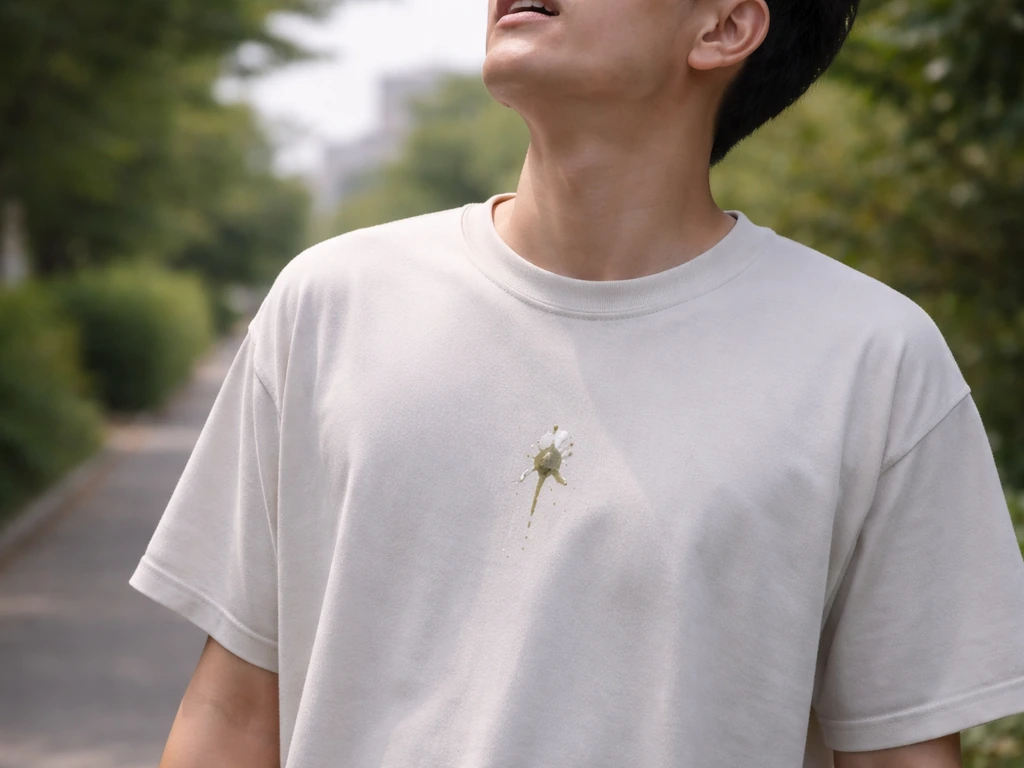
Why it happened: the biology behind the splat
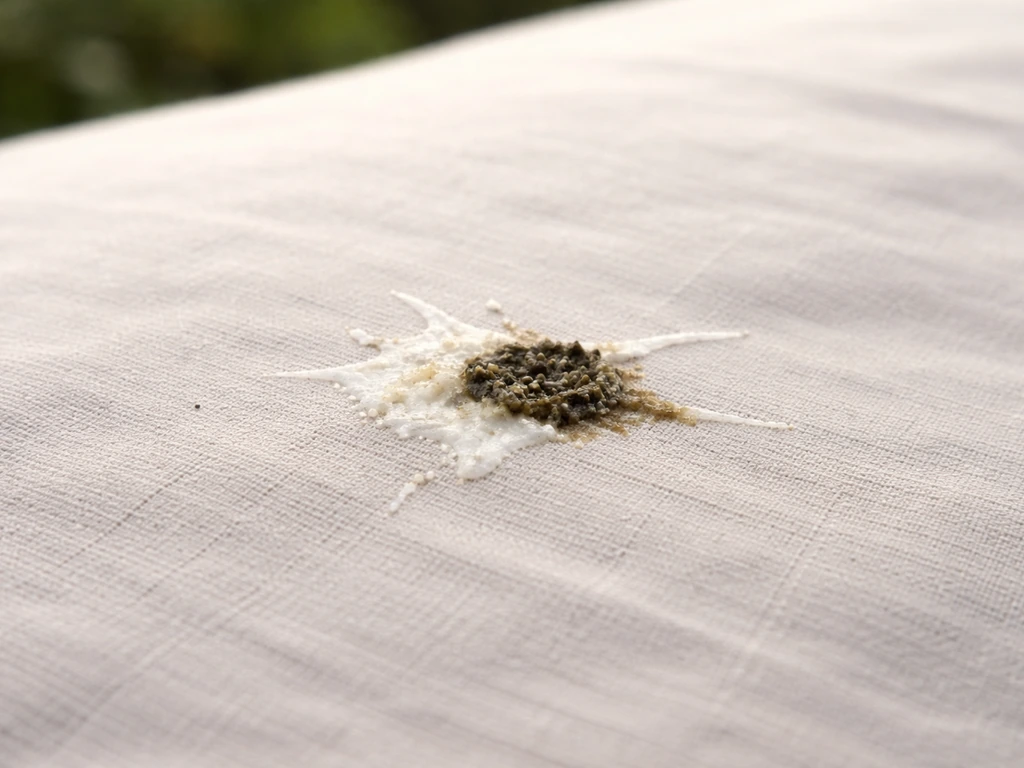
When people say a bird "peed" on them, they're describing something that's technically a little more complicated than that. Birds don't have separate systems for urine and feces the way mammals do. Instead, both waste products exit simultaneously through a single opening called the cloaca. What you see is a combined excretion: the darker, more solid portion is fecal matter, and the white or creamy part is urates, the bird's equivalent of urine, made up of uric acid rather than the water-heavy urine humans produce. So the whole thing drops at once, which is why it usually looks like a white-topped blob.
This also means the common reassurance that "it's just pee, so it's harmless" doesn't hold up biologically. The white portion and the darker portion are part of the same excretion event, not two separate things. Whether you caught mostly the white urate portion or the full drop, you're dealing with mixed bird waste either way.
As for why it happened to you specifically: birds don't aim. They drop waste whenever their bodies signal the need, which often happens during flight (the movement itself can trigger it), when they're startled, or when they shift position on a perch above you. If you were standing under a tree, a bridge, a power line, or anywhere birds like to rest, you were simply in the wrong place at a biologically inconvenient moment. It's not personal.
What to do right now
The first thing most people do instinctively is wipe or smear it, which is the one thing you want to avoid. Smearing spreads the material across a wider area of skin or fabric and makes cleanup harder. Here's the practical order of operations:
- Don't smear. If it's fresh and sitting on top of fabric or skin, resist the urge to rub it in.
- Scrape or flick off the bulk. Use a stick, tissue edge, or napkin held flat to lift the material away rather than rubbing it into the surface.
- Rinse skin with clean running water. Plain water is fine for intact skin. Wash the area thoroughly with soap and water as soon as you can reach a sink.
- For clothing: rinse the fabric from the back side under cold running water to push the material out rather than forcing it deeper into the fibers. Then treat with a stain remover or a small amount of dish soap before laundering as normal.
- Avoid touching your face, eyes, or mouth until your hands are washed. This is the single most important hygiene step.
- Wash your hands with soap and running water for at least 20 seconds. The CDC specifically recommends this after any contact with birds or their droppings.
If it landed on a hard surface like a car hood or patio table, wet the area first with water or a diluted cleaning solution before wiping. Dry scraping or sweeping bird droppings can kick up fine particles into the air, which is where the real hygiene risk lives, more on that below.
Real health risks vs. the myths
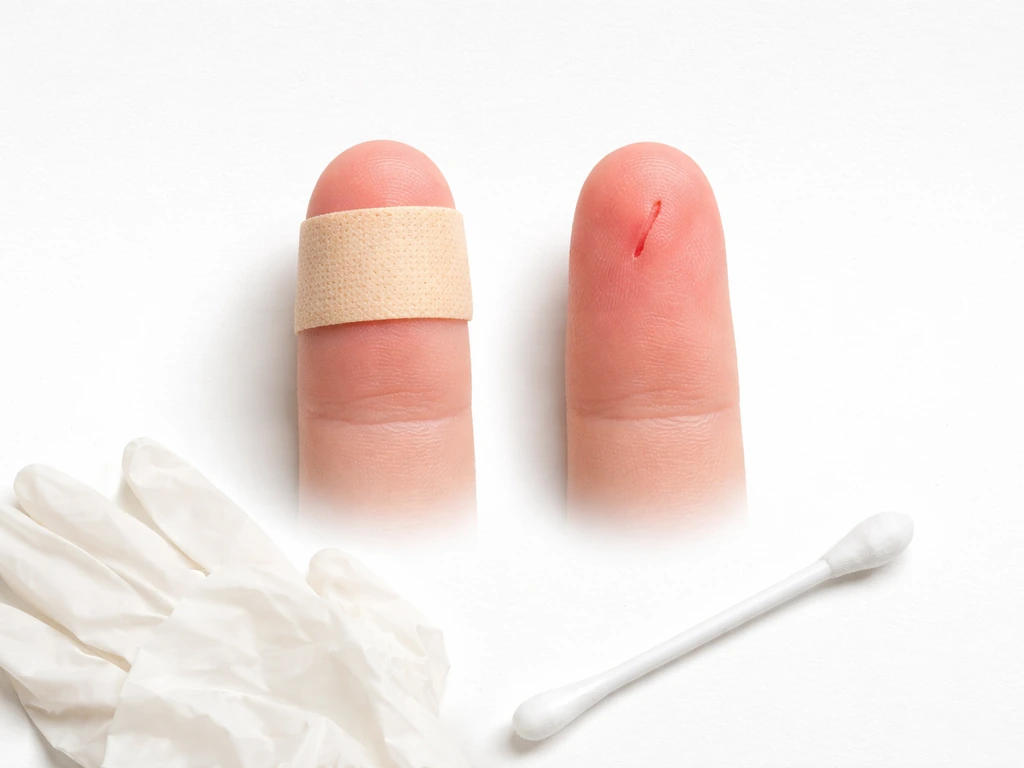
Let's be honest about the risk level here. A single fresh dropping landing on your intact skin is not a medical emergency. The genuine concerns with bird droppings tend to involve respiratory exposure to dried, aerosolized material, not a one-time contact event on your arm or jacket.
The two diseases most commonly associated with bird droppings are psittacosis (caused by Chlamydia psittaci, more associated with parrots and poultry) and histoplasmosis (a fungal infection linked to accumulated droppings in enclosed spaces). For psittacosis, the CDC notes the most common route of exposure is breathing in dust from dried bird secretions or droppings, not skin contact from a fresh incident. For histoplasmosis, the CDC and NIOSH both emphasize that the risk comes from disturbing large accumulations of droppings in places where Histoplasma is common, creating dust that can be inhaled. The U.S. National Park Service notes that stirring up dust from areas contaminated with large quantities of bird droppings or bat guano can put people at risk for histoplasmosis infection. Neither of these disease pathways is triggered by a fresh splat landing on you outdoors.
The practical takeaway is that your risk management comes down to not aerosolizing material, not touching your face before washing up, and washing your hands properly. If the dropping landed near your eyes or mouth, rinse those areas with clean water too. If you develop flu-like symptoms (fever, cough, chest tightness) in the days following any significant bird dropping exposure, especially if you were cleaning up a large accumulation, that's worth mentioning to a doctor. But for the average "a bird got me while I was walking to my car" situation, thorough handwashing and cleaning the affected area is genuinely sufficient.
| Concern | Actual risk pathway | What the evidence says |
|---|---|---|
| Psittacosis | Inhaling dried, aerosolized droppings or secretions | Low risk from a single fresh outdoor incident; handwashing is the key step |
| Histoplasmosis | Disturbing large accumulations of droppings in enclosed/dusty environments | Not a concern for a single fresh splat; relevant when cleaning nesting sites or attics |
| General germ exposure | Touching droppings then touching face, food, or mouth | Managed by washing hands and avoiding face-touching until clean |
| Eye or mouth contact | Direct contact near mucous membranes | Rinse with clean water immediately; seek advice if irritation persists |
What it might mean: spiritual and symbolic takes
Once you've cleaned up and your hygiene is sorted, there's a whole other layer of this moment that humans have been sitting with for a very long time. Across cultures and centuries, encounters with birds have been read as omens, messages, and reflections of what's moving in a person's life. Being touched by a bird, even in this unceremonious way, is not exempt from that interpretive tradition.
The good luck interpretation

The most widespread folk belief around bird droppings landing on you is that it's a sign of good luck and incoming prosperity. This belief is documented in Dartmouth's Folklore Archive and appears in USC's Digital Folklore collection as well. The logic behind this varies by tradition, but a common thread is that something unexpected and slightly unpleasant arriving from above is seen as a clearing of the path, like the universe making an awkward gesture that precedes a windfall. In some interpretations, the rarer the bird or the more unusual the circumstances, the stronger the supposed omen.
It's worth noting that the "good luck" framing is so common across so many unrelated cultures that it functions almost like a universal comfort mechanism, a way of reframing an unpleasant surprise into something positive. Whether that reframe reflects a genuine metaphysical truth or simply the human need to find meaning in disruption is a question only you can answer for yourself.
Ornithomancy and bird encounter traditions
Ornithomancy, the practice of divining meaning from birds, is one of the oldest recorded forms of divination. Ancient Roman augurs read the flight patterns and calls of birds to interpret divine will before major decisions. In Celtic and indigenous traditions across multiple continents, birds were considered messengers between the human world and the spirit world. Within these frameworks, any notable encounter with a bird, including one that leaves a mark on you, can be considered a moment worth pausing over.
What the bird was matters in some traditions. A crow or raven dropping on you might carry different weight than a sparrow or pigeon, depending on the symbolic vocabulary of the tradition you're drawing from. Crows in Celtic tradition were associated with transformation and the crossing of thresholds. Sparrows have long been symbols of the small but spiritually significant. If you noticed the type of bird clearly, it's worth exploring what that species means to you or within your cultural background.
Eastern and metaphysical perspectives
In several Eastern traditions, birds are seen as carrying messages from ancestors or spirit guides, and unexpected bird contact is taken as a prompt to pay attention. The metaphysical interpretation often centers less on the physical act and more on what was happening internally at the moment, what you were thinking about, worrying over, or hoping for. From this lens, the dropping isn't the message itself; it's the interruption that makes you stop and notice. The moment of surprise becomes the opening for reflection.
Biblical and folklore perspectives
The Bible doesn't address bird droppings as omens directly, but birds carry significant symbolic weight throughout scripture. In Matthew 6:26, Jesus points to "the birds of the air" as evidence of God's provision, they neither sow nor reap, yet they are cared for. In 1 Kings 17:4, ravens are commanded to bring food to the prophet Elijah, positioning birds as active participants in divine care. Psalm 84:3 describes sparrows finding a home near God's altar, using birds to express refuge and nearness to the sacred.
In broader Western folklore, bird encounters were commonly treated as portents worth noting, not with certainty, but with attention. The direction a bird flew, the species involved, and the time of day all factored into folk interpretations. Being directly touched or marked by a bird (even accidentally) was generally seen as a stronger signal than simply seeing one pass by. Medieval European superstition was not consistent about whether this was good or bad luck, it varied significantly by region and species, but it was consistently treated as worth noting.
What most of these traditions share is the underlying principle that the natural world speaks, and that moments of unexpected contact are invitations to listen. Whether you interpret that through a Christian lens of divine attention, a Celtic lens of ancestral messaging, or simply as the kind of folklore that cultures generate to make sense of random events, the spiritual tradition of bird encounters is rich and genuinely cross-cultural.
Turning it into personal reflection
If the spiritual angle resonates with you, one of the most grounded ways to work with it is to treat the moment as a reflection prompt rather than a definitive sign. Here are some questions worth sitting with:
- What were you thinking about in the moments just before it happened? A worry, a hope, a decision you've been putting off?
- Where were you, and does the setting carry meaning for you — your workplace, your home neighborhood, somewhere associated with a specific relationship or chapter of your life?
- What was your emotional state? Stressed, content, distracted, open?
- Did you notice the type of bird, or does anything about the encounter feel distinct from ordinary experience?
- If this were a message, what would make the most sense for you to hear right now?
One honest caveat worth building in: psychologists call the tendency to find meaningful patterns in random events "apophenia," and the habit of seeking information that confirms an existing belief is called confirmation bias. Neither of these is a reason to dismiss personal meaning-making, they're simply useful tools for keeping your interpretation honest. The question isn't just "what could this mean?" but also "what might I be projecting onto this, and why?"
That kind of double-check doesn't kill the meaning. It actually sharpens it. If you sit with both the possible significance and the possible coincidence, and something still resonates, that resonance is more trustworthy than a reflexive leap to the nearest superstition. Some people find that the most useful thing a bird dropping does is simply interrupt them long enough to notice what's actually going on in their life. If you are also wondering, what does it mean when your bird sleeps on you, similar meaning-making and attention to context can apply.
This kind of physical, unexpected bird contact connects naturally to the broader question of what various bird encounters mean for you personally. Experiences like a bird preening you, biting you, or touching you each carry their own layer of symbolic weight in different traditions, and they're all part of the same larger conversation about how we read our interactions with the natural world. Whatever you make of today's moment, the fact that you're asking "what does this mean?" is itself the starting point, the bird got your attention, and now the reflection is yours to do with as you like. If you're wondering about another kind of bird cue, you might also be curious about what does it mean when a bird blinks at you.
FAQ
Does bird droppings on your skin have a higher risk than the article suggests if it gets in a cut or scrape?
A fresh splat on intact skin is usually low risk outdoors, but if the droppings touch an open wound, the practical priority is cleaning immediately with soap and running water, then covering the area. This is more about preventing general contamination than the specific infections described for droppings exposure, but it’s smart to be extra cautious with broken skin and to consider calling a clinician if you notice worsening redness, swelling, or drainage over the next day or two.
What should I do if bird droppings get on my clothing and I can’t wash them right away?
Don’t rub them in. Scrape off solids gently, then let the fabric air-dry before washing (so you avoid spreading wet material). Wash on the warmest setting the care label allows, and rinse the sink or tub where you cleaned. If it landed on delicate fabric, pre-treat with a laundry stain remover before washing, and avoid wearing the item again until it’s cleaned.
Is it safe to use hand sanitizer instead of washing with soap and water?
For bird droppings, hand sanitizer is not a substitute for washing because dried droppings can leave particles behind, and you want to remove material, not just reduce germs on the surface. Soap and water for long enough to scrub thoroughly, then rinse, is the best choice, especially before touching your face, phone, or keys.
How can I tell if the droppings might have come from a sick bird or poultry?
You usually cannot tell from a single droplet, and the health risk for most people is driven by airborne dust from larger accumulations rather than one incident. The useful decision point is what you did afterward: if you were dealing with a pile or cleaning an enclosed area (roof, attic, garage, bird coop), that’s when you should be more strict about dust control and consider appropriate respiratory protection.
What if the dropping splashed into my eyes or mouth?
Rinse promptly with clean running water. For eyes, flush for several minutes, blink during rinsing, and avoid rubbing. If irritation, redness, or blurry vision lasts more than a few hours, or if you wear contact lenses, switch to glasses and seek medical advice.
When would bird droppings be enough reason to seek medical care even if it happened outdoors?
Consider contacting a clinician if you had significant exposure to a large accumulation (for example, cleaning a heavily contaminated area, disturbing dried material indoors), or if you develop concerning symptoms like fever plus cough or chest tightness in the days after the exposure. If you have immune suppression, chronic lung disease, or you’re pregnant, err on the side of asking a doctor sooner rather than waiting.
Can I avoid aerosolizing droppings when cleaning a sidewalk or patio?
Yes. Wetting first is key, then use a damp paper towel or cloth to lift residue. Avoid dry sweeping or power washing directly before residue is softened, because that’s what can create airborne particles. After pickup, wipe again with a cleaner and dispose of materials in a sealed trash bag.
Does the type of bird change what I should do, practically speaking?
Different birds can symbolize different meanings, but for practical safety the same rules apply: avoid touching your face, wash hands thoroughly, clean the affected fabric or surface, and do not disturb large dried accumulations. If you know you were near poultry or a roost with heavy buildup, just treat cleanup as higher dust-control priority, even though the first moment you were splatted still isn’t usually an emergency.
If I feel nauseated or panicky after it happens, is that related to infection risk?
It’s more likely a stress or disgust reaction than an infection from a single outdoor incident. Infection risk is about timing and exposure type, not immediate feelings. If you’re worried, focus on the controllables you can do right away (rinse, clean, wash hands), and if symptoms persist or you had major dust exposure, get medical guidance.
How do I handle the situation socially or at work without spreading it to others?
The best approach is to remove contaminated outer layers, clean the area you touched, and wash hands before you shake hands, handle shared items, or return to meetings. If you’re on a time crunch, use wipes on the visible spot first, then still wash hands when you can. Also avoid using other people’s supplies (like towels) because you may transfer residue.
Next Articles
Why Is My Bird Flapping Its Wings at Me? Causes and What to Do
Understand why your bird flaps wings at you and what to do, from hormones and stress to attention and warnings.
Makes My Bird Twitch Meaning: Causes, Fixes, and Red Flags
Understand why your bird twitches, what to check now, red flags, first-aid steps, and symbolic meaning safely.
Why Does My Bird Chirp When I Leave the Room? Causes and Fixes
Understand why your bird chirps when you leave and follow a step-by-step plan to reduce stress, plus optional spiritual