A bird attack dream almost always points to some form of perceived threat, pressure, or conflict in your waking life. Whether it's a single crow diving at your head or a swarm of birds chasing you across an open field, the core message is the same: something feels aggressive, destabilizing, or out of your control right now. That said, the specific details of the dream matter enormously. Which bird attacked? Where did it happen? Did it hurt you? Did you fight back or run? Those details shift the meaning significantly, and working through them is how you get from "I had a scary dream" to "I actually understand what my mind is processing."
Bird Attack Dream Meaning: Symbolism and What to Do

Maya Hartwell
28 Apr 2026

What a bird attack dream usually symbolizes
In most symbolic and spiritual traditions, birds represent freedom, communication, hope, and messages from beyond the ordinary. They live between earth and sky, which makes them natural messengers in folklore, biblical texts, and indigenous cosmologies alike. When a bird turns aggressive in a dream, that messenger quality doesn't disappear. It intensifies. The dream is still delivering a message, but now it's forcing you to pay attention.
Post-Jungian dream symbolism links bird wings to aspirations and the desire to escape, while the beak specifically connects to communication and the need to speak out. So an attacking beak in a dream can be read as a communication that feels threatening, a confrontation you've been avoiding, or words aimed at you that have landed hard. An attack involving claws or wings reads more like a collision with something you wanted to escape from.
More broadly, bird attacks in dreams are commonly interpreted as: destabilization, a growing problem you've been ignoring, negative thoughts (your own or someone else's) directed at you, a "man versus nature" sense of being overwhelmed by instincts or forces bigger than yourself, and disruption of freedom or peace. None of these are predictions. They're symbolic reflections of what's already stirring in your life.
Common bird attack scenarios and what they tend to mean
The scenario shapes the meaning just as much as the bird itself. Here's a breakdown of the most common versions people report, and what each tends to point toward.
Birds attacking you from the sky
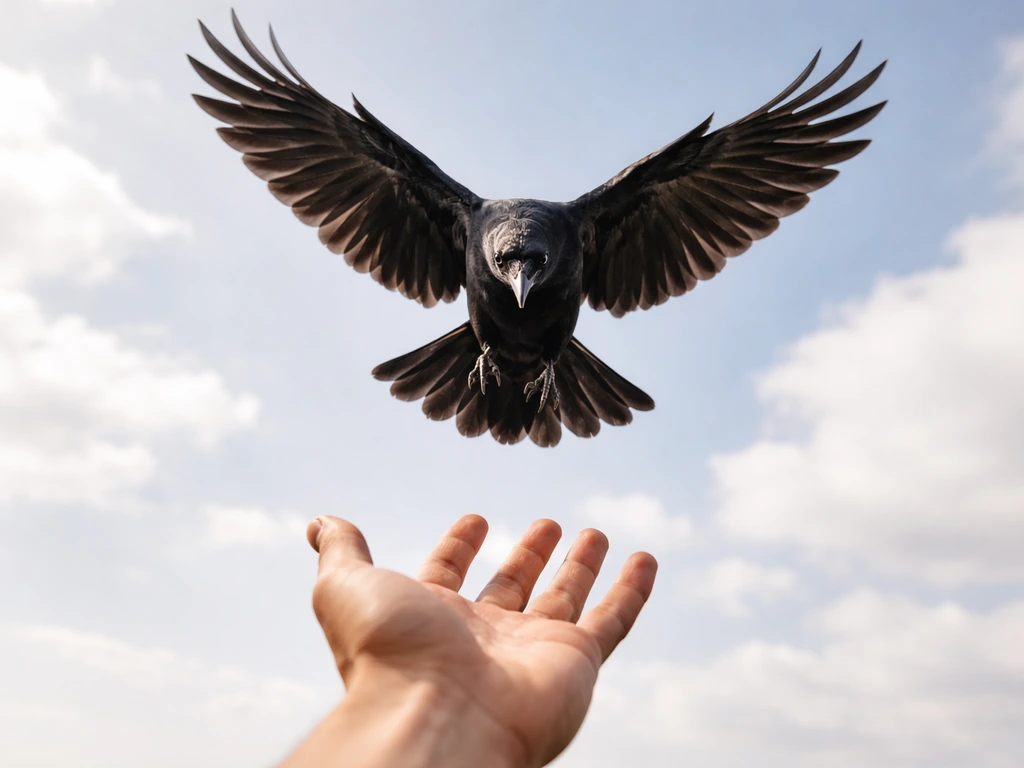
This is the classic "hitchcock" scenario: you're exposed, out in the open, and birds are diving at you from above. The sky represents the realm of thought, spirit, and the unknown. An attack from that direction often reflects feeling like a higher-level threat is looming, whether that's authority figures, overwhelming responsibilities, or a spiritual or moral weight you're carrying. There's a sense in this dream of being unprotected and caught in the open with nowhere to hide.
Birds attacking you indoors
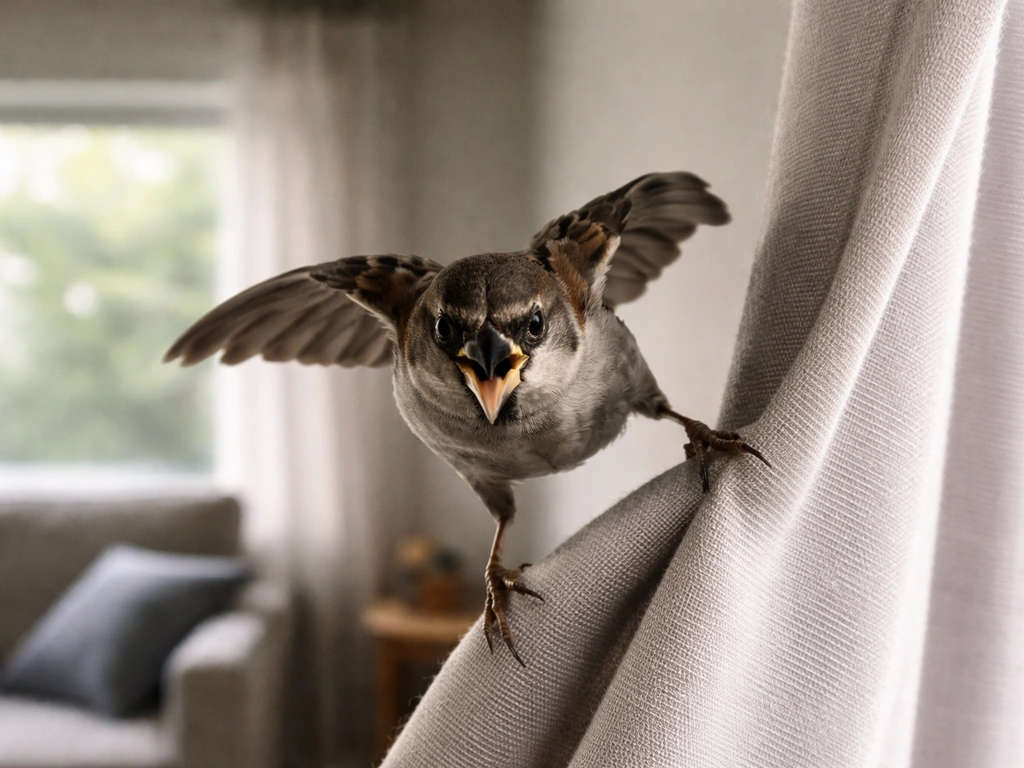
When the attack happens inside your home or another enclosed space, the symbolism shifts to your personal boundaries, your inner world, or your sense of security. A bird that gets inside and becomes threatening is a classic symbol of an intrusion, something that doesn't belong in your safe space has gotten in. This connects naturally to the symbolism explored in dreams about birds trapped in the house, where the creature's presence indoors often signals a disruption to domestic stability or a boundary that's been crossed.
Being pecked or clawed
Pecking specifically ties back to the beak's communication symbolism. If a bird is pecking at you in a dream, the interpretation in many traditions is that you're receiving criticism, harsh words, or persistent pressure from someone in your waking life. If the bird biting your hand shows up in your dream, it often points to feeling attacked where you feel most vulnerable, like your ability to protect or provide bird biting hand in dream meaning. Clawing tends to carry a more visceral quality: something is trying to grab hold of you, pull you down, or wound you. Both forms of attack suggest a targeted experience rather than a general sense of threat.
A swarm or flock chasing you
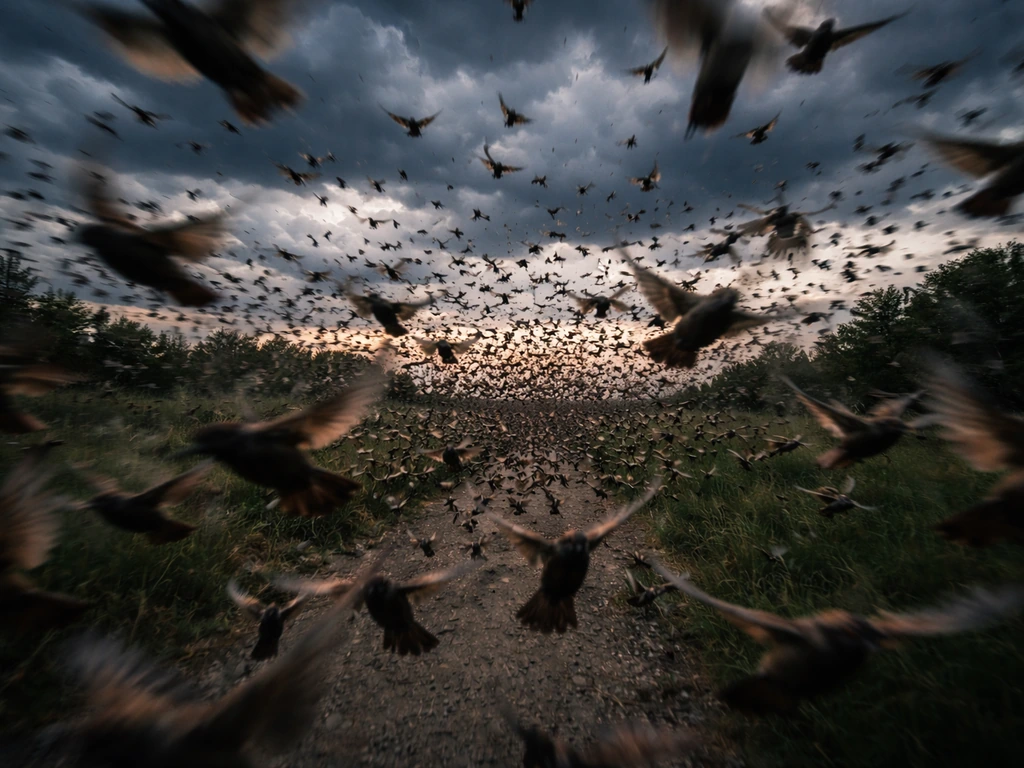
Being chased by a swarm amplifies the sense of overwhelm. This dream often reflects anxiety about a collective force, whether that's social pressure, group judgment, gossip, or a situation that feels like "everyone is against me." The swarm can also represent your own compounding thoughts, particularly anxious or self-critical ones that have built critical mass and feel impossible to outrun.
Being unable to defend yourself
Helplessness in the dream, where you can't fight back, can't move, or your defenses don't work, is one of the more distressing versions. This typically connects to feelings of powerlessness in a real situation. You may feel trapped in a conflict, unable to set a boundary, or frozen in the face of criticism or a threat you can see coming but can't stop.
Killing the bird or escaping safely
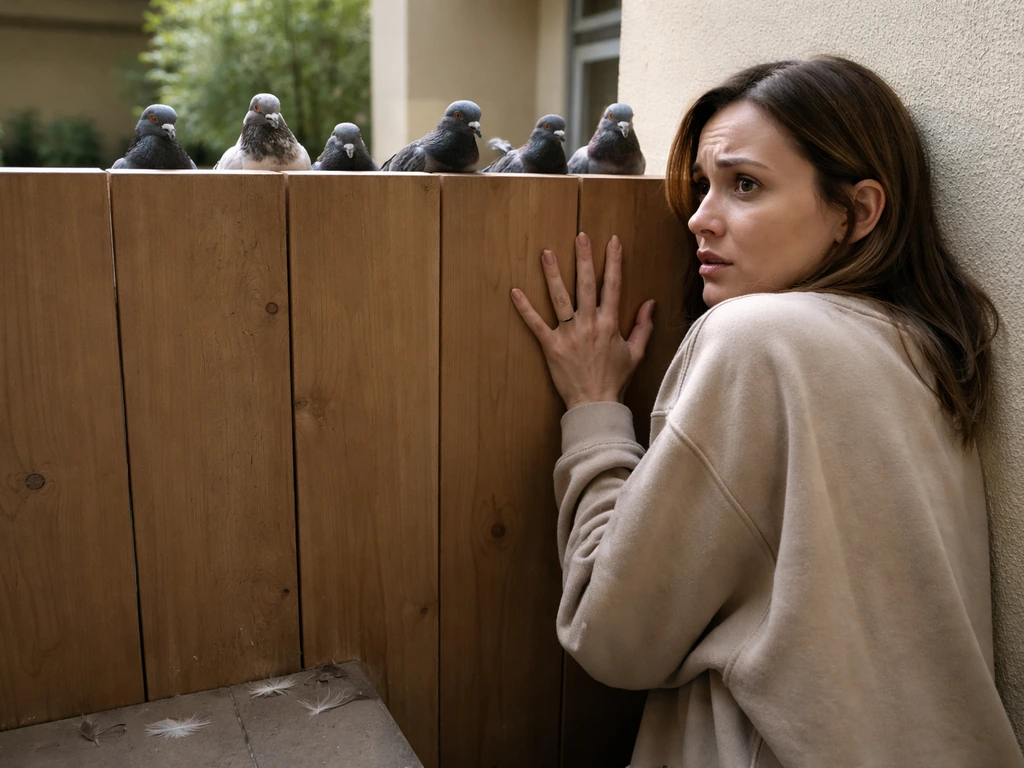
These outcomes are notably more hopeful. If you kill or repel the attacking bird in your dream, many traditions interpret this as reclaiming power, overcoming a fear, or resolving a conflict. If you escape unharmed, the message is often about resilience: you're processing a threat without being destroyed by it. The dream is doing its job, helping you rehearse and survive the scenario psychologically.
Spiritual and folkloric interpretations across belief systems
Across traditions, the type of bird doing the attacking carries its own layered meaning. Here's how different cultural lenses read some of the most common attacking birds in dreams.
| Bird | Cultural/Spiritual Association | Attack Interpretation |
|---|---|---|
| Crow or Raven | Western folklore: ill omen, death; some indigenous traditions: wisdom, transformation | A confrontation with something feared or suppressed; a message demanding attention you've been refusing |
| Eagle or Hawk | Biblical and indigenous: divine messenger, power, sovereignty | A spiritual challenge or test; something requiring courage or elevated perspective |
| Owl | Many traditions: death, hidden knowledge, the unconscious | An uncomfortable truth pressing in; a fear of the unknown or of endings |
| Small bird (sparrow, robin) | Folklore: soul, vulnerability, humility; biblical: God's care for the small | Feeling attacked by something seemingly minor but emotionally significant; guilt or self-criticism |
| Parrot or talking bird | Communication, mimicry, gossip | Fear of words being used against you; betrayal through speech or rumor |
| Unidentified dark bird | Universal: shadow, unconscious fear | A generalized dread or a repressed emotion demanding acknowledgment |
In biblical tradition, birds carry dual symbolism: they can represent God's provision and care (Matthew 6:26) or spiritual uncleanness and threat (Revelation 18:2). A threatening bird in a dream, read through a biblical lens, might prompt prayer for protection and discernment about a situation that feels spiritually heavy. Celtic and druidic traditions often read ravens and crows as boundary-crossers between worlds, so an attacking crow in that framework might signal a message from the ancestral or otherworld realm pressing urgently for your attention. In Eastern traditions, birds attacking in dreams can signal imbalance in chi or blocked communication energy, suggesting the need to express something important that's been held back.
What's actually triggering the threat: decoding your emotional context
Dreams rarely manufacture emotions from nothing. The feeling of being attacked by birds almost always maps onto something real you're carrying. The most useful thing you can do after this dream is ask yourself which of these themes feels most alive for you right now.
- Conflict or confrontation: Are you in an unresolved argument or a situation where someone has been verbally aggressive or critical toward you?
- Feeling targeted or scapegoated: Do you feel like a particular person or group is directing hostility or judgment your way?
- Guilt or shame: Sometimes the "attacking bird" is an externalized version of your own inner critic, especially if the bird feels relentless or impossible to escape.
- Anxiety about freedom or change: Birds symbolize freedom, so an attacking bird can reflect fear that a change or loss is threatening your sense of independence or direction.
- A message you've been avoiding: If something in your life has been trying to get your attention and you've been putting it off, the dream may be dramatizing that urgency.
- Boundary violations: If someone has been crossing your personal, emotional, or relational boundaries, the dream's intrusion pattern often mirrors that.
- Protection needs: Especially if the dream involves attacks on children, family, or your home, your psyche may be signaling a need to actively protect what matters most.
This kind of emotional decoding is where the dream becomes genuinely useful. The symbolism isn't there to frighten you. It's there to hand you a map of what you're already navigating, just translated into imagery your waking mind might be too defended to process directly. Think of it the way Freud described dream content: the threatening material is psychically significant, not a literal forecast. It's your mind working on something real.
What to do after the dream: grounding, reflection, and ritual
Waking up shaken is its own experience that deserves care before you even start interpreting. Here's a practical sequence for the morning after a bird attack dream.
Ground yourself first

If you woke up in a state of anxiety, blank" rel="noopener noreferrer">use the 5-4-3-2-1 grounding technique before reaching for your phone or trying to analyze anything. Name five things you can see, four you can physically feel, three you can hear, two you can smell, and one you can taste. This technique is clinically recognized for reducing anxiety and stress responses, and it works especially well in the disoriented space right after a distressing dream. A common example Healthline discusses is the 5-4-3-2-1 grounding method, also called a five senses approach, which can help bring you back to the present when anxiety hits blank" rel="noopener noreferrer">5-4-3-2-1 grounding method (five senses approach). It brings you back into your body and your actual physical environment.
Journal the details while they're fresh
Write down everything you remember: the bird species or color, where the attack happened, whether you were alone, how the attack felt (sharp, overwhelming, relentless, surprising), and how it ended. Then write down your immediate emotional response, not what you think it means, just what you felt. These raw details are your raw material for interpretation.
After capturing the dream itself, try these reflection prompts to connect it to your life:
- What situation in my life right now feels most like being attacked or overwhelmed?
- Is there a conversation or confrontation I've been avoiding that might be building pressure?
- Who or what in my life feels like it's crossing a boundary I care about?
- What part of my freedom, peace, or personal direction feels threatened?
- If the bird was trying to deliver a message rather than just attack, what might it be saying?
Spiritual responses if that resonates with you
If you approach life through a spiritual or metaphysical lens, there are several responses that many traditions offer for processing a threatening dream. None of these are mandatory, and none of them require you to believe the dream was a literal supernatural event. They're frameworks for intentional processing.
- Prayer for protection and discernment: In Christian and many indigenous traditions, asking for clarity and a sense of protection after a frightening dream is a natural and grounding act. You don't need to interpret the dream perfectly to simply ask for guidance.
- Cleansing or clearing intention: In folk and metaphysical traditions, a morning ritual like burning sage, opening windows, or setting a conscious intention to release the dream's energy can help you feel less haunted by it through the day.
- Meditation on the bird's message: Rather than fearing the imagery, sit quietly and ask what the dream's "bird" was trying to communicate. Sometimes the most threatening-feeling dreams are carrying the most important truths.
- Protection visualization: Some traditions recommend consciously visualizing a protective light, circle, or shield around yourself before bed if recurring bird attack dreams are leaving you feeling vulnerable.
When to take it seriously as anxiety or trauma, not just symbolism
Sometimes a distressing dream is best understood not as a spiritual message but as a sign that your nervous system is under real strain. Threat simulation theory in sleep research proposes that dreaming may function in part as a kind of evolutionary rehearsal, simulating threatening scenarios to prepare you for real-world dangers. In people under significant stress or carrying trauma, this threat simulation system can go into overdrive, producing repeated, vivid, and distressing dreams that feel relentless rather than meaningful.
Consider reaching out to a therapist or sleep specialist if any of the following apply to you:
- The bird attack dream recurs frequently, especially multiple times per week.
- You're waking up in significant distress, with a pounding heart, sweating, or feeling afraid to go back to sleep.
- The dreams are affecting your daytime functioning, mood, or your willingness to sleep.
- You've experienced trauma, and the dream content feels connected to that experience.
- You've noticed a pattern of threatening or frightening dreams across different themes, not just birds.
Evidence-based treatments exist specifically for recurring nightmares. Imagery Rehearsal Therapy (IRT), a CBT-based approach, involves rewriting the nightmare's ending and rehearsing the new version while awake. It has strong clinical support and is recognized at the highest evidence level by sleep medicine organizations. Cognitive Behavioral Therapy for Nightmares (CBT-N) is another established pathway. Both approaches treat nightmares as workable, not as something you simply have to endure. If your dreams are distressing you repeatedly, that's not a spiritual failing or a sign something is cosmically wrong. It's a signal that your nervous system needs some support.
Putting it all together: your interpretation steps for today
You don't need to land on one perfect interpretation. The goal is to walk away with something useful. Here's a practical summary of how to work through a bird attack dream today, without catastrophizing and without dismissing what your mind was trying to tell you.
- Ground yourself physically if you woke up anxious (5-4-3-2-1 technique).
- Write down the dream details: bird type, location, how it attacked, how it ended, and your emotional response.
- Identify which emotional theme fits your life right now: conflict, criticism, boundary violation, avoidance, anxiety about change, or something else.
- Match the bird's species and behavior to the symbolic tradition that resonates most with your own beliefs, whether that's biblical, folkloric, metaphysical, or psychological.
- Ask the honest question: Is there something this dream is urging me to address or a conversation I've been avoiding?
- Choose one response that fits your orientation: a journaling session, a grounding ritual, a prayer for discernment, a protective intention, or simply a conversation with someone you trust.
- If the dreams are recurring and distressing, make an appointment with a therapist who works with sleep or trauma. This is a valid and practical step, not a last resort.
Bird attack dreams are startling, but they're rarely meaningless. If you want a deeper bird eating bird dream meaning, you can apply the same process to identify what kind of threat and communication your mind is processing. Whether you read the imagery through a spiritual lens, a psychological one, or both, the dream is pointing toward something real in your inner or outer life.
The bird that felt like a threat might, once you sit with it, turn out to be a messenger after all. What might you take from this one? If you're also curious about bird nests in dreams, the bird nest dream meaning can add another layer to how your subconscious is interpreting safety, home, and protection.
If you're also curious about related themes like a bird laying eggs in dream meaning, you can compare how nesting and reproduction symbolism may shift the overall message.
FAQ
What if I was attacked by a bird but I cannot identify the species or color in the dream?
You can still interpret it by focusing on the role the bird played, not the exact identity. Note how it behaved (pecking, clawing, diving), where it attacked (head, face, hand, back), and how you tried to respond (fight, freeze, run). If the bird feels “unknown,” that often points to an unclear threat in waking life, like vague pressure or an unresolved conversation.
Does a bird attacking me in the dream mean I will be harmed in real life?
No. In most interpretations, the dream reflects how you are currently experiencing threat, stress, conflict, or boundary issues. Treat it as a prompt to check your real conditions (workload, relationships, self-talk), not as a forecast. If the dream spikes after news or conversations, it may be your mind processing information stress.
Why does it matter whether I fought back or escaped unharmed?
Because those outcomes usually map to your sense of agency. Reclaiming power (repelling, killing, successfully setting distance) often connects to boundary-setting or problem resolution, even if it is not happening yet. Escaping without harm can reflect resilience and emotional recovery, but it may also indicate avoidance, so it helps to ask whether you want to confront the issue or just protect your energy.
What does it mean if I felt frozen or unable to move during the attack?
Freezing commonly points to powerlessness or a “no-win” feeling in a real situation, such as criticism you cannot address or a conflict where you feel trapped by consequences. This can be more than symbolic, especially if you also experience sleep paralysis or frequent night terrors. If you suspect sleep paralysis, note whether the dream overlaps with waking-body sensations like immobility or a sense of pressure on the chest.
How should I interpret repeated bird attack dreams?
Repetition usually signals an ongoing stress loop, not a one-time event. Look for the same pattern showing up across dreams, for example, the same location (home vs outside), the same attack style (pecking vs clawing), or the same feeling (helplessness vs panic). Recurring themes often match an unresolved boundary issue, persistent criticism, or a fear that has not been converted into a concrete plan.
What if the bird attacked someone else, not me, in the dream?
That often shifts the focus from your personal vulnerability to how you relate to other people’s stress or your responsibility feelings. If you watched the attack, it can reflect guilt, helplessness, or fear of intervention. If you tried to help, it may indicate you want to protect someone or stop a harmful pattern.
Does the dream mean communication problems if the bird was pecking or biting?
Often, yes, especially with pecking or beak-focused attacks, but it is not limited to “speaking up.” Also consider the receiving side, for example, being hit by harsh feedback, being talked over, or feeling “cornered” by questions. A helpful next step is to identify who in waking life tends to deliver criticism or pressure, and whether you are avoiding a response.
How do I interpret an attack indoors versus outdoors if I already have strong boundaries in real life?
Indoor attacks can still relate to boundaries, even if you believe you are doing well. It may point to emotional boundaries (privacy, mental access) rather than physical ones. Ask whether there is a “safe space” in your life that has recently been disrupted, such as your routine, your home peace, your sleep environment, or your ability to decompress.
What if the dream includes a flock or swarm, and I cannot tell who the “enemy” is?
Swarm scenarios frequently reflect diffuse pressure, like group judgment, social anxiety, gossip, or anxiety that builds from many small inputs. If you feel there is no clear target, your mind may be treating a general stressor as a single threat. A practical check is to list recent “many small pressures” (messages, demands, unclear expectations) and see which one is growing fastest.
What if I wake up feeling normal but the dream was terrifying?
That pattern can happen when your nervous system discharged emotion during sleep and you processed it by morning. Still, the dream may highlight a theme worth reviewing, especially if it repeats or if it resurfaces during the day. Use a quick log anyway, one sentence for the key image and one sentence for the feeling, then decide whether there is an actionable situation to address.
Is it normal to feel worse after interpreting the dream?
Yes, if you start catastrophizing or over-fixing on symbolism. If interpretation makes you more anxious, switch from “meaning hunting” to “life impact check.” Choose one concrete step from your notes, such as setting a boundary, scheduling a difficult conversation, reducing a trigger, or addressing a sleep disruption. If anxiety persists, consider professional support rather than deeper symbolic analysis.
When should I consider getting help for bird attack dreams specifically?
If dreams are recurring, cause fear of bedtime, disrupt sleep quality, or come with intrusive waking anxiety, that is a strong sign to seek help. The article notes evidence-based nightmare treatments, and it can be especially relevant if the dreams feel vivid, hard to control, or tied to trauma. Also consider a sleep specialist if you notice signs of parasomnias, panic at night, or possible sleep paralysis.
What is a quick way to turn the dream into an action plan the same day?
Pick one theme from your notes (boundary, criticism, overwhelm, unresolved conflict, communication). Then write one action that matches it: one message you need to send, one limit you will set, one task you will delegate, or one conversation you will prepare for. Avoid creating a “moral meaning” story, instead use the dream as a checklist for what your mind is already flagging.
Next Article
Why Is My Bird Flapping Its Wings at Me? Causes and What to Do
Understand why your bird flaps wings at you and what to do, from hormones and stress to attention and warnings.