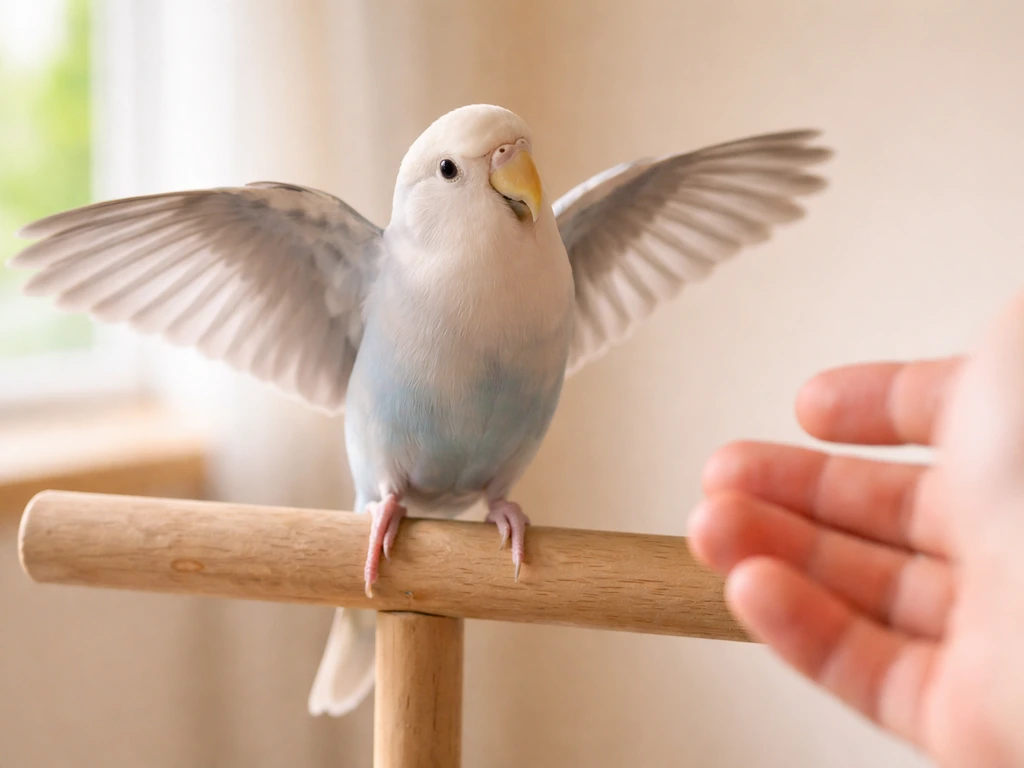
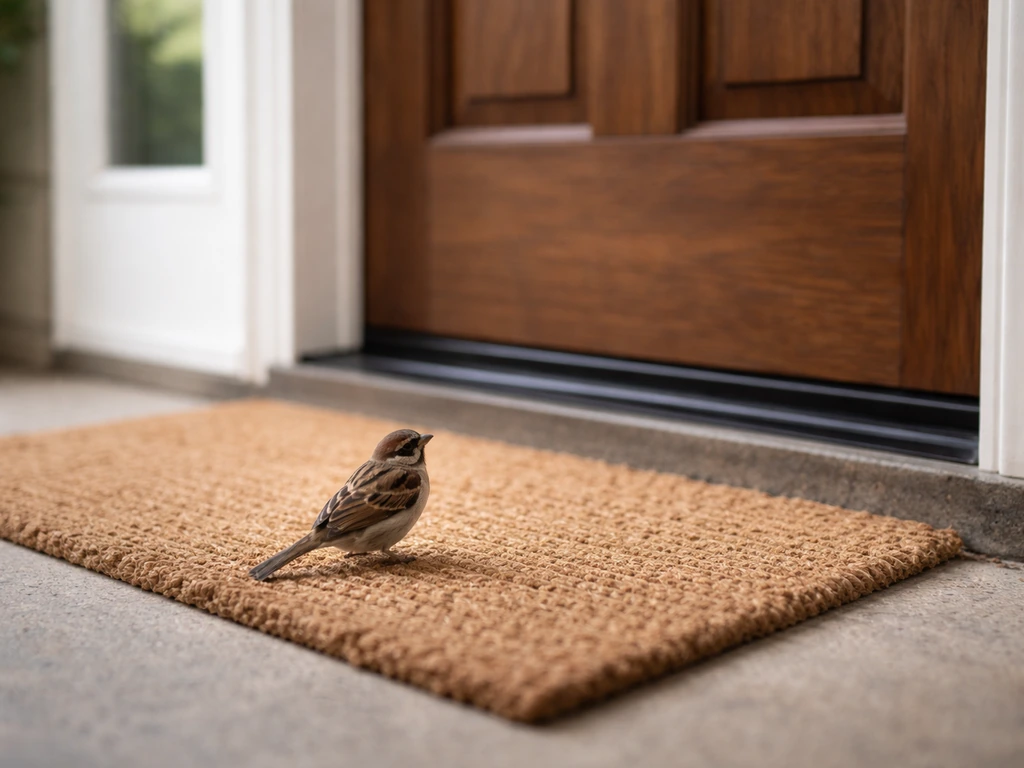
If the same bird keeps showing up at your house day after day, there are two things happening simultaneously: a very real, practical reason the bird is drawn there, and possibly something worth paying attention to on a deeper level. If, instead, you’re dealing with a bird trying to get in your car, the quick first steps are different because the goal is to manage the panic and prevent injury while helping it exit safely. Both are worth exploring, and neither cancels the other out. Let's start with what's actually pulling the bird back, then get into what it might mean.
Why Does the Same Bird Keep Coming to My House?

Maya Hartwell
18 Apr 2026
Natural reasons a specific bird keeps returning
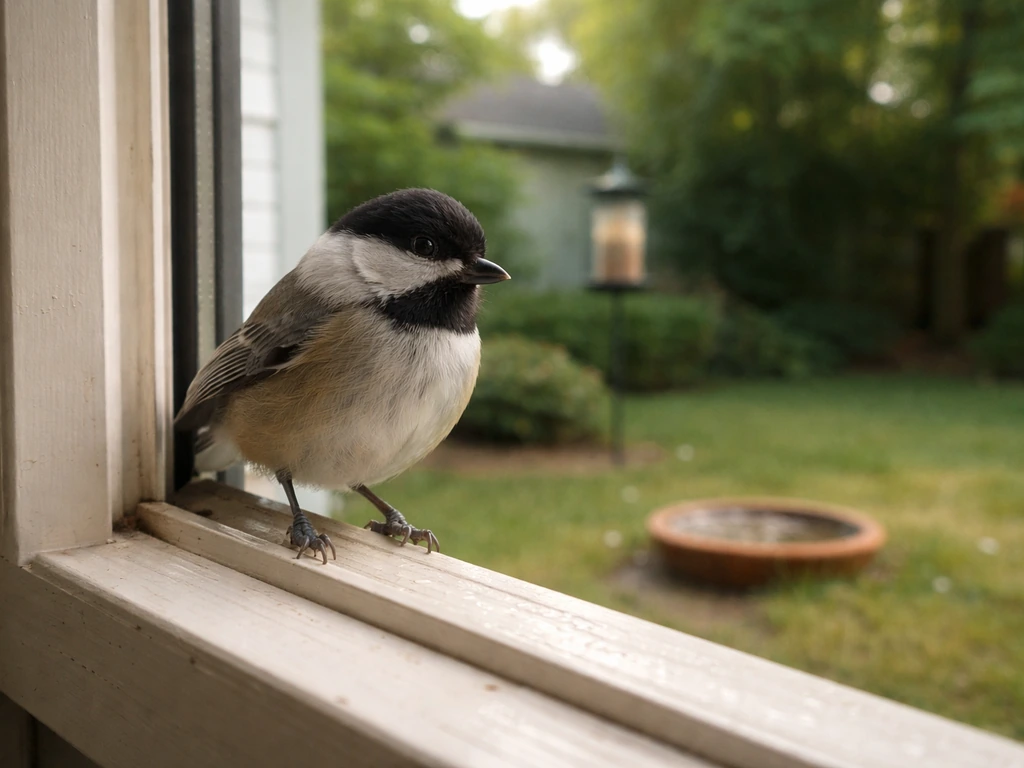
Birds are creatures of habit driven by survival. Every time a bird returns to your house, it's because your property is meeting at least one of its three core needs: food, water, or shelter. Wildlife biologists and extension services frame it exactly this way. If your yard or home exterior consistently provides any combination of those three things, birds will not just visit once. They'll come back, tell their habits to their body clock, and keep coming.
Food is the most common driver. Feeders are obvious, but so are less obvious sources: outdoor pet food bowls, compost bins, berry-producing shrubs, insect-rich siding or eaves, or even spilled birdseed under a feeder that you've stopped filling. A bird that found food at your house once has a spatial memory that keeps flagging your address.
Water is surprisingly powerful. A birdbath, a leaky outdoor faucet, a puddle that forms in the same spot after rain, even a pet's outdoor water bowl, these are all magnetic to birds, especially during dry spells. The U.S. Fish and Wildlife Service specifically highlights water features as one of the key draws that bring birds back to residential areas repeatedly.
Shelter and nesting are the third pull. Dense shrubs, window ledges, roof overhangs, cluttered porches, gaps in siding, and mature trees near the house all offer exactly what birds look for when raising young or roosting. Research on urban nest-site selection shows birds prioritize concealment and consistent light conditions, meaning if your yard already sheltered a nest once, that spot gets flagged in the bird's memory as a viable site next season too.
Beyond those three basics, territorial behavior plays a huge role. Some birds, robins, mockingbirds, and cardinals especially, establish and defend territories that include your yard. A territorial bird will return repeatedly simply because it considers your property part of its domain. And in spring and early summer, that behavior intensifies significantly.
Is it really the same bird, or the same species?
This distinction matters both practically and symbolically. If you're seeing what looks like the same bird every morning, it could genuinely be the same individual, or it could be different members of the same species using the same route. A territorial bird (like a mockingbird or a robin) is almost certainly the same individual returning. A species like a house sparrow or house finch might be multiple birds that look identical to us. To narrow it down, look for distinguishing marks: an unusual feather, a slight injury, a color variation, or a behavioral quirk specific to that bird. If you see it at roughly the same time each day, from the same direction, doing the same thing, there's a good chance you're dealing with one individual. That matters because a single returning bird carries more weight both as a behavioral pattern and, if you're open to it, as a symbolic signal.
How to identify the bird and read the behavior clues
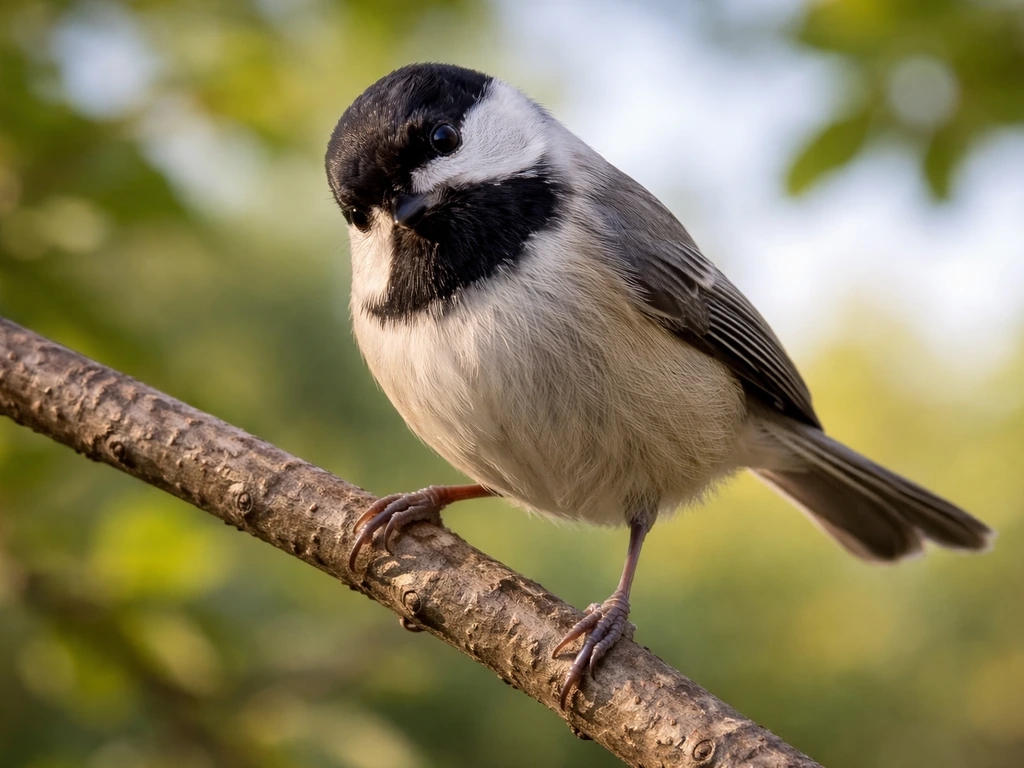
Before you can figure out what to do, you need to know what you're dealing with. Start by identifying the species. A free app like Merlin Bird ID (from Cornell Lab of Ornithology) lets you photograph the bird or describe its markings and get an accurate ID in seconds. Once you know the species, you'll understand its natural behavior, diet, and nesting habits, which tells you a lot about why it's there.
Then watch what it actually does. Behavior is your clearest clue to the reason for the visit. Here's what to look for:
- Pecking at windows or siding: Often territorial behavior, the bird sees its own reflection and thinks it's a rival. Common in cardinals, robins, and mockingbirds.
- Landing near or in the same spot repeatedly: Likely a food source or a preferred perch within its territory.
- Carrying nesting material (twigs, grass, fluff): Actively building a nest nearby. Note where it goes with the material.
- Hovering or circling the roofline: May be looking for entry points, roosting spots, or investigating a previously used nest site.
- Calling loudly from the same perch each morning: Classic territorial display. The bird is announcing ownership of its range.
- Appearing lethargic, sitting on the ground, or allowing close approach: Possible injury or illness. This bird needs different attention.
- Coming to the same feeder or water source at the same time daily: Habituated to a reliable food or water resource you're providing.
Also track the timing. Morning visits tied to territorial calls are different from afternoon visits tied to your feeder refill routine. Seasonal timing matters too. A bird that appears every spring is likely returning to nest. A winter-only visitor is probably migrating through and finds your yard a reliable stop.
Quick troubleshooting you can do today
Run through this checklist right now. It covers the most common reasons a bird keeps returning and gives you an immediate action for each.
- Check all food sources: Walk your property and identify anything a bird could eat. Feeders, pet food left outside, open compost, berry bushes, insect-attracting lights, or seed spilled under a feeder. Remove or relocate what you don't want to keep providing.
- Check all water sources: Birdbaths, leaky faucets, standing puddles, pet water bowls. If you're not trying to attract birds, eliminate standing water or move it away from the house.
- Inspect the roofline, eaves, and vents: Look for gaps, loose siding, damaged soffits, or uncovered vents. These are entry points for nesting or roosting. Note any droppings concentrated in one area, that's a reliable sign of a regular perch or roost spot.
- Look for existing nests: Check gutters, window ledges, porch corners, and dense shrubs close to the house. An active nest changes everything about how you should respond (see the safety/legal section below).
- Check windows for reflections: If the bird keeps pecking at a specific window, stand outside and look at that glass from the bird's approach angle. If you see sky or foliage reflected in it, the bird is seeing a rival or an open path and responding accordingly.
- Note any recent changes: Did you add a feeder, plant new shrubs, leave a garage or shed door open, or change your outdoor lighting recently? Birds pick up on environmental changes fast.
- Photograph the bird from multiple angles: This helps with ID and helps you track whether it's the same individual over time.
Deterrence vs. welcoming: humane steps to change the pattern
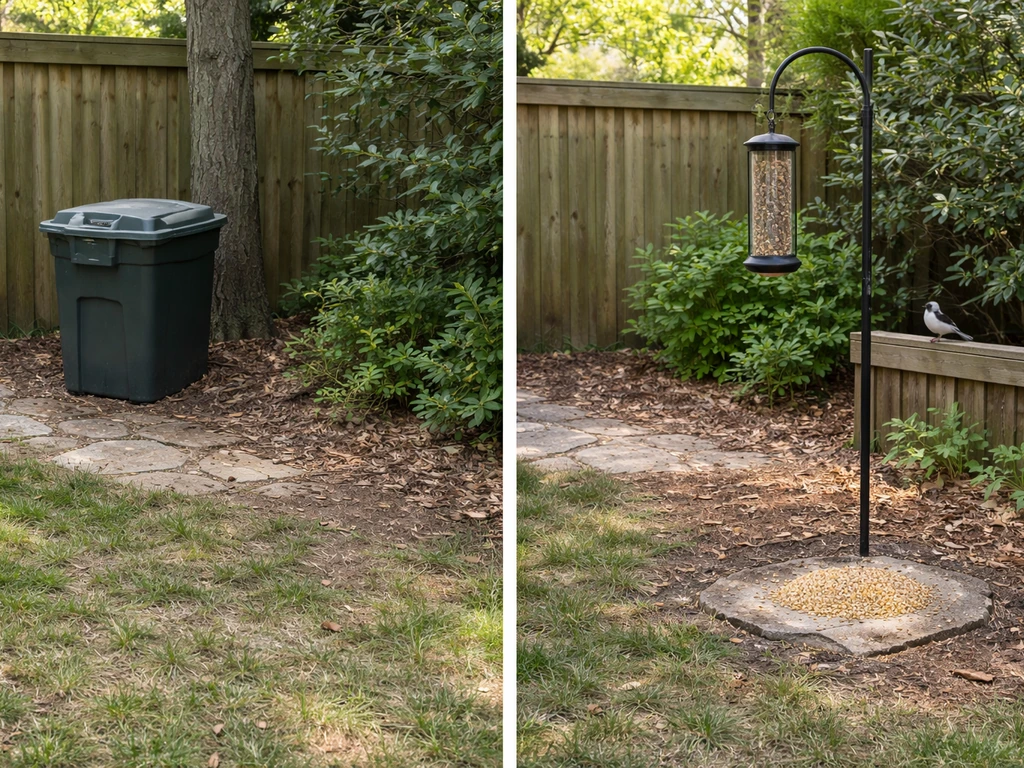
Once you know why the bird is coming back, you can make a clear decision: do you want to stop the visits, or lean into them? Both are valid. Here's how to do either humanely.
If you want to reduce or stop the visits
- Remove food attractants: Take in pet food bowls after feeding, move feeders to the far end of the yard away from the house, secure compost bins with tight lids.
- Eliminate water sources close to the house: Even small standing water can be a powerful draw. Fix dripping faucets and empty saucers under pots.
- Cover entry points: Use hardware cloth or metal mesh to seal vents, gaps in soffits, and open spaces under eaves. Do this before nesting season (early spring) if possible.
- Break window reflections: Apply window film, hang external screens, use WindowAlert UV decals, or simply close blinds on the interior during the hours the bird is active. This resolves territorial pecking quickly.
- Install physical deterrents on preferred perches: Bird spikes on ledges, reflective tape near entry points, or motion-activated sprinklers placed humanely can discourage a habitual perching spot without harming the bird.
- Trim or modify shelter near the house: Dense shrubs right against the foundation that are used as cover can be pruned back to make the spot less appealing for nesting.
If you want to welcome the bird and support it
- Make the food source intentional: Upgrade to a species-appropriate feeder with the right seed mix for the bird you're attracting. Sunflower seeds attract a wide variety of songbirds; suet appeals to woodpeckers and nuthatches.
- Add a clean birdbath: Change the water every two to three days to prevent mosquito breeding and keep it fresh. Place it in a shaded spot to slow evaporation.
- Provide nesting support: Install a species-appropriate nest box at the correct height and facing direction. Audubon's guidelines specify entry hole sizes and heights for different species. Leave some natural nesting material nearby, dried grass, small twigs, pet fur (undyed) placed loosely on a shrub.
- Plant native species: Native plants provide both food (seeds, berries, insects) and shelter in forms birds have evolved to use. Even one or two native shrubs can dramatically increase your yard's appeal.
- Reduce window strike risk: Even if you're welcoming the bird, window strikes are a serious hazard. Use exterior screens or break up large reflective glass surfaces.
| Goal | Key Action | Expected Result |
|---|---|---|
| Stop visits | Remove food, water, cover near house | Bird finds a different territory anchor within days to weeks |
| Stop window pecking | Break reflection with film or decals | Territorial behavior typically stops within a week |
| Block nesting entry | Seal gaps with hardware cloth | Prevents nesting before it starts; must happen before eggs are laid |
| Welcome the bird | Add feeder, birdbath, nest box | Strengthens the bird's attachment to your property |
| Reduce window strikes | Apply exterior window film or screens | Reduces glass collision risk while keeping visits possible |
When it might be injury, nesting, or a protected species
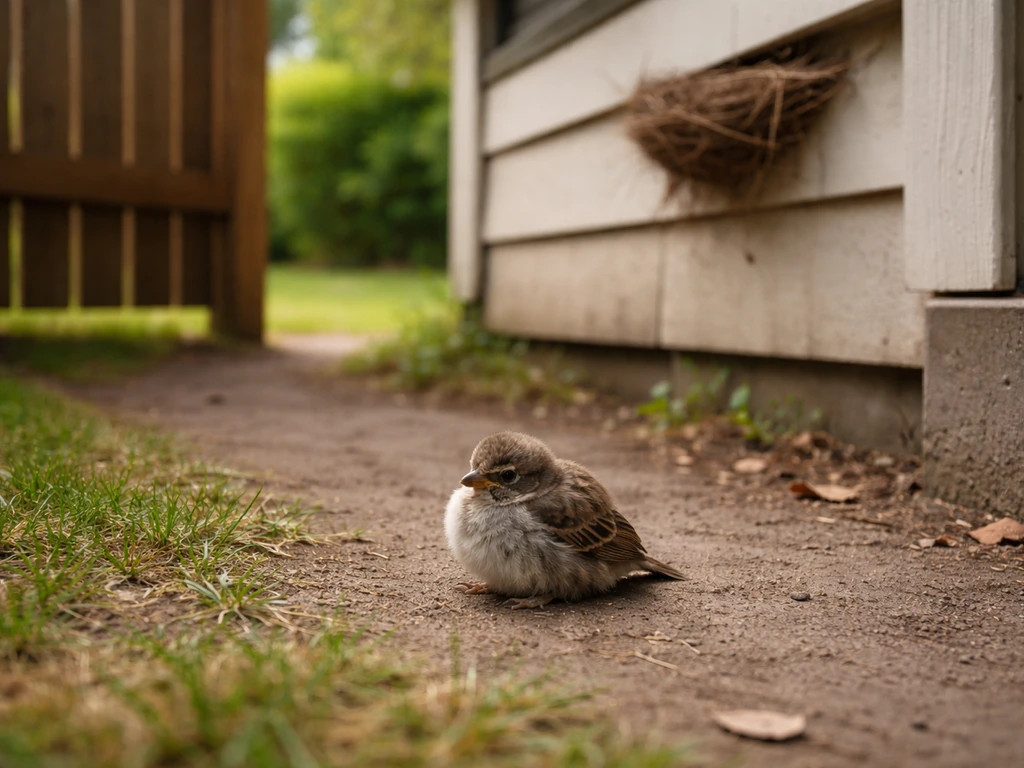
Some repeat visits aren't about habit at all. They're about distress or vulnerability, and those situations carry both practical and legal weight.
Signs a bird may be injured
A bird that keeps returning to a low spot on the ground, allows you to approach within a few feet, sits with fluffed feathers in an unusual location, or shows visible asymmetry (drooping wing, listing to one side) may be injured or ill rather than habituated to your yard. Don't attempt to handle it yourself unless you've confirmed it's injured and need to transport it. Contact a licensed wildlife rehabilitator in your area. In the U.S., the National Wildlife Rehabilitators Association (NWRA) has a directory, and most states have a wildlife hotline through the state fish and wildlife department.
Active nesting and the law
If a bird has already built a nest at or in your house and that nest contains eggs or chicks, you are almost certainly legally prohibited from removing or disturbing it. In a U.S. Fish & Wildlife Service memorandum, an MBTA inactive nest is treated differently than an active nest, with a nest becoming active when the first egg is laid and staying active until fledged young are no longer dependent on the nest a nest becomes active when the first egg is laid and remains active until fledged young are no longer dependent on the nest. In the United States, the Migratory Bird Treaty Act (MBTA) protects nearly all native bird species, their nests, eggs, and young. Disturbing an active nest, even of a common species like a robin or a house sparrow (note: house sparrows are an introduced species and not protected under the MBTA), can result in federal fines. The practical advice: if you find an active nest, leave it alone until the young have fledged (left the nest on their own), which typically takes three to six weeks depending on the species. After fledging, remove the nest and then seal the entry point or modify the location so it's not reused.
If you're unsure whether a species is protected, your state's fish and wildlife agency or the USFWS can confirm. When in doubt, assume it is protected and act accordingly.
Spiritual and symbolic meanings of repeat bird visits
Once you've worked through the practical explanations, or alongside them, there's a whole other layer worth considering. Across virtually every major spiritual and cultural tradition, birds that repeatedly visit a specific person or home are seen as carriers of meaning. The recurrence is the key detail. A single bird sighting is easy to dismiss as coincidence. The same bird returning again and again is harder to brush off, and many traditions don't try to.
Common themes across traditions
In biblical tradition, birds appear repeatedly as messengers and signs of divine attention. Ravens brought food to the prophet Elijah. Doves signal peace and the presence of the Holy Spirit. The consistent theme is that a bird's arrival, especially a persistent one, invites the observer to pay attention to what's happening in their life or spirit at that moment.
Celtic folklore holds that certain birds, particularly robins, wrens, and crows, carry messages from the spirit world or from ancestors. A robin returning to the same threshold repeatedly was historically seen as a soul checking in, particularly around times of loss or transition. In many indigenous North American traditions, birds serve as intermediaries between the physical and spirit worlds, and a bird that keeps returning to someone's dwelling is often interpreted as a specific message or guardian presence.
In Eastern traditions, including Chinese and Japanese folklore, birds like cranes and swallows are associated with good fortune, longevity, and protection of the household. A swallow nesting in your eaves was considered an extremely positive omen, a sign the home would prosper. Chasing it away was considered bad luck.
In general metaphysical and new age frameworks, a bird that keeps appearing to a specific person is often interpreted as a spirit guide, an ancestor's presence, or a signal to pay attention to something the person has been ignoring in their waking life.
Symbolic meaning by bird type
| Bird | Common Symbolic Themes | Traditions That Carry This Meaning |
|---|---|---|
| Robin | New beginnings, renewal, messages from loved ones who've passed | Celtic, Christian folklore, North American |
| Cardinal | Loved ones visiting from the afterlife, spiritual encouragement | Christian, American folk tradition |
| Crow or Raven | Deep wisdom, transformation, shadow work, ancestral communication | Celtic, Norse, indigenous North American, Greek |
| Sparrow | Community, simplicity, divine care for small things, resilience | Biblical, East Asian |
| Hawk or Falcon | Clarity, vision, a call to look at the bigger picture | Egyptian, indigenous North American, Celtic |
| Dove | Peace, divine presence, the Holy Spirit, transition and hope | Biblical, Greek, Roman, universal |
| Owl | Hidden knowledge, intuition, a transition or ending approaching | Greek (Athena), Celtic, many indigenous traditions |
| Swallow | Good fortune for the home, protection, the return of warmth | Chinese, Japanese, Roman, general European folklore |
| Woodpecker | Persistence, uncovering what's hidden, rhythm and timing | Roman augury, indigenous North American |
| Blue Jay | Assertiveness, communication, pay attention to what you've been avoiding | North American folklore, metaphysical tradition |
It's worth noting that the meaning you find most resonant may depend less on the tradition and more on what's happening in your own life right now. Many people who ask 'why does the same bird keep coming to my house?' are going through a transition: a loss, a major decision, a period of uncertainty. The bird's persistence tends to feel significant in those moments, and it's worth sitting with why.
The same curiosity that brings people to wonder about a repeat bird visit often shows up in questions about other unusual bird behaviors, like why a bird keeps appearing suddenly near you, or why a bird seems fixated on your car. If the pattern is specifically about your vehicle, the practical causes can be similar to other repeat-bird behaviors, like why does a bird keep sitting on my car. If the pattern seems to match "why is a bird obsessed with my car," use the same type of clues to determine whether it is seeking food, water, shelter, or territory fixated on your car. Those experiences share a common thread: repetition and targeting of one specific person or place. That pattern is what elevates a sighting from random to potentially meaningful. If your main concern is aggression rather than just lingering, the same clue-based approach applies, and you can see the likely explanations in why is a bird attacking my car.
Putting it all together: what to do next
Here's how I'd approach this if it were my house. Start with the practical investigation. Walk the property, run the checklist above, identify the bird, and note what it's actually doing. Most of the time, within ten minutes you'll find the environmental reason: a feeder, a reflection, a nesting spot, or a consistent water source. That's your first answer, and it's actionable today.
Once you understand the practical cause, you can decide what to do with it. Remove the attractant if you don't want the bird there. Support it intentionally if you do. Address any injury, nesting, or legal concern with the right authority if needed. None of that takes more than a day to set in motion.
Then, if you're open to it, sit with the other layer. What species is it? What does that bird traditionally represent? What's going on in your life right now? Does the timing of these visits line up with anything significant? You don't have to commit to a spiritual framework to find value in that reflection. Sometimes a question like 'why does this bird keep coming back?' is the mind's way of asking a question it hasn't quite found words for yet.
The most grounded approach is to hold both: this bird is here for a real reason rooted in its biology and your environment, and that reason is also worth paying attention to. What you make of it from there is entirely yours.
FAQ
How can I tell if it is the same individual bird or just the same species?
If it shows up at the same spot and does the same behavior on a consistent schedule, it could be one individual, especially for territorial species. But many birds that look similar to you will rotate, so rely on unique traits (scars, one odd feather, a consistent limp) and take short videos from the same angle to confirm whether it is truly the same bird.
If I take down the feeder, why does the bird keep coming back?
Yes. Even when you remove food, a bird may keep visiting for a few days because of learned timing, memory of a reliable route, or because it is nesting nearby. For a quicker test, remove one attractant at a time (for example, stop refilling seed but leave water off) and watch changes over 24 to 72 hours.
What is the most humane way to stop repeat visits?
Turn off or reduce the attractant carefully. If the bird is drinking, covering puddles, fixing leaks, and cleaning birdbath water daily often reduces repeat visits without harming wildlife. Avoid using deterrents that injure birds, such as sticky substances or sprays around nests or ledges where roosting is occurring.
Could window reflections be why the bird keeps coming to my house?
Reflections can act like a repeated target, especially for birds that mistake glass for open space or defend territory against their own image. To reduce it, try repositioning feeders farther from windows, add window decals on the outside, and cover reflective panes during peak times.
What should I look for in the bird’s behavior to figure out the cause?
Because different birds have different needs, the best “clue” is what it does when it arrives. Eating or foraging points to food, repeated dipping or bathing points to water, and lingering in covered ledges or shrubs points to shelter or nesting. If it sings or calls from the same perch, that is a strong territory indicator.
Does the season matter for answering why the same bird keeps coming?
Some birds return during nesting season, but repeated sightings in colder months are often about foraging and migration stopovers. A simple rule of thumb is seasonal consistency: spring and early summer usually suggest nesting behavior, while winter-only visits more often suggest searching for reliable food and shelter.
When should I stop assuming it is habituated and consider injury or illness?
If the bird lets you get close, has drooping posture, uneven balance, fluffed feathers that do not match normal resting, or a visible injury, treat it as potentially ill or injured rather than “just friendly.” In that case, do not handle it yourself, limit human contact, and contact a licensed wildlife rehabilitator or your state wildlife hotline.
What if the bird built a nest on my porch or in a window area?
If you find an active nest with eggs or chicks, do not remove it or block access. In the U.S., most native birds and their nests are protected, and penalties can apply even if the bird is common. Wait until chicks fledge, then address the entry point afterward and modify the spot so it is not reused.
Can I relocate the bird or remove the nest if it is causing problems?
Yes, but the “right approach” depends on the species and the risk level. For example, some birds are protected while others are not, and some situations involve immediate safety (aggressive territorial behavior, collisions, or a nest near a door). The practical next step is to identify the bird and confirm protection status before taking exclusion actions.
What information should I collect before using an ID app or calling for help?
A few practical recordings can speed up identification and decision-making: time of day, exact location on your property, what it was doing (feeding, bathing, calling, carrying material), and one clear photo of the face and wings. If you can, compare to field marks (eye ring, wing bars, bill shape), because “first impression” species can be misleading.
Next Article
Why Is My Bird Flapping Its Wings at Me? Causes and What to Do
Understand why your bird flaps wings at you and what to do, from hormones and stress to attention and warnings.