If your bird is twitching, it most likely means one of two things: they're in a light or REM sleep cycle doing completely normal muscle twitches, or something in their environment (or body) is causing stress, discomfort, or illness. The tricky part is that twitching can look almost identical whether it's harmless or serious. So the first move is always to watch carefully, note the context, and run through a quick checklist before you decide whether to relax or call an avian vet.
Makes My Bird Twitch Meaning: Causes, Fixes, and Red Flags

Maya Hartwell
27 Apr 2026
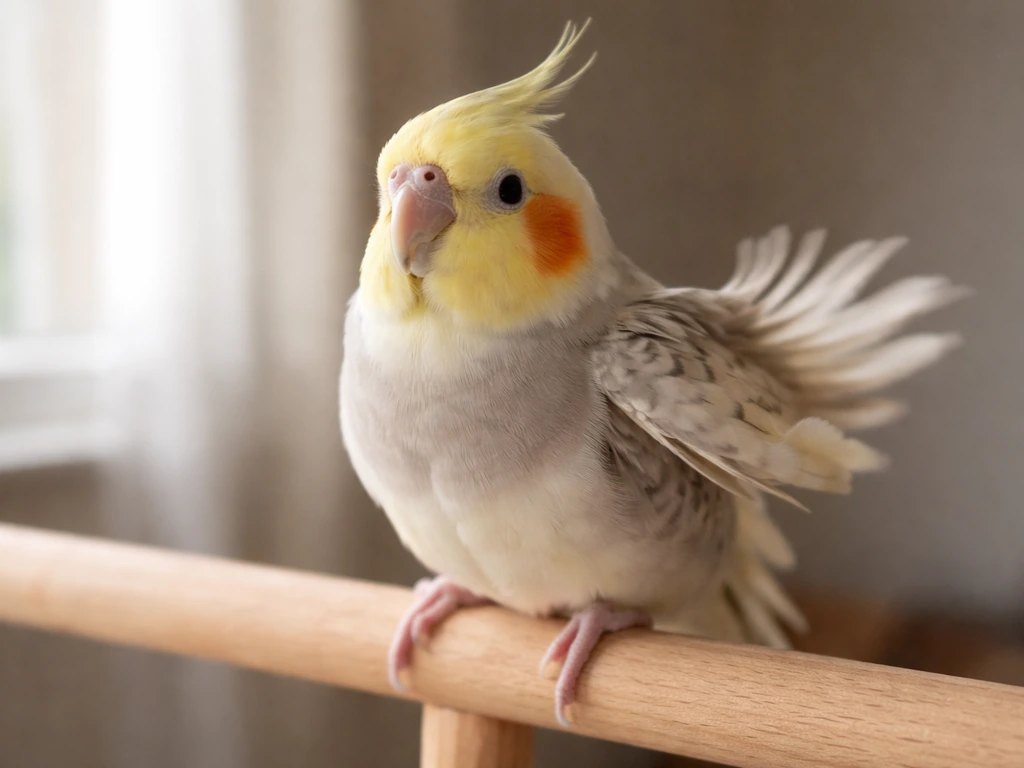
Quick check: what twitching looks like and when it's normal
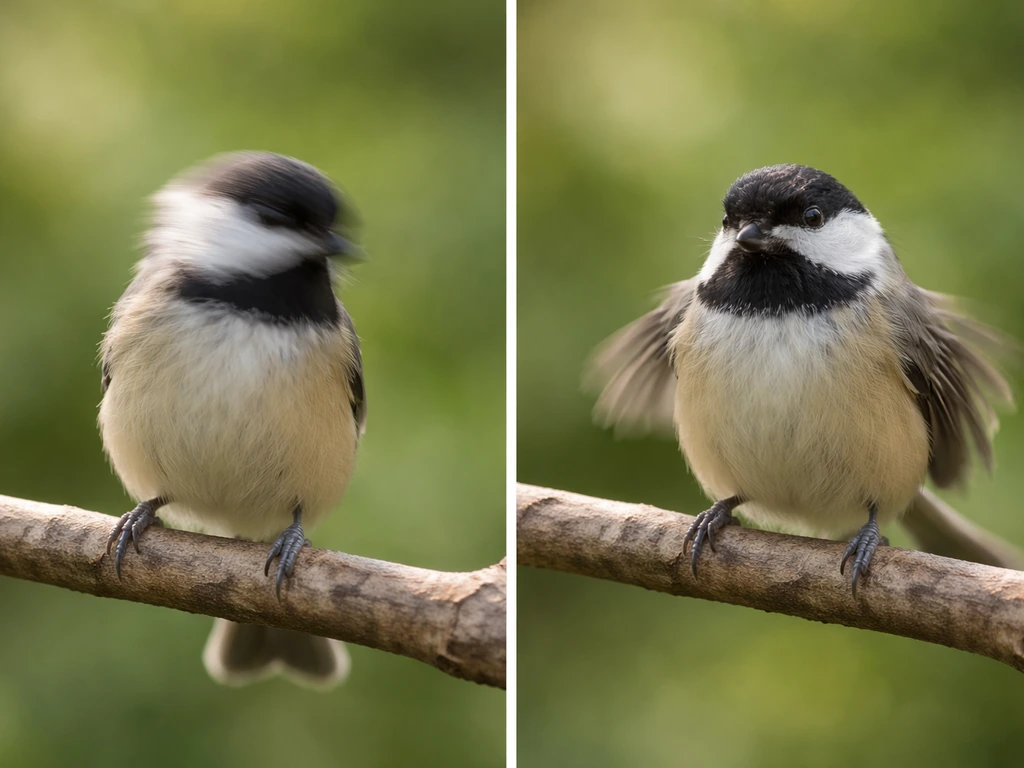
Twitching in birds shows up in a few different ways. You might see a quick head jerk, a beak twitch, a single wing shudder, or a rapid full-body shiver that lasts just a second. Sometimes it's a repeated, rhythmic motion; sometimes it's a one-off flinch. Context is everything here.
The most common completely normal twitching happens during sleep. Research on sleeping budgerigars has shown that muscle twitches involving the head, beak, and sometimes the wings or whole body occur during REM sleep, much the same way dogs and cats twitch when they dream. Birds actually have sleep structures surprisingly similar to mammals, and during REM phases, phasic twitches of skeletal muscle groups, including those controlling eye movements, are a regular part of the process. A bird napping on their perch who gives a sudden head twitch and then resettles is almost certainly fine.
Twitching is also normal during feather settling and preening. After a bath or a good shake, birds will ripple their feathers back into place, and this can look like a quick shudder down the back or wings. A relaxed bird doing this will have fluffy, loose feathers and may follow up with preening. That's a good sign.
- Twitching only during or right after sleep (REM-related muscle twitches)
- A single full-body shudder after waking or bathing
- Brief feather-settling ripples following preening or excitement
- A quick head or beak twitch that stops immediately and doesn't repeat
- Normal posture, alert eyes, and regular eating/drinking before and after
If your bird's twitching fits those descriptions and they're behaving normally otherwise, you're likely watching something perfectly natural. But keep reading, because a few easy checks will confirm that.
Common causes of bird twitching (stress, sleep, posture, comfort)
Beyond normal sleep twitches, there are several everyday reasons a bird might twitch that aren't emergencies but are worth addressing.
Stress and overstimulation
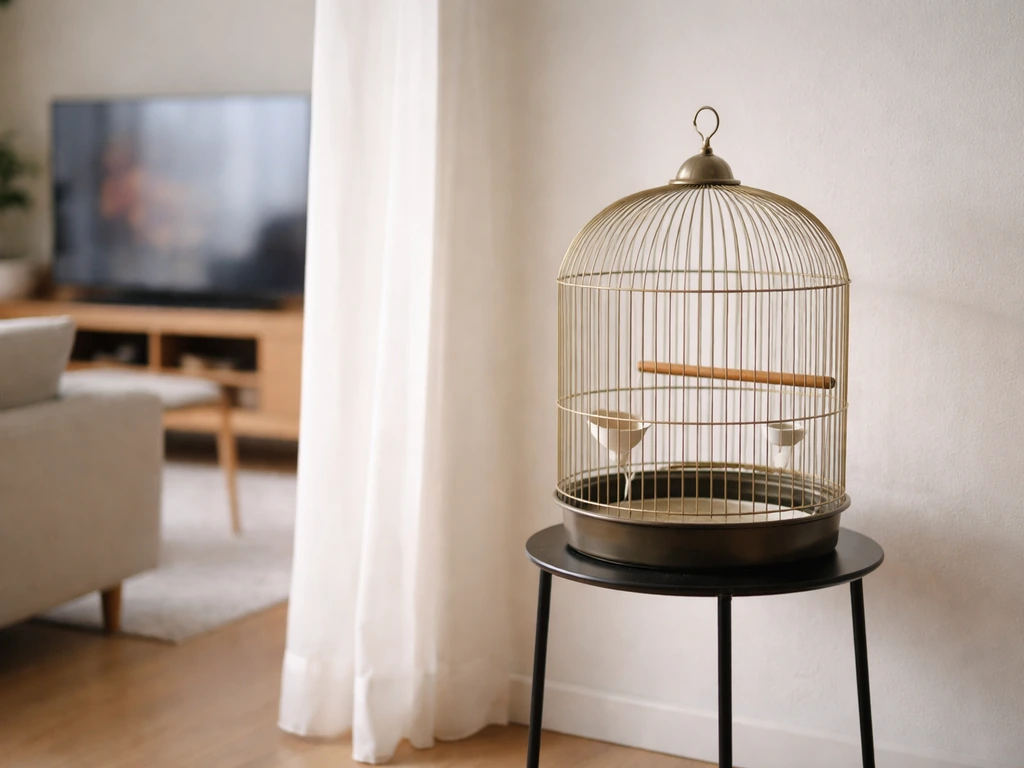
A stressed or overstimulated bird will often show muscle tension that can manifest as twitching, especially around the head and neck. Signs that stress is the cause include slicked-back, tight feathers (the opposite of relaxed puffiness), wide eyes, and reluctance to move or vocalize. Loud noises, new pets, strangers, or even a rearranged room can trigger this. You might also notice this kind of twitching alongside chirping or wing flapping when the bird is trying to communicate anxiety. This can happen when your bird is anxious or excited about your absence or changes in its environment chirping.
Temperature and drafts
Birds are highly sensitive to temperature changes. A bird that's too cold will shiver and may show repetitive full-body tremors. Check whether the cage is near an air vent, window, or exterior wall. Similarly, a bird that's too warm may show agitation and unusual movement. Most pet birds do best between about 65 and 85 degrees Fahrenheit, depending on species.
Excitement and social behavior
Some birds twitch or vibrate with excitement when their favorite person enters the room, during play, or when they hear music they like. If you are seeing wing flapping along with twitching, it can be your bird trying to express excitement or communicate anxiety, so checking the situation and your bird’s comfort can help you figure out what it needs.
If your bird stretches as soon as he sees you, that can also be a sign of excitement and bonding, and it helps to look at the context alongside normal twitching why does my bird stretch when he sees me. This kind of twitching usually comes with other positive signals: singing, chirping, raised crest feathers, or eager movement toward you. It's the bird equivalent of barely containing their excitement.
Itching from feathers, mites, or skin irritation
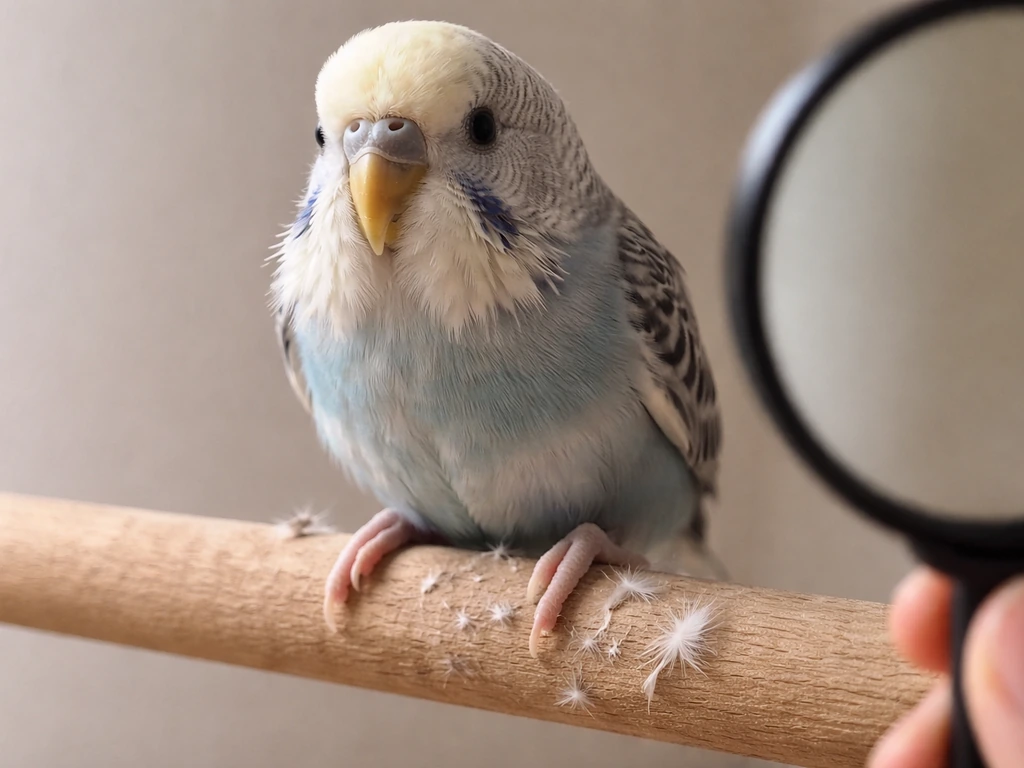
If a bird is twitching in a localized area, especially around the face, neck, or feet, itching or skin irritation could be the cause. Mites can live on the skin of pet birds and cause restlessness, scratching, and twitchy movements. Look closely for tiny moving specks on the skin or feathers, and check around pin feathers, which can be uncomfortable as they grow in.
Health red flags: seizures, pain, breathing trouble, poisoning, parasites
This is where you need to pay close attention. Some twitching is a warning signal that your bird needs veterinary care urgently. Birds are notorious for hiding illness until they're seriously compromised, so catching these signs early matters.
| Red Flag Sign | What It Looks Like | Urgency Level |
|---|---|---|
| Open-mouth breathing | Beak open while at rest, not after activity | Emergency: call vet now |
| Tail bobbing with each breath | Rhythmic pumping motion of the tail at rest | Emergency: call vet now |
| Repeated uncontrolled spasms | Multiple twitches in a row, body jerking, loss of balance | Emergency: call vet now |
| Collapse or falling off perch | Bird can't grip or stand, found on cage floor | Emergency: call vet now |
| Lethargy after twitching | Eyes half-closed, unresponsive, won't eat or move | Urgent: same-day vet |
| Head tilt or circling | Constant lean or spinning, can't coordinate | Urgent: same-day vet |
| Sudden onset after chemical exposure | Twitching began after fumes, cleaning sprays, new candles, Teflon pans | Emergency: call vet now |
| Visible bleeding or injury | Blood near feathers, head, or feet alongside twitching | Emergency: call vet now |
| Wing droop with twitching | One or both wings hanging lower than normal | Urgent: same-day vet |
Neurological episodes and seizures in birds can be caused by tumors, bacterial or fungal infections, heatstroke, vascular events, or trauma such as flying into a window or wall. Toxin exposure, including Teflon fumes, scented candles, air fresheners, and cleaning products, is a common and often overlooked cause of sudden neurological symptoms in pet birds. If you recently used anything with a strong scent or heat-based fumes near the bird's space and twitching started shortly after, treat that as an emergency.
Respiratory distress can also look like twitching when the bird is working hard to breathe. Signs of breathing trouble include blank" rel="noopener noreferrer">open-mouth breathing at rest, wheezing or clicking sounds, frequent sneezing, wing pumping with each breath, and the tail-bob pattern. These are never normal at rest and always warrant a call to an avian vet.
What to do right now: step-by-step home troubleshooting
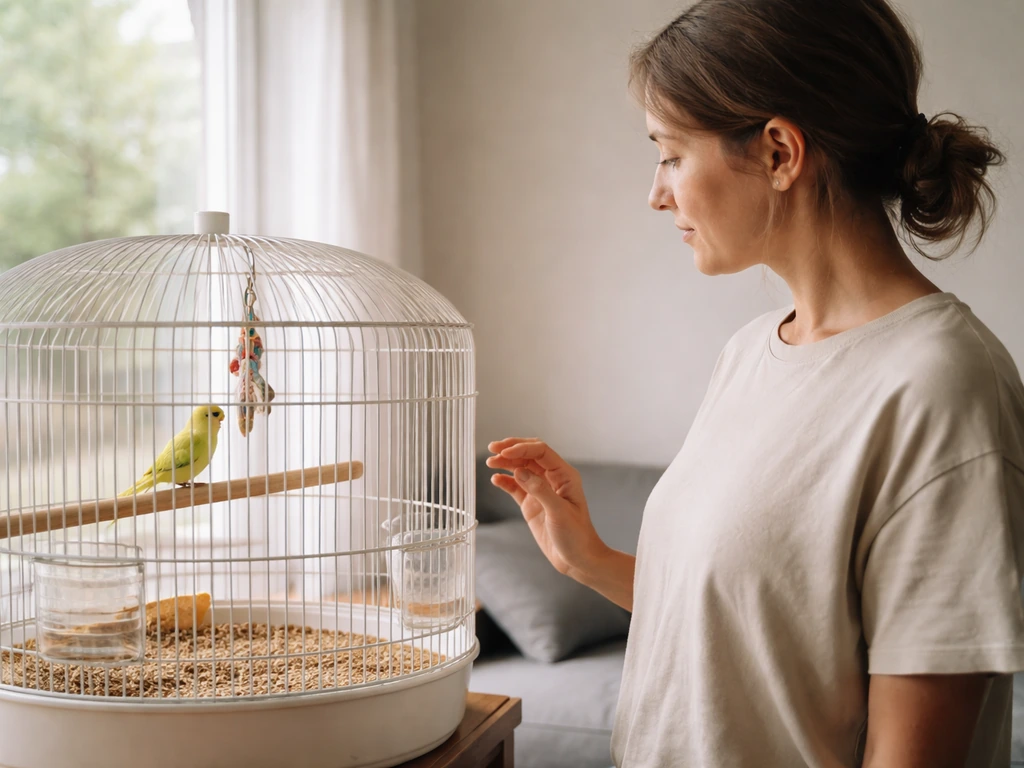
If you've just noticed your bird twitching and you're not sure what to do, go through these steps in order. Stay calm; birds pick up on your energy.
- Observe without interfering first. Watch for at least two to three minutes without reaching into the cage. Note how often the twitching happens, how long each episode lasts, and which body part is involved.
- Check posture and eyes. Is the bird sitting upright or hunched? Are both eyes open and alert? Are feathers relaxed and slightly fluffy (normal resting state) or slicked tight against the body (stressed)?
- Watch the breathing. Count breaths for 15 seconds and multiply by 4. Look for any tail bobbing with each breath, open-mouth breathing, or noticeable chest movement. If you see any of these, skip to step 8.
- Check the environment. Is the cage near a vent, draft, window, or fan? Is the room temperature comfortable? Has anything new been introduced: a new pet, a new person, rearranged furniture, new scents, or cleaning products nearby?
- Look for visible hazards. Were there any strong fumes recently from cooking (especially non-stick pans), candles, air fresheners, or cleaning sprays? Remove the bird immediately from any such environment and move them to fresh air.
- Inspect feathers and skin. Look for small moving specks (mites), broken blood feathers, swelling, or discharge. Be gentle and just observe; don't pull at any feathers.
- Make sure food and water are accessible and fresh. A bird under stress needs easy access to both. If the bird is on the cage floor, bring water and soft food down to that level.
- If twitching is ongoing or you see any red flag signs, set up a temporary hospital space. Use a small box or carrier with air holes. Provide gentle warmth targeting around 85°F (29.4°C) using a heating pad on the lowest setting placed under half the enclosure (so the bird can move away from heat if needed). Do not use a heat lamp directly over the bird. Do not apply any ointments, creams, or human medications.
- Record a video. Use your phone to capture the twitching in real time. Get as close as safely possible, capturing the bird's full body, the twitching motion, and any breathing patterns. This video is extremely valuable for your avian vet.
- Decide: Is this a watch-and-wait situation or a call-the-vet situation? Use the red flag table above as your guide.
When to call an avian vet and what to report
Call an avian vet the same day if your bird has been twitching for more than a few minutes at a stretch, if twitching is happening repeatedly throughout the day, or if you see any of the red flag symptoms listed above. If the twitching came on suddenly after chemical or fume exposure or if your bird has collapsed, treat it as an emergency and call immediately, even outside regular hours. Many avian practices have emergency lines, and some areas have emergency exotic animal hospitals.
When you call or walk in, be ready to share the following information clearly. The more detail you give, the faster the vet can help.
- Species, age, and sex of the bird
- Exactly what the twitching looks like and how long it has been happening
- Whether it's constant or comes in episodes, and how often
- Current diet and any recent diet changes
- Cage setup, location, and any recent changes to the environment
- Any chemical, fume, or toxin exposure in the past 24 to 48 hours
- Whether any other pets or birds in the home are sick or have recently died
- Any past illnesses or vet visits
- The video you recorded of the twitching episode
That video is genuinely one of the most useful things you can bring. Avian vets often can't replicate what they need to see during an exam, and a clear clip of the twitching gives them information that words alone can't. Use a camera app with zoom so you capture both the motion and the bird's overall body position and breathing pattern.
Spiritual and symbolic meanings of bird twitching across traditions
Once you've run through the practical checks and you know your bird is physically okay, or even while you're sitting with the uncertainty, there's a whole other layer of meaning some people find worth exploring. Across many traditions, birds are understood as messengers, spiritual intermediaries, and omens of change. So what might it mean, symbolically, when your bird twitches?
Nervous energy and heightened awareness
In many folk and metaphysical traditions, twitching, especially in animals, is read as a sign of heightened sensitivity to unseen energy. A bird twitching is sometimes interpreted as a creature that is tuned into a frequency its human companions can't quite perceive, picking up on shifts in the spiritual atmosphere of a home. Some people interpret this as a sign to slow down and pay attention, that something in your immediate environment or inner life needs acknowledgment.
Biblical and Christian symbolism
In Christian tradition, birds carry strong themes of divine provision and presence. The Gospel of Matthew references God's awareness of even the smallest sparrow, suggesting that birds are under divine watchfulness. From this perspective, a bird that seems to be reacting strongly, even twitching or unsettled, might be interpreted by some believers as a nudge to pay attention to one's own spiritual state or surroundings, a gentle reminder of presence and care rather than an omen of harm.
Celtic and European folklore
Celtic traditions held birds as soul messengers capable of traveling between worlds. An unsettled or twitching bird in the home was sometimes taken as a sign that the veil between everyday life and the spirit world was momentarily thin, or that a message was trying to come through. Some European folklore traditions also read sudden animal movements as weather omens or precursors to change, suggesting a shift in circumstances was near.
Eastern and metaphysical interpretations
In various Eastern philosophical traditions and modern metaphysical frameworks, birds are associated with the air element, the mind, and communication. A bird that seems restless or twitchy is sometimes read as a reflection of mental or emotional unrest in the space it inhabits, or as a signal that something unspoken needs to be brought into awareness. Some intuitive readers interpret a twitching bird as a prompt to examine what is creating tension or unresolved energy in the home.
Cleansing and reset
A more hopeful symbolic reading found in several traditions is that a bird's sudden movement or trembling represents a clearing of stagnant energy, a reset. Just as a bird physically shakes out its feathers to settle them back into order, some people interpret the twitching as a symbolic shaking loose of what no longer serves, either for the bird, the household, or its human companions.
How to hold both: trusting your intuition and getting your bird the care they need
Here's the thing: spiritual interpretation and practical care are not in competition. You can absolutely sit with the symbolic resonance of your bird's behavior and still take it to the vet. In fact, honoring both is probably the most complete way to respond to this kind of moment.
Avian first aid, at its core, is supportive stabilization until proper veterinary care is available. It is not a substitute for diagnosis. And spiritual meaning-making, at its best, is a way of finding personal resonance and reflection in lived experience. It is also not a substitute for diagnosis. Both of those things can be true at once.
So if your bird is twitching and you find yourself wondering whether it means something beyond the physical, let yourself wonder. Ask what the experience might be reflecting back to you. Is your home full of tension lately? Are you in a period of transition or uncertainty? Birds have long been understood as mirrors of the emotional environment they inhabit, and your instinct to look for meaning is worth following.
At the same time, if your bird shows any of the red flag symptoms described above, don't wait on meaning-making before getting help. The most loving response to a creature in your care is to make sure they're physically safe first. You can reflect on the symbolism from the waiting room.
Birds communicate in so many ways, through chirping, wing stretching, posture, and yes, twitching. For a deeper answer about what bird chirping might signal in different contexts, see our guide on what does bird chirping mean. Each of those behaviors has both a practical dimension and, for those who are open to it, a symbolic one. The instinct that sent you searching for answers today is worth trusting. Just make sure you follow it all the way through, from the spiritual question to the practical check, and back again.
FAQ
How can I tell the difference between normal sleep twitching and something serious while my bird is perched?
Yes. If twitching is accompanied by breathing trouble (open-mouth breathing, tail-bobbing, wing pumping, wheezing, clicking) or sudden collapse, treat it as an emergency and contact an avian vet immediately. Normal REM twitches happen with calm breathing and quick resettling, not labored respiration.
Is repeated twitching worse than a single twitch?
Repetitive twitching when your bird is fully awake and alert, especially if it keeps returning across the day, is more concerning than a brief, one-time twitch. As a rule of thumb, a short burst during napping is lower risk, but twitching that persists for minutes, ramps up, or keeps recurring warrants same-day veterinary advice.
What household exposures can cause sudden twitching that looks neurological?
Watch for triggers you may have missed: new scented products (candles, diffusers, air fresheners), nonstick cookware fumes (especially overheated Teflon), strong cleaners, smoke, aerosol sprays, and heavy fragrance from human hair or laundry. If twitching started soon after any of those, consider it urgent because birds can deteriorate quickly.
What’s the fastest home check if my bird seems cold or overheated and twitches?
Start with temperature and airflow. Move the cage away from vents, drafty windows, and exterior walls, then check for hot spots near heaters or direct sun. Most birds do best roughly in the mid-60s to mid-80s Fahrenheit range, but species vary, so aim for stable, indirect conditions rather than spot-checking one moment.
If my bird twitches near the face or feet, could it be mites, and what should I do first?
If the twitching is localized with itchiness, examine the skin and feathers in good light for mites or irritation, especially around pin feathers. Also note whether your bird is scratching, over-preening, or losing feathers in patches. Do not use random over-the-counter mite treatments without a vet plan, because dosing and product choice matter for birds.
What information should I gather for the avian vet besides a video?
Yes. Bring a short video, but also record breathing and behavior details in real time: whether the bird is awake, posture changes, time of onset, and whether there is open-mouth breathing or tail-bobbing. If possible, note what happened right before it started (bath, cleaning, new pet, loud noise) so the vet can narrow down causes.
After a bath or shake, my bird twitches. When is it still normal?
Some birds twitch more when they are settling after a bath, but they should remain comfortable overall, with normal posture and no signs of breathing effort. A key edge case is a bird that repeatedly “shivers” without relaxing afterwards, especially if feathers look tight, eyes are wide, or breathing looks off.
Can twitching be a sign of illness even if my bird is eating and acting mostly normal?
It can. Toxin exposure, infections, or neurologic problems may cause twitching, and birds often hide illness. If the bird seems unsteady, shows head-tilting, falls, becomes unusually quiet, or has abnormal balance, don’t wait for more twitching to “prove” it, call a vet promptly.
What should I do immediately at home while waiting for an avian vet call?
If you’re about to seek help, remove potential irritants right away: stop scented products, ventilate the room, avoid aerosols, and ensure safe, stable temperature. Keep the bird calm (dim light, reduce handling) and do not try to medicate unless your avian vet instructs you, since some human meds can be unsafe for birds.
Next Articles
Why Does My Bird Chirp When I Leave the Room? Causes and Fixes
Understand why your bird chirps when you leave and follow a step-by-step plan to reduce stress, plus optional spiritual
Why Does My Bird Stretch When He Sees Me? Causes
Why your bird stretches at your arrival: greeting cues, attention, readiness, plus health red flags and next steps.
What Does Bird Chirping Mean? Practical and Spiritual Guide
Interpret what bird chirping means with practical causes and spiritual symbolism, plus safe steps and when to call help