When your bird spots you across the room and immediately stretches out a wing, extends a leg, or pulls himself up to full height, it almost always means one thing: he's happy to see you. In most healthy pet birds, stretching when you appear is a greeting behavior, a physical expression of positive anticipation, and a sign that your bird feels safe enough around you to relax his muscles in your presence. That said, context matters, and a small handful of stretch-and-posture combinations can signal something worth paying closer attention to. Here's how to read the whole picture.
Why Does My Bird Stretch When He Sees Me? Causes

Maya Hartwell
15 Apr 2026
What stretching actually means in bird body language
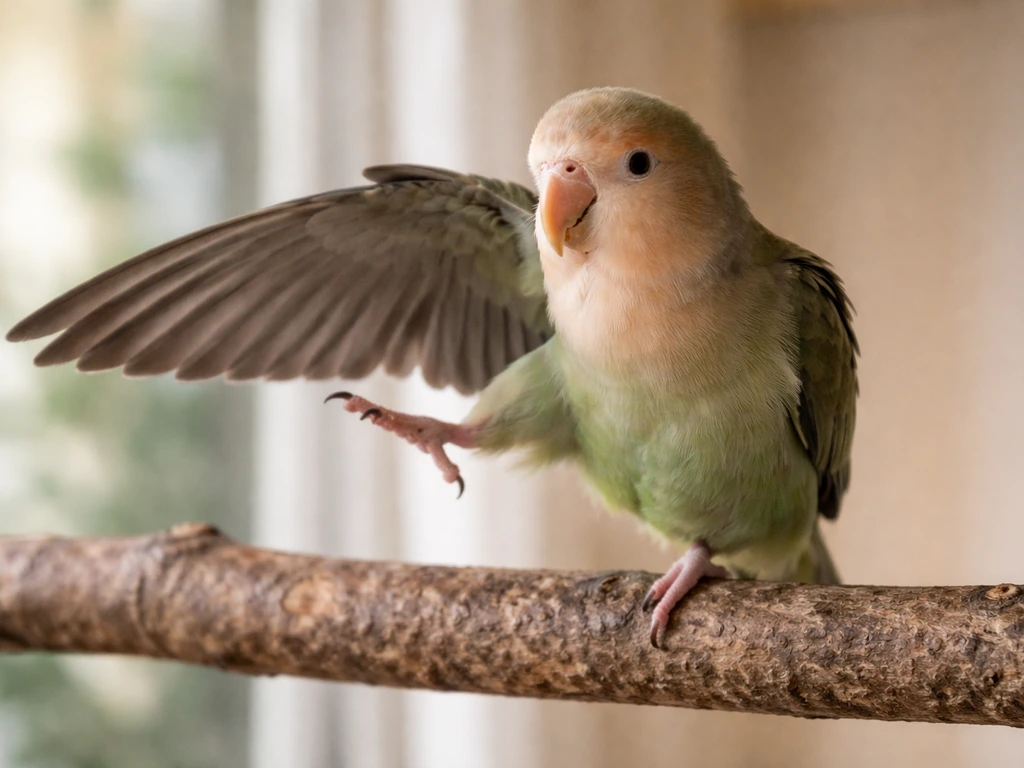
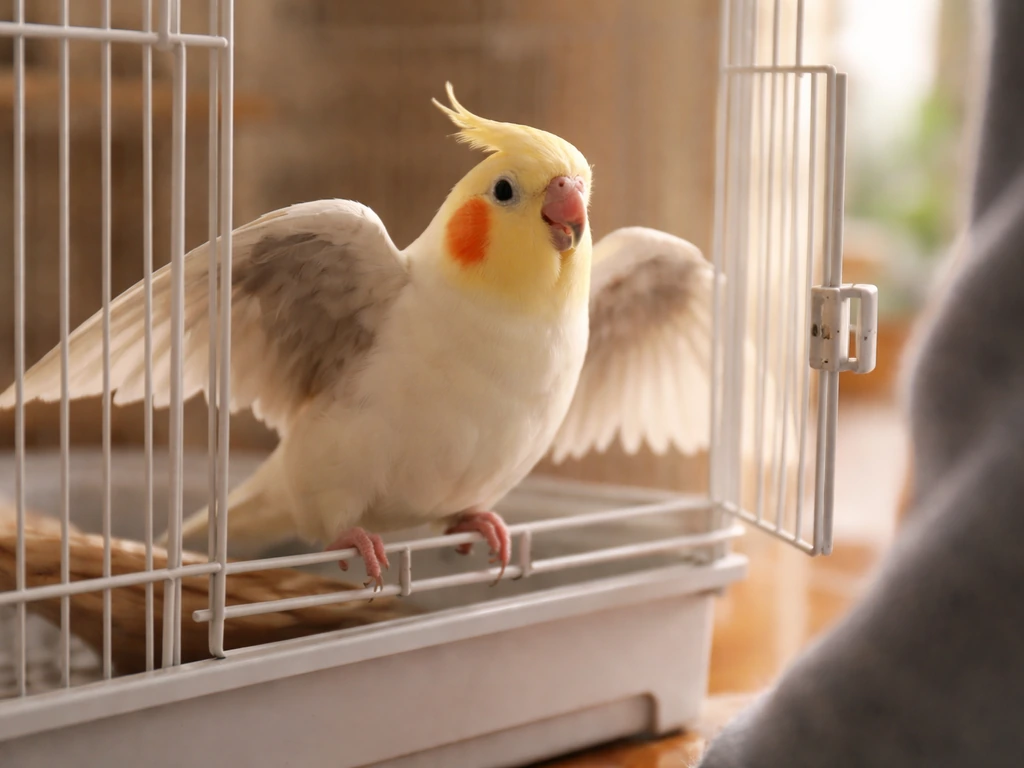
Stretching is a normal, healthy physical behavior in birds, and it usually looks like one of a few predictable patterns. A bird might extend one wing and the matching leg on the same side simultaneously, a classic "wing-and-leg" stretch you'll see in budgies and parakeets throughout the day. Cockatiels often go further, extending both wings fully while rising up to their full height, then flaring or fluffing the tail feathers once they settle back. Parrots, conures, and larger species often do a full-body bow-stretch, sometimes paired with a tail wag or a quick whole-body shake at the end.
According to avian behavior research, a happy, satisfied parrot will stretch in several different ways, and this stretching is often accompanied by a tail wag or even a brief whole-body shake. That shake-and-settle at the end is a particularly good sign: it typically means the bird is resetting to a relaxed, comfortable baseline. Comfort-associated behaviors in budgies specifically include soft chatter, singing, stretching, beak grinding before sleep, and preening, all grouped together as signs that a bird feels at ease in his environment.
Stretching also tends to cluster with other relaxed body-language cues: slightly closed eyes, soft vocalizations, fluffed feathers under the beak and on the head (not all-over fluffing, which can mean illness), and preening. If you're watching your bird and you see stretching alongside those other signals, you're almost certainly looking at a calm, content animal.
Why your bird stretches specifically when he sees you
The timing is not a coincidence. When a bird stretches at the moment he sees you, he's doing something very specific: he's responding to the arrival of someone he associates with good things. Positive anticipation triggers a physical "wake-up" response in birds. Think of it like a person stretching in the morning before something they're looking forward to. Your bird has learned, through repeated experience, that you appearing means interaction, food, play, or simply company, and his body gets ready for that.
This is also a social signal directed at you. Birds use posture and movement to communicate within their flock, and for a pet bird, you are the flock. Stretching when you walk in can function as a greeting, the avian equivalent of a wave or an outstretched hand. Some birds combine it with a wing flap directed at you, which layers excitement on top of the greeting. Others follow it up by moving toward you on the perch or the cage bars, another strong sign that the stretch was social and inviting rather than self-soothing.
There's also a conditioning element at play. If you reliably interact with your bird when you arrive, and those interactions are positive, the stretch can become a learned cue over time: a trained greeting behavior that your bird performs because it has reliably produced a good result, your attention and engagement.
Context clues: species, mood, time of day, and environment
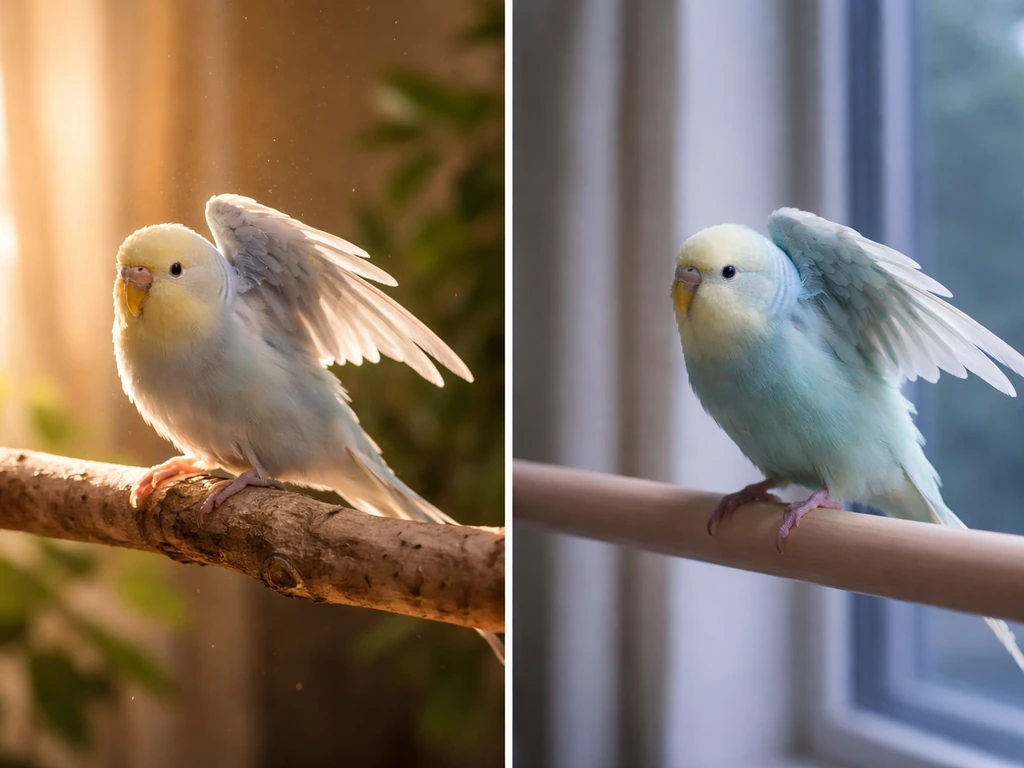
Not all stretches look the same, and not all birds express greeting the same way. Species matters quite a bit here. Budgies and parakeets tend toward the one-sided wing-and-leg stretch, while cockatiels go bigger with full wing extensions. Conures are often more dramatic, sometimes jiggling the tail while stretching a wing out, which can look almost like a little dance. Larger parrots like African greys or cockatoos may do a slow, deliberate full-body bow-stretch that looks almost formal. All of these are normal within their species context.
Time of day is worth noting. Stretching is very common right after waking, when birds are literally warming up their muscles after a night of sleep. If you're the person who uncovers the cage in the morning, the stretch you see may be partly physiological and partly social. Mid-day stretches when you walk into a room are more purely social in nature. Pay attention to whether the behavior happens at other times too, during the day without your presence, which is perfectly normal, versus only when you appear, which leans more toward a greeting.
Environment plays a role as well. A bird in a well-placed cage, out of drafts, with appropriate light and temperature, who has regular daily interaction, is far more likely to greet you with relaxed stretching than a bird who is understimulated, cold, or isolated. Cage placement near a window with natural light (but not direct afternoon sun) and a predictable daily routine give birds the stable environment that produces relaxed, expressive behavior.
Also pay attention to what the rest of his body is doing during the stretch. Is he leaning toward you or away? Are his eyes soft and slightly lidded, or wide and alert? Is he vocalizing quietly, or is he silent and tense? These details matter more than the stretch itself. What your bird chirps and when can tell you a lot about his emotional state in the same moment.
Health checks: how to tell normal stretching from a red flag
Here's where it's worth slowing down and looking carefully, because a small number of posture and movement patterns that look like stretching can actually be signs of discomfort or illness. Birds are famously good at hiding that they don't feel well, an evolutionary survival trait, so by the time symptoms become visible, they can already be significant. The good news is that the body language of illness looks meaningfully different from relaxed greeting behavior once you know what to look for.
Normal greeting stretching is brief, purposeful, and followed by a return to alert or engaged posture. The bird looks bright-eyed and interested. Stretching associated with illness or discomfort tends to look different: slower, repeated without resolution, often paired with other warning signs. If you notice your bird doing something that looks like twitching or unusual repetitive movement alongside his stretches, it's worth reading up on what makes a bird twitch and what it might signal.
The following combinations of symptoms alongside any unusual posturing should prompt you to contact an avian vet, not a general small-animal vet if you can avoid it, but a vet with specific bird experience:
- Open-mouth breathing or labored breathing at rest (not after exercise or overheating)
- Tail bobbing with each breath, which indicates respiratory effort
- Wheezing, clicking, or wet-sounding breathing
- Nasal discharge or discharge from the eyes
- Excessive sneezing or coughing
- All-over fluffed feathers combined with lethargy or reduced responsiveness
- Drooping wings, limping, or one-sided movement
- Reduced appetite or not eating at all
- General listlessness, sleeping more than usual, or difficulty staying on the perch
Any change in your bird's regular attitude, behavior, or personality is itself a reason to call a vet. Respiratory signs in particular should be treated as urgent: in more serious respiratory infections, birds can decline quickly, and signs like high-pitched breathing noises, clicking, open-mouthed breathing, and marked tail bobbing indicate the bird is working hard to breathe and needs prompt evaluation. A UPenn nursing-track conference PDF on avian triage highlights respiratory effort signs such as tail bobbing and open beak breathing as important early indicators to watch for blank" rel="noopener noreferrer">tail bobbing and open-mouthed breathing.
A quick side-by-side check

| Signal | Likely Normal | Potential Concern |
|---|---|---|
| Stretch duration | Brief, resolves in seconds | Prolonged, repeated, unresolved |
| Eyes | Soft, slightly lidded, curious | Half-closed with lethargy, or wide with fear |
| Feathers | Smooth, or briefly fluffed under chin only | All-over fluffed, especially with drooping |
| Breathing | Silent, normal rate | Open-mouth, tail-bobbing, clicking, wheezing |
| Posture after stretch | Alert, moves toward you or vocalizes | Hunched, drooping, stays still |
| Appetite | Normal | Reduced or absent |
| Overall energy | Engaged, responsive | Listless, sleeping excessively |
How to respond to greeting stretches (and make the most of them)
When your bird stretches to greet you, the best thing you can do is acknowledge it. Respond calmly and positively: speak to him in a quiet, warm voice, offer your hand or a finger perch, and let him set the pace for interaction. This reinforces the greeting behavior in the best possible way, by confirming that the anticipation was correct and that something good follows.
If you're working on step-up training or building trust, this greeting moment is genuinely one of the best windows to use. The bird is already in a positive, open state. Keep training sessions short, use a calm encouraging voice, and offer a high-value treat immediately after any successful behavior. Avoid chasing, forcing, or rushing the interaction, and practice in a familiar, quiet space when your bird is alert but not overstimulated. If your bird is more cautious, identifying what he considers a truly high-value reward (a favorite food, a specific toy, a particular kind of scratching) is often the key to moving forward.
Enrichment also matters outside of the greeting moment itself. A bird who has foraging opportunities, varied perches, appropriate social time, and mental stimulation throughout the day will greet you with more enthusiasm and more relaxed body language than one who is bored or under-stimulated. Rotate toys regularly, offer foraging puzzles, and make sure your bird has things to engage with when you're not in the room. Speaking of which, if you've noticed that your bird also chirps or calls out when you leave the room, that's closely related behavior: your bird is bonded to you and tracks your presence actively.
One thing to be careful of: if your bird ever stretches while looking tense, leaning away, or with feathers puffed around the head and shoulders, that's not a greeting. Birdfact also notes that raising or puffing feathers, along with other postures, can signal dominance or intimidation or a mating display, so context is key when interpreting body language feather raising or puffing can be a dominance or mating display that depends on context. That combination (puffed head/shoulder feathers, wide eyes, possible open beak) can signal overstimulation or early aggression. In that case, back off gently, give the bird space, and wait for a calmer moment before approaching again. Don't push through that state, as it can escalate and damage the trust you've built.
The spiritual and symbolic side of repeated stretching
If you're drawn to this site, you're probably someone who notices patterns in bird behavior and wonders whether there's more to them. And honestly, that's a reasonable thing to sit with. The practical explanation for why your bird stretches when he sees you is solid and straightforward, but meaning-making is its own layer of experience, and it doesn't have to conflict with the behavioral one.
Across many traditions, birds are seen as messengers and as mirrors. A bird that opens its wings or stretches its body in your presence has long been associated with welcoming energy, with openness, and with readiness to receive. In symbolic frameworks, a full-body stretch toward someone can be read as an expression of trust and spiritual alignment: the bird is, quite literally, opening itself up. In Celtic and indigenous traditions alike, birds that orient toward you and display are sometimes interpreted as affirming your presence, a kind of "you are seen" from the natural world.
The repeated nature of the behavior, every time you arrive, every single day, carries its own symbolic weight for those who look for it. There's something in the consistency that feels like recognition. Not just of you as a food source or a flock member, but of your arrival as an event worth marking. In metaphysical frameworks, this kind of repeated, patterned animal behavior is sometimes interpreted as a form of spiritual greeting or an alignment of energy. Your bird may be, on the most literal level, warming up his muscles. But on another level, he's saying: you matter here.
It's worth holding that possibility gently rather than definitively. As with most bird symbolism, the most honest approach is to let it be a reflection rather than a prescription. The spiritual meaning of your bird stretching toward you is whatever resonates as true for you in that moment. Religious and spiritual traditions have long read significance into bird behaviors, while also cautioning against over-interpreting every movement as a supernatural directive. The sweet spot is somewhere in the middle: open to meaning, grounded in observation. What does it feel like when he does it? What do you want to carry from that moment?
When it's time to call a vet or a behavior specialist
If you've gone through the checklist above and something doesn't feel right, trust that instinct. Bird owners often know before the symptoms are obvious that something is off. Any respiratory sign (open-mouth breathing, tail bobbing, clicking, wheezing, nasal discharge) is reason to call an avian vet the same day, not tomorrow. The same goes for a bird who has stopped eating, is sleeping far more than usual, is sitting on the cage floor, or has drooping wings.
For behavior concerns that aren't medical, the referral pathway typically starts with ruling out any underlying health issue first. Once a vet has cleared your bird physically, a behavior professional can help if you're dealing with persistent fear, aggression, or stress-related behaviors that aren't resolving with basic positive reinforcement. When looking for a behavior specialist, two credentials are worth knowing: DACVB (Diplomate of the American College of Veterinary Behaviorists) for board-certified veterinary behaviorists, and CAAB (Certified Applied Animal Behaviorist) for non-veterinary behavior specialists. Both indicate formal training and accountability.
The threshold for involving a specialist is usually significant: medical complexity that a general vet can't resolve, safety concerns for people in the home, or a behavior problem that hasn't responded to consistent positive-reinforcement training over a reasonable period of time. For most birds who are simply stretching when they see you, none of this will ever be necessary. But it's good to know the path exists if you need it.
At the end of the day, a bird who stretches when he sees you is almost certainly a bird who is comfortable, bonded to you, and looking forward to your company. That's a genuinely good thing. Enjoy it, respond to it warmly, and keep watching the whole picture of his behavior over time. The more you learn to read his body language in full, including the small sounds he makes throughout the day, the more connected you'll feel to what he's actually communicating.
FAQ
How can I tell if my bird’s stretch is greeting behavior or just warming up?
No. A one-time stretch can happen from waking up, loosening muscles, or reacting to a sound or movement. If it reliably happens at your exact arrival time and then your bird settles into relaxed cues afterward (soft eyes, quiet vocals, normal preening), it is much more likely to be a greeting than a random body warm-up.
What stretching signs mean my bird might be sick instead of happy?
If the stretch includes repeated tail bobbing, open-mouth breathing, clicking, wheezing, or a clear effortful breathing posture, do not treat it as “just excited.” Birds often hide illness, so any breathing-related signs with stretching should be treated as urgent and evaluated by an avian vet the same day.
My bird stretches and then flaps his wings. Is that always a good sign?
Yes, pairing the stretch with a brief wing flap, stepping toward you, or a “shake and settle” is typically a positive social pattern. However, if the posture escalates into fear or defensiveness, you may see the bird retreat, freeze, or puff unevenly around the head and shoulders. In that case, pause interaction and let him approach when he is calmer.
Can I accidentally make a friendly stretch turn into stress?
Overhandling can flip the meaning. If you rush in every time and reach toward him, some birds redirect their excitement into overstimulation, which may look like stretching plus stiff body tension, dilated eyes, or a sudden attempt to move away. A safer approach is to respond calmly, speak softly, and offer a finger or perch only if he leans in.
What if my bird stretches when he sees me but won’t step up?
Sometimes, especially during early trust-building. If the stretch is followed by hesitant approach, low perch positions, or staying behind the bars, the behavior may be a “check-in” greeting rather than an invitation to step up. Let him initiate the next interaction, and keep sessions short until he shows consistent relaxed cues.
Why does he stretch only when I come in, not randomly during the day?
If you see stretching only when you enter the room and not at other times of day, it suggests your presence is the trigger. If he also stretches frequently when alone, it may simply be normal activity, not bonding. Use the pattern over several days, not a single moment, to interpret the intent.
Is fluffed feathers during the stretch normal excitement or a warning?
If the stretch is paired with feather puffing that is localized (small fluffed areas around the face or slight fluff under the beak) and the bird otherwise looks bright and steady, it can be comfortable excitement. All-over fluff, continued panting or tail bobbing, or a fluffed posture that lasts long after the greeting can point to discomfort or illness.
Does time of day change whether the stretch is a greeting?
If the stretch happens right after you uncover the cage, part of it is likely post-sleep muscle warm-up. Morning greetings are often strongest when your routine is consistent. Try keeping the same timing for daily interaction and monitor whether the behavior still appears at your arrival even when the “wake-up” stimulus changes.
What should I do in that moment to reinforce the right behavior?
Increase the chance of a positive outcome by using predictable cues: same calm greeting voice, offer a neutral perch or your finger without grabbing, then give a preferred reward only after he shows the relaxed, inviting version of the behavior (for example, a stretch followed by soft eyes). Avoid rewarding the stretched posture if he is tense or pushing away.
What should I look for right after the stretch to confirm it’s friendly?
The best “read” is what comes immediately after. Relaxed greeting usually transitions into normal posture (standing tall or moving toward you) and other calm signals. If the stretch is followed by repeated backing away, hissing, biting, or escalating body tension, treat it as a boundary signal and create space before trying again later.
My bird seems excited, but the stretch comes with pacing or agitation. What does that mean?
Yes. A bird can stretch when he is excited, but excitement can also be misdirected if he cannot access you or his preferred activity. For example, stretching plus frantic pacing near the bars may be frustration or high arousal. In those cases, redirect with an approved toy, foraging opportunity, or brief training in the cage rather than immediate physical interaction.
Can his stretching be different for different family members?
It can. If you have multiple people in the home, some birds respond with stretching based on predictability and consistency of who feeds, trains, or offers calm attention. If one person triggers it more than others, it usually reflects learned association and comfort level, not a “favorite” alone.
Next Articles
What Does Bird Chirping Mean? Practical and Spiritual Guide
Interpret what bird chirping means with practical causes and spiritual symbolism, plus safe steps and when to call help
How to Tell If a Bird Has Imprinted on You: Signs
Learn signs a bird has imprinted on you, from following and calling to stress reactions, plus support steps and red flag
How to Tell If a Bird Is Looking at You Safely
Spot bird cues to tell if it’s focused on you, plus safe next steps and respectful symbolic meaning.