Dreaming about petting a bird most commonly points to themes of trust, connection, and communication opening up in your life. The act of gently touching a bird in a dream suggests you are reaching toward something delicate and meaningful, whether that's a relationship, a creative goal, a spiritual message, or a part of yourself you've been too afraid to handle. It rarely has one fixed meaning, but the emotional tone you felt during the dream and the bird's response to your touch are the two most important clues you can work with.
Petting a Bird Dream Meaning: What It Symbolizes and Why

Maya Hartwell
6 May 2026
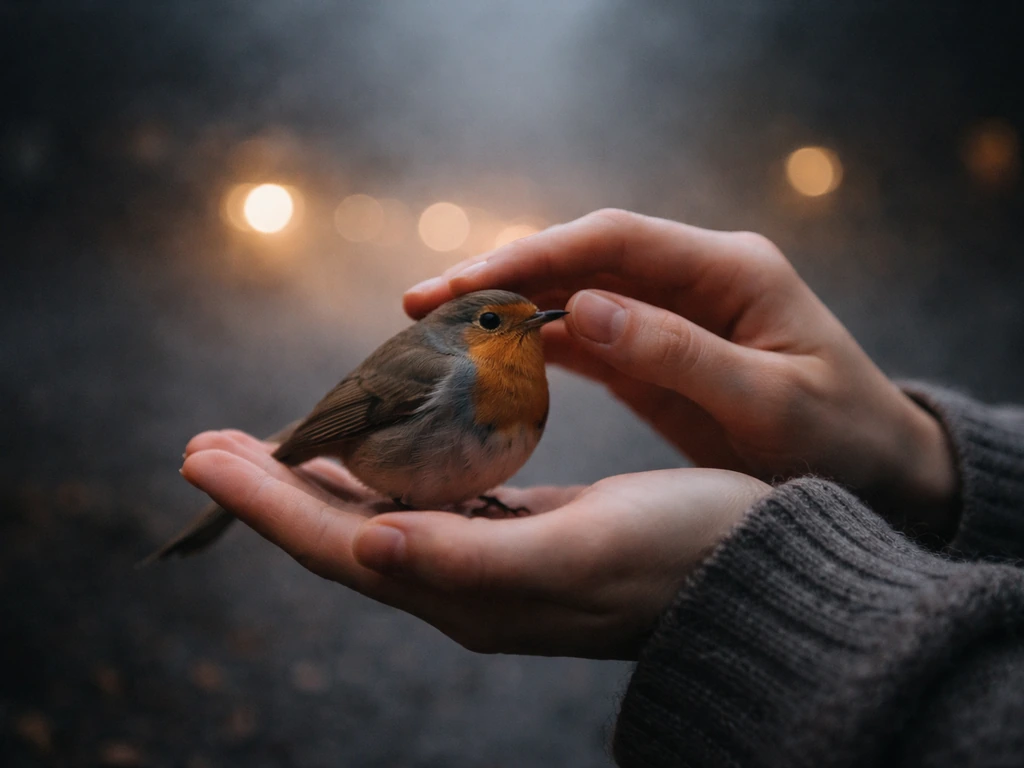
Quick meaning: what petting a bird in a dream usually signals
If you're looking for a fast takeaway before diving deeper, here it is. Petting a bird in a dream tends to reflect one or more of these core themes, depending on your current life circumstances:
- Trust and gentleness: You are learning to approach something fragile with care, a situation, a person, or an emotion that requires a soft touch.
- Communication and messages: Birds across many traditions are seen as messengers. Touching one in a dream can suggest you are receiving or about to receive guidance, either from within or from a source you consider spiritual.
- Connection and nurturing: The act of petting implies closeness. This dream can reflect a desire for deeper emotional connection, or signal that healing and nurturing energy is flowing toward you (or from you).
- Freedom and control in balance: Birds symbolize freedom in almost every cultural tradition. Petting one rather than caging or releasing it suggests you are finding a middle ground between control and allowing things to move naturally.
- Spiritual presence or inner wisdom: In metaphysical and Jungian frameworks, birds often represent the bridge between the conscious mind and something deeper. Touching one can mean you are making contact with your own intuition or with what you consider the divine.
None of these is a guaranteed interpretation. Think of them as hypotheses to hold up against your own life and see which one resonates. The goal isn't to decode a fixed message but to ask: where does this feel true right now?
How your emotions and the bird's response change everything
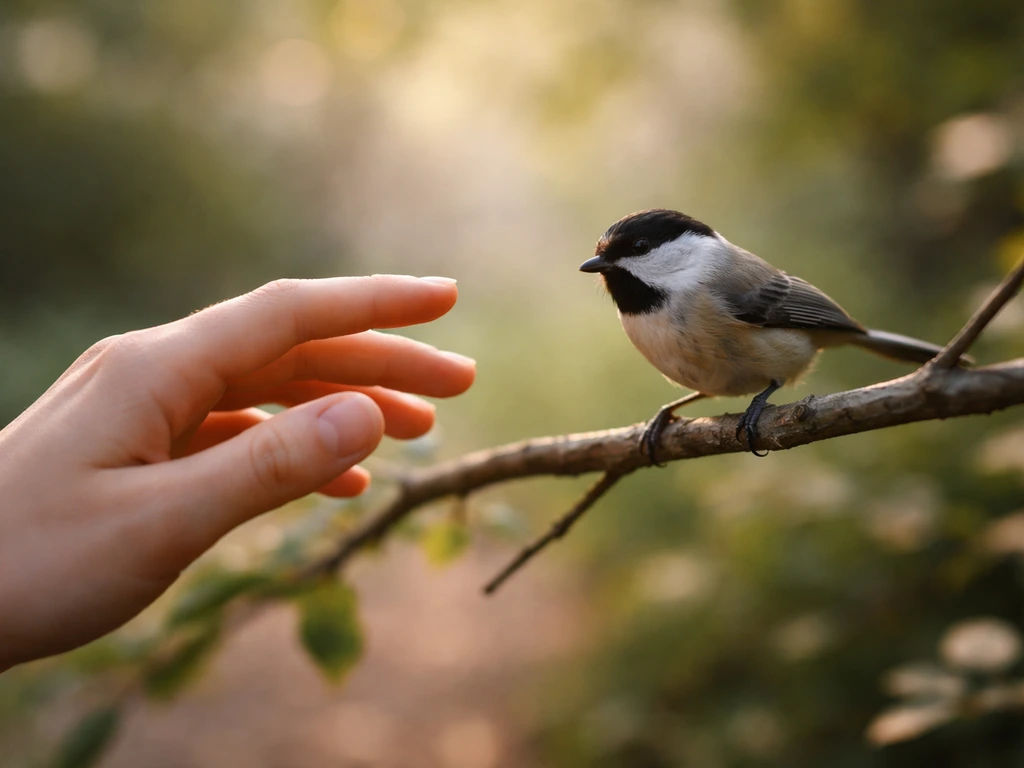
The single most important thing you can do when interpreting a dream like this is identify the dominant feeling you had during it, not just what happened, but what it felt like. Did you feel peaceful and honored that the bird let you touch it? Did you feel anxious, afraid of startling it? Did you feel desperate, like you needed to hold on? Each of those emotional tones points in a different direction.
A practical way to use this: once you name the dominant emotion, ask yourself where in your waking life you have felt that exact feeling recently. That's the area of life the dream is most likely processing. This approach comes from practical dreamwork traditions that treat the emotion as the real language of the dream and the symbol (the bird) as the costume it's wearing.
| Your emotional tone during the dream | What it likely reflects |
|---|---|
| Calm, peaceful, honored | Trust is growing. Something you've hoped for is settling into place. |
| Cautious, holding your breath | You sense fragility in a relationship or situation and are trying not to push too hard. |
| Joyful, delighted | Connection, creativity, or a relationship is bringing genuine fulfillment. |
| Anxious, afraid to lose it | Fear of losing something you value. Possibly gripping too tightly. |
| Sad or tender | Healing is happening, or grief that hasn't been fully acknowledged is surfacing. |
| Guilty or undeserving | Self-doubt around a relationship or situation where you feel you haven't done enough. |
The bird's response matters just as much. A bird that leans into your touch and stays calm is a very different symbol from one that tolerates you with visible tension, and both are different from a bird that snaps at your hand or bolts the moment you reach out.
Bird details that shift the meaning: species, color, and size
If you can remember what kind of bird it was, that detail adds a meaningful layer to the interpretation. Different bird types carry widely recognized symbolic associations across cultures, and those associations don't disappear just because you're dreaming.
| Bird type | Common symbolic layer | What it adds to the petting dream |
|---|---|---|
| Dove | Peace, the Holy Spirit, divine reassurance, new beginnings (Genesis 8:11 gives us the olive branch image) | Petting a dove often signals reconciliation, spiritual comfort, or a relationship moving toward peace. |
| Owl | Wisdom, intuition, the unconscious, hidden knowledge | Touching an owl suggests you are reaching toward inner wisdom or making peace with something you previously feared knowing. |
| Eagle or hawk | Vision, strength, spiritual authority, higher perspective | Petting one of these powerful birds implies you are gaining access to clarity or stepping into a role that requires courage. |
| Sparrow | Simplicity, divine care, the ordinary made sacred (Matthew 10:29-31 reminds us not one sparrow is forgotten) | A petting dream with a sparrow can be a gentle reminder of being seen and valued even when you feel small or overlooked. |
| Parrot | Communication, expression, what is being repeated | Petting a parrot may point to a conversation you need to have or a message you keep hearing but haven't acted on. |
| Crow or raven | Transformation, magic, the threshold between worlds | Touching a crow in a dream is often about making peace with change or engaging with a part of your psyche you usually avoid. |
| Unknown or vague bird | The general archetype matters more than species; focus on behavior and emotion | Use the color and size as your interpretive anchors. |
Color is another useful lens. A white bird (especially a dove or dove-like creature) tends to carry peace and purity themes across biblical, Islamic, and Western folkloric traditions. A black bird often signals transformation or a passage through difficulty rather than something negative, though some interpretive frameworks do associate it with shadow-side awareness. A brightly colored bird (red, blue, gold) often amplifies the emotional intensity of the dream: a blue bird can point to communication and calm, a red bird to passion or urgency, a golden bird to something rare and precious entering your awareness. Size matters too. Small birds often symbolize new, tender developments, while larger birds suggest something significant and established demanding your attention.
Scenario by scenario: what the bird's behavior is telling you
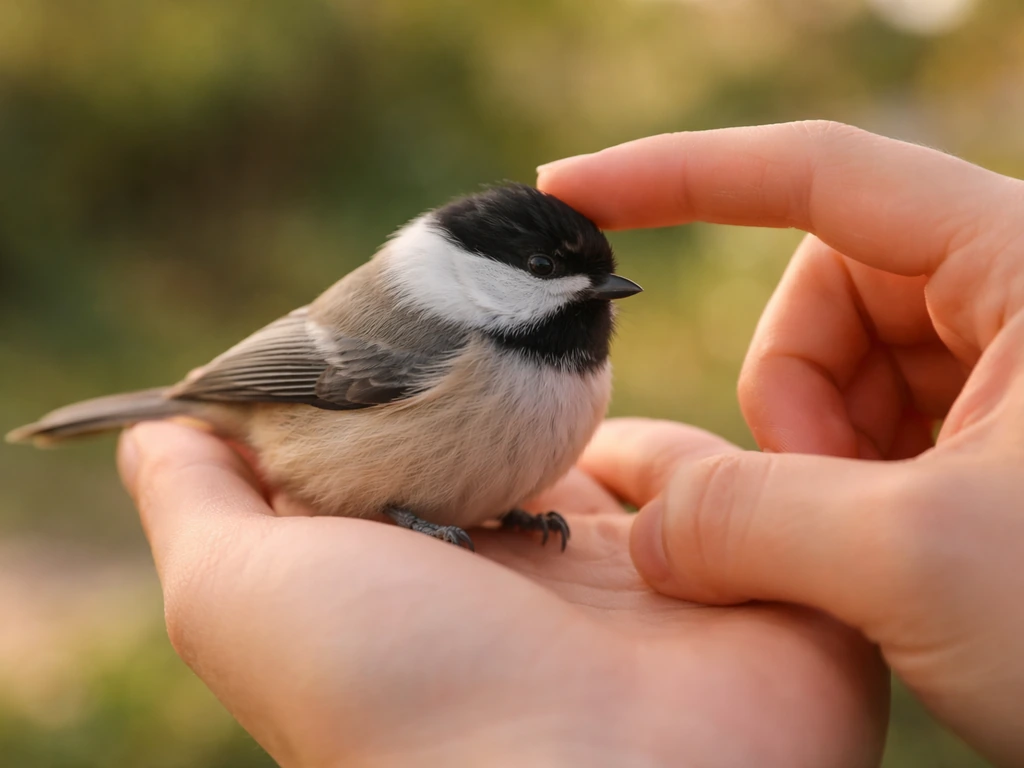
The friendly, tame bird that welcomes your touch
This is the most straightforwardly positive scenario. A bird that settles into your hand or leans into your stroke without hesitation suggests that trust is either already established or actively being offered to you. In a relational context, this often reflects a connection (with a person, a creative project, or a spiritual path) that feels safe and reciprocal. Some metaphysical traditions would call this a sign that your intuition is aligned and you are moving in the right direction. From a Jungian lens, the tame bird suggests your conscious self is in a comfortable relationship with your instinctual, unconscious nature rather than fighting it.
A wild bird that lets you approach
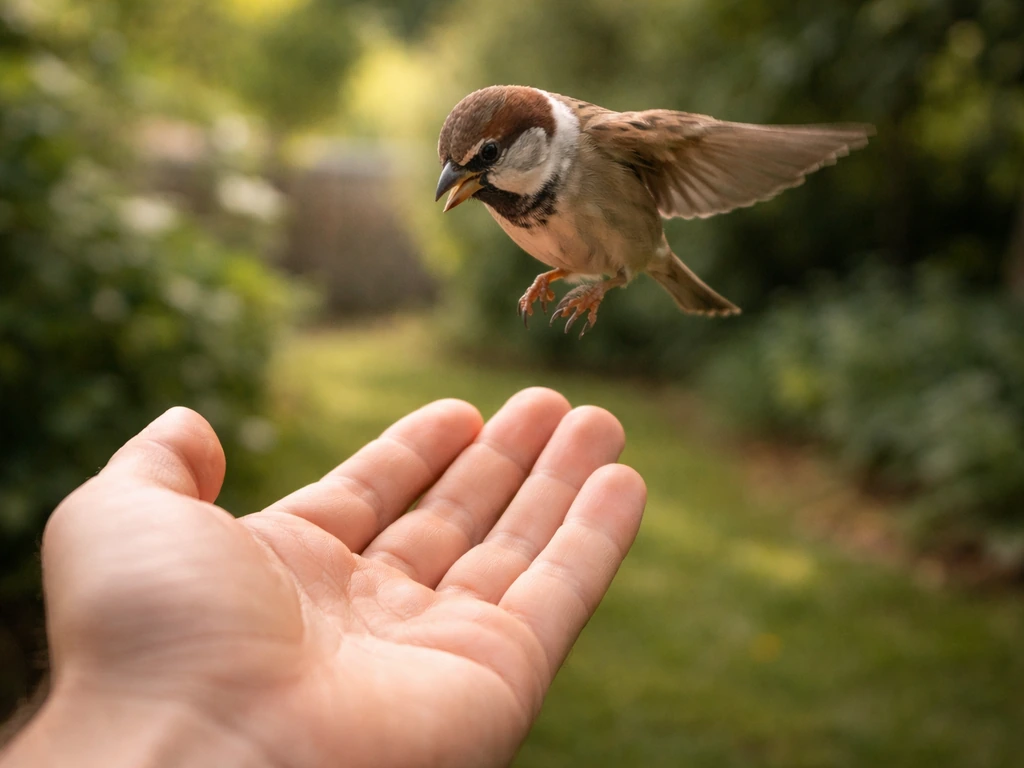
This is arguably the most powerful scenario because wild animals approaching you in dreams carries enormous symbolic weight across traditions. Whether you come from a spiritual background that sees animals as messengers, or a psychological one that sees them as representing instinctual forces, a wild bird choosing to accept your touch suggests something unusual is being offered. It can indicate that you are being trusted with something rare: access to a truth, a relationship, or a part of yourself that doesn't normally come this close. Many dream interpreters (and real-world spiritual seekers, as seen in bird encounter experiences) respond to this kind of dream with a sense of being singled out or guided.
The bird bites or pecks at you
A bite during a petting attempt doesn't necessarily mean something bad. It most often means the thing you are reaching toward is not yet ready to be handled on your terms. The bird is communicating a boundary. This can mirror a real-life situation where you are pushing too hard into someone else's space, trying to force a creative outcome before it's ready, or reaching for spiritual certainty when the moment calls for patience. It can also point inward: are you trying to touch (understand, resolve, integrate) a part of yourself that is still too raw to be approached directly? The bite is information, not punishment.
The bird escapes or flies away as you reach for it
Chasing or almost-petting a bird that keeps moving away is one of the more emotionally loaded bird dream scenarios. It often reflects a longing for something that feels just out of reach: connection, freedom, a goal, or a spiritual experience you can sense but can't quite grasp. In some traditions this is interpreted as a reminder that certain things can't be forced or captured, only invited. From a psychological angle, the escaping bird can represent parts of yourself, creativity, intuition, or emotional openness, that are retreating because the conditions don't feel safe enough for them to land.
Petting an injured or sick bird
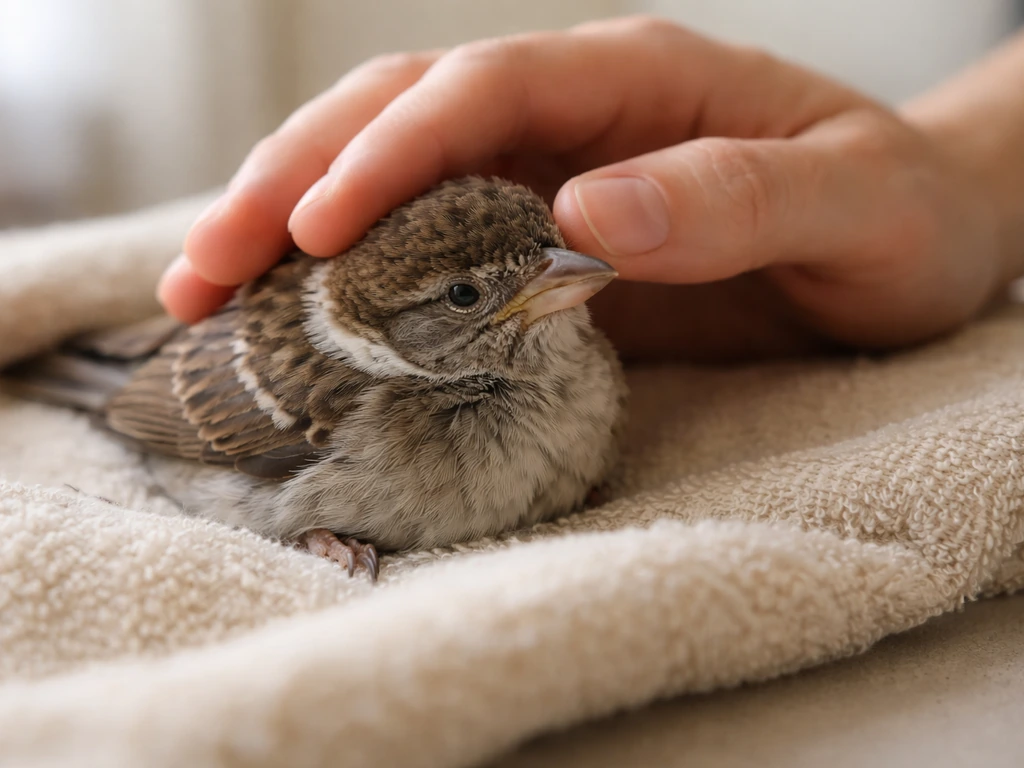
This scenario is almost always tied to healing, either your own or someone else's. If you dream of gently touching a wounded bird, you may be in a caregiving role in waking life that is emotionally demanding. You may also be in the middle of your own healing process and the bird represents the fragile, recovering part of you that needs gentle handling rather than pressure. Some spiritual frameworks see an injured bird in a dream as a call to pay attention to something in your life that has been wounded and left unaddressed. The fact that you are petting it, not ignoring it, is significant. You are choosing to tend to it.
Spiritual, symbolic, and biblical angles worth considering
Across traditions, birds occupy a unique symbolic position as creatures that move between earth and sky, between the visible world and whatever lies above or beyond it. That liminality is part of why so many cultures have used birds as symbols of the soul, of divine messages, and of spiritual ascent. Dreaming of petting one, of making physical contact with that symbol, is a particularly intimate version of this motif.
Biblical and Christian perspectives
In Christian scripture, the dove is the most prominent bird symbol, appearing at Noah's moment of reassurance (Genesis 8:11, when the dove returns with an olive branch) and at the baptism of Jesus, where the Holy Spirit descends in the form of a dove. Petting a dove in a dream, within this framework, can feel like an intimate brush with divine peace or comfort.
The sparrow references in Matthew 10 are also worth holding: they speak to being seen and cared for by God even in smallness. If your dream featured a sparrow and you've been feeling overlooked or forgotten, that resonance may be worth sitting with. Biblical interpretation of bird dreams generally encourages reflection rather than certainty. The tradition cautions against reading too much into omens and points instead toward the emotional and spiritual invitation the image carries.
Some people also explore turning into a bird dream meaning when a bird feels especially connected to their identity or inner transformation emotional and spiritual invitation the image carries.
Islamic dream interpretation
In Islamic dream tradition, birds frequently represent the soul, freedom, spiritual knowledge, and sometimes prosperity or divine messages. A bird that willingly comes to you or allows touch is often read as a favorable sign, potentially indicating good news, blessings, or that your prayers and intentions are in alignment. Seeing birds in an Islamic dream is usually considered a positive sign, and singing birds are often seen as an extra-good omen a favorable sign.
Some Islamic dream-interpretation guides take birdsongs as a sign that foresees pleasant speech or valuable insight birdsongs can foretell “pleasant speech” or valuable insight. Scenario matters here too: the state of the bird (healthy vs.
injured), the type, and the dreamer's life circumstances all shape the reading. A dove in Islamic interpretation can signal hearing news from someone distant or the arrival of peace in a troubled situation.
Jungian and psychological perspectives
From a Jungian or depth psychology lens, birds in dreams often represent transcendence and the connection between conscious and unconscious realms. Touching one is significant because it implies the conscious self is making direct contact with something that usually eludes it. The interaction (nurturing vs. confronting) modifies the meaning, which is why a petting dream where the bird accepts you feels so different from one where it resists or bites. Psychologically, this dream can also surface when someone has been out of touch with their instincts or intuition and is beginning to reconnect. The bird landing in your hand, literally, is the unconscious presenting a moment of re-integration.
Folkloric and cross-cultural themes
In Celtic tradition, birds serve as messengers between the human world and the Otherworld. In many Indigenous traditions, specific birds carry specific medicines or teachings, and encountering them (even in dreams) is treated as meaningful guidance rather than coincidence. Eastern traditions often tie birds to the soul's journey and to auspicious timing. What unites most of these frameworks is the idea that a bird choosing to accept your presence and touch is not a neutral image.
It implies relationship, reciprocity, and a kind of permission being granted. This connects to a sibling theme worth exploring: what it means to see or encounter a bird and have it approach you, whether in waking life or in the more symbolically rich landscape of a dream about talking birds or birds that communicate directly.
Dreams involving a talking bird dream meaning can follow the same rules, with communication and guidance showing up through the bird's behavior and your emotions.
What to do now: journaling prompts and a real-life connection checklist
The most useful thing you can do after a dream like this is write it down before the details fade, then sit with a few focused questions. Dream journaling is consistently supported as a tool for self-reflection and pattern recognition, and it works best when you resist forcing a single meaning and instead treat interpretations as hypotheses to test against your life.
Journaling prompts to work through

- What was the dominant emotion during the dream? Write it down in one or two words. Now ask: where in my waking life have I felt this exact feeling in the last week or two?
- What type of bird was it, and what do I personally associate with that bird? (Personal associations matter more than any dictionary definition.)
- Did the bird trust me, resist me, or something in between? What area of my life currently mirrors that dynamic?
- Is there something delicate, fragile, or easily frightened in my current life that I am trying to approach gently? Am I managing that well?
- Is there a message, a relationship, or an opportunity that I've been too afraid to reach toward? Does the bird scenario reflect how that attempt is going?
- If the bird bit or flew away: what boundary or limit might be asking for my respect right now?
- If the bird was injured: who or what in my life is wounded and quietly waiting for care?
Real-life connection checklist
Before you decide whether to treat this dream as spiritual guidance, emotional processing, or simply a vivid subconscious image, run through this quick checklist. It helps you ground the symbol in something real rather than staying purely abstract.
- Have you had any real-world bird encounters recently that felt unusual or significant? Dreams and waking encounters sometimes cluster together as a pattern worth noticing.
- Have you been dealing with a communication challenge, a difficult conversation, or a message you've been avoiding sending or receiving?
- Is there a relationship in your life where trust is either being built, tested, or broken? The bird's response in your dream may mirror the current state of that trust.
- Are you in a season of healing (physical, emotional, or relational)? Petting an injured bird, or a bird that seems fragile, often surfaces during recovery periods.
- Have you been feeling spiritually disconnected or like you're waiting for guidance? A bird coming to your hand in a dream, especially a wild one, is often interpreted across traditions as a sign that what you're seeking is closer than it feels.
- Consider whether this is a repeating dream type. If you frequently dream of birds, that pattern is more meaningful than any single image.
- Finally, decide how you want to hold the meaning: as a spiritual message to act on, as emotional information to sit with, or as a subconscious mirror of something you already know but haven't articulated. All three are valid.
There is no single correct answer to what petting a bird in a dream means. If you are specifically wondering about seeing a starling bird meaning, note that the bird’s species and tone can shift the symbolism toward new social connections and adaptation petting a bird in a dream. If you want the broader takeaway, you can also explore what seeing a bird in your dream means overall.
What there is, almost always, is a genuine piece of information about where you are right now, what you are reaching toward, and how ready both you and that thing are to make contact. Trust the emotional thread. Follow it back into your waking life. That's where the real meaning lives.
A love bird dream meaning is often tied to strong affection, closeness, and the way trust shows up in a relationship. If you are curious about seeing a bird meaning specifically, focus on the circumstances of the encounter and the emotions it brings up.
FAQ
Does the meaning change depending on whether I felt good or bad during the dream?
Yes. If you woke up feeling calm, safe, or comforted, the dream is more likely pointing to an opening in trust or communication. If you woke up feeling unsettled, guilty, or overly vigilant, it may reflect a real-life dynamic where you want access to someone or something before the other side feels ready.
What if the bird looked injured or unhealthy compared to if it looked healthy?
It can. If the bird looked healthy and normal while you pet it, interpretations often center on reciprocity and readiness. If the bird looked sick, dirty, or frightened, the dream more strongly signals caregiving, emotional vulnerability, or an inner part that needs gentler handling.
How should I interpret it if the bird was hard to see, or my interaction felt unclear?
It often does. Petting a bird you can see clearly and interact with directly usually relates to something specific you are reaching toward. Petting a bird that feels distant, blurry, or hard to hold onto can point to uncertainty, mixed signals, or a message you sense but are not ready to act on yet.
What if I was petting the bird gently versus aggressively in the dream?
Usually, yes. If you pet the bird with care and it remains steady, the dream commonly mirrors a situation where boundaries are respected and progress is possible. If you pet too roughly, push harder, or ignore signs of stress, the dream may be reflecting impatience, overreaching, or a mismatch between your pace and what the situation can tolerate.
Does the setting in the dream matter (home versus outdoors versus public place)?
Watch the direction and context. Petting the bird in your own space (home, room, yard) often links to inner life or personal goals. Petting the bird in a public place or unfamiliar setting can emphasize social visibility, reputation, or feeling watched while you try to connect.
If the bird bit me, does that always mean something negative?
A bite can be a boundary signal, but the follow-up matters. If the bite startled you and you backed off, it may represent learning to slow down. If you tried again immediately despite the bite, it can indicate a pattern of ignoring warnings, romantic pressure, or forcing a creative or spiritual outcome too soon.
What does it mean if I kept reaching out but the bird wouldn’t let me touch it?
Yes, especially for “almost” scenarios. If you nearly pet the bird but it kept moving away, the dream often reflects longing mixed with timing issues. A helpful question is whether you are trying to control an outcome (capture, guarantee, certainty) rather than invite what you want under safer conditions.
How do I interpret the difference between a tame bird and a wild bird accepting my touch?
It can. If the bird is clearly tame and comfortable, the dream may reflect an established support system or intuition that feels accessible. If the bird is wild and still accepts your touch, it can highlight rare trust, unusual access to information, or being “chosen” by the process rather than forcing it.
What if I don’t know the bird species, or it felt like a random bird?
Yes. If you pet a bird that feels personally meaningful (a specific species that you associate with someone, a memory, or a value), the dream is likely processing that relationship or theme. If the bird species feels random or unknown, lean more heavily on emotion (fear, tenderness, urgency) than on symbolic “type” associations.
I barely remember the details. How can I interpret the dream if I only recall one strong sensation?
If you can’t remember details, use the strongest sensory cue you do remember (sound, softness of feathers, weight in your hand, temperature, fear level). In many people, those physical sensations carry more interpretive accuracy than the “story” itself.
Should I treat this dream as spiritual guidance or just emotional processing?
Be careful about treating the dream as a literal prediction. A practical approach is to translate the dream into a “next-step” behavior, like having a difficult conversation, setting a gentler boundary, or seeking a nurturing resource for yourself. If you use it as actionable reflection, it stays useful instead of becoming scary or fatalistic.
What waking-life actions make sense after having this dream?
Try not to overcorrect. If you felt a desire to protect the bird, your waking response could be caring for something vulnerable in your life, like a project in progress or a relationship that needs patience. If you felt a need to dominate or hold on tightly, the dream may be suggesting loosening control and allowing natural unfolding.
Next Article
Seeing a Bird Meaning: Spiritual and Practical Guide
Learn spiritual and practical meanings of seeing a bird, including species, behaviors, indoor entry, and how to avoid su