Seeing a bird can be exactly what it looks like: a bird doing bird things. Dreams about petting a bird often connect to gentleness, connection, and your readiness to engage with something delicate in waking life petting a bird dream meaning. It can also feel like something more, a moment that stops you mid-step and makes you wonder if the universe just cleared its throat. The honest answer is that it can be both at the same time. What you do with a bird encounter depends on how you ask the question, and this guide will help you ask it well.
Seeing a Bird Meaning: Spiritual and Practical Guide

Maya Hartwell
10 Apr 2026
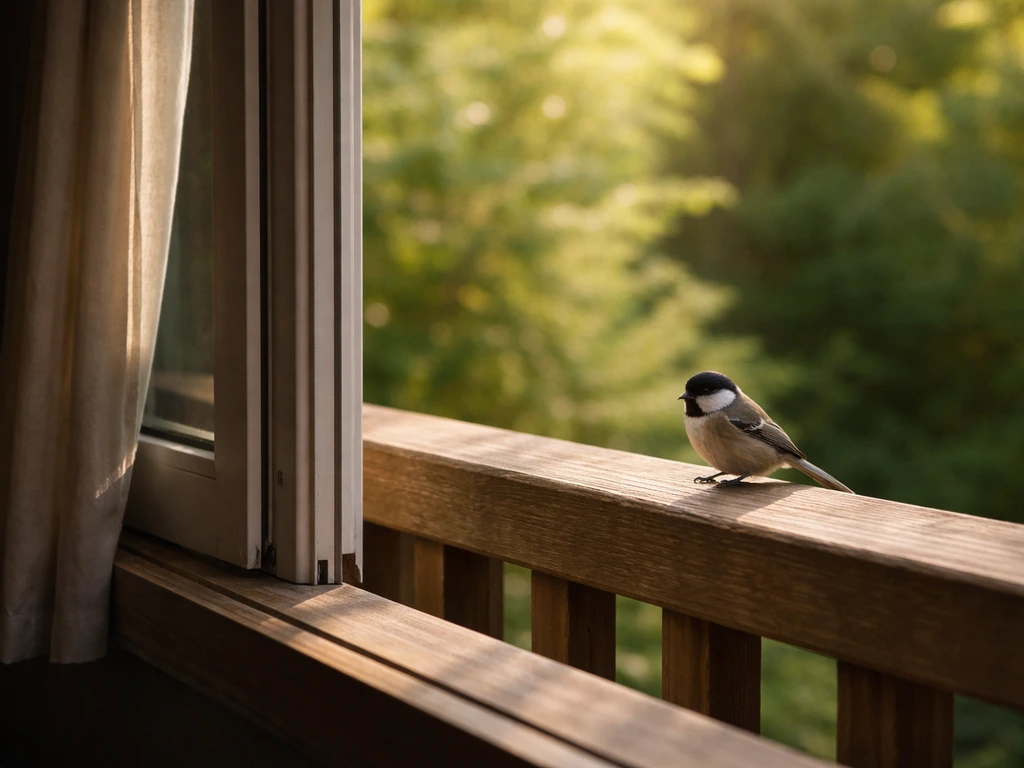
Sign or coincidence? Starting with the honest question
Birds appear constantly. They perch, fly over, land near windows, call out from trees, and occasionally walk right up to you. The vast majority of those moments are just ecology in motion. So what lifts one encounter out of the ordinary? Most people who arrive at this question describe something that felt different: the bird held still when it shouldn't have, appeared in an unusual location, showed up at an emotionally loaded moment, or kept returning over days. Context and frequency are the two biggest factors that shift a random sighting into something that feels meaning-bearing.
The Environmental Literacy Council puts it plainly: birds are widely understood across cultures as symbols of transcendence, freedom, and connection between the earthly and the divine. That symbolic weight has been built over thousands of years of human storytelling. But the same organizations that collect these cultural beliefs, like the Audubon Society of Western Pennsylvania, frame them honestly as tradition rather than predictive fact. Holding both of those things at once is the healthiest starting point: something can be culturally meaningful and personally resonant without needing to be literally true.
Narrow it down: what kind of encounter did you actually have?
Before you look up what a bird symbolizes, spend a moment identifying the details. The meaning shifts significantly depending on the specifics, and vague interpretations tend to produce vague guidance. Here are the factors worth noting:
- Species: Was it a crow, a dove, a red cardinal, an owl, a sparrow, a hawk, or something you didn't recognize? Species carries the heaviest symbolic weight across traditions.
- Behavior: Was it still and watching, moving erratically, singing, following you, tapping repeatedly, or attacking its own reflection?
- Location: Did it appear at home, near a place of grief, at work, in a hospital, at a graveyard, or somewhere deeply familiar?
- Time of day: Dawn, midday, dusk, and night encounters each carry different associations in folklore.
- Number of birds: One cardinal is read differently from a flock of crows. Repetition and grouping matter.
- Direction of flight: Several traditions, particularly Celtic and indigenous North American, assign meaning to whether a bird flew toward you, away, from the left, or from the right.
- Your emotional state: What were you thinking about or going through when it appeared? This context shapes personal resonance more than almost anything else.
Write those details down before they blur. You'll use them in the reflection steps later in this guide.
What different birds and behaviors commonly mean
Symbolic meanings by bird type
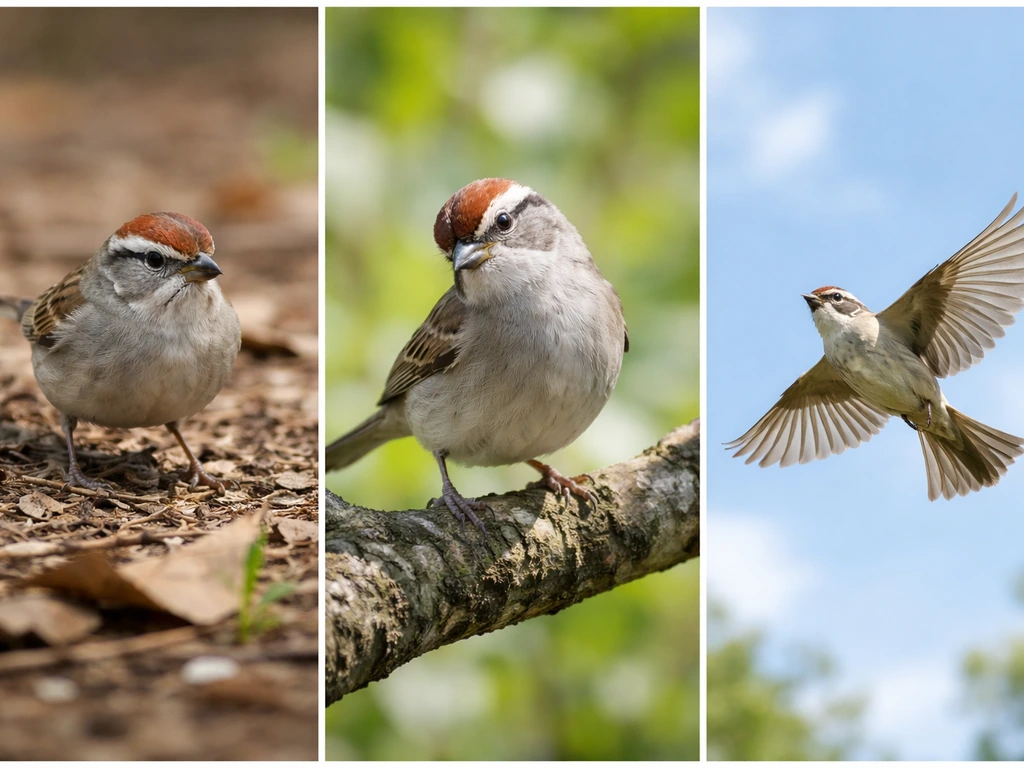
Cultures across the world have assigned meanings to specific bird species for millennia. These aren't random; they tend to emerge from the bird's observable behavior, appearance, and ecological role. Below are the most commonly interpreted species and what they've come to represent across traditions.
| Bird | Common Symbolic Meanings | Traditions That Carry This |
|---|---|---|
| Dove | Peace, divine presence, new beginnings, the Holy Spirit | Biblical, Christian, Greco-Roman, universal folklore |
| Crow / Raven | Transformation, intelligence, death as transition, mystery, prophecy | Celtic, Norse, Indigenous North American, folklore |
| Cardinal (red) | A deceased loved one's presence, vitality, love, encouragement | North American folk belief, Christian folklore |
| Owl | Wisdom, hidden knowledge, death omens, night awareness | Greek, Roman, Indigenous, global folklore |
| Sparrow | God's watchfulness and care, humility, community | Biblical (Matthew 10:29), Christian tradition |
| Hawk / Eagle | Vision, higher perspective, divine messenger, strength | Indigenous North American, Celtic, Egyptian |
| Robin | Renewal, spring, good news, a spirit visiting from beyond | British, European folklore |
| Hummingbird | Joy, lightness, resilience, love returning, healing | Central and South American, New Age tradition |
| Starling | Community, communication, adaptability, collective intelligence | European folklore, naturalist tradition |
| Blackbird | The veil between worlds, transition, poetic insight | Celtic, Irish folklore |
If you spotted a starling specifically, it's worth knowing that the meaning of seeing a starling runs deeper than most people expect, threading through European folklore's take on collective wisdom and adaptation.
What bird behaviors tend to mean
Beyond species, behavior shapes the read. A bird visiting your yard once is ambient nature. A bird sitting on your windowsill and staring at you for ten minutes while you cry is a different kind of moment. Repeated sightings of the same species over several days, especially in unexpected places, are commonly interpreted as spiritual persistence: the message hasn't been received yet. A bird following you on a walk, singing directly at you, or landing unusually close suggests intimacy in many traditions, an attempt at contact. Unusual actions like hovering in place, flying in circles, or appearing agitated near your space are harder to ignore and are most often the encounters that bring people to sites like this one.
When the encounter feels more intense
A bird flies into your home
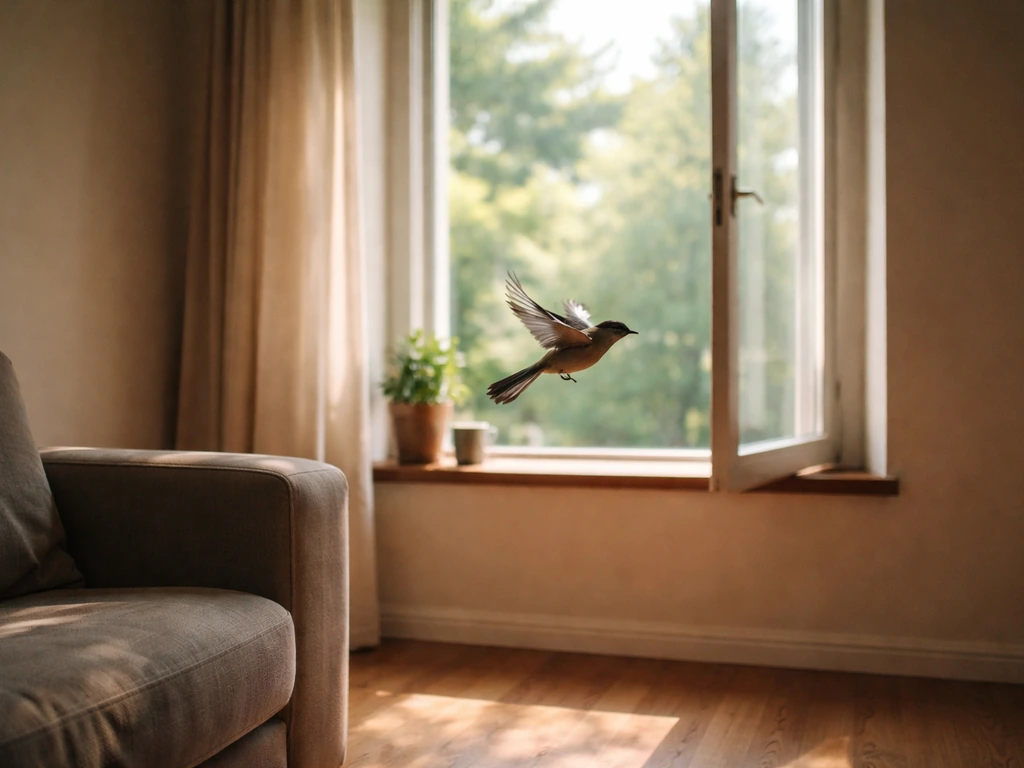
A bird entering a house is one of the oldest omens in European and British folklore, frequently associated with news from the spirit world, change coming, or a soul passing through. That symbolic weight is real and ancient. What's equally real is that birds fly indoors primarily because they see reflected sky or trees in glass and fly toward what looks like open habitat.
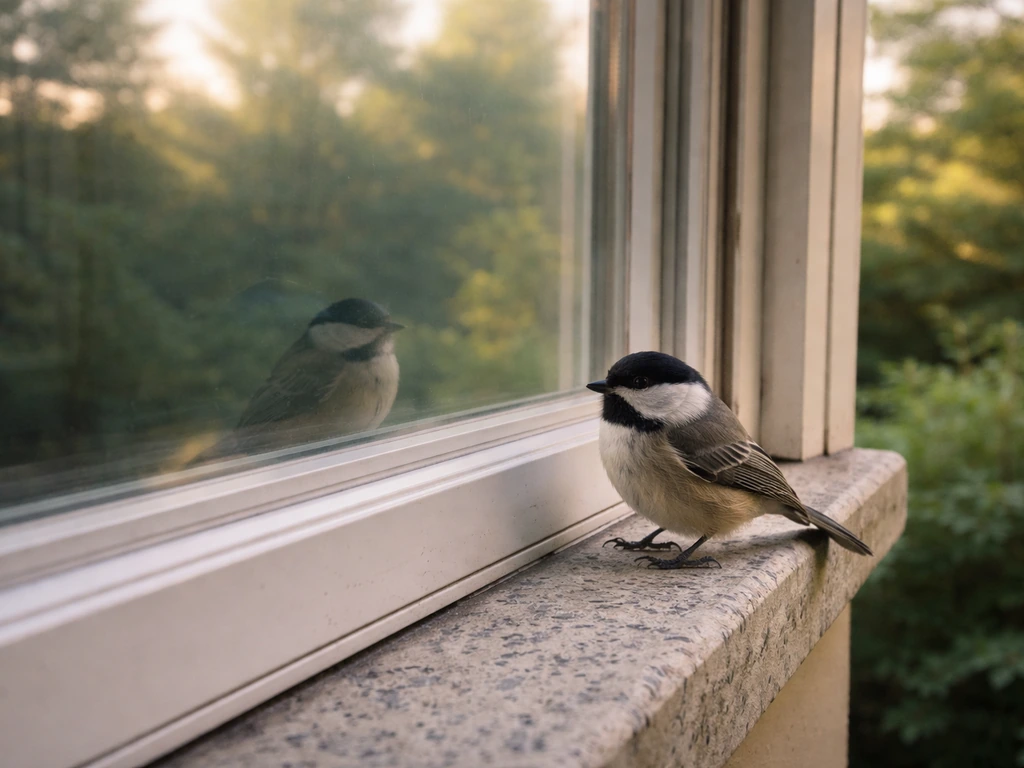
Cornell Lab of Ornithology explains that birds collide with windows for exactly two reasons: they see a reflection of sky or vegetation and perceive it as a clear path, or they see their own reflection and react to it as a territorial rival. Neither scenario involves intention toward you.
Both can produce the eerie experience of a bird suddenly inside your home. That doesn't cancel the emotional weight of the moment, but it does ground it.
Finding a dead bird
Folklore traditions almost universally treat a dead bird as a transitional omen: the end of one phase, a warning, or in some indigenous traditions, a message that something needs to be released. In practice, birds die in large numbers near buildings. Audubon Magazine notes that window strikes are even deadlier than previously measured, and a bird that collides with a window may fly away appearing unharmed but die hours later from internal injuries.
Artificial outdoor lights compound this: AP News reports that birds drawn to building lights at night become disoriented and are at elevated risk of collision and death. So finding a dead bird near a building is statistically common, not cosmically rare. That doesn't mean you have to dismiss the encounter. It means you can hold the symbolic meaning without assuming the universe engineered that bird's death specifically for your attention.
Bird droppings land on you or your space
In many European folklore traditions, bird droppings landing on a person are considered a sign of coming good luck. The logic is loosely probabilistic: it's an uncommon enough event that it feels noticed. That said, there's a practical health layer worth knowing. The CDC identifies bird and bat droppings as a potential source of histoplasmosis, a fungal infection that can become serious when disturbed soil or dried droppings are aerosolized.
If you're finding accumulated droppings near your home, the responsible action is to clean them carefully with protective equipment rather than leave them, regardless of what they symbolize. For large accumulations of bird or bat droppings, CDC/NIOSH recommends using [respiratory protection such as an N95 filtering facepiece respirator](https://www. cdc. gov/niosh/histoplasmosis/prevention/personal-protective-equipment.
html) and wearing gloves to reduce exposure risk. The luck reading doesn't require you to leave a health hazard in place.
Practical reality checks before you interpret
A short list of natural explanations that account for most unusual bird encounters:
- Migration patterns: Many species pass through areas they're not normally seen in during spring and fall migration. An unfamiliar bird in April or October is more likely a migrant than a message.
- Reflective windows: If a bird is tapping repeatedly on your window, it almost certainly sees its own reflection and is defending territory. This is especially common in cardinals and robins in spring.
- Food and water sources: Birds are excellent at locating resources. If one keeps returning to your yard or window, check for accessible food, water, or nesting material nearby.
- Distress and disorientation: Lights confuse migrating birds at night, drawing them toward buildings. If you see birds circling or flying erratically near a lit building, disorientation from artificial light is the most likely cause.
- Predation: A dead bird in your yard is often the result of a cat, hawk, or window strike, not a portent.
Getting these explanations out of the way first actually makes spiritual interpretation cleaner. If the encounter has a clear ecological explanation, you can acknowledge that and still choose to sit with the symbolic layer. If it genuinely defies explanation, that's meaningful too.
The spiritual and cultural angles, without the spiral
Biblical readings
In the Bible, birds appear at pivotal moments of divine communication. The most famous is the dove returning to Noah with an olive leaf in Genesis 8, a sign that the floodwaters had receded and life was returning. Christianity later adopted the dove as the visible form of the Holy Spirit at Jesus' baptism. Sparrows carry a gentler theology: Matthew 10:29 uses sparrows explicitly to illustrate God's watchfulness, arguing that if God notices every small bird that falls, God certainly notices you. This framing treats bird encounters less as omens and more as reminders of care and provision, a meaningful distinction if you're coming from a Christian or broadly theistic perspective.
Celtic and folklore traditions
Celtic traditions placed enormous interpretive weight on bird direction, behavior, and species. Wrens were sacred; cranes guarded the Otherworld; ravens served as oracles. In many European folk traditions, birds arriving from the right were considered good omens, while birds from the left (the Latin root of 'sinister') were warnings. These systems weren't arbitrary: they were built from generations of observational pattern-matching between bird behavior and seasonal or social events. You don't need to adopt them wholesale to find them useful. They offer a vocabulary for noticing what you already noticed.
Eastern and indigenous perspectives
In many East Asian traditions, cranes are symbols of longevity and fidelity; swallows bring good fortune to homes they nest in. Across various Indigenous North American traditions, different bird species serve as messengers between the human world and the spirit world, with specific birds holding specific relational roles to clans, seasons, or ancestors. These meanings are culturally situated, not universal exports, and they're best understood within their original frameworks rather than borrowed wholesale. What they share, across traditions, is the idea that birds occupy a threshold: they move between earth and sky, between the seen and unseen, in a way that humans find instinctively significant.
What about bird dreams?
Sometimes the bird encounter that stays with you didn't happen in waking life. If your bird experience came to you while sleeping, the symbolic interpretation shifts somewhat. What it means to see a bird in your dream draws on a different interpretive tradition, one that treats the dreaming mind as a symbolic processor working through emotion and experience rather than an external omen system. Dreams involving birds tend to reflect your relationship with freedom, aspiration, communication, and transition.
Within dream work, specific scenarios carry their own weight. If you dreamed of turning into a bird, that typically points to a desire for transformation or escape, a wish to rise above a current limitation. If you dreamed of a lovebird specifically, the focus narrows to connection, intimacy, and romantic or familial bonds. A dream where you were petting a bird suggests a gentler relationship with your own instincts or with a situation you've been trying to control. And if the bird in your dream spoke or communicated with you, that's often interpreted as your inner voice or intuition trying to get a clear message through.
What to do right now: next steps that actually help

Journal the details while they're fresh
Write down everything you noted in the identification section above: species, behavior, location, time, your emotional state, what you were thinking about. Then add what the encounter made you feel immediately, before you started looking for meaning. That unfiltered emotional response is often more revealing than any symbolic dictionary.
Sit with these reflection prompts
- What was on my mind in the hours before this encounter? Is there a theme that the bird's symbolism might speak to?
- Have I seen this species or had a similar encounter recently, or does this feel singular and unusual?
- What would I most want this encounter to mean? Does that tell me something about what I'm hoping for or fearing?
- Does a traditional or cultural reading of this bird resonate with where I am right now in my life?
- What would it look like to act on this as a message? Is that action something I'd endorse even if the bird was just a bird?
Prayer, meditation, or quiet sitting
If you hold a prayer practice, the bird encounter can become a simple prompt: bring the question into your prayer and sit with what arises. If meditation is your mode, use the image of the bird as your anchor and notice what surfaces without forcing interpretation. If neither of those fits, even five minutes of quiet with the question (what do I actually need right now?) tends to reveal more than scrolling through meaning lists.
Decide how to hold it
You don't have to choose definitively between 'it was just a bird' and 'it was a message from beyond.' Most people who take bird symbolism seriously do both at once. They acknowledge the ecological reality and let the symbolic resonance inform their reflection. What you want to avoid is the spiral: compulsively re-checking meanings, building anxiety around what it might predict, or feeling like you missed a message because you didn't act fast enough. If your experience involves a talking bird in a dream, the talking bird dream meaning can add an extra layer to how you interpret the symbolism. Symbolic interpretation is a tool for insight, not a system of obligations. Use what opens something up for you and set aside the rest.
The bird you saw was real. What it means to you is also real. Those two things can coexist without either one canceling the other out.
FAQ
How do I tell the difference between a meaningful bird encounter and a coincidence?
Start with frequency and context, then check emotional timing. If the bird appeared repeatedly or in an unusual place, and your reaction came before you looked for interpretations, it is more likely to be personally meaningful than random background nature.
What should I do if the bird kept returning over several days?
Instead of repeatedly searching for a new “message,” choose one theme to explore for a short window (for example, “what am I avoiding?”) and take a single practical step related to that theme within 24 to 72 hours, then reassess.
Does the bird species matter if I could not clearly identify it?
Yes, but you can still do meaningful work with “best-guess” traits. Note size, color, markings, and behavior (perching, hovering, singing, ground-walking). If identification remains uncertain, focus on behavior and your emotional state rather than forcing a species match.
What if the bird action was intense, like hovering, circling, or acting agitated?
Those behaviors can reflect territorial defense, mating, or disorientation near your space (especially near windows or feeders). Treat the symbolic layer as a prompt for attention, but pair it with practical causes you can observe, such as nearby predators or reflective surfaces.
What does it mean if a bird is staring at me or follows me closely?
Many traditions read this as contact or intimacy, but in the real world it can also be curiosity, a search for food, or territorial behavior near your path. A useful middle approach is to record what the bird did right before and after you moved, then interpret “what in my life feels close or persistent?”.
Is it actually bad luck if I find a dead bird near my home?
Not necessarily. The most useful stance is to separate symbolism from cause. Window strikes and disorientation from lights account for many cases, so treat it as a sign to improve the environment (reduce nighttime light spill, address window collisions) while still reflecting on your feelings.
If I keep seeing birds during a stressful period, does that mean something is “wrong” spiritually?
Often it means your attention is heightened, and birds become more noticeable. A grounded test is to ask whether you are actually being given clarity or just additional anxiety. If it increases worry, return to one concrete action you can take, such as journaling for 10 minutes or making one call you have delayed.
What should I do if a bird enters my house and won’t leave?
Move quietly, open doors and curtains to create an obvious exit path, and turn off lights in interior rooms while reducing other reflective areas if possible. If the bird appears injured, contact a local wildlife rehabilitator rather than trying to handle it yourself.
I found bird droppings on me, how should I handle the “luck” part responsibly?
You can keep the cultural meaning lightly, but do the practical health step first. Clean promptly with gloves or tissue and wash skin thoroughly, then check where the droppings came from (roofline, balcony, feeder area) to prevent repeated exposure.
What if I dreamed about a bird, but it felt like an external omen?
Treat the dream as symbolic processing, but still connect it to waking life. Ask what theme the dream emphasized (freedom, communication, transition, connection), then identify one waking-life decision or conversation that matches that theme.
How can I avoid the anxiety spiral from checking interpretations repeatedly?
Choose one interpretation for reflection only, set a time limit (for example, “I will look for meaning for 10 minutes once, then I stop”), and create a single real-world check-in question such as “What do I need to do today that supports this theme?”.
What’s the best next step after I write down species, behavior, location, and my feelings?
Convert your notes into one small action plus one boundary. For example, “Action: have the difficult conversation,” “Boundary: I will not re-check online meanings tonight.” This turns insight into movement without making you dependent on omens.
Next Articles
Why Is My Bird Flapping Its Wings at Me? Causes and What to Do
Understand why your bird flaps wings at you and what to do, from hormones and stress to attention and warnings.
Makes My Bird Twitch Meaning: Causes, Fixes, and Red Flags
Understand why your bird twitches, what to check now, red flags, first-aid steps, and symbolic meaning safely.
Why Does My Bird Chirp When I Leave the Room? Causes and Fixes
Understand why your bird chirps when you leave and follow a step-by-step plan to reduce stress, plus optional spiritual