A bird just unloaded on you, and now you're standing there wondering what on earth that means. Whether you're mildly annoyed, quietly curious, or genuinely wondering if the universe is trying to tell you something, you're in the right place. The short answer: it almost certainly means nothing about you personally from a biological standpoint, but across dozens of spiritual traditions and folklore systems, a bird dropping landing on a person carries some surprisingly consistent symbolic weight. Let's walk through both sides honestly.
Bird Peeing on You Meaning Spiritual and Practical

Maya Hartwell
20 Apr 2026

What actually happens when a bird "pees" on you
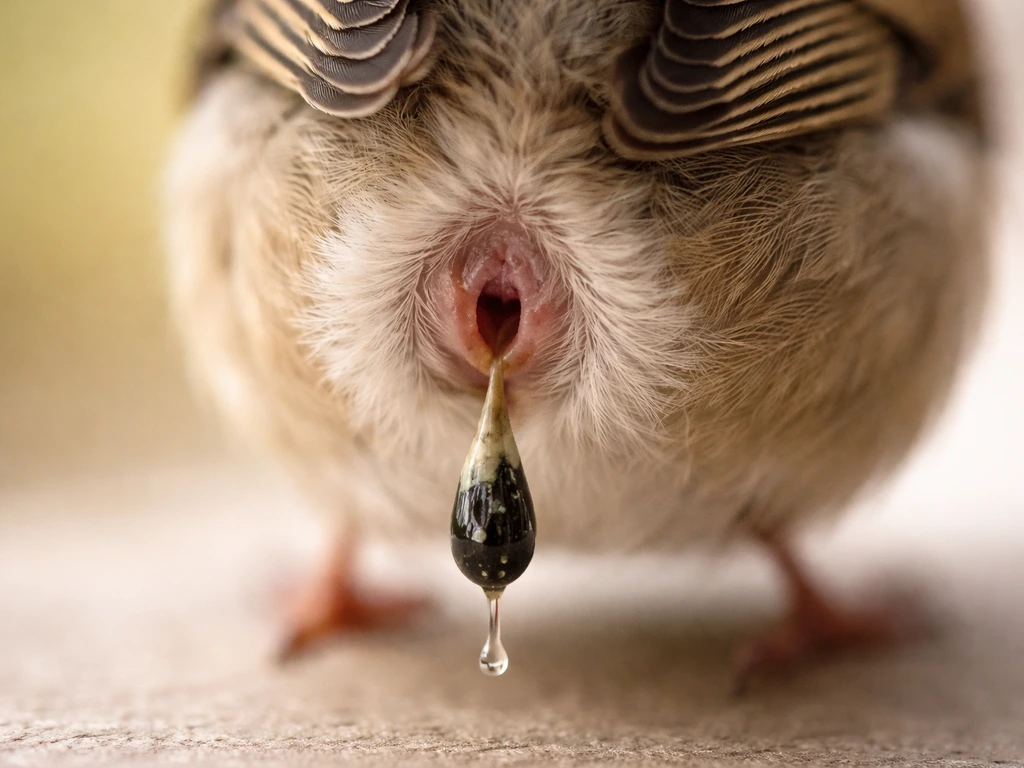
Here's something most people don't know: birds don't technically pee the way mammals do. They have no separate bladder that stores liquid urine. Instead, their kidneys convert nitrogenous waste into uric acid (and related compounds called urates), which is a paste-like substance that conserves water far more efficiently than liquid urine would. That waste travels through a single chamber called the cloaca, the same opening birds use for mating and laying eggs, and everything comes out together in one combined event. The white chalky part of a bird dropping is actually the uric acid equivalent of urine. The darker center is the fecal matter. It's one package, not two.
This also means birds can't aim at you. The cloaca doesn't work like a directed squirt gun. When a bird needs to go, gravity and flight physics do the rest. If you're standing under a perch, flying path, or feeding spot, the odds of becoming a target are simply a matter of proximity and timing. It's not personal. That said, knowing it's random doesn't make it any less startling, and it certainly doesn't stop the interpretive part of your brain from asking: okay, but why me, why now?
Which birds are most likely to hit you (and why)
Not all birds are equally likely to leave you with a cleanup situation. A few species and circumstances make direct contact far more probable, and understanding this helps you decide how much "intentionality" to read into the moment.
- Seagulls: Highly social, constantly in motion over busy coastal areas, and not shy around humans. Their droppings are large and frequent. If you're at the beach or near a harbor, seagulls are the most common culprit.
- Pigeons: Urban dwellers that roost in dense clusters above foot traffic. Their sheer numbers and tendency to perch on ledges above people make them statistically the most frequent "offenders" in cities.
- Starlings and sparrows: Common in parks and suburban areas, especially where people gather near trees. They tend to drop from low branches, so the landing zone is more predictable.
- Crows and ravens: Less frequent but memorable. Crows in particular are associated with sharp spiritual symbolism across many cultures, so if a crow hits you, expect people to bring up omens.
- Raptors (hawks, eagles): Rare, but their droppings are significant in volume. Being hit by a hawk or eagle is uncommon enough that many traditions treat it as a particularly strong sign.
- Birds overhead during feeding or roosting: Any species feeding on berries, seeds, or insects will digest quickly and drop frequently. Timing your walk under a fruiting tree at dusk is almost asking for it.
The conditions that raise your odds include standing under trees, telephone wires, or building ledges, walking through parks at dawn or dusk when birds are most active, and being near open water or food sources. There's nothing mystical about the physics, but the species involved does shape how many spiritual traditions interpret the event.
Spiritual meanings across traditions: cleansing, luck, and messages

Across an impressive range of cultures and spiritual systems, being hit by bird droppings has been interpreted not as bad luck but as a moment of unexpected blessing or spiritual attention. The interpretations differ in flavor, but the thread running through most of them is surprisingly consistent: something from above has touched you, and that contact carries meaning.
Good fortune and abundance
In many Western folklore traditions, including Russian, Italian, and Turkish folk belief, bird droppings landing on a person are considered a sign of incoming good luck or financial gain. The logic is partly ironic (something unpleasant must bring something good to balance it), but the consistency of this interpretation across unconnected cultures suggests it resonates on a deeper level. If you've heard someone say "that's actually lucky," they're drawing on centuries of this tradition.
Spiritual cleansing and reset

In several metaphysical and New Age frameworks, a bird dropping on you is read as a kind of involuntary spiritual cleansing. The idea is that something from the natural world has interceded to clear stagnant or negative energy from your field. It's an uninvited reset. Some practitioners specifically interpret it as a sign that you were carrying something heavy (worry, grief, blocked energy) and the encounter served to break that pattern open. Think of it less as a blessing and more as a cosmic "okay, shake it off now."
A message that something is shifting
In shamanic and indigenous traditions across North America, the Pacific Islands, and parts of Africa, birds are understood as messengers between the earthly and spiritual realms. A bird making direct physical contact with a person, even through droppings, is sometimes read as a strong signal that a transition is underway in that person's life. It's not necessarily good or bad: it's a threshold marker. You're moving from one phase into another, and the natural world is registering that shift.
Protection and spiritual attention
Some Celtic and Eastern European folk traditions interpret bird contact as a sign that a spirit, ancestor, or protective force has noticed you. Birds, particularly white ones like doves or egrets, were seen as vehicles for ancestral messages. Being "marked" by one wasn't an insult but an acknowledgment. In this reading, the dropping is less about the bird and more about what or who might have sent it your way.
Biblical and folklore perspectives on birds as signs
The Bible doesn't address bird droppings specifically, but its relationship with birds as symbols and messengers is woven through both Old and New Testament texts. If the dream involved a bird landing on you, you can apply the same biblical theme of pausing and reflecting rather than assuming it is random biblical meaning of catching a bird in a dream. If you are trying to interpret bird pooping as a biblical sign, start with the same theme of pausing and reflecting rather than assuming it is random, such as the biblical meaning of bird pooping on your car. Birds appear as instruments of divine provision (ravens feeding Elijah in 1 Kings 17:4-6), as signs of God's care for creation blank" rel="noopener noreferrer">(Matthew 6:26, "look at the birds of the air"), and as markers of spiritual moments, the dove at Jesus's baptism being the most iconic example. The broader biblical principle is that God communicates through creation, and birds are explicitly part of that created language.
Within that framework, many Christian folk traditions have interpreted unexpected bird encounters, including droppings, as moments worth pausing over rather than dismissing. Not as divine commands, but as gentle nudges to pay attention. The biblical meaning of bird pooping on you tends to be discussed in terms of unexpected blessing or humility, a reminder that we are not in control of what falls on us from above, literally or figuratively. If you've also wondered about the biblical meaning of a bird flying in your house, the same idea of pausing and reflecting on what the moment stirs up can apply The biblical meaning of bird pooping on you. If you're drawn to that interpretive lens, it's worth sitting with what was on your mind or heart right before the encounter.
European and Appalachian folklore adds its own layer. In many regional traditions, birds entering a person's space (whether by flying toward them, perching near them, or making physical contact) were treated as omens worth noting. The species mattered: a crow or raven suggested a message from the other side, a robin suggested new beginnings, a sparrow suggested community or humility. The folklore around bird droppings specifically leans almost universally toward good fortune, possibly because the randomness of the event made it feel chosen rather than incidental.
What to do right after it happens

Before you dive into interpretation, take care of the practical side. Bird droppings can carry bacteria (Salmonella, E. coli) and in rare cases fungal spores (Histoplasma, Cryptococcus), particularly in areas with heavy bird populations. The risk from a single exposure is generally low for healthy adults, but you shouldn't leave it on skin or clothing longer than necessary.
- Rinse the affected area with clean water as soon as possible. If it landed on your hands or face, wash thoroughly with soap and water.
- If it landed on clothing, rinse before the uric acid sets (it can stain quickly, especially on light fabrics). Cold water is better than hot for rinsing before laundering.
- Avoid touching your face before washing your hands, especially if the dropping landed on your hands or arms.
- If you were in an area known for large bird roosting colonies (under a bridge, near a cave, in a dense urban roost), and you're immunocompromised, take extra care and consult a healthcare provider if you develop respiratory symptoms.
- Take a breath. A single dropping from a passing bird is an extremely common event. The physical risk is minimal for most people.
Once the practical side is handled, if you want to "ground" the spiritual side of the experience, take a moment before you rush back into your day. Stand still for 30 seconds. Notice what you were thinking about right before it happened. Notice how you feel now: startled, amused, unsettled, or weirdly calm. That emotional data is part of the interpretive process across almost every tradition that takes bird encounters seriously.
Should you treat it as a sign or a coincidence?
This is the honest question, and the answer depends on you. From a strictly biological standpoint, being hit by a bird dropping is the result of being in the wrong place under a bird that needed to eliminate waste. It happens to millions of people every day. There is no scientific evidence that birds target individuals with intent or that their droppings carry supernatural information.
From a spiritual and symbolic standpoint, meaning is something humans assign to experience, and there's nothing wrong with that, as long as it doesn't tip into fear, obsession, or confirmation bias. The danger isn't in finding meaning; it's in finding only the meaning you were already looking for. If you've been anxious about money, you might latch onto the "good luck" interpretation and expect a windfall. If you've been feeling spiritually adrift, you might read it as a cosmic wake-up call. Both could be true, or neither. The encounter is an invitation to reflect, not a verdict.
A useful rule of thumb: treat it as a coincidence first and see if reflection reveals anything resonant. If after sitting with it you feel a genuine intuitive pull toward a specific interpretation, trust that. If you feel anxious or spiraling, that's a sign to return to the practical explanation and let it go. Similar principles apply when exploring other bird-related symbolic encounters, like what it means when a bird flies into your home or the imagery that surfaces in dreams. Similar principles apply when exploring other bird-related symbolic encounters, including the biblical meaning of killing a bird in a dream, like what it means when a bird flies into your home or the imagery that surfaces in dreams.
A quick look at how interpretations vary by tradition

| Tradition | Interpretation | Emotional tone |
|---|---|---|
| Western/European folklore | Good luck, incoming financial blessing | Positive, celebratory |
| Biblical/Christian folk tradition | Unexpected grace, call to humility, divine attention | Reflective, faithful |
| Shamanic/Indigenous frameworks | Threshold marker, transition underway, spirit messenger active | Neutral, transitional |
| New Age/Metaphysical | Spiritual cleansing, energy reset, clearing stagnant patterns | Positive, transformative |
| Celtic tradition | Ancestral notice, protective attention, spiritual marking | Reverent, protective |
| Eastern European folklore | Fortune incoming, especially financial or relational | Positive, luck-oriented |
Reflection prompts to help you find your own meaning
If you want to take this seriously, do it intentionally. Grab a notebook or just sit quietly for a few minutes and work through these questions. There are no right answers, and you don't have to arrive at a tidy conclusion. The point is to use the encounter as a lens rather than a verdict.
- What was I thinking about or worrying over in the moments before the bird hit me? Is there a connection between that thought and any of the symbolic interpretations I've read?
- What species of bird was it, and does that species carry specific meaning in any tradition I feel connected to?
- How did I react emotionally in the first few seconds: humor, irritation, awe, or calm? What does that reaction tell me about where I am right now?
- If this were a gentle message from something larger than myself, what would it most likely be asking me to pay attention to?
- Is there something I've been avoiding, delaying, or not acknowledging that the idea of a 'reset' or 'new beginning' could apply to?
- Am I interpreting this from a grounded, curious place, or from anxiety or a need for reassurance? Honest self-check here.
- Would I feel differently about this event tomorrow, or next week? Does the meaning feel durable or reactive?
You don't need to force a message out of this. Sometimes a bird drops on you and it means nothing beyond the need for a clean shirt. But if the encounter lingers in your mind and you keep returning to it, that persistence itself is worth paying attention to. The traditions that read bird encounters as meaningful aren't saying the bird decided to deliver a telegram. They're saying that moments of unexpected contact with the natural world can act as mirrors, reflecting something we were already carrying. What you see in that mirror is yours to interpret, quietly and without pressure.
FAQ
Does bird peeing on you meaning change if it’s on your face, hair, or hands instead of your clothes?
Yes, mainly for the practical side. Face, hair, or hands increase the chance you’ll rub it into your eyes or mouth, so rinse with running water sooner and wash thoroughly. For symbolism, you can still reflect on “unexpected contact,” but your interpretation should start after you reduce the exposure risk.
What’s the safest way to clean bird droppings from skin and clothing right away?
For skin, blot and rinse with cool or lukewarm water, then wash with soap. Avoid scrubbing dry, since it can spread residue. For clothing, pre-treat the spot and wash separately if possible. If it’s on outdoor gear you can’t wash immediately, wipe with a disposable cloth and clean hands afterward.
Can bird droppings cause an infection if I only got hit once?
The risk from a single event is generally low for healthy adults, but it’s not zero, especially if it stayed on skin, got into eyes, or you have a suppressed immune system. If you develop fever, severe stomach symptoms, eye irritation, or a rash shortly after, seek medical advice and mention potential bird-dropping exposure.
Should I be worried if the dropping was white and chalky only?
White, chalky material is typically urate waste, but it still counts as droppings residue and can carry microbes. Don’t assume “chalky means safe.” Treat it the same as darker parts: wipe or rinse promptly and clean the surrounding area.
What if the bird landed close but didn’t drop, then later I found it on me?
If you only notice it after the fact, the timing can make interpretation feel more “chosen.” Practically, the meaning comes from the window you were under a perch or flight path. Symbolically, it can still be a mirror for what you were thinking, but try not to treat the delay as evidence of intent.
Does the bird species (crow vs. pigeon vs. dove) affect the bird peeing on you meaning?
It can affect folklore interpretations, but there’s no biological link between species and spiritual intent. In traditions that read omens, different species are assigned different messages. If you want to use this, pick one species-based meaning that feels grounded to you, and avoid collecting multiple conflicting “signs” at once.
Is it ever possible the bird intentionally targeted me?
From a science standpoint, there’s no good evidence that birds aim at individuals. What looks like intent is usually proximity and timing under a common perch. If you feel sure it was targeted, the more useful next step is to focus on reducing your exposure next time (avoid standing directly under active perches).
How can I reflect without falling into confirmation bias or spiraling?
Use a short, structured check. Ask, “What was I doing and feeling right before this happened?” Then, “Is there any real-world action that matches what I’m noticing?” If your thoughts jump straight to fear, obsession, or expecting a specific payout, pause and return to practical coincidence.
What should I do if I’m already anxious about money or spiritual matters and the event happens?
It’s easy to latch onto the “good luck” or “cleansing” interpretations, but treat them as prompts, not predictions. Choose one small, controllable step (budget check, reaching out, self-care) so the moment nudges action rather than expectation.
If I want to use the spiritual “pause for 30 seconds” approach, what exactly should I write down?
Note three things: your pre-encounter thought or worry, your immediate reaction (startled, annoyed, calm), and any single theme that keeps repeating (overwhelm, letting go, change). Then pick one meaning to explore, not five.
Does the meaning differ if it happened while traveling, at work, or on a special date?
The location and timing can shape what symbolism “hooks into,” but it doesn’t change the underlying reality of waste release. If the event happened during a stressful moment at work or travel, interpret it as a cue to reset your attention, then follow through on what you can control right now.
When is it appropriate to call a professional for cleanup (carpets, upholstery, or indoor surfaces)?
If it got on porous surfaces like carpets, upholstery, or indoor vents, or if you’re dealing with repeated exposure, consider professional cleaning. For a single small spot, careful spot-cleaning and drying can work, but avoid re-contaminating the area or spreading residue with high-pressure rinsing.