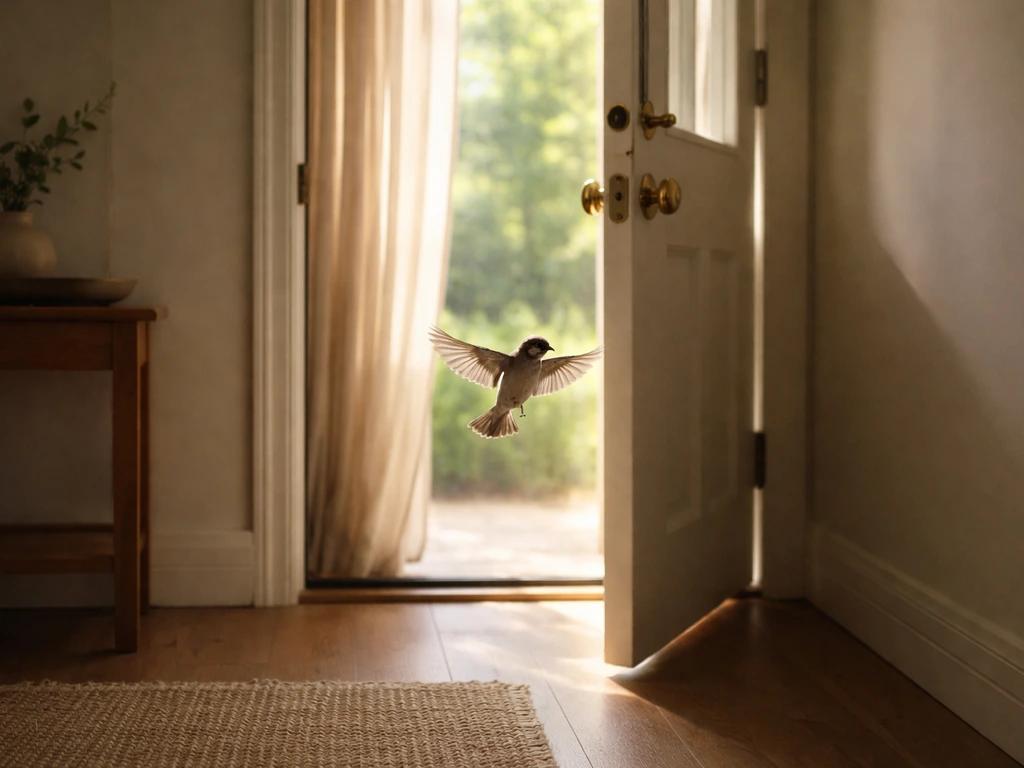
A bird trying to get into your house is one of those moments that stops you cold. Whether it's tapping at the window repeatedly, hovering at the doorway, or throwing itself against the glass, your first instinct is probably a mix of 'how do I help this thing?' and 'what on earth does this mean?' Both questions are worth taking seriously. This article walks you through exactly what to do right now to keep the bird safe, why it's probably happening from a purely practical standpoint, and what traditions across cultures have said about this kind of encounter.
Bird Trying to Get in House Meaning: What It Really Indicates

Maya Hartwell
22 Apr 2026
What people usually mean by 'a bird trying to get in the house'
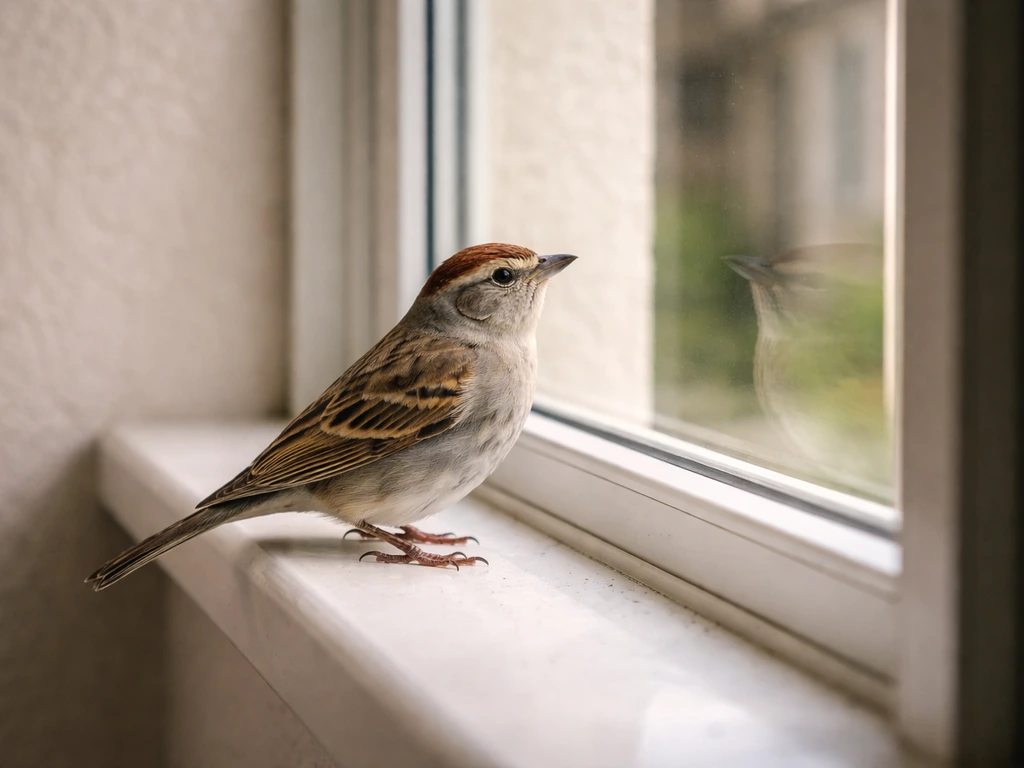
When people search this phrase, they're usually describing one of a few different situations, and it helps to know which one you're in. The most common scenario is a bird repeatedly hitting or tapping at a window, as if it's trying to fly through the glass. Another is a bird hovering or landing at a doorway or on a windowsill without actually coming inside. A third is a bird that has actually gotten in and is now trapped, flying frantically around a room. And sometimes, a bird will make several persistent passes at one particular window over days or even weeks.
Each of these has a slightly different practical explanation and a slightly different symbolic weight in spiritual traditions. Whether the bird is just at the threshold or actually inside matters, both for what you should do next and for how different belief systems interpret the event. Related to this: a bird that fully enters your home and flies around carries its own rich layer of meaning, which is worth exploring separately alongside this encounter.
What to do right now: immediate steps
Before we get into meaning, let's handle the moment. Before we get into meaning, let's handle the moment meaning of bird flying into house. If the bird is still outside trying to get in, the main risk is a window collision, which blank" rel="noopener noreferrer">injures or kills more than one billion birds in the U.S. annually, mostly at homes and low buildings. If it has gotten inside, it's likely panicked and at risk of injury. Here's what to do in each case.
If the bird is outside at a window or door
- Close or dim interior lights in the room closest to where the bird is. Bright interior light makes the window more reflective from outside, which is often what's attracting the bird in the first place.
- Close window blinds or pull down shades, especially white or light-colored ones. NH Audubon notes this disrupts the reflection the bird is reacting to.
- If the bird is attacking a specific window repeatedly, tape a piece of paper or cardboard to the outside of that pane to break up the reflection. A physical break in the glass surface often stops the behavior immediately.
- Do not try to grab or chase the bird away from outside. Startling it can cause it to fly into the glass harder.
If the bird is inside your home
- Stay calm and move slowly. A panicked bird that sees you flailing will exhaust itself crashing into walls and furniture.
- Close doors to other rooms so the bird is confined to one space. Smaller area, fewer obstacles.
- Turn off all interior lights in that room. Darkness inside makes the outside look brighter and more inviting.
- Open one window or door that leads directly outside and make it the obvious exit: remove screens if you can.
- Back away and give the bird time. San Diego Humane Society and the Humane Rescue Alliance both emphasize this: once you've set up the right exit, step back and let the bird find it on its own.
- If it's been more than 20 to 30 minutes and the bird is still inside, you can try gently herding it toward the exit by holding a large towel or cardboard box as a 'wall,' moving slowly.
- If the bird seems injured, stops moving, or is clearly in distress, see the section below on when to call a professional.
Why this actually happens: the real-world reasons
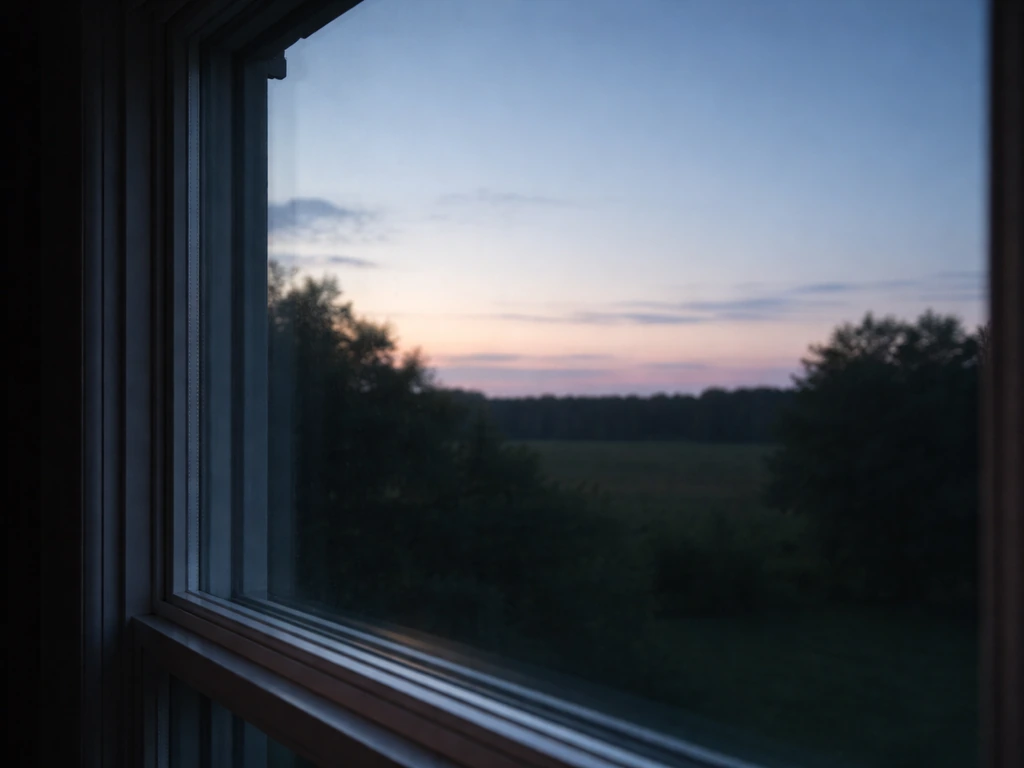
There are several legitimate, well-documented reasons a bird ends up at your window or doorway. None of them require a mystical explanation, though that doesn't mean the encounter can't also carry personal meaning for you.
Reflections and the glass illusion
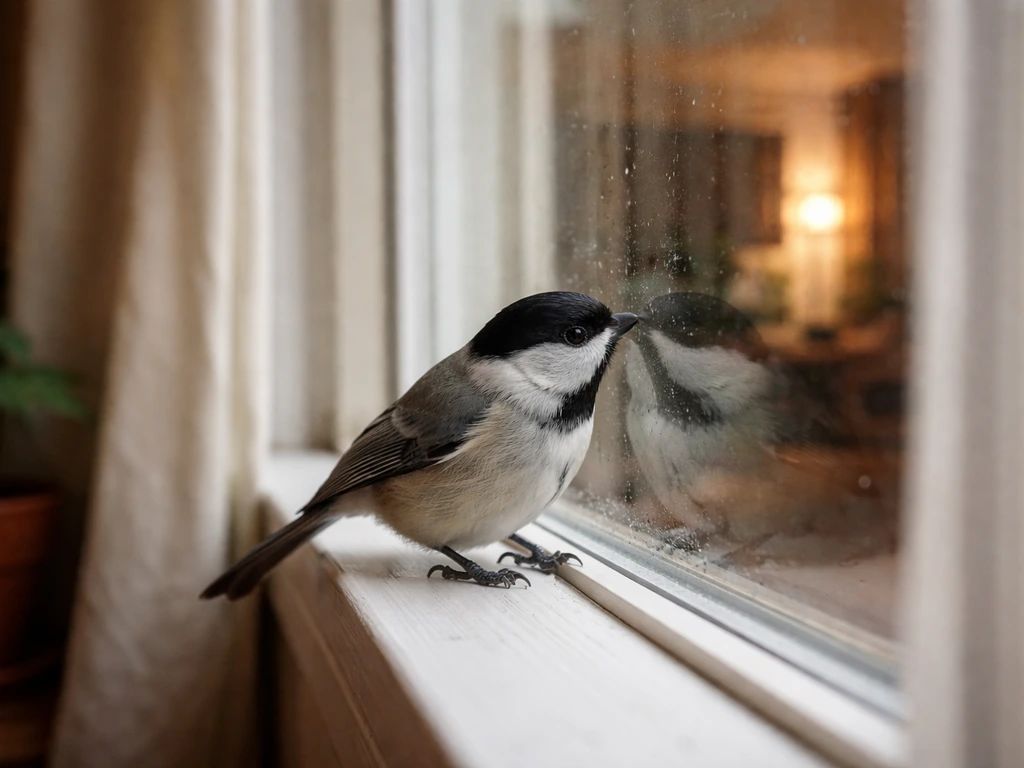
This is the most common cause of persistent window behavior. Birds don't perceive glass as a solid barrier. When a clear window reflects blue sky or trees, it looks like open air and open habitat to a bird. The Smithsonian National Zoo describes this as a 'tunnel effect': the bird sees what looks like a continuation of the landscape and flies toward it. During breeding season, some birds, especially cardinals and robins, will also attack a window because they see their own reflection and interpret it as a rival bird. NH Audubon notes this behavior often starts at dawn and repeats throughout the day, which is exactly what many people describe as a bird 'trying to get in.'
Artificial light at night
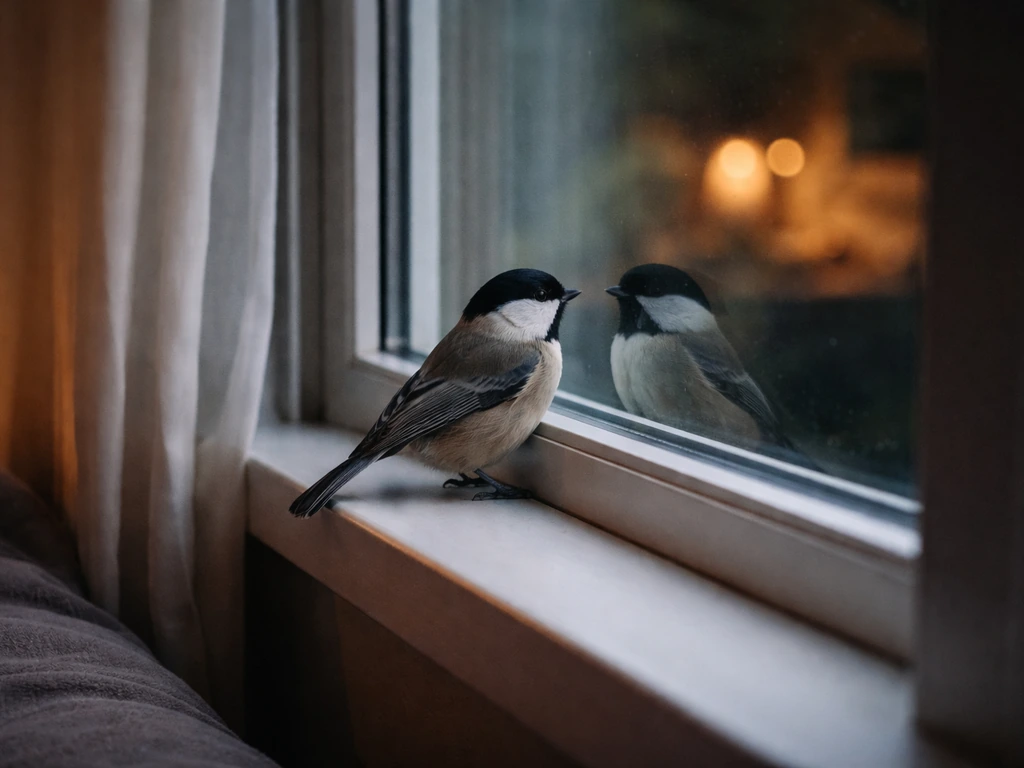
Nocturnal migrating birds navigate partly by starlight. Bright artificial lights from homes and buildings pull them off course, drawing them toward the light source. The Animal Welfare Institute explains that once a bird is circling a lit building, it may fail to see the window as a solid barrier and fly directly into it. Audubon's Lights Out program documents this extensively: turning off lights at a single downtown building reduced migratory bird deaths there by 83 percent. If you're seeing this at night, especially in spring or fall, a migrating bird is likely the culprit.
Weather, shelter, and food
Sometimes the explanation is much simpler. A bird may be seeking shelter from cold, rain, or a predator. It may smell food, or see a warm interior and be attracted to it. House sparrows and starlings in particular will probe around doorways and eaves looking for nesting opportunities. If you're in late winter or early spring and noticing a bird checking specific spots repeatedly, it may be scouting a nesting location.
Illness or disorientation
A bird that seems confused, can't maintain straight flight, or is repeatedly hitting the same surface without any obvious reflection or light cue may be sick or injured. Disorientation is a symptom of several avian illnesses. If the bird looks fluffed up, is holding one wing oddly, seems unable to stand, or isn't reacting normally to your approach, that's a signal to contact a wildlife rehabilitator rather than trying to handle the situation yourself.
How to stop it from happening again
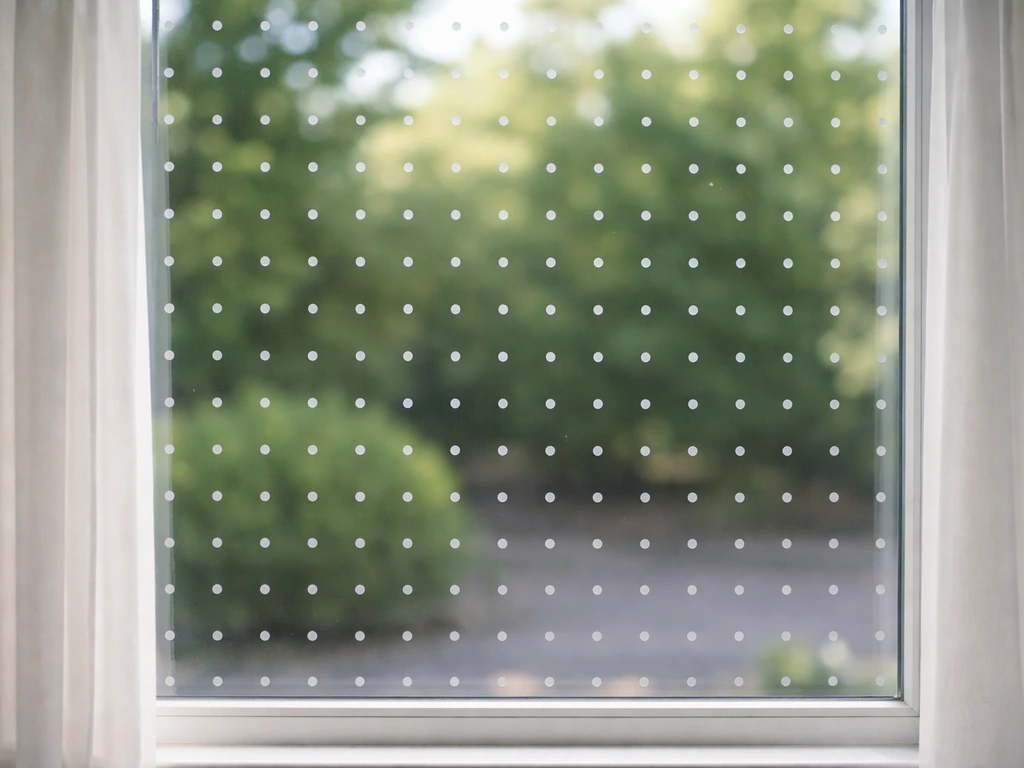
Prevention is mostly about making glass visible. The Smithsonian National Zoo recommends applying window treatments with markings spaced no more than two inches apart, so birds can't mistake the gaps for open air. You have a few practical options:
- Apply window film or decals rated for bird safety, placed in a grid no more than two inches apart vertically and four inches apart horizontally.
- Hang exterior screens, netting, or string about two to three inches in front of problem windows.
- Tape paper, kraft paper, or window paint temporarily to the outside of the window during active nesting or migration season.
- Turn off or dim interior lights at night, especially during spring and fall migration periods (roughly March through May, and August through November).
- Close blinds or shades in rooms you're not using during daylight hours.
- Remove bird feeders, baths, or other attractants from directly in front of large windows. Moving them either closer than three feet to the glass (so birds can't build up enough speed to be injured) or farther than 30 feet away are both effective strategies.
What the behavior itself might mean symbolically
Different behaviors carry different symbolic weight in spiritual and metaphysical traditions. Rather than treating every bird encounter as an identical omen, it's worth paying attention to what the bird was actually doing. Here's how different behavioral patterns are commonly interpreted. Here's how different behavioral patterns are commonly interpreted chinese meaning of bird flying into house and what it might suggest spiritually or symbolically can be compared here as an adjacent interpretation option.
| Bird Behavior | Common Symbolic Interpretation |
|---|---|
| Repeated tapping or pecking at a window | Often linked to persistence, a message trying to get through, or an invitation to look more carefully at something you're avoiding. Some traditions connect it to a spirit or ancestor seeking attention. |
| Hovering at a doorway or threshold without entering | Thresholds carry deep symbolic meaning in folklore worldwide. A bird pausing at a doorway is sometimes read as a messenger standing at the boundary between worlds, delivering a warning or invitation without fully crossing over. |
| Circling or flying around the house repeatedly | Circling is often associated with protection, watchfulness, or a spirit making its presence known. In some indigenous traditions, birds that orbit a home are seen as guardians checking in. |
| Persistent attempts over multiple days | Persistence is almost universally read as urgency in symbolic traditions. If the same bird returns to the same spot for several days, many people interpret this as a message that genuinely warrants attention, not a random encounter. |
| Bird at the window at night | Nighttime bird encounters carry heavier omens in most folklore traditions, often connected to the spirit world, transitions, or news arriving from a distance. Owls in particular are deeply associated with this. |
It's worth holding both truths at once. A cardinal attacking a window is almost certainly responding to its own reflection during breeding season, and it can also feel like a meaningful encounter to someone who recently lost a loved one. Neither explanation cancels out the other.
Faith, biblical, and folklore perspectives
Biblical context
The Bible uses birds as teaching illustrations throughout its text. Matthew 6:26 points to birds as evidence of God's provision and care for creation, while Luke 12:6-7 uses sparrows specifically: 'not one of them is forgotten by God,' immediately followed by 'do not be afraid. ' These passages aren't instructions for reading bird behavior as personal omens. They frame birds as part of a created world that reflects divine care.
Many Christian commentators would also point to Deuteronomy 18:10-12, which cautions against interpreting omens or using divination, and 1 Corinthians 14:29, which advises testing any claimed spiritual message carefully rather than accepting it uncritically. If you're coming from a Christian perspective, the encounter might simply be an invitation to notice God's creation with fresh eyes, rather than a specific predictive sign.
If you're looking for the more traditional side of this, some people interpret a sign like this as is a bird flying in the house good luck.
Folklore and cross-cultural traditions
In Celtic tradition, birds, especially wrens and robins, are considered messengers between worlds and their presence near a home is read as communication from ancestors or the spirit realm. In many Eastern European folk traditions, a bird persistently trying to enter a home is seen as the soul of a deceased relative attempting to make contact.
A common belief is that a bird trying to enter the house may symbolize death or contact from the spirit world soul of a deceased relative. Japanese folklore associates certain birds (particularly white ones) with spiritual messengers, while in many indigenous North American traditions, birds are understood as carriers of specific spiritual information depending on their species and direction of approach.
West African and Caribbean diasporic traditions, including elements of Vodou and Candomblé, often treat unusual bird behavior near a home as a sign from the ancestors requiring acknowledgment. Across almost all of these traditions, the response isn't fear, it's attention and respect.
Metaphysical perspectives
In metaphysical and New Age frameworks, birds are commonly understood as high-vibration messengers, and a bird trying to enter your home is often read as spirit activity or an urgent nudge from the universe toward awareness. In particular, people often ask what a bird fly in your house meaning could be in their spiritual or folklore context bird trying to enter your home (bird fly in your house meaning). The window itself becomes symbolic: glass as a barrier between the seen and unseen world, with the bird pressing against it as something from the other side trying to reach you. Some practitioners recommend sitting quietly after such an encounter and asking internally what message you may be avoiding or not yet ready to receive.
Details that help you personalize the meaning
If you're drawn to the symbolic side of this encounter, the specific details of what you experienced matter a great deal. A visit from a single bird at dawn carries different resonance than a flock of birds circling at dusk. Here's what to pay attention to:
- Species: Cardinals are widely associated with deceased loved ones in North American folk belief. Owls carry death and transition symbolism across many cultures. Sparrows represent humility and community. Robins are linked to new beginnings and spring transitions. Ravens and crows carry wisdom and transformation. Doves are universally associated with peace and the divine.
- Time of day: Dawn encounters are often linked to new beginnings or messages about starting something. Midday visits are more neutral or practical. Dusk and nighttime encounters carry heavier symbolism around endings, transitions, or the spirit world.
- Number: One bird is a personal message in many traditions. Two birds together often signal partnership or a relationship needing attention. A flock or multiple birds amplifies the message and can indicate a larger life shift.
- Injury or distress: A hurt bird arriving at your door carries a different message than a healthy, vibrant one. Some traditions read injured birds as calls for healing, either in your own life or for someone close to you.
- Direction of approach: Many indigenous and Eastern traditions assign meaning to cardinal directions. A bird arriving from the north (associated with wisdom and winter) carries different weight than one from the south (associated with warmth, growth, and summer energy).
- What you were doing or thinking when it happened: This is the detail most spiritual traditions treat as most significant. A bird showing up precisely when you were contemplating a major decision or grieving a loss is the kind of 'coincidence' that deserves your attention, regardless of how you explain it.
When to call a wildlife professional
Most bird encounters at windows resolve on their own once you remove the attractant (the reflection, the light). But there are situations where you need outside help, and trying to handle them yourself can make things worse.
- The bird is visibly injured: bleeding, holding a wing at an odd angle, unable to stand, or has been hit by a window and is lying on the ground.
- The bird has been inside for more than an hour and isn't finding the exit despite your efforts.
- The bird appears sick: fluffed feathers, labored breathing, discharge from eyes or nostrils, or extreme lethargy.
- It's a baby bird (nestling or fledgling) that has ended up inside.
- The bird is a raptor (hawk, owl, falcon) and is inside your home. These birds have talons and beaks that can cause serious injury and require professional handling.
In the U.S., it's important to know that handling most wild birds without a permit is actually illegal under federal law. The U.S. Fish and Wildlife Service requires a federal migratory bird rehabilitation permit to legally transport or temporarily possess sick, injured, or orphaned migratory birds. This means well-meaning handling can put you in legal territory as well as physical risk. The right move is to contact a licensed wildlife rehabilitator, your local animal control, or organizations like International Bird Rescue or The Raptor Trust, who can provide species-specific guidance and legal, safe intervention.
To find a licensed rehabilitator near you, search your state wildlife agency's website or contact your local Audubon chapter. Columbus Audubon also maintains resources for connecting people with wildlife rescue after initial attempts to help a trapped bird haven't worked.
Whatever brought you to this moment, whether it was a tapping that startled you awake, a small body at your window that broke your heart a little, or a persistent visitor you can't stop thinking about, take it seriously on every level. Handle the practical side first: get the bird safe, protect your windows, call for help if needed.
After a bird hits a window, San Diego Humane Society advises checking it for injuries such as the head and wings and using their Wildlife Help Hub for what to do next examine it for injuries (head or wings) and use a Wildlife Help Hub for next steps. Then, when things are calm, sit with whatever feeling the encounter left you with.
That feeling, more than any fixed interpretation, is usually where the real meaning lives. If you want to go deeper into the bird flying in the house meaning, the specific context and behavior matter just as much as the practical steps.
FAQ
What should I do if the bird keeps attacking the same window for days, not just once?
Treat it like an ongoing collision risk and remove the attractant immediately (cover or close that window, add blinds, or place a temporary solid screen). If it still happens, check for other reflective surfaces nearby (mirrors, glossy doors, car windshields) and mark the glass on all sides the bird can see.
Is it ever safe to capture the bird myself if it’s trapped inside?
Only if you can do it without chasing. If the bird is panicked, chasing can cause exhaustion and additional injuries. Use a simple approach instead, dim the room lights except one exit window/door (with the lights off near it), and open a single escape route while keeping other rooms closed.
What if I can’t tell whether the bird is outside or already inside?
Go by behavior and sound. Window-tapping usually means it is outside. Rapid fluttering, chirping inside rooms, droppings near vents, or feathers on floors strongly suggests it is inside. If you suspect entry, treat it as inside and start securing escape routes before looking around.
How do I keep the bird from flying into other rooms while I try to help?
Close interior doors and block off hallways so it has one clear path to an open door or window. Avoid moving it by hand unless a trained rehabilitator advises it, and keep pets and children away from the escape route.
What’s the best way to set up an outdoor exit when a bird is inside?
Open one door or window that leads directly outdoors and turn off lights inside except near that exit. If possible, place the exit on the same level as the bird’s flight pattern (for example, open a nearby window, not a far one across the house).
Do different bird species need different help, or is the response always the same?
The immediate safety steps are similar, but the aftercare differs. Species like raptors may require specialized handling, and some small birds can be fragile and stress easily. If you don’t know the species or the bird looks uncoordinated, contact a licensed wildlife rehabilitator instead of trying to identify and manage it yourself.
When should I call a wildlife rehabilitator versus waiting for the bird to leave?
Call for help if the bird appears injured or sick (lying on the ground, limping, abnormal wing position), repeatedly can’t right itself, shows heavy fatigue, or you find it after several hours. If it seems healthy and is able to orient toward the exit, you can give it a short window to escape once glass and lights are corrected.
Does the “white bird” or certain color have a special spiritual meaning?
Folklore often assigns extra significance by color, but from a practical standpoint color does not change the safety steps. If the bird is repeatedly trying to enter, assume it’s responding to reflections, light, or nesting cues first, then reflect spiritually after the risk is handled.
Can I prevent repeat visits without damaging the windows or changing the whole house setup?
Yes. Add temporary solutions like removable window decals or exterior netting, use blinds/curtains during peak hours, and fix gaps in screens or eaves that birds use for probing. Keeping one side of a reflective window covered at times when birds are most active can reduce repeated incidents.
What if the bird’s behavior seems unusual, like circling or flying in circles near the house?
Circling can happen when it is drawn to a light source at night or repeatedly finds the same reflective “open air” cue. At night, reduce indoor lights, turn off exterior lights near the window, and keep curtains closed on the most problematic side.
What are the legal concerns if I keep the bird overnight?
In the U.S., many wild migratory birds are protected, and keeping, transporting, or temporarily possessing them can require permits. If the bird doesn’t immediately recover or escape, contact a licensed rehabilitator rather than holding it yourself.
Next Articles
Chinese Meaning of Bird Flying Into House and What to Do
Chinese symbolism of a bird flying into your house, possible spiritual luck or warnings, and safe steps to guide it out.
Bird Flying in the House Meaning and What to Do Now
Find bird flying in the house meaning and what to do now safely, plus spiritual, biblical, and cultural interpretations.
Meaning of Bird Flying Into House: Practical and Spiritual Guide
Learn practical steps and spiritual meanings of a bird flying into your house, plus safe next actions.