In Chinese folklore, a bird flying into your house is generally read as a meaningful sign, and more often than not, it leans toward the positive side. The broad traditional view holds that a bird entering your home signals incoming good fortune, a shift in energy, or a message worth paying attention to. That said, the interpretation isn't one-size-fits-all. The type of bird, the time of day, and even the direction it enters from all factor into how Chinese folk tradition tends to read the event. Let's break it down properly.
Chinese Meaning of Bird Flying Into House and What to Do

Maya Hartwell
7 Apr 2026
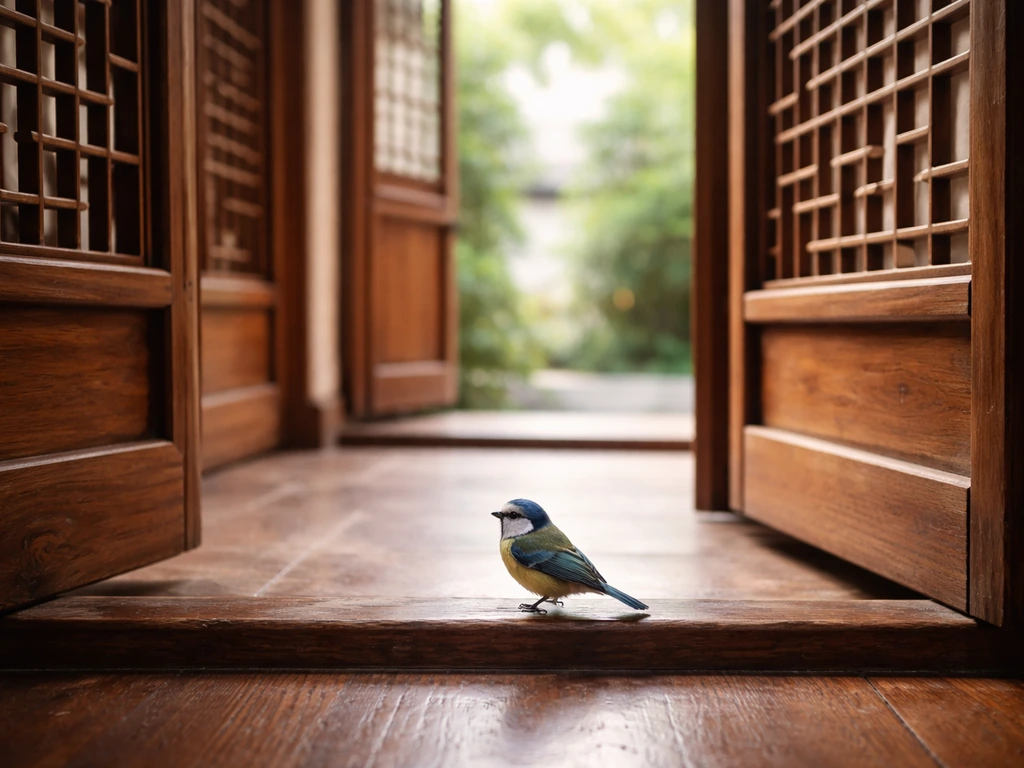
What Chinese culture says when a bird flies into your house
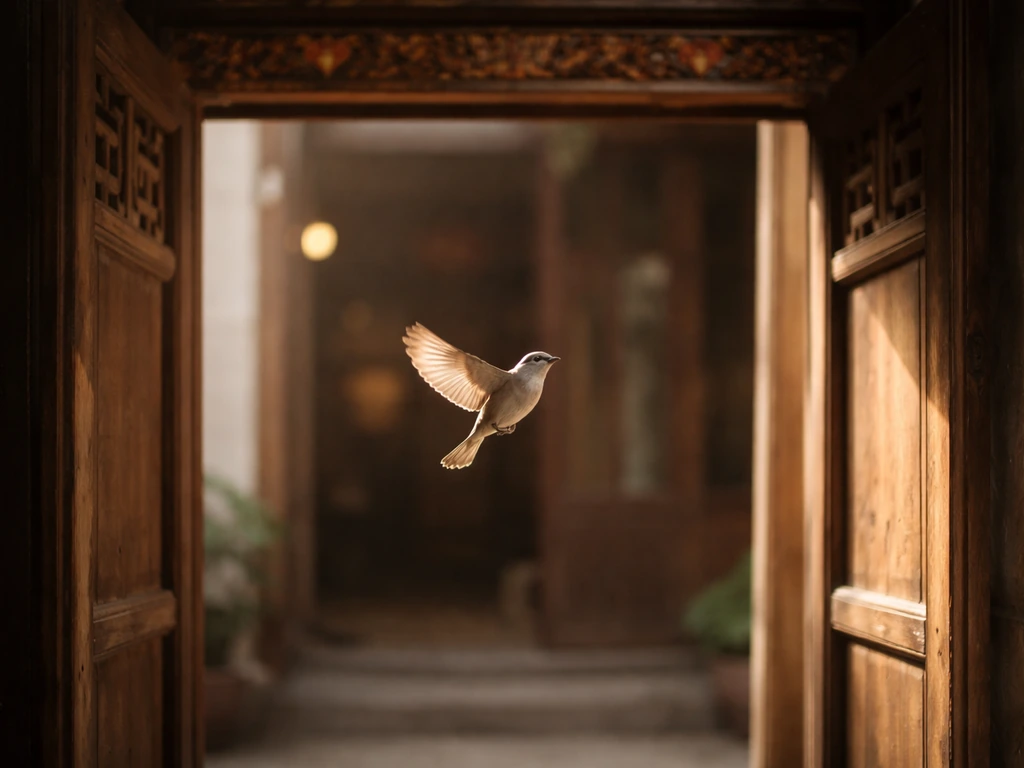
Chinese folk belief has long treated birds as messengers between the earthly and spiritual realms. The appearance and flight of birds was widely regarded as augury, and this tradition runs deep in Chinese cultural history. When a bird makes its way indoors, it crosses a threshold that ordinary wild creatures rarely cross, which is precisely why the event carries symbolic weight.
The general folk reading in Chinese tradition is auspicious. A bird darting into a room or interior space has historically been connected to coming luck for the people who live there. This isn't vague wishful thinking either. Classical Chinese fengshui and folklore texts frame the home as a living energy field, and a bird choosing to enter it was seen as a sign that the home's vital energy (生气, or shengqi) is healthy and attractive to creatures associated with good omens.
That said, not every bird gets the same welcome in Chinese symbolism. The crow has long been viewed as an omen of evil in Chinese folk tradition, making a crow indoors a considerably less welcome visitor than, say, a swallow. This is worth knowing because the meaning of a bird flying into your house can shift dramatically depending on which bird actually showed up.
Bird-by-bird: what Chinese folklore says about specific visitors
Chinese folk tradition is specific about which birds carry which meanings. Here's how the most common indoor visitors are typically interpreted:
| Bird | Chinese Folk Meaning | General Tone |
|---|---|---|
| Swallow (燕子) | Good fortune, happiness, and a prosperous household; swallows entering a home are strongly tied to fengshui blessings | Very auspicious |
| Magpie (喜鹊) | Herald of good news (报喜鸟); morning visits linked to the arrival of honored guests or positive events | Auspicious |
| Sparrow (麻雀) | Brings joyful energy (喜气); a sign the home has lively, welcoming energy | Auspicious |
| Crow (乌鸦) | Historically associated with bad omens and evil in Chinese folklore | Inauspicious |
| Unknown small bird | Often treated as a general good luck sign under broad folk readings | Mildly auspicious |
Swallows deserve a special mention. In Chinese fengshui culture, a swallow flying indoors is one of the most celebrated signs a household can receive. They're directly associated with 吉祥 (jiaxiang, meaning auspiciousness) and are believed to choose homes with good energy. Many families historically felt honored when swallows nested inside or near the home. The magpie runs a close second. Its name literally contains the character for happiness (喜), and it's been called the herald bird, the one who announces that something good is coming your way.
Spiritual messages, luck, warnings, and timing
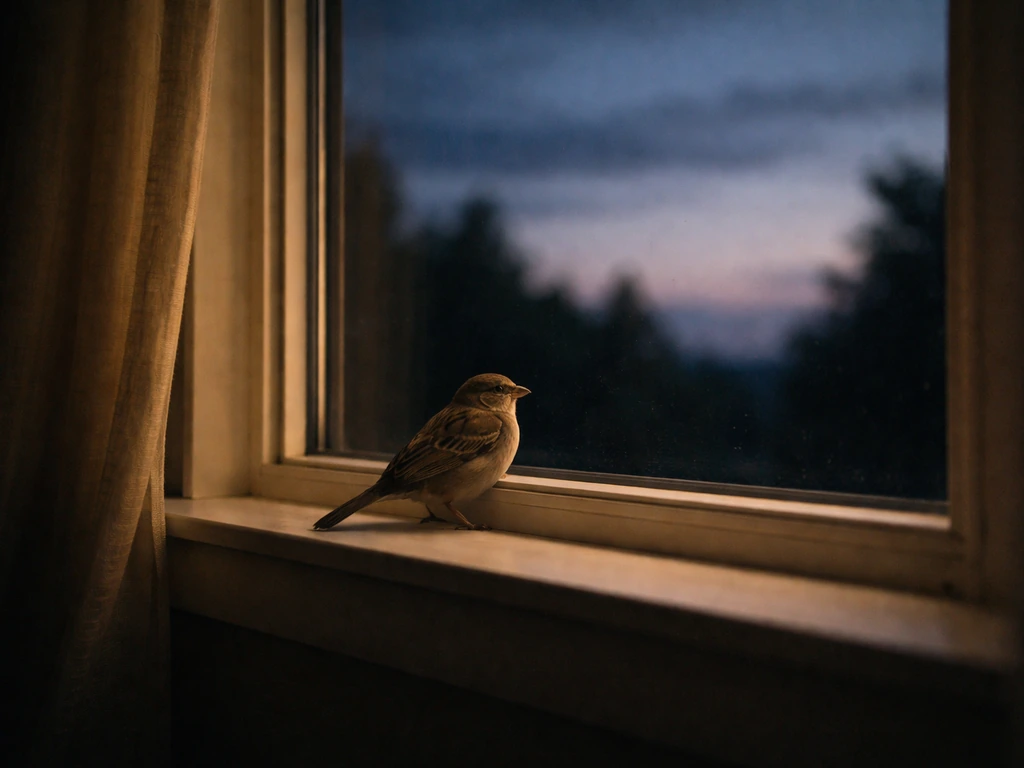
Chinese folk interpretation doesn't just look at what bird appeared. It also weighs when and how. Timing matters considerably in Chinese omen reading, and this applies to birds indoors as much as anywhere else. A magpie calling or appearing at dawn, for instance, is traditionally linked to a visit from an important person or the arrival of good news that day. The same bird at an unusual hour or behaving erratically carries a different shade of meaning.
From a spiritual standpoint, many people drawn to Chinese metaphysical traditions interpret a bird in the house as a messenger carrying an energetic signal. The core question isn't just 'is this good or bad?' but rather 'what might this be directing my attention toward?' If you've been waiting on news, a decision, or a change in circumstances, Chinese folk tradition would read this event as a sign that movement is coming. If the bird enters calmly and exits calmly, the energy is considered clean and positive. If the bird panics, crashes into walls, or dies inside, the reading shifts toward caution.
It's also worth knowing that Chinese folk readings vary by region, family tradition, and time period. There is no single standardized answer that applies universally across all of Chinese culture. What a family in rural Guangdong believed about a sparrow in the kitchen may differ from what a family in Shandong believed. Treat these interpretations as a living tradition, not a fixed rulebook.
Folk household beliefs and scenario-specific readings
Beyond the bird's identity, Chinese household folklore pays attention to specific scenarios. The full tradition around a bird flying in the house includes a range of context clues that shape the reading. Here are the most commonly cited ones:
- A bird that enters, rests calmly, and then leaves on its own: generally read as a peaceful good omen, a brief blessing passing through your space
- A bird that stays for an extended period or returns multiple times: interpreted as a stronger sign, possibly pointing to a significant change or opportunity approaching
- A bird that flies directly to a specific person: some folk traditions hold that the message is meant for that individual specifically
- A bird that dies inside the house: treated more cautiously, often prompting a household cleansing or protective ritual
- A bird that arrives during a significant family event (birth, illness, major decision): the timing amplifies the reading considerably in folk interpretation
Cross-cultural comparison is useful here too. European folklore, for instance, holds that a robin flying indoors brings good luck, while a cuckoo entering a home is considered a bad omen. These parallel structures, different birds carrying opposite meanings, mirror the way Chinese tradition handles the crow versus the swallow. The underlying logic across cultures is strikingly similar: some birds are aligned with life and renewal, others with death and misfortune.
For many readers, this event also raises questions about what happens when a bird seems to be actively seeking entry rather than accidentally stumbling in. If you've noticed a bird persistently hovering near your windows or door, the symbolism gets even more pointed. A bird trying to get in your house carries its own layer of folk meaning, suggesting that the energy or message is pressing for your attention rather than simply passing through.
Practical causes: why birds actually fly inside
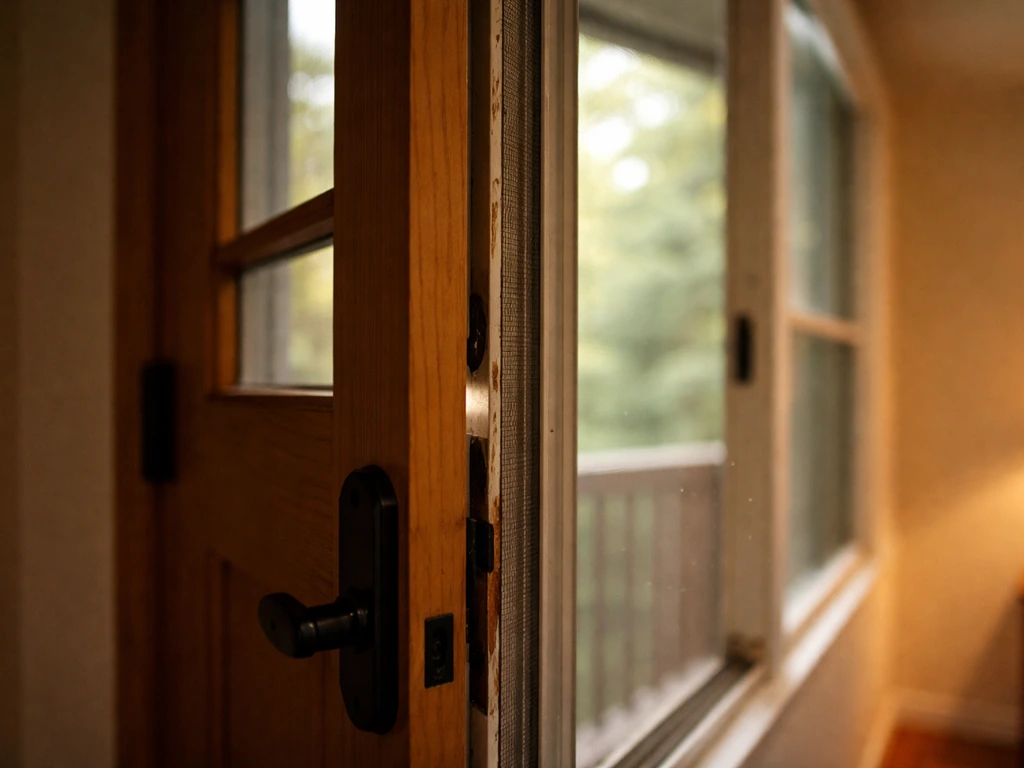
Here's the grounding piece that belongs in any honest guide. Birds fly into homes for completely practical reasons, and understanding those doesn't require you to abandon the symbolic reading if it resonates with you. Both things can be true at once.
- Open doors and windows during warm weather: the most common cause by far. Birds follow light, air movement, and insects
- Reflective glass confusion: birds can mistake a window reflection for open sky and fly toward it, sometimes making it inside through an adjacent opening
- Nesting season (spring and early summer): birds are actively scouting enclosed spaces for nesting sites and may explore interior rooms
- Weather and barometric pressure: before storms or major weather shifts, birds sometimes behave disoriented and seek shelter in unusual places
- Young or fledgling birds: juvenile birds learning to fly are far more likely to end up indoors accidentally than experienced adults
- Chasing prey: small birds may follow insects inside without realizing they've crossed into a human space
None of these explanations make the experience less interesting or meaningful if you choose to read it symbolically. But they do matter for how you respond in the moment, which is where we go next. It's also worth reading up on what it means when a bird flies into your house across different traditions, because the practical and symbolic interpretations often inform each other in useful ways.
What to do right now: practical steps and respectful rituals
Whether you're treating this as a spiritual sign or a practical accident, your first job is the same: help the bird find its way out safely and calmly. Here's how to handle it step by step.
- Stay calm and move slowly. A panicked bird is dangerous to itself and will exhaust quickly. Lower your energy in the room before doing anything else.
- Close off interior doors to contain the bird to one room. This reduces the area it can crash around in.
- Open the largest window or external door in that room as wide as possible. Then step back and give the bird space and time to find the opening.
- Dim or block other light sources in the room so the open exit becomes the brightest point. Birds naturally move toward light.
- If the bird is on the floor or stunned, place a light cloth gently over it to calm it, then carry it outside using cupped hands and release it facing open space.
- Avoid chasing the bird with brooms or towels. This causes panic and injury.
If you want to add a culturally resonant layer to the experience after the bird has safely left, Chinese folk tradition offers some simple options. Burning a small amount of incense at the threshold of the room, setting an intention of gratitude and welcome for whatever good energy may be arriving, or simply pausing to notice what you were thinking about when the bird appeared are all practices compatible with Chinese metaphysical tradition. Some households sprinkle a few grains of rice near the entry point as a gesture of abundance and hospitality toward the omen. None of these need to be elaborate. The intention behind the action carries more weight than the ritual itself in folk practice.
If you're someone who finds meaning in these encounters, you might also take a moment to journal what was on your mind when the bird arrived. Chinese augury, like many omen traditions, assumes the timing is rarely accidental. What question were you sitting with? What decision is pending? The bird's visit might be your own intuition finding an external mirror.
Is this good luck or something to worry about?
Most of the time, a bird in the house is simply a bird in the house, and if it's a swallow, magpie, or sparrow, Chinese folk tradition would tell you to feel genuinely good about it. But there are situations where it's worth paying closer attention, either practically or symbolically. Whether a bird flying into your house is good luck really does depend on the full context, not just the fact of the visit.
On the practical side, worry is warranted if the bird appears injured, disoriented, or unable to fly after being released. In those cases, contact a local wildlife rehabilitator rather than attempting care yourself. If you find a sick or injured bird, Birds in Backyards recommends using gloves or a towel, placing the bird in a ventilated box, and keeping it dark and quiet while you arrange help. If birds are entering your home repeatedly, you likely have a structural gap, broken screen, or open vent that needs addressing. Multiple incidents in a short period usually point to an access problem, not a string of omens.
On the symbolic side, some people feel unsettled by the idea that a bird in the house could carry a warning rather than a blessing. It's true that in certain folk contexts, particularly when the bird is a crow, behaves erratically, or dies inside, the traditional reading turns cautious. If you're feeling anxious about the event, the most grounded thing you can do is acknowledge the feeling without catastrophizing. The association between a bird flying inside and death exists across several folklore traditions, but it's one interpretation among many, and it's far from the dominant reading in Chinese folk belief, where the event is far more often treated as a positive signal.
If the visit genuinely unsettles you, a simple protective gesture from Chinese folk practice, like placing a small mirror near the entry point to reflect any negative energy outward, or burning white sage or sandalwood, draws on widely used household cleansing traditions and may help you restore your sense of calm. The goal isn't to ward off a bird. It's to reset the energy of the space so you feel grounded again.
What you take from this moment is yours to decide
Chinese folk tradition offers a rich, layered way to read a bird in the house, and the dominant thread is hopeful. Swallows signal abundance. Magpies announce good news. Sparrows bring joyful energy. Even the more ambiguous readings, a bird whose species you can't identify or whose behavior was unusual, are typically treated as prompts to pay attention rather than causes for alarm.
What matters most is what the experience means to you in the context of your life right now. If you've been waiting for a sign, this might feel like exactly that. If you're a skeptic, you can appreciate the practical fascination of a wild creature briefly sharing your space and let it go at that. Both responses are honest. Chinese folk tradition itself never claimed to offer certainty. It offered a way of paying attention to the world that assumes nothing is entirely random, and that's a posture worth holding lightly, whatever you believe.
FAQ
Does the bird’s color or markings change the Chinese meaning of a bird flying into my house?
A dead bird inside is the one scenario many Chinese folk readings treat more cautiously. Even then, it is usually read as a prompt to reset and protect the home rather than a guaranteed tragedy. If possible, handle it with care and contact local wildlife or waste services for proper disposal.
What should I do if I can’t identify the bird species that entered my home?
Yes, in practice. People often pay attention to whether the bird looks dark and heavy (which may align people’s intuition with harsher symbolism) or bright and lively (which people associate with smoother omens). However, color is not a universal code across regions, so the bird’s species and behavior (calm vs panicked) are typically treated as more important.
Is it better to interpret the event symbolically or focus only on practical reasons?
Treat it as an “attention prompt” rather than trying to force a perfect match. Chinese folk tradition varies by region, so if you cannot identify it, focus on what happened (time of day, direction of entry, calm exit or distress) and then do the practical steps to ensure safety. Symbolically, you can keep it simple, notice what you were thinking about, and avoid assuming the worst.
What does it mean if birds enter my house repeatedly over several days?
If the bird is repeatedly appearing, treat it as a likely access and attractant problem first, then add symbolism only if you still want that layer. Recurrent visits usually point to openings, outdoor nesting near vents or windows, or light at night that draws birds indoors.
Does it matter whether the bird enters through the front door versus a window or balcony?
Yes. A bird entering through a main door or front entry is often treated as more significant than one that simply lands in a room, because thresholds and “gateways” are where folk tradition reads energy exchange most strongly. Still, the core guidance is the same, help it out safely and check for entry points.
Should I try to catch and feed the bird, or is it safer to just let it leave?
Most households would prioritize safety. If the bird is injured, becomes exhausted quickly, or you cannot safely coax it out, do not attempt home care. Contact a local wildlife rehabilitator, because improper care can be harmful and illegal in some areas.
What does it mean if the bird seems desperate to get in rather than accidentally flying inside?
When a bird shows aggressive persistence toward windows or doors, Chinese folk interpretation can shift from “passing message” to “urgent attention.” Practically, that persistence often means it is disoriented by reflections, screens, or light sources, so you should reduce indoor lights, open the nearest exit, and cover other reflective surfaces.
How does the bird’s behavior after entering affect the meaning?
If the bird exits quickly and calmly, many people read it as “clean” and straightforward, suggesting movement without disruption. If it circles for a long time, crashes, or cannot orient, it may be read more cautiously, but it is also a sign of disorientation, so treat it as a cue to adjust lighting and open a clear escape route.
How can I avoid overreacting to the symbolism, especially if interpretations conflict by region?
Family and regional differences matter, so do not treat any single interpretation as a universal rule. A good decision aid is to use the tradition as a lens, then anchor your response in what you can verify (species, behavior, access points, bird condition). If you feel anxious, choose the lowest-stakes action that restores calm, like a gentle cleansing or a gratitude intention.
Next Articles
Bird Flying in the House Meaning and What to Do Now
Find bird flying in the house meaning and what to do now safely, plus spiritual, biblical, and cultural interpretations.
Meaning of Bird Flying Into House: Practical and Spiritual Guide
Learn practical steps and spiritual meanings of a bird flying into your house, plus safe next actions.
Why Is My Bird Flapping Its Wings at Me? Causes and What to Do
Understand why your bird flaps wings at you and what to do, from hormones and stress to attention and warnings.