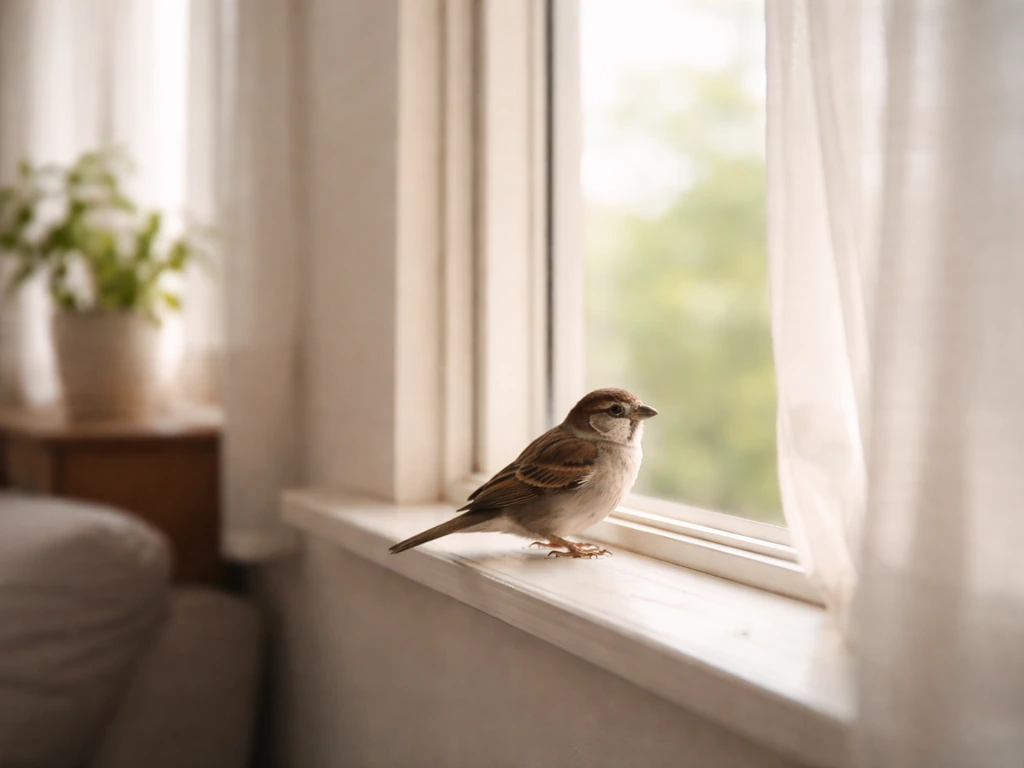
A bird flying into your house does not mean someone is going to die. That's the direct answer, and it matters to say it clearly, because the fear behind that search is real. What it does mean depends on which tradition you're drawing from, what the bird did, and honestly, what resonates with you personally.
Bird Flying in House Meaning: Death Omen or Symbol?

Maya Hartwell
3 May 2026
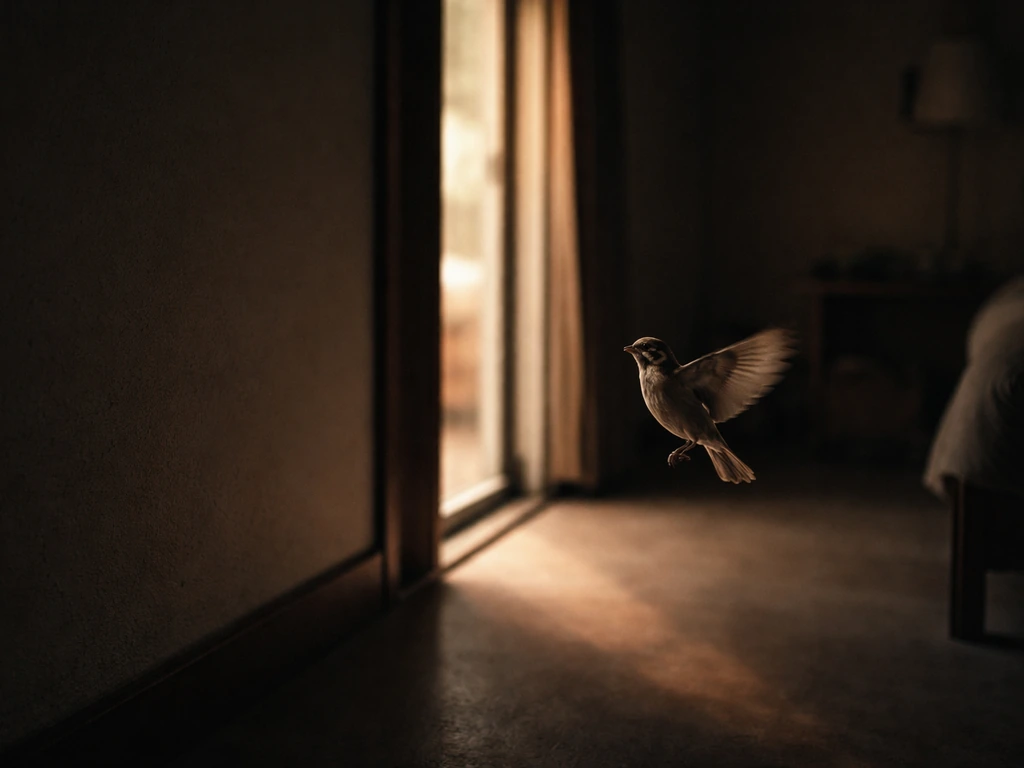
People often search for the bird fly in your house meaning, and this article explains the most common interpretations alongside the practical, physical reasons birds behave this way. If you’re looking for the meaning of bird flying into house specifically, this is where the tradition and the bird’s behavior both matter. Across cultures, a bird indoors can signal a message, a transition, a shift in energy, or simply a confused animal that followed the light.
The death omen interpretation is one thread in a much larger tapestry, and it's far from the dominant one once you look at the full picture.
Why birds fly into houses (and why it's usually not mysterious)
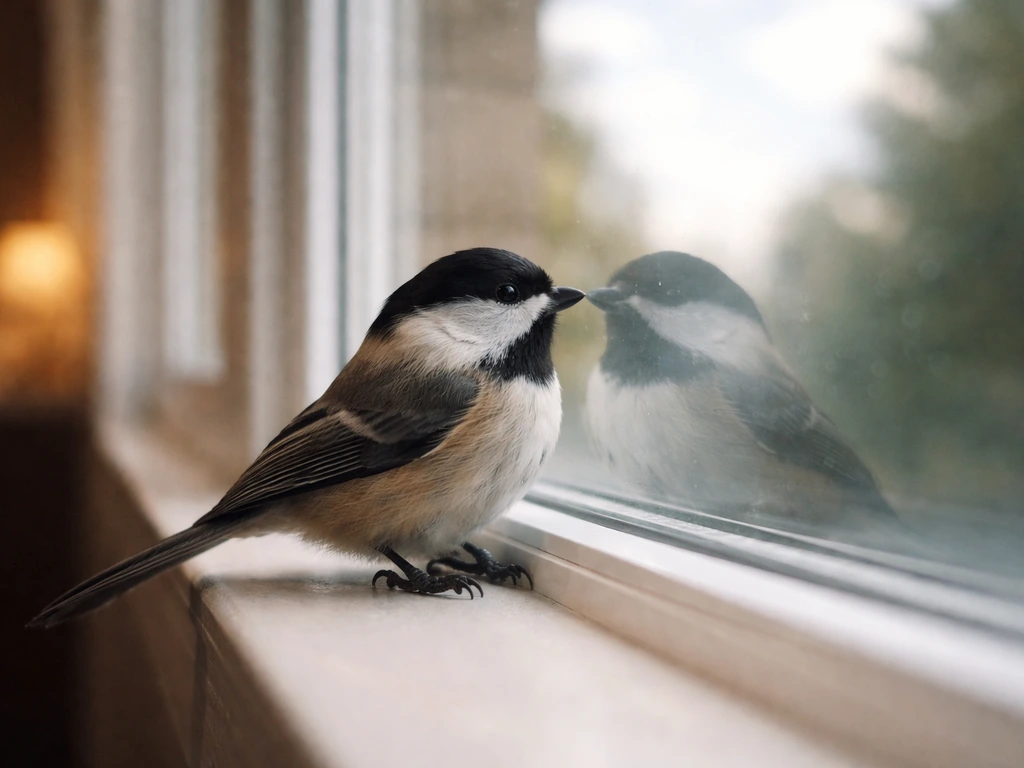
Before diving into symbolism, it helps to understand what's actually happening physically, because the natural explanation often softens the fear considerably. Birds fly into houses and collide with windows primarily because of glass. According to the Cornell Lab of Ornithology, birds see reflections of sky and vegetation in windows and interpret them as open space they can fly through. If you have potted plants near a window, or your window looks out onto trees, a bird can genuinely believe it's flying toward habitat rather than glass.
During breeding season, a different dynamic kicks in. Audubon notes that birds (especially robins and cardinals) will repeatedly approach windows because they see their own reflection and mistake it for a rival. They're not trying to enter your home symbolically. They're defending territory from an imaginary competitor. The USGS adds that night collisions often involve migrating birds disoriented by artificial light from buildings, since many species navigate by starlight and can lose their bearings around lit structures. So if a bird showed up at night or seems to be hitting the same window repeatedly, biology is almost certainly the explanation.
An open door or window during warmer months is another common entry point. Birds follow light, warmth, and the smell of vegetation. A bird that wanders inside through an open back door isn't delivering a message so much as making a navigational error. That doesn't mean the experience can't feel meaningful, but the starting point should be curiosity rather than dread.
What to do right now: getting the bird safely back out
If a bird is currently in your house and you want to help it leave without harm, the steps are straightforward but require a calm, methodical approach. Panic from you, a pet, or loud noise will only make the bird more frantic and likely to injure itself.
- Remove or contain any pets immediately. Cats especially can seriously injure a bird within seconds.
- Turn off interior lights in the room where the bird is. Darkness reduces the bird's panic response.
- Close off other rooms so the bird has fewer places to hide and become trapped.
- Open the largest window or exterior door in the room, ideally one that faces outside directly.
- Step back and give the bird space. Most birds will find the opening on their own within a few minutes once they're not being chased.
- If the bird is not finding the exit, try gently encouraging it by slowly walking toward it from the opposite side of the room, which steers it toward the light of the open exit.
- Do not grab or throw anything at the bird. A towel can be used as a last resort to gently guide a grounded bird, but only if absolutely necessary.
The Schuylkill Center for Environmental Education specifically recommends turning off lights and blocking off areas so the bird has one clear path to an exit. That combination of darkness inside and bright light outside is your best tool. Once the bird leaves, close the window or door to prevent re-entry.
If the bird is injured or dead: what to do and what it might mean
Handling an injured bird
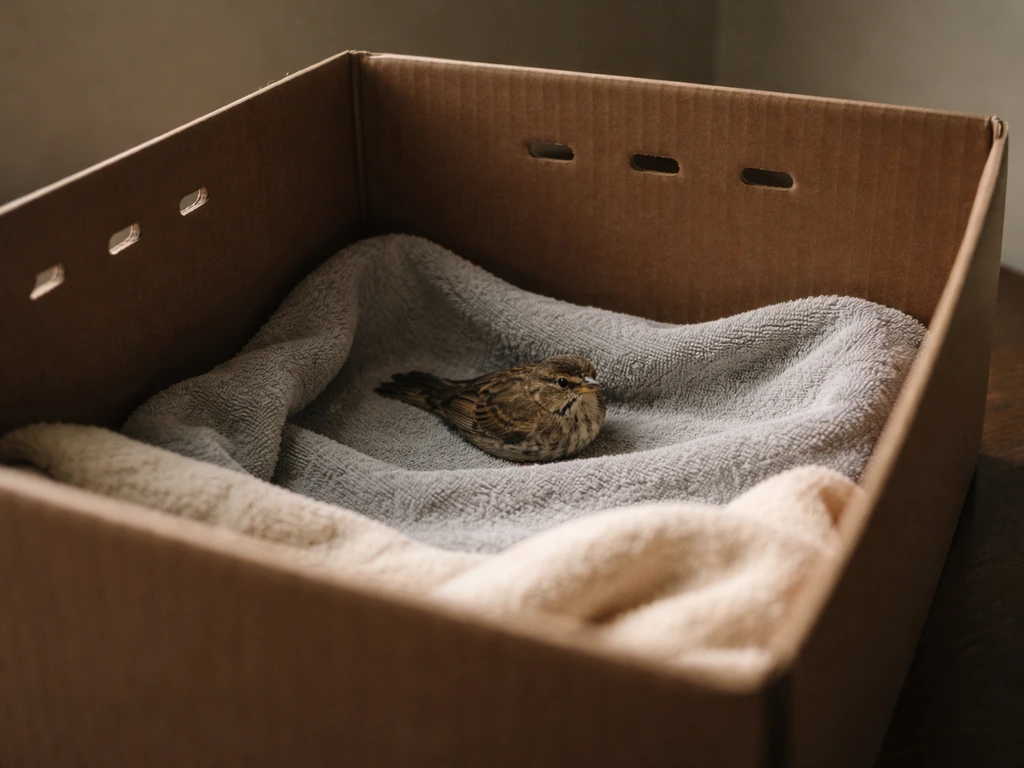
If the bird collided with a window before entering, or if it's grounded and not flying, treat it as potentially injured even if it looks fine. All About Birds warns that window-collision victims can have internal injuries that worsen over time, so a bird that seems okay may still need help. The recommended approach from both Audubon and Tufts Wildlife Clinic is the same: gently place the bird in a shoebox or paper bag with air holes, lined with a small cloth or paper towel. Keep the container in a warm, dark, quiet spot away from people and pets. Do not try to feed or water it. Contact a local wildlife rehabilitator or wildlife rescue organization as soon as possible.
Give the bird 15 to 30 minutes in the quiet dark box. Many window-stunned birds recover and can be released. If it isn't alert and upright within that time, it needs professional help. The Golden Gate Bird Alliance recommends taking non-recovering birds immediately to a wildlife rescue rather than waiting.
Handling a dead bird
If the bird is already dead, do not pick it up with bare hands. The CDC is clear on this: avoid direct contact with dead wild birds. Use disposable gloves or an inverted plastic bag to place the bird into a sealed garbage bag. If you're unsure about local disposal rules, contact your local animal control or health department. After handling anything the bird touched, wash your hands thoroughly. This isn't meant to alarm you. It's just good hygiene, the same way you'd handle any wildlife you find outdoors.
The symbolic weight of a dead bird found indoors
Finding a dead bird inside your home does carry heavier symbolic weight in most traditions than a living bird that found its way out. Across folklore and spiritual frameworks, a dead bird indoors is more often interpreted as a symbol of endings, the close of a chapter, or a need to pay attention to what in your life may need releasing. That's meaningfully different from "someone you love will die." Endings can be relationships, jobs, habits, or old versions of yourself. If this interpretation resonates, it may be worth sitting with the question of what transition you might be approaching.
What birds flying indoors have meant across spiritual traditions
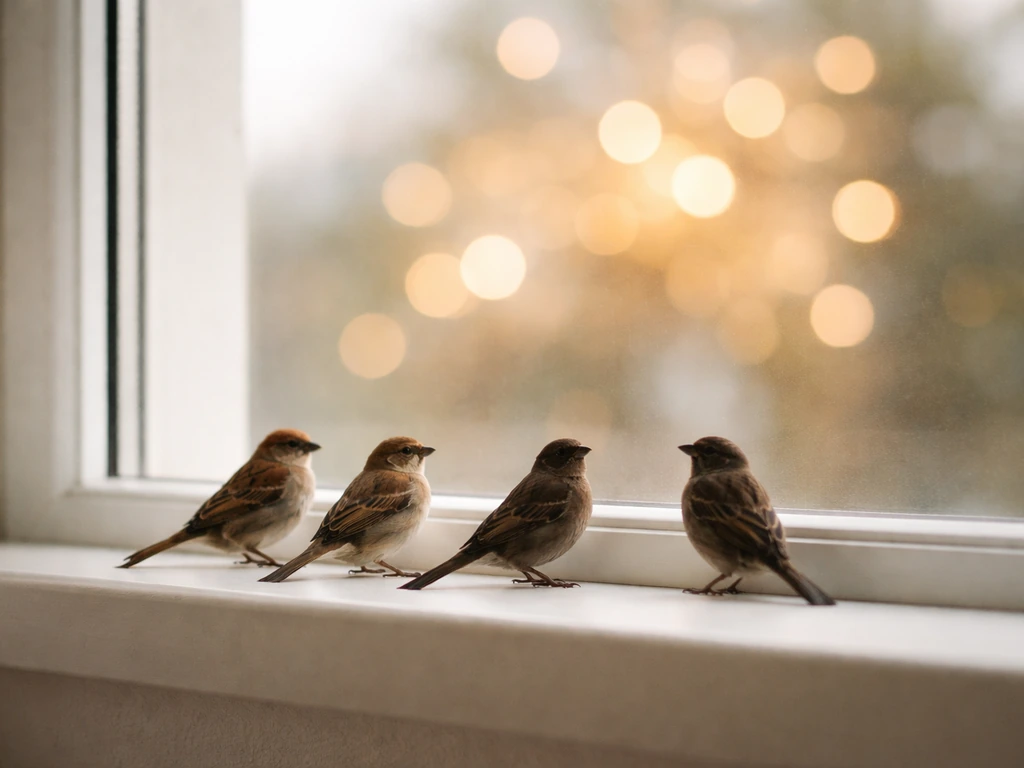
Birds have been spiritual messengers across virtually every human culture, long before anyone coined the word "omen." That cross-cultural consistency is part of why a bird in the house feels significant. When the same image appears in Celtic lore, indigenous traditions, Chinese mythology, biblical texts, and Appalachian folk belief, it's worth taking seriously as a symbolic event, even if the specific interpretation varies considerably.
In many indigenous and shamanic traditions, birds are seen as messengers between realms, carrying information between the physical and spiritual worlds. A bird entering your home in these frameworks is often read as a message being delivered, not a threat being announced. The question isn't "is someone going to die?" but "what is being communicated, and am I paying attention?"
In Celtic traditions, birds (especially wrens and robins) were considered sacred and closely tied to the spirit world. A bird entering the home was sometimes seen as a soul visiting, which could be comforting rather than ominous. In feng shui and Chinese metaphysical traditions, the meaning shifts depending on the type of bird and the circumstances.
If you're looking for the Chinese meaning of a bird flying into the house, it is usually interpreted through symbolism tied to the bird type and the state of energy in the home Chinese metaphysical traditions. A swallow entering is generally considered auspicious. A crow or dark bird is more ambiguous. Feng shui practitioners may interpret a bird entering as affecting the flow of energy (qi) in the home, but this doesn't default to a death interpretation.
As one feng shui source notes, different birds carry different energies, and the context matters considerably.
The species, color, behavior, and even time of day all shift the reading in divinatory traditions. A red bird during grief is read differently than a sparrow on a sunny morning. This variability is worth remembering: there's no single authoritative answer, even within any one tradition.
The death interpretation: what the folklore, Bible, and metaphysical traditions actually say
Folklore and regional superstition
The death omen association is real and widespread, so it's worth addressing directly rather than dismissing. Snopes documents a longstanding superstition, particularly common in Western folk belief, that a wild bird flying into a home portends ill luck or death. Appalachian and Southern folklore, as recorded in Hillbilly Slang and similar sources, frames the belief this way: a bird in the house means either a visitor is coming or someone is going to die.
If you are looking for the bird flying in the house meaning, this is the belief most people are referring to when they talk about omens. The ambiguity built into that belief is notable. Even within the tradition itself, death is only one of two possible readings.
Snopes also documents variants involving specific behaviors: a bird that enters, circles the room, lands on a chair, and then departs is the version most associated with the death omen in some folklore strands. A bird that simply flies in through an open window and leaves quickly carries less weight in these traditions. Context, behavior, and what happens next all color the interpretation.
Biblical and Christian angles
Biblical tradition doesn't associate birds entering homes with death omens specifically. In scripture, birds are more often symbols of divine care, freedom, and the Holy Spirit. The dove carries peace and covenant. Sparrows are used to illustrate God's awareness of even the smallest life. The raven appears as a provider in Elijah's story. Where Christian folk tradition has inherited the death omen idea, it tends to be a regional cultural overlay rather than something rooted in scripture. For readers approaching this from a Christian perspective, a bird in the house is more authentically read through a lens of divine attentiveness than as a warning of death.
Metaphysical and spiritual interpretations
In metaphysical and new age frameworks, a bird entering the home is most commonly interpreted as a message about transition, change, or the need to shift perspective. Death in this context is almost always symbolic rather than literal: the death of a situation, the end of a cycle, or a doorway into something new. Some practitioners interpret a bird indoors as a sign that a spirit or departed loved one is nearby, especially if the event occurs around a time of grief or anniversary. Others see it as a prompt to examine what needs releasing from your life. The emphasis is on message and meaning, not on fate or prediction.
How to decide what this means for you
This is where the interpretive work becomes personal, and it's honestly the most important part. Folklore and tradition can offer frameworks, but they can't hand you the meaning of your specific experience. A few questions are worth sitting with honestly.
- What was happening in your life when this occurred? Symbols tend to land hardest when they rhyme with something already in motion.
- What was your immediate gut response, before you started searching? Fear, wonder, sadness, calm? Your first reaction often contains information.
- Has this happened before, or is this a one-time event? Repeated incidents (a bird hitting the same window daily, or recurring visits over days) carry more interpretive weight than a single occurrence.
- What species was it? Different birds carry different associations across cultures. A raven or crow carries different traditional weight than a sparrow or wren.
- Was the bird alive and energetic, stunned, or dead? The condition of the bird shapes the symbolic read considerably.
One practical note on repetition: if a bird keeps returning to the same window repeatedly, Audubon explains this is almost certainly a territorial behavior triggered by reflection. The bird sees itself and fights the "rival" it sees in the glass. This is a very natural and seasonal behavior, not a spiritual escalation. You can break the cycle by covering that window section with paper or tape on the outside, or by applying window decals spaced on a 2-inch by 2-inch grid as the USGS recommends.
Confirmation bias also plays a role here, and it's worth naming. Snopes notes that the death omen belief tends to persist partly because people remember the times a bird appeared and something bad later happened, and forget the many times nothing followed. That's not a reason to dismiss spiritual experience, but it is a reason to hold the interpretation loosely rather than treating it as certainty.
A quick comparison of traditions and what they say
| Tradition | Common Interpretation | Death Specifically? |
|---|---|---|
| Western folklore (Appalachian, European) | Bad luck, visitor coming, or death omen | Sometimes, not always |
| Biblical / Christian | Divine attention, spiritual message, care | Rarely, not scripturally supported |
| Chinese folk belief / feng shui | Varies by bird type; can be good luck or warning | One of many possible readings |
| Celtic | Soul visit, spirit world messenger | More comforting than ominous |
| Indigenous / shamanic traditions | Messenger between realms, communication from spirit world | Transition, not necessarily death |
| Metaphysical / new age | Symbolic transition, releasing old cycles, spirit contact | Symbolic death only (change/ending) |
Cleaning up and taking care of yourself afterward
Practical hygiene
After the bird has left or been removed, clean any surfaces it touched or left droppings on. Bird droppings can carry pathogens, and the CDC recommends avoiding contact with bird feces and contaminated materials. Use disposable gloves when cleaning, wipe down surfaces with a disinfectant cleaner, and wash your hands thoroughly afterward. If the bird was in the house for a significant amount of time, check the area for any droppings you might have missed. Ventilate the room. This doesn't need to be a dramatic deep clean, just thorough and sensible.
If you had to handle the bird directly, change your clothes and wash them, especially if the bird was visibly sick or dead. The CDC advises contacting local animal control or a health department if you're unsure how to dispose of a dead bird based on your local rules.
Preventing future visits
To reduce future bird window collisions, keeping curtains or shades drawn during the day reduces the reflective effect from inside. On the outside of windows, apply bird-deterrent decals in a 2-inch by 2-inch grid pattern (not just one or two stickers in the center, which birds fly around). Moving potted plants away from windows eliminates one of the main visual lures. If a particular bird is returning to the same window repeatedly, covering that section of glass on the outside temporarily will break the territorial reflection cycle within a few days.
Emotional and spiritual processing
If the experience left you unsettled, that feeling deserves attention regardless of whether the bird was "an omen" or not. Something that startles us into asking big questions is worth sitting with. Journaling about the event, what you felt, what was happening in your life, and what interpretations resonated, can clarify things more than any single article will. If you come from a faith tradition, prayer or meditation in the aftermath is a natural next step.
If you work with cleansing or protective rituals (smoke cleansing, salt, prayer over the threshold), this is a reasonable moment to use them, not out of fear, but as a way of marking the moment and restoring a sense of peace and intentionality in your space.
The broader topic of birds flying into and around homes carries many shades of meaning depending on context: whether a bird is trying to get in versus actually entering, whether it's a one-time visit or a repeated pattern, and what culture or framework you're drawing from. Those distinctions matter, and they're worth exploring at whatever depth feels right for you. What's most important right now is that you have what you need to handle the immediate situation safely, understand the range of what it might mean, and make your own thoughtful interpretation rather than defaulting to the most frightening one.
So: what does this experience bring up for you? That question is ultimately more useful than any tradition's fixed answer.
FAQ
Does a bird flying into my house really mean someone will die soon?
If you meant “death” literally, the answer is still no, a flying bird is not a reliable predictor of anyone’s death. Treat it as two separate tracks: symbolism is personal, while the immediate task is safety (get the bird out calmly, then clean droppings if any). If someone is actually sick or injured, rely on real-world signs and medical guidance, not the omen story.
What specific bird behavior makes the “death omen” belief feel stronger?
In many death-omen interpretations, the “circles, lands, then leaves” pattern carries more weight than a quick fly-by. If the bird only entered briefly and exited fast, most traditions (and the physical explanations) treat it as lower significance. Still, you can note your exact sequence and time to help you decide what meaning, if any, you want to attach.
Is the meaning different if the bird shows up at night versus daytime?
Time of day matters for the physical cause. Collisions at night are more likely linked to disorientation from building lights, so a nighttime event points more to navigation problems than spiritual messaging. Daytime events near windows also fit reflection and territorial behavior, especially during breeding season.
What should I do if the same bird keeps coming back to the same window?
Yes. A bird that appears repeatedly usually signals a recurring cause, most commonly a reflection “rival” or a visible attraction like plants or a nearby feeder. Before treating it as symbolic, try fixing the practical trigger (cover the outside of the window section, reposition plants, or add decals in a grid). If it stops after those changes, the pattern was likely environmental.
Does it matter if the bird only hits the window but never enters the home?
There’s a key difference between “in the house” and “at the door.” If it never fully enters and just hits the glass near an opening, that typically suggests window confusion rather than a message about your home. If it actually flies indoors and lands in rooms, you can still interpret it symbolically, but the physical exit-control steps stay the same.
How can I tell if a window-collision bird needs professional help right away?
If the bird is grounded, breathing oddly, bleeding, or you see it unable to right itself, consider it potentially injured even if it looks “mostly okay.” Do not give food or water, and keep it warm, dark, and quiet in a ventilated container while you contact a wildlife rehabilitator. Waiting too long can worsen internal injuries after window collisions.
Is it really dangerous to touch the bird if it’s dead or seems sick?
“Do not pick it up with bare hands” applies both to the dead bird and to a live bird that may be bloodied or visibly sick. Use disposable gloves, avoid touching your face, and disinfect the area after cleanup. If you have cuts on your hands or are immunocompromised, skip handling entirely and contact local services.
What’s the safest way to clean droppings or feathers after the bird leaves?
Yes, handling can spread contamination, so take a small hygiene protocol seriously. After cleanup, ventilate the room, wipe surfaces with a disinfectant appropriate for the surface type, and wash hands thoroughly. If there are many droppings or large debris, consider using a mask and following local guidance for wildlife waste.
Should I worry about pets or kids if a bird was in the house?
If the bird was near children, pets, or food prep areas, treat it as a contamination event. Remove pets from the room during cleanup, cover or discard any exposed open food, and delay using reusable dishware in the area until it is cleaned. This is practical hygiene, even when you choose not to interpret the event spiritually.
How do I interpret this without letting fear take over?
Pick one meaning question and one action. For example, “What transition feels active in my life?” plus “What’s the next practical step to prevent repeat collisions?” This prevents the experience from turning into fear-based guessing, while still honoring the personal significance you may feel.
How can I avoid confirmation bias when the omen story feels emotionally convincing?
It’s okay to set a boundary: decide not to treat the event as a prediction and only allow it as reflection. A useful decision aid is to write two columns, what traditions claim versus what you can observe in your environment (reflections, lights on at night, plants, open doors). Observation should guide your physical response, and reflection can guide your personal meaning.
Next Article
Bird Fly in Your House Meaning: Spiritual and Practical Steps
What bird fly in your house means spiritually and practically, plus step by step ways to get it out safely.