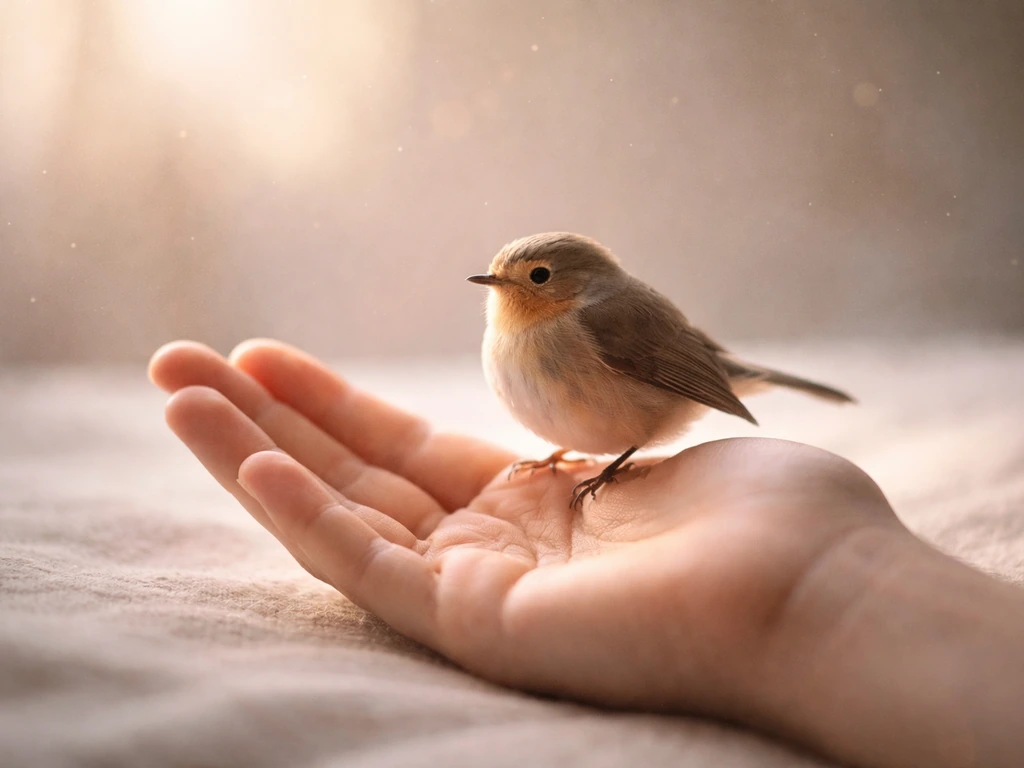
A bird landing on your hand in a dream almost always points to something arriving in your life that requires you to be open, still, and receptive. Across spiritual traditions and psychological frameworks, the hand represents agency and action, and when a bird chooses to land there, the combined image suggests a message, opportunity, or connection that is close enough to grasp but gentle enough to scare away if you force it. The exact meaning shifts depending on the bird's species, color, your emotional state during the dream, and what's happening in your waking life right now.
Dream Meaning of a Bird Landing on Your Hand and What It Signifies
Maya Hartwell
25 Apr 2026
Quick meaning check: why this dream shows up
Birds in dreams have a long-standing symbolic connection to freedom, spiritual transcendence, and communication. They appear in dream-symbol traditions as messengers bridging the conscious and unconscious, the earthly and the divine. The landing on your hand specifically adds a layer of intimacy and directness that changes the interpretation significantly. It isn't a bird flying past or sitting on a fence in the background.
It's choosing you, choosing your hand, the part of your body most associated with doing, creating, and reaching out. Dream interpretation sources that track body symbolism note that when a bird makes contact with a person rather than landing nearby, the emphasis shifts toward receiving a message or being encouraged to take action. So if you woke up from this dream asking "what does this mean? ", that instinct to pay attention is already part of the answer.
It's also worth knowing upfront that dream meaning isn't a one-size-fits-all equation. Carl Jung's approach to dreams treated them as a theater of symbols, not a fixed dictionary. He emphasized asking "why this symbol and not another?" meaning your personal associations, your current circumstances, and the feelings inside the dream matter as much as any universal interpretation. So the reading you'll find here is a framework, not a verdict. Use it as a lens, not a prophecy.
The bird's species and color change everything
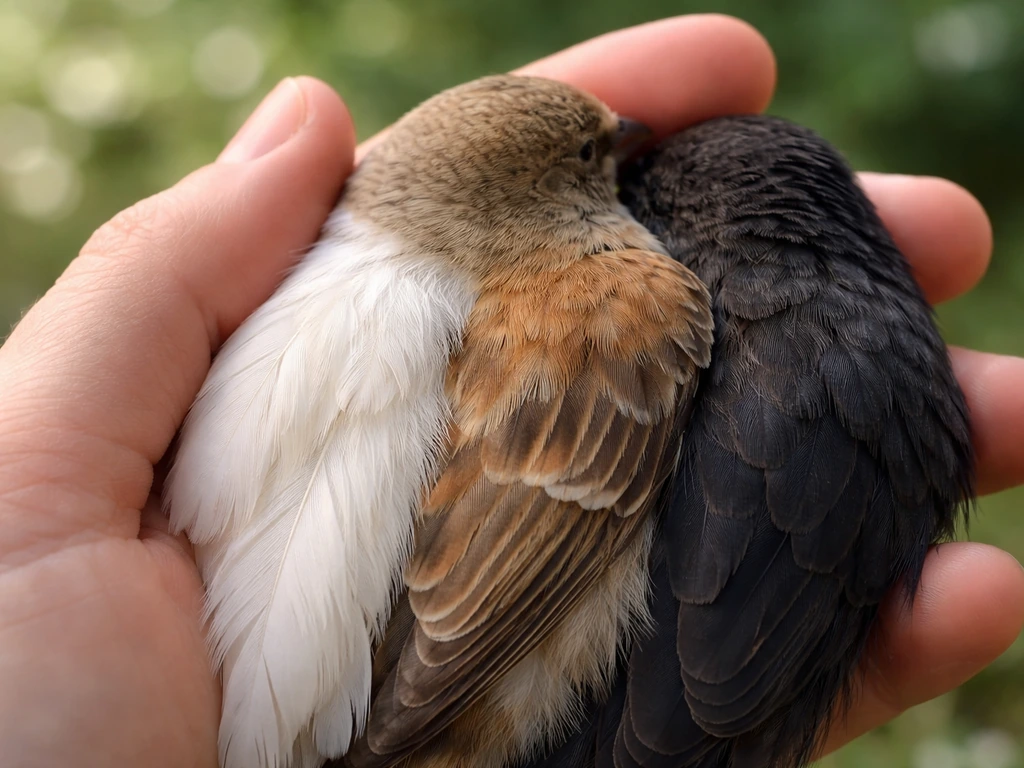
If you remember what kind of bird it was, that detail is worth leaning into. If you don't, the general symbolism of a small, calm bird landing willingly on your hand still carries a positive and gentle read. Here's how some of the most commonly reported species and colors tend to shift the meaning:
| Bird | Common Symbolic Association | Dream Interpretation Lean |
|---|---|---|
| Dove (white) | Peace, the Holy Spirit, divine blessing | Spiritual guidance arriving; a period of calm or resolution approaching |
| Robin (red breast) | New beginnings, spring energy, renewal | Something fresh is starting; a creative or personal season is opening |
| Owl | Wisdom, but also foreboding in some traditions | A message worth thinking carefully about; pay attention to what you've been avoiding |
| Sparrow or small brown bird | Simplicity, community, everyday joy | Small blessings matter; don't overlook the ordinary |
| Bluebird | Happiness, optimism, good fortune | Positive change or emotional lightness on the way |
| Black bird (crow/raven) | Transformation, intelligence, mystery | A significant shift; something hidden may be coming to light |
| Parrot or colorful bird | Communication, creativity, self-expression | Something important needs to be said or heard |
Color also carries weight even when you can't identify the species. A white bird in your hand tends to read as purity, peace, or spiritual clarity, drawing on traditions from Christian symbolism (the dove as the Holy Spirit) to broader folklore. A red bird often connects to passion, vitality, or urgent energy. A black bird isn't automatically a bad sign. In many traditions it signals transformation and deep wisdom rather than danger. A golden or yellow bird commonly points to optimism, intellect, or incoming good news. If the bird was injured or frightened, hold that detail aside for the context section, because it reshapes things considerably.
Spiritual and omen-style interpretations
From a spiritual standpoint, a bird landing on your hand in a dream is one of the more positive and meaningful images you can encounter. Across traditions, birds are seen as messengers between the human and divine realms, and when one lands directly on your hand, many traditions read that as a sign that you are being reached personally.
In Christian and biblical-influenced readings, the image of a bird resting in an outstretched hand carries echoes of the Holy Spirit's descent as a dove. Ancient Christian visual tradition includes the dove-resting-in-an-outstretched-hand motif as a symbol of divine grace and guidance arriving. In Christian thought, the dove is commonly understood to symbolize the Holy Spirit, notably associated with the baptism of Jesus blank" rel="noopener noreferrer">the dove-resting-in-an-outstretched-hand motif. If you dream of a dove landing on your hand, many within this tradition would read it as a message of peace, reassurance, or spiritual direction.
In Celtic and European folklore, birds were considered the souls of the departed or spirit messengers, and a bird choosing to land on a person was read as a significant omen: that person was being singled out for a message, a blessing, or a warning worth heeding. Indigenous traditions across many cultures hold birds as sacred intermediaries, though interpretations vary widely by tribe and species, so it's important not to flatten those rich, specific traditions into a single reading.
In general spiritual terms (not tied to one tradition), this dream is often interpreted as: a message from a deceased loved one or an ancestor trying to reach you, divine or universal guidance arriving at a moment you need direction, protection being offered or renewed, a confirmation that the path you're on is the right one, or an invitation to receive help or grace you may have been resisting.
It's also worth noting that the question of whether a bird landing on you in waking life is considered good luck connects directly to this dream symbolism. The dream version tends to carry the same optimistic reading, amplified by the personal, interior nature of the dream space.
The psychological read: trust, vulnerability, and what you're ready to receive
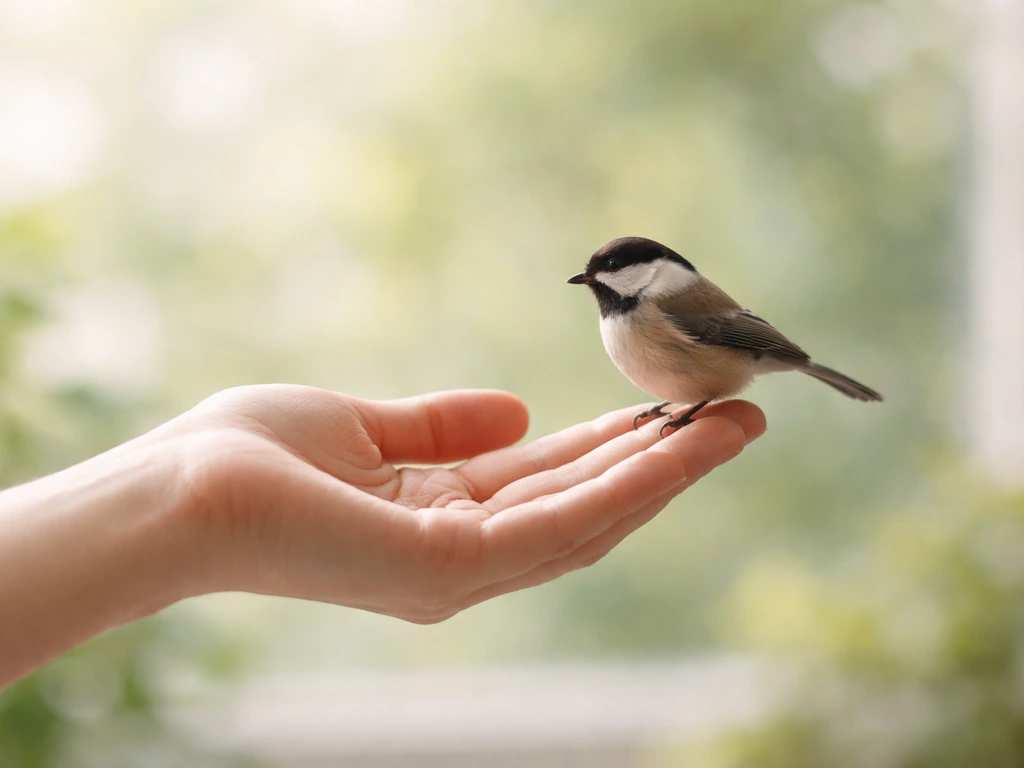
If you prefer a psychological lens, this dream is just as rich. Getting a bird to land on your hand in real life requires patience, stillness, and a quality of calm openness. If you want to compare it to the waking-life version, see when a bird feather lands on you as a closely related sign to consider.
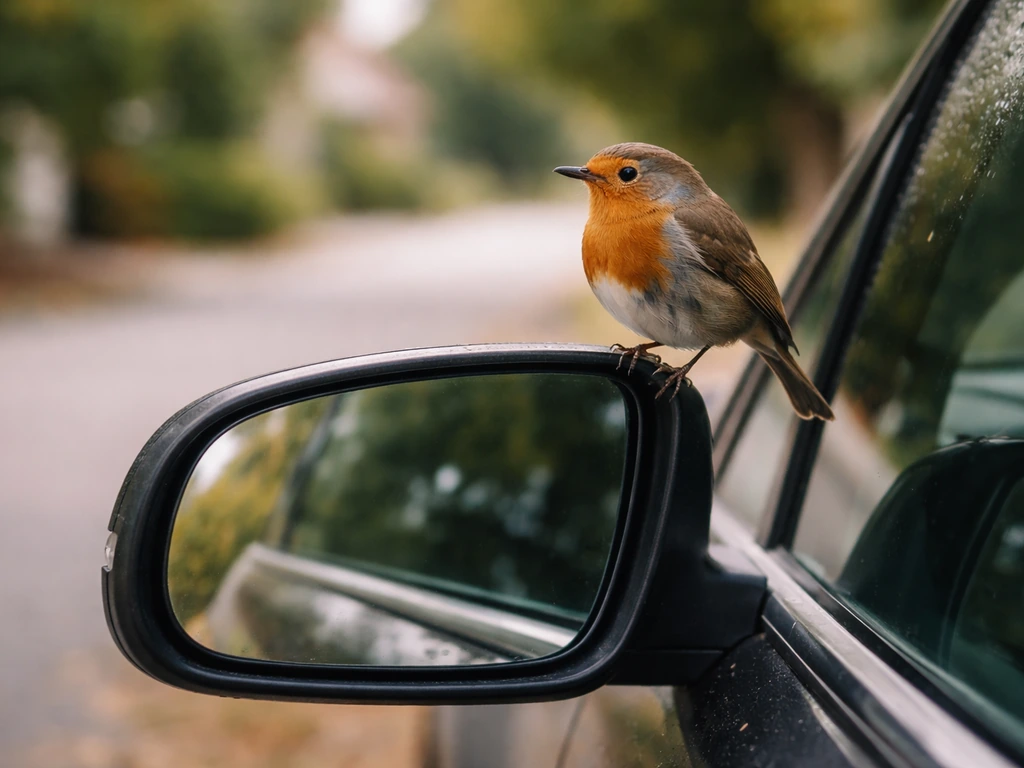
If you wonder whether a bird landing on you is a bird landing on you good luck in real life, start by noticing how receptive and calm you feel when it happens. When a bird lands on your car in real life, it can similarly be read as a pause to notice what is trying to reach you a small, calm bird landing willingly on your hand. You can't force it. The bird chooses.
In that sense, dreaming about it happening can reflect something your unconscious is processing about trust and receptivity.
Ask yourself: In your waking life right now, is there something you want to welcome in but are afraid to reach for? A relationship, an opportunity, a creative project, a conversation you've been avoiding? The bird landing willingly on your hand may be your unconscious signaling that you are safe to be open. You don't have to chase this thing. You can hold out your hand.
There's also a vulnerability angle here. Holding a bird is an act of trust in both directions. The bird trusts you not to harm it. You trust yourself to be gentle enough to keep it. If the dream felt tender or careful, your unconscious may be working through questions about whether you're ready to handle something fragile: a new relationship, a sensitive conversation, a creative risk, even your own emotional wellbeing.
Birds in dreams also frequently map to communication themes. If the bird seemed to be trying to tell you something, or if it arrived in a moment of silence in the dream, your mind may be nudging you toward a conversation, a creative expression, or an honest exchange you've been holding back.
Context is doing most of the heavy lifting
The specific details of the dream matter enormously. Here are the most important ones to consider:
How did you feel during the dream?
Your emotional state inside the dream is often more revealing than the image itself. If you felt calm, joyful, or awed, the dream leans positive: something good is arriving and you're ready for it. If you felt anxious, uncertain, or afraid of the bird flying away, your unconscious may be processing fear of loss or missed opportunity. If you felt a deep sense of peace or even the presence of someone who has passed, that reading may carry personal spiritual significance worth sitting with.
What else happened in the dream?
- The bird stayed and seemed settled: a message of stability, confirmation, or arrival of something lasting
- The bird flew away quickly: possible anxiety about timing, readiness, or fear of losing an opportunity
- The bird bit or scratched you: something you're drawing toward yourself may have a cost or complication you're not fully acknowledging
- The bird was injured or sick: concern for someone vulnerable, or a part of yourself that feels fragile
- There was blood: this shifts the reading toward sacrifice, intensity, or unresolved emotional pain connected to what the bird represents
- Someone else was present: their identity in the dream often points to who or what in your real life the bird's message is connected to
- The setting felt sacred (a garden, forest, water): reinforces spiritual or transformative interpretation
- The setting felt threatening or dark: the contrast between the bird's gentleness and the environment may reflect navigating something difficult while holding onto hope
What's happening in your waking life right now?
Dreams tend to process the emotional and relational texture of your current life. If you're at a crossroads with a decision, grieving a loss, entering a new relationship, beginning a creative project, or navigating a conflict, this dream is likely reflecting that situation through bird symbolism. The timing matters. Ask yourself honestly: what is my hand reaching for or holding right now? What might be trying to land, if I stay still enough to let it?
What to do after having this dream

You don't have to just wonder about it. Here's a practical approach you can start today:
- Write it down before the details fade. Record the bird's appearance, where you were, who else was present, what you felt, and what happened when the bird landed. Don't filter or judge. Just capture it.
- Ask yourself these reflection questions: What was the bird like? What does that kind of bird mean to me personally? How did I feel when it landed? What in my life right now is asking for my open, patient attention?
- Look for the emotional core. Dreams rarely deliver literal instructions. What feeling dominated the dream? That emotion is your richest clue about what the dream is working through.
- Notice if anything in your waking life mirrors the dream. Did someone reach out recently that you haven't responded to? Is there an opportunity you've been hesitating on? A conversation you know you need to have?
- Sit with it for 24 to 48 hours before deciding what it means. Meaning often clarifies with a little distance. If the dream stays vivid or recurs, that's a signal to take it more seriously.
- If the dream felt spiritually significant, consider any personal spiritual practice you have, whether that's prayer, meditation, time in nature, or simply quiet reflection. You don't need to decode it perfectly to let it guide you.
Dream journaling, in particular, is a genuinely useful practice here. A contemplative approach from psychology frames it as a way to record, reflect, sort, and find patterns across dreams over time, rather than hunting for prophecy. The goal isn't to confirm a belief. It's to let the dream imagery speak to your current emotional and relational reality.
Common misconceptions worth clearing up
One of the most common mistakes people make after a vivid dream like this is treating it as a guaranteed prediction. Mainstream sleep science and psychology are consistent on this: dreams are not reliable forecasting tools. Even when a dream feels prophetic, the most grounded explanation is that your mind is processing emotions, memories, and current concerns, and occasionally those reflections happen to align with real events. Healthline also notes that multiple theories exist about whether and how dreams have meaning, including ideas tied to memory and emotion processes your mind is processing emotions, memories, and current concerns. That doesn't make the dream meaningless. It makes it even more personally relevant. But it's not a guaranteed sign of what's coming.
Another misconception is that there's one universal meaning that applies to everyone who has this dream. There isn't. Jung's method of amplification asks why this symbol appeared for this person at this moment. A bird landing on the hand of someone going through grief is speaking to something different than the same dream appearing for someone on the edge of a major creative decision. The symbol is the same. The meaning is personal.
It's also worth noting that not every vivid dream carries deep meaning. Sometimes a bird in a dream is just a bird because you saw a bird yesterday, watched a nature documentary, or heard one outside your window this morning. The honest question to ask yourself is: does this dream feel different from most of my dreams? Does it carry an emotional weight or clarity that ordinary dreams don't? If yes, pay attention. If no, it's completely reasonable to let it pass without analysis. Not every dream is a message. But when one lingers, it usually has something worth hearing.
The invitation here isn't to build a belief system around a single dream. It's to let this image, a bird trusting your hand enough to land, ask you a question about your own life. What are you ready to receive? What are you still holding your hand out for? Those questions tend to matter, regardless of where you stand on omens and spiritual symbolism.
FAQ
If I had this dream, does it mean something good is definitely coming?
Yes, but the “waking-life” meaning can differ. If you are feeling impatient, guarded, or afraid when it happens, the dream can be reflecting your nervous system’s hesitancy, not a guaranteed positive event. A useful check is to compare the emotional tone: calm receptivity in both the dream and real life usually points to readiness, while fear in either place suggests something you need to approach more slowly.
What if the bird in the dream was injured or afraid?
Not necessarily. If the bird looked sick, injured, or frightened, treat the image as “what needs care” rather than “what will be taken from you.” Injured-feather or struggling-bird symbolism often connects to boundaries, a fragile situation in waking life, or a need for support before moving forward.
The dream felt like it was from a deceased loved one, is that always what it means?
It can indicate a message, but the safest interpretation depends on whether you felt connection or dread. If you felt comfort, the dream may be about reconciliation, remembrance, or feeling guided. If you felt unsettled, it can also reflect unfinished grief or a fear of change. A practical step is to write one sentence after waking: “The feeling I associate with that presence is…” and build your meaning from that.
What does it mean if I tried to move or catch the bird in the dream?
When the bird lands but you try to grab, shoo it away, or panic, the dream often mirrors how you handle opportunities. The land-on-hand image emphasizes receiving, not forcing. Ask yourself what you have been trying to control, then look for a place where “holding still” would help you notice what is already available.
If the bird was chirping, silent, or acting differently, does that change the interpretation?
A “talking bird” or bird behavior (chirping, pecking, circling before landing) can shift the emphasis toward communication and timing. If it chirped right after landing, it may symbolize a prompt to express something. If it stayed silent, it can be more about nonverbal reassurance (permission to rest, wait, or observe). The key detail is how your body reacted to the bird’s behavior.
What if my hand felt weak, numb, or hurt during the dream?
Yes. If your hand looked injured, dirty, numb, or you couldn’t feel it, it can point to reduced confidence in your ability to act or receive. If your hand felt strong and capable, it supports the “openness and agency” theme. Body sensations in dreams are often more diagnostic than the symbol itself.
Does the meaning change if I’m dealing with pregnancy, postpartum, or fertility concerns?
If you are pregnant or have recently given birth, or you are planning to become pregnant, dreams like this can still be symbolic, but the “message” may relate to protection, caretaking, and support. Keep the focus on what feels emotionally relevant to your current season rather than trying to predict events. A journaling prompt that helps is: “What do I most want to protect or nourish right now?”
How can I use this dream without turning it into anxiety or a “guarantee”?
To avoid overpredicting, look for whether the dream provides clarity, not certainty. A helpful decision aid is to rank what you felt: receptivity, curiosity, fear, urgency, or relief. Then choose one small real-world action that matches that rank, such as sending the message you’ve delayed (if receptivity/clarity) or creating a plan and timeline (if fear/urgency).
Next Article
When a Bird Lands on Your Car: What to Do and Meanings
Practical steps and spiritual meanings when a bird lands on your car or mirror, plus how to handle droppings safely.