A bird just landed on your car, maybe right on the side mirror, and you're not sure what to do. Should you shoo it away? Leave it alone? Is something wrong with the bird? And is there something more to this moment than a random pit stop? The short answer: stay calm, take a quick look, and let the bird's behavior guide your next move. Most of the time it's completely natural, occasionally it signals something worth addressing, and for many people it carries a quiet symbolic weight worth sitting with.
When a Bird Lands on Your Car: What to Do and Meanings

Maya Hartwell
22 Apr 2026
What to do right now when a bird lands on your car
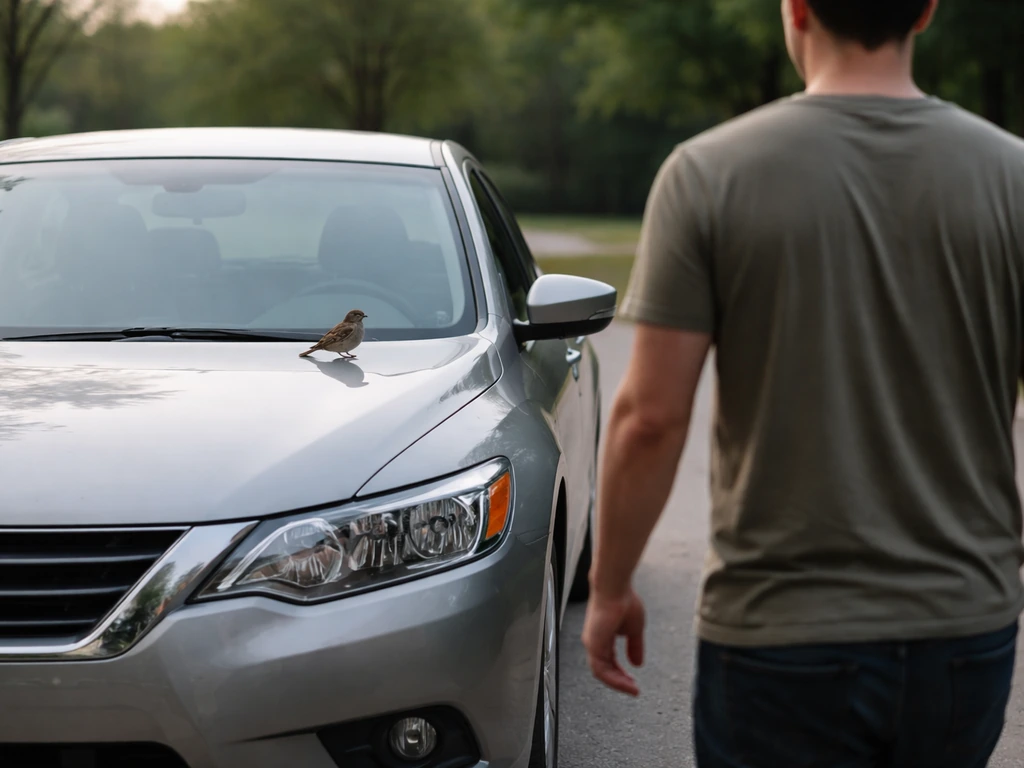
The first thing to do is nothing dramatic. Don't lunge at the bird, honk, or rev the engine to scare it off. Sudden movements or loud noises can cause the bird to panic and injure itself, especially if it's already disoriented. If you're driving and a bird lands on your hood or mirror while you're moving, pull over safely, turn on your hazard lights, and let the bird take off on its own time. If the bird seems stuck or injured, that changes your approach, but most birds that land on a parked car will leave within a minute or two on their own.
If the bird is on a parked car and you need to get going, simply walk toward the car at a normal pace. That's usually enough to send it on its way. If it doesn't leave, or if it seems lethargic, tilted, or unable to fly, then it's time to assess more carefully.
Check the bird and the spot carefully, especially the mirror
Before you assume the bird is injured or that something is wrong, look at what it's actually doing. Birds land on cars for very different reasons, and the behavior tells you a lot. Ask yourself a few quick questions: Is the bird pecking or headbutting the mirror or window? Is it just perching calmly? Is it hunting for insects near the hood or grill? Is it favoring one wing, sitting on the ground, or unresponsive to your approach?
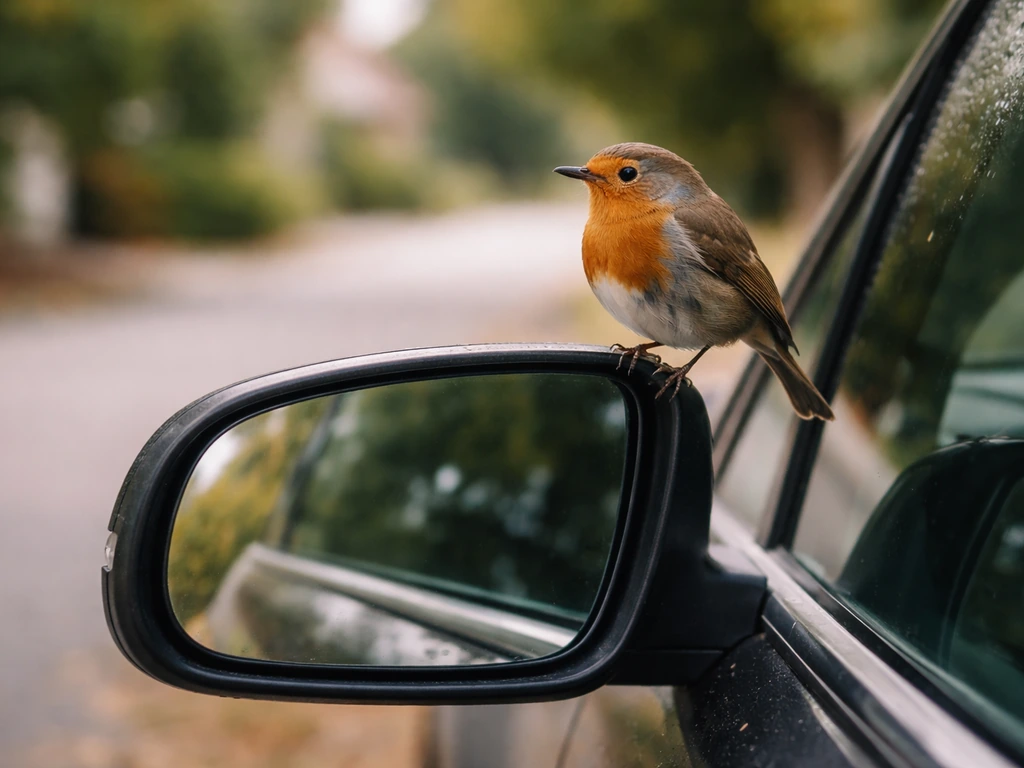
Pay special attention if the bird is on or near your side mirror. Mirror-focused behavior, especially repeated pecking, lunging, or fluttering against the glass, is almost always territorial aggression toward a reflection. Audubon explains that birds pecking or attacking windows and mirrors is common during breeding season because the bird sees its reflection and treats it like a rival it wants to drive away birds pecking or attacking windows and mirrors is common during breeding season because the bird sees its reflection as a rival. The bird sees what it thinks is a rival, and it's not going to back down easily. This is the most common reason a bird will return to your mirror again and again, sometimes for hours, as documented in real-world cases of bluebirds spending an entire day battling their own reflection on a car mirror.
If the bird looks clearly hurt, watch for these specific signs: a visibly broken or drooping wing, bleeding, a bird that's shivering or sitting flat on the ground, or a young bird with a deceased parent nearby. Those are the signals that it genuinely needs help. A bird that's alert, upright, and flying short distances is almost certainly fine.
Why your car? The practical reasons birds choose vehicles
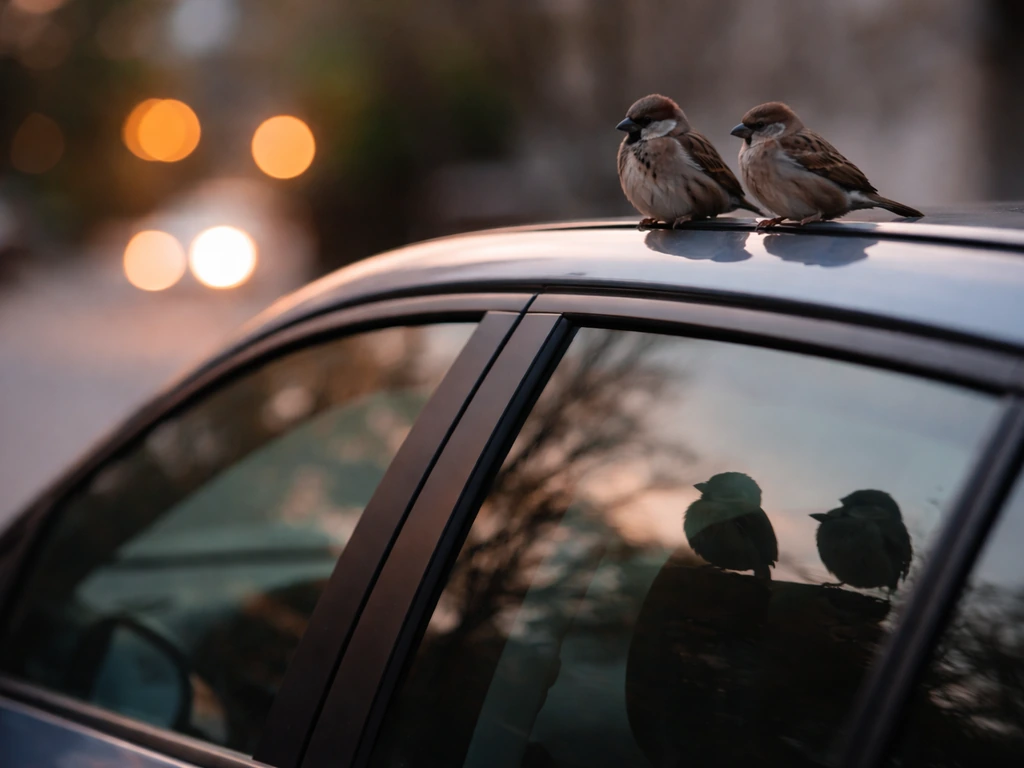
Cars are genuinely attractive to birds for a few concrete reasons, and none of them have anything to do with you personally. Understanding the practical causes makes it easier to decide whether you need to do anything.
- Reflections in mirrors and windows trigger territorial behavior, particularly in male songbirds during breeding season (roughly spring through early summer). Robins, cardinals, and bluebirds are especially prone to this. The bird perceives its own reflection as an intruding rival and attacks it. Audubon, Cornell Lab, and the University of Georgia all document this as one of the most commonly reported bird-car conflicts.
- Insects accumulate on the front panels, grill, and hood of cars, especially after highway driving. Research published in urban ecology literature shows birds actively forage for insects on cars, treating them as an incidental food source. If a bird is picking carefully at your hood rather than attacking the mirror, this is probably what's happening.
- Cars are elevated, warm perches in open areas, which makes them useful lookout spots for many species.
- Parking near trees, shrubs, or nesting areas means your car sits within a bird's territory, making it a natural extension of the bird's daily circuit.
None of this is rare. With an estimated 89 million to 340 million birds dying in road vehicle collisions annually in the U.S. alone, birds clearly don't keep their distance from cars. Up-close encounters with parked vehicles are simply part of how birds navigate an urban landscape.
The spiritual meaning: what it can symbolize when a bird lands on your car or mirror
This is where the encounter gets interesting for a lot of people. Across cultures and spiritual traditions, birds have long been regarded as messengers, transitional symbols, and bridges between the earthly and the unseen. When one shows up in your space, even on something as mundane as a car, many traditions read that as a moment worth paying attention to.
In folkloric and metaphysical interpretations, a bird landing on your car is often understood as a message about your current journey, both literally and figuratively. Cars represent movement, direction, and the path you're on in life. A bird pausing on that path is sometimes read as an invitation to slow down, check your direction, or acknowledge that something or someone is watching over you as you move forward.
The mirror carries its own symbolic layer. In many spiritual and psychological traditions, mirrors represent self-reflection, truth, and seeing yourself clearly. A bird landing on or engaging with your car mirror is sometimes interpreted as a nudge toward honest self-examination: What are you avoiding looking at? What part of your life might need a clearer-eyed view? Some spiritual writers frame it specifically as guidance arriving at a moment of transition or self-discovery.
From a biblical perspective, birds appear throughout scripture as symbols of divine care and provision. Matthew 6:26, where Jesus points to birds as creatures cared for by God, is a touchstone here. That said, biblical teaching also includes a caution worth noting: Matthew 4:7 and Matthew 12:38-39 both address the temptation to demand signs or treat every event as a supernatural message. Many Christians find meaning in nature without leaning on omens, holding the encounter lightly as a reminder of presence and care rather than a specific directive.
In Celtic tradition, birds (especially small songbirds) were considered messengers from the Otherworld, carrying news from ancestors or the spirit realm. In many Indigenous traditions across North America, birds are honored as intermediaries between the human world and the sacred, and their presence is observed with respect and attention rather than analyzed for a single fixed meaning. Eastern traditions, including some Buddhist and Taoist frameworks, read bird appearances as moments calling for present-moment awareness, a gentle reminder to notice what's actually in front of you.
What the bird's behavior and timing might be telling you
If you're drawn to symbolic interpretation, the specifics of the encounter matter. A single visit from a calm, perching bird carries different resonance than a frantic, repeated assault on your mirror. Some people interpret a bird landing on you as a sign of good luck, even when it’s simply a surprising coincidence is a bird landing on you good luck. Here's a loose interpretive framework drawn from common folklore and metaphysical traditions:
| Behavior or Timing | Common Practical Cause | Symbolic Interpretation |
|---|---|---|
| Bird perches calmly on hood or roof and looks around | Using car as a lookout or resting spot | A moment of pause; invitation to be present or reflective |
| Bird repeatedly attacks the side mirror | Territorial behavior triggered by reflection | Symbolically linked to confronting your own reflection; self-examination or unresolved inner conflict |
| Bird appears just before or after a significant event | Coincidence with high personal awareness | In many traditions, read as a sign of transition, confirmation, or a message from a loved one who has passed |
| Bird returns to the same car spot multiple days | Nesting nearby, established territory, or persistent reflection response | Recurring signs are often seen as amplified messages; something asking for sustained attention |
| Bird on your car in the early morning | Natural active foraging hours | In Celtic and Indigenous traditions, dawn encounters carry particular weight as messages from the threshold between states |
| Small songbird vs. large bird of prey | Different species, different ranges and behaviors | Songbirds often linked to communication, joy, or messages; raptors to clarity, power, and seeing the big picture |
It's also worth noting that if you're drawn to the idea of birds as personal messengers, there are adjacent encounters worth comparing. Landing on your car is different, in both practical and symbolic texture, from a bird landing directly on your body, which many traditions treat as a distinctly more personal and intimate form of contact. And dreams involving birds landing on or near you carry their own interpretive tradition worth exploring separately. Dream meaning of a bird landing on your hand is often explored as a sign of protection, connection, or readiness for something new.
Grounded next steps: cleaning, safety, and making space for reflection
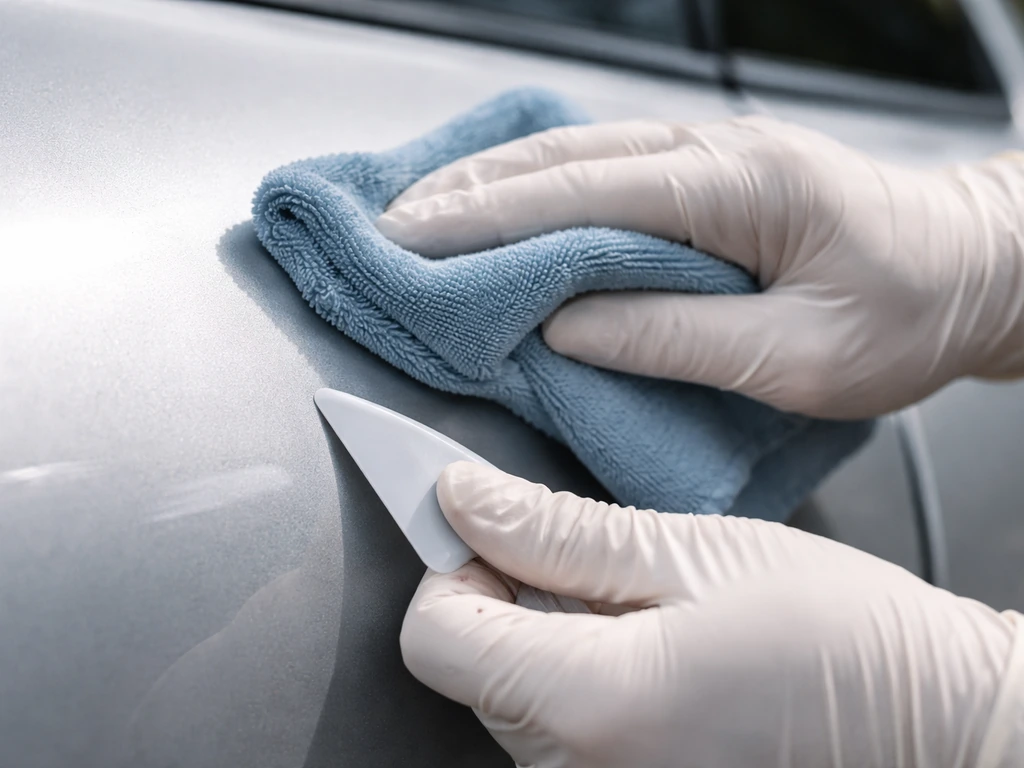
If the bird left droppings
Clean the droppings off your car as soon as reasonably possible. Bird droppings are acidic and can damage paint and clear coat if left for extended periods. More importantly, handle the cleanup safely. The CDC advises against dry sweeping or vacuuming droppings because that aerosolizes particles. Instead, wet the area first with water or a disinfectant spray, let it soak for a moment, then wipe it up. Wear disposable gloves, and wash your hands thoroughly afterward. OSHA also recommends avoiding unprotected contact with bird droppings and bird secretions as a general hygiene precaution, particularly for people with any respiratory sensitivity.
If the bird is attacking your mirror repeatedly
The most effective practical fix is to break the reflection. Audubon recommends temporarily covering the mirror with a plastic bag, a cloth cover, or tape while the bird is in its territorial phase, which typically peaks during breeding season. Cornell Lab and BTO both frame this as a straightforward behavioral fix rather than an emergency. The bird isn't hurting your car (usually), but it can exhaust and injure itself over days of sustained fighting. Covering the mirror protects both your paint and the bird.
If the bird seems injured or sick
If the bird shows clear signs of injury, don't try to feed it or handle it unnecessarily. The U.S. Fish and Wildlife Service recommends leaving wildlife alone when in doubt, but for birds with visible injuries, the right move is to contact a licensed wildlife rehabilitator or local veterinarian. If you need to move the bird for its own safety (away from traffic, for example), Tufts Wildlife Clinic recommends covering it gently with a towel to reduce stress, placing it in a ventilated box, and keeping it in a quiet, dark, and warm space during transport. Avoid noise and excessive handling. For larger birds with talons or strong beaks, Audubon advises extra caution to avoid personal injury.
Making space for what the encounter might mean
Once the practical side is handled, if this encounter stayed with you, that's worth noticing. You don't need to assign a firm meaning to it. Instead, sit with a few questions. What was on your mind just before the bird arrived? Is there something in your life right now that feels like it's asking for your attention? Are you moving through a transition, a decision, or a period of uncertainty? Many people find that bird encounters act less like answers and more like gentle interruptions, pauses in the noise that create space for the thoughts already trying to surface.
Whether you interpret this as a spiritual message, a quirk of bird behavior, or simply a strange and interesting moment, you've already done the most important thing: you noticed. If you are wondering, “is it good luck if a bird lands on you,” this is one of the most common symbolic interpretations people use to comfort themselves after the practical steps are handled. Some people also connect the idea of a bird landing on you with good luck, so it can be a comforting sign to take note of. That noticing is where meaning tends to take root, if you want it to.
FAQ
What should I do if the bird lands briefly, then won’t leave?
If it lands and then immediately takes off, treat it as normal behavior and focus on what you can control, like keeping your movements calm and checking for droppings afterward. If it stays for more than a few minutes, acts disoriented (circling, repeatedly fluttering with no lift), or shows injury signs, switch to the “assess carefully” approach and consider contacting a wildlife rehabilitator.
Can I wait for the bird to leave instead of approaching it?
Yes, but timing matters. If it is a parked car and the bird is not clearly injured, you can wait it out for a minute or two while staying still. If you see territorial mirror behavior (repeated pecking or charging the glass), cover the mirror temporarily, then remove the cover once it stops to avoid prolonged stress.
Is it ever okay to grab the bird or use a loud deterrent?
Do not. Avoid catching the bird, tossing water, or trying to “shoo” it by banging the car or using aggressive noises, because that can injure a bird that is already stressed or disoriented. If you need to move it for safety, follow a low-stress method like gently using a towel to reduce flapping, then place it in a ventilated box for short, supervised transport.
How can I tell the difference between “stunned” and “actually injured”?
Watch for wing posture and responsiveness rather than only motion. A bird can twitch and still be okay, but clear indicators include a wing that droops or hangs lower than the other, bleeding, persistent inability to stand or perch, or an upright bird that still cannot take off after repeated attempts.
What if the same bird comes back to my mirror multiple times?
If it is on your side mirror and keeps returning, assume reflection-driven aggression and break the visual cue. Covering the mirror with a cloth or bag usually works better than repeated shooing, and it also helps protect the mirror and paint from repeated contact.
What if a bird lands on my hood or mirror while I’m already driving?
If you are driving and it lands while you are moving, prioritize safe driving first, pull over only when you can do so safely, and use hazards if you stop. Then let it take off on its own, do not honk or rev, and check for droppings after it leaves.
How long can I wait before cleaning bird droppings?
Clean droppings soon, but do not rush with dry sweeping. Wet the spot first, wipe with a disposable towel, then wash the area. Also inspect for cracks, pitting, or discoloration on paint or clear coat, because damage can become more noticeable after a few days of exposure.
What if I need to leave the car for a while while the bird is still there?
If you must park in the meantime, keep distance and avoid leaning on the mirror. You can reduce stress by leaving the car quiet (no slamming doors, minimal engine noise) and, if mirror aggression is the issue, cover the mirror as described in the practical fix section.
Is there a way to prevent repeat mirror battles beyond a one-time cover?
Yes, especially if you suspect a recurring territorial issue. If you notice the bird repeatedly hitting the same mirror area at similar times, take photos or note the dates, and consider additional prevention like swapping to an anti-reflective cover or adjusting mirror angle to reduce direct sky and reflection.
What should I do if the bird is bigger (e.g., a hawk or similar) and won’t move?
If the bird is large, treat it like higher-risk wildlife. Keep your distance, avoid getting your hands near feet or beak, and contact a local wildlife rehabilitator or animal control if it cannot move away. In the meantime, block hazards (traffic lanes, obstacles) rather than handling the bird.
If I want to interpret it symbolically, how do I avoid overreading the event?
Keep any symbolic interpretation light and personal. A helpful decision rule is to ask what action would support your well-being today, then do that practical thing, whether it is slowing down, making a call, or addressing a neglected task.
Does a “meaningful” bird encounter change what I should do in the moment?
Yes, but focus on practical safety and hygiene first. Cleaning droppings and reducing reflection-driven stress are the actionable parts. If you are still preoccupied afterward, that is usually the signal to notice what was on your mind, not that you must take a specific supernatural step.
Next Articles
Why Is My Bird Flapping Its Wings at Me? Causes and What to Do
Understand why your bird flaps wings at you and what to do, from hormones and stress to attention and warnings.
Makes My Bird Twitch Meaning: Causes, Fixes, and Red Flags
Understand why your bird twitches, what to check now, red flags, first-aid steps, and symbolic meaning safely.
Why Does My Bird Chirp When I Leave the Room? Causes and Fixes
Understand why your bird chirps when you leave and follow a step-by-step plan to reduce stress, plus optional spiritual