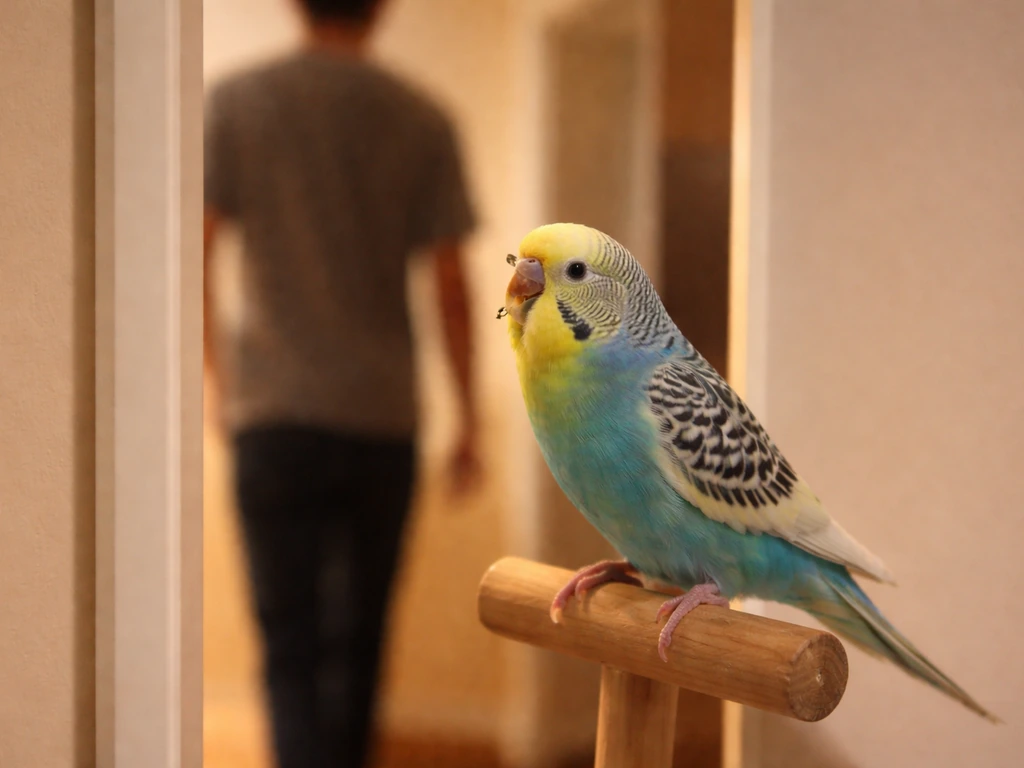
Your bird chirps when you leave the room because it's doing what birds are wired to do: calling out to its flock. In the wild, birds use contact calls to locate each other constantly. You are its flock. The moment you disappear, it calls to find you. That's the short answer. But the intensity, timing, and body language around that chirping tells you a lot more about whether this is totally normal flock behavior, a sign of deeper anxiety, or something worth addressing with some targeted training. In other words, if you keep hearing chirps when you leave, it's usually part of normal flock communication unless the timing, intensity, and body language suggest stress or anxiety. Let's break it down.
Why Does My Bird Chirp When I Leave the Room? Causes and Fixes

Maya Hartwell
22 Apr 2026
Common reasons birds chirp when you leave
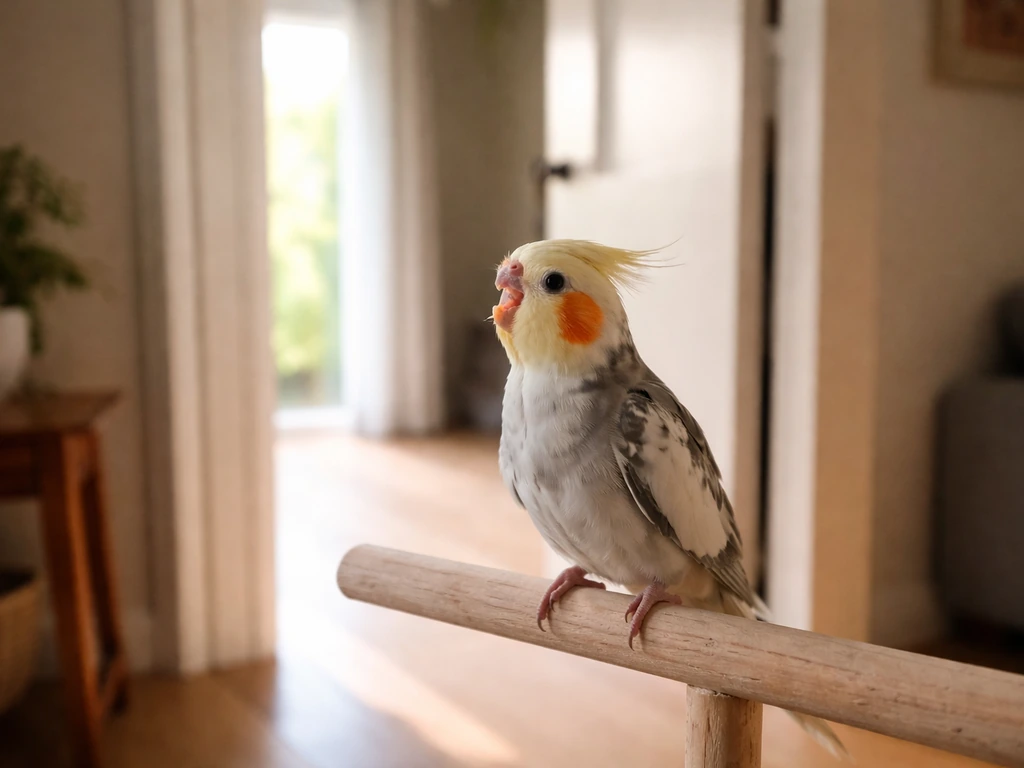
Most of the time, departure chirping falls into one of a handful of categories. Knowing which one you're dealing with shapes what you do about it.
- Contact calling: Your bird is doing the avian equivalent of yelling 'Hey, where'd you go?' This is deeply instinctual and often completely normal, especially in social species like cockatiels, conures, and African greys.
- Attention-seeking and social bonding: Your bird has learned that chirping when you leave sometimes brings you back. If you've ever rushed back in to check on it, you've reinforced this loop without meaning to.
- Separation stress or anxiety: More than just a contact call, this is genuine distress. The bird is not just checking in, it's panicking at the idea of being alone.
- Routine anticipation: If your departures tend to line up with feeding time, treat time, or a specific interaction, your bird may be chirping in anticipation of what usually comes next, not because it's stressed.
- Boredom and insufficient enrichment: A bird with nothing to do in its environment has no competing reason to stop vocalizing. Chirping fills the gap.
- Alarm or territorial calls: Some departure chirping is actually a response to movement, sounds, or perceived threats in the environment, not about you personally.
- Hormonal or seasonal triggers: During breeding season, even mild departures can trigger louder, more urgent calling due to hormonal shifts.
How to identify your bird's specific cause
Timing and body language are your two best diagnostic tools here. Watch what happens in the ten seconds before you leave and the ten seconds after. A bird doing a normal contact call will chirp a few times, get quiet, and resume normal activity once it hears you respond or return. A bird with separation anxiety won't settle. And a bored bird will often start vocalizing a while after you've left, not immediately as you walk out.
What to watch for in timing
- Chirping starts the instant you step toward the door: often contact calling or learned attention-seeking
- Chirping starts only after several minutes of quiet: more likely boredom or low-stimulation environment
- Chirping escalates and doesn't stop for long periods: red flag for separation anxiety
- Chirping happens at the same time every day regardless of your departure: probably routine anticipation tied to feeding or interaction schedule
What to watch for in body language
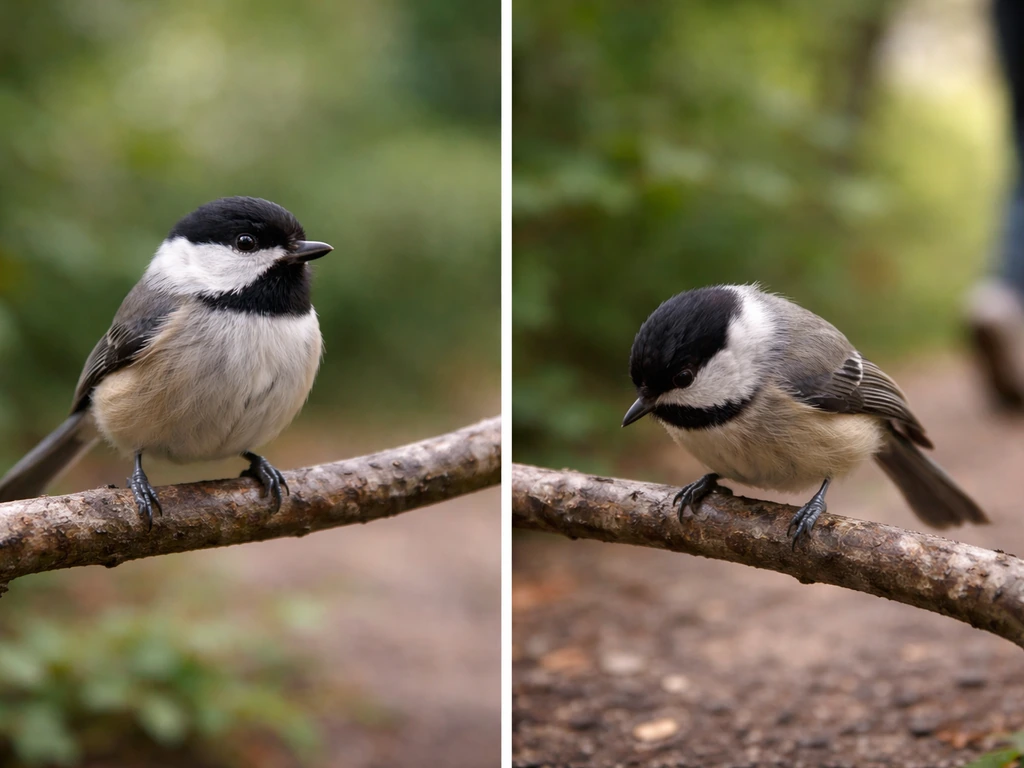
Body language tells you more than the sound itself. A bird doing a simple contact call usually looks alert but relaxed, feathers smooth, posture normal. A bird in genuine distress shows it physically. Signs of stress or anxiety include pacing on the perch, toe tapping, head swinging, wings held slightly away from the body, panting, hissing, or a fanned tail. Raised head feathers combined with frantic movement are worth taking seriously. If your bird is biting cage bars, attempting to escape, or rocking back and forth repetitively, those are signs the chirping is coming from a much more anxious place.
Separation stress vs. normal flock communication
This distinction matters enormously because the approach you take for each is different. Normal flock communication is healthy. You don't want to eliminate it entirely, and you probably couldn't even if you tried. A few contact calls when you leave, a happy greeting when you return, that's a well-adjusted bird doing exactly what birds do.
Separation stress is something else. It's prolonged, escalating, and often comes with frantic cage movement, bar chewing, escape attempts, reduced appetite, or refusal to play unless you are physically present. In severe cases, it can eventually progress to feather picking or self-mutilation, which is why catching it early matters. One thing worth knowing: birds are remarkably good at reading your emotional state. If you feel guilty, rushed, or anxious when you leave, your bird picks up on that tension and mirrors it back. If you mean a twitching or startled reaction from your bird when you leave, it can be part of the separation stress and anxiety discussion in this guide mirrors it back. Staying calm and matter-of-fact during departures genuinely helps.
The other thing that separates normal calling from anxiety is duration. A contact call resolves. Anxiety doesn't. If your bird is still vocalizing intensely 20 or 30 minutes after you've left (you can check this with a simple phone recording while you're out), that's a behavioral pattern worth addressing deliberately.
What you can do about it today

Here's a practical action plan you can start right now, not next week. Work through these in order, since the earlier steps tend to have the quickest impact.
- Stop rushing out. Before you leave any room, take a breath and slow down your energy. A calm, unhurried departure signals to your bird that there's nothing alarming about your exit.
- Use a departure cue phrase. Pick a consistent phrase like 'Be right back' or 'Bye-bye, see you soon' and say it every single time before you leave. Over time, this phrase becomes a reliable predictor that you will return, which is calming. Some trainers recommend narrating where you're going too, such as 'I'm going to the kitchen,' to maintain the sense of flock connection.
- Start desensitization with very short departures. Leave the room for just a few seconds, then return before your bird starts vocalizing. The goal is to return before anxiety peaks, not after. Repeat this many times. Gradually extend the duration over days and weeks as your bird stays calm.
- Don't come back in response to chirping. If you rush back every time your bird calls, you're teaching it that calling works. Wait for a brief quiet moment before re-entering, even if it's just a two-second pause.
- Set up a foraging or enrichment activity before you leave. Offering a food puzzle, a new toy, or a warm food item right before your departure gives your bird a positive, absorbing activity to do in your absence. This reframes departures as the start of something good.
- Turn on low-level background sound. A radio, TV on low, or a playlist of nature sounds can reduce the silence that makes solo time feel more isolating for social birds.
- Record yourself while you're out. Use your phone to record your bird for 20 to 30 minutes after you leave. This tells you whether it settles quickly or stays distressed, which guides how seriously you need to treat this.
Enrichment, routine, and training strategies for the longer term
One-time fixes don't stick if the underlying environment and routine aren't supporting a calmer bird. Here's what to build into your daily setup.
Lock in a consistent daily schedule
Birds thrive on predictability. Scheduling your interaction with your bird at the same time each day, whether that's morning feeding, an afternoon training session, or evening out-of-cage time, reduces ambient anxiety significantly. When your bird knows what's coming, it doesn't need to vocalize to figure out where you are or when something is happening.
Sleep matters more than most people realize
Most parrots and companion birds need 10 to 12 hours of uninterrupted sleep per night. A chronically sleep-deprived bird is a more reactive, more vocal, more anxious bird. If your bird's sleeping area is in a high-traffic room or near noise and light past 8 or 9 pm, moving it to a quieter space can noticeably reduce overall stress levels, including departure-related chirping.
Build a richer cage environment
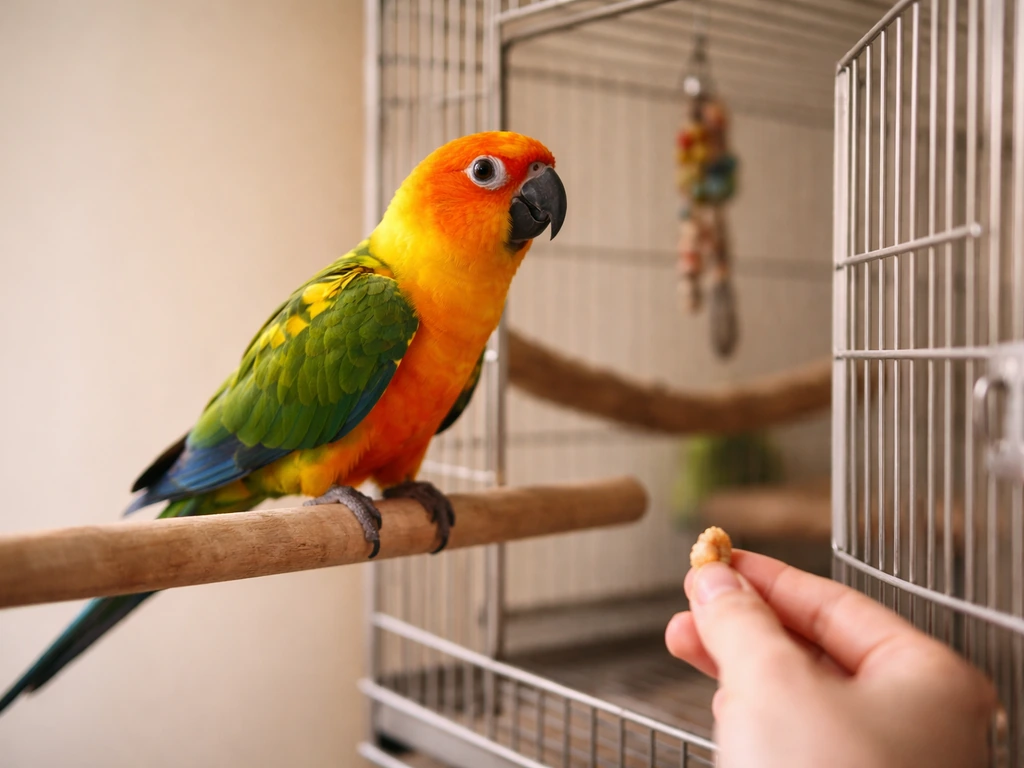
Bored birds vocalize. Rotate toys regularly so there's always something novel in the cage. Foraging toys, in particular, where your bird has to work to extract food, keep it mentally occupied and reduce the amount of mental bandwidth available for anxious calling. Cage placement also matters: a spot where your bird can see into the room without being directly in front of a window full of outdoor movement tends to reduce alarm calling.
Train a 'stay' or independence cue
With consistent positive reinforcement, you can teach your bird that a specific word or gesture means you're leaving but coming back. Pair the cue with treats and calm departures repeatedly. Over weeks, this cue becomes a signal that predicts a safe, uneventful alone time, not an emergency.
Health and environment checks, and when to call a vet
Before you decide this is purely behavioral, it's worth ruling out health and environmental contributors. Sometimes what looks like anxiety is actually discomfort or illness expressing itself through vocalization and restlessness.
Environmental factors to check right now
- Temperature: Is the room your bird stays in too cold or drafty when you leave?
- Light: Is it getting the right light-dark cycle? Too much artificial light at night disrupts sleep and hormones.
- Air quality: Birds are sensitive to cooking fumes, candles, air fresheners, and even non-stick cookware off-gassing. These can cause distress and vocalizing.
- Cage size and perch placement: A cage that's too small, or one where perches don't allow comfortable resting, creates chronic low-level stress.
When to call an avian vet
Call your avian vet if the chirping is accompanied by any of these: sudden changes in behavior (sudden biting or lunging can signal pain), signs of feather picking or self-mutilation, reduced appetite or weight loss, unusual night waking or breathing changes, or if the bird is showing severe separation anxiety that doesn't respond to two to three weeks of consistent behavioral management. A vet can rule out hormonal imbalances, infections, and other physical causes, and in cases of serious separation anxiety, may discuss whether an anxiolytic medication is appropriate alongside behavioral work. Don't skip the vet step and assume everything is purely emotional, especially if the change in behavior was sudden.
If you're dealing with confirmed separation anxiety that isn't improving, some avian specialists now offer video review of behavioral episodes and customized training plans. That level of professional support is worth pursuing before things escalate to feather destruction.
What it might mean: a spiritual lens on departure chirping
Once you've addressed the practical and health considerations, there's another layer some people find meaningful. If you're someone who pays attention to animal behavior as potential messages, the image of a bird calling out the moment you leave carries real symbolic weight across multiple traditions.
In many indigenous and folk traditions, birds that vocalize during transitions, specifically as someone leaves or arrives, are seen as threshold guardians. Their call marks the in-between moment, the crossing from one space to another. Some interpret a bird's insistent calling at departure as a reminder to stay present, to not move through life too quickly, to notice what you're leaving behind.
In Celtic and broader European folklore, birds were often associated with the soul and with messages between worlds. A companion bird calling as you leave could be read symbolically as a call to stay connected, to carry your relationships with you even as you move through the world. There's something poetic about the fact that the bird calls not while you're there, but precisely as you go.
From a biblical perspective, birds frequently appear as symbols of divine watchfulness and care. In that frame, a bird's persistent call as you leave might be read as a kind of reminder of connection, of being seen and known, even in ordinary moments. The bird's voice becomes a small, daily prompt.
In metaphysical and New Age traditions, birds are often associated with communication, intuition, and spiritual messages. A bird calling at your departure might be interpreted as drawing your attention to a relationship, a decision, or an emotion you're moving away from too fast. What are you leaving? What might want your attention before you go?
None of these interpretations replace the practical work of understanding and supporting your bird's wellbeing. But they offer a different kind of meaning for those who want it. The behavior of birds has stirred human reflection for thousands of years, and there's something worth sitting with in the image of a creature calling after you, not to stop you, but to stay in contact.
Just as people look for meaning in bird chirping generally, or notice something significant when a bird stretches toward them or flaps its wings in greeting, a departure call can be a moment of connection, literal and perhaps symbolic, if you're open to reading it that way. What does your bird's call stir in you when you hear it? That question might matter as much as the behavioral answer.
FAQ
How can I tell the difference between normal contact calls and true separation stress?
If the chirping happens only right as you exit and then stops within a few moments, it usually matches normal contact calling. A better rule of thumb is to check whether your bird calms after it hears any sound or response from you (for example, footsteps in another room, a door latch, or a brief reply). If it escalates or continues for many minutes regardless of what happens after you leave, treat it as separation stress or another issue rather than simple flock behavior.
Could my reaction to the chirping be making it worse?
Yes, it can be triggered by your own emotion and routine, but you also want to avoid accidentally rewarding panic. If your bird ramps up and you return quickly to soothe it, it can learn that calling loudly brings you back. Use the calm “return is predictable” approach, then reinforce quiet departures with treats or attention that comes after the bird settles, not while it is in a frantic vocal burst.
What should I not do when my bird chirps as I leave?
Avoid “leaving then coming back” repeatedly in response to every chirp, that pattern teaches the bird that loud calling controls your exits. Instead, keep departures neutral and consistent, and consider a graded plan, where you first practice short, boring absences and only increase time once the bird remains settled. Recording the bird on your phone helps you track progress without adding attention during the vocalizing.
Is there a useful checklist I can use during the next time I leave?
Use duration and settling behavior, not just volume. If you hear brief chirps in the first seconds but the bird becomes quiet and resumes normal perch activity, that points to normal flock communication. If you notice prolonged, escalating calls, pacing, repeated toe tapping, bar chewing, or reduced appetite around your absence window, that suggests stress and warrants the behavior plan and possibly a vet check.
Could visual stimulation like a mirror or window traffic be causing the chirping?
A mirror is not the same as another bird, but it can still increase arousal in some birds by adding movement, reflections, or visual stimulation during your absence. If your bird spends time near the mirror and becomes more vocal when you’re gone, try covering the mirror during your departure period or moving it to a less stimulating position and see if the pattern changes over several days.
Do routine changes affect departure chirping?
Even one-sided routine changes, like feeding earlier than usual on weekdays or changing the time you put your bird to bed, can shift baseline anxiety and make departures harder. Aim for consistent wake, feeding, play, and bedtime times, then adjust one variable at a time so you can tell what actually helped.
What daily setup changes help most, besides training?
Yes. Birds sometimes vocalize more when they are hungry, under-stimulated, or not getting enough sleep. Two practical adjustments are to provide a foraging option before you leave and ensure the sleep space is quiet and dim enough that your bird actually stays in an uninterrupted rest cycle. If sleep is improved, departure chirping often drops within days, not weeks.
Can an avian vet prescribe something to stop the chirping, and should I ask immediately?
In many cases, yes, but medication is a “last mile” tool. If the chirping is part of a severe separation anxiety pattern that does not improve after consistent management for a couple of weeks, an avian vet may discuss options alongside behavioral work. Do not use human anti-anxiety medications, and only adjust anything medication-related under avian veterinary guidance.
What symptoms would mean I should treat this as a health issue instead of anxiety?
If the chirping coincides with signs of pain or illness, stop assuming it is only emotional. Watch for abrupt behavior changes, new aggression or sudden biting, fluffed posture, abnormal breathing, frequent tail bobbing, unusual night waking, or feather picking beginning around the same time as departure episodes. Those clues are strong reasons to schedule an avian vet visit rather than focusing only on training.
How do I teach a leaving cue correctly so it reduces anxiety?
A simple cue can help, but keep it consistent and avoid turning the cue into an exciting event. For example, say the cue, offer a small treat, and then exit calmly without extra talking or drama. The goal is that the cue predicts “safe alone time,” not “human is leaving, panic now.” If the bird gets more worked up when the cue happens, scale back and reintroduce it more gently.
Next Articles
Why Does My Bird Stretch When He Sees Me? Causes
Why your bird stretches at your arrival: greeting cues, attention, readiness, plus health red flags and next steps.
What Does Bird Chirping Mean? Practical and Spiritual Guide
Interpret what bird chirping means with practical causes and spiritual symbolism, plus safe steps and when to call help
How to Tell If a Bird Likes You: Signs and Steps
Learn signs a bird trusts and loves you, plus safe bonding steps, red flags, and optional spiritual interpretations.