When a bird flies into you, the most likely explanation is completely natural: the bird was startled, disoriented, or defending its nest. Bird Collision Prevention Alliance states that artificial light at night can attract birds, disrupt migration, and lead to repeated collisions with glass as birds try to escape. That said, across dozens of cultures and thousands of years, people have also read these moments as messages worth paying attention to. Both things can be true at once, and this guide walks you through the practical side first, then the symbolic one, so you leave with a clear head and a full picture.
What Does It Mean When a Bird Flies Into You?

Maya Hartwell
15 Apr 2026
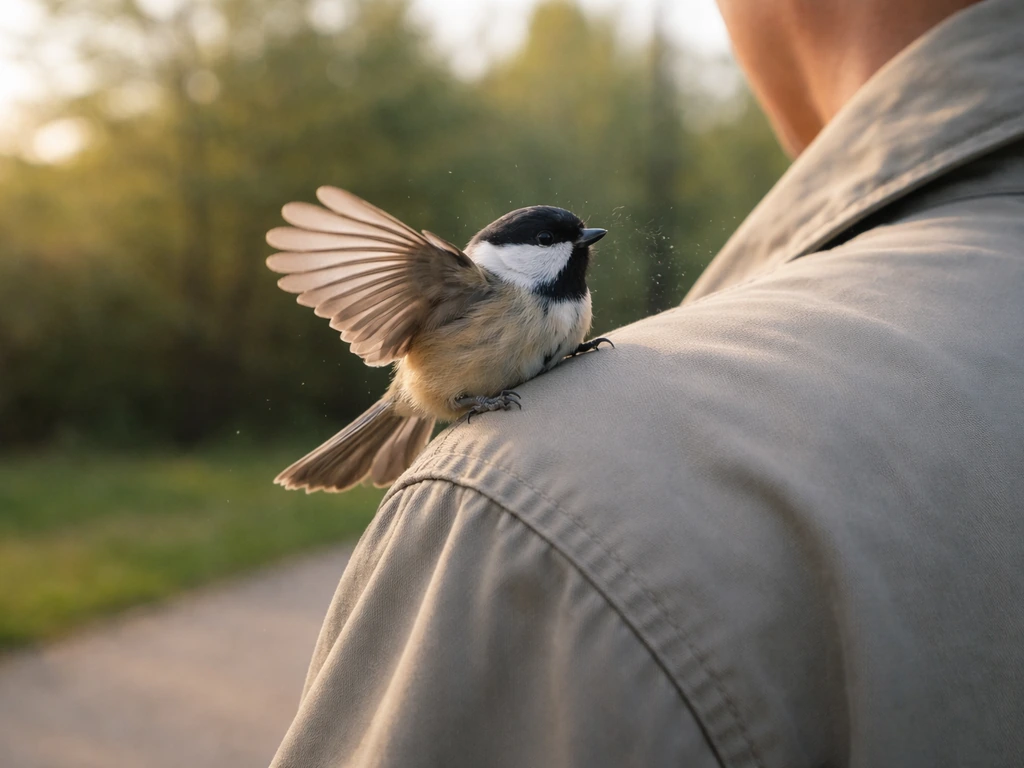
Quick reality check: the most likely natural reasons this happens
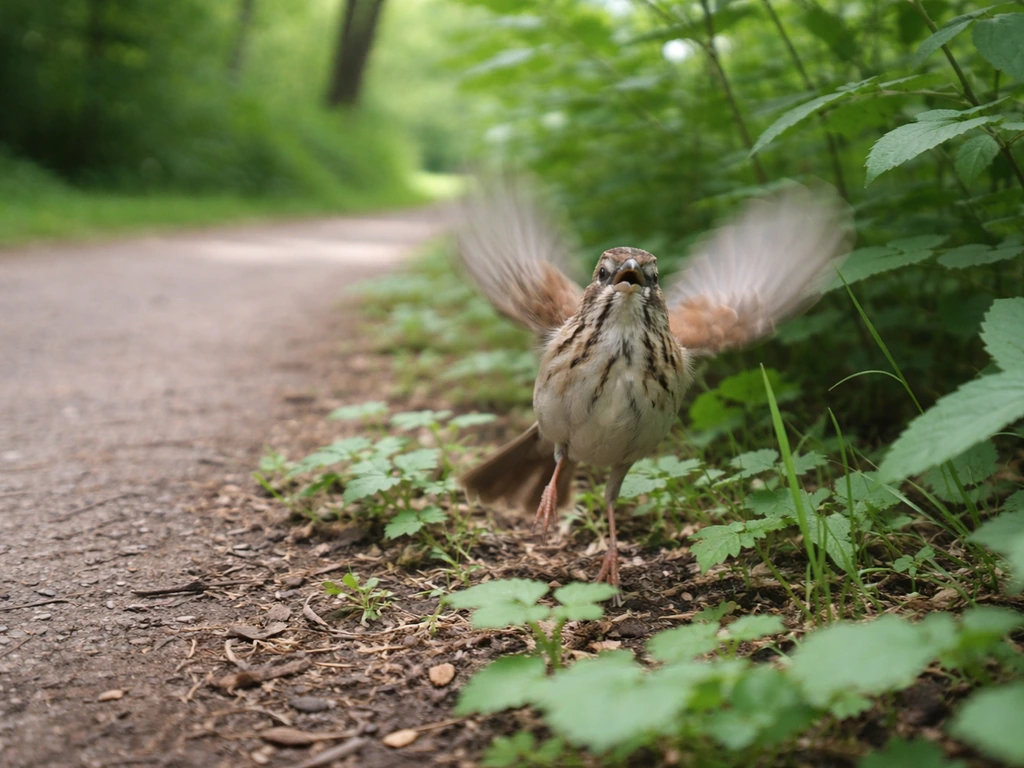
Birds are not targeting you personally. Almost every time a bird flies into or at a person, there is a straightforward biological reason behind it. Understanding those reasons is the best starting point because it helps you assess whether the bird (or you) needs help, and it gives honest context before you layer on any symbolic meaning.
- Startle response: Birds flush suddenly when surprised. If you walked too close to a roosting or ground-feeding bird, it may have flown directly at you simply because you were in its escape path.
- Territorial or nesting aggression: During nesting season (roughly spring through early summer), parent birds actively dive-bomb anything they perceive as a threat. Robins, mockingbirds, red-winged blackbirds, and raptors are all known for this. The National Park Service specifically notes that aggressive dive-bombing behaviors during nesting are normal and recommends retreating rather than engaging.
- Window and glass confusion: Birds mistake reflections in glass for open sky or habitat. This is one of the most common causes of birds flying hard into structures. The U.S. Fish and Wildlife Service notes that glass collisions happen because interior spaces can appear brighter than outside, making the glass effectively invisible to the bird.
- Artificial light disorientation: Bright lights at night draw migrating birds in and scramble their navigation. The Bird Collision Prevention Alliance documents how birds can become trapped near lit courtyards and repeatedly strike glass while trying to escape. During migration seasons, the risk of a disoriented bird colliding with a person or building spikes considerably.
- Mistaken identity: A bird that has been hand-fed or habituated to humans may approach or contact people without fear, especially if you are wearing bright colors or carrying food.
- Illness or injury: A bird that is sick, injured, or stunned may not fly away or may move erratically and collide with you. This is a wildlife health concern worth taking seriously.
Safety first: what to do right after it happens
Before you think about what the encounter might mean, take a moment to assess the immediate situation for both yourself and the bird. Most encounters are minor, but a few steps protect your health and give the bird the best chance of survival.
For you

If a bird made direct contact with your skin, wash the area with soap and water right away. blank" rel="noopener noreferrer">OSHA guidance on avian influenza exposure specifies washing hands for at least 15 seconds with soap and water after any contact with wild birds or their droppings. The CDC also recommends avoiding direct contact with sick or dead wild birds and thoroughly cleaning any surfaces or skin that came into contact with bird droppings or feathers. If you notice any swelling, dizziness, or trouble breathing after an encounter, treat it as a potential allergic reaction and seek medical care. These reactions are rare but worth taking seriously.
For the bird
If the bird hit hard and is sitting stunned on the ground, do not assume it will be fine on its own. Audubon recommends placing a collision-stunned bird in a safe, dark, dry container (like a paper bag or small box with air holes) and contacting a licensed wildlife rehabilitator as quickly as possible. Wildlife rehabilitators can provide anti-inflammatory medication and expert care that improvised home treatment simply cannot match. The U.S. Fish and Wildlife Service suggests calling your local wildlife rehabilitator, humane society, or county wildlife agency to find qualified help quickly. If the bird was dive-bombing you defensively and flew off fine, it almost certainly does not need intervention.
When to call for help
Call a wildlife rehabilitator or local wildlife agency if: the bird is not flying away on its own, it is visibly injured, it is behaving erratically, or it is a raptor (hawk, owl, falcon) displaying aggressive behavior near your home. The U.S. Fish and Wildlife Service specifically advises against handling raptors yourself and recommends contacting local wildlife agencies or rescue groups for aggressive nesting situations.
What the scenario actually tells you: flying at vs. toward vs. around vs. landing
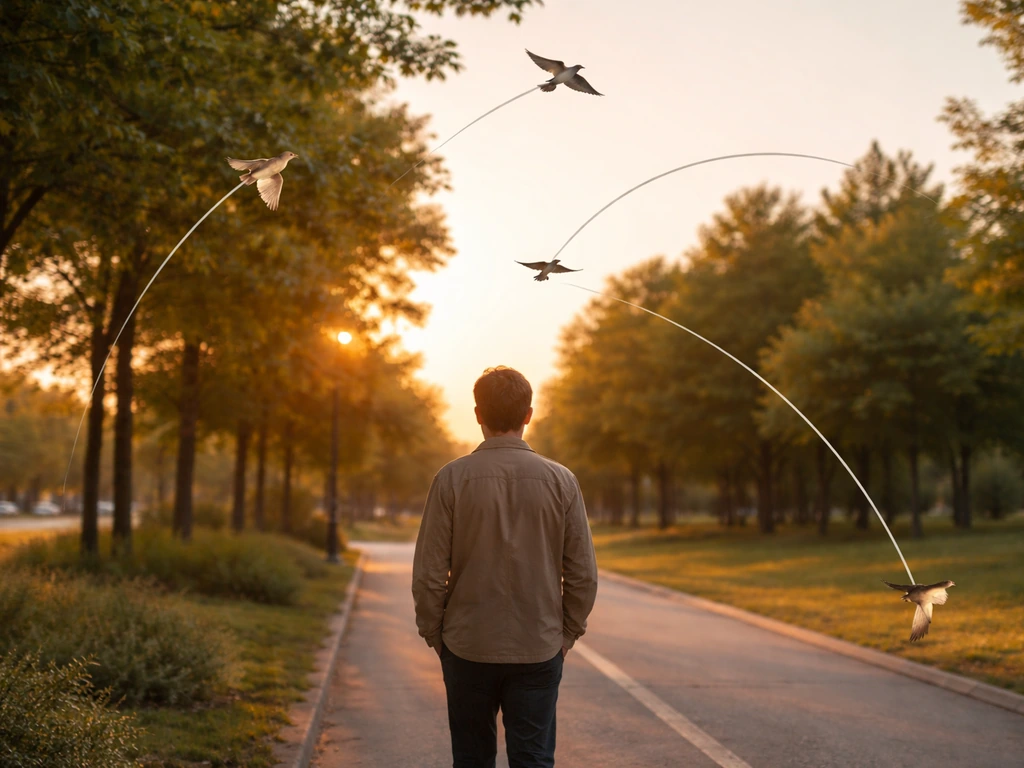
The specifics of how a bird interacted with you shift both the natural explanation and the symbolic interpretation. Here is how to read each scenario.
| Scenario | Most Likely Natural Cause | Common Symbolic Reading |
|---|---|---|
| Bird flies hard into you (collision) | Startled, disoriented by glass or light, or unhealthy | A jarring wake-up call; sudden change or message demanding immediate attention |
| Bird flies directly at you (dive-bomb) | Territorial defense, nesting aggression | A warning, boundary message, or prompt to reassess what you are protecting or approaching |
| Bird flies toward you and lands nearby | Habituation, curiosity, food association | An invitation or gentle message; openness and trust from the spirit world |
| Bird flies around you in circles | Thermal riding, territorial display, or distress | Cyclical energy, a circling of attention; something returning or needing to be revisited |
| Bird lands directly on you | Tame/habituated bird, or bird that is stunned/ill | Direct contact reading: a blessing, omen, or personal message delivered without ambiguity |
The landing scenario carries particular weight in symbolic traditions. what it means when a bird lands on you is explored in more depth elsewhere on this site, but the short version is that direct body contact is almost universally read as a more personal and pointed message than a flyby. Similarly, if a bird flew toward you and the interaction felt more like a stare-down than a collision, the experience of a bird fixing its gaze on you has its own symbolic weight worth sitting with.
Spiritual and metaphysical symbolism: what people read into these moments
Across metaphysical and new-age traditions, birds are understood as messengers, partly because of their ability to move between earth and sky, and partly because unexpected bird encounters tend to feel personally significant in a way that is hard to explain. A bird flying into you, especially unexpectedly, is often read as a disruption of ordinary energy, the universe (or spirit, or your own higher self, depending on your framework) forcing your attention onto something you have been overlooking.
The species matters in this framework. A hawk or eagle flying at you is typically read as a call to look at a situation from a higher perspective, or a message about power and focus. A small songbird making contact is often interpreted as a gentler nudge toward joy or presence. A crow or raven encounter tends to be read through a lens of transformation, mystery, or transition. Across most metaphysical traditions, the message is less about doom and more about attention: something in your life needs to be seen.
If the encounter felt aggressive or alarming, it does not automatically read as a bad omen. Many traditions, including Celtic and indigenous North American belief systems, view the protective bird (the one defending its nest aggressively) as a symbol of fierce love, boundaries, and the importance of guarding what matters. The experience of a bird actively attacking you is interpreted in some traditions as a mirror for areas of your own life where you need to set stronger limits.
There is also a more specific reading for when a bird lands on or very near your body after flying toward you. In Eastern traditions, particularly in some Chinese and Japanese folk belief, a bird choosing to rest on a person is seen as a sign of favor, luck, or spiritual alignment. The bird is not fleeing you; it is choosing you, which carries its own symbolic weight. If you are curious about the nuances of that kind of stillness and presence, the meaning of a bird sitting on you rather than just landing adds a useful layer to that interpretation.
Reflection prompts for personal meaning
- What were you thinking about or worried about in the moments just before the bird encounter?
- Did the bird's behavior feel aggressive, gentle, curious, or panicked? How does that quality map onto something happening in your life right now?
- What species was it, and does that species carry personal significance for you or your family?
- Did the encounter feel like an interruption or like an invitation? That distinction often points toward whether the message (if you read it as one) is corrective or affirming.
Biblical and cultural folklore perspectives
Biblical tradition has a nuanced relationship with bird omens. On one hand, birds appear throughout scripture as meaningful symbols: the dove as a sign of peace and the Holy Spirit (Genesis 8, Matthew 3:16), ravens as providers (1 Kings 17:4-6), and the eagle as a symbol of divine strength (Isaiah 40:31). On the other hand, Deuteronomy 18:11 is frequently cited in conservative Christian theology as part of a broader prohibition against interpreting omens and seeking supernatural guidance outside of God's direction. Some Christian readers would see a bird encounter as a natural event and nothing more, while others within charismatic or mystical Christian traditions might still see the hand of God in the natural world, including in animal encounters. Both readings are sincere and longstanding.
In Celtic folklore, birds were treated as messengers between the human world and the otherworld. A bird making unexpected contact, especially with the head or hands, was sometimes read as a direct communication from ancestors or spirit guides. The head, in particular, was considered a spiritually significant part of the body, which is worth noting for anyone who experienced a bird flying at or grazing their head. The specific symbolism around a bird targeting the head runs deeper in Celtic and shamanic traditions than a general body encounter.
In many indigenous North American traditions, birds are understood as relatives and messengers rather than omens to be feared. The meaning of an encounter is often tied to the specific bird, the direction it came from, and the circumstances of the person's life at the time. There is no single universal reading; the interpretation is personal and relational, developed through community knowledge and individual reflection rather than a fixed symbolic dictionary.
European and Appalachian folk traditions often assign meaning based on species: a wren at your door is good luck, an owl calling your name is a death omen, a red cardinal means a deceased loved one is near. A bird flying into you or your home in these traditions is frequently read as a message from the spirit world, though the valence (good or bad) depends heavily on the species and the context. Folklore surrounding certain birds as ill-omened creatures has deep roots, and cultural interpretations of bird-meaning vary dramatically by region and tradition.
How to respond after the encounter
Once the immediate safety steps are handled, if the encounter still feels significant to you, there are a few grounding practices that people across traditions use to honor and process an unexpected animal encounter.
- Ground yourself first. Take a few slow breaths. If you were startled or shaken, let your nervous system settle before you try to interpret anything. A grounded state gives you better access to intuition than an adrenaline spike does.
- Note the details while they are fresh. Write down the species (or your best guess), the time of day, what you were doing, where you were, and how the bird behaved before, during, and after the encounter. Details that seem minor often become meaningful in retrospect.
- Set an intention or affirmation. Some people find it useful to say something simple aloud or in writing, like: 'I am open to whatever this moment is asking me to notice.' This is not about commanding a message from the universe; it is about shifting your own attention into a more receptive mode.
- Sit with the reflection prompts listed in the section above. Give yourself at least a few minutes rather than rushing to look up a definitive meaning online.
- Return to it in 24-48 hours. Many people find that the personal resonance of an animal encounter becomes clearer with a little distance. Journaling about the encounter again a day or two later often surfaces insights that were not available in the immediate moment.
Common follow-up questions answered directly
Was it a warning?
It might be, symbolically speaking, but 'warning' is worth unpacking. In most traditions that interpret bird encounters as meaningful, a warning is not a doom announcement. It is more like a tap on the shoulder: pay attention here, something needs your awareness. If the bird was dive-bombing you, many symbolic traditions read that as a call to protect something important in your life or to reconsider where you are pushing into territory that is not yours to enter. A collision or hard flyby is sometimes read as a more urgent version of the same message.
Does it mean bad luck?
Not inherently, and not in most traditions. The 'bad luck' association with certain bird encounters tends to be species-specific in folklore (owls and crows get this most often, often unfairly) rather than a general rule for any bird flying near you. Most metaphysical and folkloric frameworks treat unexpected bird contact as significant rather than negative by default. The meaning, if you are assigning one, should come from your own reflection and context, not from a blanket cultural label.
What if the bird hit hard or behaved aggressively?
A hard hit means the bird was either moving fast (startled flight or territorial dive), significantly disoriented, or both. On the practical side, check yourself for scratches, wash up, and assess the bird as described above. On the symbolic side, intensity in animal encounters is often read as proportional to urgency: a gentle near-miss is a whisper, a hard collision is louder. If the behavior was clearly aggressive (repeated dive-bombing, following you), it is almost certainly a nesting bird and the practical advice is simply to take a different route. But symbolically, repeated aggressive contact from a bird, the kind where it keeps coming back, is interpreted in some traditions as a very insistent message that something needs to shift. The territory of what it means when a bird attacks you goes into that more aggressive interaction in greater detail if you want to dig further.
FAQ
What should I do if a bird flew into me but I did not get any blood or droppings on my skin?
Even without visible mess, treat the event as a potential contamination risk. Avoid rubbing your eyes and face, wash your hands after touching your clothes or hair, and if the bird hit near your mouth or nose, rinse your face with water. If you later find feathers or droppings on surfaces you touched, clean those areas before going back to food or contact lenses.
When is a bird encounter considered an emergency from a medical standpoint?
Go to urgent care or call emergency services if you have trouble breathing, wheezing, swelling of lips or tongue, faintness, or widespread hives after the encounter. Also seek prompt care for eye exposure (feathers or droppings near the eye), because irritation or infection can develop even if the bird did not touch your skin directly.
Should I try to help a collision-stunned bird by bringing it indoors or feeding it?
Do not feed it, and avoid long indoor handling. A safer approach is a brief containment in a small dark, dry, ventilated box or bag while you contact a licensed wildlife rehabilitator. If it is injured, DIY rehabilitation attempts often worsen stress and injuries.
What if the bird is a raptor and it is acting aggressively near my home, can I move it away myself?
It is best not to handle hawks, eagles, owls, or falcons. Instead, back away, keep pets indoors, and contact a local wildlife agency or rehabilitator to address a nesting or territorial situation. If it is targeting a specific entry point, changing your route temporarily usually reduces repeated risk to both you and the bird.
How do I interpret the meaning if I see the bird again later the same day or multiple days in a row?
Repetition is often treated as stronger symbolism, but it is important to balance that with practicality. If the bird is the same species returning to a consistent nesting spot, the natural explanation may be ongoing territory defense or courtship. For the symbolic read, many people use repetition as a reminder to act on one specific priority rather than treating it as a constantly changing message.
Does the meaning change if the bird flies into my car windshield instead of my body?
Yes, in most natural interpretations it points to navigation or disorientation, especially around reflective surfaces at dawn, dusk, or in bright weather. Symbolically, a “near but indirect” event is sometimes read as a warning to slow down or be more alert, rather than a direct personal message. Still, you should clean glass and check yourself if you were startled and drove unsafely.
If the bird hit my head or face area, is it more significant symbolically and also more risky physically?
Both can be true, but risk comes first. Face or head contact raises the chance of eye irritation and mild injury from the impact, so rinse eyes with clean water if there was any droplet or feather exposure and watch for redness, pain, or light sensitivity. Symbolically, some traditions treat head contact as more personal, but you can keep the interpretation grounded by focusing on how the moment changes your attention afterward.
What if the bird flew off immediately after hitting me, do I still need to report or contact anyone?
If it flew away cleanly and you have no injury concerns, intervention is usually unnecessary. Do still contact local wildlife resources only if you observe ongoing distress, repeated collisions at a specific spot (like a window), or if you later notice the bird cannot fly normally.
How can I tell whether it was a protective nest situation versus a random startled accident?
Protective behavior often looks like repeated dive-bombing, circling, following you toward the same area, or aggression near a doorway, pathway, or visible nest or nest site. A one-time collision without follow-up aggression is more consistent with startled or disoriented flight. If aggression repeats in the same location, relocate your route and contact wildlife help if it continues.
Are there any common misconceptions about “bad luck” with birds flying into people?
A common mistake is treating any bird encounter as universally ominous. Folklore often assigns negative meaning mainly to specific species or situations, and many traditions treat these events as attention cues rather than doom. If you feel unsettled, use your own context to decide what feels actionable (a boundary, a decision, or a change in focus) rather than defaulting to fear.