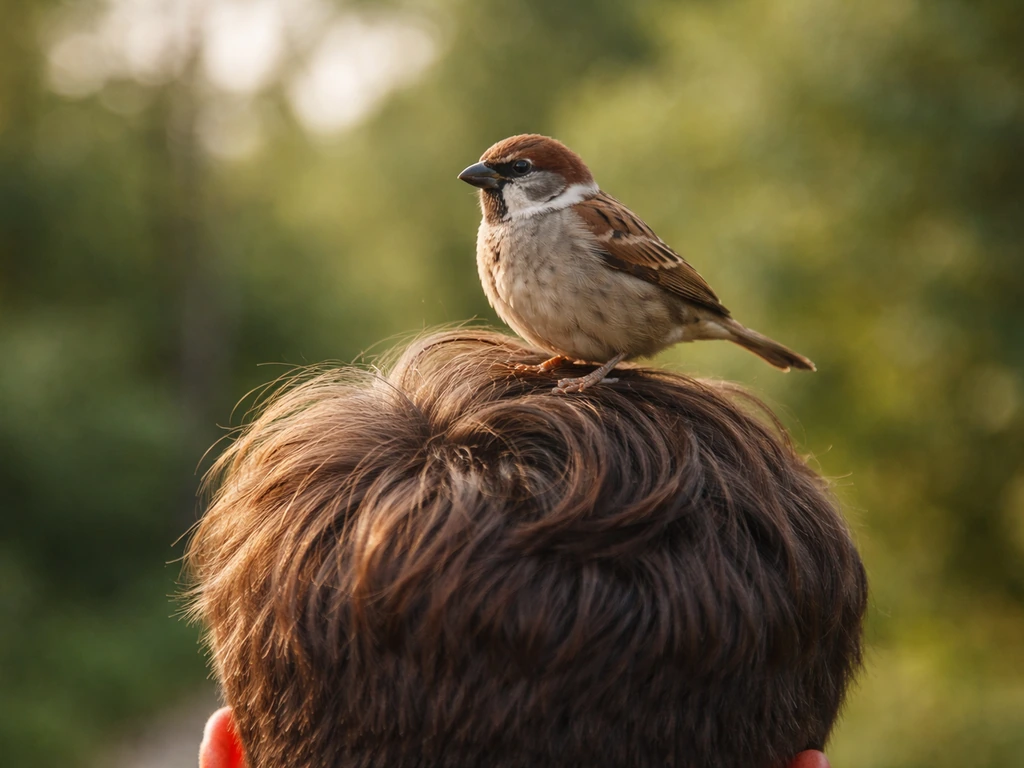
A bird just landed on your head. First things first: stay calm, move slowly, and let it leave on its own terms. Once it's gone, check your scalp and skin for any scratches, wash the area with soap and water, and if there are droppings involved, wet them before wiping, never dry-brush or vacuum bird droppings. After you've handled the practical side, you've got a genuinely interesting experience to sit with, because across dozens of cultures and faith traditions, a bird choosing to land on a person's head is considered one of the more striking signs you can receive.
When a Bird Lands on Your Head: Safety, Meaning, and What to Do

Maya Hartwell
15 May 2026
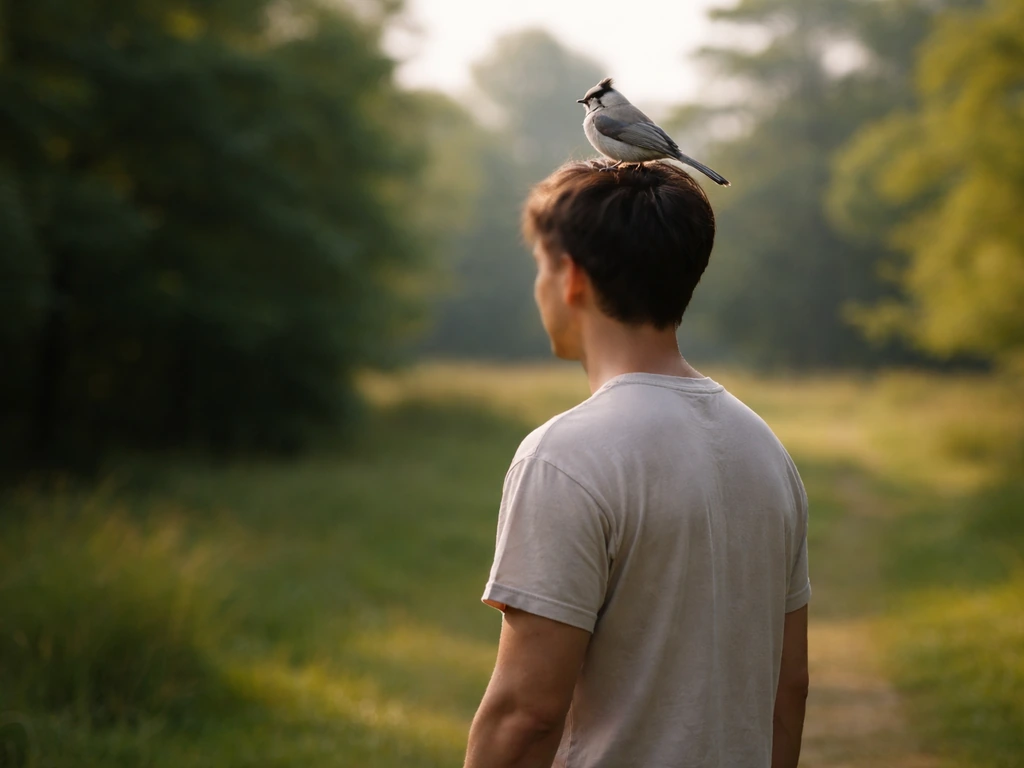
What to do right now: safety and cleanliness first
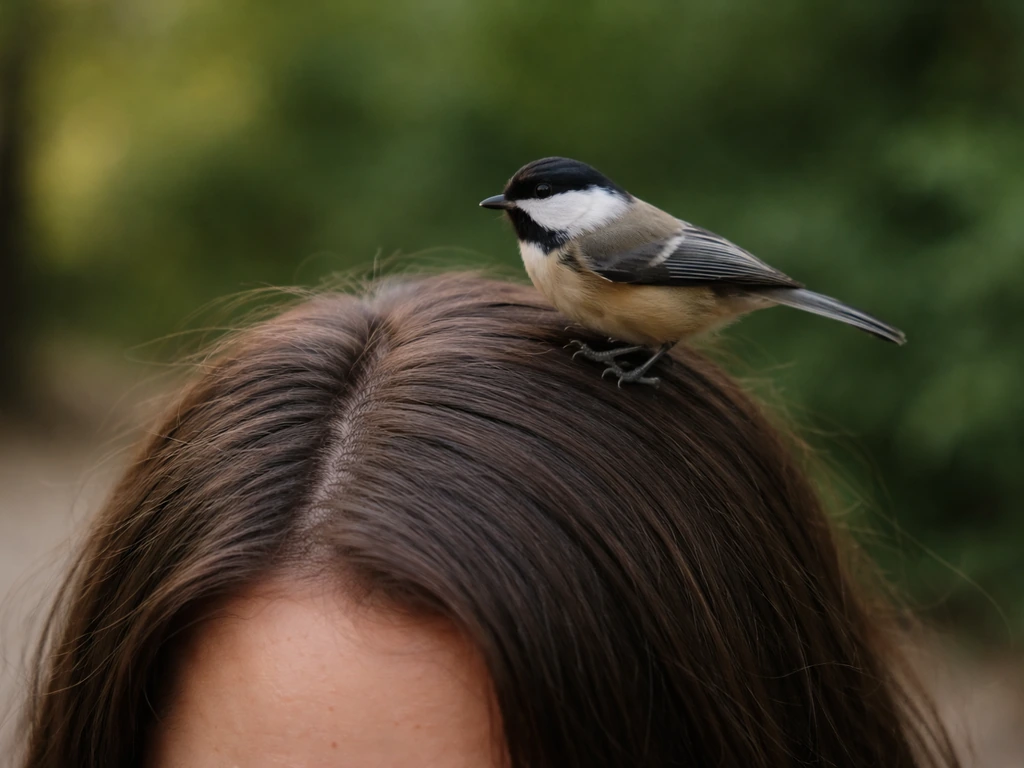
The moment a bird lands on your head, your instinct might be to swat it away or jerk your head back. Resist that. A sudden movement can startle the bird into scratching or biting defensively. Instead, stand still, speak softly if you need to, and tilt your head very slowly to encourage it to step off onto a nearby branch, railing, or your outstretched hand.
Once the bird is gone, do a quick check. Run your fingers through your hair and look for any broken skin, scratches or small punctures from claws. Wild birds can carry bacteria on their feet, so even a minor scratch deserves a good wash with soap and warm water. If the bird broke skin and you don't know its history, it's worth a call to your doctor, especially if it was a wild bird rather than a tame pet.
If the bird left droppings on you, wet the area before you wipe it. The CDC's guidance on bird droppings is clear: never dry-sweep or vacuum them, because that sends potentially infectious particles airborne. Wet the droppings with water or a disinfectant spray first, then wipe and discard using gloves or a barrier if possible. Wash your hands thoroughly afterward, the same principle the CDC recommends for anyone handling pet birds or cleaning their cages. For droppings on surfaces like a hat or jacket, the same wet-wipe approach applies, followed by washing the item.
- Stay still and let the bird leave on its own before reacting
- Check your scalp and skin for scratches or punctures from claws
- Wash any contacted skin with soap and warm water
- Wet droppings before wiping — never dry-brush or vacuum them
- Wash your hands after any contact with the bird or its droppings
- Call a doctor if the bird broke skin, especially if it was a wild bird
Why birds actually land on people's heads
Before you assign any meaning to what just happened, it helps to understand why a bird might do this in the first place. If you want a deeper dive into the meaning of bird landing on your head, the spiritual interpretations section can help you compare traditions. Birds are opportunistic and curious, and a human head is, from a bird's perspective, a reasonably appealing perch. It's elevated, it's warm, and it often sits relatively still compared to the rest of a moving body. People sometimes describe this kind of omen-like encounter as "a bird in your teeth," meaning a surprising sign or message is calling your attention a bird in your teeth meaning.
Urban and suburban birds, sparrows, pigeons, starlings, crows, are often habituated to humans and may have lost much of their natural wariness. If you were sitting quietly in a park, standing near a feeder, or simply being still in an outdoor space, a bold bird may have simply chosen you as the most convenient landing spot. Crows and corvids in particular are known for their curiosity and their tendency to investigate anything novel, including the tops of people's heads.
Hand-raised or semi-tame birds sometimes land on strangers because they associate humans with food and safety. If you were near a place where people regularly feed birds, this is a very likely explanation. There's also the warmth factor: on a cooler day, a bird may genuinely be seeking a warm surface, and a human head loses a lot of body heat, making it attractive on a brisk morning.
Occasionally, a bird landing on you is about territory or nesting. During breeding season (typically spring through early summer), some birds, mockingbirds, red-winged blackbirds, become highly territorial and may land on or near a perceived intruder as a warning. If the encounter felt aggressive rather than gentle, that context matters both practically and symbolically.
Spiritual meanings: what traditions say about a bird landing on your head
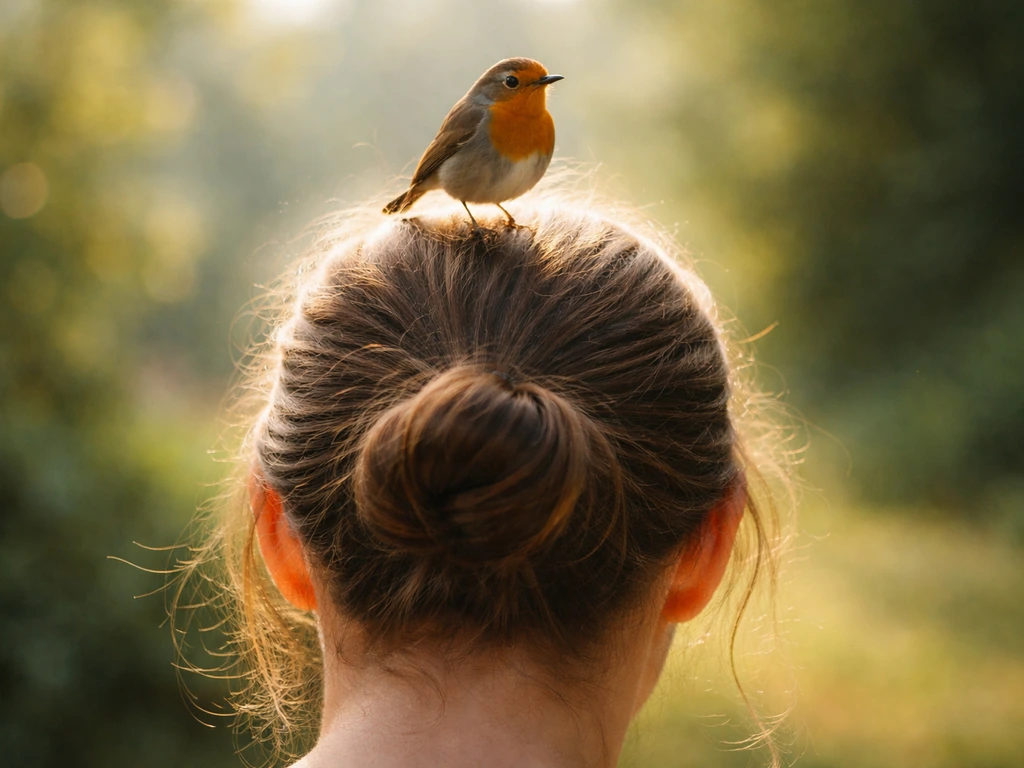
In spiritual traditions worldwide, the head holds special significance, it's associated with the mind, the crown chakra, divine communication, and the seat of consciousness. A bird landing specifically on the head, rather than the shoulder or hand, is often read as a more potent sign because of that association. Whether or not you hold that view, it's worth knowing what the major traditions say.
Across many metaphysical and spiritual frameworks, birds are seen as messengers between the earthly and spiritual realms. A bird choosing to land on you, especially on your head, is frequently interpreted as a sign that a message is being delivered directly to your consciousness, your higher self, or your spiritual awareness. The idea is that the universe, ancestors, guides, or the divine is trying to get your attention in a very literal, physical way.
The species and color of the bird carry their own layers of meaning. A white dove landing on your head is almost universally read as a sign of peace, divine blessing, or spiritual purity. A crow or raven carries associations with transformation, mystery, and intelligence, in many traditions it's a messenger from the spirit world rather than an ominous sign. A robin is often linked to new beginnings and the return of hope. A sparrow, humble and common, is sometimes seen as a reminder of life's simple blessings. A red cardinal, especially significant in North American grieving traditions, is frequently interpreted as a visit from a deceased loved one. If you're familiar with the bird that landed on you, that species meaning is worth sitting with.
How long the bird stayed matters too. A bird that lands and immediately takes off may be delivering a quick nudge, a moment of awareness rather than a sustained message. A bird that sits quietly for several seconds or even minutes is often interpreted as carrying a more significant or urgent message worth reflecting on. And your emotional state in that moment is considered relevant in many traditions: did you feel a sudden calm? Unexpected joy? A sense of being watched or recognized? Those feelings are often treated as part of the message itself.
Setting and context shape the interpretation
A bird landing on your head indoors carries different weight in many traditions than one that finds you outside. Indoors, birds are often seen as stronger omens precisely because their presence is so unusual, they've left their natural domain to reach you. Outdoors, the encounter is more naturalistic but still meaningful. If the landing happened during a moment of prayer, grief, major decision-making, or deep thought, many traditions would read that timing as especially significant. If it happened while you were distracted and rushing through your day, the message might be a call to slow down and pay attention.
What the Bible and religious traditions say
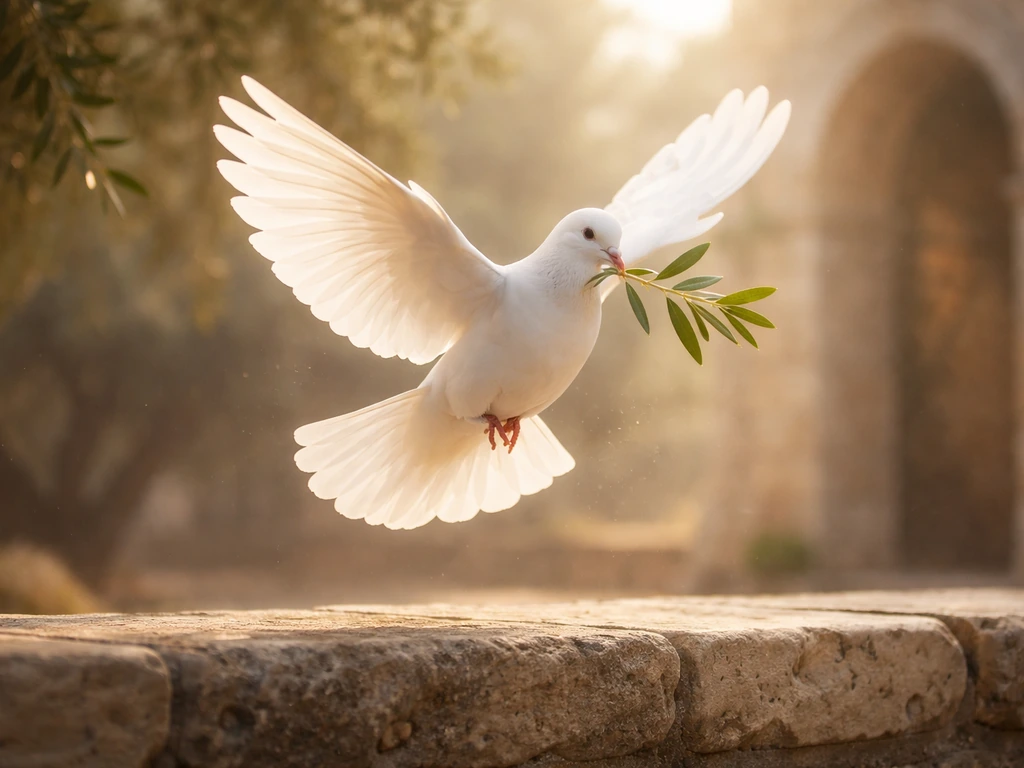
In biblical scripture, birds are woven through some of the most significant spiritual moments. The dove that returned to Noah carrying an olive branch was a divine sign of peace and covenant. The Holy Spirit descending like a dove at Jesus's baptism (Matthew 3:16) is one of the most recognizable images in Christian tradition. Ravens fed the prophet Elijah in the wilderness (1 Kings 17). In these accounts, birds function as physical instruments of divine communication and provision.
Many Christian believers who experience a striking bird encounter, especially one as direct as a landing on the head, interpret it through this lens: as a potential sign of God's presence, care, or gentle guidance. The fact that the head is the seat of thought and spiritual discernment in many theological frameworks makes the location feel especially meaningful to those with a faith perspective. It's not a doctrine or a guarantee of anything, but within a personal faith practice, the experience is worth bringing to prayer and reflection.
In Islamic tradition, birds are described as glorifying Allah and are regarded with respect as fellow creations of God. Unusual encounters with birds are sometimes seen as reminders of divine presence and the importance of gratitude. In Jewish tradition, birds appear throughout scripture as symbols of freedom, divine watchfulness, and the soul's journey, the psalmist famously compares longing for God to a bird finding its home (Psalm 84). Across these traditions, the common thread is that birds are not random background noise; they're part of a creation that speaks, if we're willing to listen.
Cultural and folklore meanings from around the world
Folk traditions are often more specific and sometimes more colorful than formal religious interpretations. In many European folklore traditions, a bird landing on you, particularly on your head, was historically read as a sign of coming good fortune or an important life change. The head was considered the closest point to the heavens, so a bird touching it was seen as heaven reaching down to make contact.
In Celtic tradition, birds held extraordinary power as messengers between this world and the Otherworld. Druids and seers paid close attention to which bird appeared, from which direction it came, and how it behaved. A bird that landed calmly and stayed was generally considered a positive omen, while one that appeared agitated was read as a warning. The wren, the robin, and the crow each carried distinct meanings in Celtic lore, and an encounter this direct would have been considered worthy of serious attention.
In many Native American traditions, though these vary enormously by nation and culture, birds are considered spiritual helpers and messengers from the Great Spirit. A bird that makes direct physical contact with a person is sometimes seen as delivering an especially immediate message, one that couldn't be communicated from a distance. The specific bird species carries meaning particular to that culture's teachings, and elders or spiritual guides within that tradition would be the appropriate people to consult for deeper interpretation.
In Eastern traditions, including Chinese and Japanese folklore, birds landing on a person are often interpreted as signs of incoming news, blessings, or ancestral communication. The crane in Japanese culture represents longevity and divine favor; even a sparrow landing unexpectedly is seen as a small but meaningful blessing. In Chinese tradition, various birds carry specific fortune associations, with the magpie being one of the most well-known symbols of good luck and happy news.
| Bird | Common Symbolic Meaning | Notable Traditions |
|---|---|---|
| Dove | Peace, divine blessing, purity, the Holy Spirit | Christian, universal |
| Crow / Raven | Transformation, intelligence, spirit world messenger | Celtic, Indigenous, Norse |
| Robin | New beginnings, hope, returning joy | European folklore, Christian |
| Cardinal | Message from a deceased loved one, spiritual presence | North American folk tradition |
| Sparrow | Humility, community, simple blessings, divine watchfulness | Biblical, universal |
| Crane | Longevity, divine favor, good fortune | Japanese, Chinese, Korean |
| Magpie | Incoming good news, luck, opportunity | Chinese, European folklore |
| Owl | Wisdom, hidden knowledge, transition | Indigenous, Greek, Celtic |
How to actually interpret what just happened to you
Here's the honest truth: no one can tell you exactly what a bird landing on your head means for your life. What they can do, what any good tradition does, is give you a framework for asking better questions. The meaning, if there is one, lives at the intersection of the event and your own inner life. Some people look up the bird on your head meaning to compare what traditions say with what you felt during the encounter.
Start by recalling the specifics. What kind of bird was it? What color? Did it land gently or unexpectedly? Did it stay long or leave immediately? Where were you, indoors, outdoors, at home, somewhere unfamiliar? What were you thinking about or going through at that moment in your life? These details are the raw material for a meaningful reflection, whatever your spiritual framework.
If you keep a journal, write the encounter down while it's fresh. Note every detail you remember, including how you felt, not just what happened. Then sit with the question: if this were a message, what would it most likely be pointing to in my life right now? Is there a decision you've been avoiding? A relationship that needs attention? A creative or spiritual project you've been putting off? The bird doesn't change any of those things, but sometimes an unusual moment of contact with the natural world is enough to crack open a perspective you didn't know you needed.
If you have a prayer or meditation practice, bring the experience there. Hold it lightly, not as a guarantee of anything, but as an invitation to pay attention. Many people in faith traditions find that unexpected natural encounters become meaningful anchors in their spiritual lives precisely because they happened without being planned or sought. The bird didn't ask your permission. That spontaneity is part of what gives it weight.
- Write down every detail while the memory is fresh: species, color, behavior, location, duration, and your emotional reaction
- Note what was on your mind or happening in your life at the moment of the encounter
- Look up the symbolic meaning of the specific bird species — cross-reference at least two or three traditions
- Spend a few minutes in quiet reflection, prayer, or meditation focused on the experience
- Ask yourself: if this were a message, what would it be pointing to in my current life?
- Stay open to the possibility that the message unfolds over the next few days rather than all at once
When to actually worry: health risks and unusual scenarios
Most bird encounters are completely harmless, and the vast majority of birds that land on people are healthy and pose no serious risk. That said, there are situations where you should take extra precautions and potentially seek medical advice.
If the bird scratched or broke your skin, wash the wound thoroughly with soap and water and consider calling your doctor, especially if you're immunocompromised or the bird appeared sick or injured. Wild birds can carry Salmonella, Campylobacter, and other bacteria on their feet and feathers. A scratch from a wild bird is unlikely to cause serious illness in a healthy adult, but it's worth being aware of.
Bird droppings carry the most significant health risks, primarily psittacosis (caused by Chlamydia psittaci) and histoplasmosis (caused by a fungus that thrives in environments contaminated with bird or bat droppings). Histoplasmosis is contracted by breathing in spores disturbed from dried droppings, which is exactly why the CDC emphasizes never dry-sweeping or vacuuming bird droppings, and always wetting them before removal. For a single outdoor encounter, the risk from incidental droppings is low. But if the bird left droppings in your hair or on your skin, clean them using the wet-wipe method, wash the area, and wash your hands.
Pay attention if the bird that landed on you appeared sick, ruffled feathers while it was warm out, discharge from the eyes or beak, difficulty flying or standing, or unusually lethargic behavior. These are signs of illness, and contact with a sick wild bird carries more risk than contact with a healthy one. If you handled a sick bird or had close contact, it's worth mentioning to your doctor. Also be aware that during active avian influenza outbreaks, guidance from public health authorities may recommend reporting sick wild birds to local wildlife authorities.
- Broken skin from claws or beak: wash thoroughly and consult a doctor, especially if you're immunocompromised
- Bird appeared sick (ruffled feathers, eye discharge, lethargy): contact local wildlife authorities and mention the encounter to your doctor
- Droppings in hair or on skin: wet before wiping, wash the area with soap and water, wash your hands
- Active avian influenza alert in your area: follow local public health guidance and report sick wild birds
- Unusual allergic reaction or respiratory symptoms in the hours following the encounter: seek medical attention
For most people, a bird landing on your head is a startling, memorable, and ultimately safe event. The practical steps take five minutes. The reflection it invites can take as long as you want to give it. Whether you experienced it as a random quirk of wildlife behavior, a gentle nudge from the universe, a sign from God, or a message from an ancestor, you're in good company, people across every culture and era have looked up after a bird encounter and wondered what it meant. Some people also search for the specific "bird in your ear" meaning, which is a different phrase from a bird landing on your head bird in your ear meaning. That wondering is itself worth something. Many people also search for what a bird hit in the head might mean, whether spiritually, psychologically, or as a health-and-safety question bird hit me in the head meaning.
FAQ
What should I do if the bird seems injured or keeps pecking/biting after landing?
If it lands on your head and you feel it is unsteady or you can see injury, do not try to force it off with your hands. Stand still, keep your face covered, and gently encourage it to leave by tilting slowly toward a nearby perch. After it leaves, keep pets and kids away while you clean droppings or check for scratches.
Do I need to disinfect everything if a bird landed on me but didn’t leave droppings?
If the bird made contact but did not leave droppings and you see no broken skin, you typically just need to rinse your hands and wash the area that touched with soap and water. The higher-risk scenario is when droppings get into hair or onto skin, since dried waste can create infectious particles if disturbed.
How can I tell whether a scratch from a wild bird is “just minor” or needs a doctor?
If you find a claw scratch, clean it with soap and running water, then apply a basic topical antibiotic or antiseptic if you normally use one. Seek medical advice the same day if the scratch is deep, keeps oozing, you develop spreading redness, fever, or red streaks, or if you are immunocompromised.
What’s the safest way to clean bird droppings out of hair, hats, or jackets?
Sprays and wipes are fine for cleanup, but avoid blowing or shaking your hair and avoid brushing dry droppings out of clothes. Wet the area first, remove gently with a barrier (gloves or a tissue), then wash hands thoroughly. For fabrics that can’t be properly washed, contain the item in a bag until you can launder it.
Does it change what I should do if the bird was tame or if I touched it before it flew away?
Yes, but treat it differently depending on exposure. If it left droppings, stop touching it with bare hands, wet-clean, then wash hands. If it scratched you, you still clean the skin even if the bird seems healthy. If you handled the bird directly, mention that to your doctor, especially if you got saliva or droppings in your eyes, mouth, or nose.
What should I do if a bird lands on my head indoors?
If it landed indoors, open windows or doors to create an exit route, then let it leave without chasing. Keep yourself calm and minimize sudden head movements, because birds can become defensive and scratch. After it leaves, check for droppings on floors, furniture, and on your clothing, then wet-clean those areas.
What if a bird landed near my eyes or I got droppings on my face?
If it happened near your eyes, rinse the eye with sterile saline or clean water immediately, and avoid rubbing. If there is irritation that doesn’t improve quickly, contact urgent care. Also wash any exposed facial skin around the eyes and mouth.
How can I recognize when a landing was likely territorial rather than “just random”?
During spring through early summer, some species can behave territorially. If the bird repeatedly approaches, makes contact, or shows aggressive postures (lunging, rapid wing displays), prioritize distance and seek cover rather than interpreting it spiritually. Practical safety comes first, especially around nests.
Should I be more cautious if the person affected is a child, elderly, or immunocompromised?
If the encounter involved a hospitalized patient, an elderly person with fragile skin, or a child who may not communicate symptoms clearly, err on the side of a quick call to a clinician after any scratch or droppings exposure. It’s especially important if the person is on steroids, chemotherapy, or has chronic lung conditions.
How do I explore the “meaning” without spiraling into fear or overcommitment?
A useful approach is to treat the meaning-work as “reflection, not proof.” After cleanup, write down the bird type and your emotional state, then choose one small next step that matches what you were already dealing with (for example, make the call you’ve been postponing). If you feel pressured or afraid, scale back the interpretation and focus on grounding routines.
Next Article
Meaning of Bird Landing on Your Head: Omen and Dream Guide
Interpret the meaning of a bird landing on your head, from spiritual omens to dream symbolism, plus safe real-life steps