
A bird built a nest on your door wreath, and now you're standing there wondering what to do, what it means, and whether you're even allowed to touch it. The short answer: it almost certainly means a bird found a safe, sheltered spot she liked, it carries some genuinely rich symbolic weight across multiple traditions, and in most cases in the U.S. you are legally required to leave an active nest alone. Let's work through all three layers, because each one matters.
Bird Nest on Door Wreath Meaning: Practical and Spiritual Steps

Maya Hartwell
18 Apr 2026
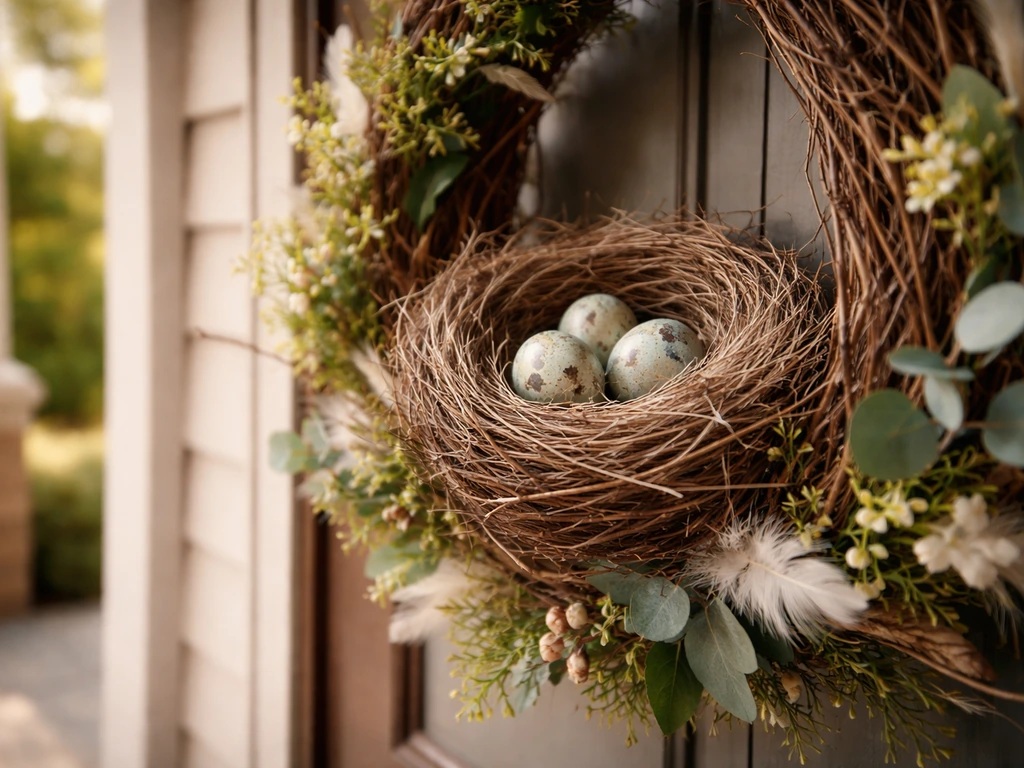
Why a bird chose your door wreath (the natural explanation first)
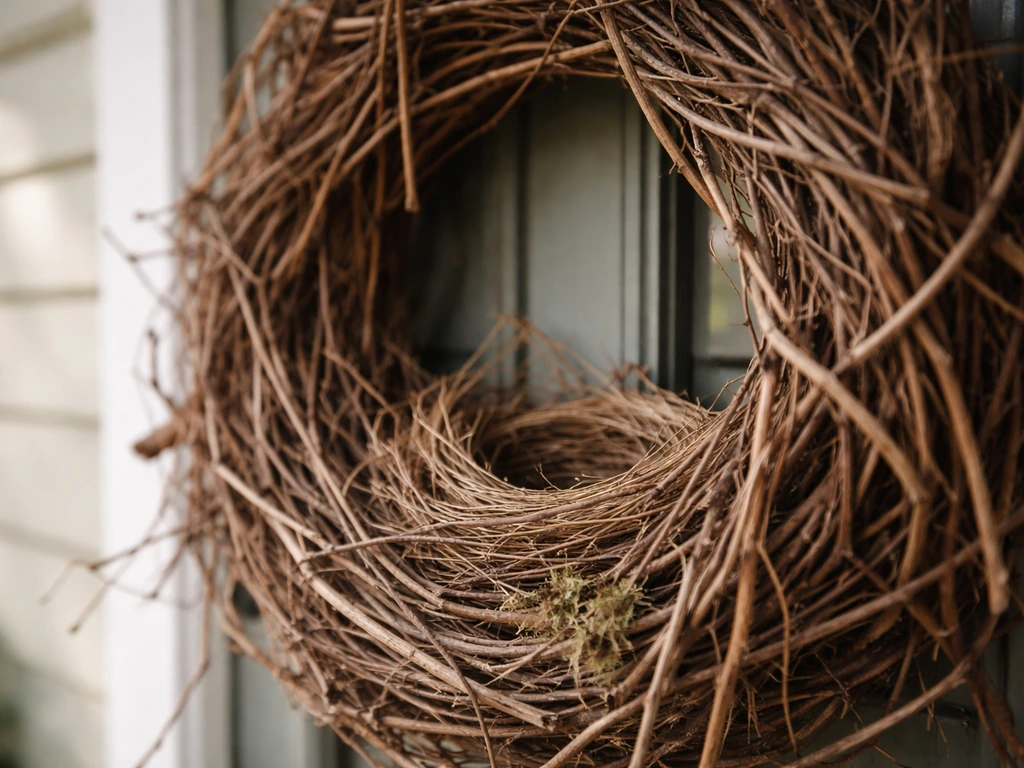
Before jumping to omens, it helps to understand why a wreath is actually a pretty logical nesting choice from a bird's point of view. Wreaths offer a dense tangle of material (twigs, vines, dried flowers, wire frames) that mimics the structure of a natural shrub. They're usually mounted on a door or wall, which means they're elevated off the ground, sheltered from rain by the overhang, and somewhat protected on one side by the door itself. For small cavity-nesting and shrub-nesting songbirds, that's a near-perfect setup.
The U.S. Fish & Wildlife Service has specifically noted that certain small songbirds will use unusual human-made structures, including hanging flower baskets and wreaths hanging on doors, as nesting sites. So this isn't a mystical fluke. House finches, robins, Carolina wrens, and mourning doves are among the most common wreath nesters. They're drawn to the location because it feels safe, not because your house is special (though you can choose to see both as true at once).
The materials in a wreath also matter. Natural wreaths made with grapevine, moss, dried herbs, or pine cones are especially attractive because birds can weave their own nesting material into the existing structure quickly. The front door area also tends to get consistent, predictable human traffic at the same times of day, and many birds actually learn to tolerate low-threat, predictable activity near their nest. In that sense, your daily comings and goings became part of her site assessment.
What a nest on your door might mean spiritually
Across a wide range of spiritual and metaphysical traditions, a bird choosing to nest at the entrance of your home is considered a deeply positive sign. If you want to compare different interpretations like bird building nest in my house meaning, you can also look at the broader symbolism people assign to nests near a home. The door or threshold holds its own symbolic weight in almost every tradition: it's the boundary between the private inner world and the outer world, the point of transition between what is and what's coming. A bird deciding to build her nest precisely at that boundary is hard to ignore symbolically.
In many spiritual frameworks, birds are seen as messengers between realms, carrying energy and intention between the earthly and the divine. A nest specifically carries meaning around new beginnings, fertility, home, protection, and the arrival of something that needs to be nurtured. When a nest appears at your door, many people interpret it as a sign that new growth is coming into your life, that your home is energetically welcoming and safe, or that a period of building and preparation is underway, one that deserves patience rather than urgency.
In Celtic and Irish folk traditions, birds arriving at or near the home were considered harbingers of news, change, or divine attention. Wrens in particular were seen as sacred and deeply tied to the home's spiritual protection. In many Indigenous North American traditions, birds are regarded as spiritual helpers, and a bird choosing your home as the site of new life can signal that your home carries strong, grounded energy. Eastern traditions, including some forms of Chinese folk belief, also associate birds nesting near the home with incoming good fortune and family harmony.
On a more personal, metaphysical level, some people experience this kind of encounter as a nudge to slow down, pay attention to what's being built in their own life, and trust the process even when nothing is visible yet. The nest is empty before it's full. The bird is on the nest meaning can also point to patience and readiness, because it often reflects a period of active building behind the scenes the nest is empty before it's full. That's not an accident as a metaphor.
What the Bible and folklore say about birds as signs

In biblical tradition, birds carry significant symbolic meaning throughout both the Old and New Testaments. Psalm 84:3 speaks directly to the image of a bird finding a home near a sacred place: "Even the sparrow has found a home, and the swallow a nest for herself, near your altar." This verse is often cited as a symbol of God's provision, peace, and the blessing of being found where you belong. A bird nesting at your door could be interpreted through this lens as a sign of divine protection over your household.
European and American folk traditions are rich with bird-and-nest omens. A widespread piece of American and British folklore holds that a bird building a nest on or near the home brings good luck, and that disturbing or destroying that nest brings misfortune to the household. Some traditions specify that the luck is proportional to how many eggs are laid, with each egg representing an additional blessing. In German folk tradition, birds nesting near the eaves or entrance were considered protective spirits of the house, and interfering with them was considered deeply unwise.
It's worth noting that virtually none of the major folklore traditions across cultures frame a bird nesting at the home as a bad omen. The symbolism is overwhelmingly positive, centered on abundance, protection, new life, and welcome change. That consistency across very different cultural systems is itself worth paying attention to. If you're trying to pin down bird nest outside my house meaning, start by separating the natural nesting explanation from the spiritual symbolism and the legal do's and don'ts.
Is it an omen, or just instinct? How to think about it
Here's the honest answer: it's both, and that doesn't create a contradiction. Birds act on instinct and environmental cues, full stop. This bird was not sent specifically to your door by the universe as a courier with a message in a tiny envelope. She assessed your wreath, found it structurally sound and well-positioned, and got to work. Understanding that doesn't diminish the symbolism. It actually enriches it. If you want to go deeper on the symbolism behind this setup, also consider the broader idea that the bird is in or on the nest as part of how people interpret these moments.
The way most thoughtful spiritual traditions approach bird encounters is not to claim that the bird consciously chose you, but to notice what the event stirs in you. Did you feel something when you discovered the nest? Surprise, tenderness, awe, curiosity? Those reactions are real data about where you are right now. If the idea of new beginnings or a protected home resonates with something you're experiencing in your life, that resonance is worth sitting with. If it doesn't land, that's fine too.
A useful way to frame it: the bird followed her instincts to your door, and you get to decide what, if anything, that moment means to you. That's not wishful thinking. That's how personal symbolism actually works. The meaning isn't in the event itself; it's in the encounter between the event and your awareness of it. The same principle applies to other nest locations, such as when a bird builds near the front of your house more generally, or when one roosts repeatedly in a specific spot. If you are wondering about the bird nest in front of house meaning, the same instinct versus symbolism framework can help you interpret what you notice. If you want to zoom in on that idea, the same safe, shelter-focused meaning often applies to other nest locations too when a bird builds a nest. If you’re wondering what it means when a bird roosts, the same idea applies: roosting often reflects safety and shelter, while your personal reaction can shape the meaning you take from it. For more on the meaning of a nest right at your front door, see the deeper interpretation of this specific doorstep placement meaning of bird nest at front door. The location matters to the interpretation, but so does your response to it.
What to do right now: the do's and don'ts

This is where practical action matters most, and where most people get it wrong by acting too quickly. Here's a clear breakdown:
- Do observe from a distance first. Before you do anything, take a few minutes to watch the nest from inside your home or at least several feet away. Determine whether it appears active (a bird coming and going), newly built and empty, or potentially abandoned.
- Do use a different door if you have one. If the nest is on your front door and another entry is available, switching your routine removes disturbance and gives the bird the best chance.
- Do keep children and pets away from the area. Even well-meaning curiosity causes stress to nesting birds and can cause them to abandon the nest.
- Don't move or remove an active nest. If there are eggs or live chicks present, you are likely prohibited by federal law from disturbing the nest (more on this below).
- Don't spray the door area with insecticides, cleaners, or anything else while the nest is active.
- Don't open and close the door repeatedly or more than necessary. Vibration and repeated disturbance can cause nest abandonment.
- Do take a photo from a respectful distance. It helps you document the nest's status over time and is useful if you need to consult a wildlife expert.
When to wait, when to intervene, and who to call
In the United States, most native songbirds are protected under the Migratory Bird Treaty Act (MBTA). A Department of Justice bulletin identifies the MBTA as providing criminal penalties for illegal take of over 1,000 native bird species, helping explain why compliance matters. Under this law, it is illegal to destroy, move, or disturb a nest that contains eggs or live chicks. The U.S. Fish & Wildlife Service is clear on this: removing an active nest with eggs or dependent young can be a federal violation, and some species carry especially strict protections. This is not a gray area. If you have eggs or chicks in your wreath, the legal path is to leave them alone until the nest cycle is complete.
A typical songbird nest cycle runs about four to six weeks from egg-laying through fledging. Most small birds, like house finches, robins, and wrens, fledge their young within two to three weeks of hatching. That's the actual window you're working with. After the young have left and the nest is confirmed empty and abandoned, you can legally and safely remove the nest and the wreath.
If you're dealing with an injured bird, a chick that has fallen from the nest, or a situation where the nest poses a genuine safety hazard (blocking a fire exit, for example), the U.S. Fish & Wildlife Service recommends contacting a qualified wildlife rehabilitator or your local wildlife agency rather than taking DIY action. If you need help with an injured bird, Mass.gov advises using a wildlife rehabilitator that has the appropriate federal permits, including for migratory birds such as songbirds qualified wildlife rehabilitator. They can advise you on legal options for your specific species and situation. You can find a licensed wildlife rehabilitator through the National Wildlife Rehabilitators Association or your state's fish and wildlife agency.
| Nest Status | Eggs or Chicks Present? | Legal to Remove? | Recommended Action |
|---|---|---|---|
| Newly built, empty | No | Generally yes (but verify locally) | Wait a few days to confirm it's not in active use before removing |
| Active, with eggs | Yes (eggs) | No, likely MBTA-protected | Leave it; use alternate entry; wait for fledging |
| Active, with chicks | Yes (live young) | No, MBTA-protected | Leave it; contact wildlife rehabilitator if there is an injury or safety issue |
| Abandoned (no activity 1-2 weeks, no eggs) | No | Yes | Remove wreath and nest safely with gloves |
| Suspected abandoned with eggs | Yes (eggs, no activity) | Uncertain; consult expert | Contact a wildlife rehabilitator before acting |
Eggs, chicks, cleaning, and what happens to your wreath
If you've discovered eggs, don't panic. Eggs mean you're in the middle of the active phase, and your job right now is patience. Mark the date you first noticed the eggs and observe from inside if possible. Most small songbird eggs hatch within 10 to 14 days of being laid. Once hatched, chicks typically fledge (leave the nest on their own) within two to three weeks. So you're likely looking at three to five weeks total from egg discovery to an empty nest.
Once the nest is definitively empty and the young have left, you can remove the wreath. Wear gloves when handling the nest, not because it's dangerous to you in most cases, but because old nests can harbor mites, parasites, and debris. Dispose of the nest in an outdoor trash container rather than composting it. If the wreath is still in good shape, you can clean it, let it air out in sunlight for a few days, and put it back up. Many people find that same species return to nest in a familiar location the following season, so if you'd prefer not to host a repeat, consider switching to a wreath made of artificial or very smooth materials that don't offer good nesting structure.
One last thing worth sitting with: whatever practical steps you take, most people who've had this experience describe it as unexpectedly moving. There's something about new life choosing your threshold, of all the places in the world, that tends to stay with you. Whether you read that as luck, as grace, as instinct, or as all three at once, the encounter is yours to interpret. What does it bring up for you right now? That question, honestly considered, might matter more than any single symbolic tradition can tell you.
FAQ
What should I do if I need to keep using the doorway, but the nest is right there?
Keep traffic around the wreath as calm and predictable as possible, avoid changing the location or swinging the wreath, and use an alternate entrance if one is nearby. If the nest blocks an essential route (like a required fire exit) you can contact your local wildlife agency or a wildlife rehabilitator to ask what safety measures are legal for your specific species.
Can I move the wreath a few inches to create more space, even if the nest is active?
In most cases, no. If there are eggs or live chicks, disturbing or moving the nest can be illegal under the Migratory Bird Treaty Act. The practical move is to leave the wreath in place until the nest is confirmed empty, then remove or replace it.
How do I confirm whether the nest is active without getting too close?
Use observation from a distance or from inside your home, and look for clear signs such as adult birds attending the nest, frequent incoming and outgoing behavior, or visible eggs/chicks. If you are unsure, assume it is active and wait, because the legal risk hinges on eggs or dependent young being present.
Is it safe to touch the wreath once the nest is empty but still looks fresh?
If there is no sign of eggs or chicks and adults are no longer visiting, you can usually remove it, but handle with gloves because older nests can hold mites, debris, and parasites. After removal, clean the area and allow the wreath to dry out before reuse.
If the bird only roosts there (no eggs), does the legal guidance change?
The body guidance is safest to apply as, leave it alone if there are eggs or dependent young, and otherwise avoid repeated disturbance. Still, species and timing matter, so if you see eggs or chicks treat it as active, and if you only see resting behavior, reduce interference and contact a wildlife professional if you are unsure.
What if the nest is built in a place I cannot leave alone, like a hanging wreath over a porch light that must stay accessible?
Avoid repairs or rearranging that could shake or expose the nest. Instead, coordinate with your local wildlife agency to discuss legal, minimal-impact options (for example, using an alternate light setup temporarily). DIY relocation is the most common mistake in these time-sensitive situations.
How long should I wait before removing the wreath if I never saw eggs but I suspect nesting?
If adults were actively using the wreath, plan for several weeks and confirm emptiness before removal. Many small songbird nests progress over roughly four to six weeks from egg-laying to fledging, so a short wait (like a few days) is usually too brief.
What should I do if a chick falls from the wreath?
Treat it as a situation for trained help. Contact a licensed wildlife rehabilitator or your state wildlife agency for instructions. Avoid feeding or trying to “rehabilitate” yourself, and keep pets away to reduce stress and injury risk.
Can I use deterrents like loud noises, sprays, or birds-on-a-wire visuals while the nest is there?
Don’t use aggressive deterrents on or near an active nest. Disturbance can harm birds and may create legal risk if eggs or chicks are present. If you want future prevention, switch materials after the nest is fully finished.
Will the same bird nest there again next season, and can I prevent it ethically?
Many birds reuse familiar sites if the structure is suitable. After the nest cycle ends, you can replace the wreath with one made of artificial or smoother materials, reduce dense tangle points, and avoid adding new natural nesting-friendly elements like grapevine or moss until you are ready for the season.
Are there health or cleanup steps I should take after removal?
Yes. Wear gloves, bag the old nest and debris for outdoor trash disposal, and wash your hands afterward. If the wreath is reusable, let it fully dry in sunlight for a few days before placing it back, and clean the door area you touched to remove dust and droppings.
Does the bird’s species affect what I should do or how urgent it is?
It can. Different songbirds have different nesting times and protections, and the safest approach is species-agnostic caution: leave active nests alone, confirm emptiness before removal, and contact a wildlife professional if you cannot wait or if you suspect an injured bird.
Next Articles
Why Is My Bird Flapping Its Wings at Me? Causes and What to Do
Understand why your bird flaps wings at you and what to do, from hormones and stress to attention and warnings.
Makes My Bird Twitch Meaning: Causes, Fixes, and Red Flags
Understand why your bird twitches, what to check now, red flags, first-aid steps, and symbolic meaning safely.
Why Does My Bird Chirp When I Leave the Room? Causes and Fixes
Understand why your bird chirps when you leave and follow a step-by-step plan to reduce stress, plus optional spiritual