A wild bird inside your house is two things at once: a real-world situation that needs calm, practical handling right now, and an encounter that many traditions consider deeply meaningful. The first priority is getting the bird out safely, without harming it or yourself. Once it's gone, you can sit with what it might mean, and there's a lot to explore there, from biblical reassurance to ancient omen traditions to modern spiritual interpretation.
Wild Bird in House Meaning: What It Really Means and What to Do

Maya Hartwell
20 May 2026
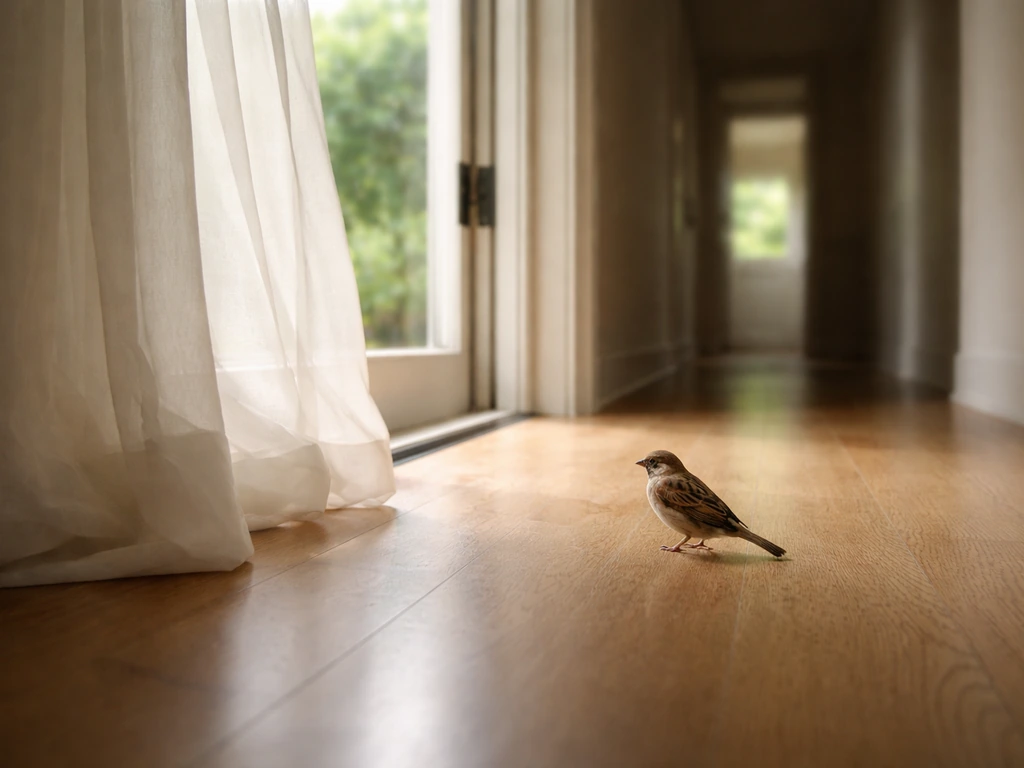
What it actually means when a wild bird gets inside
When a wild bird ends up in your home, it usually means one of two things depending on who you ask: a confused animal that followed light or airflow through an opening it couldn't distinguish from open sky, or a messenger carrying something worth paying attention to. Both interpretations can be true at the same time, and that's kind of the point. The practical and the symbolic aren't mutually exclusive here. What you do with the experience, whether you treat it as a wildlife incident, a spiritual moment, or both, says as much about your own inner life as it does about the bird.
People have been watching birds enter homes and reading meaning into it for thousands of years. The practice of interpreting bird behavior as omens even has a name: ornithomancy, which was a serious discipline in ancient cultures. That long history is part of why the moment feels significant even to people who don't think of themselves as particularly spiritual. Something in us pays attention when a wild creature crosses the threshold into our domestic space.
Get the bird out first: a calm, humane step-by-step plan
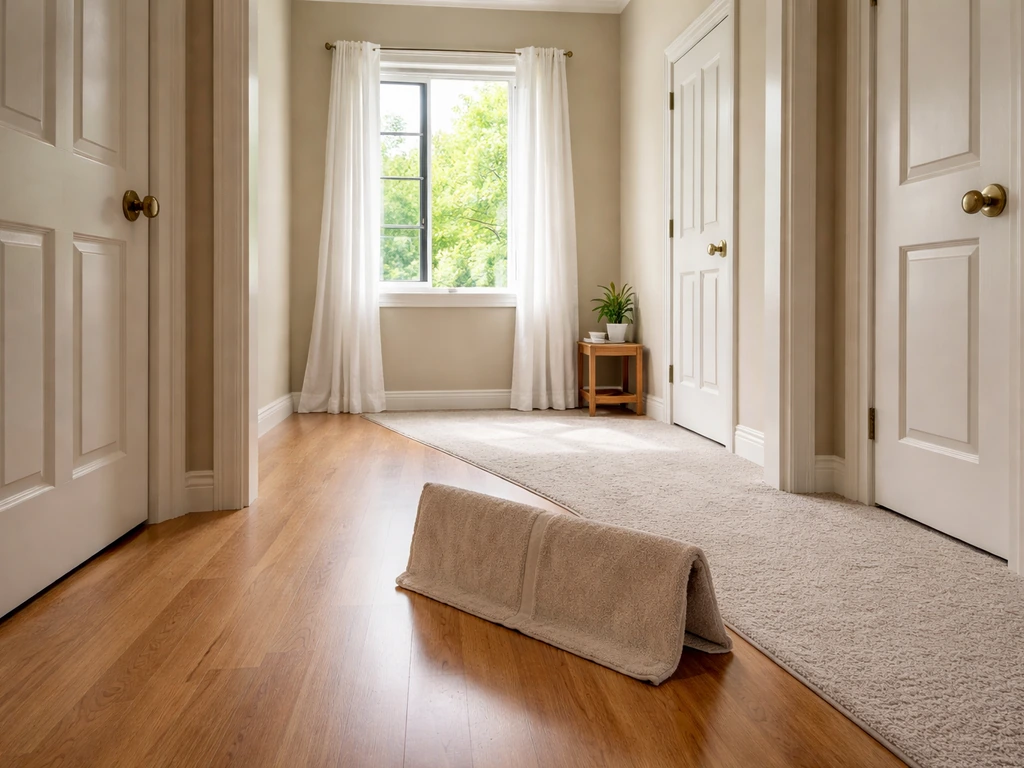
Before anything else, take a breath. A panicking bird and a panicking human is a bad combination. Birds can injure themselves badly by slamming into walls and glass when they're frightened, so slow and quiet is the strategy here.
- Close all interior doors. You want to confine the bird to one room that has a direct exit to the outside. The fewer choices it has, the faster it finds the right one.
- Open one exterior door or window wide, and remove the screen if there is one. This becomes the bird's exit route.
- Dim or turn off the interior lights. Birds move toward light, so making the outdoors the brightest direction works with their instincts rather than against them.
- Step back and give the bird space. Stand away from the exit and stay still. Most birds will find their way out within a few minutes once the room is quiet and the path is clear.
- If the bird is still struggling after several minutes, use a large towel held open in front of you to gently herd it toward the exit. Do not grab the bird with bare hands. The towel protects both of you.
- Once the bird is out, close the exit and take stock of any droppings or debris left behind.
Cleaning up afterward
Bird droppings can carry pathogens including the fungus responsible for histoplasmosis, as well as influenza A viruses in some contexts. Do not sweep or vacuum dry droppings, because that sends particles airborne where you can inhale them. Instead, ventilate the space well, dampen any droppings before picking them up, then clean the area with soap and water followed by a disinfectant that carries EPA label claims against influenza A viruses. If there was significant waste or the bird was visibly sick, a simple face covering during cleanup is a reasonable precaution.
In the U.S., you're legally permitted to humanely remove a migratory bird from inside your home without a special permit when there's a health or safety risk to people or the bird, under federal regulation 50 CFR § 21.14. So you're within your rights to handle this yourself using the steps above.
When to call for professional help
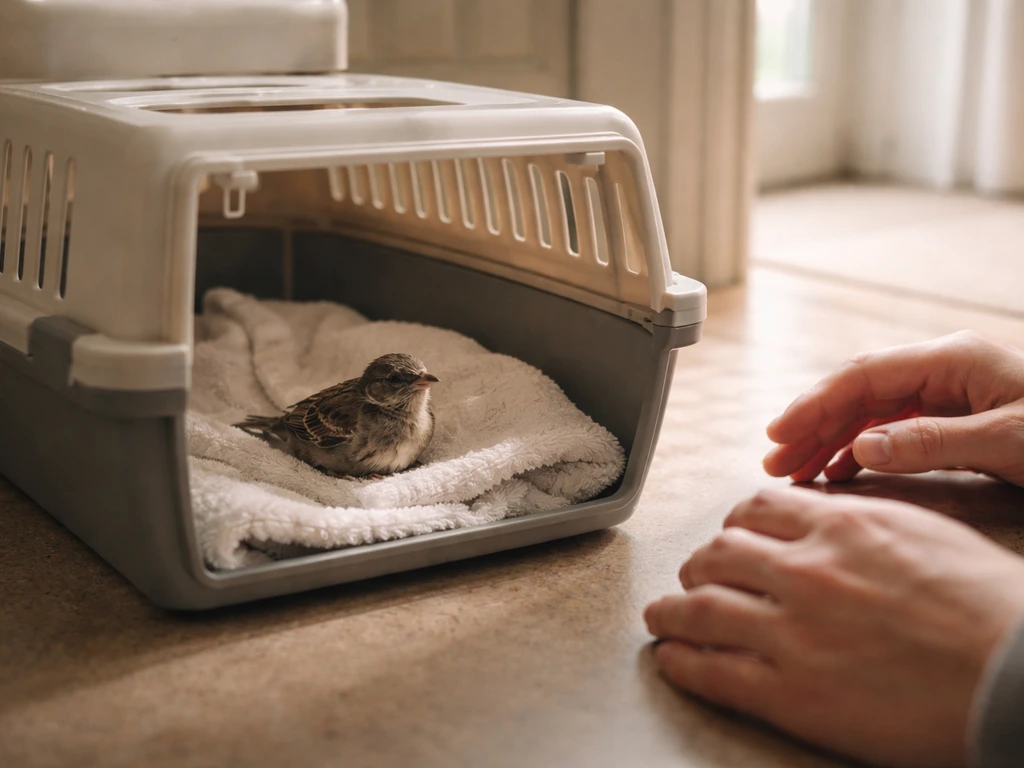
If the bird is injured, unable to stand, or clearly disoriented beyond normal stress, don't try to treat it yourself. Contact a local wildlife rehabilitation center or your state's animal control service. Licensed rehabilitators have the training and permits to handle wild birds properly. The same goes for recurring incidents, if birds are regularly getting into a particular space, that's a structural issue (a gap, a damaged screen, a recurring light attraction pattern) worth having assessed.
Why birds end up inside in the first place
There's almost always a straightforward physical explanation for how the bird got in, and understanding it can help you prevent it from happening again.
Glass confusion is the most common cause. Birds cannot reliably distinguish glass from open air. They may see a reflected habitat in a window and fly toward it thinking it's real, or they may see a rival bird (their own reflection) and fly at it aggressively. Either way, they end up hitting the glass, sometimes stunning themselves and sometimes ending up inside if a door or window was also open nearby.
Artificial light at night is a significant factor during migration seasons. Research from institutions like the Field Museum has documented how bright building lights attract and disorient migrating birds, particularly during spring and fall. Songbirds, warblers, thrushes, and sparrows that migrate at night are especially vulnerable. If you had lights on and windows open during a migration period, that's likely what drew the bird in.
Nesting instinct is another driver. House sparrows, for example, naturally nest in the eaves, crevices, and ledges of buildings. A bird actively looking for a nesting site in spring may find an open window or vent and fly straight in. This is especially common if the same species shows up repeatedly.
Severe weather can push birds into unusual spaces too. Storms, high winds, and sudden temperature drops can push birds to seek shelter in places they'd normally avoid, including through open doors into human spaces.
The spiritual and symbolic meaning of a wild bird in your home
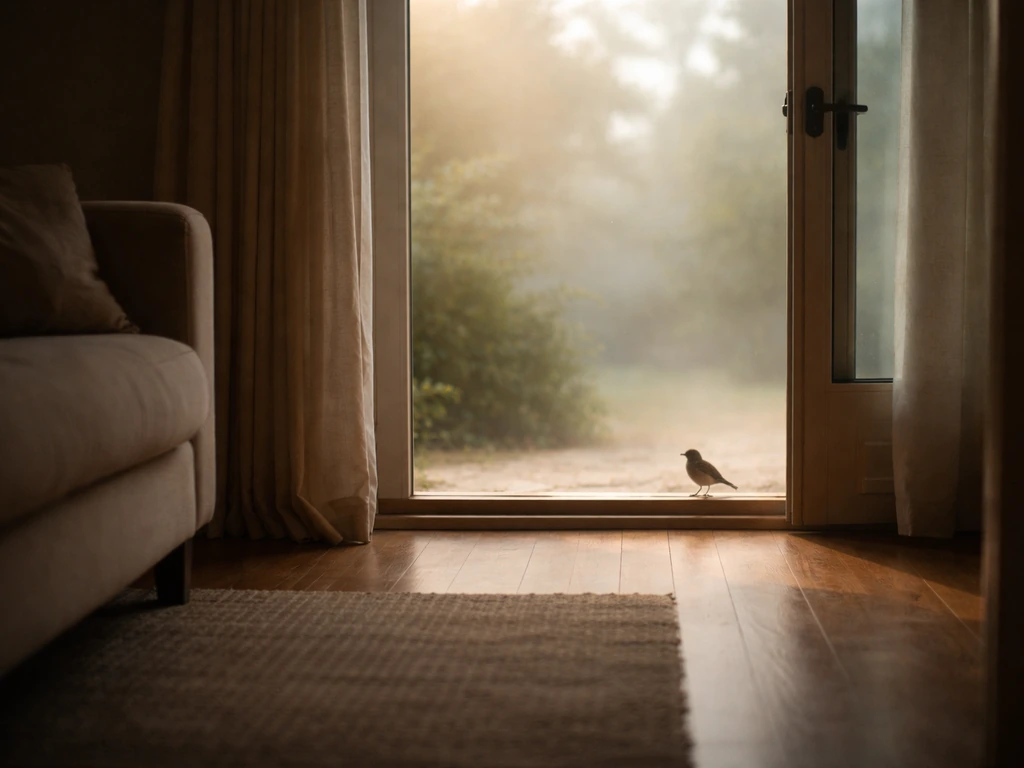
Once the bird is out and you've had a moment to breathe, many people find themselves sitting with a quiet feeling that the encounter meant something. That response is ancient and cross-cultural, and worth exploring rather than dismissing.
Birds occupy a symbolic position in nearly every human culture as messengers, guides, and connectors between the visible world and something beyond it. Because they move freely between earth and sky, they've long been understood as beings that exist in multiple realms at once. When one crosses into your home, your most personal, protected space, it's not surprising that it feels like a communication of some kind.
The most common spiritual themes associated with a bird entering a home are: change or transition arriving, a message from someone or something you can't see directly, an invitation to look at your life from a wider perspective, or a reminder of freedom, that you may be feeling trapped or constricted and the bird's presence is nudging you to notice that.
The specific bird species matters too, though this article focuses on wild birds generally. A robin carries different symbolic weight in many traditions than a sparrow or a hawk. If you're curious about the meaning connected to the specific bird you encountered, that's worth exploring separately.
What the Bible and folk traditions say
From a Christian perspective, birds in scripture are most often symbols of God's provision and care rather than literal omens. Matthew 6:26 is the passage that comes up most often in this context: 'Look at the birds of the air; they do not sow or reap or store away in barns, and yet your heavenly Father feeds them.' The point of the verse is reassurance, if God cares for birds, how much more does God care for you. For many Christians, a bird entering the home lands as a gentle reminder of that care rather than a warning of anything coming.
Folk traditions across cultures carry a much wider range of interpretations, and they don't all agree. In older European and Appalachian folklore, a bird entering a home was sometimes read as a sign that a visitor was on the way, and in darker versions of the tradition, as a death omen, particularly if the bird circled the room or couldn't find its way out. Snopes has documented how this belief varies significantly by detail: what the bird does inside the house matters as much as its presence. These traditions were never uniform, and neighboring communities in the same region could hold completely opposite interpretations.
In Celtic traditions, birds were seen as souls or messengers from the otherworld. In many Indigenous North American traditions, specific birds carry specific teachings or warnings. In East Asian folklore, birds entering the home are sometimes associated with incoming news, luck shifts, or ancestral visits. The common thread across nearly all of these is that the bird is treated as a carrier of meaning rather than just an animal that made a wrong turn.
How behavior, location, and timing shift the meaning
If you're drawn to the metaphysical or omen-style interpretation, the details of the encounter are where the meaning becomes specific. Not all bird-in-house experiences feel the same, and in most traditions, that difference matters.
| What happened | Common metaphysical reading |
|---|---|
| Bird flies in calmly and perches | Often interpreted as a deliberate visit or gentle message; less urgency, more presence |
| Bird bangs frantically against windows | Read as urgency, confusion, or a message trying hard to get through; also associated with warning or disruption |
| Bird lands near you specifically | Seen as personal rather than general; a direct communication meant for you |
| Bird lands in the center of a room | Associated with a message meant for the household or family as a whole |
| Bird lands near a window | Liminal symbolism; the window as a threshold between inner and outer worlds |
| Bird enters a bedroom | Often tied to personal or private matters; sometimes associated with the dreaming self or intimate relationships |
| Same bird or species returns multiple times | Treated in many traditions as a pattern rather than coincidence; amplified meaning, a message worth taking seriously |
| Bird enters on a significant date (anniversary, grief date, birthday) | Commonly interpreted as contact from a loved one who has passed, or a milestone acknowledgment |
Timing and patterns matter. A single bird flying in by accident during migration season reads differently than the same species showing up inside three days in a row with no obvious physical explanation. If you're experiencing a repeated pattern, that's worth sitting with more intentionally rather than explaining away.
The bird's behavior inside the home also connects to the question of what kind of message might be arriving. In many metaphysical frameworks, calm and deliberate equals clarity and peace, while frantic and confused equals urgency, chaos, or something unresolved. Neither is inherently negative, both are considered forms of guidance in these traditions.
What to do with the meaning: reflection, ritual, and next steps
Whether you're approaching this from a spiritual, religious, or simply curious angle, the most valuable thing you can do after a bird visit is slow down and notice what came up for you during it. Your initial gut feeling in the moment, the first word or image that landed, is often more useful than anything you'll read afterward.
Journaling is one of the most practical tools here. You don't need to believe in omens for this to be useful. Simply writing down the details, the species if you know it, the time of day, what the bird did, where it went in the house, what you were thinking about before it arrived, often reveals something worth noticing. Ask yourself: What was on my mind just before this happened? Is there something in my life right now that feels like it's trying to shift or break through? What would I tell a close friend if they described this same encounter to me?
If you come from a Christian or other faith tradition, this is a natural moment for prayer. You don't need to frame the bird as an omen to ask for guidance or clarity around whatever the encounter stirred in you. Many people simply pray with gratitude for the reminder that they're not navigating life alone.
If you're drawn to more earth-based or ritual practices, consider acknowledging the bird's visit with a simple gesture: opening a window to invite clear air through, lighting a candle, leaving a small offering outdoors, or speaking aloud the thing you think the bird might have been pointing toward. These aren't prescriptions, they're invitations to engage with the experience rather than just letting it pass.
And if what you're feeling is unease, particularly if you come from a folk tradition where birds in the house carry heavy associations, it helps to remember that the interpretation has always been in the hands of the person experiencing it. Folklore is not fate. The bird's meaning is shaped by your beliefs, your moment in life, and what you do with the encounter. A superstition about death omens carries weight only to the degree you give it weight, and there are many equally ancient traditions that read the same event as a blessing.
If the bird was a specific species, there may be layered meaning worth exploring, a robin in the house, for example, carries its own distinct symbolic history across European and North American traditions. The room the bird entered also shifts things: a bird in the bedroom sits in a different symbolic register than one in the kitchen or living room.
Above all, treat the encounter as an invitation rather than a verdict. Something wild entered your domestic world, looked around, and left. That's worth a moment of genuine reflection, whatever your belief system, or lack of one.
FAQ
What should I do if the bird seems injured or is bleeding?
If you suspect the bird hit glass or is bleeding, do not handle it. Keep people and pets away, close interior doors to prevent it spreading to other rooms, and call a local wildlife rehabilitator or animal control. For cleanup afterward, treat it as potentially contaminated, ventilate well, and avoid sweeping or vacuuming dry droppings.
What if this happens repeatedly at my house?
Yes. If the bird keeps appearing in the same area, that points to an entry route (a broken screen, a chimney gap, a soffit opening, a loose window seal, or an exterior vent). After the bird is out, inspect and seal openings at the suspected entry point, and reassess nighttime lighting and any open windows during migration.
How should I clean up droppings safely, especially if they’ve been there a while?
The safest approach is to assume droppings and nesting material may contain pathogens. Wear gloves, dampen droppings before picking them up, then wash the area with soap and water and disinfect. If you use a spray disinfectant, let it sit for the manufacturer’s contact time, and keep the space ventilated until it dries.
Can I pick up the bird myself to get it out faster?
Avoid handling the bird with bare hands. Wild birds can bite and scratch, and direct contact also increases disease risk. If you must intervene to remove the bird, use a towel or thick gloves only for guidance, not restraint, and focus on directing it toward an open exit.
What are common mistakes people make that make the situation worse?
Do not trap the bird unless you can do so quickly and gently. Common mistakes are using a towel over the bird’s head (increasing panic), chasing it room to room, or leaving it in a closed room with poor ventilation. Instead, turn off extra lights inside, keep pathways clear, and create one obvious exit route.
The bird is trapped in a room, how do I get it to leave without scaring it more?
If the bird won’t leave, it often needs a clearer exit. Close off other rooms, open an exterior door or window, place a light source near the exit so it can orient, and dim lights in the rest of the house. Use quiet, slow movement, and give it several minutes before taking any other steps.
What if I find that the bird might have gotten in through a nest or ventilation space?
If you find a nest or suspect it entered through an eave or vent, wait until the bird is fully out before doing repairs. Then block access during the appropriate season and ensure any active nesting is not disturbed. If you are unsure whether a nest is active or protected, contact a local wildlife authority or rehabilitator for guidance.
How can I treat this as meaningful without letting fear or superstition take over?
Yes. A bird can signal a change for you, but you can keep it grounded by separating symbolism from action. The practical steps (safe removal, cleanup, and preventing repeat entry) can be your baseline, while you decide what meaning to explore privately through journaling or prayer.
How do I interpret the bird’s behavior in a practical way after it’s out?
A useful comparison is, did the bird behave like it was confused (staying near windows, reflecting, hitting glass), or like it was searching (pausing, scanning corners, looking for potential nest spots)? Confusion often points to light or glass issues, while searching may indicate nesting interest or entry through crevices.
Is there any extra risk for people with allergies, asthma, or weakened immune systems?
If you have respiratory conditions, are immunocompromised, or there are small children in the home, be extra cautious with cleanup. Consider staying out of the area during initial ventilation and asking another adult to handle cleanup with gloves and a face covering. If droppings look heavy or there’s visible debris, calling professionals can be the safest move.