When a bird crosses your path, the most likely explanation is simple: you were in the right place at the right time during the bird's normal daily movement. Birds travel constantly for food, water, territory, and seasonal migration, and humans happen to walk through those routes all the time. That said, many traditions across cultures have long read these moments as meaningful, treating a bird crossing your path as a potential message, omen, or nudge from something beyond the ordinary. Both readings can be true at once. The bird was doing bird things, and the encounter still landed with you for a reason worth exploring.
What Does It Mean When a Bird Crosses Your Path?

Maya Hartwell
2 May 2026
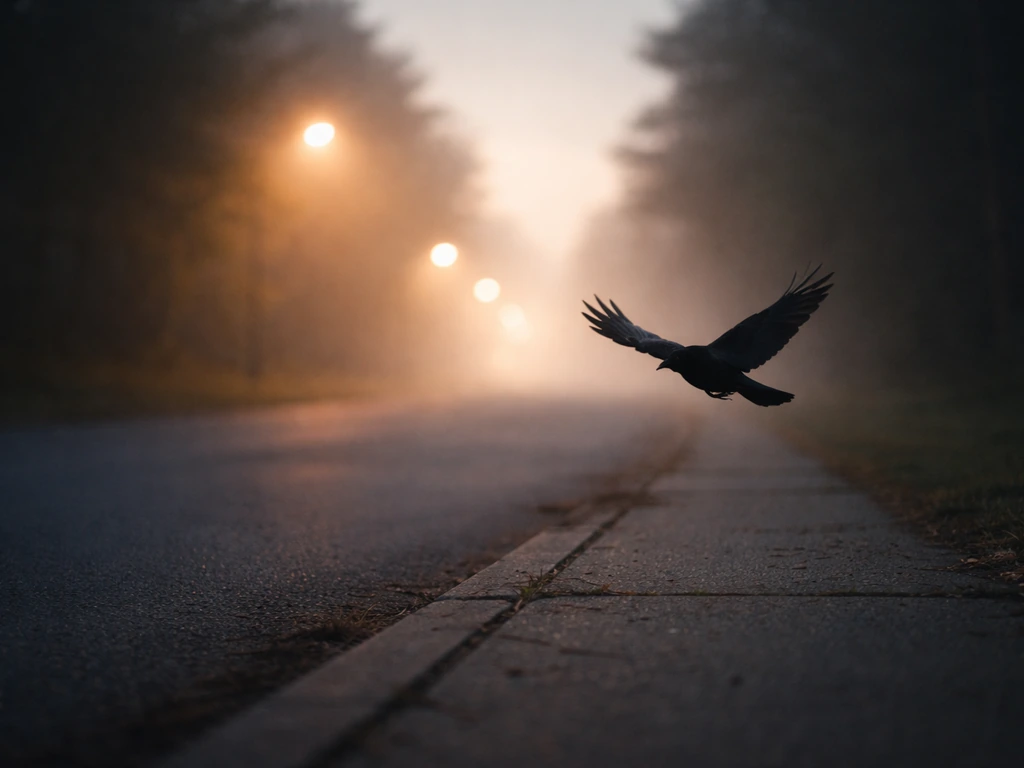
The practical side: why birds cross your path
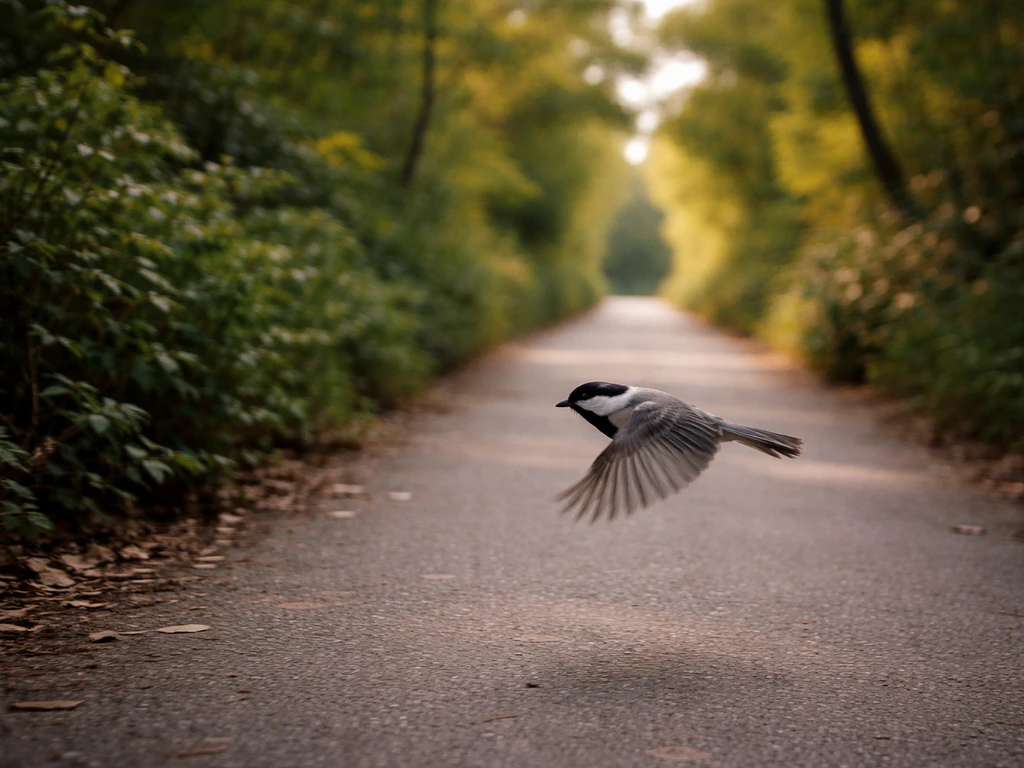
Before diving into symbolism, it helps to understand what's actually happening when a bird darts across your path. Most of the time, it comes down to a few very ordinary factors. Aggressive or territorial behavior is a normal anti-intruder response in birds, which can explain why they may move quickly and cross paths during nesting or territory defense (Massachusetts Audubon).
- Migration routes: Birds shift their flight paths between spring and fall based on weather, food availability, and wind patterns. If you're walking near a corridor they use, you're simply in their lane. Cornell Lab's eBird data shows these routes are predictable but not always obvious to people on the ground.
- Foraging and stopover behavior: Migratory birds don't fly non-stop. They alternate between flight and ground time, stopping to eat and rest. You might encounter a warbler, sparrow, or thrush mid-stopover, crossing between a feeding spot and cover.
- Territorial behavior: In spring especially, birds defending nesting territories move quickly and boldly through space. A robin or mockingbird cutting across your path may simply be running off a rival or returning to its nest.
- Startled flight: A bird flushed from the ground by your footsteps will bolt across your path in whatever direction feels like escape. It's reacting to you, not sending a message.
- Coincidence and confirmation bias: Research in psychology points out that humans are wired to notice meaningful patterns, particularly when we're already in a reflective or emotionally heightened state. If you were already thinking about something big when the bird appeared, your brain flags the encounter as connected. That's a cognitive tendency, not proof of a cosmic link.
None of this invalidates a spiritual reading. It just means you're working with a real, living creature acting on instinct, and your interpretation is a layer you bring to the moment, which is exactly how symbolism has always worked.
Spiritual meanings and omen traditions around the world
Across a striking range of cultures, birds have been treated as messengers between the visible and invisible worlds. A 2018 comparative review published in a SAGE journal found that bird signs are communicated through vocalizations and behaviors in traditions spanning multiple continents, with the specific meaning tied closely to the cultural framework of the observer. There is no single universal interpretation, which is actually freeing: it means you get to weigh the traditions that resonate with your own background and beliefs.
In many Indigenous traditions across North America, birds are understood as ecologically and spiritually embedded beings whose behavior carries layered meaning. A 2021 paper in Ornithological Applications describes how local communities interpret bird cues for both ecological predictions (weather, seasons) and socio-spiritual ones. This is not fortune-telling in the tabloid sense. It's a deeply observational practice built over generations of watching how the natural world communicates. Meanings are community-specific, not generic, so be cautious of any list that claims one bird universally means one thing.
In Eastern and animist traditions, a bird crossing your path is often read as a messenger from ancestors or spirit guides, with the direction of flight mattering as much as the species. Flying from left to right was traditionally seen as auspicious in some European augury practices, while right to left signaled caution. Celtic traditions placed enormous weight on bird encounters in liminal spaces, such as doorways, crossroads, or the moment between tasks, treating those intersections as spiritually thin places where messages could pass through.
At the broadest level, a bird crossing your path in spiritual terms is often read as a signal to pay attention: to a decision you're weighing, a transition you're in the middle of, or a fear you've been avoiding. The bird doesn't deliver a verdict. It asks a question.
What the bird actually did matters
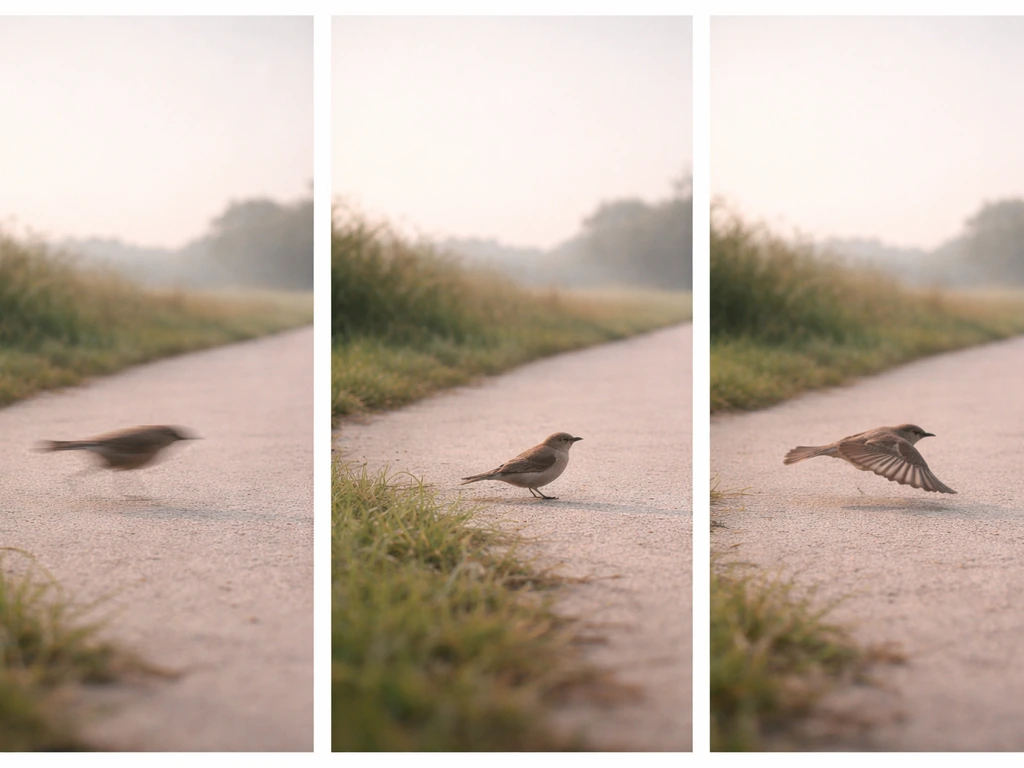
The specific behavior of the bird shapes its symbolic meaning considerably. A bird that darts across your path once and disappears reads very differently from one that lingers, lands nearby, or seems to watch you. Here's how different behaviors are generally interpreted in symbolic traditions.
| Behavior | Common Symbolic Reading | Practical Note |
|---|---|---|
| Crosses your path quickly and flies off | A brief nudge or reminder; pay attention to what you were thinking in that moment | Most common encounter; often just startled flight or foraging movement |
| Lands nearby and stays | An invitation to slow down; a message asking you to sit with something | Birds may be foraging, resting, or watching for predators |
| Flies low directly toward you or past your face | Urgency; a strong symbolic signal in many traditions; protection or warning | Could be a territorial bird, especially in nesting season (April through July) |
| Circles overhead | Watchfulness, perspective, a broader view being offered; associated with hawk or vulture symbolism | Raptors circle thermals for lift; vultures circle to assess safety before descending |
| Appears to watch you without flying away | Presence, communication, a spirit or ancestor check-in in many folk traditions | Sick or injured birds may appear unnaturally still; observe but don't handle |
| Takes off abruptly as you approach | Transition, release, or a sign to let go of something | Natural startle response; also common in territorial species |
The direction of crossing is also worth noting. Some European folk traditions distinguish between a bird crossing from right to left (sometimes seen as a caution or obstacle ahead) versus left to right (forward movement, good timing). These are not hard rules, but if you're drawn to that framework, direction is part of the picture.
Color and species symbolism: what kind of bird was it?
The species and color of the bird you encountered adds another layer. Different birds carry distinct symbolic weight across traditions, and some of those associations are remarkably consistent across cultures even if they're not universal.
Crow or raven
Crows and ravens are probably the most misread birds in popular symbolism. They're frequently cast as death omens, but that framing is not universal. In many Indigenous traditions, ravens are trickster figures associated with transformation, intelligence, and the reshaping of reality rather than death. In Celtic tradition, crows were linked to the battlefield but also to prophecy and wisdom.
If a crow crosses your path, the more accurate symbolic read across cultures is: change is coming, and you may need to be clever about how you navigate it. Separate guides explore the specific meaning of a black bird crossing your path in more depth. For a deeper look, explore the meaning of a black bird crossing your path and what different traditions commonly connect it to.
Dove
The dove is one of the most consistent symbols across traditions. In Christian symbolism, the dove is associated with the Holy Spirit, peace, and divine presence, drawn directly from Matthew 3:16 where the Spirit descends like a dove. In Genesis, Noah's dove returns with an olive branch as a sign that the flood has receded and a new beginning is available. Genesis 8:11 describes Noah's dove returning with an olive leaf, which is the biblical basis for the dove/olive branch association mentioned here. Globally, doves signal peace, hope, and the lifting of a burden. A dove crossing your path is widely read as a reassuring sign: whatever you're carrying, there's gentleness and resolution on the other side.
Robin
Robins are strongly associated with renewal, new beginnings, and the presence of departed loved ones in British and Celtic folk tradition. Their appearance at the start of spring made them symbols of hope returning after difficulty. In many families across the UK and Ireland, a robin appearing after a loss is taken as a visitation from someone who has passed. If a robin crosses your path, the traditional read is optimism: something is starting fresh.
Hawk
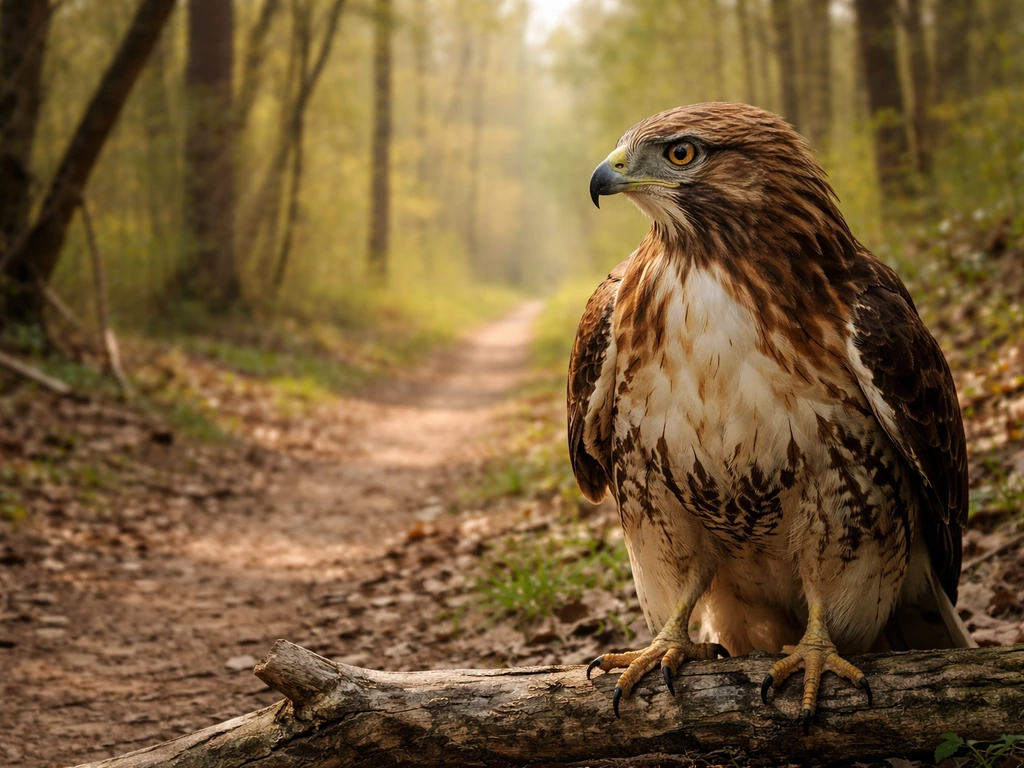
Hawks are messengers in many Native American traditions, associated with perspective, vision, and the ability to see a situation from above. A hawk crossing your path is often interpreted as a prompt to zoom out, stop reacting from ground level, and assess the bigger picture. Hawks are also associated with focus and decisive action once clarity is found.
Owl
Owls are liminal creatures, most active at the threshold of day and night, and symbolic traditions reflect that. They're associated with wisdom, the unseen, hidden truths, and in some traditions, transition or death (not as a threat, but as a passage). Encountering an owl during the day is unusual enough that many traditions treat it as a particularly pointed message: something hidden is about to become visible.
Sparrow or small brown bird
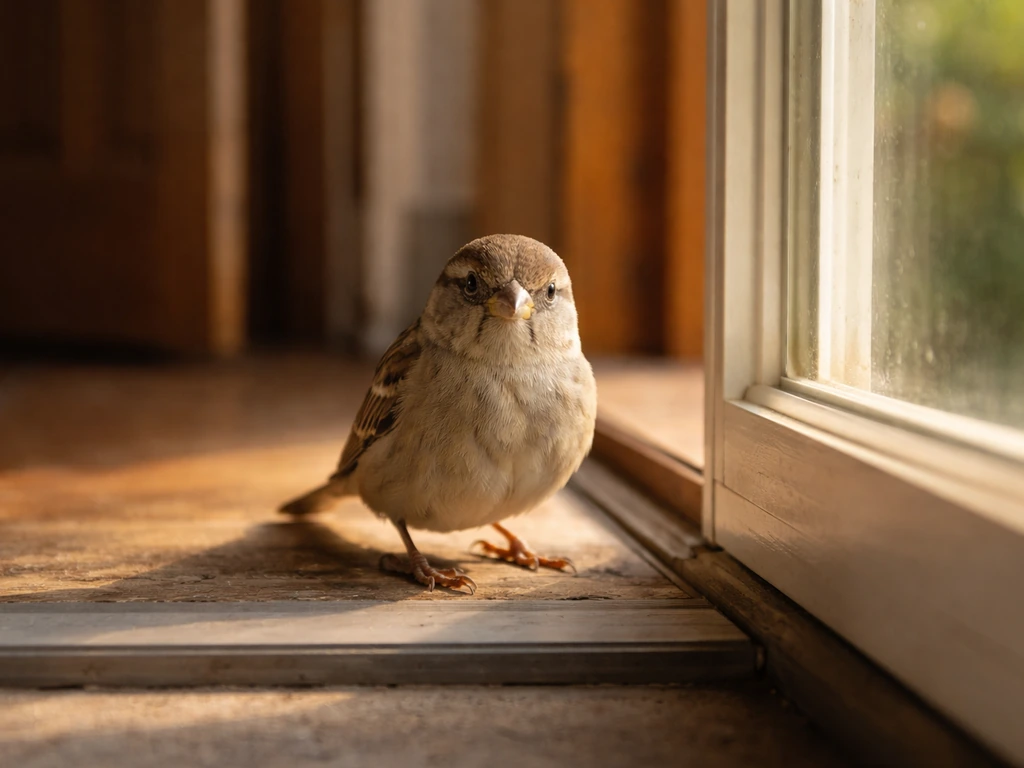
Small, common birds like sparrows carry some of the most quietly powerful symbolism in the biblical tradition. Matthew 10:29 notes that not one sparrow falls to the ground apart from the Father's awareness, framing these small, easily overlooked birds as held within divine care and notice.
A sparrow crossing your path in spiritual terms is a reminder that small things matter, that ordinary moments are seen, and that you don't have to be doing something grand to deserve attention and care. For more on this specific encounter, the meaning of a brown bird visiting you is worth exploring separately. For a broader look at the overall message behind a small bird visiting you, see what does it mean when a little bird visits you.
If you want the symbolism angle, the meaning of a brown bird visiting you can offer a more personalized lens for what to focus on next.
Red bird (cardinal)
Red birds, particularly cardinals, are among the most commonly reported as signs from deceased loved ones in American folk belief. Their vivid color against winter backgrounds made them stand out as symbolic interruptions in the mundane. A red bird crossing your path is widely associated with love, vitality, and a message from someone no longer living. This specific encounter has its own rich tradition worth reading further on its own.
Biblical and folklore perspectives
Scripture doesn't frame bird encounters as omens in the divination sense, but it does use birds as vehicles of meaning and divine action repeatedly. Beyond the dove and sparrow passages already mentioned, ravens appear in 1 Kings 17:4, where God commands ravens to bring food to the prophet Elijah at the brook. The raven, often cast as a dark symbol, is here an instrument of provision and care. This points to a broader biblical pattern: birds act as agents of God's will, not as fortune-telling signs but as reminders of care, presence, and providence.
In British and European folklore, the magpie crossing your path holds a particularly strong place in the popular imagination. Historical records from the Cotswolds document the belief that a magpie crossing one's path in the morning was a bad omen, and the old counting rhyme (one for sorrow, two for joy, and so on) formalized a number-based system for reading magpie encounters. These are explicitly folk beliefs rooted in pre-Christian and Celtic cultural soil, not doctrine, but they've persisted for centuries precisely because they give people a framework for interpreting unexpected encounters.
Celtic traditions broadly treated birds as messengers from the Otherworld, particularly birds encountered at liminal moments: the edge of a forest, the turn of a season, the threshold of a journey. The specific belief that a bird crossing your path on the morning of an important day carried significance is documented across Irish, Welsh, and Scottish folk sources. The meaning depended on the bird, the direction, and the behavior, not just the presence.
What these traditions share is a posture of attention: the encounter is an invitation to notice, not a verdict to obey. Even in traditions that treat certain bird encounters as warnings, the prescribed response is reflection and preparation, not panic.
How to respond after the encounter

Whether you lean toward the spiritual or the practical, the most useful thing you can do after a bird crosses your path is slow down and notice. Here's how to actually work with the experience rather than just wondering about it.
Ground yourself first
If the encounter felt jarring or emotionally loaded, take a breath before you assign meaning. Pause where you are for a moment. Notice what's around you, what you were thinking about just before the bird appeared, and how your body feels. This isn't mystical advice; it's just good interpretive hygiene. The meaning you find will be clearer once you're not startled.
Note the details while they're fresh
If this encounter felt significant to you, write it down quickly. The details that matter most for both practical identification and symbolic interpretation include:
- Time of day and date (morning encounters carry different traditional weight than evening ones)
- Location (near your home, on a commute, at a crossroads or threshold, in nature)
- Species or description: color, size, any markings you noticed
- What the bird did: crossed and disappeared, landed, circled, seemed to look at you, flew low
- Direction of travel if you noticed it
- What you were thinking or feeling in the moment before the bird appeared
- Any life question or decision that's been on your mind recently
Journaling prompts for reflection
If you want to go deeper, these prompts work whether you're approaching this spiritually or psychologically. They're based on the idea, supported by clinical psychology research, that coincidences are most useful when treated as mirrors for your own inner state rather than external directives.
- What was I thinking about right before the bird appeared? Is there something unresolved there?
- If this bird were carrying a message meant specifically for me today, what would I most need to hear?
- Does the symbolic tradition associated with this bird (its species, its color) resonate with anything I'm going through?
- Am I looking for permission to do something, or reassurance that something is okay? Could this encounter be giving me that?
- What would I do differently today if I took this encounter as a signal to pay attention?
When to treat it as a sign to act, and when to let it go
Not every bird encounter warrants a deep dive. If a sparrow shot across your path while you were thinking about lunch, let it be a sparrow. But if the encounter landed with weight, if it interrupted something, if you're still thinking about it hours later, that's worth sitting with. The test isn't whether the universe sent you a message. It's whether the encounter helped you access something you already knew or needed to hear. If journaling on it produces clarity about a decision, a relationship, or a direction, act on that clarity. The bird was the occasion. You did the work.
One note worth including: if you find yourself regularly interpreting ordinary events as directed specifically at you in ways that feel urgent or distressing, it's worth talking to someone. Spiritual attunement and meaningful coincidence are normal human experiences. But when the pattern feels compulsive or frightening, that's a different conversation to have with a professional.
FAQ
What should I do right away if a bird crosses my path while I’m driving or in a hurry?
If safety is involved, treat the encounter as a cue to slow down or check your surroundings, then move on. You can still reflect later, but avoid trying to interpret it in the moment while making time-sensitive decisions.
Does the meaning change if the bird flies directly toward me or away from me, not just across my path?
Many symbolic frameworks focus on crossing direction, but if the bird’s path feels targeted, interpret it as a prompt to notice what you were doing immediately before, such as the decision you were considering. If it flew away, it can function as “release” rather than “warning,” depending on your tradition, but the practical check is your emotional response.
How can I tell whether I’m reading the encounter too personally or just noticing meaning?
A helpful test is whether your interpretation leads to grounded action (a clear next step, healthier boundaries, better planning). If it pushes urgency, fear, or compulsion, or tells you not to trust your own judgment, scale back and return to observable facts (species, behavior, time, context).
What if I saw more than one bird cross my path, or they crossed multiple times?
Multiple crossings typically intensify “attention” symbolism, but you can keep it practical by logging each detail separately (species, direction, number of passes, and your state). Then look for a consistent theme in your journaling, like “transition” or “decision,” instead of assuming a fixed multi-bird code.
Do white birds, gray birds, or birds with unusual colors have special meanings?
Color can add nuance in some traditions, but most systems are inconsistent across regions. A safer approach is to identify the species first and then check whether your specific belief tradition connects that species color pattern to a theme, rather than relying on internet claims.
How should I interpret the encounter if I don’t know the bird species?
Use “best effort” identification and avoid overconfident symbolism. Note size (small, medium, large), shape (round-bodied, long-tailed, broad wings), and behavior (perching, darting, hovering), then keep the spiritual meaning broad, like “pay attention to a transition,” until you can confirm.
Is it a bad sign if the bird acts strangely, like hitting a window or behaving repeatedly around me?
If a bird crashes or appears distressed, start with the real-world explanation (disorientation, weather, collision risk). Spiritually, many people treat it as a reminder to slow down and be gentle, but prioritize safety and care, such as contacting local wildlife help if needed.
What if I’m skeptical, but I still feel emotionally impacted by the bird encounter?
That can still be meaningful without adopting an omen framework. Treat it like a psychological mirror: what thought, worry, or relationship topic was closest to the surface when the bird appeared? Use the encounter as permission to pause and clarify, not as proof of hidden instructions.
Can I assign a symbolic meaning if the bird crossing happens during a stressful moment like grief or panic?
Yes, but do it carefully. Since heightened emotion can amplify pattern-finding, ground your interpretation by writing only observable details first and postponing conclusions until you’re calmer. If distress spikes or you feel compelled to act immediately based on the sign, seek support.
If a tradition gives “left to right is good” and “right to left is caution,” what should I do if my personal experience contradicts that?
Use the framework as a lens, not a rule. When your lived response disagrees, prioritize what the encounter helps you recognize internally, such as whether you actually feel ready to move forward or need preparation and support.
How long should I “sit with it” before deciding the bird had meaning for me?
A practical window is minutes to a day. If the encounter is still affecting your choices after that, jot down the specific decision or fear it seems to relate to. If it fades quickly, it may have been a simple coincidence, and you can let it pass.
Could a bird crossing my path be purely ecological, and not symbolic at all?
Yes, and it’s normal for both explanations to coexist. If nothing in your thoughts or feelings changes, it likely was your presence intersecting a routine route. If it interrupts your focus or clarifies a question, that’s where meaning often lives.