When a brown bird visits you, the most common spiritual interpretation is that it carries a message of grounding, stability, and quiet protection. Think of it less as a guaranteed prediction and more as an invitation to pause: something about your home, your roots, your resilience, or your sense of safety may be worth reflecting on right now. That said, brown birds are also among the most frequent visitors to human spaces for completely practical reasons, so the meaning you take from the encounter depends a lot on context, the bird's behavior, and what's already on your mind.
What Does It Mean When a Brown Bird Visits You

Maya Hartwell
25 Apr 2026
What a brown bird visit usually means spiritually
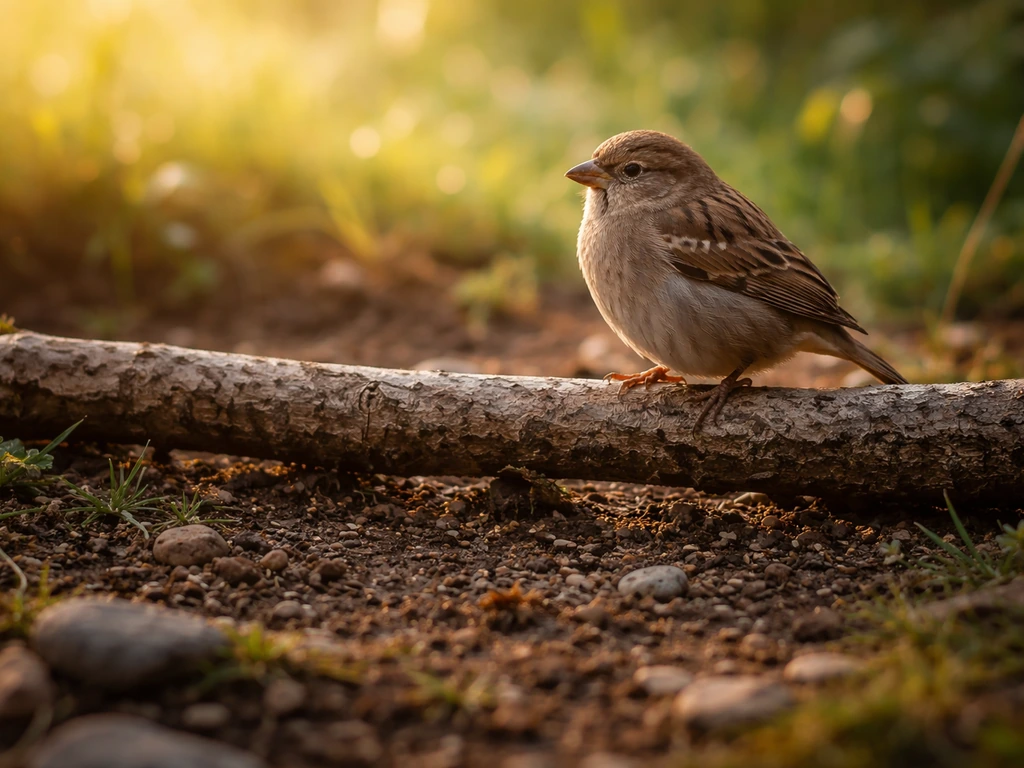
Across modern spiritual traditions, brown birds are consistently linked to a handful of themes: stability and grounding, personal growth, humility, protection, and the warmth of home and family. The brown color itself plays a role here. Brown is the color of earth, of nests, of roots. It doesn't dazzle, but it endures. When a brown bird shows up at your window, your yard, or even inside your house, many people interpret that as a gentle nudge toward those same qualities in their own life.
A few of the most widely shared interpretations worth considering:
- Grounding and stability: A reminder to stay rooted, to focus on what's solid and real rather than what's uncertain or chaotic.
- Protection and safety: In many traditions, a bird visiting the home is seen as a guardian energy, watching over the household.
- Patience and quiet strength: Brown birds, especially sparrows and wrens, thrive through adaptability rather than force. Their visit can mirror a call to that same patience in your own situation.
- Home and family: Because many brown birds are so deeply associated with nesting and community, their presence is often read as a sign to tend to your relationships and your sense of belonging.
- Personal growth and new beginnings: Some traditions see any unexpected animal visitor as a signal that change is arriving, even if it arrives softly.
The honest caveat here: none of these interpretations are verifiable facts. They're symbolic frameworks, ways of using the natural world as a mirror for inner life. The most grounded approach is to treat a brown bird visit as an invitation to reflect, not a prophecy about what's coming. What resonates with you personally often matters more than any standardized meaning.
Which brown bird was it? The species shifts the symbolism
The broad "brown bird" category covers a surprising range of species, and their traditional symbolism doesn't all overlap. Identifying the bird, even roughly, helps you find a more specific meaning if that's what you're after.
House sparrow
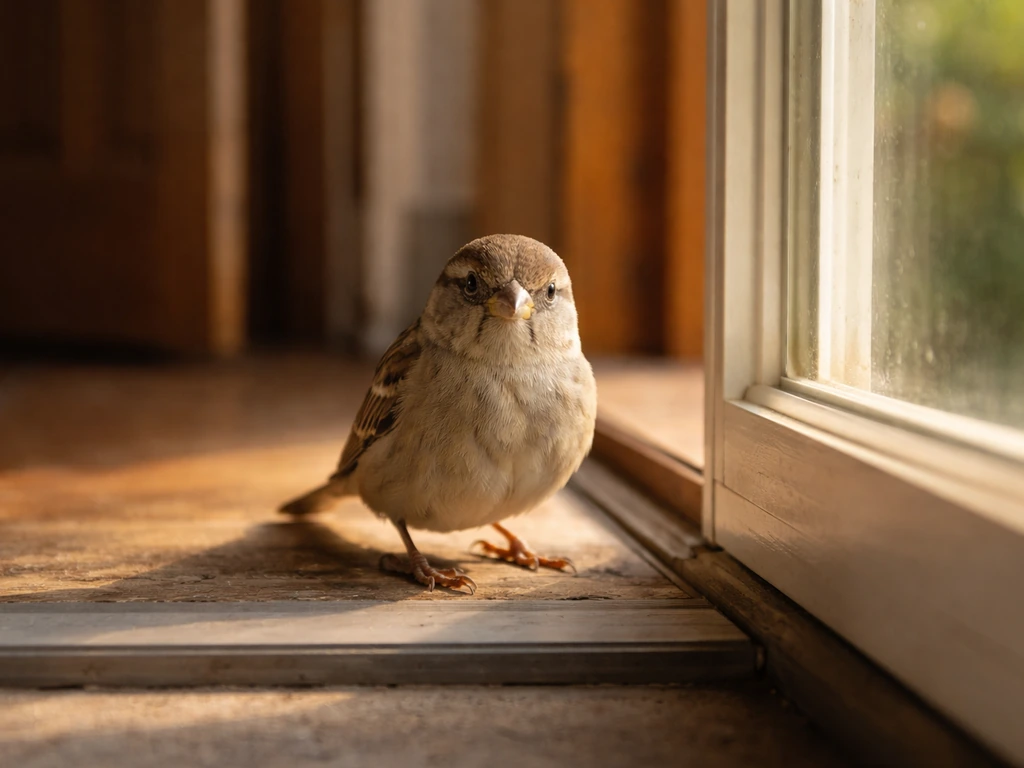
This is the most likely culprit for most people. House sparrows are small, streaky brown birds that live almost exclusively around human structures. Cornell Lab of Ornithology notes they nest in building cavities, gutters, and birdhouses, and readily eat birdseed from feeders. They're practically built to appear at your home. Symbolically, sparrows are associated with community, resilience, and adaptability. In some folklore traditions, a sparrow flying into your house is considered good luck or a sign of prosperity coming. Their "energy of home" symbolism is probably the most commonly cited meaning for sparrow encounters specifically.
Robin
Robins are a classic harbinger of spring and renewal. While their breast is orange-red, their back and wings are a warm brown, and they're frequently interpreted as a "brown bird" by people who don't know the species. Robins are strongly associated with new beginnings, the return of hope after a difficult period, and the idea that something fresh is on the way. In Celtic and British folklore, the robin is one of the most spiritually significant birds, often linked to messages from the deceased or the divine.
Wren
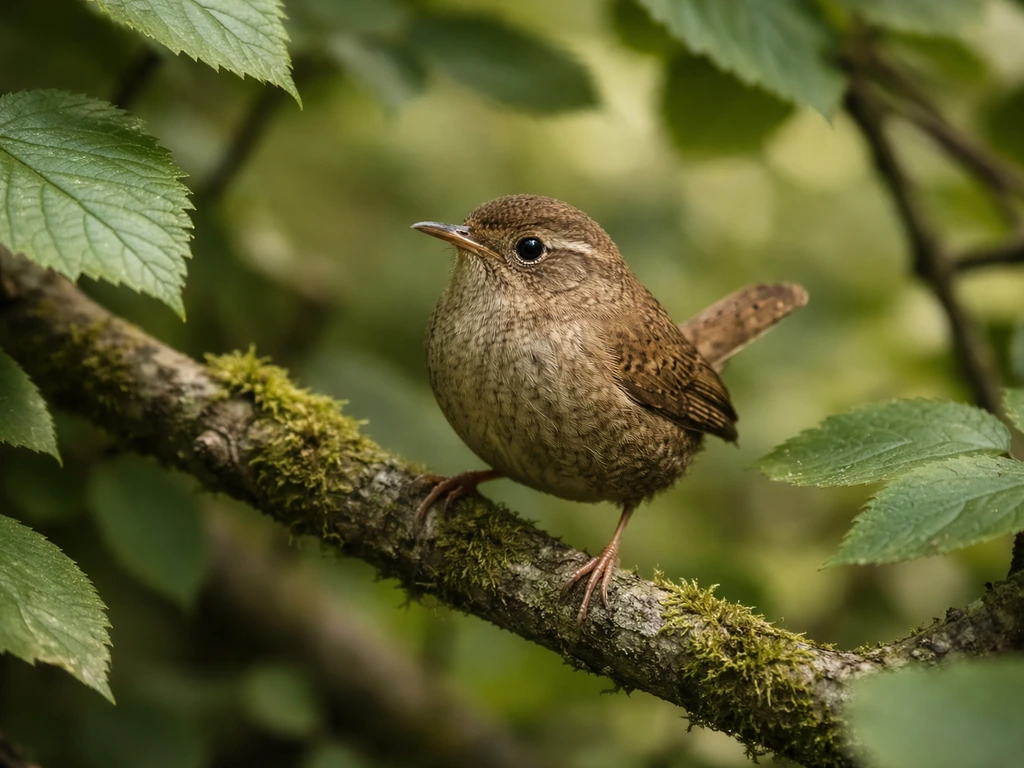
Tiny, energetic, and fiercely determined, wrens pack outsized symbolism into their small frames. In Celtic tradition especially, the wren was considered the king of birds despite its size, symbolizing cleverness, resourcefulness, and the ability to navigate difficult situations. A wren visit is often interpreted as encouragement to trust your own ingenuity.
Finch (house finch or purple finch)
Female finches are a plain brown, while males show more color. Finches are associated with joy, abundance, and the sweetness of life, often tied to themes of appreciating small pleasures. If the brown bird at your feeder has a chunky beak and moves in small flocks, it's likely a finch, and the symbolism skews toward gratitude and creative energy.
Thrush or brown thrasher
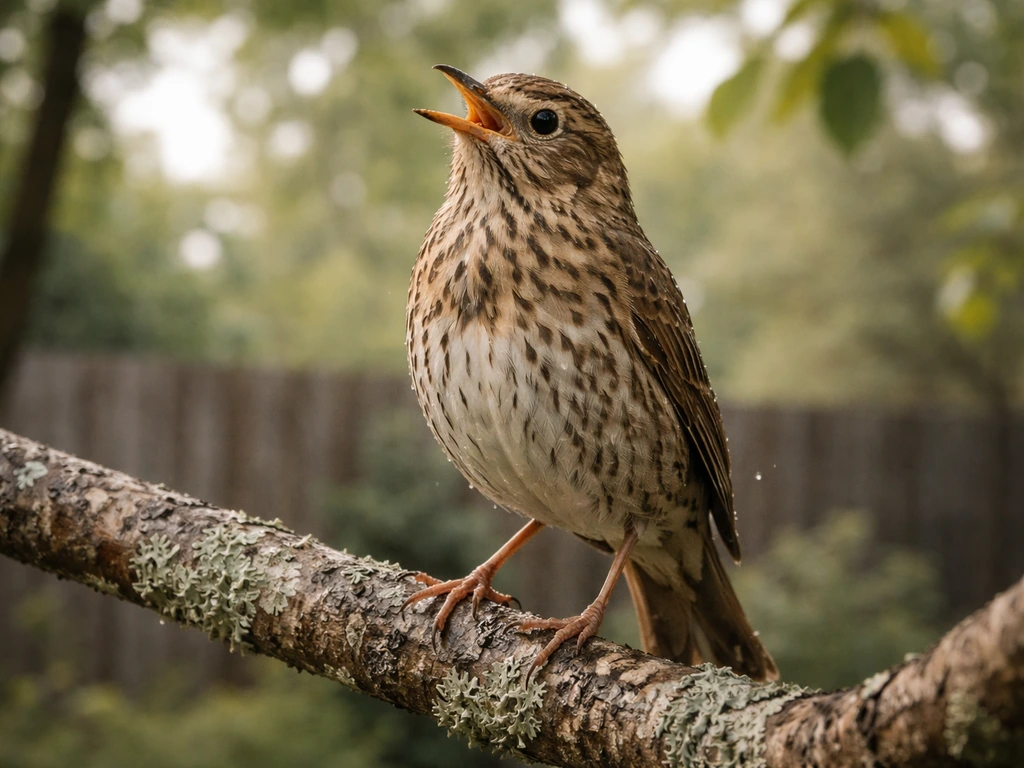
Both are spotted or streaked brown birds with melodic songs. Thrushes in particular have long associations with the soul, transformation, and the threshold between worlds in European folklore. If the bird was singing emphatically or had a spotted chest, this may be your visitor, and the symbolism leans toward introspection and inner wisdom.
| Bird | Key symbolic themes | Worth noting |
|---|---|---|
| House sparrow | Community, resilience, home, good luck | Most common brown bird at human homes |
| Robin | Renewal, new beginnings, hope, messages | Often linked to spring or a loved one passed |
| Wren | Resourcefulness, cleverness, determination | Celtic tradition holds them as especially significant |
| Finch (female) | Joy, abundance, gratitude, creativity | Often visits feeders in small flocks |
| Thrush / Brown thrasher | Soul, transformation, inner wisdom | Usually identified by spots and a strong song |
What the Bible and faith traditions say about bird visits
If you come from a Christian background or find yourself asking whether this could be a sign from God, the biblical tradition actually offers a thoughtful lens, though not the one pop-spirituality sites often suggest.
In Matthew 6:26, Jesus points to birds as evidence of God's provision: "Look at the birds of the air; they do not sow or reap or store away in barns, and yet your heavenly Father feeds them. Are you not much more valuable than they?" The teaching here is about releasing anxiety and trusting in divine care, not about reading bird visits as personal omens. Similarly, blank" rel="noopener noreferrer">Matthew 10:29 notes that not even a single sparrow falls to the ground outside of God's care. Theologians consistently interpret this as an affirmation of God's attentive love for all creation, with the point being that if God notices the least-valued creatures, how much more does God notice you.
The Noah narrative (dove and raven) shows birds functioning as meaningful signs within a specific biblical story, but most Bible scholars treat these as narrative and theological moments, not a universal template for reading bird encounters in daily life. The tradition points more toward trust and gratitude than toward decoding omens.
For faith traditions that work within a framework of signs and divine communication, a brown bird at your door could reasonably be taken as an invitation to prayer or reflection on God's provision in your life. The key distinction most pastoral voices make: it's an occasion for spiritual attention, not a forecast of specific events.
What different cultural traditions say about brown bird visits
Bird symbolism is one of the most cross-cultural phenomena in human history, and brown birds specifically show up in multiple traditions with overlapping, if slightly different, meanings.
- Celtic tradition: Birds at the threshold of a home, particularly wrens and sparrows, were seen as messengers from the otherworld or from ancestors. A bird repeatedly returning to a door or window was taken as a sign that a spirit wished to communicate or that protection was being offered.
- Indigenous traditions (various): Many Native American traditions treat bird visits as messages from spirit guides or from the natural world offering guidance. The meaning is highly specific to the tribe and region, and it's worth being cautious about over-generalizing here, but the common thread is attentiveness to the animal's behavior as a form of communication.
- East Asian traditions: In Chinese and Japanese culture, birds near the home are generally positive symbols. Sparrows in particular are associated with good luck and joy in Japanese folklore. The direction a bird flies from and toward can shift the interpretation.
- European folklore: Across many European traditions, a bird entering a home was considered a significant omen. A brown bird entering peacefully was often interpreted as a guest or good news arriving; a bird flying in distressed or dying was sometimes considered an ill omen, though context mattered.
- African traditions: Many West African spiritual traditions treat bird visits as communications from ancestors, with the type of bird and its behavior determining the nature of the message. Smaller, common birds are often seen as benevolent messengers.
The throughline across almost all of these traditions is the idea that bird visits are worth pausing for. Not necessarily catastrophic, not necessarily a detailed prediction, but an invitation to pay attention to the world around you and within you. If the moment feels unusually resonant, it can also fit the idea of when a red bird crosses your path, shifting your attention to what you should notice right now.
The practical side: why a brown bird might actually be at your home
Here's something worth knowing: most brown bird visits have completely ordinary explanations, and understanding those doesn't cancel out the symbolic meaning if you find it meaningful. It just helps you respond practically and responsibly.
- Nesting season: House sparrows, wrens, and finches all nest in and around human structures. If a brown bird is persistently hanging around your eaves, gutters, window frames, or porch light, it's almost certainly scouting or building a nest. Nesting activity peaks in spring and early summer.
- Food and water sources: If you have a feeder, birdbath, fruit trees, or berry bushes, you are essentially running a bird café. Brown birds at your windows near feeders are almost always there for the food.
- Seasonal migration: Spring (right now, late April) and fall are peak migration periods. Brown birds that would normally pass through without stopping may pause at homes with good food sources or suitable cover. Artificial lighting at night can also disorient migrating birds and draw them toward buildings.
- Window and glass confusion: Birds don't perceive glass as a barrier. They see reflections of sky or trees and fly toward them. A bird repeatedly visiting or tapping the same window is often responding to its own reflection, not delivering a message.
- Accidental indoor entry: If a brown bird ended up inside your home, it likely flew in through an open door or window, or was disoriented by a collision. This is a practical situation requiring practical action, not necessarily a spiritual one.
None of this means the encounter can't hold personal meaning for you. But knowing the natural context helps you interpret responsibly and respond appropriately, especially if the bird needs help.
What to do after a brown bird visits you
Whether you're approaching this spiritually, practically, or both, there are real next steps that will help you get more out of the experience.
Observe and note the details
Before you interpret anything, just notice. What was the bird doing? Was it calm and settled, or distressed and frantic? Was it alone or with others? What time of day was it? Where exactly did it appear, and for how long? Has it come back more than once? These details shift the symbolic reading significantly across traditions, and they also help you assess whether the bird needs practical assistance.
Journal the encounter
If you're drawn to working with signs and synchronicities, keeping a brief journal entry is genuinely useful. Write down the date, what was happening in your life at the time, and what the encounter felt like. Over weeks or months, patterns often emerge that are far more personally meaningful than any general interpretation you'd find online. Note what the brown bird's visit brings up for you emotionally, not just intellectually.
Use prayer, meditation, or intention-setting if that fits you
If your spiritual practice includes prayer, meditation, or intention-setting, the moment of a bird visit can be a natural anchor for that. If you’re wondering what it means when a little bird visits you, these same ideas can help you interpret the moment with care a natural anchor. You might sit quietly, acknowledge the encounter, and ask yourself (or whatever higher power you work with) what it is you need to notice right now. Is there something about stability, home, or patience that needs your attention? Let the bird's presence open the question rather than answer it.
Practical checks to make
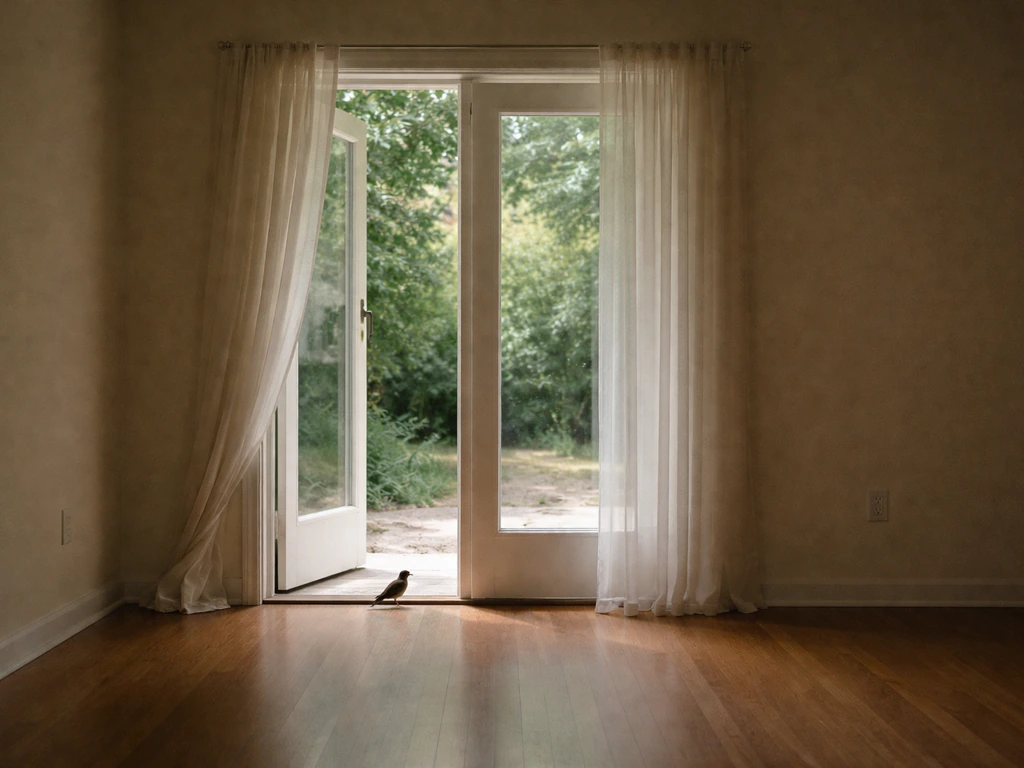
- If the bird is inside your home: Turn off lights in the room to reduce confusion, open a window or door, and give the bird space and time to find its way out. Don't chase it. If it's a bird of prey rather than a small brown bird, close it into one room and contact a wildlife rehabilitator.
- If the bird hit your window: Mark the glass on the outside with decals, tape, or patterns spaced about 2 inches apart. This makes the glass visible to birds and significantly reduces collision risk. The FWS notes that external markings work far better than internal ones.
- If you want to encourage visits safely: Place feeders either very close to your window (within 3 feet, to reduce collision speed) or more than 30 feet away. Provide fresh water. This creates genuinely bird-friendly conditions rather than accidental hazards.
When the encounter needs more than interpretation
Sometimes a bird visit is less about symbolism and more about a living creature that needs help. Knowing the difference matters.
The bird appears injured or dazed
If a brown bird is sitting on the ground unable to fly, appears lopsided, is breathing with its mouth open in a resting state, or was visibly struck by a window, it may be injured. After a window strike, birds sometimes appear stunned but can still have serious internal injuries. Audubon recommends getting any window-collision bird to a licensed wildlife rehabilitator rather than assuming it will recover on its own. Contact your local wildlife rehab center or call a wildlife hotline. Don't give it food or water.
You've found a baby bird
This is one of the most common spring encounters and one of the most misread. A baby bird on the ground is not automatically abandoned. If it's a nestling (featherless or nearly featherless), the U. S.
Fish and Wildlife Service says the best action, if you can do so safely, is to place it back in the nest. If you can't find the nest or the bird is clearly injured, contact a professional wildlife rehabilitator. Do not give it food or water. If it's a fledgling (fully feathered, hopping around), it's almost certainly in the process of learning to fly and its parents are nearby.
Leave it alone unless it's in immediate danger from a cat or car, in which case move it a few feet to a safer spot.
Unusual behavior or flock behavior
A single brown bird at your feeder is ordinary. A brown bird that is pressing against a window repeatedly for days, acting aggressively toward its own reflection, may be in a territorial loop triggered by the glass. Birds can collide with windows especially during spring and fall migration, so turning off unneeded lights and using timers or motion sensors to reduce attraction to glass can help prevent strikes [pressing against a window repeatedly for days](https://www. fws.
gov/story/threats-birds-collisions-buildings-glass). All About Birds recommends window-treatment prevention, such as placing netting or screening a short distance from the glass, to help stop birds from striking windows pressing against a window repeatedly.
That's not a spiritual crisis, it's a bird that needs the window treated to break the cycle. If you see a large number of birds behaving unusually (circling, falling, mass disorientation), that's worth reporting to your local wildlife agency or Audubon chapter as it can indicate environmental concerns.
The most respectful response to any bird encounter, whether you're reading it for signs or not, is to look at the animal first and ask what it actually needs. Spiritual meaning and practical compassion aren't in competition. In many of the traditions that take bird symbolism most seriously, the sign and the creature are one and the same, and honoring the message means honoring the messenger.
If this encounter has you thinking more broadly about birds as messengers, you might find it useful to explore what it means when a bird crosses your path more generally, or how the symbolism changes when the visitor is a small bird specifically. What does it mean when a bird crosses your path more generally, and how does the symbolism shift by species, context, and behavior? The color and type of bird matter too: a black bird crossing your path or a red bird carries quite different symbolic weight from your quiet brown visitor today. If you meant the red bird specifically, you can also look into what it suggests when a red bird crosses your path.
FAQ
How can I tell if a brown bird visit is more likely a practical situation than a spiritual sign?
Start with behavior and setting. If the bird is repeatedly hitting glass, acting confused, or appears injured (lying on the ground, mouth open, breathing oddly), treat it as a practical need first. If the bird is calm, perching normally, and the encounter is brief, it is more reasonable to focus on reflection or symbolism rather than rescue actions.
What should I do if the bird is inside my house and won’t calm down?
Open a door or window on the side you want it to leave from, turn off interior lights, and close off other rooms so it has one clear exit. Avoid chasing it. Once it flies out, do not try to feed or handle it.
If a brown bird keeps returning to my window, does that always mean “something” spiritually?
Repeated window pressing is often a territorial or reflection-triggered behavior, especially during breeding season or when there are nearby feeders. The practical fix is to reduce reflections (close blinds, add window film, or temporarily move feeders away). Symbolic meaning can coexist, but treating the window issue is usually the real-world answer.
Is it okay to feed a brown bird that visits me while I interpret the encounter?
If it is normal and healthy, feeding once can be fine. But do not offer food or water to birds that appear stunned, injured, or after a window strike. In those cases, contact a licensed wildlife rehabilitator and let professionals handle care.
What if I see a nestling or fledgling, and I am unsure which one it is?
Look for feathers and mobility. A nestling is usually featherless or nearly so and needs the nest placed back (if you can do so safely). A fledgling is fully feathered and hopping, and parents are likely nearby, so leave it alone unless it is in immediate danger from pets, traffic, or exposure.
Should I look up the exact species every time to get the “right” meaning?
Not necessarily. The article’s guidance supports using species identification as a way to refine reflection, not a requirement. If you are overwhelmed, you can start with broad cues (sparrow-like near buildings, robin-like for renewal themes, wren-like for resourcefulness) and choose the meaning that fits your emotional context.
What does it mean if the bird’s behavior is distressed, like frantic circling or nonstop calling?
Distress behavior often points to immediate environmental stress, predation attempts, or confusion from reflections and lights. Spiritually, you can interpret the pause invitation, but practically it means you should make the space safer (reduce light reflections, remove glare, and check for hazards like cats).
How do I keep from turning a random visit into anxiety or doom-spiraling?
Use a “reflection window” rule. Notice what the visit brings up, then make one small, concrete action related to stability or home (tidy a space, reach out to family, rest, or plan a grounded step). If the interpretation starts to feel like fear-based forecasting, scale back to gratitude and attention rather than prediction.
If the bird is injured, can I call an emergency line or should I wait to see if it recovers?
Do not wait in cases like window strikes, inability to fly, or signs of serious injury. Contact your local wildlife rehabilitator or wildlife hotline as soon as possible. Time matters for window-collision injuries, and licensed care improves outcomes.
How long should I journal or meditate on the visit before moving on?
A practical approach is to do a short check-in the same day, then one follow-up after a week. Write what you noticed emotionally, what was going on in your life, and whether any pattern appears later. If nothing resonates, it is okay to treat it as purely symbolic or purely practical and let it go.
Next Article
Why Is My Bird Flapping Its Wings at Me? Causes and What to Do
Understand why your bird flaps wings at you and what to do, from hormones and stress to attention and warnings.