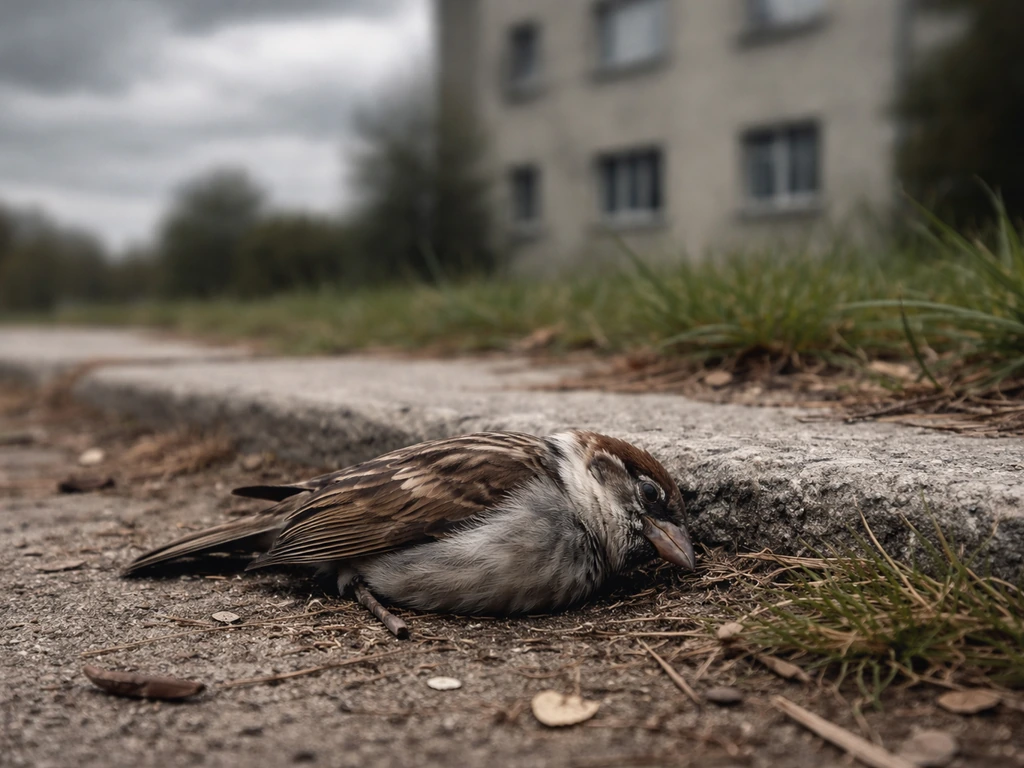
A dead bird falling from the sky is jarring in a way that's hard to shake. Before anything else: don't touch it with your bare hands, keep pets and children away, and take a breath. What you're dealing with is almost certainly a natural death with a perfectly explainable cause, but that doesn't mean the experience won't stay with you. Across cultures and centuries, people have found meaning in exactly this kind of moment. This guide walks you through both tracks: what to do right now for safety, and what traditions, faiths, and metaphysical perspectives say about the symbolism of a bird that falls unexpectedly from above.
Dead Bird Falling From Sky Meaning: Safety and Symbolism

Maya Hartwell
26 Apr 2026
What to do immediately: safety and cleanup first
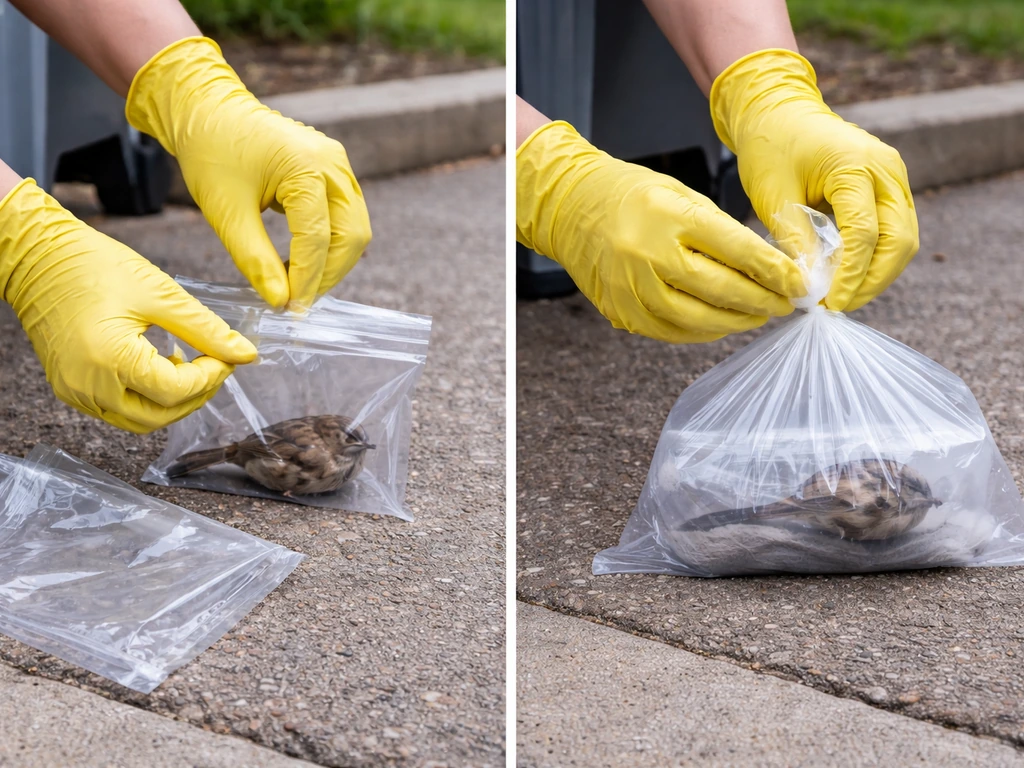
The first priority is safe handling. Dead birds can carry pathogens including West Nile virus (WNV) and, in rare cases, highly pathogenic avian influenza (H5N1). Neither of these is a reason to panic, but they are good reasons not to pick the bird up with your bare hands. The CDC is clear on this: always use disposable impermeable gloves, and place the bird directly into a sealed plastic bag. If you don't have gloves on hand, the inverted plastic bag trick works, cover your hand with the bag, pick up the bird, then invert the bag over it and seal it.
For most single dead birds, double-bagging and disposing in a trash receptacle that children and animals can't access is the right move. If you found five or more dead birds in the same area, that's a situation worth escalating, contact your local wildlife biologist or state wildlife agency, as clusters of deaths can signal a disease event worth investigating. The Illinois Department of Public Health instructs that if you find a dead bird, you should contact your local health department, which is the authorized agency for dead-bird pick-up for testing and surveillance and can advise on protective handling contact your local wildlife biologist or state wildlife agency. The Illinois Department of Public Health and similar state agencies specifically flag multi-bird deaths as a reporting priority.
If there's any chance of splashing during cleanup (a bird in standing water, for example), the CDC recommends adding safety goggles and a surgical mask to protect your mucous membranes. Once you're done, discard or disinfect your PPE and wash your hands thoroughly with soap and water, or use an alcohol-based hand sanitizer if soap isn't available. The USGS also recommends reporting dead birds to your local health department, many departments use those reports to track WNV activity in your area, so even a brief online report can contribute to public health monitoring.
Why birds actually fall from the sky: the natural causes
The phrase "falling from the sky" makes this feel more dramatic than it usually is, but there are real, well-documented reasons a bird might die in mid-flight or high up and then drop. Understanding these doesn't diminish the experience; it just gives you a grounded foundation before you reach for spiritual meaning.
- Window and building collisions: This is one of the leading human-caused sources of bird death. Audubon research estimates that window strikes kill well over one billion birds annually in the U.S. alone. Birds can't distinguish between a reflection of sky in glass and actual open sky, so they fly straight into it at full speed. Some die instantly; others fly away appearing fine and die later — which is why a bird might seem to "fall from the sky" with no obvious explanation nearby.
- Artificial light disorientation: Migrating birds navigate partly by starlight, and bright artificial lights at night (from buildings, streetlamps, or urban skyglow) can completely disorient them. Audubon's Lights Out Program documents how birds circle exhausted around lit buildings and then collide with glass or simply drop from exhaustion.
- Illness and starvation: Birds weakened by infection, parasites, or lack of food can lose their ability to fly and fall mid-air. West Nile virus, avian pox, salmonella, and other diseases can cause sudden neurological failure that looks, from the outside, like a bird simply falling from the sky.
- Storms and extreme weather: High winds, hail, and sudden cold snaps can disorient or physically strike birds during flight, especially during migration when large numbers are aloft at once.
- Predation mid-flight: Hawks and falcons kill prey in the air. If the prey escapes or the predator drops it, you may witness a bird falling that was struck or injured above.
- Entanglement: Birds can become caught in fishing line, netting, or plastic mesh at height and fall when they can no longer sustain flight. The Wildlife Center of Salt Lake specifically identifies entanglement as a cause of injury and death in wild birds.
- Toxin or pesticide exposure: Poisoned birds can lose motor control suddenly, appearing to simply fall without warning.
In 2021, a mystery bird death event on the U.S. East Coast prompted lab testing from multiple agencies. Even with expert investigation, some causes took time to identify, and that uncertainty is normal. If you're genuinely unsettled by the cause, reporting to your local wildlife agency is the right move and gives you something concrete to do.
Spiritual and symbolic meanings of a dead bird
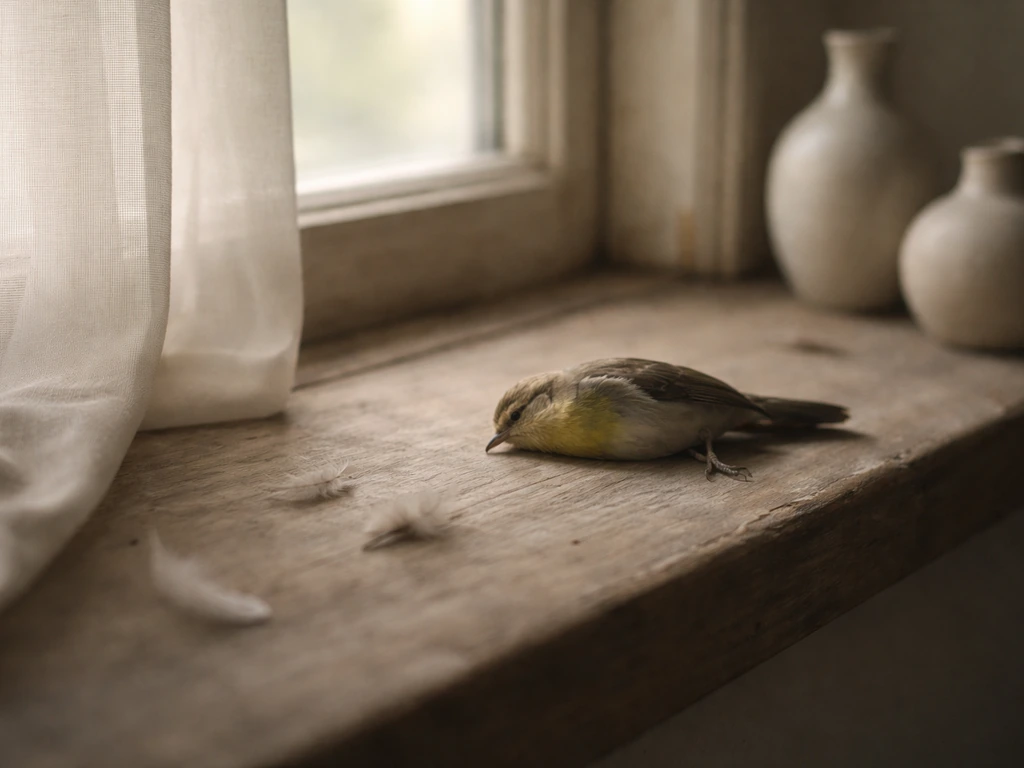
Across virtually every culture with a tradition of watching birds, which is most of them, dead birds carry symbolic weight. The ancient practice of ornithomancy (reading omens from bird behavior and appearance) spans Greek and Roman augury, Celtic tradition, Indigenous American practices, and Asian folklore. A bird dying in an unusual or dramatic way, like falling from above, tends to be read as a more significant signal than simply finding one on the ground.
The most consistent thread across traditions is that dead birds signal transition, not necessarily tragedy. They mark endings that make space for something new. In many Indigenous traditions, birds are messengers between the physical and spirit worlds, and their death is seen as the completion of a message delivered, not a curse. Celtic folklore similarly associates birds with the otherworld, and an unexpected bird death near a person or home is often read as a threshold moment: something is closing, and something else is beginning.
In Chinese and East Asian traditions, the interpretation depends heavily on the bird species and where it falls (more on that below). A falling or dead bird near a home can be read as a sign to pay attention to family dynamics, health, or a relationship that may need care. In some African and Afro-Caribbean spiritual traditions, a dead bird appearing unexpectedly is a call to seek spiritual protection or cleansing, not because the bird is bad luck itself, but because it signals that protective energy is needed.
If you're drawn to metaphysical or spiritual perspectives, the most widely shared interpretation is this: a dead bird falling is a call to awareness. Something in your life, a relationship, a pattern, a belief, a chapter, may be ending or asking to be released. The bird's fall from the sky specifically, rather than from a perch or tree, amplifies the sense of unexpectedness and can symbolize something that felt stable suddenly shifting. If you are instead dealing with a dead bird hanging from a tree, the symbolism can shift, and it helps to know the specific dead bird hanging from tree meaning.
How species, location, and timing change the meaning
If you want to go deeper into the symbolic interpretation, these three factors tend to shift the meaning most significantly across traditions.
Bird species
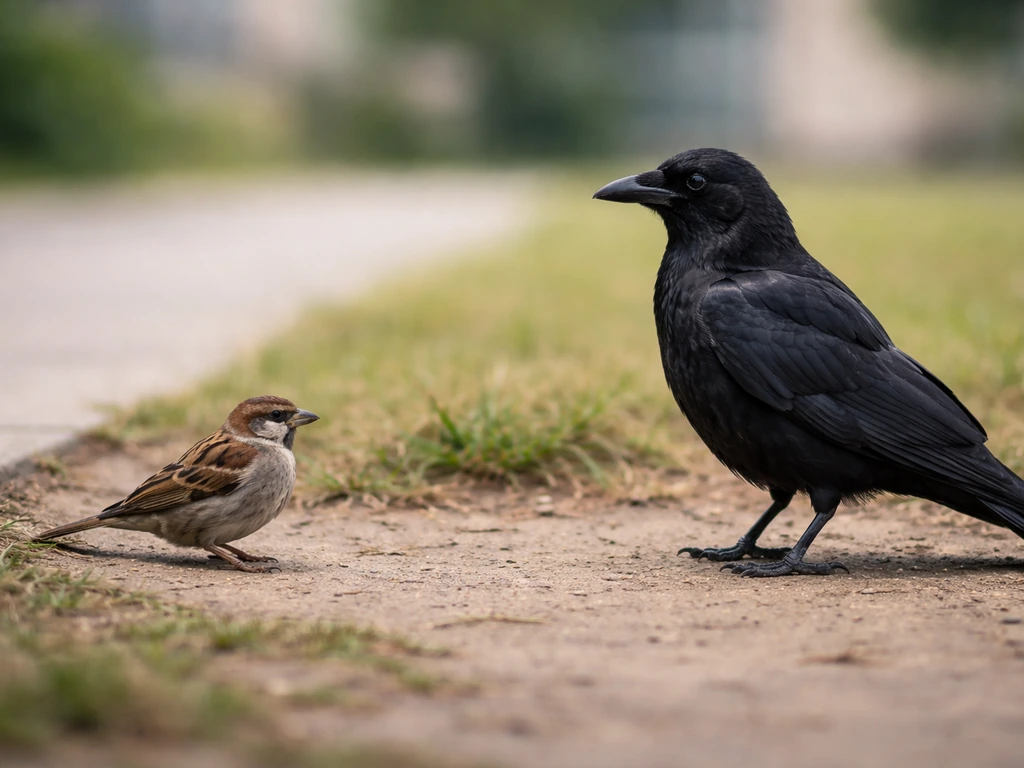
| Bird | Common Symbolic Association |
|---|---|
| Sparrow | Humility, community, everyday life; in Christian tradition specifically tied to divine care (Matthew 10:29) |
| Crow or Raven | Transformation, the unseen, messages from the spirit world; often associated with major life transitions |
| Dove | Peace, love, spiritual purity; a dead dove can signal grief or the end of a period of harmony |
| Robin | New beginnings, spring, renewal; death of a robin sometimes read as one chapter closing before a fresh start |
| Owl | Wisdom, the hidden, the liminal; in many cultures an owl's death near a home signals a significant change ahead |
| Hawk or Eagle | Power, vision, leadership; a fallen hawk is often read as a call to reclaim or reconsider personal power |
| Hummingbird | Joy, resilience, lightness; its death can be a reminder not to neglect the small pleasures in life |
Location
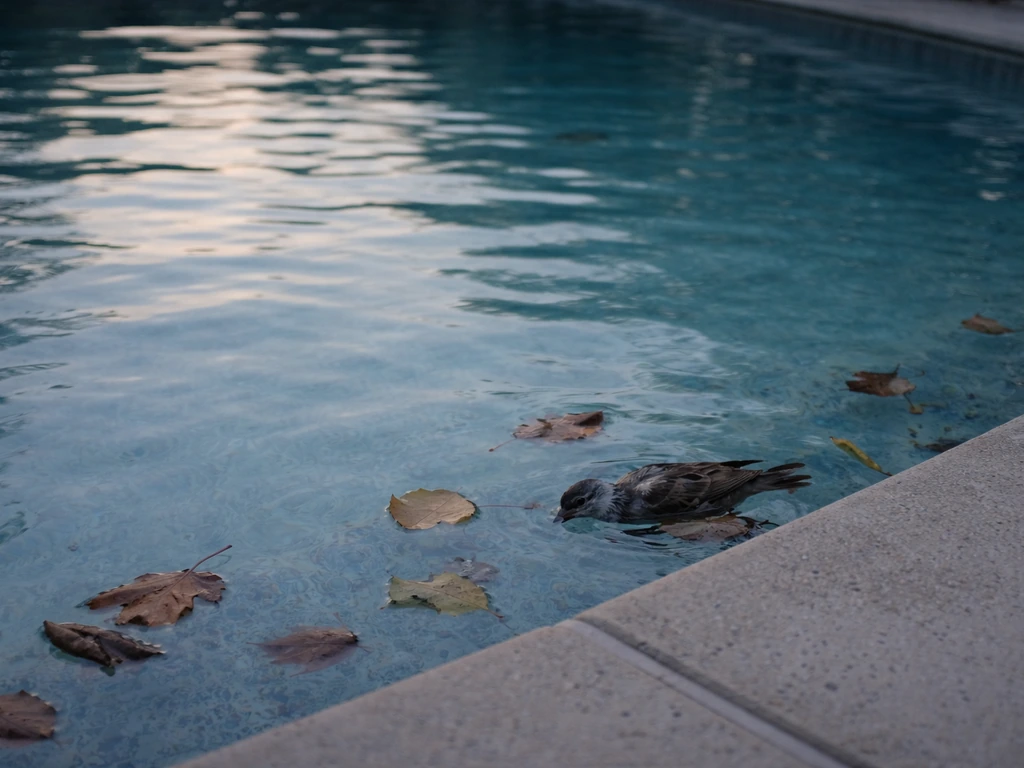
Where the bird falls matters to many interpretive traditions. A bird falling near your front door is often read as a message directed at you or your household, something entering or leaving your personal space energetically. A bird falling near a workplace or car is sometimes associated with professional shifts or a journey. Finding it in water, like a pool or fountain, adds a layer of emotional or subconscious symbolism in many traditions. If you're also curious about a dead bird in a pool specifically, that scenario carries its own nuances worth exploring separately. If you specifically mean finding a dead bird in a pool, there are extra symbolic nuances some traditions connect to emotions and subconscious themes.
Timing and season
Season and life context amplify the symbolic read. A bird falling during a personally significant time, a major decision, a loss, a transition period, tends to feel more resonant, and many people find it meaningful precisely because of that timing. In spring, a dead bird is often read against the backdrop of new growth: something old must give way. In winter, it can reinforce themes of dormancy or necessary endings. During migration seasons (spring and fall), the sheer volume of birds in the sky means collisions and deaths are more common, which doesn't erase the meaning you find in it, but does provide context.
Is it a warning, bad luck, or a sign of change?
This is the question most people are really asking. The honest answer is: it depends on the lens you're using, and none of those lenses are universally true. In Western popular superstition, dead birds, especially black ones or those that die near a home, are often labeled "bad luck" or a death omen. But this framing is actually a minority position globally and historically. Most traditions that take bird omens seriously don't frame them as fixed bad luck; they frame them as signals requiring attention or action.
A "warning" interpretation says: something in your life needs your attention before a situation worsens. A "change" interpretation says: a transition is underway whether you're ready or not. A "protection" interpretation (common in some spiritual traditions) says: the bird absorbed or reflected something difficult so you could be made aware. None of these is inherently negative unless you treat the sign as fate rather than information.
The related topic of dead bird omens in general covers this spectrum well. What makes the "falling from the sky" version distinct is the element of unexpectedness and height, the bird didn't die quietly; it fell. That drama is part of what makes people take notice and search for meaning. If the event felt significant to you personally, that feeling itself is worth sitting with, regardless of what any tradition says.
Biblical, folklore, and metaphysical lenses
Christian and biblical perspective
The most cited biblical passage in this context is Matthew 10:29-31, where Jesus says that not one sparrow falls to the ground apart from the Father's knowledge, and that humans are worth far more than sparrows. For many Christians, this passage reframes the entire question. A dead bird falling isn't an omen or a sign of divine displeasure; it's a reminder of God's intimate awareness of even the smallest created things. The Lutheran tradition, among others, cautions against reading natural events as deterministic signs or superstitions, and encourages believers to respond with prayer and trust rather than fear. The pastoral takeaway from the Matthew passage is comfort, not warning: you are seen and cared for.
Celtic and European folklore
In Celtic traditions, birds were widely seen as souls or messengers crossing between worlds. An unexpected bird death, especially one that fell from above, was often interpreted as a message from an ancestor or the spirit world requiring acknowledgment. Irish and Scottish folklore sometimes associates sudden bird deaths near a home with a significant change in the family's fortunes, though not always a negative one. European folk traditions recorded in historical texts consistently treat unusual bird behavior as worthy of attention rather than as random noise.
Indigenous and animist traditions
In many Indigenous North American traditions, birds are considered relatives and messengers. The specific meaning of a bird's death varies widely by nation and tradition, so generalizing is difficult, and it's worth being careful not to flatten these into a single "Native American belief." Broadly, though, many animist traditions treat the death of a bird near a person as the completion of a spiritual delivery: the bird brought something it was carrying, a warning, a message, a blessing, and has now released it. The appropriate response is gratitude and reflection.
Metaphysical and New Age perspectives
In contemporary metaphysical and New Age traditions, dead birds are commonly interpreted as signs of energetic shift. The "falling from the sky" element is often read as something coming down from a higher plane of awareness into your conscious life, a spiritual message becoming impossible to ignore. Some practitioners view it as a prompt for cord-cutting rituals, releasing what no longer serves you, or completing unfinished emotional business. Others read it as confirmation that a transformation already underway is real and significant. These traditions tend to be personal and intuitive rather than dogmatic, which means the meaning you sense personally carries weight.
What to do next: reflection, prayer, journaling, and prevention
Once the bird is safely handled and disposed of, you're left with the experience itself. Here's how to actually work with it, depending on what resonates with you.
For the spiritually or symbolically inclined
- Journal about it now, while the details are fresh. What were you thinking about when it happened? What's been on your mind lately that feels unresolved? The timing and your emotional context are the most personal data you have.
- Sit with the species and location. Look up the bird if you identified it. Does the symbolic tradition around that bird resonate with anything in your current life?
- If you're spiritually grounded in prayer, use the moment. Matthew 10: 29 is a genuine source of comfort — bring whatever is weighing on you into that conversation.
- If you work with ritual or energetic practices, consider a simple releasing or protection practice: lighting a candle with intention, smudging a space, or spending time in quiet acknowledgment of whatever transition may be underway.
- Avoid the spiral of "is this bad luck?" — and return instead to the question: what does this experience seem to be asking me to pay attention to?
Practical prevention for the future
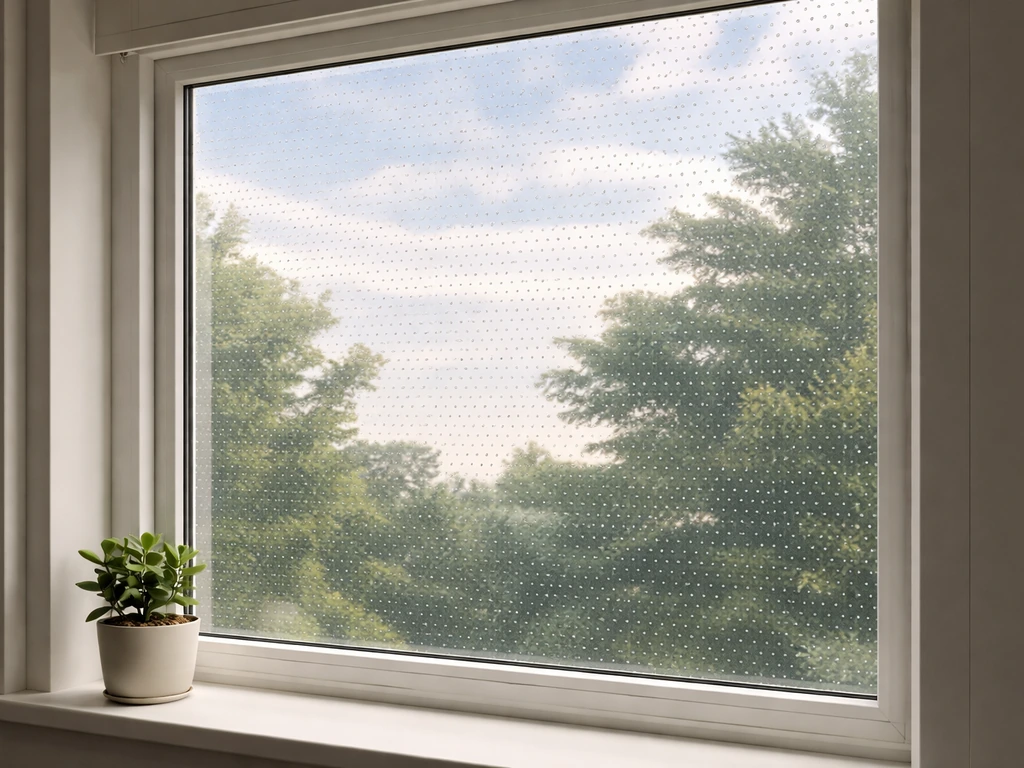
If window collisions are a likely cause, and they often are, there are straightforward things you can do. Audubon and the American Bird Conservancy both recommend applying window treatments that make glass visible to birds: UV-reflective decals, exterior screens, or tape patterns spaced no more than four inches apart horizontally. Turning off or dimming non-essential indoor and outdoor lights from midnight to dawn during spring and fall migration windows dramatically reduces collision risk. Audubon’s Lights Out Program also urges reducing bright artificial lights, since night-migrating birds can become disoriented by skyglow and collide with buildings and windows dimming non-essential lights during spring and fall migration reduces collision risk. The U.S. Fish and Wildlife Service offers a Bird-Friendly Home Toolkit that walks you through the specific options. These are real, effective steps, and taking them is its own kind of response to the experience.
If you want to report the death for public health purposes, the CDC and USGS both support dead bird reporting as a way to track West Nile virus. Most states have online reporting portals through their wildlife or health agencies. It takes five minutes and genuinely contributes to early detection of disease events in your area.
A dead bird falling from the sky can be many things at once: a natural event with a biological explanation, a moment that carries cultural or spiritual weight, and a personal prompt worth reflecting on. If you are wondering what a bird falling from the sky means to you personally, this guide brings together safety steps, likely causes, and the most common symbolic interpretations. You get to decide how much meaning you assign, and what, if anything, you want to do with it. The bird has fallen. What do you want to carry forward from this moment?
FAQ
What should I do if the dead bird lands in my yard and I still have to walk past it?
Keep distance until it is secured. If you must pass, avoid stepping on feathers or droppings, wear closed-toe shoes, and cover the area if it is accessible to pets. After disposal, wash hands and change into clean clothes to reduce tracking particles into the house.
Is it safe to move the bird if I have gloves on, like nitrile or rubber gloves?
Gloves help, but the key is barrier coverage and disposal. Use disposable impermeable gloves, then seal the bird in a plastic bag before removing gloves. If the glove gets torn, wet, or you touch the outside of the bag with contaminated gloves, discard immediately and use new ones.
Do I need to disinfect the ground or porch after pickup?
Often, basic cleaning is enough, but disinfect high-touch areas if there was any contact or splashing. Use household disinfectant according to label directions, then wash surrounding surfaces and your hands. Avoid spraying aggressively, since that can aerosolize debris.
What if the bird is wet or stuck to something, like glue, tar, or standing water?
Do not try to peel it off with bare hands or scrape it dry. Bag it carefully with gloves, and if it is stuck to a surface, contain the contaminated material while removing it. For bodies in water features, remove with a tool while keeping contact minimal, then clean nearby splash zones.
How do I know whether I should report it versus just disposing of one bird?
A single dead bird can usually be handled privately, but reporting becomes more important if multiple birds are found close together, the birds appear to be clustered in one location, or there are signs of disease like many bodies at once. If you see any pattern over a day or two, contact your local health or wildlife agency rather than waiting.
What if the bird falls near my baby’s toys or inside my garage?
Treat it as a higher-risk contamination zone. Do not let anyone in contact with the area until you have bagged the bird. Clean and disinfect any items the bird may have touched, and discard porous items that cannot be effectively cleaned (for example, certain fabric covers).
Can I bury the bird in my yard instead of using trash?
Check local guidance first. Many areas prefer sealed bag disposal in trash or directed wildlife handling to reduce disease spread and scavenger contact. If burial is allowed, it should be deep and contained, and still follow the bagging and PPE steps.
What should I do if I accidentally touched the bird or its feathers without gloves?
Rinse the area with soap and water right away, then wash again thoroughly. Avoid touching your face while cleaning. Monitor for symptoms only if you had direct contamination, and consider contacting a local health line for advice if you are immunocompromised or the exposure involved significant splashing.
Does the symbolism change if the bird is injured but not fully dead?
Yes. If the bird is alive or only temporarily motionless, prioritize humane aid by contacting a local wildlife rehabilitator. The safety meaning is still relevant, but spiritual interpretation is less the focus because the bird may survive with proper care.
Are window collisions the most likely cause even when the bird seems to fall from very high up?
Often, yes, but height is not a perfect clue. Birds can also die from storms, predators, building lights during migration, or collisions with cars or structures. If collisions are likely, the window-treatment steps still help, especially if this happens repeatedly at the same location.
If I want to interpret it spiritually, how can I avoid turning it into fear?
Use it as a prompt for reflection rather than a prediction. A practical approach is to write down one actionable change you can make (for example, paying attention to a strained relationship, reviewing safety routines, or practicing a grounding ritual), and set a time limit for rumination (like one week) before moving forward.
Should I keep the bird for a ritual or keepsake?
Generally, no. Even if your intent is symbolic, dead birds can carry pathogens, and keeping remains increases exposure. If you want a keepsake, consider non-contact alternatives, like photographing from a safe distance (before touching anything) or using an object that represents the moment instead.
Next Article
Dead Bird in Pool Meaning Spiritual, Superstition, and Reality
Dead bird in pool meaning explained spiritually, superstitiously, and practically, plus safe cleanup and when to worry