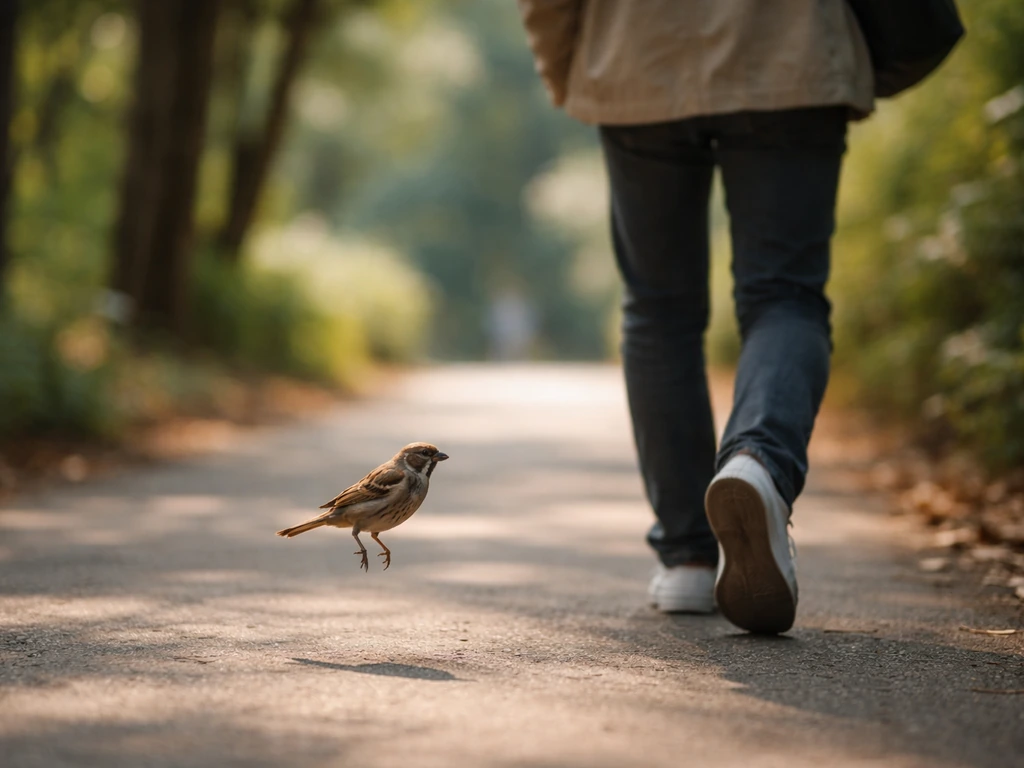
A bird sitting on a tree is, most of the time, just a bird doing what birds do: resting, scanning for threats, warming up in the sun, or choosing a safe perch to sing from. But if that image stopped you in your tracks, made you pull out your phone to search, or left you with a lingering feeling that it meant something, you're in good company. Across cultures and centuries, a perched bird has carried symbolic weight that goes well beyond biology. This guide covers both sides honestly: the natural reasons a bird parks itself on a branch, and the spiritual, biblical, and folkloric meanings people have drawn from that same image for thousands of years.
A Bird Sitting on a Tree Meaning: Literal and Spiritual Insights
Maya Hartwell
2 May 2026
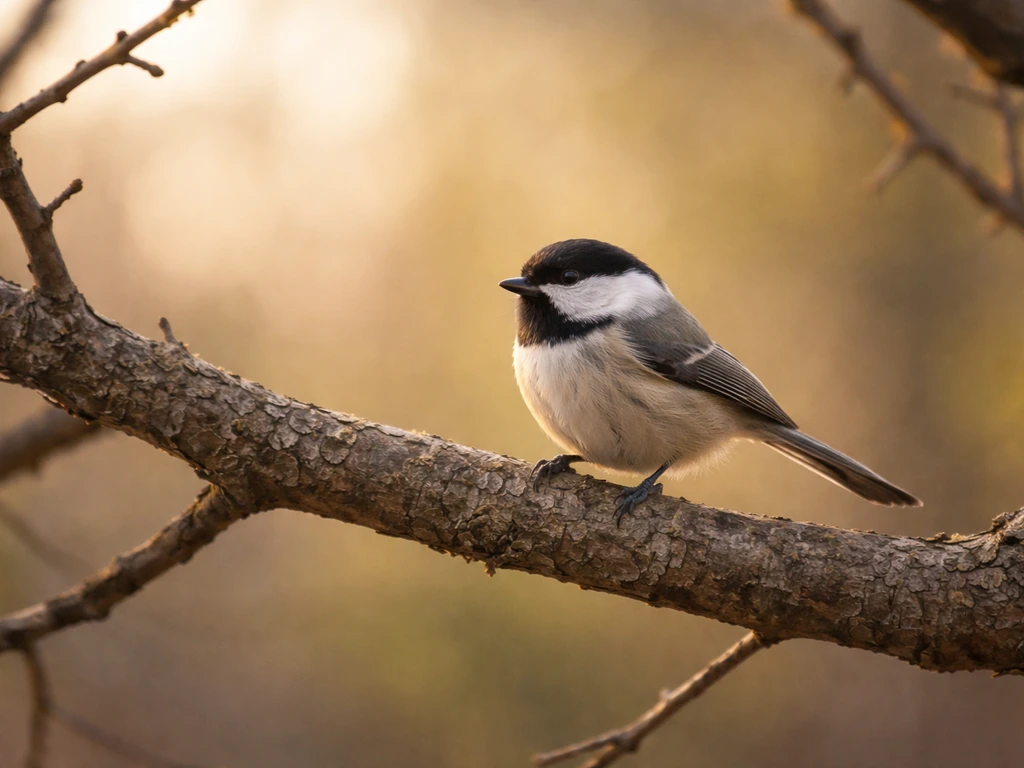
What the phrase actually means: literal vs symbolic
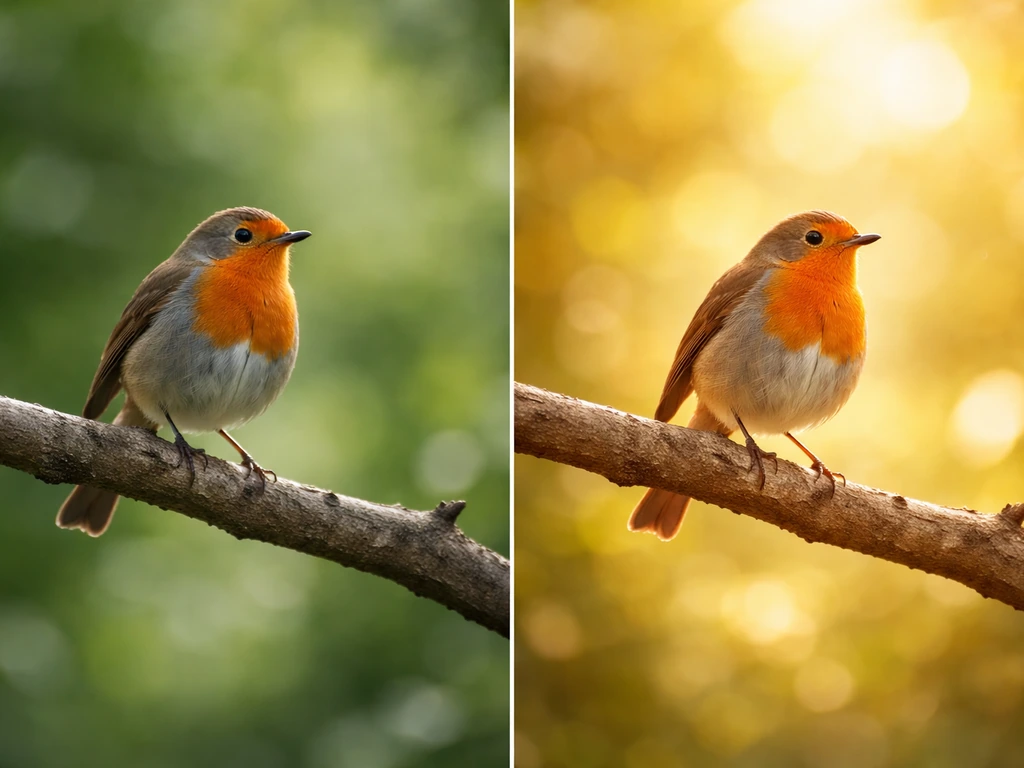
When someone says 'a bird sitting on a tree,' they're usually describing one of two things. Either they literally watched a bird perch on a branch and felt moved by it, or they've encountered the phrase as a kind of spiritual shorthand, something they read in a quote, a dream, or a cultural saying, and they're trying to decode what it represents. Both are completely valid starting points, and the meaning you pull from the encounter often depends on which lens you bring to it.
From a purely natural standpoint, birds perch on trees for very practical reasons. If you’re wondering, “why does my bird like to sit on my shoulder,” the answer usually starts with comfort, safety, and bonding. Songbirds roost in dense trees or shrubs at nightfall because the branches offer cover from predators. During the day, a bird might be sunbathing (a real behavior called [sunning, used for thermoregulation and feather maintenance](https://link.
springer. com/article/10. 1186/s42523-020-00043-7)), scanning the environment for food or danger, or selecting an elevated perch specifically to project its song further. Research on passerines shows that birds actually [weigh predation risk when choosing where to sing](https://bmcecolevol.
biomedcentral. com/articles/10. 1186/s12862-018-1301-3), which means the exact perch a bird picks is a calculated decision, not a random one. So even the literal act of a bird sitting on a tree is more purposeful than it looks.
Symbolically, the image of a bird perched on a tree is one of the oldest and most universal in human storytelling. The tree represents rootedness, life, the axis between earth and sky. The bird represents the soul, freedom, divine messengers, or the moving principle of life itself. Together, the image suggests a meeting point: something free and airborne choosing, briefly, to land. That tension between flight and stillness is part of why the image carries so much emotional resonance.
Common spiritual interpretations of a bird perched on a tree
In metaphysical and spiritual traditions, a bird perching on a tree near you is often read as a moment of alignment or a gentle nudge from the universe to pause and pay attention. The stillness of a perched bird, as opposed to one in flight, is frequently interpreted as a message to slow down, to be present in the moment rather than rushing forward. Some traditions frame perched birds as messengers between realms, neither fully of the earth (like ground creatures) nor fully of the sky (like birds in flight), but occupying that in-between space deliberately.
If the bird was singing, many spiritual frameworks interpret that as a message of hope, joy, or encouragement. Stillness and silence from the bird is sometimes read as a call for inner reflection or quiet contemplation. A bird that locks eyes with you before flying away is often described in spiritual communities as a direct 'message received' signal. None of these interpretations are universal or scientifically grounded, but they function meaningfully for a lot of people as a framework for reflection, and that psychological function is real even when the supernatural claim is unprovable.
Biblical and Christian symbolism: how to read it responsibly
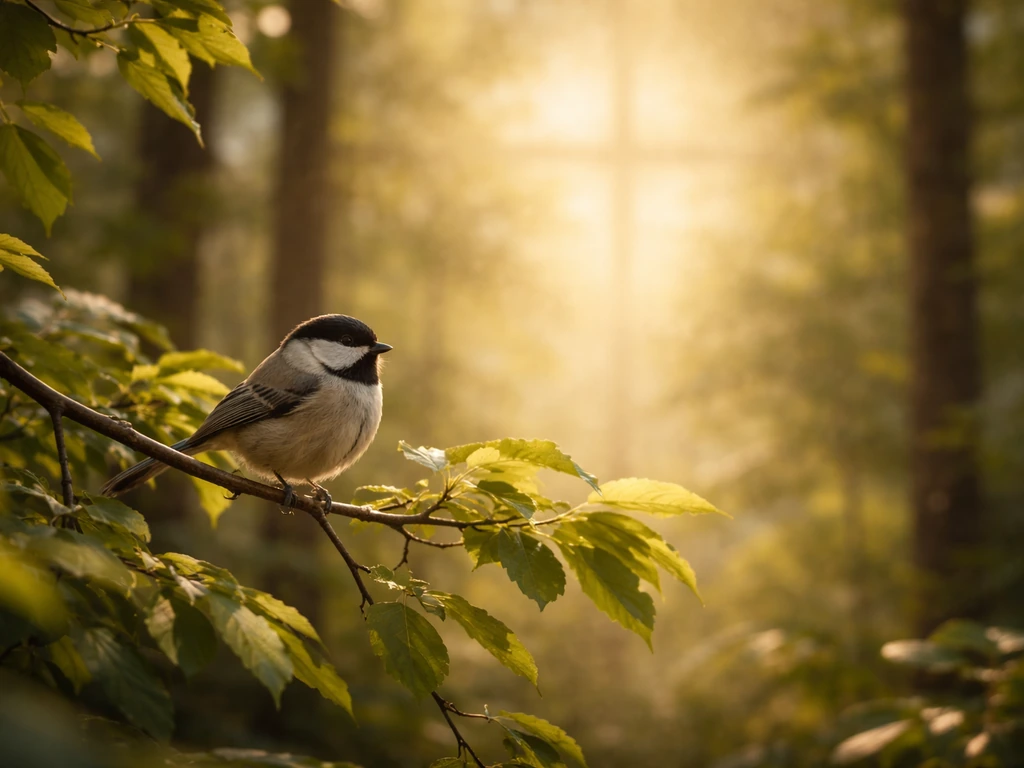
The most widely quoted biblical reference tied to birds and trees comes from Matthew 6:26, where Jesus points to the birds of the air as an example of God's provision and care: they don't sow or reap, yet they're fed. This passage is explicitly about reducing human anxiety by pointing to nature as evidence of divine care. It's not framing birds as predictive signs or omens. The 'birds of the air' language is actually a common Jewish idiom simply meaning 'birds,' without implying any special celestial status or message-carrying role.
Birds appear throughout the Bible in poetic and prophetic contexts: doves carry peace symbolism, ravens appear in judgment imagery, and singing birds are used in descriptive passages to convey life and flourishing. However, the broader biblical framework is quite cautious about omen-reading. Multiple passages explicitly warn against divination and interpreting signs as predictive tools, with the emphasis instead on trusting God's direct guidance rather than reading meaning into natural events. If you're a Christian reader, the more consistent approach would be to let a bird encounter prompt gratitude and a sense of God's care, not to treat it as a coded prophecy.
That said, many Christian mystics and contemplatives throughout history have used nature, including birds, as a doorway into prayer and reflection. There's a meaningful difference between 'this bird is a sign predicting my future' and 'this bird reminded me to be still and grateful.' The first is theologically complicated in most Christian frameworks; the second is widely encouraged.
What folklore and world cultures say about perched birds
Folklore interpretations vary enormously depending on the species involved, and this is where bird identification actually matters quite a bit. Here's a quick overview of how some common species have been read across traditions:
| Bird | Common Folkloric Association | Cultural Context |
|---|---|---|
| Crow or Raven | Death, bad luck, transformation, intelligence | European folklore leans negative; some Native American and Gaelic traditions view crows as wise and lucky |
| Dove | Peace, purity, divine presence, new beginnings | Widely positive across Jewish, Christian, and secular Western traditions |
| Owl | Death, bad omens, wisdom, hidden knowledge | Negative in many Middle Eastern and Western traditions; considered lucky in Japan due to linguistic wordplay connecting 'owl' and 'luck' |
| Robin | Good luck, new beginnings, messages from the deceased | Common in British and Celtic folklore; often seen as a sign of a loved one's spirit |
| Blackbird | Mystery, the threshold between worlds, enchantment | Prominent in Celtic and Druidic traditions as a liminal messenger |
| Sparrow | Humility, community, resilience, divine attentiveness | Appears in biblical imagery as an example of God's awareness of even small things |
The key takeaway from cross-cultural folklore is that no single bird carries a fixed universal meaning. A crow perched on a tree in rural Ireland carries different cultural weight than the same crow in a Japanese garden or a Native American ceremony. Context, community, and personal history all shape what the image means. Folklore is a living tradition, not a lookup table with fixed answers.
How to personalize the meaning for your specific encounter
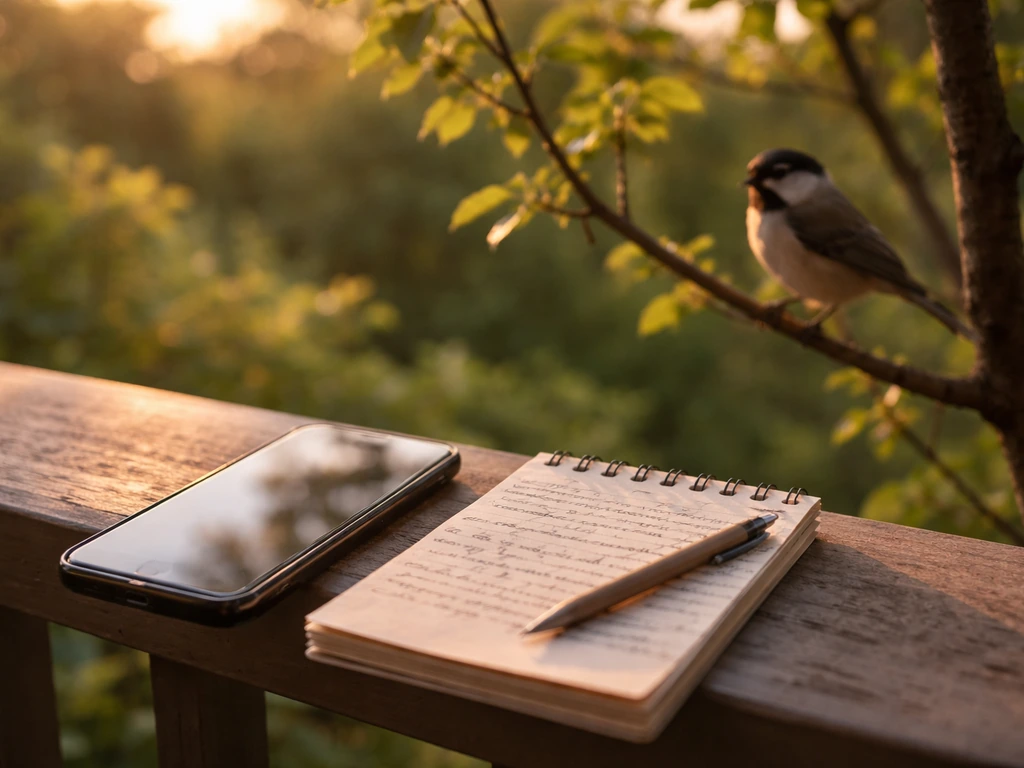
This is where the real interpretive work happens. A generic 'bird on a tree means X' answer is the least useful thing you can take away from this. The details of your specific encounter are what actually give it personal meaning. Here are the factors worth paying attention to: If you're wondering why your bird stares at you, the behavior details like eye contact, posture, and vocalizing can point to more grounded explanations than symbolism alone.
The bird's species and behavior
Did you recognize the species? Was it common for your area or unusual and out of place? An everyday sparrow sitting on a tree is a very different experience from a bird you've never seen before suddenly appearing in your yard. Beyond species, notice what the bird was actually doing.
Was it singing? Perfectly still? Preening? Looking directly at you?
If your bird looks at you sideways or with unusual focus, it can be a useful clue about what it is noticing and how it’s reacting. Making alarm calls? These behaviors have both natural explanations (a singing bird is projecting its territory call; a still bird may be sunning or watching for predators) and symbolic layers that different traditions read differently.
Time of day, season, and location
A bird perched at dawn carries different symbolic energy than one appearing at dusk or in the middle of a difficult afternoon. In many traditions, dawn birds are associated with new beginnings and hope, while dusk birds are linked to transitions, endings, or the boundary between the visible and invisible world. Season matters too: a bird appearing in winter when few others are around often feels more striking and intentional than one in a tree full of summer song. And location, whether it's outside your front door, your bedroom window, a hospital garden, or a place with personal significance, shapes the meaning considerably.
Your emotional state in the moment
This is probably the most underrated factor. Were you grieving? Making a difficult decision? Feeling anxious and overwhelmed? Feeling grateful and at peace? The emotional context you bring to an encounter powerfully shapes what you take from it. A perched bird appearing during a moment of deep grief is often interpreted as comfort or a message from a loved one who has passed. The same bird seen during a mundane Tuesday errand barely registers. Your inner state is part of the meaning, not separate from it.
Dream vs real-life encounter: the meaning shifts more than you'd think
A lot of people searching this topic are actually trying to decode a dream rather than a waking encounter, and it's worth separating those two experiences. In a real-life encounter, the meaning is filtered through sensory reality: you saw an actual bird, in a real place, at a real moment in your life. The encounter is grounded. In a dream, the bird on a tree is a symbol your own subconscious has generated, and that shifts the interpretive frame significantly.
In dream interpretation traditions, a bird perched on a tree typically represents a part of you that is resting between two states of being: between action and reflection, between holding on and letting go, between one chapter and the next. The tree in dreams is almost universally associated with personal growth, stability, or the self. So the dream image of a bird sitting on a tree is often read as your psyche working through a moment of transition or decision.
Ask yourself: in the dream, was the bird about to fly away? Was it healthy and vibrant or still and quiet? Was it watching you? These details matter as much in dream interpretation as species and behavior matter in waking encounters.
If you're someone who notices bird encounters in waking life too, including moments when a bird seems to follow you, or stares at you with unusual focus, or lands unusually close, those experiences carry their own interpretive weight worth exploring separately from a tree-perching encounter. They tend to feel more personally directed and often prompt a different kind of reflection.
Practical next steps you can do today
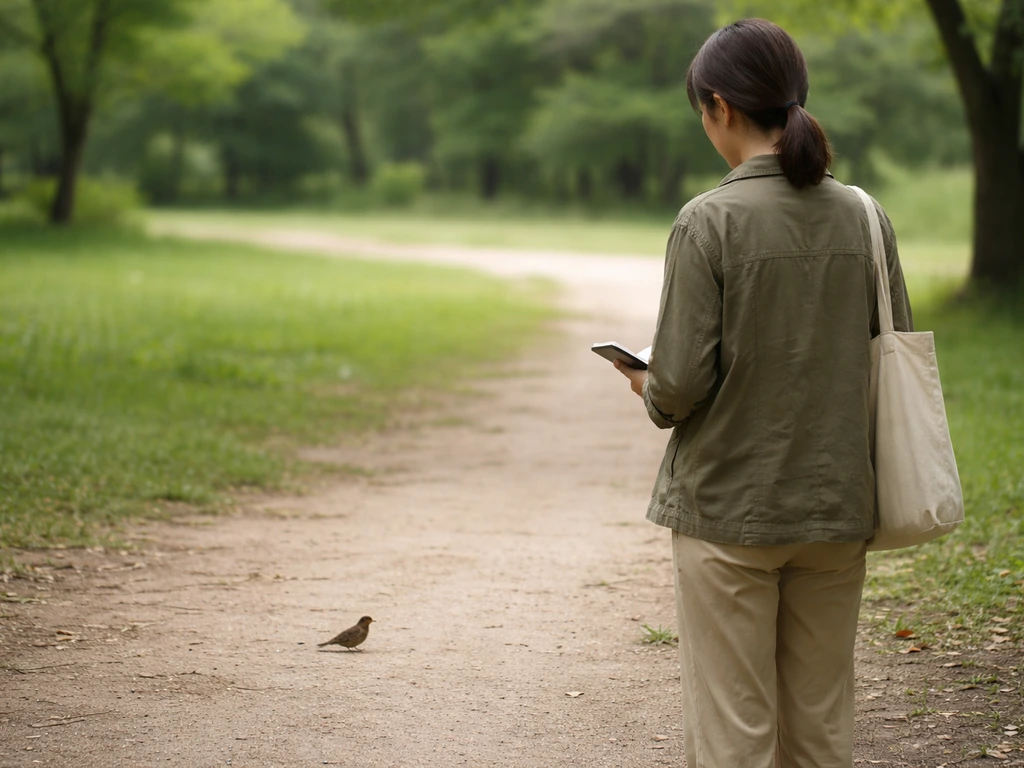
Whether you're reading this right after an encounter or processing one that happened days ago, here are concrete things you can do to work with the experience thoughtfully rather than anxiously.
- Check the natural explanation first. Before assigning meaning, spend a moment observing. Was the bird roosting at nightfall (a very common behavior)? Was it singing from a high perch (a natural territory behavior)? Was it sunning itself on a warm morning branch? Ruling out the obvious doesn't diminish a spiritual experience; it actually clarifies when something genuinely unusual is happening.
- Write down the details. Grab a notebook or phone and record: the species (or your best description), what it was doing, the time, the location, the season, the weather, and critically, what was on your mind when you noticed it. You'll be surprised how much clarity comes from writing it out rather than keeping it as a vague feeling.
- Sit with the feeling, not the analysis. Before you research meanings or ask for interpretations, give yourself five quiet minutes just to notice how the encounter made you feel. Peaceful? Curious? Sad? Hopeful? That emotional response is often more informative than any symbolic dictionary.
- Use a reflection or gratitude prompt. A simple gratitude reflection can help you process the experience without spiraling into over-interpretation. Try: 'What am I grateful for in this moment? What might this encounter be inviting me to notice or let go of?' These questions anchor the experience in your actual life rather than abstract symbolism.
- Pray or meditate if that's part of your practice. If you're spiritually inclined, this is a natural moment to bring the encounter into your prayer or meditation. Frame it as an invitation to presence and trust rather than a predictive sign. 'What are you inviting me to notice?' is a healthier starting question than 'What is this predicting?'
- Research the species once you've done the inner work. After you've sat with your own feelings and observations, look up the symbolic traditions around the specific bird you saw. You'll engage with that information much more discerningly once you've already checked in with yourself.
Common misunderstandings to watch out for
The biggest trap in omen interpretation is confirmation bias: once you believe a bird encounter means something specific, your brain selectively notices future events that seem to confirm it and quietly ignores the ones that don't. This is a well-documented psychological pattern, not a character flaw. It's just how human pattern-recognition works under uncertainty. Being aware of it doesn't mean you have to dismiss the experience; it just means you hold the interpretation a little more lightly.
A few other common mistakes worth naming:
- Assuming a bird automatically means bad news. Most folklore traditions contain both positive and negative interpretations for virtually every species. A crow perched on a tree is not a guaranteed death omen; it may be a symbol of intelligence, transformation, or simply a crow that found a good branch.
- Treating symbolic meaning as a substitute for practical decision-making. Spiritual reflection can be a genuinely useful coping and meaning-making tool. But if you're facing a real decision (a health concern, a relationship, a career move), the bird encounter is a prompt for reflection, not an answer. Use it to open the conversation with yourself, not to close it.
- Conflating a very common natural behavior with a rare meaningful event. Birds sit on trees hundreds of times a day. The encounter that feels meaningful to you may genuinely be worth reflecting on, but it's worth asking honestly: did this stand out because it was unusual, or because you were already in a reflective state of mind?
- Applying a cultural meaning that doesn't belong to your own tradition. If your background has no connection to Japanese culture, interpreting an owl through a Japanese lucky-owl framework is borrowing symbolism without roots. It's not wrong, but meanings tend to carry more personal weight when they come from traditions you're actually embedded in.
- Getting stuck in a loop of trying to decode the 'right' meaning. If you find yourself hours deep in symbol research, anxiously searching for the definitive answer, that's a sign the encounter has become a source of rumination rather than reflection. The point of symbolic interpretation is to open something in you, not to provide a certainty that nature never actually promised.
At the end of the day, the image of a bird sitting on a tree is an invitation: to pause, to look up, to notice something beyond the noise of your immediate concerns. Whether you take it as a biological moment of natural beauty, a spiritual nudge, a cultural symbol, or a dream-language message from your own psyche, what matters most is what you do with the stillness it creates. That quiet moment of noticing? That's already the meaning, before you even try to name it.
FAQ
How can I tell if a bird on a tree is a meaningful sign or just coincidence?
Yes, but do it gently. If the bird’s behavior was normal (perching, scanning, sunning), treat the encounter as a cue to pause rather than as a predictive message. If you feel compelled to interpret it anyway, limit yourself to what you can control (your next choice, your gratitude practice, or your decision to slow down) instead of trying to forecast events.
What details should I check first to interpret the quote meaning correctly?
Don’t start with “what does it mean,” start with “what is it doing.” Note posture (relaxed vs alert), sound (singing vs silence), and movement (staying put vs searching). A still bird can be sunning or resting, while a singing bird often indicates territory and readiness to attract mates, which changes the most likely explanation.
What’s a safer way to interpret the meaning as a Christian or faith-based reader?
If you want spiritual value without theological risk, use a “reflection” frame instead of an “omen” frame. For example, interpret the bird as permission to be present, to seek comfort, or to practice patience, rather than as coded information about your future. This keeps the experience meaningful while avoiding prediction logic that many traditions caution against.
Does the bird type (species) change the meaning of the quote?
Species matters, but so does local context. A crow, dove, sparrow, or robin can carry different folklore associations, yet your neighborhood and your own history often outweigh generic meanings. If you are unsure of the species, record what it looked like (size, color, markings) and interpret more broadly, focusing on your emotions and the bird’s behavior.
How does the meaning change when the bird on a tree appears in a dream?
A “bird on a tree” in a dream is usually best read as an inner transition image, not an external event preview. Ask what was happening in your life and what the bird’s state implied (healthy vs quiet, about to fly vs staying). If the dream bird feels like it is watching or guarding, it can symbolize a part of you that is pausing to protect your stability.
What if I keep seeing birds perched on trees, like they are following me?
If the bird is repeatedly showing up, avoid turning it into a rigid prediction. Instead, treat repetition as a prompt to review your patterns: are you stressed, avoiding a decision, or needing rest? Keep a brief log of date, location, species if known, and your mood at the time to see whether the meaning you assign stays consistent with your real circumstances.
How do I avoid confirmation bias when interpreting the meaning?
Yes, and it can make interpretations inaccurate. If you recently read or heard a specific “meaning” and then see the bird, you may unconsciously look for matching outcomes. Counter this by writing a neutral observation first (behavior, time of day, your emotional state) and only then deciding whether a reflection meaning fits.
Is a dawn or dusk bird on a tree always a stronger sign?
Be careful with timing assumptions. Dawn and dusk can feel symbolic, but birds perch throughout the day for routine reasons like thermoregulation and territorial calls. Use time-of-day as a mood modifier only after you confirm the bird’s likely behavior (for example, early morning singing can be natural territory behavior).
What does it mean if the bird encounter happens during grief or a hard decision?
If your encounter feels tied to grief, the most helpful approach is to translate it into care and coping rather than message certainty. Consider simple actions like visiting a memorial place, writing a letter, or doing a brief grounding exercise when the memory comes up. This uses the encounter to support you without requiring you to conclude anything paranormal.
What if the bird looked close to me, made eye contact, or stayed still for a long time?
Look for immediate practical impact. If the bird was silent, still, and close to you, it may have been seeking safety or food rather than communicating. If you can identify it and observe normal feeding or shelter behavior, lean toward natural explanations first, then allow symbolism as a secondary layer.
Next Article
Why Is a Bird Following Me? Natural Causes and Meaning
Learn why a bird follows you, what to do for safety, and how to interpret it naturally and spiritually.