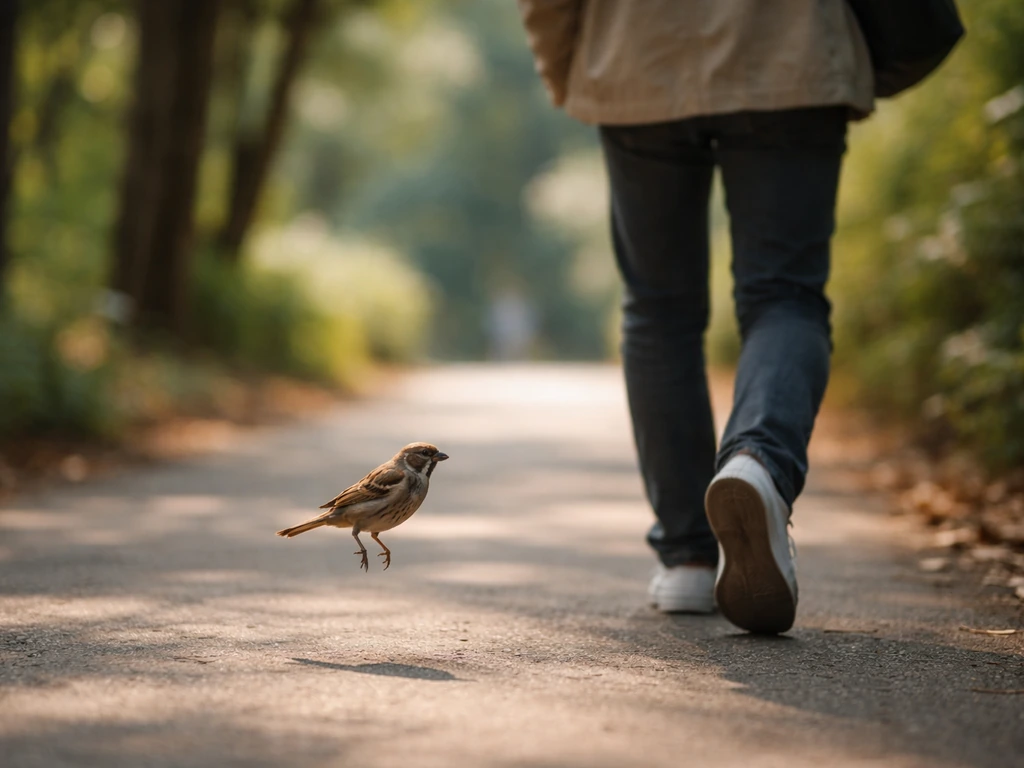
A bird is following you because it sees something useful in your presence: food, a threat to chase off, a familiar route to investigate, or a nest nearby that needs defending. Those are the most common reasons, and one of them almost certainly applies to your situation. But once you've ruled out the practical stuff, there's a long tradition of treating this kind of encounter as more than coincidence, and that layer of meaning is worth exploring too.
Why Is a Bird Following Me? Natural Causes and Meaning

Maya Hartwell
1 May 2026
Why a bird is actually following you (the natural reasons)
Birds don't follow people randomly. There's almost always a clear behavioral driver, and most of them fall into a handful of categories.
You're near food
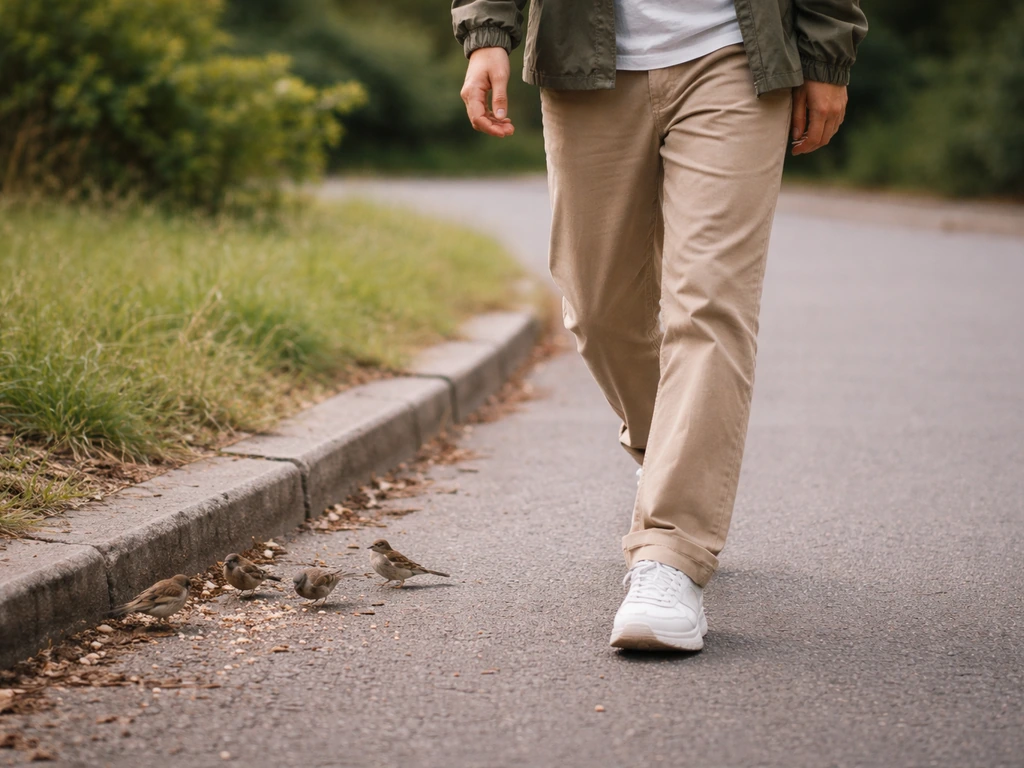
This is the simplest explanation and often the right one. If you've been eating outside, have seeds or crumbs on your clothing, or regularly walk a route where you've fed birds before, some species will connect you with a food reward and follow you hoping to cash in again. Corvids (crows and ravens especially) are particularly good at this. They remember individual human faces and will track a person they associate with a reliable food source across surprisingly long distances.
You're attracting insects
When you walk through grass or disturb leaf litter, you flush out insects. Robins, wagtails, and several other ground-feeding species have learned that following a larger animal (or a lawnmower, or a person gardening) is an efficient way to catch a meal. If the bird following you is staying low and darting around your feet, this is almost certainly what's happening.
Nesting season territorial behavior
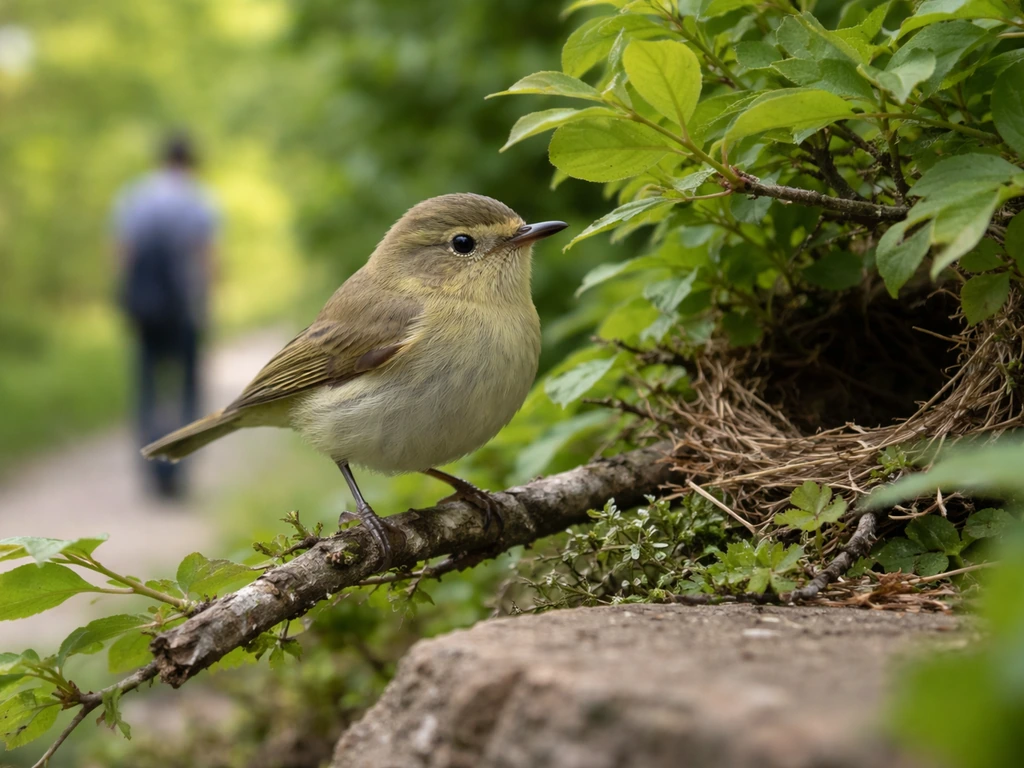
This one is the most important to understand for your safety. During nesting season (primarily spring and early summer), parent birds become intensely protective. Many species will actively follow, call at, and sometimes swoop at people who venture within about 50 meters of their nest. What feels like a bird following you on a walk may actually be a parent escorting you away from their nest site. The U.S. Fish and Wildlife Service notes there are usually warning signs before a bird goes into full defense mode, things like loud alarm calls, puffed-up posture, or tight circling overhead.
Mobbing behavior
Smaller birds sometimes mob larger animals, including people, to drive a perceived predator away from breeding territory. If you're being followed by a group of small birds calling aggressively, that's classic mobbing. It's especially common in spring and usually stops once you move far enough from the nest area.
Curiosity, learned routes, and flock dynamics
Some birds, particularly young ones still figuring out their world, will follow moving objects or people out of curiosity. Others may have simply learned your walking route and appear at the same spots each day, giving the impression of following you when they're really just on their own familiar circuit. If a bird has been separated from its flock, it may also latch onto a moving creature for a sense of safety and direction.
Colors, reflections, and your clothing
Certain colors trigger territorial responses in birds, particularly bright reds and oranges near robins during breeding season. Shiny accessories or reflective surfaces can also catch a bird's attention. If you only get followed on certain walks or when wearing specific items, this could be the cause.
How to figure out which scenario fits your situation
The fastest way to narrow this down is to use Audubon's framework of field marks: note the bird's overall size and shape, bill structure, any distinctive head or body markings, and what it's actually doing. The free Merlin Bird ID app from Cornell Lab covers thousands of species worldwide and can identify a bird from a photo or even a description of its song. Once you know the species, the behavior usually makes much more sense.
| Behavior you're seeing | Most likely cause | Quick check |
|---|---|---|
| Single bird darting at your feet | Foraging for flushed insects | Is it low to the ground, snapping at the air? |
| Bird calling loudly and circling overhead | Nest defense, territorial behavior | Are you near trees, hedges, or eaves? |
| Group of small birds diving and calling | Mobbing behavior | More than one bird involved? |
| Crow or corvid trailing you persistently | Food association or learned route | Have you fed birds here before? |
| Lone bird following from a distance quietly | Curiosity, flock separation, or route familiarity | Is the bird young or looking disoriented? |
Take note of the time of year too. A bird following you in early spring or summer is far more likely to be nest-related than one doing the same in October. Merlin also provides habitat and behavior context alongside its ID, so you can compare your encounter notes with what that species typically does in your region.
What to do right now (and what not to do)
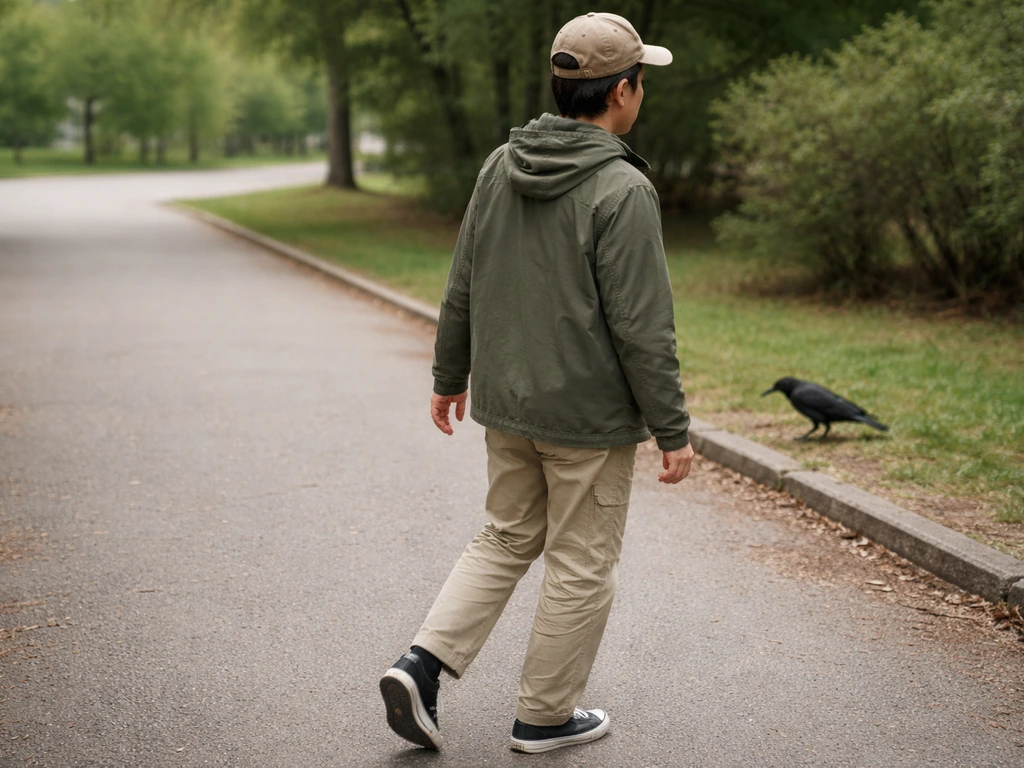
Your first move is to stay calm and keep moving. Sudden movements, waving arms, or trying to shoo the bird will almost always escalate things, especially if territorial behavior is involved. Here's what to actually do:
- Keep a calm, steady pace and move away from the area where the bird is most active. If it's nest defense, the following should stop once you're clear of the territory.
- Avoid direct eye contact with an agitated bird. In many species, a direct stare reads as a threat.
- Do not attempt to feed the bird, even if it seems friendly. Feeding wild birds on the spot reinforces the following behavior and can cause longer-term dependency issues.
- Secure pets if you're at home. Cats and dogs near an agitated bird, especially one defending a nest, can escalate quickly and endanger both the animal and your pet.
- Check the area for a nest. Look at nearby trees, hedges, roof overhangs, and gutters. If you find one, simply reroute. Wildlife Victoria recommends route avoidance as the most effective response to swooping birds.
- If the bird keeps following you inside your usual outdoor space (a yard, for example), observe from indoors for a while. Give it room to relax before you head back out.
One thing many people instinctively want to do is try to catch or handle the bird, especially if it seems to be struggling or confused. Resist that impulse unless there's clear injury involved. Handling a wild bird unnecessarily stresses it and can cause harm to both of you.
When to take it more seriously: safety and when to get help
Swooping and nest aggression
If a bird is actively swooping at your head repeatedly, that's genuine defensive aggression. It rarely causes injury but it can, particularly for cyclists or children. The safest response is to leave the area calmly and take a different route until nesting season ends (usually 4 to 6 weeks). Wearing a hat or holding an umbrella over your head reduces the risk of contact.
If the bird looks injured
A bird following you that appears disoriented, has drooping wings, is shivering, or seems lethargic may be injured or unwell. Don't try to feed it or give it water. If it's a baby bird and you can see a nest nearby, you can gently place it back (despite the old myth, parent birds will not reject a chick you've touched). If there's no nest in reach, move it to a shaded, sheltered spot and observe from a distance, ideally from indoors, to see if a parent returns. If no parent comes within a couple of hours, contact a licensed wildlife rehabilitator or your local vet. The Audubon Society, RSPCA, and Tufts Wildlife Clinic all give the same core advice: obvious injury means professional help, not home care.
Health considerations
Birds don't transmit rabies (rabies is a mammal disease), so that's not a concern here. But basic hygiene still matters. The CDC recommends washing your hands thoroughly after any contact with birds, their droppings, or items they've been around. If you're cleaning up after a bird has been in your yard, avoid stirring up dry droppings into dust, as this is the main transmission risk for conditions like psittacosis. For avian influenza, the CDC's guidance is straightforward: observe sick or dead wild birds from a distance and avoid direct contact.
What it might mean spiritually: the symbolic side of being followed
Across cultures and centuries, birds following or approaching humans has rarely been treated as nothing. Whether you lean biblical, folkloric, indigenous, or simply intuitive, there's a rich tradition of reading these encounters as potential messages. The key here is not to force a meaning, but to stay open to whatever resonates. If you're looking for a "bird sitting on a tree" quote meaning, treat it as a prompt to notice what that symbol might be pointing to in your own life a bird sitting on a tree quote meaning.
Biblical and Christian tradition
In biblical scripture, birds carry consistent symbolic weight. The most iconic is the dove as a symbol of divine presence and peace (Matthew 3:16, where the Spirit descends like a dove at Jesus's baptism). Eagles represent renewal and strength, ravens provision and trust. A BYU Religious Studies Center study on birds in scripture notes that bird symbolism is consistently used to convey spiritual qualities, including God's guidance, watchfulness, and care. If a dove, sparrow, or eagle is the bird following you, those associations are worth sitting with.
Celtic and European folklore
In Celtic tradition, birds were seen as messengers between the human world and the Otherworld. A robin following you was considered a sign of a soul checking in from beyond. Crows and ravens were associated with the goddess Morrigan and carried omens of transformation, not necessarily bad ones, but significant change. Wrens were considered sacred, and having one follow you was considered exceptional luck. European folklore more broadly treated any persistent bird encounter as a sign worth noting, particularly if it happened at a crossroads or during a time of personal transition.
Indigenous and Eastern traditions
Many Indigenous North American traditions teach that birds are messengers from the spirit world, with different species carrying different meanings specific to each nation's teachings. It's worth approaching these beliefs respectfully rather than appropriating them, but the underlying theme of birds as connectors between worlds is widespread. In several East Asian traditions, birds arriving unusually close to a person signals spiritual attention, and the specific species matters significantly. A swallow following you, for instance, carries associations with good fortune and safe return in Japanese and Chinese folk belief.
Metaphysical and personal spiritual frameworks
In more contemporary metaphysical traditions, a bird following you is often interpreted as a sign that you're being guided, watched over, or prompted to pay attention to something in your life. The species is considered important (a hawk following you reads differently than a sparrow), and so is your emotional state at the moment of the encounter. Were you anxious, at a crossroads, grieving, or feeling hopeful? Many in these traditions believe the message mirrors what you were already working through internally.
It's worth noting that these interpretations aren't mutually exclusive with the natural explanations. A robin following you because you've disturbed insects in the garden and a robin arriving as a symbolic reminder from a loved one who has passed are not competing explanations for everyone. Many people hold both at once.
Making meaning from this: how to interpret your own encounter
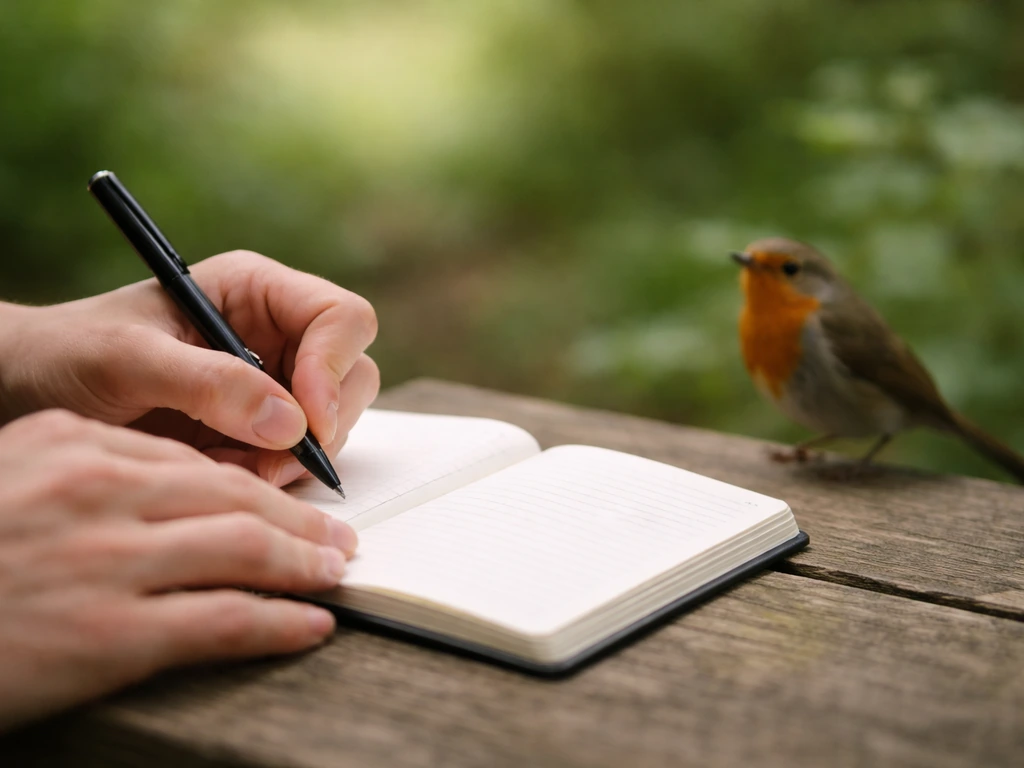
If the experience felt significant to you, that instinct is worth following. Here's a practical way to work through it without forcing a conclusion.
Write it down while it's fresh
Audubon recommends journaling bird encounters to fix the details in memory, and the same principle applies here whether your interest is ID or interpretation. Note the species (or your best description if you're unsure), time of day, location, weather, the bird's specific behavior, how long it followed you, and any sounds it made. Also jot down what you were thinking or feeling just before it started. These details matter both for practical ID and for personal meaning-making.
Check your personal associations first
Before reaching for a cultural or symbolic framework, ask yourself what this bird means to you personally. Did your grandmother love cardinals? Did a particular bird appear repeatedly during a difficult time in your past? Personal associations often carry more weight than textbook symbolism. What your gut says about the encounter is a legitimate starting point.
Compare interpretations across frameworks
Look up what different traditions say about the specific species that followed you. Read the biblical angle, the folklore angle, the metaphysical angle. Notice which interpretation feels like it's speaking to something real in your current life, not which one sounds most interesting in the abstract. Meaning tends to land somewhere specific when you're genuinely open to it.
Don't overread, but don't dismiss either
A starling following you because you're wearing a shiny belt buckle doesn't need to become a mystical experience if nothing about it resonates. But if the encounter was genuinely striking, happened at a meaningful time, or keeps coming back to you, that's worth sitting with. The most honest approach to bird symbolism is to hold the natural explanation alongside the symbolic one and see what emerges over time, rather than rushing to either conclusion.
This kind of encounter connects naturally to other bird behaviors people find puzzling or meaningful, like a bird that holds your gaze for an unusually long time, or one that chooses to sit on your shoulder rather than a perch nearby. The through-line in all of these is the feeling that a wild creature is paying attention to you specifically, and that's an experience worth reflecting on regardless of what you ultimately decide it means.
What were you carrying when that bird found you? That question is worth sitting with longer than any single interpretation.
FAQ
If a bird is following me but never gets close, does it still mean danger or a nest is nearby?
Not necessarily. Calm, intermittent trailing with lots of distance usually points to foraging or curiosity, but nesting-season defense can be subtler at first. If you notice alarm calling, repeated tight circling, or the bird changing direction to intercept you, treat it as nest-related and leave the area or take an alternate route.
What if the bird keeps following me in the same neighborhood but my presence seems unrelated to food or gardening?
Some birds learn routines, not people. They may be checking the same stretch for insects flushed by regular foot traffic, or they might be scouting a nearby roost, water source, or feeder you are not aware of. Tracking the time and location (and whether you pass the same landscaping features) helps separate “following you” from “moving along their route.”
How can I tell the difference between mobbing (defending territory) and a true swoop/attack situation?
Mobbing usually looks like multiple quick passes and aggressive calling from small birds, often staying low and darting around a perceived threat, then stopping once you move away from the breeding area. True defense toward the head is more direct, with repeated intercept attempts overhead, and it may be accompanied by warning body language like puffed feathers. When in doubt, increase distance and move on.
Is it safe to take photos or use headphones if a bird is following me?
Photos are fine if you keep moving and do not block yourself into the bird’s flight path, but stop and put the camera away if the bird begins alarm behavior or starts circling tighter. Headphones can reduce your awareness of approaching warning calls or swoops, so consider keeping one ear free near nesting areas.
Do I need to report it or contact wildlife if a bird keeps acting strangely near people?
If the bird is repeatedly disoriented, lethargic, colliding with objects, or obviously injured, contact a licensed wildlife rehabilitator or your local vet, especially during spring and summer. If it is only following, calling, and actively trying to herd you away from a nest, reporting is usually unnecessary, but you should respect the boundary and adjust your route.
Can a bird follow me indoors, like in a garage or hallway, and still have a natural explanation?
Yes. Disorientation, a lost young bird, or attraction to open doors and light are common. If you can do so safely, close interior doors to limit panic, turn off other lights, and gently guide the bird toward an open, exterior exit with lights that match the outdoors. Avoid grabbing it unless there is an emergency.
What should I do if I find a baby bird that seems to be followed by adults but I’m not sure it’s injured?
First, assess the bird’s posture and breathing, drooping wings and severe weakness suggest illness or injury. If it appears uninjured and it is actively calling or showing normal movement, keep distance and do not put it back if it is already in a safe, natural spot. If it is out of place and you can see a nest nearby, place it back gently and monitor from afar.
Is washing my hands enough if I touched bird droppings or bird-feathered debris?
Wash thoroughly with soap and water and avoid touching your face while cleaning. Also disinfect high-touch surfaces like doorknobs if you moved through the area. If you have to clean a lot of droppings, use wet methods to prevent dust, and wear gloves if available.
What if the bird is following me but I’m wearing bright colors, reflective gear, or a shiny accessory?
That pattern strongly suggests attention to visual cues. A practical test is to change one variable, for example remove or cover the reflective item or switch to dull outerwear, then see whether the behavior stops. If it continues regardless, switch back to the other drivers like nesting defense and route foraging.
When should I stop trying to interpret meaning and focus only on safety?
If the bird is repeatedly targeting your head, showing escalating alarm behavior, or you are with children, cyclists, or near a nest site, prioritize stepping back and leaving the area over symbolic interpretation. Even if the encounter feels meaningful, the safest approach is to create distance until the behavior calms.
Next Article
Why Does My Bird Stare at Me? Causes and What to Do
Learn why your bird stares: curiosity, bonding, stress, illness, boredom, sleep needs. Get a quick decision tree and fix