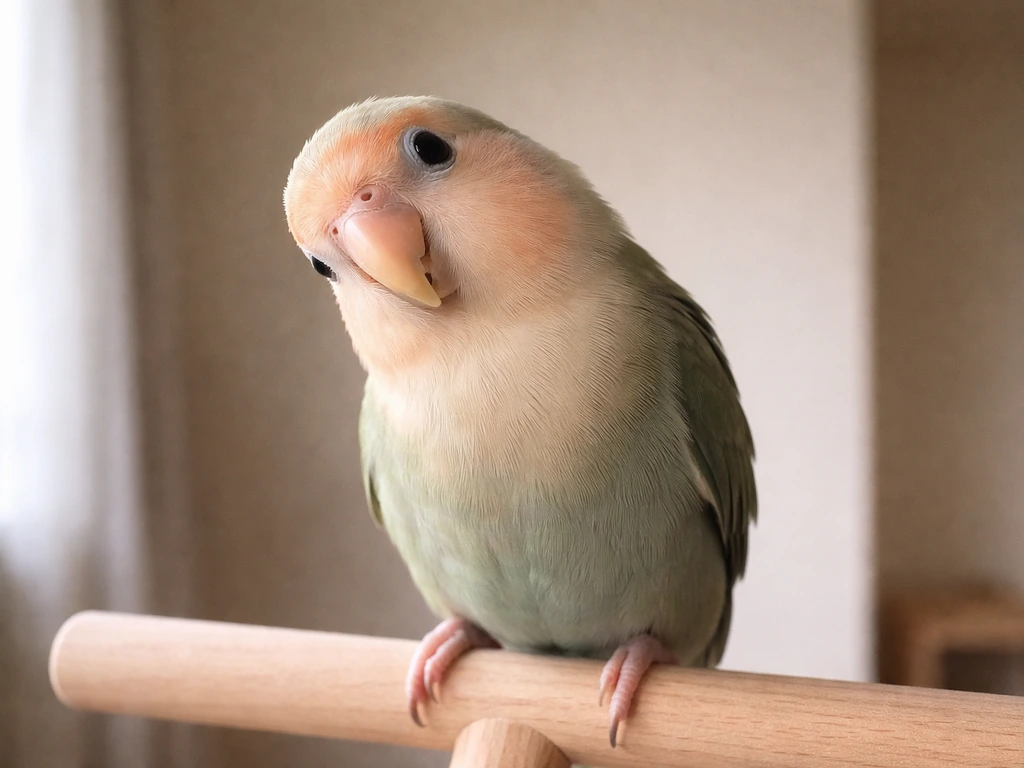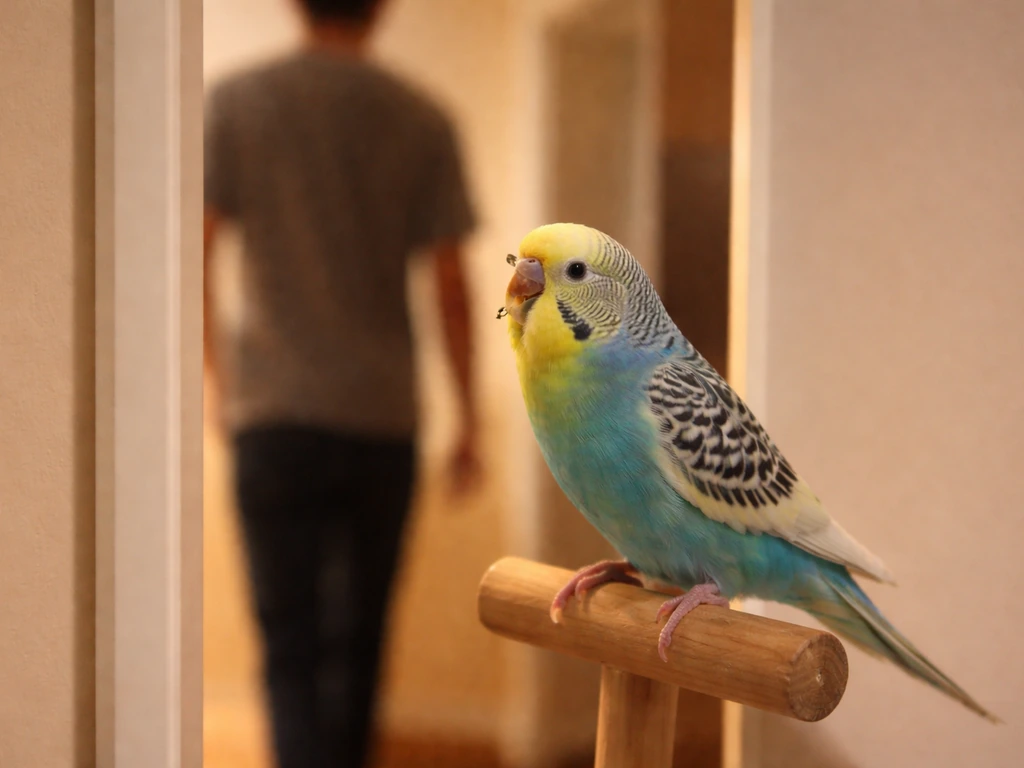
Your bird is staring at you because it finds you genuinely interesting. Most of the time, prolonged eye contact from a pet bird means curiosity, social bonding, or a simple bid for your attention. Birds are highly visual animals and you are the most dynamic thing in their environment. That said, staring can also signal stress, territorial arousal, boredom, or, less commonly, pain or illness. The difference is almost always readable in the body language surrounding those eyes, and once you know what to look for, you can figure out what is going on in about five minutes.
Why Does My Bird Stare at Me? Causes and What to Do
Maya Hartwell
30 Apr 2026
The most common reasons your bird is staring at you
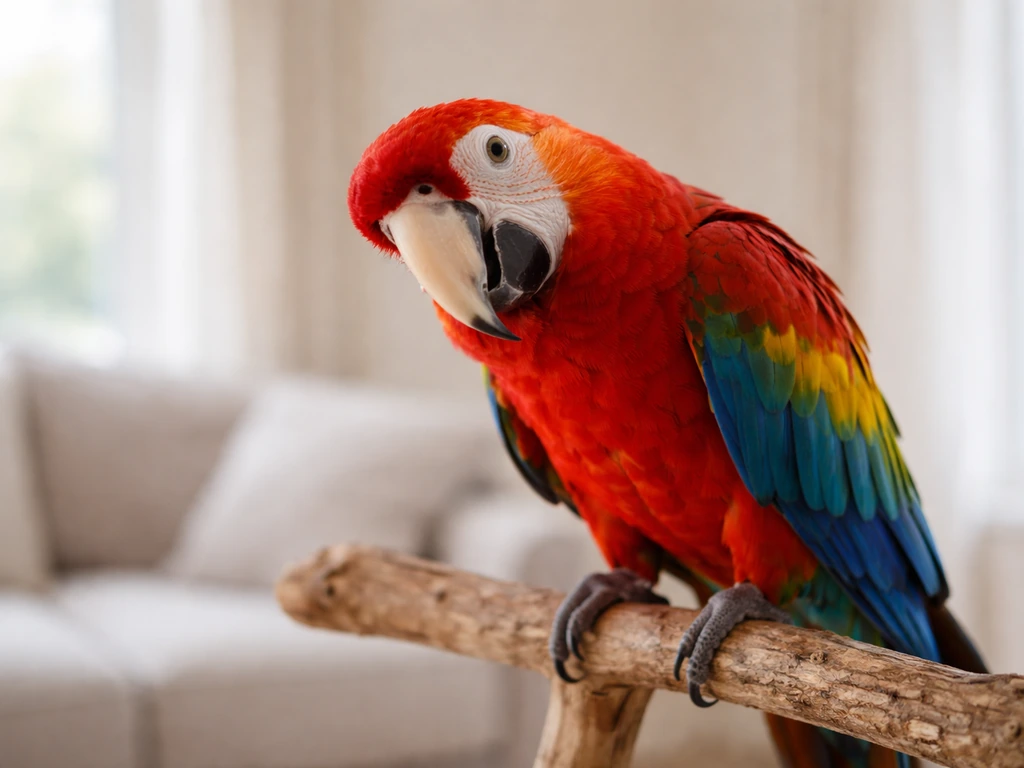
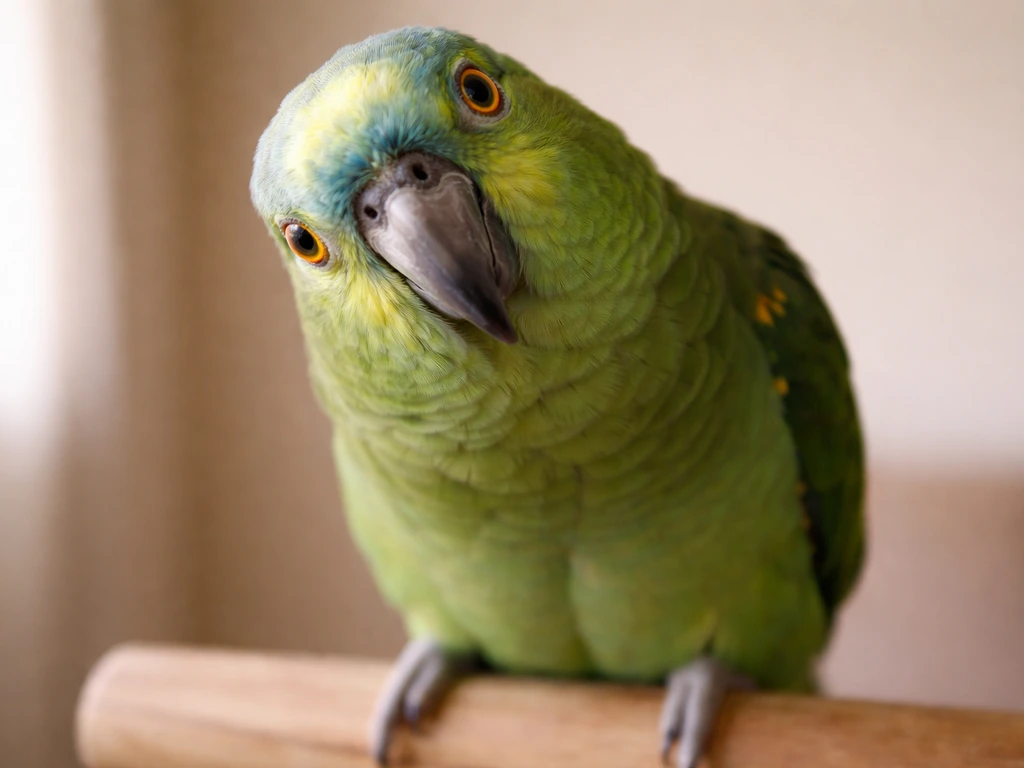
Curiosity is the number one driver. Birds, especially parrots, are wired to monitor their flock constantly, and in a home environment, you are the flock. When you move around the room, change clothes, cook something that smells interesting, or just sit quietly reading, your bird is taking it all in. Staring is how they stay connected to what is happening around them.
Bonding is another big one. A bird that trusts you and is comfortable in your company will often lock eyes with you as a form of gentle social engagement. Think of it like a companion checking in. If your bird is staring while staying relaxed and maybe vocalizing softly, that is a very good sign for your relationship.
Attention-seeking is the third common reason. Birds are smart enough to figure out very quickly that staring at you tends to produce a reaction: you talk back, you walk over, you offer a treat. Some birds develop staring into a deliberate strategy for getting interaction. If your bird ramps up into calls or screaming when you do not respond, boredom or under-stimulation is probably part of the picture.
You may also notice your bird staring during a specific routine moment, like mealtimes, when you pick up your keys, or when you approach the cage. That is simply pattern recognition. Birds learn human schedules fast and the staring is anticipatory focus, not anxiety.
When staring signals stress, fear, or territorial behavior
Not all intense eye contact is friendly. If your bird's stare is paired with a rigid, upright posture, a fanned tail, raised feathers along the back or head, beak lunging, or loud alarm calls, you are almost certainly looking at territorial arousal or a fear response. This kind of staring is a warning, not an invitation.
Territorial staring tends to be very directed, almost laser-like, and it commonly shows up during breeding season, when a new person enters the room, or when the bird feels its cage space is being invaded. Veterinary behavioral descriptions of psittacine territorial displays specifically include voluntary pupil constriction and dilation (eye pinning), tail-feather fanning, and beak lunging alongside that intense fixed gaze. If you are seeing these combinations, back off, give the bird some space, and avoid making direct eye contact until the bird settles.
Fear-based staring looks slightly different. A frightened bird may be crouched low, trembling, holding its wings slightly away from its body, or pressing itself against the back of the cage. The eyes may be wide and unblinking. Fear staring often accompanies a new object in the room, a sudden loud noise, or an unfamiliar person. The bird is tracking the threat and deciding whether to flee or freeze.
Stress from chronic under-stimulation can also produce a kind of blank, persistent staring that looks more vacant than engaged. If your bird stares without much other activity, barely moves around the cage, and shows little interest in toys or food, boredom is a serious welfare concern that can escalate to feather-damaging behaviors over time.
Reading body language alongside the stare
The stare itself is just one data point. Always read the whole bird. Here is a practical breakdown of what to look for.
Eyes: pinning and blinking
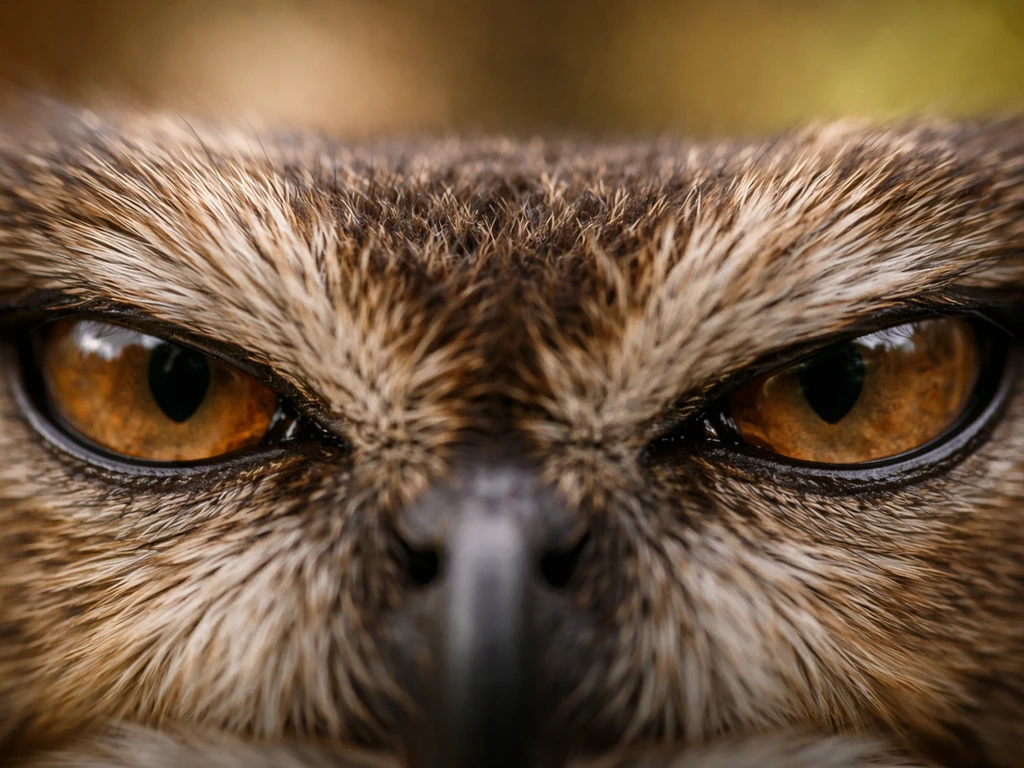
Eye pinning, where the pupils rapidly constrict and dilate, signals heightened arousal. It can mean excitement and joy, or it can mean aggression depending on everything else the bird is doing. A bird pinning its eyes while leaning toward you, fluffing up, and fanning its tail is not in a friendly mood. A bird pinning its eyes while leaning toward you, chattering, and bobbing its head is probably delighted. Context is everything.
Feathers: smooth vs. puffed
Smooth, sleek feathers held close to the body are a comfort signal. Puffed feathers are a red flag in an alert, active bird because they indicate the bird is trying to appear larger (a threat display) or, if the bird is sitting still and quiet, that it is cold or unwell. A puffed, quiet, unresponsive bird that is also staring blankly is something to take seriously.
Posture and crest
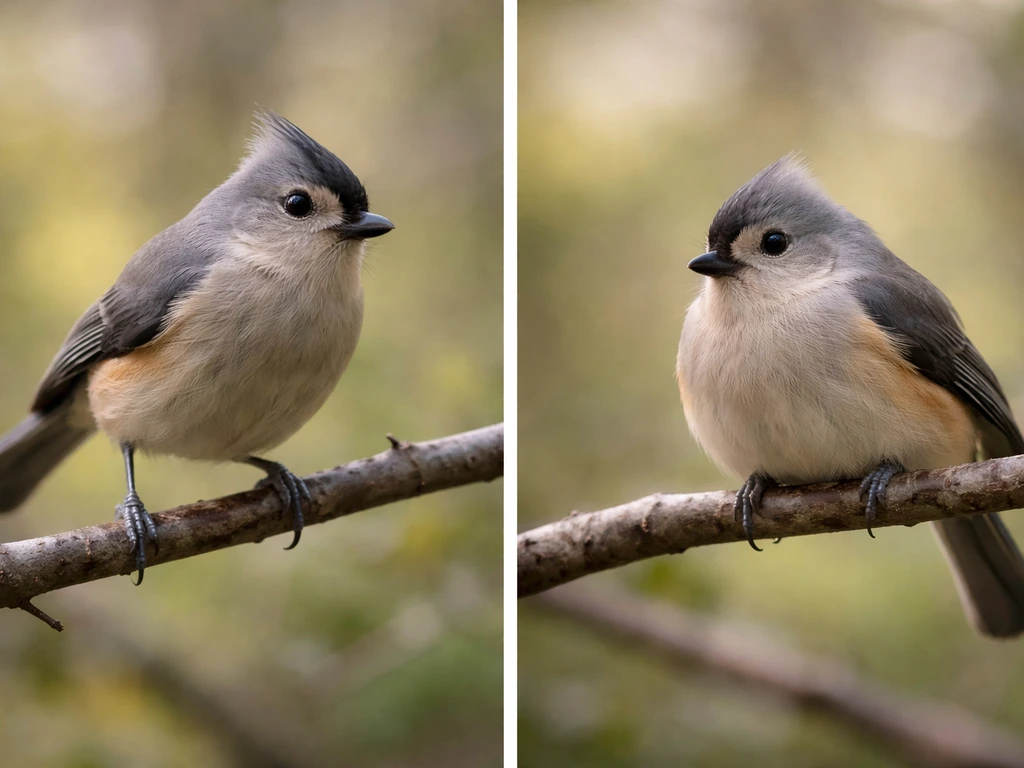
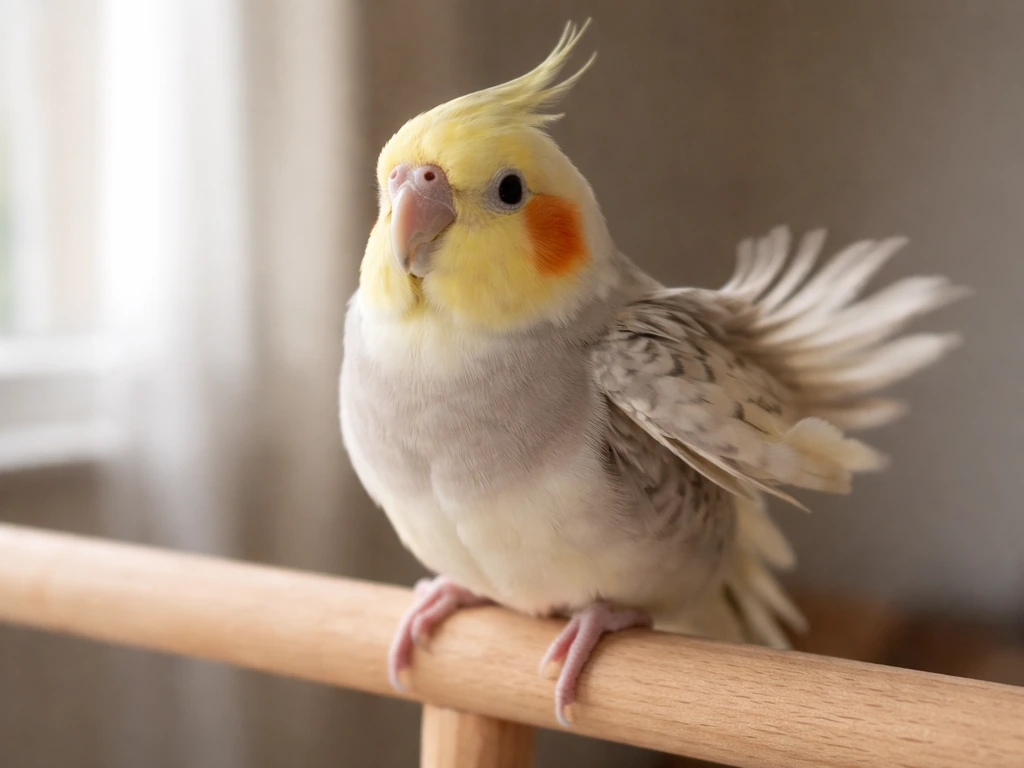
An upright, stiff posture with the body leaning forward is a sign of alert engagement that can tip into aggression. A bird that is relaxed will often stand in a slightly rounded, settled way. For crested species like cockatiels and cockatoos, a fully raised crest often signals excitement or alarm, while a flattened crest can mean fear or aggression. A gently raised crest usually means curious interest.
| Body Language Cue | Likely Meaning | What to Do |
|---|---|---|
| Smooth feathers, relaxed posture, soft eyes | Comfortable, curious, bonding | Enjoy it, interact gently |
| Eye pinning with head bobbing and chattering | Excited, playful, engaged | Great time to interact |
| Puffed feathers, leaning forward, tail fanning | Territorial or aggressive arousal | Back away, give space |
| Crouching, trembling, wings held out slightly | Fear or anxiety | Remove the stressor, speak calmly |
| Puffed feathers, still, quiet, eyes half-closed | Possible illness or discomfort | Monitor closely, consider vet |
| Blank stare, minimal movement, no interest in toys | Boredom or chronic stress | Enrich environment immediately |
Quick checks and fixes you can do today
Before you jump to conclusions, run through this short audit. Most staring issues resolve quickly once one of these variables is corrected.
- Check sleep quality. Birds need 10 to 12 hours of uninterrupted sleep in a quiet, dark space away from TVs and other noise. A sleep-deprived bird is more irritable, more reactive, and more prone to unusual behavior. If your bird's cage is in a busy room that stays lit late into the evening, that is the first thing to fix.
- Check cage placement. Is the cage near a window where outdoor birds, cats, or sudden movement could be triggering constant alerting? Is it in a drafty spot or near a vent? Cage position affects stress levels significantly.
- Audit light exposure. Natural light cycles matter for bird mood and health. If your bird gets no natural daylight, consider moving the cage to a room with indirect window light during the day.
- Look at foraging and enrichment. A bored bird stares because there is nothing else to do. Add foraging toys, rotate enrichment items, and hide small food portions for the bird to discover. Even wrapping a piece of food in paper counts. Foraging has major behavioral importance for captive birds and its absence directly impacts welfare.
- Evaluate your daily interaction time. If your bird is staring and calling out when you are across the room, it may simply need more one-on-one time with you. Even 15 to 20 focused minutes twice a day can make a real difference.
- Review diet. A bird on a poor diet (seeds only, no variety) can develop deficiencies that affect behavior and mood. If you are not already offering fresh vegetables and a quality formulated pellet alongside seeds, start there.
Health red flags: when staring might mean something is wrong
Birds instinctively hide illness, which means by the time a bird looks sick, it has often been struggling for a while. A bird that is staring blankly, sitting puffed on the bottom of the cage, or simply not moving with its usual energy deserves a closer look. Here are the specific signs that mean you need an avian vet, not just a cage rearrangement.
- Open-mouth breathing at rest: This is a serious emergency sign. A bird should breathe with its beak closed. Open-mouth breathing, especially paired with tail bobbing (a rhythmic pumping motion at the tail during breathing), means the bird is struggling to get enough air. Get to an avian vet the same day.
- Tail bobbing at rest without open-mouth breathing: Even on its own, rhythmic tail movement while sitting still can indicate respiratory distress and warrants prompt veterinary attention.
- Discharge from the eyes or nostrils: Any oculonasal discharge, crusting around the eyes, or swelling around the face is a sign of possible upper respiratory disease.
- Puffed feathers plus stillness plus the stare: A bird sitting quietly puffed up and staring without response to stimulation is showing a classic sickness posture. The puffing in this context reflects the bird trying to conserve heat, which can indicate fever or chills.
- Sudden change in droppings: Unusually watery, discolored, or malodorous droppings alongside behavioral changes are a flag worth reporting to a vet.
- Unexplained weight loss or reduced appetite: If your bird is staring at food but not eating, weigh the bird on a gram scale. A loss of even a few grams in a small bird is significant.
If you see any of the respiratory signs above, treat it as urgent. Birds deteriorate quickly. For the other signs, call an avian vet to describe what you are seeing and follow their triage guidance. Not every vet has avian experience, so specifically seek out one who does.
The spiritual and symbolic side of a bird staring at you
If you have already ruled out stress, illness, and boredom, and your bird is simply holding your gaze in a calm, steady way, it is worth pausing on what that moment might mean beyond the behavioral. If you are looking for a deeper meaning, a bird sitting on a tree quote meaning often gets shared as a spiritual or symbolic message about awareness and connection. People have been interpreting the gaze of birds as meaningful for thousands of years across cultures and belief systems, and there is something genuinely worth sitting with here.
In many spiritual traditions, birds are understood as messengers, intermediaries between the physical and the unseen. A bird that holds your gaze is often interpreted as delivering something intentional rather than accidental. In Christian and biblical symbolism, birds appear frequently as carriers of divine communication: think of the dove at baptism, or the raven sent from the ark. A bird directing its attention toward you has, in this framework, been seen as a moment of spiritual contact or a nudge toward awareness.
In Celtic tradition, certain birds were considered to be seers or spirit animals with access to knowledge beyond the ordinary. The prolonged, unblinking gaze of a bird was taken as an omen worth pondering, often read as a reminder to pay attention to something you might be overlooking in your own life. Indigenous traditions across North America similarly regard birds as spiritual guides who communicate through presence and behavior, with the direction of a bird's attention seen as pointing toward something meaningful.
In Eastern metaphysical frameworks, particularly those rooted in Chinese and Japanese symbolism, birds represent auspicious energy, good fortune, and the soul's connection to higher realms. A bird that singles you out with its gaze can be interpreted as a sign of being seen or chosen by positive forces.
Parrot symbolism specifically tends to center on communication, truth-speaking, and the power of words. In spiritual writing, parrots have long been associated with carrying messages between worlds, not just mimicking them. A parrot staring at you might, in this light, be read as a prompt to examine what you are communicating and what you are not saying.
These interpretations are not substitutes for practical observation, and it is worth noting that if your bird is showing any of the stress or illness signals described earlier, addressing those is always the first responsibility. But once you are confident your bird is healthy and at ease, the question of what a calm, sustained gaze might mean for you personally is genuinely worth asking. If your bird’s gaze includes that sideways look, it can still come down to the same calm versus stress cues discussed earlier why does my bird look at me sideways. What feels true when you meet your bird's eyes? What might you be meant to notice right now?
It is also interesting that this experience of being watched by a bird does not only happen with pet birds. Many people report feeling singled out by wild birds, or finding that a bird seems to follow their movements with unusual intent. If you are wondering why a bird follows you outside, the same curiosity and alertness cues often explain it a bird seems to follow their movements with unusual intent. The sense that a bird is observing you with purpose is a nearly universal human experience, one that has generated meaning across nearly every culture on earth.
What to do next: a simple decision guide
Use this to figure out your next step right now based on what your bird is actually doing.
- Is the bird puffed, still, and unresponsive, or showing open-mouth breathing or tail bobbing? Stop here and call an avian vet today. This is a potential medical emergency.
- Is the staring paired with lunging, tail fanning, raised feathers, or alarm calls? This is territorial or fear-based arousal. Give the bird space, reduce environmental stressors (new objects, loud sounds, unfamiliar people nearby), and avoid direct eye contact until the bird calms down.
- Is the bird staring blankly with low energy and little interest in food or toys? Audit sleep (10 to 12 hours in a quiet, dark space), add foraging enrichment immediately, and evaluate diet. If no improvement in 48 to 72 hours, check in with a vet.
- Is the staring paired with calling, screaming, or following your movements around the room? This is attention-seeking rooted in under-stimulation. Increase daily interaction time and enrich the cage environment.
- Is the bird calm, feathers smooth, posture relaxed, maybe vocalizing softly? This is normal bonding and curiosity. Engage back, talk to your bird, offer a favorite treat. You are in good shape.
- Is the bird healthy and relaxed but the gaze feels unusual or particularly intent? Sit with the moment. Consider what the spiritual and symbolic traditions above say about a bird directing its attention toward you, and reflect on what that encounter might mean for you personally.
Most of the time, your bird is staring at you because you matter to it. It also helps to look at why your bird likes being so close, such as perching on your shoulder why does my bird like to sit on my shoulder. That is actually a remarkable thing when you think about it. A creature with no evolutionary reason to form bonds with a human has decided you are worth watching. Whether you read that as simple animal attachment, as a reflection of the care you have put into the relationship, or as something with a deeper spiritual resonance, the gaze of a bird that trusts you is worth receiving with attention.
FAQ
How can I tell if my bird’s stare is affectionate or a warning?
Try a short “context check” first. If your bird’s stare comes with soft vocalizations, relaxed body, smooth feathers, and it does not lunge, it is usually bonding or curiosity. If it is accompanied by fanning, raised/back feathers, rigid posture, or beak lunging, treat it as warning or fear and slow your movements, speak softly, and avoid direct eye contact for a minute.
My bird stares at me when I walk up to the cage, but gets louder if I don’t respond. What should I do?
Many birds lock onto you when you approach the cage because they associate you with social contact or routines. If the staring escalates when you do nothing, rotate the “ask” back to the bird’s control: sit near the cage without leaning in, offer a low-pressure cue like talking, then reward only when the bird stays calm (not when it escalates into alarm).
What if my bird’s eyes “pin” and it leans toward me, should I correct the behavior?
If you notice eye pinning along with leaning forward, tail fanning, or rapid escalation in behavior, that is heightened arousal that can turn aggressive. One practical step is to interrupt the trigger rather than the gaze: step back, give the bird a few minutes, and remove the “target” stimulus (new person hovering, hands near the face, or changes around the cage) until the body language settles.
My bird stares for long periods and seems uninterested. How do I know if it is boredom versus something more serious?
Look for the “behavior around the eyes” pattern. Curiosity and bonding usually include at least one sign of engagement, like head bobbing, interactive vocalizing, or normal movement around the cage. Chronic under-stimulation shows up as a blank, persistent stare with little interest in toys or food, reduced activity, and no response to common routine cues, which means you should increase foraging and enrichment immediately and consider a vet if it does not improve quickly.
What staring plus other signs means I should treat this as urgent rather than behavioral?
If you see respiratory symptoms, a fast decline, tail bobbing with breathing effort, open-mouth breathing, wheezing, or unusual fluffed puffiness that does not settle, contact an avian vet right away. Even if the bird also acts “social” at times, breathing issues can coexist with curiosity and still be urgent.
Should I make eye contact back when my bird stares at me?
When a bird holds gaze with calm posture, “staring back” can sometimes reinforce the interaction. Try a neutral approach: glance briefly, then soften your gaze (slow blink if your species tolerates it), and turn your body slightly sideways. If the bird relaxes afterward, you can keep interactions short and predictable.
What environmental changes could cause my bird to stare more than usual?
Sudden changes matter. If the staring started after a new cage location, new lighting, a new mirror in the room, a new scent from cooking, or a new person entered your space, use that as your starting hypothesis. Remove or reduce one change at a time and observe whether the bird’s stance and crest settle within a day or two.
My bird stares and sometimes lunges. How do I reduce the risk without forcing handling?
Avoid quick grab-and-hold responses. Instead, give a small “choice window”: move slowly away from the cage face, offer a perch option or a treat near where the bird feels safe, and watch whether posture and feather position soften. If the bird repeatedly escalates to lunging, reduce direct access to your face and work on trust with step-up and target training.
What home checks should I do if I suspect illness behind the staring?
Chronic “vacant” staring can be a clue, but weight, droppings, sleep pattern, and appetite confirm it. If you track meals, activity, and poop consistency for 24 to 72 hours and nothing improves, schedule an avian exam rather than only changing routines, because birds can mask illness until they cannot.
Is it okay to treat my bird’s stare as a spiritual sign, and when should I ignore that and focus on practical causes?
If you are trying to interpret it spiritually, keep it subordinate to welfare. A simple decision rule helps: if the bird is otherwise healthy, relaxed, and eating normally, you can treat the gaze as meaningful for your reflection. If any stress or illness indicators appear, focus on practical fixes first, because spiritual interpretation should never delay veterinary or enrichment interventions.