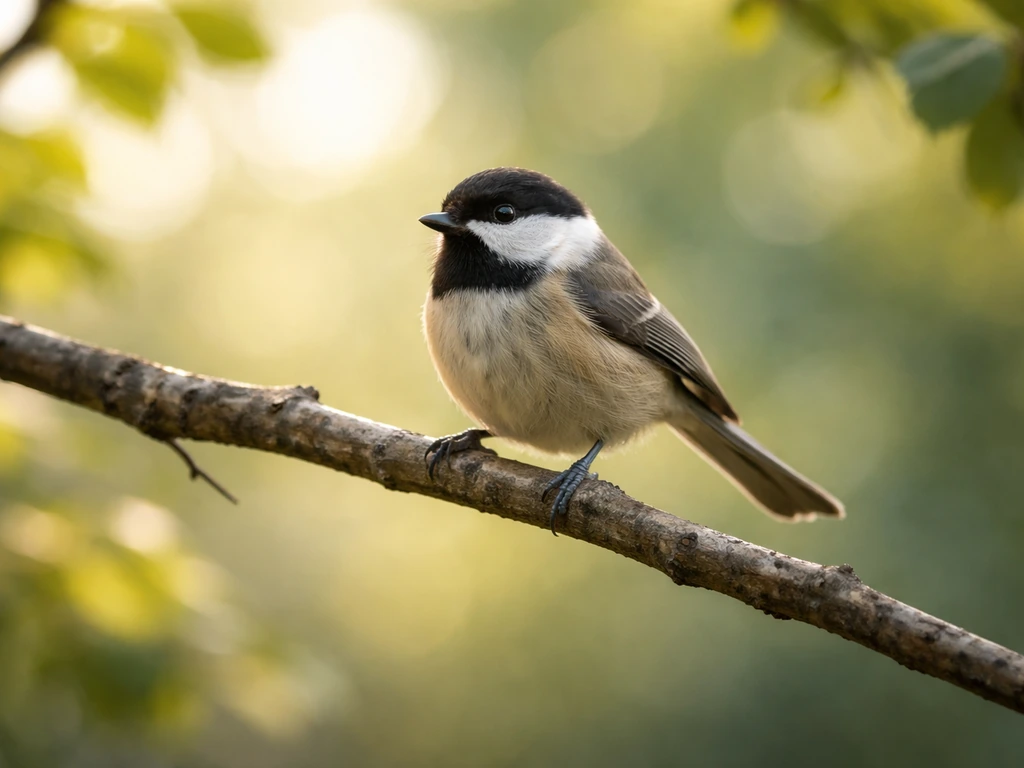
When a bird sits on a branch, it's almost always doing something perfectly practical: resting, warming up, surveying its territory, or watching for food. If you are wondering why is a bird sitting on my porch, start by checking the everyday reasons before reading it as a sign. But for a lot of people, that moment carries a weight that goes beyond the biological. There's something about a still bird on a branch, holding your gaze, that makes you stop and wonder. This guide covers both layers: why it actually happens, and how to read the moment if you feel like it might mean something more.
When a Bird Sits on a Branch: Meanings and Reasons
Maya Hartwell
17 May 2026
Why birds sit on branches (the real-world reasons)
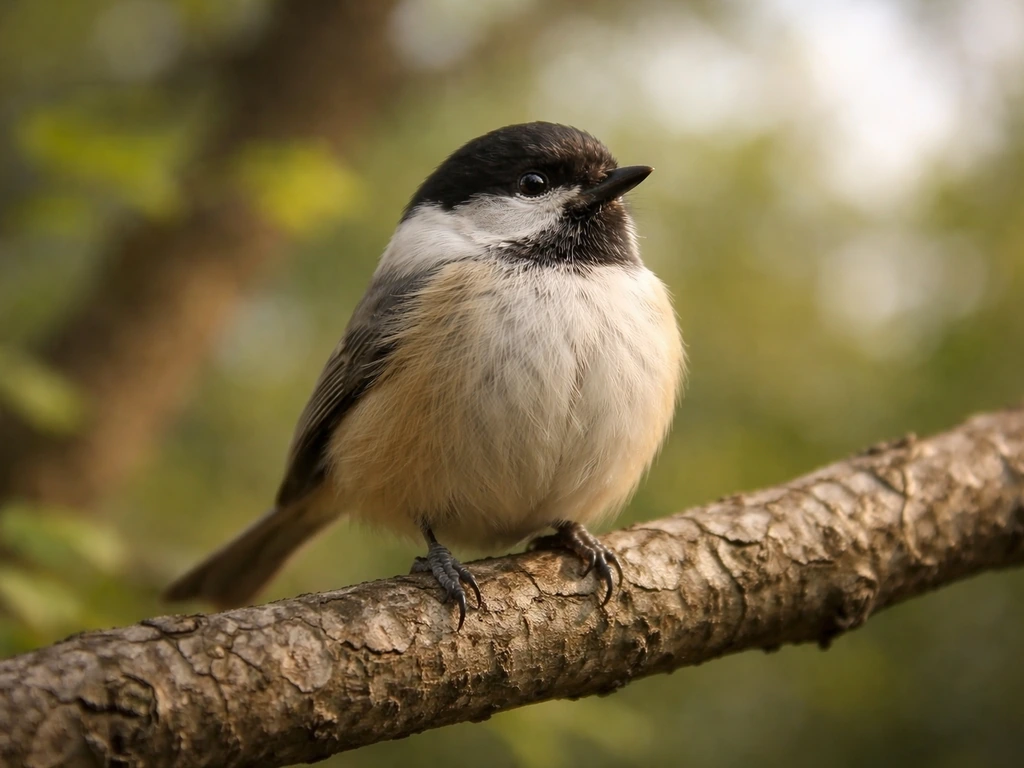
Birds perch on branches for a surprisingly wide range of reasons, and most of them have nothing to do with you. Understanding the natural side of this behavior actually makes the symbolic interpretation more meaningful, because you can better recognize when something seems genuinely unusual.
Rest and energy conservation
Perching is how birds rest. Songbirds have a specialized tendon mechanism in their feet that automatically tightens their grip when they bend their legs, which means they can hold onto a branch securely even while sleeping, even in high winds. During cold weather, birds also slow their metabolic rate to conserve energy, and sitting still on a sheltered branch is a core part of that strategy. You'll often see birds fluffing their feathers while perched on cold mornings: that's not decoration, it's insulation, trapping warm air close to the body.
Sunbathing, feather care, and temperature regulation
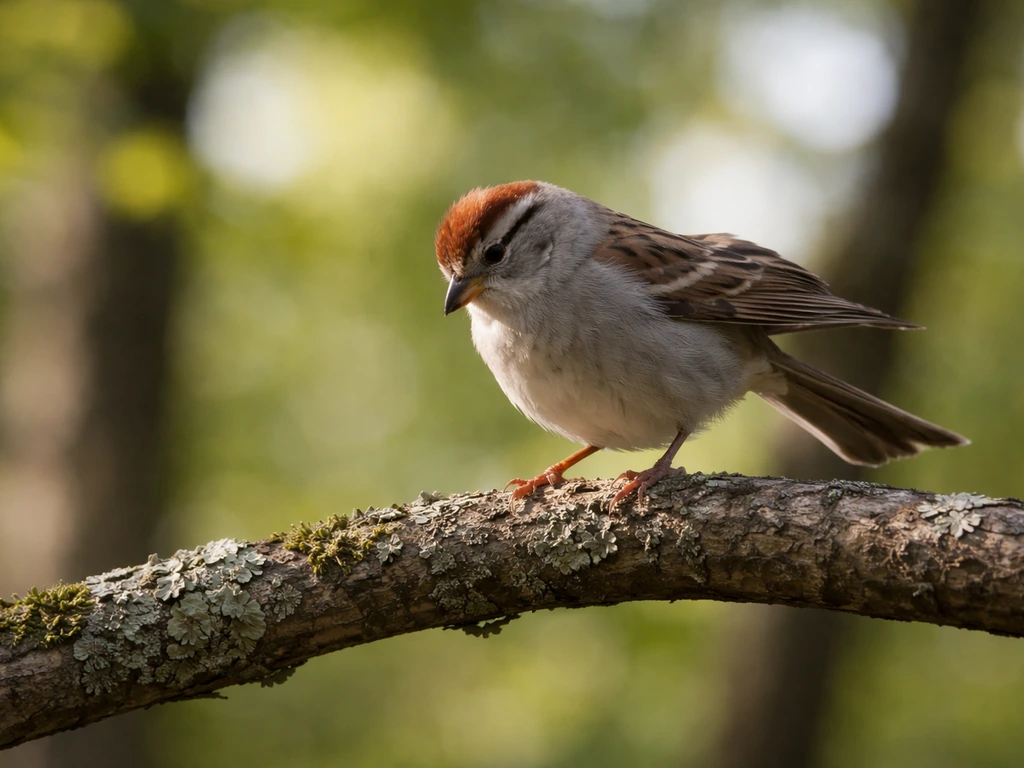
A bird perched in a sunny spot with its feathers fluffed and one or both wings spread out is almost certainly sunbathing. This serves multiple functions: warming up after a cold night, drying feathers after rain or bathing, and possibly helping to dislodge parasites from the plumage. Some larger birds (vultures, cormorants, eagles) adopt what's called a "horaltic pose" with wings fully spread, which can be dramatic to witness. On hot days, the same bird might perch with its beak open and panting, which is a cooling behavior rather than a warming one. The time of day and weather conditions are your first clues to what's going on.
Territory, lookout, and feeding strategy
Many birds use elevated branch positions as a vantage point. A bird perched high and alert, scanning the ground or the middle distance, is likely watching for prey, monitoring for rivals, or keeping tabs on its territory. Raptors like hawks and kestrels do this visibly and with obvious stillness. Songbirds do it too, often punctuating a long perch with a burst of song that reinforces territorial claims to any nearby bird listening. If the bird you're watching is singing repeatedly from the same spot, that's a territorial broadcast, not a performance for you.
Mating displays and social signaling
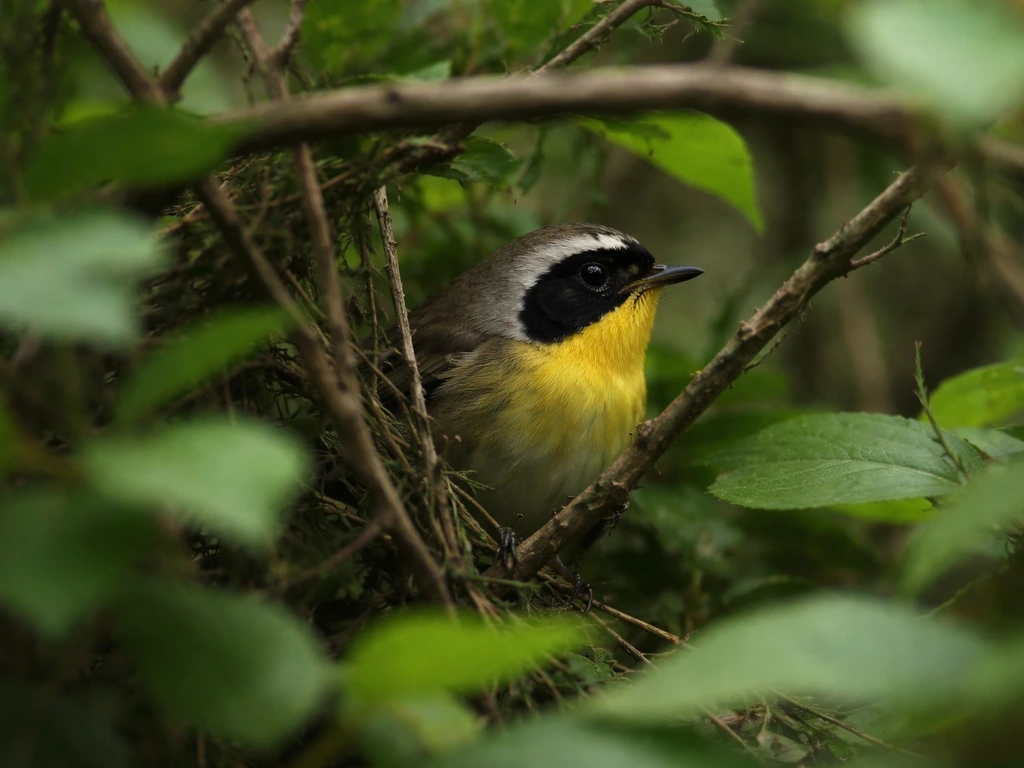
During spring and early summer, a conspicuous perch can be a stage. Males in breeding season often choose the most visible branch they can find to sing, display plumage, or call. A bird that seems unusually still or posed, especially a brightly colored one, may be in full display mode. Posture matters here: an upright, puffed chest with head held high often signals confidence and display, while a crouched, flattened posture can signal submission or alarm.
Predator avoidance and shelter-seeking
Sometimes a bird is just hiding. Dense branches provide cover from aerial predators, and a bird that tucks itself into the interior of a bush or tree rather than sitting exposed is probably aware of a threat nearby. If you notice a bird suddenly go very still and silent while perched, that's an alert response. Tail flicking, nervous head movements, and repeated alarm calls from a perched bird are all signs it's tracking something it considers dangerous, whether that's a hawk overhead or a cat on the ground below.
Is it a sign or omen? Spiritual and symbolic meanings
Across virtually every culture that has lived alongside birds, people have read meaning into bird behavior. A 2018 comparative review published in the journal Environment and Society found that across many ethnolinguistic groups worldwide, birds consistently appear as sign-bearers, with owls, crows, cuckoos, herons, and eagles among the most frequently cited. The signs are often communicated through behavior, including where a bird perches, how long it stays, and what sounds it makes. All About Birds' where a bird perches. So if you feel like you're reading something into the moment, you're participating in a very old human tradition.
A single bird sitting quietly on a branch near you is most commonly interpreted through a lens of stillness and message-bearing. Across many traditions, a perched bird that holds its ground rather than flying away is seen as a deliberate presence, something choosing to be seen. In broadly animist and indigenous frameworks, birds are often understood as messengers between the physical world and spiritual dimensions, and a bird that lingers is considered to be delivering something, even if the content of the message requires your own reflection to interpret.
Species shifts the meaning significantly. A robin perched near you after a loss is widely associated in Western folklore with the presence of a departed loved one. A crow holding eye contact from a branch carries associations with intelligence, transformation, and sometimes warning across Celtic, Norse, and many indigenous North American traditions. A dove sitting calmly nearby is almost universally read as peace, purity, and divine presence. A hawk or eagle perched visibly overhead tends to carry meanings of vision, power, and spiritual guardianship in many traditions. None of these are rigid rules, but they're a useful starting point for your own interpretation.
Biblical and folklore perspectives on the bird-on-a-branch moment
Birds and branches appear together throughout scripture in ways that carry layered meaning. Psalm 104:12 describes birds singing among the branches by the waters, framing the image as part of creation's harmony and God's provision. In Ezekiel 17:23, birds perching in the branches of a tree is used as a prophetic allegory for shelter, refuge, and the fulfillment of divine promise. The image is one of peace and arrival, a creature finding its place in something larger.
The most famous bird-and-branch moment in the Bible is arguably the dove returning to Noah's ark with an olive leaf (Genesis 8:11). Both Jewish tradition (including Talmudic commentary) and Christian interpretation have unpacked this scene as representing peace, covenant, and hope after hardship. The dove on a branch became a symbol that traveled from scripture into art, into political iconography, and into everyday language. When you see a dove perched quietly, that's an image with thousands of years of accumulated meaning behind it.
In European folklore, the branch a bird chooses was sometimes considered as meaningful as the bird itself. Oak branches carried associations with strength and divine presence in Celtic tradition. Rowan trees were considered protective, and a bird perching on one was sometimes seen as a blessing or affirmation. In some Slavic and Eastern European folk traditions, the first bird seen perched at your window in the morning set the tone for the day ahead. These traditions don't ask for literal belief; they offer a poetic framework for paying attention to the natural world.
How to read it in your own context
The details of your specific encounter are what shift a generic interpretation into something personally meaningful. Here are the factors worth paying attention to.
| Detail to notice | Why it matters | What to ask yourself |
|---|---|---|
| Species | Different birds carry different traditional meanings across cultures | Do you recognize the bird? Does it feel significant to you personally? |
| Posture | Alert vs. relaxed vs. fluffed vs. spread-wing all suggest different states | Is it still and calm, or tense and scanning? |
| Duration | A bird that lingers unusually long feels more significant than a quick stop | Did it stay? Did it seem to watch you specifically? |
| Time of day | Bird activity peaks at dawn and dusk; midday perching can be more notable | Was this an unexpected time for a bird to appear? |
| Single vs. flock | A lone bird draws more symbolic weight in most traditions than a group | Was this bird alone or part of a larger movement? |
| Direction it faces | Some traditions assign meaning to the cardinal direction a bird faces | Was it facing toward you, away, or toward something specific? |
| Sounds or calls | Singing vs. alarm calls vs. silence all carry different energies | Was it quiet, singing, or giving a specific call? |
| Your emotional state | Encounters feel more significant when you're already in a reflective state | Were you thinking about something important when it appeared? |
If several of these factors feel unusual at once, like a bird you don't normally see, sitting unusually close, in the middle of the day, holding eye contact and not flying away, most people across most traditions would agree that's worth sitting with. If one dove lands briefly while you're eating lunch outdoors, that's probably a dove eating lunch nearby. Context is everything.
It's also worth thinking about what else was happening when the bird appeared. If you were in the middle of a difficult decision, grieving someone, or asking a question internally, many people find that the encounter feels like a response. That's not a claim about how the universe works; it's an observation about how meaning-making happens in human experience. You get to decide how much weight to give it.
Dream meanings vs. real-life encounters
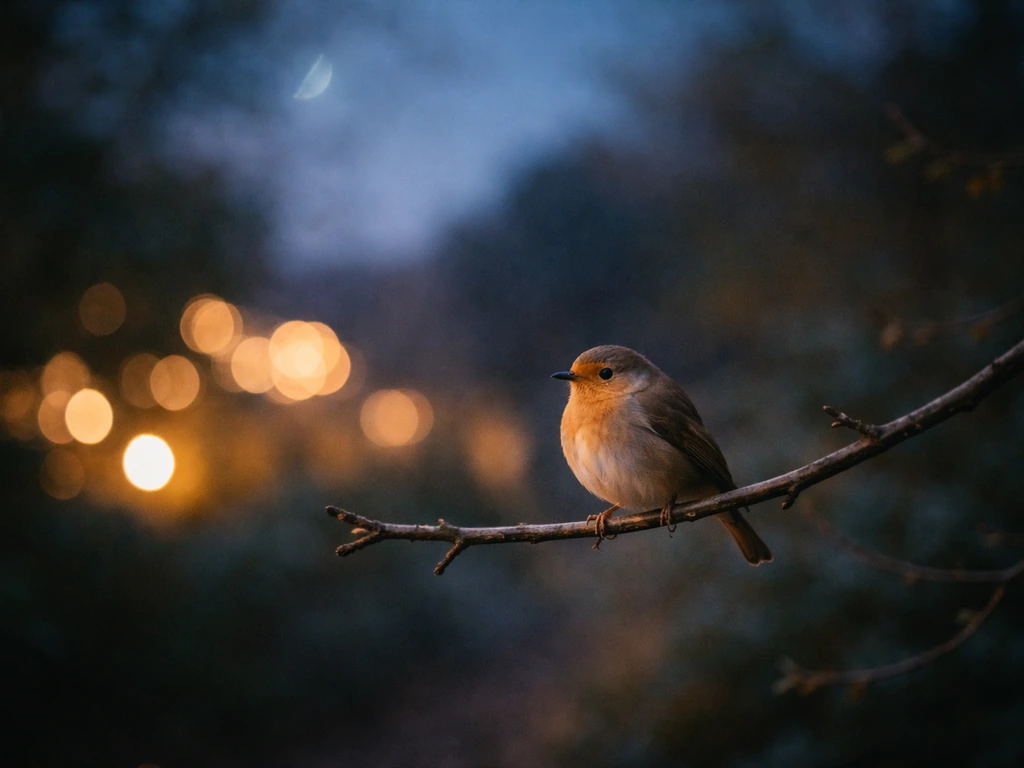
A lot of people searching this topic are actually working through a dream, not a waking encounter, and it's worth separating the two because the interpretive frame is different. In a real-life encounter, the natural explanation is always on the table and should be considered first. In a dream, there is no natural explanation: everything is symbolic by default, because your mind constructed the scene.
In dream interpretation across many traditions, a bird sitting calmly on a branch is generally a positive image. It suggests stability, a pause before movement, and potential. The branch itself in dreams often represents something you're relying on: a relationship, a belief, a situation. A bird perched comfortably suggests trust in that foundation. A bird that's restless or keeps almost flying but stays put might reflect your own ambivalence about a decision or next step. A bird that flies away the moment you approach in a dream can point to something that feels just out of reach.
The species matters in dreams just as in waking encounters. An owl perched on a branch in a dream often connects to hidden knowledge, a question you need to examine more honestly. A songbird singing from a branch in a dream is almost universally interpreted as joy, communication, or good news incoming. A black bird sitting silently tends to appear in dreams during times of transition, not necessarily as a dark omen, but as a marker of threshold moments.
When you're trying to figure out whether your experience was a dream or real (which can feel genuinely blurry right after waking), the emotional texture is usually your best guide. Dreams of birds on branches often carry a particular quality of stillness and attention that lingers. If you woke up feeling watched or accompanied, that's a dream signature worth exploring. If you clearly remember being outside in a specific place and the bird was visibly breathing and eventually flew away, you were awake.
What to do next: observe, reflect, decide
How to observe without disturbing the bird
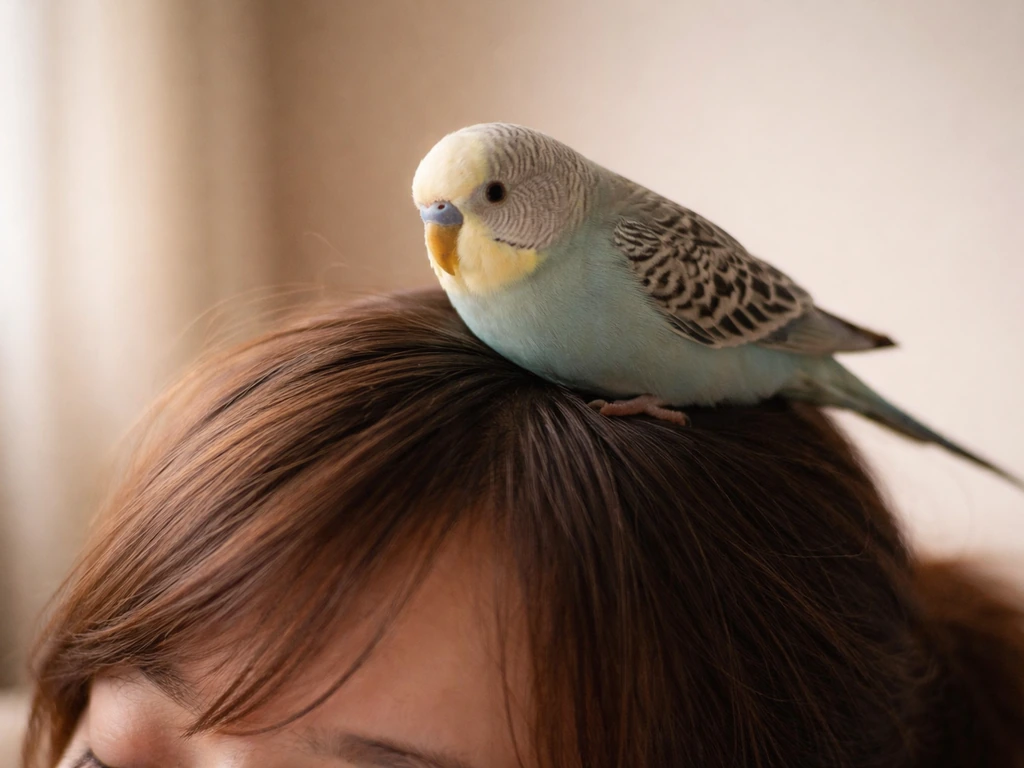
If a bird is currently sitting on a branch near you and you want to watch it, move slowly and avoid making sudden sounds or gestures. If your bird seems to prefer sitting on your head, the most helpful next step is to look for comfort, bonding, and safety cues in its behavior.
Research on bird disturbance shows that birds have what's called an "alert distance," the point at which they stop what they're doing and start tracking you as a potential threat. You'll see this shift clearly: the bird's head comes up, it goes still, it might start alarm calling. If you've triggered that response, freeze or quietly back away rather than pressing closer.
The goal is to watch the bird behaving naturally, not to see how close you can get before it flies.
If there's any chance the bird is near a nest, give it extra space. Even a single disturbance can cause some birds to abandon a nest or chicks. Observing from a comfortable distance, even just a few meters back, is almost always enough to appreciate the encounter without affecting the bird's behavior.
Safe reflection: how to sit with the moment
If you're drawn to the symbolic or spiritual side of this encounter, you don't need a ritual or a rigid framework. Simply noticing your own reaction is a good place to start. Did the encounter feel significant, and if so, why? What were you thinking about just before the bird appeared? What does the species mean to you personally, separate from any cultural tradition? Sometimes your gut response to the bird is the most honest interpretation available.
If you practice journaling, writing down the specific details immediately (time, species if known, posture, duration, your emotional state) gives you something to return to. Patterns across multiple encounters are often more meaningful than any single moment. If you've noticed birds appearing at particular moments in your life repeatedly, that pattern is worth reflecting on regardless of your broader belief system.
Deciding whether this is ordinary or worth treating as a message
Here's a practical way to think about it: if the bird's behavior has a clear natural explanation (it's cold out and it's fluffing up, it's spring and it's singing from a territory perch, it's a species that commonly perches in that spot), lead with the natural explanation and let any symbolic resonance be secondary. If the encounter has multiple unusual elements that don't have obvious practical explanations, like the wrong species for your area, unusual behavior, unusual timing, unusual duration, it's reasonable to hold more space for meaning.
You might also find it useful to compare this experience with other bird encounters you've had or wondered about. A bird sitting on your porch railing, a bird sleeping in an odd spot near your home, or a bird that seems to follow your movements all carry their own interpretive possibilities. If you keep seeing a bird sleeping on your porch, the first step is to look for real-world reasons like rest, warmth, and shelter A bird sitting on your porch railing. The through-line is usually the same: notice the details, consider the natural explanation first, and then ask what the encounter might reflect about where you are in your own life right now.
There's no single correct answer to what a bird on a branch means, and any tradition or interpreter who tells you there is should be approached with some skepticism. What these encounters offer is an invitation to pause, which is genuinely rare. Whether the bird is a messenger or just a thrush drying its wings in the morning sun, the moment it gave you, that pause where you stopped and paid attention, that part is yours to keep.
FAQ
How can I tell if a bird sitting on a branch is resting or acting strangely because it is sick or injured?
Look for normal perching behavior first, steady breathing, and coordinated movement. Red flags include a bird that stays on the same spot for an unusually long time, has a ruffled or soaked appearance that never smooths out, cannot keep its balance, shows repeated open-mouth breathing, or fluffs while remaining unresponsive. If you suspect injury or illness, keep your distance and contact a local wildlife rehabilitator rather than trying to handle it.
What does it mean if the bird doesn’t fly away when I approach, even if I’m not trying to scare it?
This can be normal, but it depends on timing and posture. A bird may freeze and track you once you cross its alert distance, then resume normal behavior if you back off. If it stays calm without any head-up tracking, it may be focused on feeding or sleeping. If it seems to ignore your presence completely or lets you get unusually close, that can indicate reduced awareness from illness, heat stress, or an injured wing.
Is a bird sitting on a branch a good sign if it keeps making eye contact?
Eye contact often means the bird is actively monitoring you. In natural settings, birds may hold eye contact while assessing distance, especially if they feel slightly threatened or are near a food source or nest. If you want the most reliable read, pair eye contact with behavior cues, like head bobbing, alarm calling, tail flicks, and whether it eventually resumes feeding or singing after you move away.
Why would a bird perch right outside my window or on a nearby branch and seem to watch me for a long time?
Windows and nearby branches create predictable lines of sight. Birds may linger because the area offers cover, a vantage point for hunting insects, or a safe corridor to travel between trees. Some species also investigate movement and contrast. If you notice repeated visits at the same times, consider practical attractants like nearby feeders, standing water, or tall shrubs that provide hiding spots.
What should I do if the bird is behaving like it’s on high alert, for example stillness plus alarm calls?
Treat it as a real-time warning signal. Slowly back away to outside the bird’s alert distance, stay low if you can, and avoid sudden gestures. If you are walking a path, give it space and let the bird decide when to resume. Continued alarm calls can indicate a nearby predator or nest area, so do not try to locate the source by pushing closer.
Could a bird sitting on a branch mean something different if it is clearly eating, not resting?
Yes. If the bird is cracking seeds, picking at bark, or carrying food items, the encounter is usually about foraging rather than messaging. Even if the moment feels symbolic, the bird’s foraging posture, repeated pecking, and quick movements typically point to feeding behavior. The most useful approach is to check whether the branch or area has food sources, like feeders, fruiting plants, or insect activity.
How can I distinguish a dream bird on a branch from a waking encounter that feels oddly vivid when I wake up?
Dreams usually lack consistent physical detail, and the emotional tone often feels like accompaniment or watchfulness rather than a specific place you can map. Waking encounters tend to include grounded cues you can verify later, like exact location, the direction of light, and a sequence of actions you can describe (perched, shifted stance, then flew). If you wake with the sense that you were outside watching, but you cannot confidently place the setting, it may be blending dream impressions with morning memory.
What does it mean if multiple birds perch on branches around the same time, does that change the interpretation?
Multiple birds often changes the natural explanation. A group can indicate a shared resource (a feeder, a fruit tree, a good insect spot) or coordinated territory behavior. Symbolically, people may interpret it as heightened significance, but behaviorally the first question is whether there is a local attractant. If you recently changed landscaping, added water, or moved a feeder, that can strongly explain clustering.
Is it safe or helpful to feed birds that are perching near you?
Feeding can be helpful, but it can also make birds linger and increase risk, like window strikes or higher predator exposure. If you feed, use appropriate seed types for your local species, keep feeders clean, and remove spilled food to reduce pests. Place feeders away from windows (or add window-safe decals) to lower collision risk, and avoid feeding if you notice aggressive behavior or repeatedly injured birds.
What is the most practical way to journal this encounter so I can spot patterns later?
Write down five quick details immediately, time of day, species (if known), exact behavior (fluffed, wings open, singing, alarm calling), duration, and your emotional state right before seeing it. Add one observation about what was going on in your environment, like weather, nearby construction, or a recent change at home. Afterward, compare not just dates, but emotional themes, like stress, grief, or anticipation, because patterns often show up in the feelings rather than the species.
Next Article
Why Does My Bird Like to Sit on My Head? Practical Guide
Why your bird sits on your head: bonding, warmth, attention and safety tips, plus red flags and optional spiritual meani