A bird trusts you when it stays calm in your presence, keeps foraging or preening without pausing, and allows you to remain nearby without shifting into alert posture or moving away. The clearest signal is what researchers call "flight initiation distance": if a bird that used to flush at 20 feet now holds its ground at 10, it has become more comfortable with you specifically. But trust in wild birds is more nuanced than simple proximity, and getting it wrong can harm the bird, so it's worth knowing exactly what to look for.
How to Know If a Bird Trusts You: Signs and Next Steps

Maya Hartwell
16 May 2026
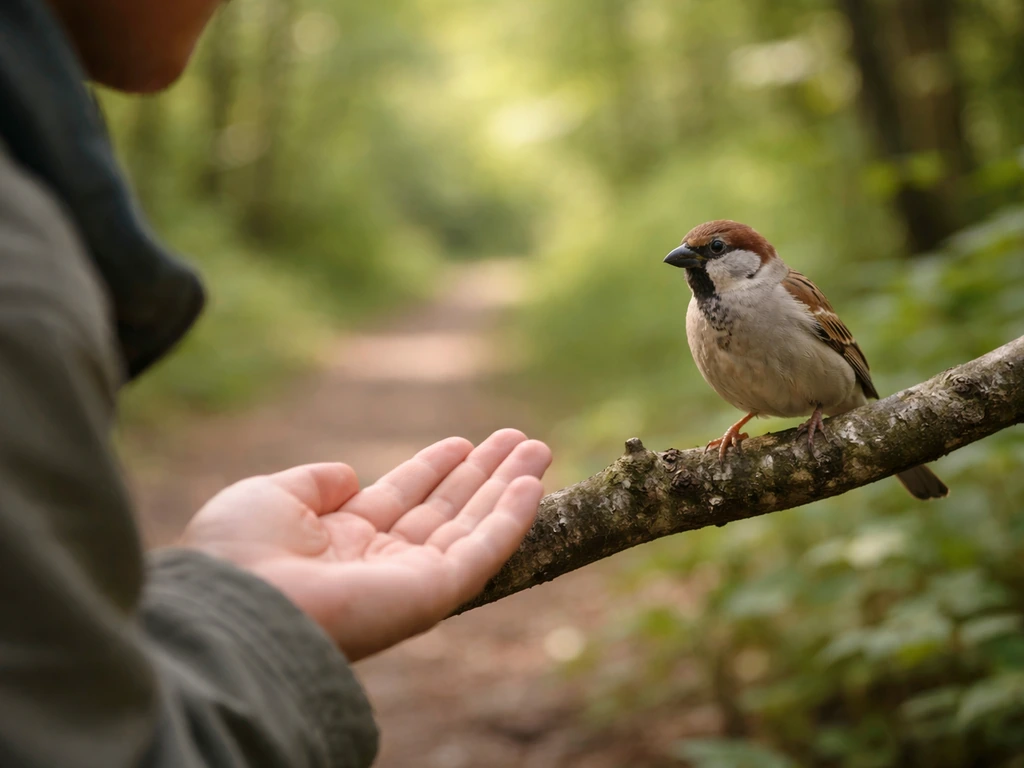
Trust vs fear: the observable cues
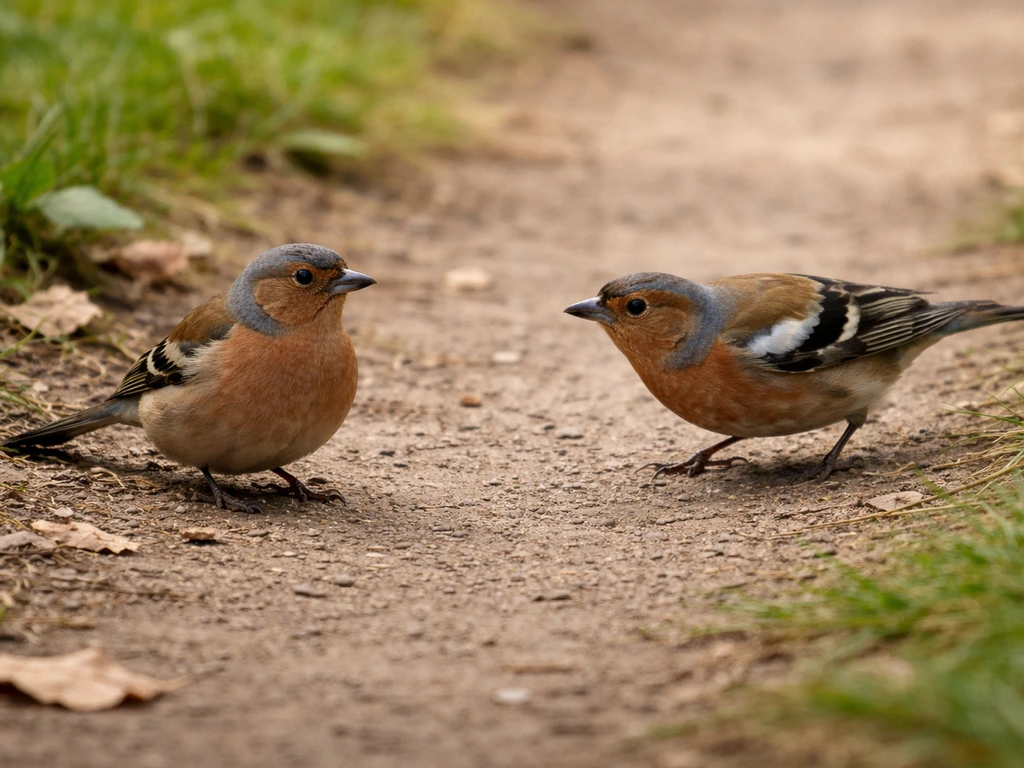
The easiest way to read a wild bird is to watch what it does the moment it notices you. A bird that trusts you (or at least doesn't feel threatened) will clock your presence and then go right back to what it was doing. A bird that fears you will freeze, go tall and thin, orient its body toward an escape route, and eventually flush. That stiffening into a narrow, elongated posture is a classic pre-flight signal: the bird is preparing to leave and your window to back off is closing.
Fear cues and trust cues are not always opposites. A bird that doesn't flee isn't automatically comfortable with you. During nesting season, for instance, a bird may hold tight to its nest even as you approach because leaving the eggs feels riskier than staying. That stillness is not trust; it's conflict. Healthy adult wild birds that are genuinely relaxed around you will still move freely, forage, and interact with their environment. If a bird absolutely won't move as you approach, it may be sick or injured rather than calm. If a bird absolutely will not move as you approach, it can indicate the bird may be sick or injured and needs welfare consideration absolutely won't move as you approach.
| What you see | What it means | What to do |
|---|---|---|
| Bird freezes, goes tall and thin | High fear, pre-flight posture | Stop moving immediately, back away slowly |
| Bird flushes and flies off | You crossed the threshold, too close | Increase your distance, give the area space |
| Bird glances at you and resumes foraging | Aware but not threatened | Hold your position, stay still |
| Bird approaches you while foraging | Habituated or curious, not necessarily "trust" | Don't encourage; observe without feeding |
| Bird alarm calls repeatedly near you | Active stress, may alert other birds | Leave the area entirely |
| Bird preens or rests while you're nearby | Relaxed and comfortable with your distance | Maintain that distance, don't push closer |
| Bird won't move at all when you approach | Possible illness or injury, not trust | Contact a wildlife rehabilitator |
Wild bird body language and distance signals
Flight initiation distance (FID) is the single most useful measure of a bird's comfort level. It's simply the distance at which a bird decides to flee in response to an approaching person. Some species naturally have longer FIDs than others, so you need a baseline for the specific bird you're observing. Once you have that baseline, you can tell whether your presence is being tolerated or actively avoided by watching whether the bird starts moving away before you've even gotten close.
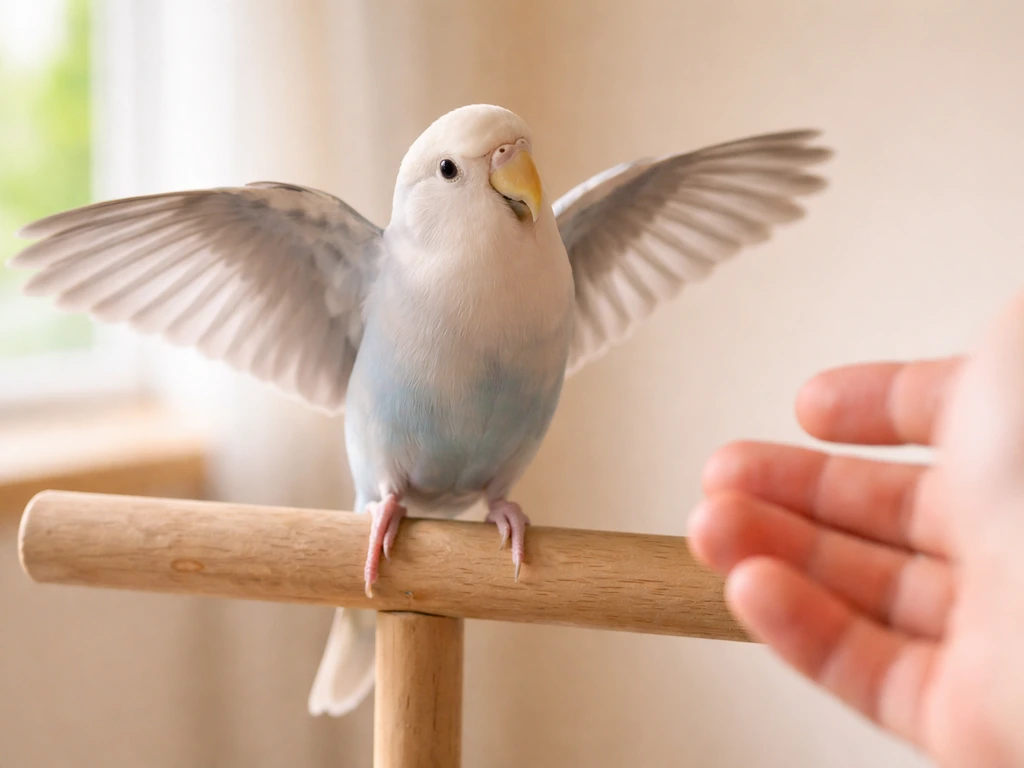
Body posture tells you almost everything else. A relaxed bird holds its feathers loosely, carries its head at a natural angle, and moves without urgency. A stressed bird compresses its feathers tight against its body, raises its crest (in species that have one) as an alert signal, or crouches low with wings slightly lifted, ready to launch. Tail flicking and rapid head bobbing are also worth noting: in many species these gestures signal agitation, not curiosity. Wing raising when facing you is often an active warning display, not a friendly greeting.
The behavior-change threshold is your most practical rule. If the bird stops eating, stops moving normally, orients toward escape, or begins calling because of you, you are too close. Back off slowly and quietly until the bird resumes normal behavior. If it never resumes, leave the area and try again another day from a greater starting distance. Limit recordings and playback in breeding season to reduce disturbance risk, and back off slowly if the bird responds to you Mindful Birding.
What the bird's behavior means: feeding, posture, and vocalizations
Continued feeding near you
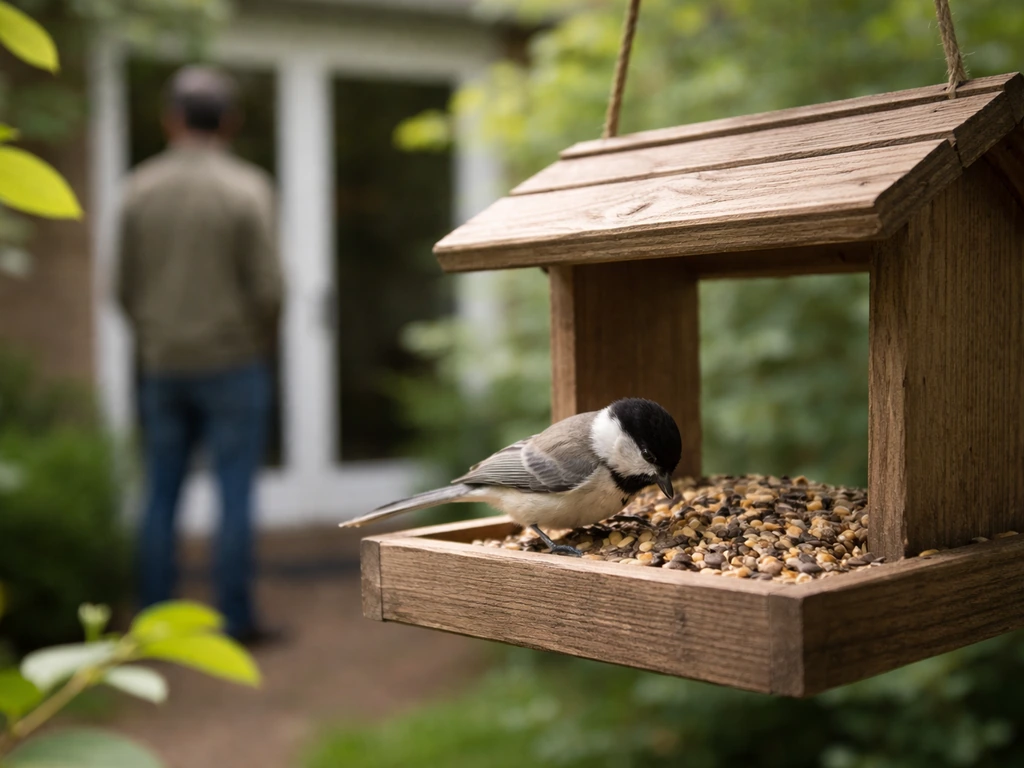
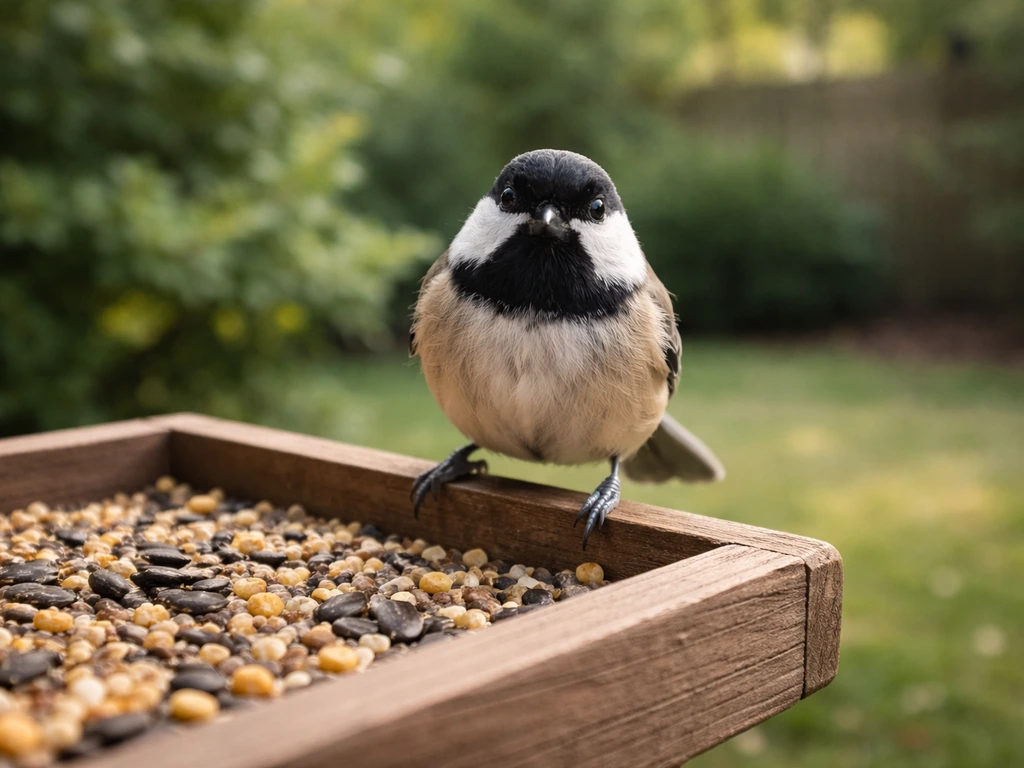
A bird that keeps foraging or eating at a feeder while you're present is the clearest indicator of ease. Foraging requires focus and a dropped guard; a bird won't do it if it considers you a threat. If you notice a bird at your yard feeder that keeps eating even as you step out onto the porch, that's a real sign of habituation to your presence, earned through repeated, predictable, non-threatening appearances.
Posture and feather position
Relaxed, slightly puffed feathers (especially in cooler weather) mean the bird is comfortable enough to thermoregulate rather than stay locked in alert mode. Feather fluffing in warm weather can mean illness, so context matters. The key is whether the bird's posture looks natural and fluid or rigid and compressed. Rigid and compressed means it's ready to flee.
Vocalizations
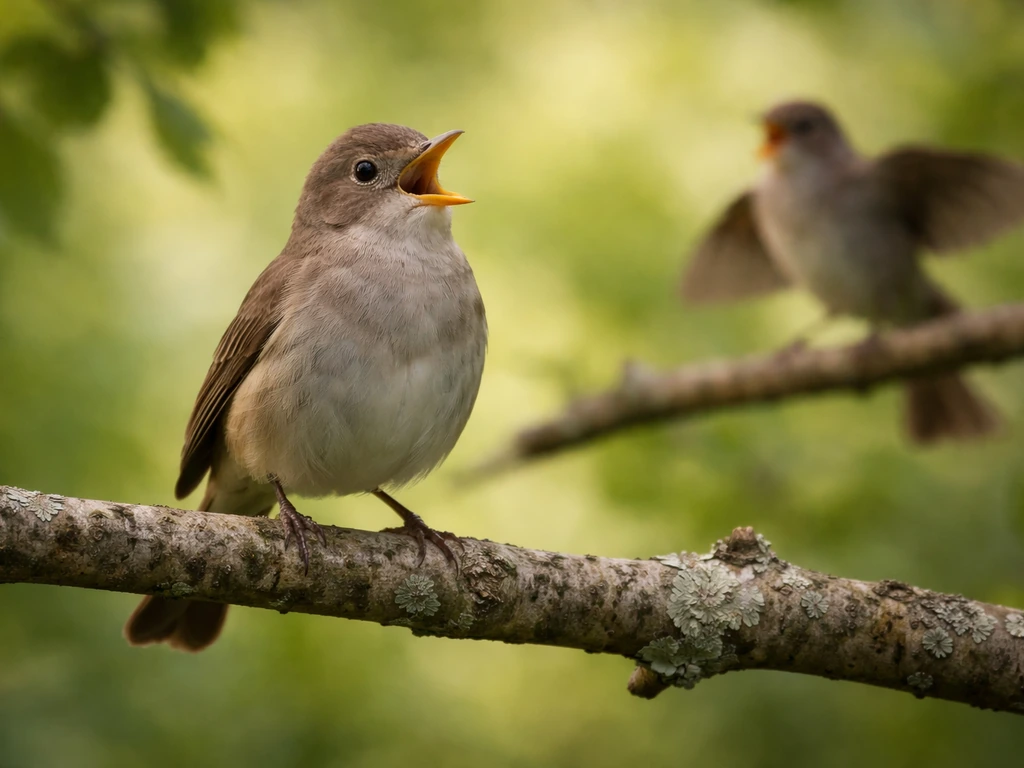
Song is generally a good sign. A bird singing near you is not panicked. Alarm calls, however, are a direct signal that you're too close or too unpredictable, and one bird's alarm call can trigger a cascade through an entire local bird community. If you hear sharp, repetitive chip notes or see a bird mobbing your position, the message is unambiguous: back up. Soft contact calls or normal foraging chatter while you're present are a positive indicator.
Common myths that trip people up
The biggest misconception is that a bird coming close to you means it trusts you. Proximity isn't trust. A bird that's become habituated to humans through repeated feeding may approach confidently, but wildlife experts specifically describe habituation as dangerous for both animals and people. Habituated birds can become aggressive, lose survival instincts, and become more vulnerable to injury near roads or structures. A bird approaching you may simply have learned that humans equal food, which is a problem rather than a bond.
- "It didn't fly away, so it trusts me" — Not fleeing can mean nesting stress, illness, or habituation, not comfort.
- "I can use bird calls to bring it closer" — Playback calls can disrupt natural behavior, stress the bird, and are banned in many parks and refuges.
- "Feeding it will build trust" — Feeding wild birds creates dependency and habituation, which wildlife agencies universally discourage.
- "It came back, so we have a bond" — Return visits reflect habitat quality and food availability more than a relationship with you specifically.
- "Staying very still means I can get as close as I want" — Stillness reduces threat signals but doesn't eliminate them; your distance still matters.
How to act to earn trust: movement, voice, posture, and spacing
The way you carry yourself around wild birds matters enormously. Approach any bird-watching spot from the side rather than head-on, moving in an arc rather than a straight line toward the bird. Direct, linear approaches mimic predator behavior. Crouch slightly to reduce your profile. Move in short, slow increments with pauses between them, letting the bird observe you and settle before you move again.
Keep your voice low and even if you speak at all. Sudden loud sounds are startling to birds in the same way a branch snap signals danger in the wild. Avoid making sudden gestures or raising your arms. If you're with others, avoid group laughter or raised voices. The goal is to be as predictable and non-threatening as a tree.
Posture matters too. Avoid direct, sustained eye contact with the bird if you're close; in many species, a direct stare is interpreted as predatory. Turn your body slightly to one side and look at the bird peripherally. Using binoculars from a respectful distance is genuinely better than getting close without them, both for the bird's comfort and for the quality of your observation.
If you have a specific wild bird visiting your garden regularly, the best thing you can do is simply be present consistently at predictable times, not pursuing or feeding, just existing in the space. Over days and weeks, the bird learns your pattern and incorporates you into its risk assessment as a non-threat. That slow, low-drama presence is what earns the closest thing to trust that wild birds offer.
Next-step plan for today
If you want to start building or testing a connection with a wild bird today, here's how to approach it practically and ethically. Knowing how to tell a bird to come here starts with staying non-threatening and giving the bird room to approach on its own.
- Choose a fixed observation spot: Pick a place you can sit comfortably for 20 to 30 minutes, ideally near natural cover or a bird feeder you've already established. A chair on a porch, a bench in a garden, or a spot near a hedgerow all work well.
- Check the timing: Early morning is when birds are most active and most likely to forage near you. Avoid nesting season disturbance by staying well back from any area where you've seen nest-building behavior.
- Arrive quietly and settle before the birds do: Rushing in and then going still isn't the same as already being there. Arrive first, settle, and let birds return to the space on their own terms.
- Mark your starting distance: Note roughly how far you are from the bird's typical foraging area. If it flushes today, that's your current FID baseline. Tomorrow, try the same distance and stay there rather than moving closer.
- Do nothing but observe: No calls, no food offerings, no reaching toward the bird. Just sit, breathe, and watch. Keep a small notebook if it helps you log what you see.
- Create a safe retreat signal: If a bird shows any stress cue (freezing, alarm calling, going rigid), slowly lean back or stand up slightly, then begin backing away. The bird will notice and register that you respond to its signals.
- Build consistency over days: Come back to the same spot at the same time. Over a week, you'll almost certainly see the bird's FID shrink if it was previously comfortable in that area.
When trust is present and when to leave the bird alone
You'll know a bird has become genuinely comfortable with your presence when it forages within its normal FID range for that location without pausing to check you, preens or rests while you're seated nearby, and resumes normal behavior within seconds after you make a small, slow movement. These are the moments to appreciate quietly and not push further.
There are also clear situations where leaving the bird alone is the right call entirely, regardless of the relationship you feel you've built. Back off and give the bird full space if you observe any of the following:
- The bird is carrying nesting material, sitting on a nest, or guarding a territory aggressively
- It's breeding season and the bird is singing territorial songs at close range to you
- The bird appears lethargic, fluffed in warm weather, or is on the ground without obvious cause
- Other birds in the area are alarm calling in response to your presence
- You're near a road, water's edge, or structure where a flushed bird could be injured
- You've already caused one flush today; the bird has had enough
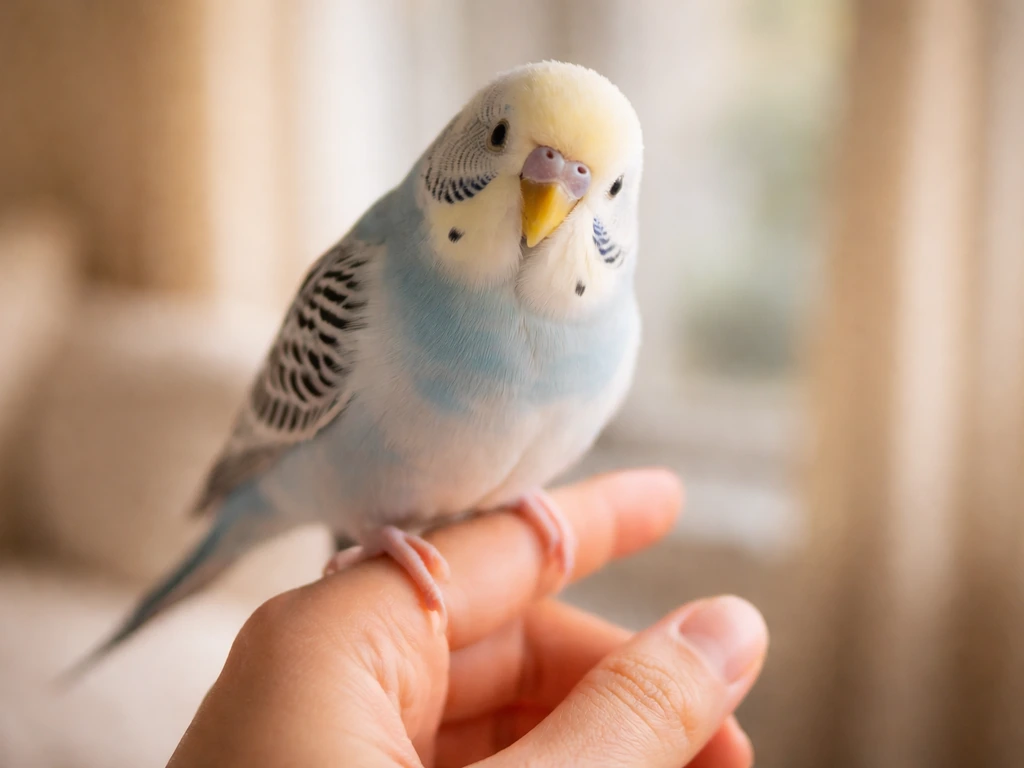
This is especially important to remember if you're comparing notes with the related question of how to tell if a bird is bonded to you or how to tell if a bird has imprinted on you, which carry different behavioral dynamics than simple tolerance in the wild. If you're wondering about that kind of attachment, the article's bonded and imprinted behavior differences can help you tell which situation you're actually seeing how to tell if a bird is bonded to you or how to tell if a bird has imprinted on you. These cues connect closely to the question of how to tell if a bird likes you, since comfort can look similar to attachment. Wild birds building comfort with your presence is not the same as the deep attachment seen in hand-raised or imprinted birds, and treating it as such can push you into behaviors that stress or endanger the animal.
The spiritual meaning of a bird that trusts you
Across many traditions, a wild bird choosing to stay near a human without fleeing carries symbolic weight that people have recognized for centuries. In Celtic folklore, birds were seen as messengers between the human world and the spirit realm, and a bird that lingered near a person was often interpreted as a sign of guidance, protection, or a message from someone who had passed. In Indigenous traditions across North America, a bird that approaches without fear is sometimes understood as an ancestor making contact or a reminder to pay attention to something you've been ignoring.
From a biblical perspective, birds appearing in moments of stillness and trust have long been associated with divine provision and presence, echoing passages about sparrows being known and cared for. In Eastern philosophical traditions, particularly in Zen practice, the moment a wild creature stays calm in your presence is understood as a reflection of your own inner stillness and how much noise, both physical and mental, you're putting into the world.
What makes these interpretations feel meaningful is that they're not entirely separate from the practical reality. Earning a wild bird's comfort really does require you to slow down, quiet yourself, become less reactive, and develop patience. Whether you frame that as a spiritual discipline or simply good birdwatching practice, the internal change is the same. A bird that stays near you is, in some sense, reflecting something back about the quality of your presence.
That said, these symbolic readings work best alongside the practical framework, not instead of it. A bird staying near you because it's sick isn't a spiritual message; it's a welfare concern. A bird approaching because it's been fed into habituation isn't offering guidance; it's learned behavior with real risks attached. Hold the symbolism lightly, stay curious about what the moment might mean to you personally, and let the practical care for the bird come first. The most meaningful encounters are the ones where the bird is genuinely safe and choosing, in its own way, to stay.
What does it mean to you when a bird holds its ground near you, going about its life as if your presence is simply part of the world it lives in? That quiet moment of mutual ease, rare and unhurried, might be worth sitting with long after the bird has gone.
FAQ
Can a bird be trusting if it never gets close to me?
Yes. Trust can show up as “tolerance without escalation,” for example the bird keeps foraging at your approach distance and does not shift into compressed, flight-ready posture. Use your bird’s species-specific baseline and look for relaxed, normal movement rather than counting how close it allows you to get.
What if a bird seems calm at first, then flushes suddenly later?
That often means the bird’s threshold changed, usually from a louder sound, faster movement, a new person entering, or a predator nearby. Back off to the last distance where normal behavior returned, then resume slowly after the bird has had time to settle.
Does singing always mean the bird trusts me?
Not always. Song can be a sign of comfort, but sudden increases in alarm-related calls or repeated contact calls from multiple birds nearby suggest you are beyond the safe comfort zone. If other birds start mobbing, treat that as a clear cue to increase distance.
How can I tell the difference between habituation and a healthy comfort level?
Habituation is when the bird stays near humans even when it should be wary, sometimes allowing close approach or showing reduced natural responses. A safer sign is the bird repeatedly returns to normal behavior within its usual routines, and still reacts appropriately when you get too close (it backs off or chooses to leave without lingering in a risky way).
Is it okay to feed wild birds if I want them to trust me?
Feeding can increase approach behavior but also raises the risk of habituation and changes how birds use their instincts. If your goal is comfort signals, prioritize predictable presence without feeding, and use food only in ways that do not increase human-bird closeness beyond what you can safely maintain.
What should I do if I accidentally get too close and the bird starts acting stressed?
Stop moving, lower your profile, and back away slowly. Then wait until normal activity resumes, such as continued foraging or preening, before you approach again at a greater starting distance. Don’t “test” repeatedly, because repeated stress teaches the bird to either flee harder or stay in conflict.
Are there situations where a bird holding still near me is not trust?
Yes. During nesting, the bird may stay near eggs or young because leaving creates higher risk. Another non-trust scenario is illness or injury, where the bird cannot respond with flight even if it feels unsafe. If movement seems impaired or breathing looks abnormal, leave the area and monitor quietly from farther away.
Does not making eye contact matter if the bird is already comfortable?
It still matters. Even if a bird tolerates you, a sustained stare can read as predatory in many species. Use peripheral viewing by turning your body slightly to the side and keeping gaze brief, then let the bird decide how much to look back.
How do I measure flight initiation distance in a practical, low-stress way?
Pick a consistent route and time, then approach slowly in small increments until the bird would normally flush, note that distance, and stop at the point where it becomes alert. Repeat on different days from a similar starting distance, and compare with your own past notes for that specific location and species, not another species.
What does “back off slowly and quietly” look like when I’m at a feeder?
Pause and take a step back rather than turning suddenly. Keep movements small, avoid reaching, and give the bird several minutes to resume eating normally. If it cannot return to normal feeding quickly, end the interaction and leave the area for that session.