When you type "what does it mean when a bird..." into a search bar, you already know something happened. Maybe a bird flew into your window and sat stunned on the sill. Maybe one kept landing near you all morning. Maybe you found a feather, or a bird perched on your shoulder, or you dreamed one flew through your bedroom. The behavior or event you witnessed is the real starting point, and figuring out what it means depends almost entirely on what the bird actually did. This guide walks you through the most common bird encounters, what they're likely to mean in practical terms, and how to read them symbolically if that's the lens you're drawn to.
What Does It Mean When a Bird Is Nearby or Indoors

Maya Hartwell
11 Apr 2026
Common reasons a bird might be in your space
Most unexpected bird encounters have a straightforward physical explanation. Birds move through our world constantly, and we intersect with them more than we realize. Here are the situations people most often ask about:
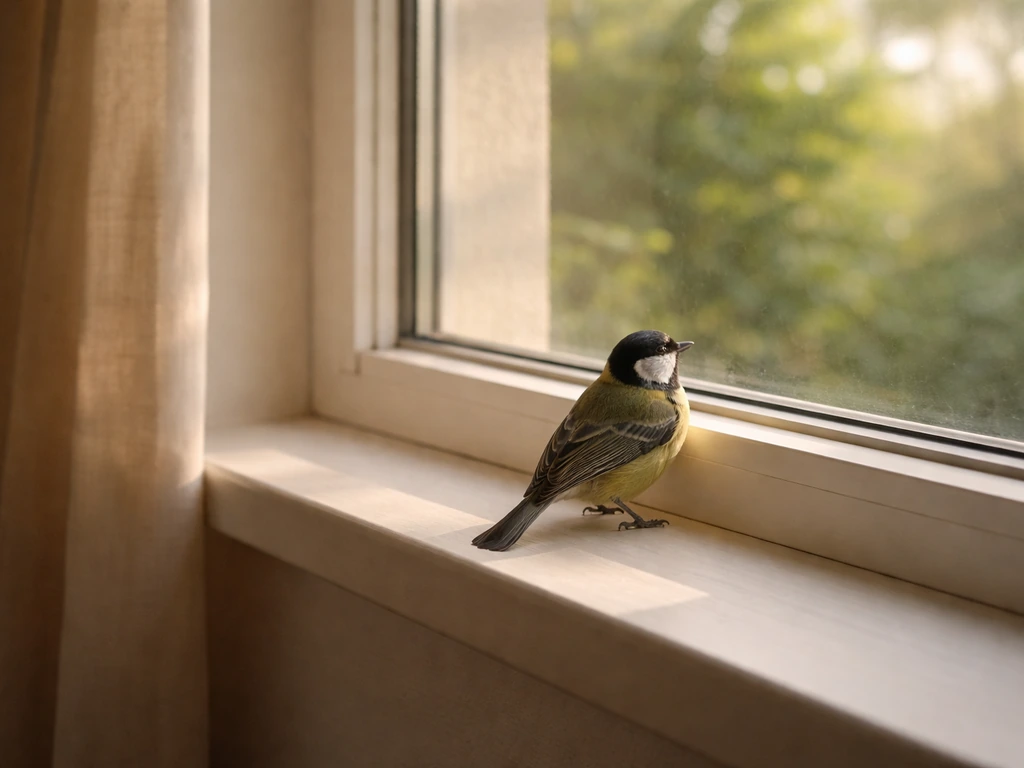
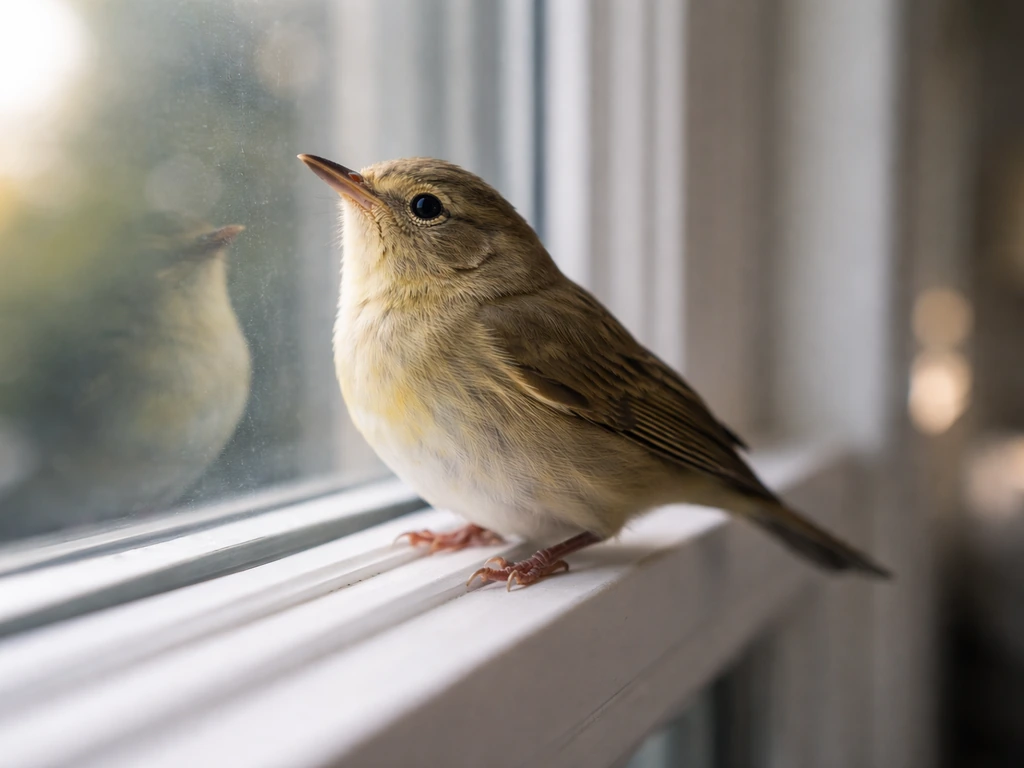
- Window collisions: Birds cannot distinguish a transparent or reflective window from open space. Reflections of sky and trees look like a clear flight path. At night, interior lights attract birds further, pulling them toward glass they can't perceive as a barrier. Researchers estimate up to 988 million birds are killed or injured by window strikes annually in the U.S. alone. A stunned bird on your windowsill or patio almost certainly just hit the glass.
- Entering your home or building: Open doors, broken screens, or an open chimney flue are the usual culprits. A bird inside your house is disoriented, not delivering a message on purpose (though you can choose to receive it as one).
- Repeatedly visiting your yard or perching near you: Feeders, reliable water sources, insects on your property, or a nearby nest explain most repeat visits. Some bold urban birds, like crows or house sparrows, also simply associate humans with food.
- Appearing injured, fluffed, or acting oddly: A bird sitting on the ground that doesn't fly away when you approach is a signal something is physically wrong. Fluffed posture, drooping wings, hunched body, and increased sleeping are recognized illness red flags.
- Leaving droppings on you, your car, or your home: Pure biology. Birds have no bladder and deposit waste constantly. The location is almost always coincidental.
Pinning down the physical explanation first doesn't cancel out the symbolic dimension. It actually helps you interpret more clearly, because you're working with the full picture of what happened.
How to interpret the bird's behavior (what it did matters)
Bird behavior is the single biggest clue for both practical and symbolic interpretation. A bird sitting silently means something entirely different from one that's vocalizing, bobbing, or spreading its wings at you. Before you decide what the encounter means, take a moment to recall exactly what the bird was doing.
Body language is surprisingly expressive. If you noticed a bird puffing out and rounding its feathers, that's worth a closer look on its own. Bird ruffling feathers can signal anything from temperature regulation to aggression to illness, and the context changes the interpretation entirely. Similarly, if the bird seemed to be holding very still and tilting its head sideways at you, that's a recognized behavior tied to how birds use their monocular vision to focus, though many people find it feels like the bird is genuinely listening. What it means when a bird tilts its head has both a sensory explanation and a long folkloric association with attentiveness and spiritual awareness.
Tail movement is another overlooked detail. A bird that repeatedly fans or bobs its tail after landing is communicating something, often related to territory, alertness, or courtship depending on the species. If you're curious about that specific behavior, exploring what it means when a bird wags its tail can give you both the behavioral science and the symbolic layer. Likewise, a bird that opens its beak and holds it open (without calling) is likely panting to regulate heat, but in symbolic traditions an open-mouthed bird is sometimes read as a message being spoken or delivered. You can dig into what it means when a bird opens its mouth if that's the specific behavior you witnessed.
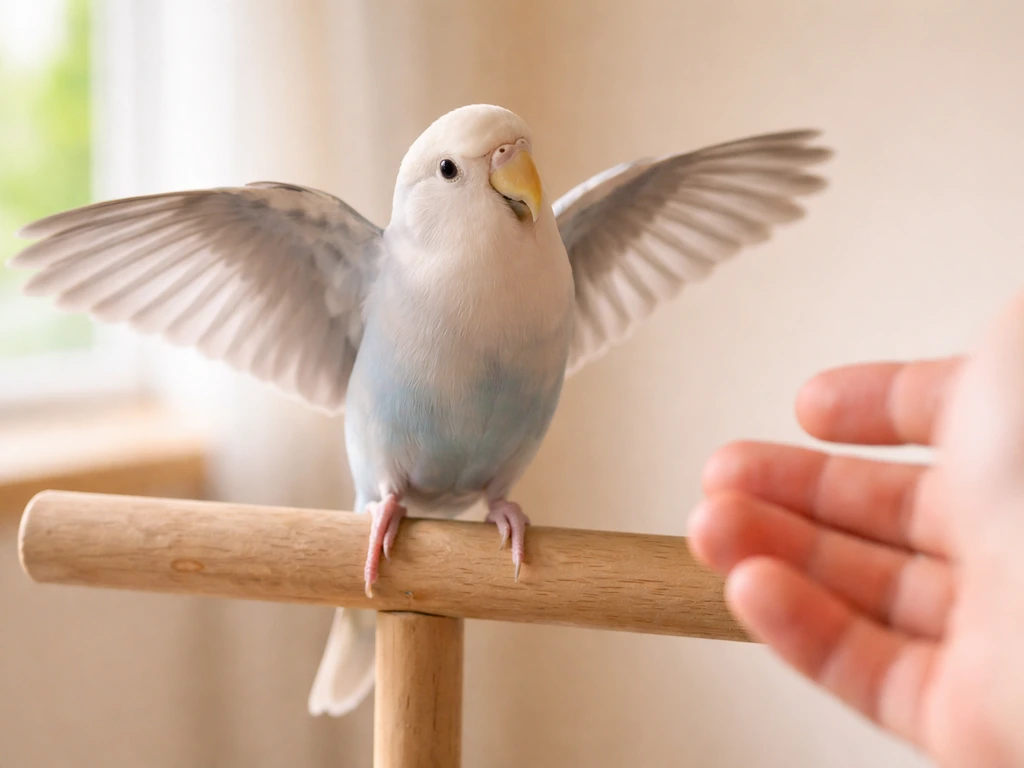
One of the more striking encounters is a bird that lands directly on you or settles so close it seems intentional. What it means when a bird lights on you is one of those experiences people remember for years, and it sits right at the intersection of behavioral explanation (habituated birds, hand-feeding culture) and spiritual resonance (being singled out, a message landing literally). Also worth noting: a bird that looks puffed up and fluffed out while sitting unusually low or still may be unwell, not just cold or resting.
Symbolic and spiritual meanings: omens, messages, and signs
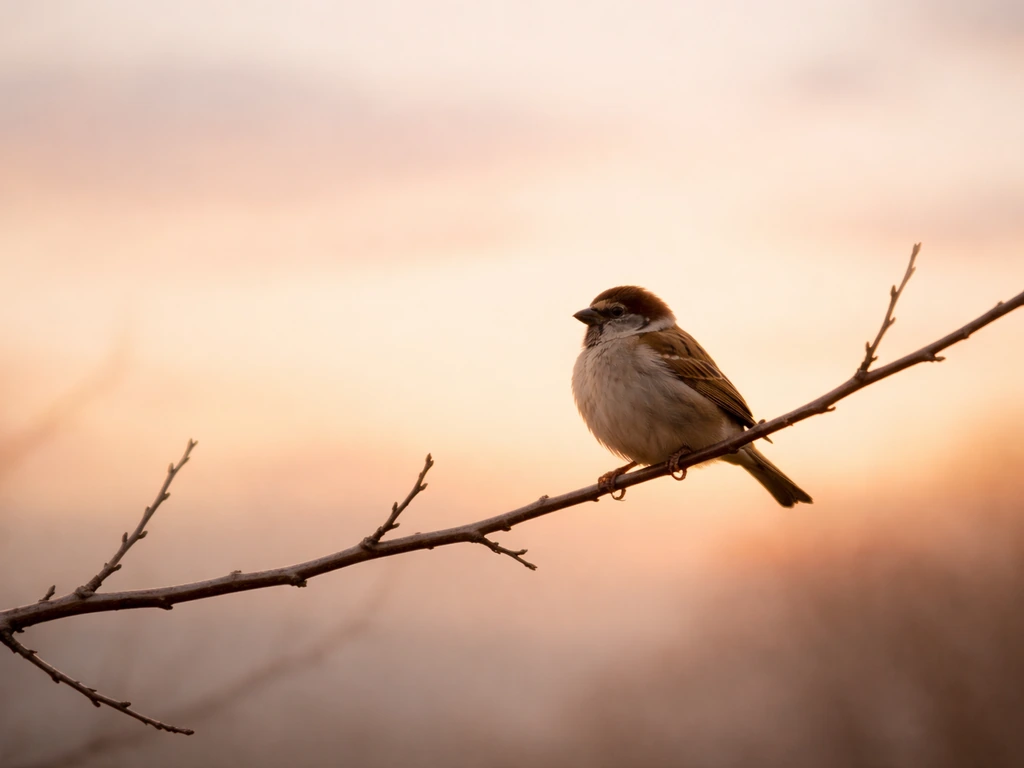
Across nearly every culture and era, birds have served as messengers between the earthly and the divine. That's not a coincidence rooted in superstition alone. Birds move between sky and earth, they appear and vanish, they sing at thresholds (dawn, dusk, storms), and their flight patterns were used by ancient Greeks, Romans, Celts, and Indigenous peoples to read fortune and fate. If you felt like a bird encounter meant something, you're tapping into a very old human instinct.
In many spiritual and metaphysical traditions, the type of bird matters as much as the behavior. A crow or raven appearing repeatedly is often interpreted as a message to pay attention, an invitation to examine what you're ignoring, or in some traditions, a warning. A cardinal is widely understood in American folk spirituality as the presence of a loved one who has passed. A hummingbird hovering near you is frequently read as a sign of joy, lightness, or the need to slow down and receive the sweetness of the moment. Owls, especially encountered in daylight, are almost universally treated as omens that demand attention, though whether they signal death, wisdom, or transition depends heavily on the tradition you're drawing from.
In Celtic tradition, birds like the wren (considered the king of birds) and the crane carried powerful symbolic weight, and their behavior at specific times was believed to communicate messages from the Otherworld. In many Indigenous North American traditions, the eagle represents a direct connection to the Creator and carries prayers upward. In Eastern traditions, the crane symbolizes longevity and good fortune, while a magpie is considered auspicious, particularly when seen in pairs. Feathers left behind by a bird carry symbolic weight too: finding a bird feather is often interpreted as a sign that you are being guided, protected, or noticed by something beyond the ordinary.
The practical question to ask yourself: Does this encounter feel meaningful to you? If a bird appeared during a significant moment, after a loss, at a crossroads in your life, or repeatedly over several days, your instinct to look for meaning is valid and worth following. What might you take from it? What were you thinking about when the bird appeared?
Biblical and folklore perspectives
The Bible is rich with bird symbolism, and these associations run through a lot of Western folk belief whether people realize it or not. One of the most direct passages is Matthew 10:29-31, where Jesus tells listeners that not even a sparrow falls to the ground without God's awareness, and uses this to reassure them: "So don't be afraid." The sparrow, the smallest and most overlooked bird, becomes a symbol of divine attention to even the least significant lives.
Ravens carry a different weight in Scripture. In 1 Kings 17:6, ravens are described bringing Elijah bread and meat each morning and evening in the wilderness, making them instruments of miraculous provision. This is why, in both biblical interpretation and broader Western folklore, a raven's appearance is not simply a dark omen but sometimes a sign of unexpected sustenance arriving in a difficult time. Doves are consistently associated with peace and the Holy Spirit, particularly in New Testament baptism imagery. Vultures appear in more sobering passages like Matthew 24:28, where their gathering marks the site of something fallen and serves as a symbol of inevitable judgment or decay.
In European folk tradition, specific behaviors carried specific warnings or blessings. A bird tapping on a window was widely interpreted as a death omen or a soul trying to communicate. A bird that flew into a house and couldn't find its way out was considered a very bad sign in British and Irish households. Conversely, a swallow nesting on your home was a blessing, believed to protect the house from lightning and illness. Magpies in English folklore generated the counting rhyme (one for sorrow, two for joy) that most people still know. These traditions aren't presented here as literal truth, but they're the lens through which many people, consciously or not, still experience bird encounters.
Dream encounters vs. real-life ones: they're not the same thing

If a bird appeared in a dream and that's what brought you here, the interpretive framework shifts. Dream symbolism has its own long history, and across many traditions, from ancient Mesopotamian dream texts to Indigenous vision practices, prophetic or meaningful significance has been attributed to what appears in sleep. Britannica notes that prophetic meaning attributed to dream imagery interacts with cultural practice rather than following any single universal framework. In other words, what a bird means in your dream is shaped partly by the tradition you're reading through, partly by your personal associations, and partly by the emotional tone of the dream itself.
A few broad patterns that appear across many traditions: a bird flying freely and upward in a dream tends to be read as liberation, hope, or an ascending message. A bird trapped or injured in a dream often reflects something the dreamer feels restricted or hurt in waking life. A bird that speaks or delivers an object in a dream is almost universally treated as a message dream, one that invites you to take note of what was communicated. A dead bird in a dream is rarely literal, it's more commonly interpreted as the end of a phase, the release of something, or a necessary closing.
The key difference from a real-life encounter: a dream bird doesn't need a physical explanation. You're working entirely in the symbolic register. Ask what the bird looked like, how you felt during the dream, and whether any waking-life circumstance mirrors the dream's emotional theme. That's usually where the useful meaning lives.
When it's more than symbolism: safety, health, and getting help
Sometimes a bird encounter requires practical action, not just reflection. Here's how to handle the most common situations responsibly.
If the bird just hit your window
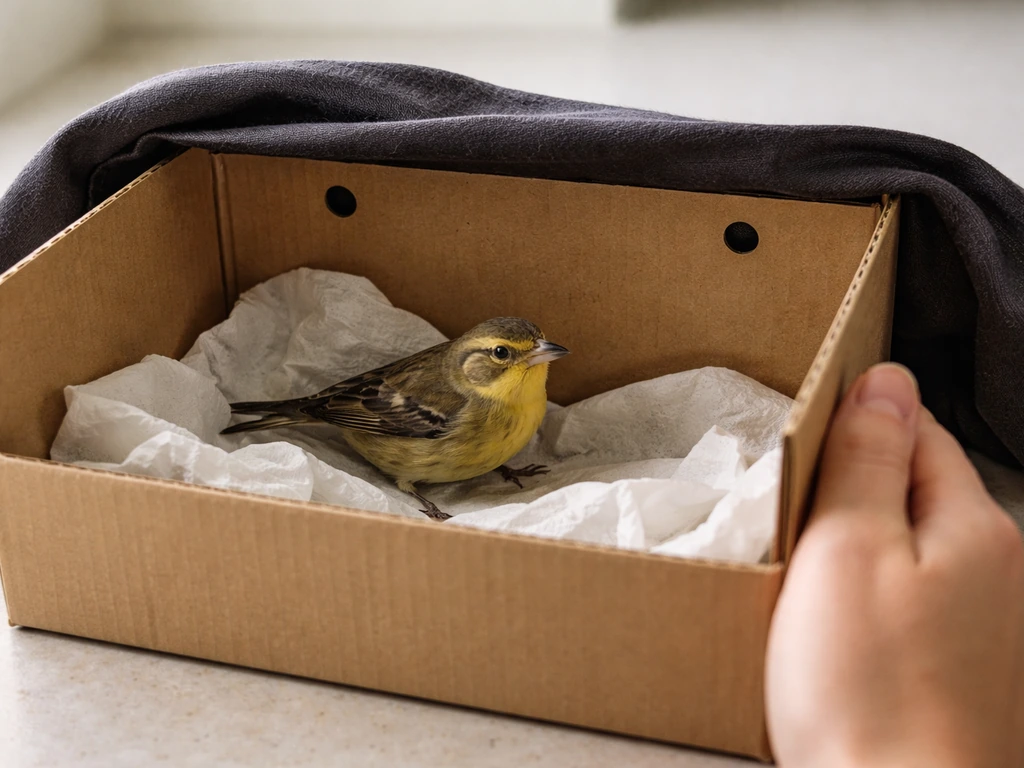
Don't assume it's dead. A stunned bird often needs time to recover. Gently place it in a well-ventilated cardboard box and keep it in a quiet, dark, warm location for about an hour. For example, All About Birds recommends placing a dazed window-collision bird in a dark, quiet, well-ventilated container and giving it time to recover. If the bird shows no obvious injuries (no bleeding, no broken wing held at an odd angle), open the box every 15 minutes to give it a chance to fly away on its own. Keep cats, dogs, and children away from the area. Do not offer food or water unless directed by a wildlife professional. To prevent future collisions, closing blinds during peak daylight hours or turning off interior lights at night both significantly reduce strike risk.
If the bird appears injured or unwell
A wild bird that lets you approach it without flying away is almost always in distress. Fluffed feathers, a hunched or drooping posture, labored breathing, and unresponsiveness are all illness red flags recognized by avian health professionals. The right move is to contain the bird gently (using gloves if possible) in a ventilated box and contact a licensed wildlife rehabilitator in your area. If you suspect a wild bird is injured or unwell, Mass Audubon advises minimizing handling and not giving food or water, and instead contacting a licensed wildlife rehabilitator contact a licensed wildlife rehabilitator. Do not attempt to give it food, water, or any medication. The National Wildlife Rehabilitators Association emphasizes that handling wild animals does carry bite and scratch risk, and anyone with significant exposure should follow up with appropriate medical guidance.
The health risks of bird droppings

Bird droppings are not just a nuisance. The CDC identifies the most common route of human infection from birds as breathing in dust from dried droppings or respiratory secretions, which can carry psittacosis (a bacterial infection) or histoplasmosis (a fungal lung disease). Symptoms of psittacosis in humans typically begin between 3 days and several weeks after exposure. Do not sweep or vacuum dried droppings without protection. The recommended approach is to wear a NIOSH-approved respirator with HEPA filtration, non-latex gloves, and eye protection; wet the area before cleaning to reduce dust; and wash your hands thoroughly afterward. If you have a large accumulation (a roosting site, attic contamination, or a heavily used ledge), treat cleanup as a genuine health task, not just housekeeping.
A quick-reference guide to the most common encounters
| Encounter | Most Likely Physical Cause | Common Symbolic Reading | Action Needed? |
|---|---|---|---|
| Bird hits window, sits stunned | Window reflection looks like open sky | A message that needs time to land; pause and reflect | Yes: box the bird, monitor for 1 hour |
| Bird keeps visiting your yard | Feeders, water, insects, nearby nest | Repeated messages, protection, or a persistent sign | No, unless bird appears injured |
| Bird enters your home | Open door, window, broken screen | Change coming; a soul or message crossing a threshold | Yes: guide it out calmly, check entry points |
| Bird lands on you | Habituation to humans, bold species behavior | Direct spiritual contact, being chosen or singled out | No, enjoy the moment |
| Bird found on ground, won't fly | Injury, illness, window strike, exhaustion | A call to pay attention; something needs your care | Yes: contact a wildlife rehabilitator |
| Bird droppings on you or property | Biology, roosting behavior | Luck in many folk traditions (especially in the West) | Clean carefully using PPE if large accumulation |
| Bird appears in a dream | Subconscious processing, symbolic language | Depends on behavior: freedom, message, transition, loss | Reflection, journaling, no physical action needed |
Bird encounters tend to stay with us precisely because they occupy that strange space between the completely ordinary and the quietly extraordinary. A sparrow on a fence is just a sparrow. But if it appeared the morning after a hard decision, or looked directly at you at exactly the right moment, the meaning you give it is yours to hold. The most useful thing you can do is notice what happened, check for any practical needs (yours or the bird's), and then sit with the question: what does this bring up for me?
FAQ
How can I tell the difference between a random bird sighting and something “meant something”?
If the bird flew away normally, perched briefly, or showed typical foraging or courtship behavior, it usually points to ordinary wildlife activity rather than a message you must act on. A stronger “meaning” signal is pattern plus context, such as the same species returning over multiple days or appearing during a clearly emotional event.
Can I interpret a bird encounter symbolically even if I don’t know the bird’s species?
Yes, but focus on the immediate details first. Start with species, posture, and behavior (ruffling, open beak, tail bobbing), then connect it to the emotion of the moment (fear, relief, longing, grief). If you jump straight to a spiritual conclusion without observing what the bird actually did, it’s easy to misread the encounter.
What does it mean if a bird keeps hitting or tapping my windows?
A single “bad luck” interpretation is usually less helpful than checking whether the bird was distressed. If a bird repeatedly taps windows, crashes, or stays on the ground, prioritize collision or illness explanations. Symbolic meaning can come later, once the practical risk is addressed (like turning off lights at night or placing reflective decals on windows).
What if a bird is inside my house, what should I do and what does it mean?
Yes, but be careful with what you assume. If the bird was in your room for hours, crashed, or showed signs of distress, the most likely meaning is an accidental entry and confusion rather than a deliberate sign. Take action by closing exterior doors, turning off interior lights, and gently guiding the bird toward a window with a light source outside.
Why do birds seem to appear at the exact time I’m thinking about something?
Birds can appear “on cue” because of predictable routines, like feeding times at nearby feeders, migration stopovers, or nesting activity near your home. If you notice repeated timing, check whether you have something attracting them (open trash, pet food outdoors, birdbath, reflective surfaces) before concluding it’s purely symbolic.
How do I avoid forcing meaning when a bird keeps showing up repeatedly?
If you keep seeing the same species, track 3 things for a week: where it appears (window, balcony, yard), what it does (hovering, calling, landing low), and how often. Then compare your interpretation to what the bird was actually doing. That reduces “confirmation bias,” the tendency to only remember the encounters that fit your belief.
Does a bird looking puffed up always mean it is sick?
Not always. Even if it “looks calm,” puffed, rounded, or unusually low birds can be cold-stressed or ill. If the bird is sitting without normal responsiveness, breathing visibly, or staying fluffed for a long period, treat it as a potential health issue and contact a licensed wildlife rehabilitator rather than trying to interpret it as a sign.
What does it mean when a bird is loud or keeps calling near me?
If a bird is vocalizing and actively moving, it’s often communicating with its mate, claiming territory, or responding to nearby threats. Symbolically, sound often gets read as “attention” because humans notice it more, but you can still anchor meaning in behavior by asking whether it sounded like repeated calls, sudden alarm, or steady song.
Is it meaningful when I find a bird feather, and should I worry about the bird’s health?
If you found a feather, symbolism aside, check for safety and practicality. A feather is usually shed naturally, but if you also see blood, a dead bird, or repeated crashes, treat that as a different situation. For symbolic interpretation, note the feather type and location (near your door, in a bedroom, on a pathway), which often shapes personal meaning.
If I dream about a bird, how do I interpret it without it becoming too vague?
A dream bird can mean different things depending on your emotional tone. If you felt fear during the dream, focus on restriction or threat themes. If you felt calm or awe, the “message” reading often maps to relief, hope, or transition. Also compare the dream bird’s behavior to your waking associations (free flight versus trapped flight).
How do I decide whether to help a bird immediately or leave it alone?
If the bird is unresponsive, appears cold and fluffed, or has trouble keeping its balance, it likely needs professional help. If it is responsive and simply resting, it may recover on its own. A useful rule is to assess for injuries, then decide: if you see blood, a limp wing, or ongoing distress, contact a wildlife rehabilitator.
What does it mean if a bird lands on me, is it always symbolic?
Yes. If the bird is near you but not approaching, your “meaning” may be more about what you notice rather than what you must do. If it lands on you or circles closely, that can happen when birds are habituated to humans or investigating warmth, scent, or movement. Still, if it appears repeatedly or lingers, consider both explanations and how they fit your circumstances.
Next Article
Why Is My Bird Flapping Its Wings at Me? Causes and What to Do
Understand why your bird flaps wings at you and what to do, from hormones and stress to attention and warnings.