When a bird preens you, it is treating you the way it would treat its closest companion. In bird behavior, preening is feather care, and when a bird extends that grooming to you, it is signaling trust, social connection, and genuine comfort in your presence. Depending on context, it can also carry deeper symbolic weight: across many spiritual traditions, being chosen by a bird for this kind of intimate contact is read as a message of protection, divine closeness, or a nudge to pay attention to something in your life. The short version is this: a bird preening you is almost always a good sign, but the full meaning depends on the bird, the setting, and how you feel in that moment.
What Does It Mean When a Bird Preens You? Practical and Spiritual

Maya Hartwell
29 Apr 2026
What preening actually is in birds
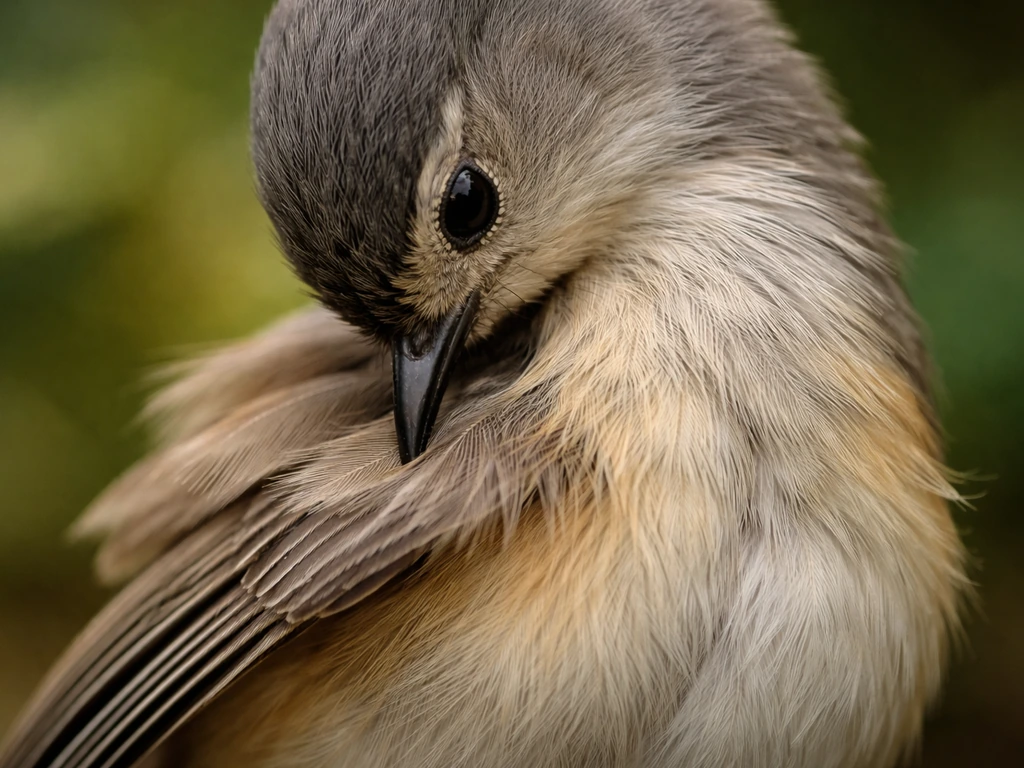
Preening is a bird's primary method of feather maintenance. Using its bill, a bird works through individual feathers, realigning the tiny filaments that interlock to keep each feather in its proper shape. It also blank" rel="noopener noreferrer">distributes preen oil from the uropygial gland near the tail, which keeps feathers waterproof and supple. Birds preen multiple times a day, often after bathing, after a rain, or when they settle in for rest. It is one of the most essential things a bird does for its own survival.
Beyond solo feather care, many species practice allopreening, which is mutual preening between two birds. The British Trust for Ornithology notes that allopreening is especially common in breeding pairs and is widely understood to strengthen the pair bond. It is not just hygiene. It is a social act, a physical expression of closeness and belonging. When a bird extends that same behavior toward you, it is drawing on the same instinct that holds bird relationships together.
Why a bird might preen you specifically
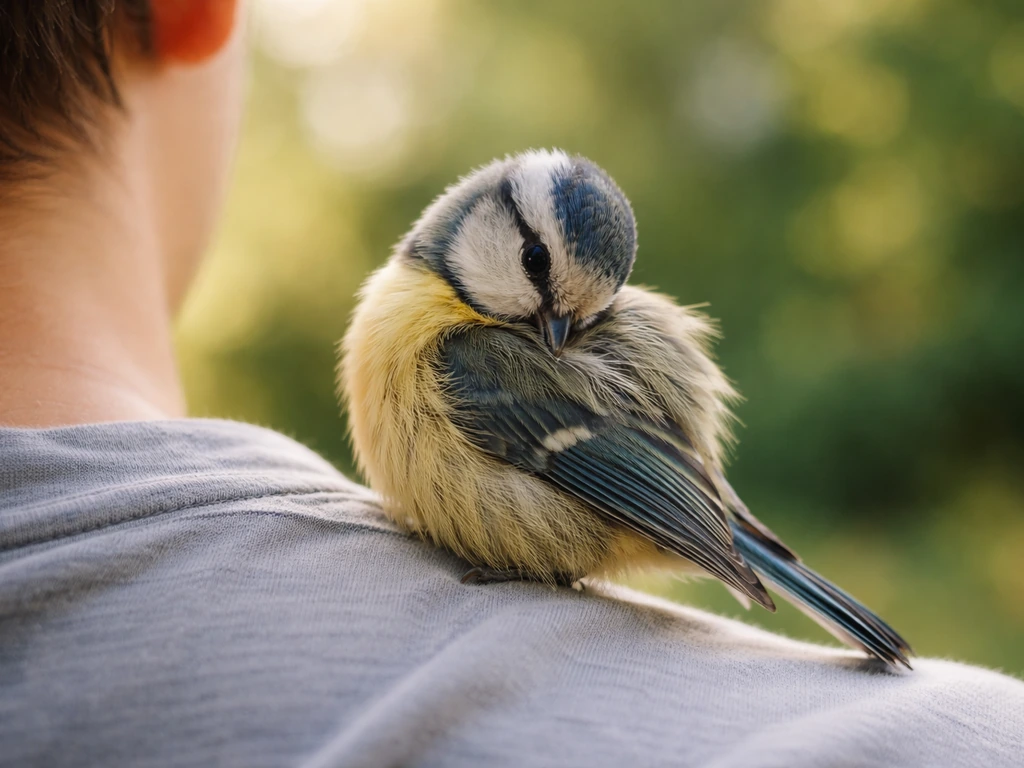
There are several practical reasons a bird might start working on your hair, skin, or clothing with its bill, and none of them are random. Birds are deliberate creatures, and this behavior almost always means something specific about how the bird perceives you.
- Trust and bonding: In pet birds especially, preening a human is a direct extension of allopreening. The bird has categorized you as part of its flock and is behaving accordingly. This is one of the clearest signs of genuine affection a bird can show.
- Curiosity about texture: Hair, beards, eyebrows, fuzzy sweaters, and earrings can all trigger a bird's bill-manipulation instinct. Some preening is simply investigative, the bird is exploring something that resembles feathers or nest material.
- Seeking comfort or warmth: Birds that are cold, anxious, or feeling vulnerable sometimes press close and begin preening a trusted person as a self-soothing behavior. They are grounding themselves through contact.
- Social reciprocity: If you have been gentle with a bird, handled it calmly, or simply spent time near it, preening you can be its way of returning the favor. It mirrors the social grooming that cements relationships in bird communities.
- Nesting or mating context: During breeding season, some birds become more tactile with companions, including human caretakers they are bonded with. The Association of Avian Veterinarians notes that preening human hair is a recognized behavior, particularly in pet birds. It is worth knowing, though, that Merck's Veterinary Manual flags that stroking birds on the back can mimic mating behavior and raise hormone levels, which can sometimes lead to stress-related issues like feather plucking. Preening your hair is different from you stroking the bird, but the mating-behavior context is worth being aware of during hormonal seasons.
- Territorial or protective instinct: Less commonly, a bird in nesting mode may preen or groom a person it has decided to claim as part of its territory, essentially incorporating you into its perceived family unit.
When preening means trust, bonding, or something more
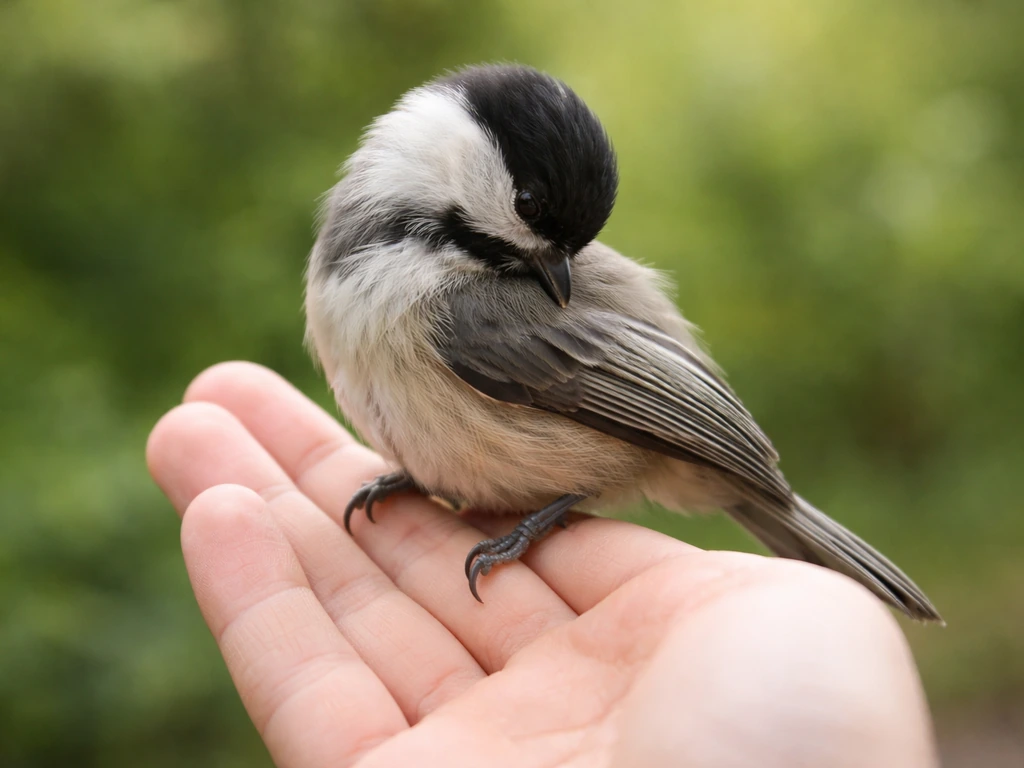
The most common and most meaningful interpretation of a bird preening you is simple: you have earned its trust. Trust is not given cheaply by birds. They are prey animals at heart, wired to stay alert to threat, and choosing to lower their guard enough to perform an intimate grooming act on you represents a significant shift in how the bird sees you. For pet bird owners, this moment is often a milestone, the point where the relationship tips from tolerance into genuine attachment.
Bonding through preening works in both directions, too. When a bird preens you, it tends to deepen your own connection to that animal. There is something about being chosen for care that changes the relationship. If the bird returns to preen you repeatedly, that pattern is meaningful: it has incorporated you into its social world as a trusted companion, possibly even a mate-equivalent in its perception.
In a mating context, especially during spring and early summer breeding seasons, a bird that preens you with particular intensity, makes soft vocalizations, and seeks prolonged physical contact may be experiencing hormonal shifts that are directing the behavior. In the Merck Veterinary Manual’s guidance on pet bird reproductive and hormonal behavior, managing reproductive drive and related behaviors may require interventions to address the bird’s hormonal shifts may be experiencing hormonal shifts that are directing the behavior. This is not something to encourage or reinforce in pet birds, because it can lead to frustration and stress for the animal. But understanding it helps you interpret what you are seeing accurately rather than simply reading it as pure affection.
Spiritual and symbolic meanings across belief systems
Across a wide range of spiritual traditions, birds are understood as messengers, as intermediaries between the everyday world and something larger. When a bird moves into close, intentional contact with a human, that intimacy tends to carry symbolic weight. A bird preening you is not just grooming. In many traditions, it is interpreted as a gesture of selection: the bird, as messenger or spirit guide, is choosing you, grooming you for awareness, cleansing your energy, or signaling that you are ready for something new.
Biblical and Christian perspectives
In biblical tradition, birds frequently appear as symbols of divine care and provision. The image of a mother bird sheltering her young under her wings appears throughout the Psalms and the Gospels. A bird tending to you, grooming you with its bill, can be read through this lens as a symbol of being held, cared for, and watched over. Some Christian readers interpret such an encounter as a quiet reminder that they are not alone, that a caring presence is attending to them even in ordinary moments.
Celtic and indigenous interpretations

Celtic traditions held birds as soul-messengers and guides between worlds, and bird contact was rarely considered accidental. Being singled out by a bird for any kind of physical interaction was often seen as a sign that the spirit world was trying to get your attention. In various Indigenous North American traditions, birds are understood as relatives and teachers rather than separate beings, and a bird choosing to groom you might be interpreted as an ancestor or guide acknowledging your presence, affirming your path, or calling you to look more carefully at your current journey.
Eastern and metaphysical views
In several Eastern traditions, birds embody spiritual purity and the soul's upward movement. A bird making deliberate contact with a person, especially on the head or crown area, is sometimes interpreted as an activation of higher awareness or a sign of spiritual attunement. In metaphysical frameworks, birds are often described as carrying high-vibrational energy, and being preened, particularly on the head or around the face, is sometimes understood as an energetic clearing: the bird is, symbolically, helping you shed what no longer serves you, much as it sheds and realigns its own feathers.
General symbolic themes
Across these varied traditions, a few symbolic themes recur consistently. Being preened by a bird tends to be associated with renewal, with being chosen or recognized, with care arriving from an unexpected source, and with the idea that you are being prepared for something. It is also often linked to the concept of reciprocity: the bird offering you the same thing it offers its most trusted companions. Whether you read that literally or spiritually, the underlying message is one of genuine connection.
What folklore and culture say about birds touching humans
Across many world cultures, any close physical contact between a bird and a human has been treated as a noteworthy event. In European folklore, a bird landing on or near your head was considered an omen, sometimes of good fortune, sometimes of significant change ahead. The specific species mattered enormously. A robin making contact was traditionally linked to the spirit of someone who had passed, offering comfort to the living. A crow or raven making deliberate contact was more often read as a message requiring interpretation rather than simple good news.
In Japanese folklore, birds have long served as go-betweens for the human and spiritual worlds, and an unusual bird encounter, especially one involving physical contact, was considered an event worth reflecting on. In many African and Afro-Caribbean traditions, birds carry the messages of ancestors, and a bird that comes close enough to touch or groom you is understood to be delivering something specific, a reassurance, a warning, or a call to action depending on timing and context.
What folklore consistently reinforces is the idea that bird-human contact is not random. Most traditions encourage the person experiencing it to pause, notice the details, and sit with the question of what the encounter might mean for them personally. That is actually not so different from what behavioral science tells us: the bird made a deliberate choice. The encounter deserves your attention.
What to do right now: safety, respect, and how to interpret the moment
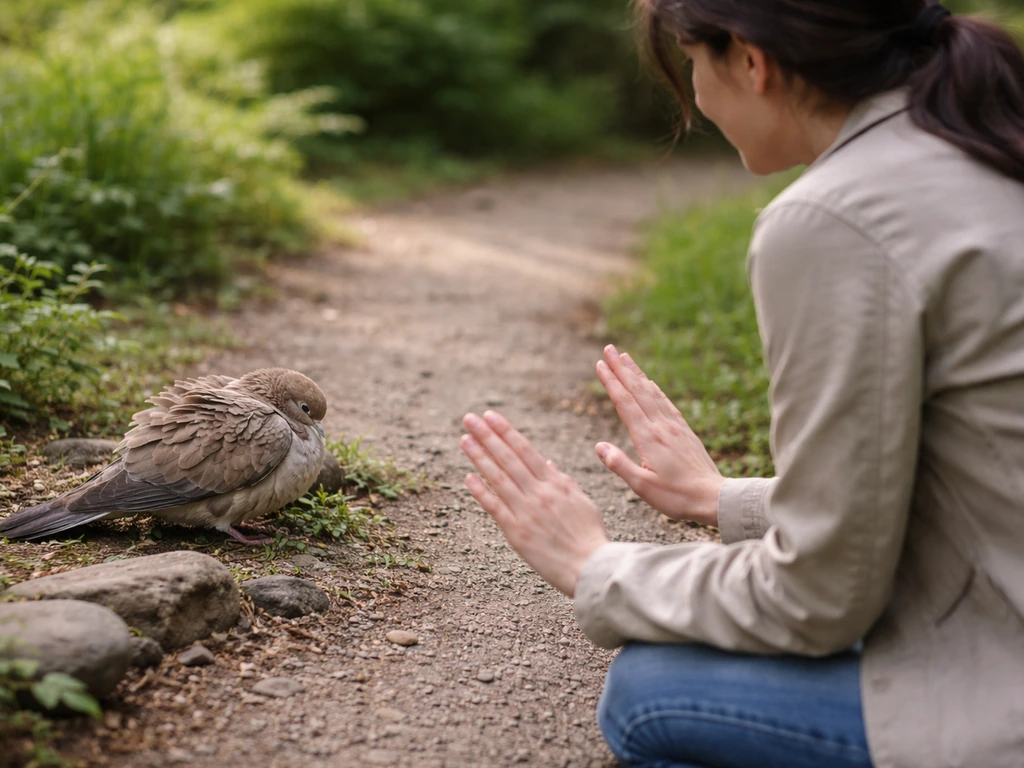
If a wild bird just preened you, the most important practical step is to resist the urge to handle it or encourage prolonged contact. A wild bird that is comfortable enough to preen a person is unusual, and while it is a remarkable experience, it can sometimes indicate the bird is ill, injured, or imprinted in a way that may not serve it well in the wild. Enjoy the moment, let it happen naturally, but do not try to capture or contain the bird, and wash your hands afterward as a basic hygiene precaution. This also applies when the bird urinates on you, which can be a normal byproduct of contact and stress or territory behavior.
For pet bird owners, being preened is a wonderful sign but comes with a small caveat: avoid reinforcing behavior that might be hormonal by limiting back-stroking and keeping interactions varied and enriched. Let the bird initiate preening on its own terms rather than positioning yourself to encourage it, and watch for signs that the behavior is becoming obsessive or stress-linked.
To interpret the meaning of your encounter thoughtfully, whether you are approaching it from a behavioral, spiritual, or folkloric angle, it helps to ask yourself a series of grounding questions.
- What species was the bird? Different birds carry different symbolic associations across traditions, and knowing the species gives you a richer frame for interpretation.
- Where did it happen? An encounter in your own garden carries different weight than one in the middle of a forest, a busy street, or a place with personal meaning to you.
- What was the bird's body language? Relaxed, soft, slow preening is bonding behavior. Tense, rapid, or agitated movements suggest a different kind of stress.
- Did the bird return? A one-time event is notable. A bird that comes back and preens you repeatedly is establishing a relationship, not just having a curious moment.
- How did you feel during and after? Your emotional response is data. Encounters that leave you feeling calm and seen tend to carry different meanings than ones that leave you unsettled.
- What is happening in your life right now? Spiritual traditions often ask you to overlay the encounter on your current circumstances. Is there something you are being asked to shed, renew, or pay closer attention to?
Similar bird encounters, like a bird touching you, biting you, or sleeping on you, all carry their own behavioral and symbolic layers, and how you interpret preening specifically can deepen when you understand how it differs from those other forms of contact. If you are wondering what it means when your bird sleeps on you, it usually points to safety, comfort, and relaxed bonding with you.
If you are wondering what it means when a bird bites you, context like the bird's body language and whether it seems defensive can help you interpret the moment safely biting you. If you are asking about a bird peeing on you, the meaning is usually more about biology and circumstance than symbolism what does it mean when a bird pees on you.
Preening is, by any measure, one of the most intimate things a bird can do with you. It is worth sitting with.
Whatever lens resonates with you, behavioral science or spiritual symbolism or both, the through-line is the same: a bird preening you is a moment of genuine connection. If you are wondering what it means when a bird blinks at you, the same idea applies: pay attention to whether the bird feels relaxed and choosing to engage rather than react a bird preening you is a moment of genuine connection. It chose you. That is not nothing. What you do with that is yours to decide.
FAQ
How can I tell if a bird is preening me because it trusts me, or because something is wrong with the bird?
If the bird is acting uncoordinated, keeps losing balance, has fluffed or badly misaligned feathers, droops its head, or seems unusually fixated on one area of you or itself, treat it as a possible welfare issue. In that case, avoid handling or encouraging contact, keep distance, and consider contacting a local wildlife rehabilitator.
Is it safe to let a pet bird preen my hair or face?
Usually it is safe when the bird is relaxed and initiating contact, but watch for sensitive areas. Keep your face close only briefly, avoid letting the bill near eyes, and stop if the bird starts stepping urgently, vocalizing in distress, or showing tense body language (raised shoulders, stiff posture, tail flicking).
What should I do right after a wild bird preens me?
Let the bird disengage naturally, then wash your hands thoroughly and change clothes if the bird made heavy contact with hair or skin. Also avoid bringing your hands to your face until after washing, since bird saliva and preen oil can carry microbes.
Does a bird preening you mean it thinks you are a mate-equivalent?
It can be part of bonding, but mate-equivalent behavior is more likely when you see a cluster of signs: repeated insistence on contact, nest-like behaviors, soft cooing or courtship displays, and strong persistence after you try to move away. If those signs appear, treat it as a hormonal risk for pet birds rather than a green light to encourage more interaction.
What if the bird preens only one specific spot on me (like my head or shoulder)?
Targeting can reflect what the bird can reach comfortably and what it finds visually or chemically interesting. If it consistently chooses a location, consider whether that spot has scent from lotion, hair product, sweat, or food residues, and whether the bird seems calm there. Changing products or reducing direct contact can reveal whether it is attraction or true grooming behavior.
Can preening be a sign of aggression or dominance instead of affection?
Rarely, but it can happen in some contexts. If preening is paired with blocking your movement, repeated pinning (standing over you), sudden lunges after a brief grooming session, or a rapid shift from calm to reactive body language, assume the bird is not offering comfort and back away calmly.
Should I move my body to help the bird preen better?
Avoid positioning yourself to “invite” longer sessions, especially with pet birds. Instead, stay still, allow the bird to come and go on its own terms, and gently redirect your hands or head if the bird escalates in intensity or becomes possessive.
How often is “normal” for a pet bird to preen you?
Normal varies by species and individual temperament, but you want it to stay occasional and voluntary. If sessions become frequent, prolonged, or the bird becomes distressed when you stop, that suggests the behavior is being reinforced too much or is turning hormonal, and you should shift to varied enrichment and reduce back-stroking or close grooming access.
Do different bird species change the meaning of preening?
Yes, partly due to typical social behavior and typical human contact tolerance. A species that naturally forms strong pair bonds may show allopreening-like social grooming when it trusts you, while more solitary species might preen you less often but still indicate strong comfort. Species also affects safety, since some birds have stronger bites or different roaming patterns.
How do I distinguish preening from pecking or biting when the bird starts with gentle contact?
Preening usually has sustained, methodical bill work on feathers or skin with a relaxed body, while pecking or biting tends to be quicker, with sharper head jabs, tense posture, and abrupt removal. If the behavior transitions from slow grooming to sharp jabs, interrupt calmly and give the bird space.