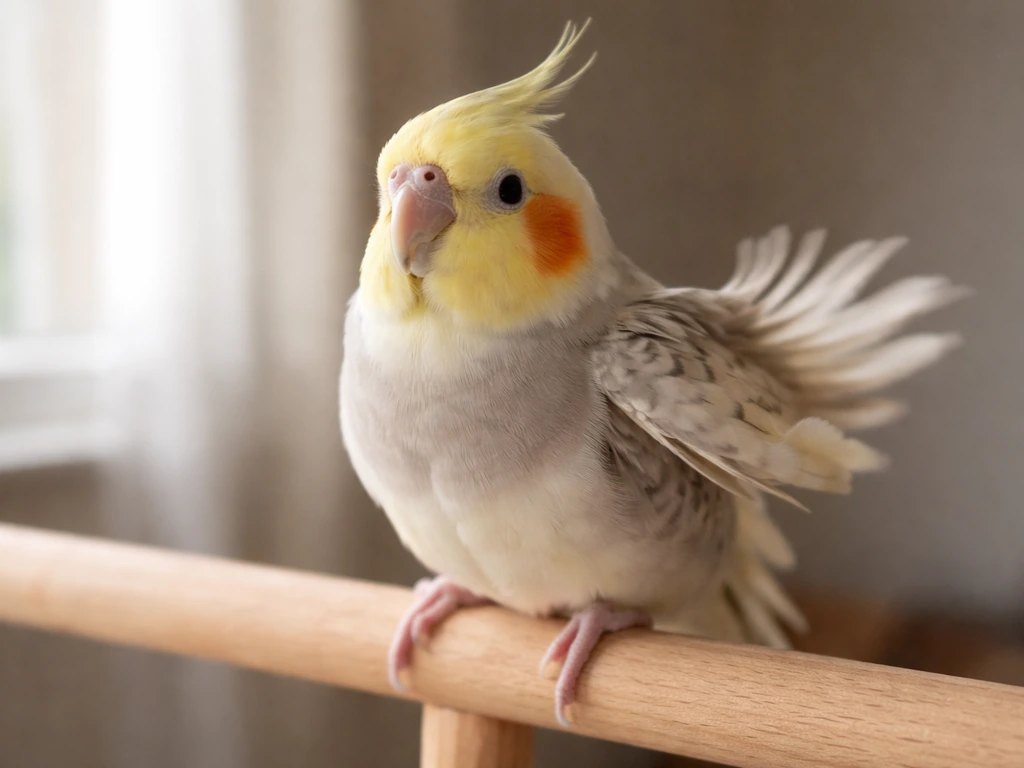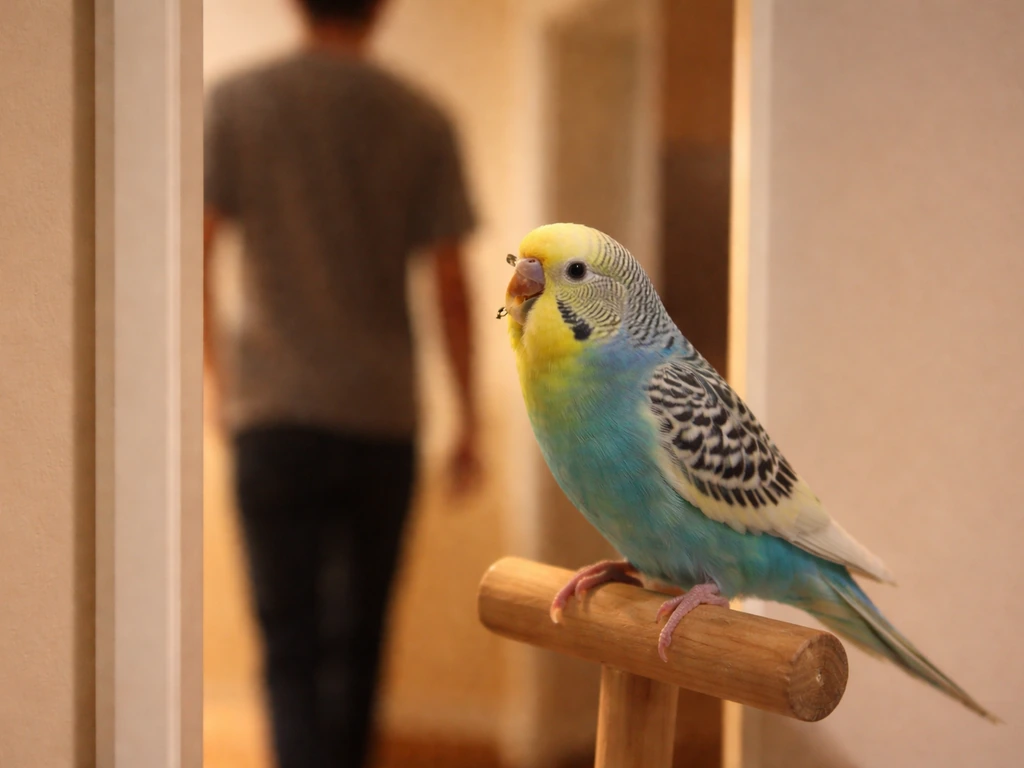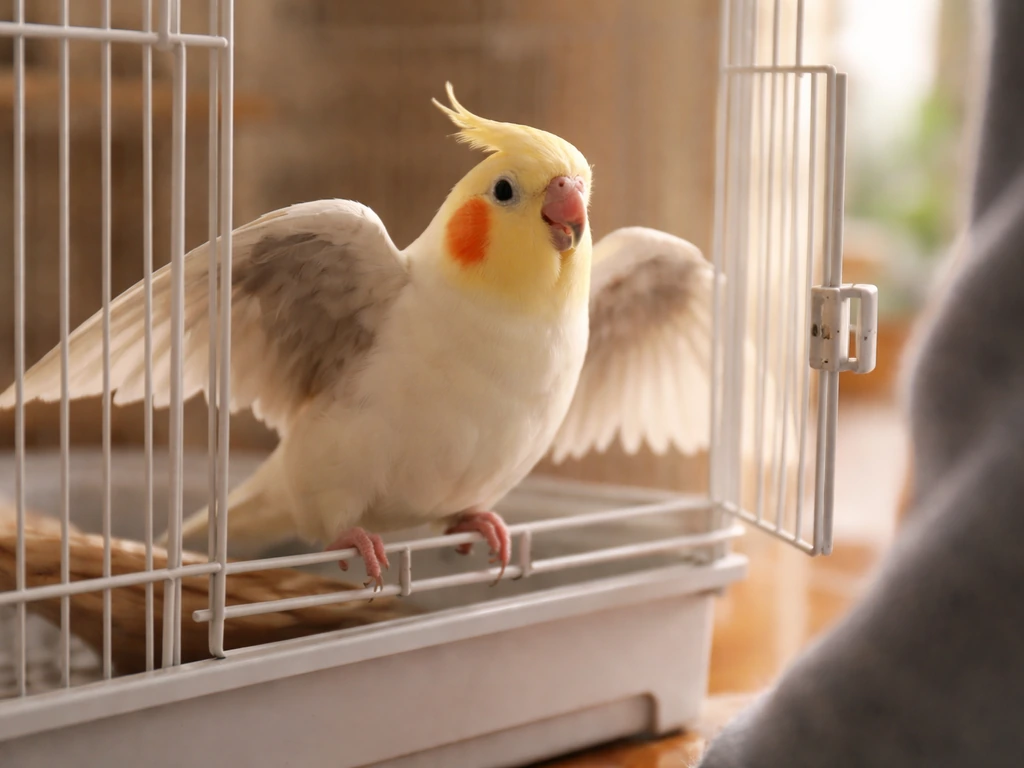
Your bird is flapping its wings at you, and the most likely reason depends heavily on context: it could be asking for attention, greeting you with excitement, displaying hormonal or territorial behavior, or signaling stress and fear. Most of the time, wing flapping directed at a person is communication, not aggression, but you do need to read the rest of the body to know which message is being sent. Once you understand what else your bird is doing (tail position, posture, eye expression, vocalizations), you can usually identify the cause within a few minutes of observation and respond appropriately.
Why Is My Bird Flapping Its Wings at Me? Causes and What to Do

Maya Hartwell
22 May 2026
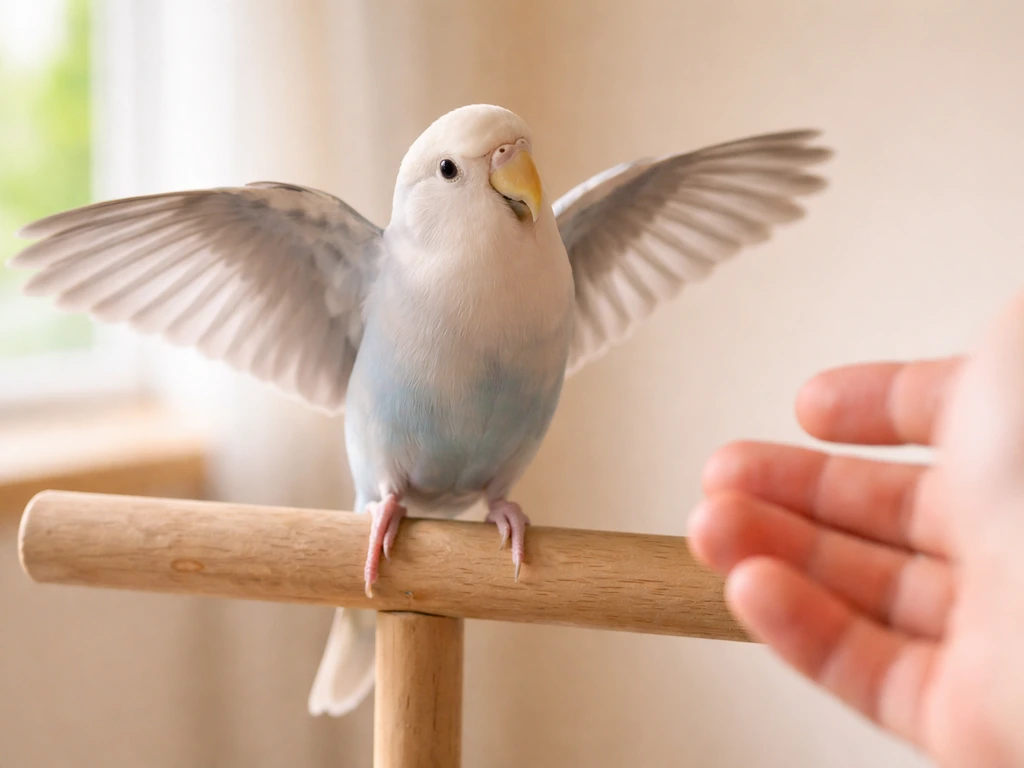
Common reasons a bird flaps its wings at you
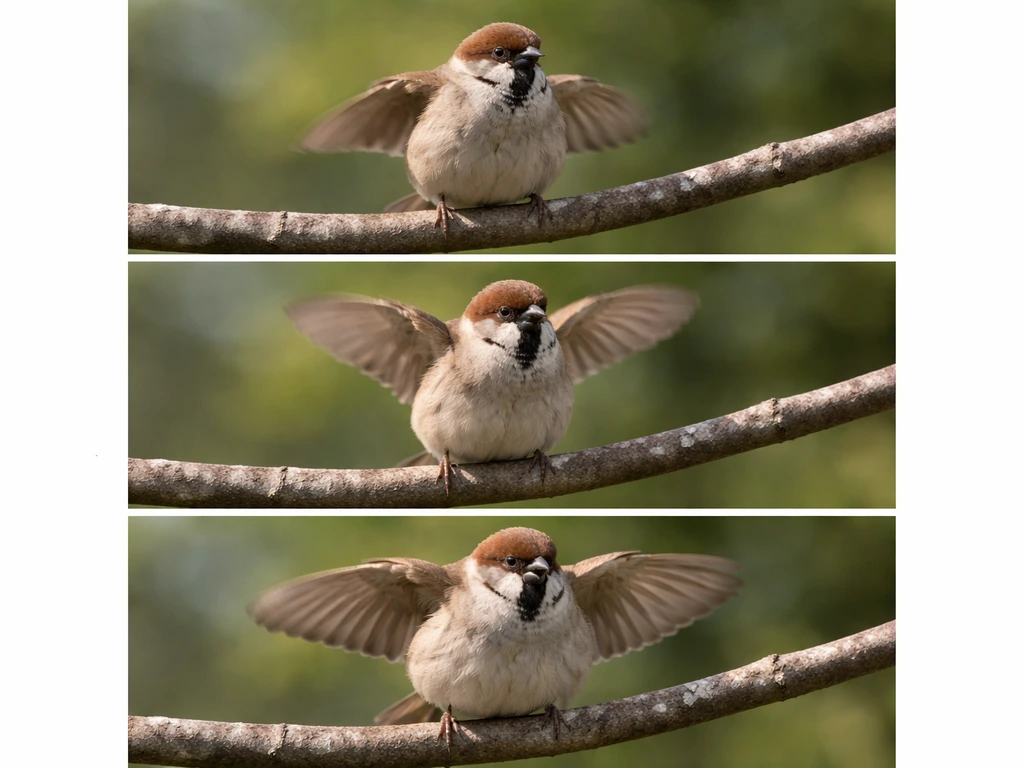
Wing flapping is one of the most versatile tools in a bird's communication kit. A single behavior can mean several different things depending on the species, the individual bird's personality, the time of day, and what else is happening in the room. Here are the most common reasons you'll see it:
- Attention-seeking: Your bird wants you to come over, pick it up, or interact. This is especially common in parakeets and other small parrots that have learned flapping gets a reaction from you.
- Greeting and excitement: Many birds flap when you walk into the room or return home, the same way a dog wags its tail. It's enthusiastic, often accompanied by chirping or whistling.
- Hormonal or mating display: During breeding season (or when triggered by long daylight hours, mirrors, or overly intimate petting), birds perform courtship displays that include wing spreading and flapping.
- Territorial behavior: If flapping happens near the cage door, a favorite perch, or food bowl, the bird may be warning you off its territory.
- Stress or fear: A bird that feels threatened will spread and flap wings as a defensive display, trying to look larger and intimidating before it escalates to biting.
- Overstimulation: Sometimes a bird that has been handled too long, or is in a noisy or chaotic environment, will flap as a way of saying 'I've had enough.'
- Begging for food or interaction: Young birds, or birds that were hand-fed, sometimes flap wings in a begging posture, especially around mealtimes.
- Response to your movement or voice: Sudden movements or an excited voice can trigger a reflexive wing flap, either out of startle or mirroring your energy.
- Environmental frustration: Birds kept in small cages with little enrichment may flap out of boredom, confinement stress, or poor air quality.
How to read accompanying body language and context
Wing flapping alone doesn't tell the full story. The real signal is in what else your bird's body is doing at the same time. Take 30 seconds to observe before you react, because how you respond either reinforces or de-escalates the behavior.
| Body Language Signal | What It Often Means |
|---|---|
| Wings fanned wide, feathers puffed, body leaning forward | Threat or intimidation display, proceed carefully |
| Wings flapping quickly, tail fanned out, head bobbing | Hormonal display or territorial aggression |
| Wings flapping, body crouching low, beak slightly open | Fear-based response, do not force interaction |
| Wings flapping, tail wagging side to side, relaxed posture | Excitement or happy greeting |
| Wings flapping with chirping or talking, leaning toward you | Attention-seeking or a request for interaction |
| Wings flapping, eyes pinning (pupils rapidly dilating/contracting) | High arousal, could be excitement or agitation, check other cues |
| Wings flapping, hissing or growling, charging toward you | Clear warning before biting, back off immediately |
| Wings flapping, puffed feathers, lethargic movement | Possible illness, monitor closely and consider vet contact |
Context matters just as much as posture. Ask yourself: Did the flapping start when you walked in (likely greeting)? When you reached toward the cage (possibly territorial)? After a long petting session (overstimulation)? During a particular time of year or after you changed the lighting schedule (hormonal)? Logging these details, even briefly in your phone's notes app, helps you spot patterns fast.
Stress, fear, and territorial behavior: what it usually looks like
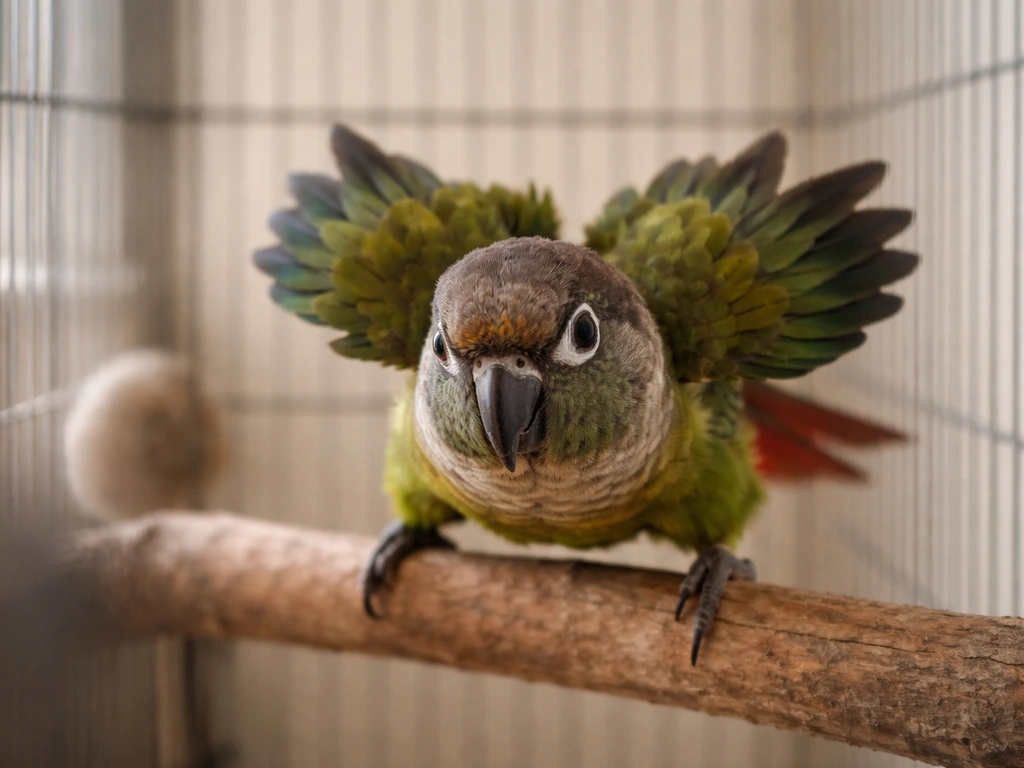
Stress and fear-based flapping tends to have a defensive quality. The bird isn't reaching toward you; it's trying to push you back or make itself look bigger and more dangerous. You'll often see the wings spread wide while the bird leans forward, feathers raised slightly to puff up the silhouette. Birdfact notes that this kind of wing display, paired with a fanned tail and head-bobbing, is used specifically to repel intruders and intimidate rivals. It's a warning, not a conversation.
PetMD frames biting and lunging as protective responses rather than random aggression, and they're almost always preceded by these softer warnings. Petco's bird body language guide flags crouching, hissing, spreading wings, and charging as signals that a bite is coming if you don't back off. If you see those signs together, the kindest thing you can do is give the bird space. Forcing interaction at this point doesn't build trust; it confirms that you are a threat.
Territorial flapping tends to happen in a specific location: at the cage door, near a favored perch, or around a food dish. The bird isn't afraid of you exactly; it's guarding something. Recognizing that territorial trigger lets you approach from a different angle, ask the bird to step up onto a neutral perch away from the guarded spot, and avoid reinforcing the territorial claim by repeatedly approaching the hot zone.
Excitement, greeting, mating displays, and attention-seeking
Happy or excited wing flapping tends to look lighter and less threatening. The feathers are usually smooth rather than puffed, the posture is upright rather than crouched or leaning aggressively forward, and the flapping is often paired with vocalizations like chirping, whistling, or even talking. If your bird chirps specifically when you leave the room, check whether it is using greeting or attention-seeking behavior like the wing flaps described above chirps when i leave the room.
Bird chirping can be a key clue to what your bird is trying to communicate, so match the sound with posture, tail position, and context. According to Petco's care guides, parakeets and other small parrots will flap wings to show happiness or to get your attention, and it reads exactly that way when you see it: bouncy, energetic, and oriented toward you rather than away.
Mating and hormonal flapping is a different story. This one can look like excitement but has an almost theatrical quality, with the bird puffing up, spreading wings wide, doing little dances, and sometimes making low cooing or regurgitating sounds. SpectrumCare notes that long daylight hours are a major trigger for hormonal behavior, and the behaviors can include repeated courtship displays and lunging near a favorite perch. Mirrors are a well-documented hormonal accelerant: some parrots interpret their reflection as a potential mate, which can send hormones into overdrive even when there's no seasonal trigger.
Attention-seeking is the easiest to spot: the bird looks at you first, then flaps. It has learned, correctly, that flapping gets a reaction. This is reinforced behavior, not aggression, but it's worth managing so it doesn't escalate into demanding or overstimulated behavior. The fix is simple: wait for a calm moment before you reward with interaction, so the bird learns that stillness, not flapping, gets your attention.
What wing flapping can mean spiritually and symbolically
If you arrived here not just as a bird keeper but as someone who senses there might be a deeper message in this behavior, that's a completely valid layer to explore alongside the practical one. Across cultures and traditions, birds in general are viewed as messengers and threshold beings, creatures that move between earth and sky. A bird directing its energy at you specifically, with wings open and spread, carries a particular visual charge that many traditions have read as meaningful.
In biblical and Christian symbolism, birds have long functioned as divine messengers, carriers of protection, and signs of the Holy Spirit. The image of spread wings appears repeatedly in scripture as a symbol of shelter, covering, and communication from the divine. Learn Religions notes that birds can function as messengers or symbolic images delivered as a kind of spiritual nudge, and the gesture of open wings directed toward someone could reasonably be read through that lens as an invitation or a signal to pay attention to something in your life.
In Celtic and indigenous traditions, birds with wings spread are often interpreted as threshold signals: something is changing, transitioning, or asking to be noticed. Wing displays in folklore frequently symbolize protection (the bird shielding you), warning (pay attention, something is coming), or activation (a call toward creative or communicative energy). The image of a bird fanning its wings at a specific person, rather than randomly into the air, tends to be read as intentional and personal in many of these systems.
From a metaphysical perspective, wing flapping directed at you can be interpreted as an energetic mirror: the bird is amplifying what's already present in your emotional or spiritual space. If you've been feeling called to speak up, to take up more space in your life, or to make a significant move, a bird displaying its wings at you could be experienced as a symbolic echo of that inner process. It's worth sitting with the question: what is expanding in your life right now, and is this bird mirroring that?
That said, the most meaningful approach is to hold both lenses at once. The spiritual interpretation doesn't require you to ignore your bird's welfare, and attending carefully to your bird's needs doesn't make you spiritually closed. The two can coexist: you can tend to a stressed bird and still reflect on what that season of intensity might be asking you to pay attention to.
What to do today: practical steps to calm, adjust, and enrich
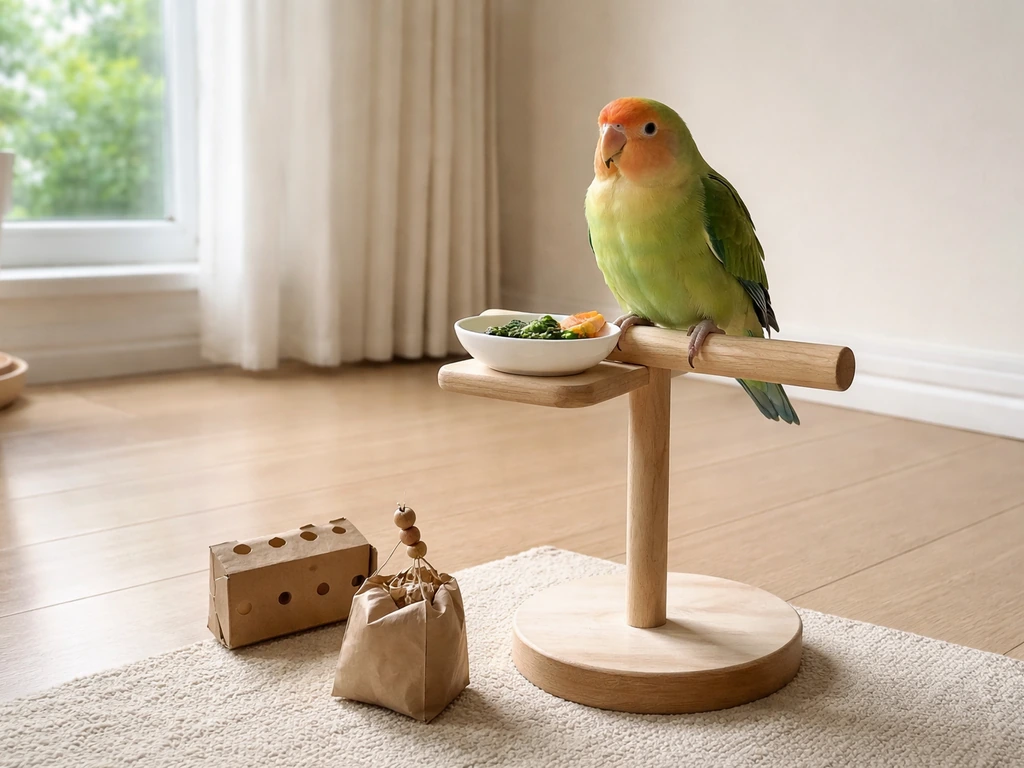
Once you've identified the most likely cause, here are the steps you can take right now, today, to address it.
If it looks like stress, fear, or overstimulation
- Lower your voice, slow your movements, and give the bird space immediately. Don't force contact.
- Reduce environmental noise and activity around the cage: turn off loud TV, move visitors away, and dim lights slightly if the bird seems highly agitated.
- Check for obvious stressors: other pets nearby, a new object near the cage, a change in room arrangement, or a recent schedule disruption.
- Offer a familiar perch or foraging toy rather than direct handling, so the bird has something to engage with on its own terms.
- If the bird calms down after a few minutes of quiet, that confirms the trigger was situational. If it doesn't settle, continue monitoring.
If it looks hormonal or territorial
- Check your lighting: if your bird is getting more than 10 to 12 hours of light per day, shorten it. Covering the cage earlier in the evening helps simulate a more natural light cycle and reduce hormonal stimulation.
- Remove mirrors from the cage or from the bird's line of sight. Birdline Parrot Rescue and Rhode Island Parrot Rescue both flag mirrors as a significant driver of hormonal behavior because birds can bond with and attempt to court their reflection.
- Review where you're petting. Stroking a bird anywhere other than its head and feet (neck, back, wings, under the wings) mimics the tactile behavior of a mate and can spike hormonal activity. Stick to head and neck scratches.
- Don't let the bird 'guard' a cave-like space: covered areas, boxes, low shelves, or inside bags trigger nesting instincts. Keep the environment open.
- If territorial flapping is happening at the cage door, practice stepping the bird up onto a neutral perch in a different area before any interaction.
If it looks like attention-seeking or excitement
- Wait for a calm moment before responding with attention. This doesn't mean ignoring your bird; it means rewarding stillness and quiet rather than the flapping itself.
- Make sure your bird is getting enough daily out-of-cage time, social interaction, and enrichment. A bored bird demands more dramatically.
- Introduce foraging toys, puzzle feeders, or shredding toys so the bird has outlets for its energy that don't involve working you for attention.
- Establish a predictable daily routine: consistent wake time, interaction time, and cover time. Birds settle when they can predict what happens next.
Basic environment check to do today
- Diet and hydration: Is fresh water available? Is the food varied and appropriate for the species? Poor nutrition affects mood and behavior.
- Airflow and air quality: No cooking fumes, aerosol sprays, or strong scents near the bird. Birds have extremely sensitive respiratory systems.
- Temperature: Keep the bird's environment between roughly 65 and 80 degrees Fahrenheit and away from drafts.
- Cage cleanliness: A dirty cage is a stressor. Clean food and water dishes daily.
- Light cycle: Aim for 10 to 12 hours of light and 12 to 14 hours of darkness, using differently lit areas rather than harsh full-spectrum light for the entire space, as the RSPCA recommends.
When to contact an avian vet or behavior specialist
Most wing flapping is behavioral and manageable at home, but there are situations where you need a professional involved. Birds hide illness until they can't anymore, so by the time symptoms are obvious, things can move fast. SpectrumCare emphasizes that birds can decline quickly due to stress and their high metabolic rate, so don't wait if you see any of the following.
Contact an avian vet urgently if you notice open-mouth breathing, tail-bobbing while breathing, or any gasping. According to both SpectrumCare and Learn Bird Sitting Toronto's emergency first aid guides, these are signs of serious breathing difficulty and require immediate veterinary attention. Similarly, LafeberVet states that bleeding is almost always an emergency regardless of where it originates, so any visible blood from flapping-related injury (broken blood feather, cut, collision trauma) means call your vet now.
- Flapping is persistent, escalating, or has recently changed in character with no clear trigger
- The bird seems lethargic, sits fluffed up on the bottom of the cage, or is losing weight
- You notice breathing changes: open-mouth breathing, tail-bobbing, labored inhale/exhale
- There is visible injury, blood, or signs of trauma from flying into walls or objects
- Feathers are damaged, over-preened, or the bird is pulling them out
- The bird has not eaten or drunk water normally in 24 hours
- Repetitive, frantic flapping happens in cycles that the bird can't seem to stop, suggesting compulsive behavior
- Hormonal aggression is severe enough that you cannot safely interact with or care for the bird
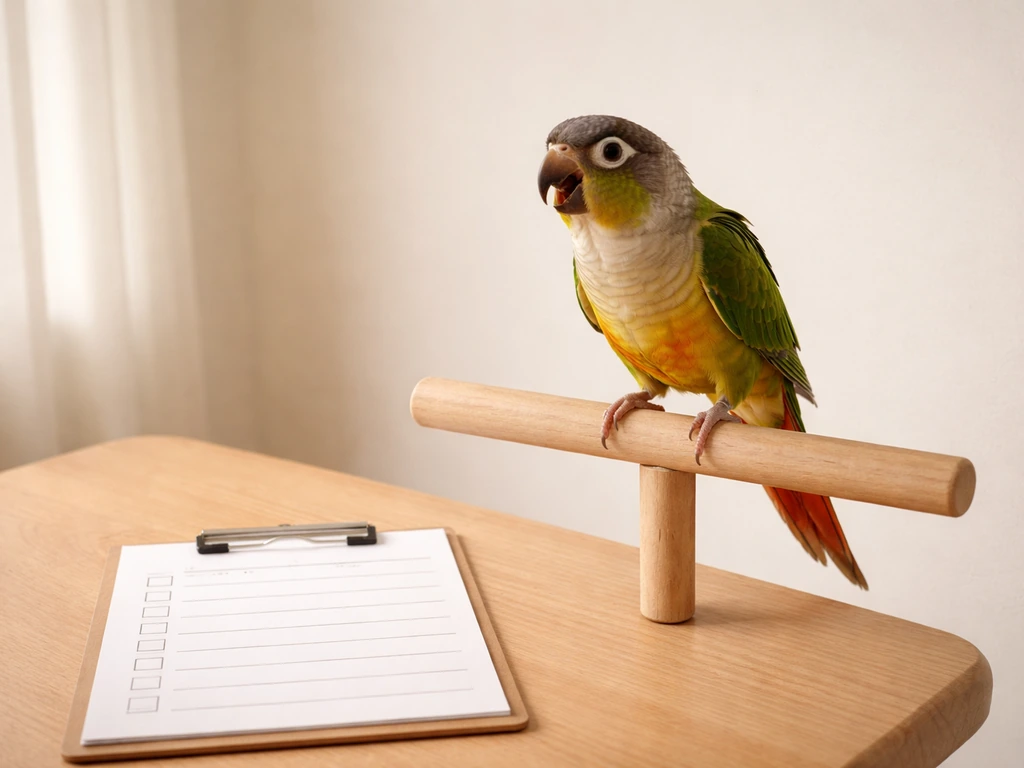
If behavior is the issue rather than physical illness, an avian behavior consultant can help you document triggers and build a management and modification plan. LafeberVet's behavioral history forms and Cornell's avian history documentation both show how much detail matters when tracking a behavior problem: when it started, how often it happens, what precedes it, and what makes it better or worse. Even keeping a simple daily log on your phone for one week before an appointment gives a vet or consultant enormously useful information to work with.
Wing flapping at you is your bird trying to tell you something. If you also notice your bird stretching when he sees you, it can signal a similar mix of communication, excitement, or comfort cues why does my bird stretch when he sees me. Most of the time, once you slow down and watch the full picture, the message is pretty clear.
And if you find yourself drawn to the deeper symbolic dimension of that communication, whether that means reading it as a call to pay attention to something shifting in your life, or simply marveling at the fact that a creature is trying to reach you across species lines, that curiosity is worth following too.
If you have been wondering “makes my bird twitch meaning,” it can also be helpful to look at context and body language alongside any symbolic interpretation spiritually and symbolically. What is your bird's energy asking you to notice today?
FAQ
How can I tell the difference between greeting wing flaps and fear or threat displays?
Check posture and “spacing.” Greeting is usually upright and relaxed, with feathers smoother and the bird oriented toward you. Fear or threat is more likely to include a forward lean, puffed or raised feathers, a fanned tail, and the bird seeming to “push you back” rather than seek contact. If the flapping happens while you’re nearing the cage door or a favorite perch, assume it’s defensive or territorial until proven otherwise.
My bird only flaps when I reach toward the cage, what should I do in that moment?
Pause and change your approach. Instead of leaning in or grabbing, step back, offer a neutral target (like a perch or training stick) away from the hot zone, and wait for one calm step-up before you reward. Repeated reaching teaches the bird that the flapping leads to forced interaction.
Is it normal for my bird to flap its wings at me during petting, or does that mean overstimulation?
Yes, it can mean overstimulation. Overstimulated birds often show quick escalation, leaning away while flapping, or a sudden shift from calm to intense body language after a longer session. Try shorter, less frequent sessions, and stop at the first sign of escalating attention-seeking (like intense flaps right after you touch them).
Can wing flapping be a sign my bird is sick, not just behavioral?
It can be, especially if the flapping is paired with breathing or lethargy changes. Look for open-mouth breathing, gasping, tail-bobbing while breathing, or unusual stillness followed by frantic flapping. If you see any breathing difficulty, treat it as urgent rather than “just behavior” and contact an avian vet right away.
What if the flapping is followed by biting or lunging?
Treat flapping plus forward movement as a pre-bite warning, not a request for more interaction. Back away to reset, give the bird space, and do not try to “handle through” the moment. In the next interaction, approach more slowly, start from farther back, and reward calm behavior only after the bird’s posture settles.
Does wing flapping mean my bird wants attention, and can I train it to stop?
Often it’s attention-seeking, and you can reduce it with consistent reinforcement rules. Wait for calm, then give attention briefly, and avoid responding to flaps with immediate talking, petting, or face-to-face contact. If possible, provide another outlet (toys, foraging, or a step-up routine) so attention-seeking has a safer alternative.
How do seasonal changes affect wing flapping in my bird?
Day length changes can increase hormonal behavior in many species. If the flapping includes puffing up, “courtship-like” movements, low cooing, or regurgitation-like behaviors, reduce hormonal triggers by managing light exposure (don’t extend daylight), avoid mirrors, and consult an avian professional if behaviors escalate.
My bird flaps and chirps when I leave the room. Is that separation distress or greeting?
It can be either, but it depends on the rest of the behavior. Greeting typically looks bouncy and oriented toward you, with no defensive posture. Separation distress is more likely when flapping comes with frantic searching, calling that escalates into panic, trembling, or destructive behavior. If the intensity increases over minutes and improves only after you return, that leans toward distress.
Can mirrors or other visual stimuli cause wing flapping even if my bird is not broody?
Yes. Many parrots interpret reflective surfaces as another bird, which can accelerate hormonal and courtship patterns. If you see wing displays that look theatrical, repeated courtship behaviors, or lunging near a mirror or shiny surface, remove the mirror and reduce other “bird-like” visual triggers.
What should I record to figure out the cause quickly?
Log three things each time it happens: what you were doing right before the flapping (walking in, reaching, petting), where the bird was positioned (cage door, specific perch, food dish), and the bird’s posture details (puffed vs smooth, tail fanned vs neutral, crouch vs upright). After a week, patterns usually point to greeting, territorial guarding, overstimulation, or hormonal triggers.
When should I seek help from an avian behavior consultant instead of trying at home?
Get professional help if the flapping frequently escalates to lunging or bites despite consistent space and reinforcement changes, if you cannot identify a trigger, or if the bird’s overall demeanor changes (less appetite, increased hiding, rapid breathing). A consultant can help you build a step-by-step management plan and replacement behaviors based on your specific household routines.