A bird eating another bird in a dream most commonly points to themes of power, survival, competition, and betrayal, the feeling that something or someone in your life is consuming your energy, your confidence, or your sense of safety. It can also signal internal conflict: one part of you overriding another. That said, the meaning shifts significantly based on which bird is the predator, which is the prey, how you felt watching it, and what's actually been happening in your life lately. This guide walks you through all of that so you can land on an interpretation that actually fits.
Bird Eating Bird Dream Meaning: Symbolism and Next Steps

Maya Hartwell
27 May 2026
What 'Bird Eating Bird' Usually Symbolizes in Dreams
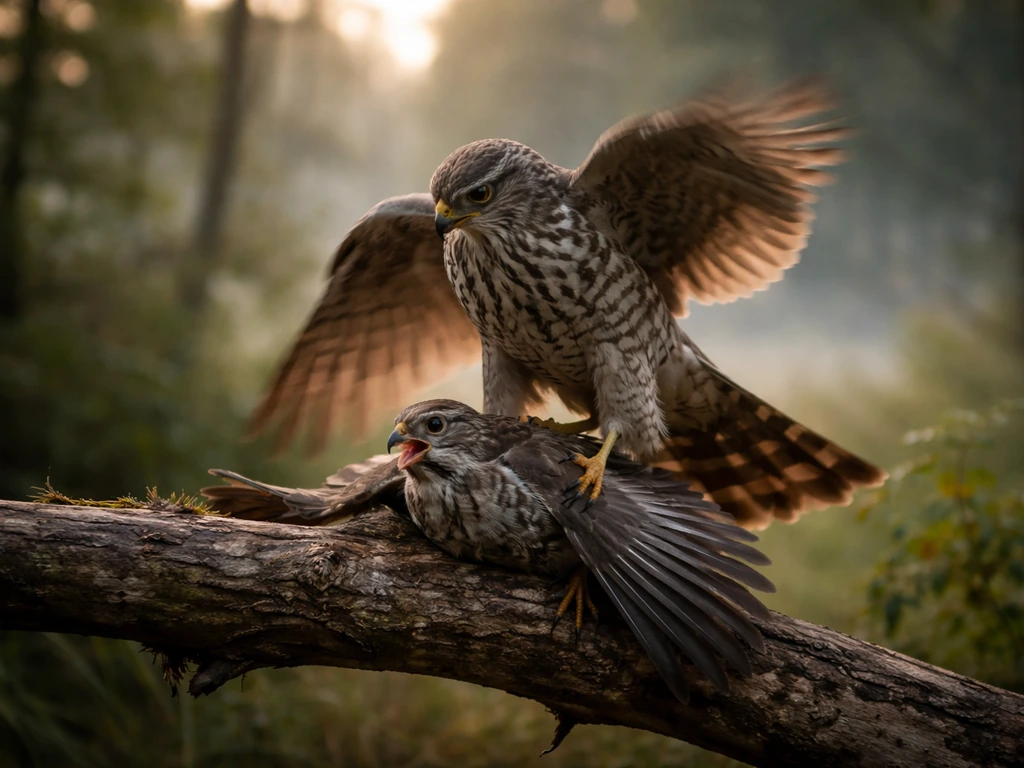
Birds have carried symbolic weight across virtually every culture in history. They represent the soul, freedom, messages from beyond, and the higher self. When one bird devours another in your dream, the imagery is deliberately dramatic, your subconscious is using a high-contrast scene to make sure you pay attention to something.
The core symbolic territory here includes: power dynamics, survival instincts, competition (in work, relationships, or within yourself), a sense of betrayal, loss of innocence, and the raw mechanics of the natural order. Predation in nature is not evil, it is simply what keeps systems in balance. Your dream may be pointing to a similar dynamic in your life that feels harsh but is ultimately part of a larger process.
At the broadest level, these are the most common interpretations people find resonant when this dream shows up:
- Something in your life — a relationship, a workplace dynamic, a habit — is draining you and needs to be addressed
- You are in competition with someone and fear being overtaken or undercut
- A part of your personality (ambition, fear, grief, old beliefs) is overpowering another part
- You are witnessing or experiencing a kind of betrayal where trust has been consumed
- A significant transformation is underway — one identity or phase of life absorbing and replacing another
- You feel powerless in a situation and your mind is processing that loss of agency
Notice that not all of these are negative. Transformation and reclaiming agency can look violent in dream language while actually representing something healthy and necessary in waking life.
Context Matters: Predator/Prey Roles, Location, and Your Reaction
The same image can carry very different messages depending on the context of the dream. Before you settle on a meaning, think through these three layers.
Which Bird Are You?
If you identified with the bird being eaten, the dream is likely speaking to vulnerability, you may feel consumed by demands, by a person, by expectations, or by your own anxiety. If you identified with the predator bird, or if you were the one doing the eating, the message shifts toward aggression, drive, or a need to reclaim something you feel has been taken from you. If you watched from a distance without any strong identification with either bird, the dream may be asking you to acknowledge a dynamic you've been choosing not to engage with.
Where Did It Happen?
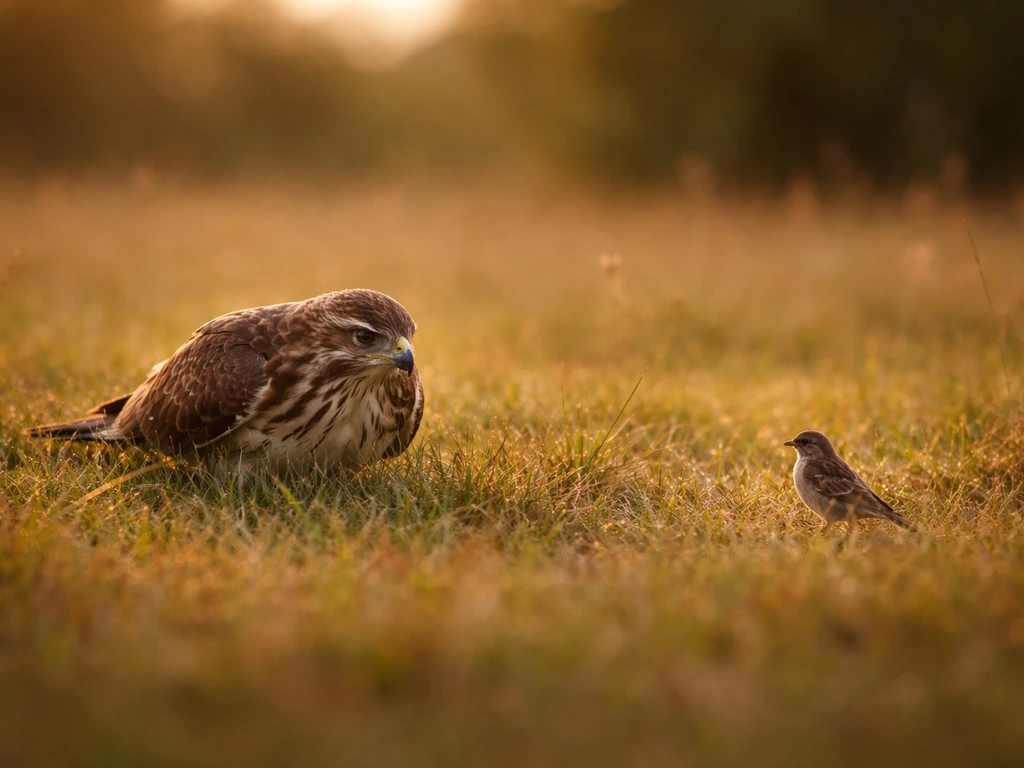
Location in dreams is always symbolic. A bird eating another bird in an open field or in nature tends to feel like the natural order at work, something is simply running its course. If you are wondering about bird nest dream meaning, compare the setting and your reaction, because context changes how the symbol lands in your life A bird eating another bird in an open field or in nature.
If it happened inside a home or a room you recognized, the dream is likely pointing to something intimate: family, a close relationship, or your private inner life. If it happened at a workplace or in an institutional setting, the competition or betrayal theme often maps directly to professional life. A dark, murky, or chaotic setting amplifies urgency, while a calm, sunlit one may suggest the process is ultimately going to resolve itself.
How Did You React?
Your emotional response inside the dream is often the most reliable interpretive clue you have. Did you feel horror, grief, relief, fascination, or calm acceptance? Horror and grief suggest the dream is flagging something that genuinely needs your attention or protection. Relief may indicate that something restrictive in your life is finally ending. Calm acceptance or even curiosity tends to signal a transformation that your deeper self is already at peace with, even if your conscious mind has not caught up yet. Did you try to intervene or stop it? That impulse, and whether you succeeded, adds another dimension about your perceived agency in a current life situation.
Bird Details That Change the Meaning
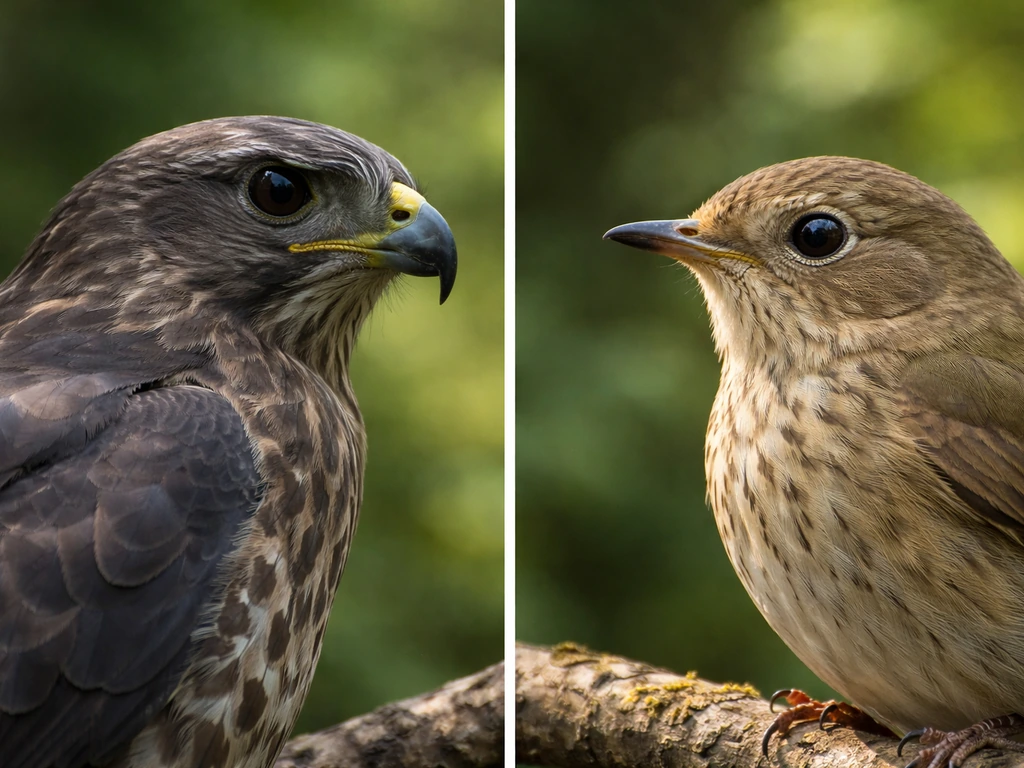
Species, color, number, and sound are the four variables that most dramatically shift what a bird-eating-bird dream is telling you. Here is how to read each one.
Species of Bird
| Predator Bird | Prey Bird | Common Interpretive Shift |
|---|---|---|
| Eagle or hawk | Smaller songbird | Ambition or authority consuming innocence, creativity, or joy; check whether power is being used fairly in your life |
| Owl | Any smaller bird | Wisdom or hidden knowledge overtaking naivety; could signal a necessary but painful awakening |
| Crow or raven | Dove or white bird | Shadow self consuming peace; or transformation of something pure into something more complex and resilient |
| Falcon | Sparrow or robin | Speed, precision, and control versus vulnerability; competition or career pressure themes often surface here |
| Larger unknown dark bird | A bird that felt familiar or beloved | Loss of something meaningful; grief, betrayal, or the end of a relationship or phase that felt like home |
| Two of the same species | Each other | Internal conflict — two equal parts of yourself in opposition; a difficult decision you are avoiding |
Color of the Birds
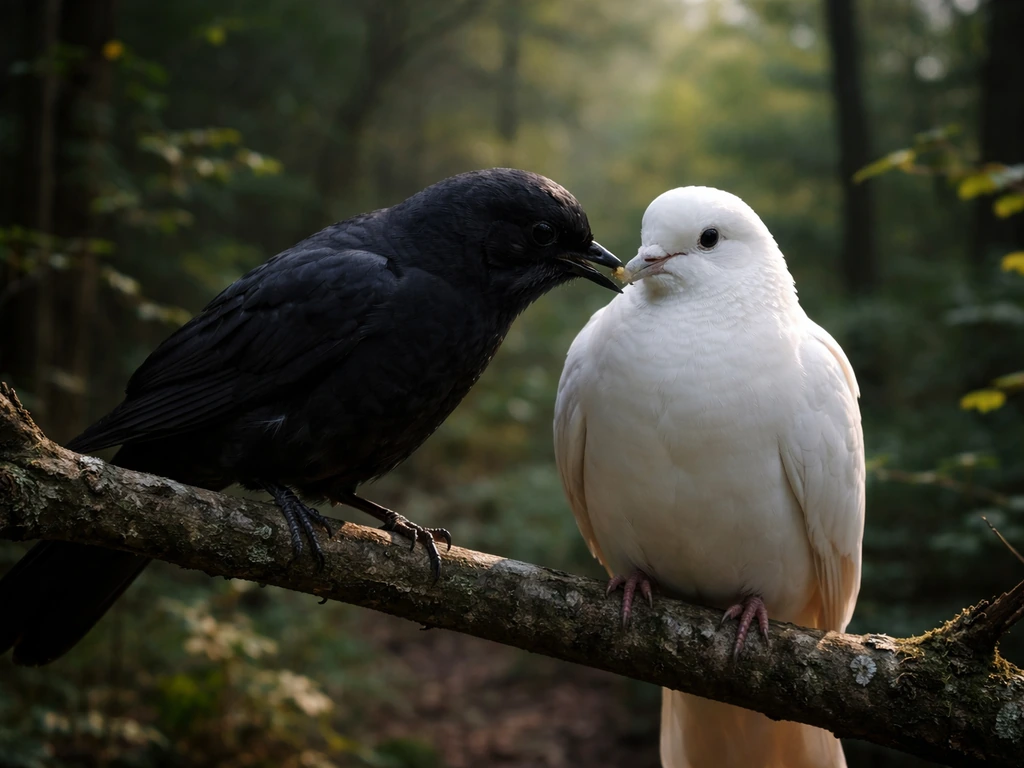
Color carries its own symbolic layer on top of species. A black bird eating a white one is one of the most common and recognizable versions of this dream, often symbolizing shadow consuming light, fear consuming hope, or complexity consuming innocence. A white or golden bird eating a darker one can flip that narrative and suggest a purification process or the resolution of something shadowy in your life. Vivid, saturated colors, a bright red bird eating a grey one, for example, tend to amplify passion, urgency, or emotional intensity in the message. A dream drained of color or appearing in near-monochrome often signals exhaustion, emotional numbness, or a situation that has lost its vitality.
Numbers and Sounds
If there were multiple predator birds and only one prey bird, the message often maps to feeling overwhelmed or ganged up on, a single vulnerability being attacked from many angles. One predator and one prey is the most personal and direct version: a specific one-to-one dynamic. If the dream was silent, that silence can feel eerie and significant, often representing something that is happening without acknowledgment or discussion in waking life. Sounds, cries from the prey bird, screeches, wing beats, signal urgency and typically indicate the situation being symbolized is still active and unresolved.
Spiritual and Omen-Style Interpretations
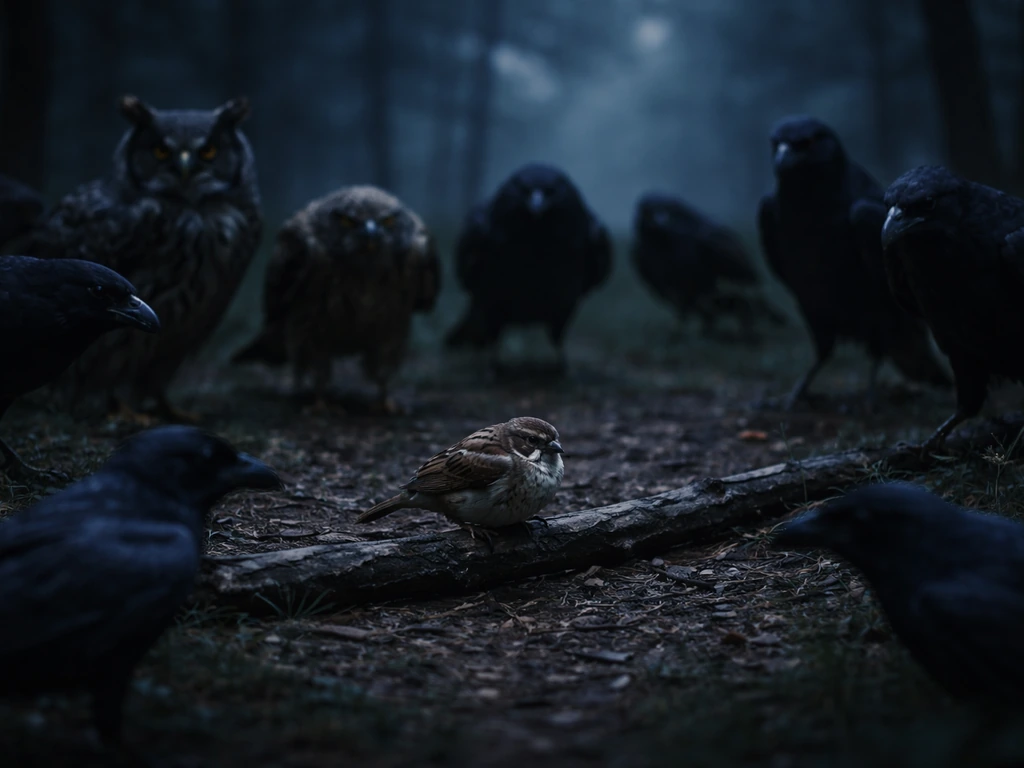
Across spiritual traditions, predation in dreams is rarely read as simple bad news. It is more often read as a message about transitions, tests, or the need to realign.
In many Indigenous and shamanic traditions, birds are messengers between the physical and spirit worlds. A predator bird consuming another in a dream could be interpreted as a spirit guide delivering an urgent message through forceful imagery, essentially the universe turning up the volume because quieter signals have not gotten through. The question these traditions often invite is: what truth have you been avoiding that is now eating away at something precious?
In Eastern spiritual frameworks, particularly those influenced by Hindu and Buddhist symbolism, the dream may point to karmic cycles. One force consuming another can represent the dissolution of an old karmic pattern to make room for a new one. This is not a punishment reading; it is a cycle reading. Something is completing itself.
Celtic and Norse traditions both featured ravens and eagles as powerful omens associated with battle, fate, and transformation. If those species appear in your dream, the message in those frameworks is often about a decisive confrontation that cannot be avoided, and the invitation is to move through it with courage rather than retreat.
As a potential warning, the dream may be flagging: a relationship where your energy, ideas, or peace is being consumed; a situation in which you are losing yourself; or a pattern of self-sabotage where your own fears are dismantling your possibilities. As a potential positive omen, it may signal: a necessary ending, the release of something that was no longer serving you, or the emergence of a stronger, clearer self after a period of difficulty.
Biblical and Folklore Parallels for Predation Themes
Predatory birds appear throughout scripture, and not always as villains. In Genesis, birds of prey descend on Abraham's sacrifice, and he drives them away, a scene many biblical commentators have read as a symbol of spiritual forces testing faith and requiring active, watchful protection of what is sacred. In Revelation and prophetic books, predatory birds are often associated with judgment, the cleansing of corruption, or the aftermath of a great spiritual reckoning. The consistent thread in biblical predation imagery is that something impure or unjust is being consumed, which, when translated into dream language, can mean your dream is flagging a situation that calls for spiritual discernment and boundary-setting.
In European folklore, an owl eating a smaller bird was sometimes considered an omen of a secret being revealed, often one that someone powerful had been concealing at the expense of someone more vulnerable. In West African traditions, birds consuming other birds in dreams were sometimes interpreted by diviners as a sign that ancestral protection was especially needed during a period of vulnerability, an invitation to pray, make offerings, or seek community support rather than face difficulty alone.
In folk metaphysics and older superstition traditions, predation dreams were often cross-referenced with recent life events: if you had recently experienced a loss, a betrayal, or a sudden reversal of fortune, the dream was seen as confirmation of that energy and a signal to take protective action, cleansing rituals, prayer, strengthening personal boundaries, or seeking wise counsel. The dream was not considered the cause of anything, but rather a mirror held up by the subconscious or the spiritual realm.
Psychological and Real-Life Explanations
It is worth being honest here: from a clinical standpoint, dream interpretation is not an exact science. Cleveland Clinic similarly notes that, from a medical perspective, dream interpretation remains a mystery and experts warn that dream content does not guarantee future meaning Dream interpretation is not an exact science.
The Sleep Foundation, Cleveland Clinic, and researchers in philosophy of mind all note that what dreams actually mean, and whether they reliably predict or reflect anything specific, remains genuinely uncertain. This is why people also search for bird laying eggs in dream meaning, using the imagery as a starting point for reflection rather than a guaranteed prediction. Experts caution against treating any dream as a guaranteed omen or message.
Experts from major sleep sources like Sleep Foundation emphasize that dreams are uncertain and should not be treated as reliable predictions or proven omens treating any dream as a guaranteed omen or message. That does not make your dream meaningless, but it does mean the most grounded approach is to treat it as a prompt for reflection rather than a verdict.
Psychologically, a bird-eating-bird dream often reflects one or more of the following real-life triggers:
- Recent or ongoing conflict with someone you feel is undermining or taking from you
- High stress around competition — at work, in a relationship, or in a creative pursuit
- Grief over something lost — a relationship, a job, a version of yourself
- Anxiety about a power imbalance you feel unable to correct
- Having recently watched nature documentaries, wildlife content, or media involving predation (yes, this absolutely shows up in dreams)
- Suppressed aggression — either your own that you feel unable to express, or someone else's directed at you
- A decision you are avoiding that involves one part of your life consuming the resources of another
The Jungian perspective is particularly useful here. Carl Jung would likely read the predator bird as a shadow element, a part of the psyche that has not been consciously integrated. Rather than seeing it as something external and threatening, the invitation is to ask: what part of myself does this predator represent, and what would happen if I acknowledged it rather than suppressed it? The prey bird, in this reading, is often the more fragile, tender, or vulnerable aspect of your identity that feels at risk.
This kind of dream also shows up more frequently during life transitions, job changes, relationship endings, moves, identity shifts, when the psyche is actively working through what gets to survive and what gets left behind. If you are in a major transition right now, this dream may simply be your mind doing that sorting work in vivid symbolic language.
How to Interpret Your Specific Dream Today

The fastest way to find your personal interpretation is to sit with the dream before the details fade. Here are targeted journal prompts to guide you through it. You do not need to answer all of them, just start writing and see which ones pull something useful to the surface.
- Describe both birds in as much detail as you can: size, color, species if you know it, and which one felt more familiar or significant to you.
- What was the setting? Did any element of the location remind you of a real place or situation in your life?
- What did you feel during the dream — fear, grief, disgust, calm, fascination? What does that emotion remind you of from the past week or month?
- If the predator bird represents something in your waking life right now, what would it be? A person, a situation, a belief, a fear?
- If the prey bird represents something in your waking life, what would it be? A relationship, an aspiration, a part of your identity?
- Did you intervene, or did you watch? What does your choice (or inability to choose) in the dream reflect about how you are responding to a current situation?
- What is the most uncomfortable truth this dream might be pointing to — the thing you would rather not look at directly?
- If this dream is a message, what is the single most useful thing it might be asking you to do or change?
Once you have written through these prompts, look for the thread that connects your answers. Most people find that one consistent theme emerges, usually something they already sensed at the edge of awareness but had not fully named yet. That naming is the interpretation.
It is also worth comparing this dream to any related bird dreams you have had recently. Dreams about a bird attacking, a bird biting your hand, or a bird trapped somewhere often cluster together during periods of heightened tension or transition, and looking at them as a series rather than isolated events can give you a clearer picture of what your subconscious is trying to process. Dreams about a bird trapped somewhere, including a bird trapped in a house, can point to feeling stuck, confined, or unable to express yourself in waking life. If you were specifically focused on a bird biting your hand, the bird biting hand in dream meaning can point to feeling threatened, overpowered, or suddenly forced to defend yourself.
Next Steps: Grounding, Reflection, and Practical Guidance
Once you have a working interpretation, the question becomes: what do you actually do with it? Here is a straightforward set of next steps organized by the approach that resonates most with you.
If You Approach This Spiritually
Spend a few quiet minutes in prayer or meditation with an open-ended question: what am I being asked to protect, release, or reclaim? If you have a spiritual practice, bring the dream image into it deliberately rather than pushing it away. Some people find it useful to light a candle and sit with the image, allowing whatever comes up emotionally to surface and be acknowledged. If the dream felt like a warning, protective prayer, asking for clarity, discernment, and strength, is a grounded and meaningful response across many traditions.
If You Approach This Psychologically
Name the real-world situation the dream seems to be mirroring. Write it out plainly. Then ask yourself: what is one concrete action I can take this week to address the power dynamic, conflict, or loss this dream is reflecting? That might mean having a difficult conversation, setting a boundary you have been avoiding, withdrawing energy from something that is consuming you, or seeking support from a therapist or trusted person. Dreams do not require action, but if the imagery is intense and recurring, your inner world is usually pointing at something that deserves your conscious attention.
Practical Boundary and Conflict Care
If the dream maps to a relationship or workplace dynamic where you feel consumed, taken from, or overpowered, take these steps seriously regardless of your interpretive framework:
- Identify the specific situation or person draining your energy and name it honestly, even just in writing
- Decide on one boundary — a limit on your time, emotional investment, or access — that you can implement this week
- Tell someone you trust about the dynamic; isolation amplifies the feeling of being consumed
- Give yourself permission to step back from something that is not actually your responsibility to fix or endure
- If the dream pointed to internal conflict (two parts of yourself at war), identify which value or need each side represents and look for a way to honor both rather than forcing one to win
Grounding After a Disturbing Dream

If the dream left you feeling shaken, do not try to intellectualize it away immediately. Ground yourself physically first: step outside, hold something warm, move your body, or eat something. Vivid predation dreams can leave a residue of anxiety that lingers into the morning, and giving your nervous system something concrete to engage with helps clear that residue before you start analyzing. Once you feel settled, then bring curiosity rather than fear to the image, you are trying to understand a message, not survive a threat. If you keep wondering about the bird attack dream meaning, use your feelings and the predator-prey roles as the key details understand a message.
Above all, resist the urge to lock in one definitive meaning and treat it as fact. Dreams are more like questions than answers. The most useful thing this one can do is prompt you to look honestly at something in your life that you may have been circling around, and then take one clear, grounded step in response to what you find there.
FAQ
Does the bird eating bird dream mean someone will betray me in real life?
Yes, but only as a clue, not a prediction. If the dream felt like immediate danger, map it to a current boundary or safety issue first, then look for the most recent trigger (conflict, betrayal, deadline pressure, or a health worry). If nothing is actively threatening right now, treat it more as processing of vulnerability or power dynamics.
How do I know if I should interpret the dream as my behavior or someone else’s?
A clean way to test your interpretation is role-checking. If you felt like the predator bird, the dream often points to your urge to take back control or stop being drained, even if you worry it makes you seem “aggressive.” If you felt like the prey bird, look for where you feel powerless, overbooked, or emotionally unsafe, and identify one specific place to regain agency.
What does it mean if I watched the bird-eating-bird scene calmly and felt nothing?
If the dream includes no strong emotion, it often signals a dynamic that has been normalized in waking life, meaning your mind is still noticing it but you are under-reacting. The next step is to ask, “What am I accepting that I would not call acceptable if I saw it in a friend?” Then choose one small boundary or reality-check conversation to try this week.
Does the setting of the dream (home vs workplace vs outdoors) change the meaning?
Location usually matters more than people expect. A predation scene in a home often relates to family dynamics, shared resources, or inner self-talk, while the same scene in a workplace can reflect competition, credit-taking, or fear of being “outperformed.” If you recall both settings in different dreams, compare them to see which life area is being targeted by the theme.
What does it mean if there are multiple birds involved, like multiple predators?
Yes. Multiple predators can reflect feeling targeted from several directions at once, like “too many demands” rather than one clear villain. One predator and one prey tends to be a more specific one-to-one dynamic. When it is multiple, your practical next step is to list the demands and identify which one is the loudest drain, then address that first.
How should I interpret bird color and black versus white in the dream?
Try not to rely on the symbolism of a single color alone. Use color as an intensity modifier and add it to the emotional response. For example, if the dream is monochrome and you felt exhausted or numb, that points toward depletion or burnout, not just “darkness.” Your action step then becomes recovery-focused, like reducing obligations or asking for support.
If the dream was eerily silent, does that change what I should do?
Silence can mean either “unspoken” or “ignored.” If the scene was silent, ask what topic you are avoiding discussing, especially if your body felt tense afterward. If you cannot name an avoidance, look for one important conversation you keep postponing and decide whether to address it with one sentence this week.
What if I felt like both birds at different points in the dream?
This can be a sign of internal conflict, especially if you noticed shifting identification during the dream. A common pattern is the “predator” feeling like your critical side, your anxiety, or your survival mode, while the “prey” is your softer needs. A useful next step is to write two columns titled “What the predator wants” and “What the prey needs,” then negotiate one compromise behavior for the next 24 to 72 hours.
What if I keep having this dream again and again?
Recurring predation dreams usually mean the underlying issue is still active, and the same lesson is not yet integrated. Instead of searching for a new interpretation every night, track the recurrence with a simple note: date, setting, who you identified with, and what emotion stayed strongest. After 3 to 4 repeats, choose one concrete action that addresses the most consistent theme.
Is it normal to feel upset by this dream, especially if it involves violence?
If the dream involves real harm to an animal, it can still be psychologically meaningful, but you can respect the distress without turning it into a moral verdict. Grounding matters: move your body, regulate breathing, and then ask what “protection” or “containment” theme the dream is pressing on. If the dream is triggering panic, consider talking with a mental health professional for extra support.
Should I treat this dream like a warning I must act on immediately?
The most useful rule is to avoid making one dream your only decision tool. Use the dream to identify one actionable question, like “Where am I losing energy?” or “What boundary do I need?” If the interpretation would push you toward fear-based choices, slow down and verify what is actually happening in waking life.
How do I connect this dream to other recent bird dreams I’ve had?
Yes, a comparison can help, but only if you keep the variables consistent. If your other dreams involve birds attacking you, biting you, or trapping you, group them by your feelings (fear, relief, resignation) and by role (victim versus aggressor versus observer). Then look for the shared thread, such as “feeling trapped,” “feeling forced to defend,” or “feeling consumed by others.”
Next Article
Bird Nest Dream Meaning: Family, Safety, Growth and Next Steps
Interpret a bird nest dream for family, safety, growth and new beginnings, with practical next steps and variant meaning