
A bird just pooped on your car, and now you're wondering if the universe is trying to tell you something. Honestly, most of the time a bird chose your hood because it was perched above a warm, reflective surface near a food source or roosting spot, not because you're being singled out cosmically. But that doesn't mean the moment has to be entirely meaningless either. You can clean it up safely, protect your paint, and still pause to reflect on what, if anything, this interruption might be nudging you to notice.
Biblical Meaning of Bird Pooping on Your Car and What to Do

Maya Hartwell
4 Jun 2026
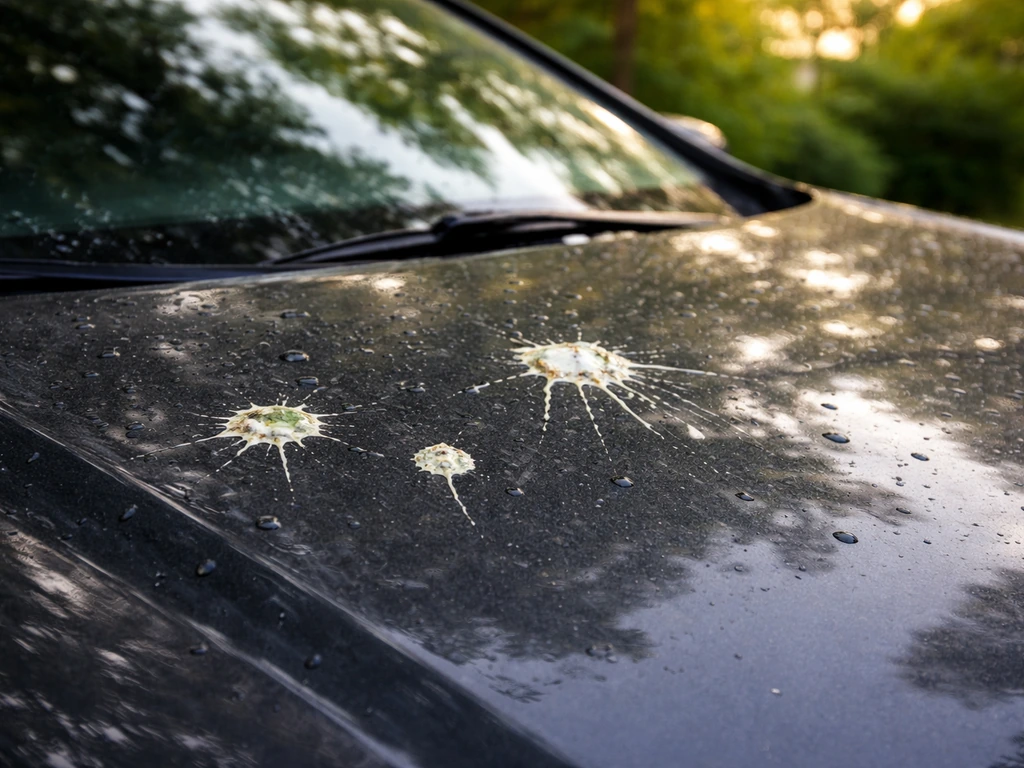
What's actually happening when a bird targets your car
Birds don't aim. They deposit wherever they happen to be perched or flying, and cars happen to be large, flat, warm surfaces that sit directly under trees, power lines, and rooftop ledges, all prime bird real estate. Birds that nest near roads, feed in roadside habitats, or are drawn to attractants in parking lots congregate in predictable patterns. If your car keeps getting hit in the same spot, you're probably parking under a known hotspot. The mess isn't personal; it's geometry and habit.
That said, the practical urgency here is real. Bird droppings are chemically active: they're acidic enough to etch through clear coat and paint if left to harden. The longer they sit in heat and sun, the deeper the damage. This is the one part of the situation that genuinely requires a fast response, not for spiritual reasons, but because your paint is at stake.
What the Bible actually says about birds

Birds appear throughout Scripture, and they almost always carry a sense of divine significance, but it's almost never in a 'this specific bird just sent you a coded message' way. The imagery is about God's character and provision, not about birds as personal messengers. In Matthew 10:29, Jesus points out that not a single sparrow falls apart from the Father's knowledge. In Luke 12:24, he invites listeners to 'consider the ravens', they don't sow or reap, yet God feeds them. The consistent biblical theme is that birds illustrate God's intimate care and oversight over all creation, including you.
Ravens, doves, eagles, and sparrows all carry symbolic weight in Scripture, but their role is largely as teaching imagery. The dove at Jesus' baptism was a one-time, witnessed event with explicit theological weight. The raven feeding Elijah was a specific, recorded miracle. Neither establishes a template where everyday bird behavior maps to personalized divine messages. The biblical tradition is much more interested in birds as evidence of God's creative care than as a communication system.
How to read 'signs' without sliding into superstition
This is where biblical thinking gets genuinely interesting, and practically helpful. In Luke 11:29, Jesus actually rebukes those who demand signs, calling it a mark of spiritual immaturity. Bible.org frames sign-seeking as a problem because it shifts focus from repentance and relationship toward demanding confirmatory proof, and it can subtly diminish the central message. The Desiring God perspective adds something useful here: interpreting every circumstance as a coded signal can become presumptuous, because you don't see all the factors God sees. Trusting the Word rather than looking for confirmation in random events is the more grounded posture.
At the same time, 1 Thessalonians 5:21 says to 'test everything; hold fast what is good', meaning discernment isn't dismissal. You're not required to ignore a moment that feels meaningful. You're just asked to hold it with open hands rather than certainty. Catholic tradition, drawing on Aquinas, warns that something becomes superstition when you place hope in a sign in a way that isn't genuinely connected to reverence for God. The line is: reflection is good, deterministic certainty is where it gets shaky.
What bird poop on a vehicle means through a spiritual lens
Across multiple folk and spiritual traditions, bird droppings, on a person or a vehicle, are commonly read as symbols of purification, unexpected blessing, or a disruption that breaks a routine pattern. The biblical meaning of a bird flying in your house similarly points more toward God’s care and invitation to reflect than toward a literal coded message. The 'unexpected interruption' framing is particularly interesting when applied to a vehicle, which represents your direction, your movement, your path forward. Some readers interpret it as a nudge to pause and look up, literally and figuratively, before continuing on your way. For people who wonder about the biblical meaning of catching a bird in a dream, it can be helpful to look at how Scripture treats birds as images of God's care rather than as coded messages pause and look up. Whether you're heading to a stressful meeting, making a major decision, or just running errands, the interruption asks: are you paying attention? If you’re also wondering about the biblical meaning of bird pooping on you, that spiritual lens can shift from a “journey” theme to a more personal reflection.
Other symbolic readings frame bird droppings as a form of cleansing or release, the idea being that something sticky and unwanted lands on you or your possessions so that something internal can be cleared. Still others tie it simply to provision and reminder, that you're seen, that creation is alive around you, and that you're not moving through the world unnoticed. These are interpretive traditions, not scriptural guarantees. But they can be genuinely meaningful touchpoints if they resonate with something you're already processing.
If you're interested in how these readings shift when a bird deposits on a person rather than a vehicle, the symbolic nuances are somewhat different and worth exploring separately. If you saw a similar “bird peeing on you” moment and want to understand the meaning, the same principles about discernment and avoiding superstition can help you interpret it wisely bird peeing on you meaning. The vehicle specifically adds the layer of journey, momentum, and direction that doesn't apply the same way to a personal encounter.
Clean it up the right way, today
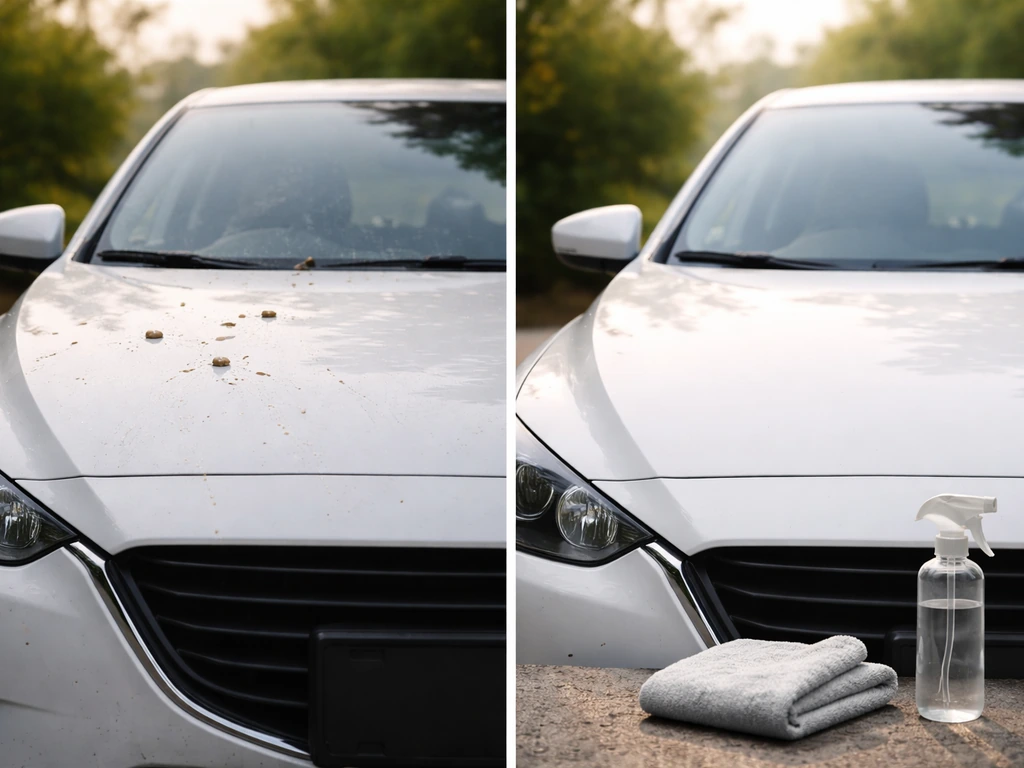
The practical steps here are straightforward, but they matter. Bird droppings can harden quickly in heat and begin chemically etching your clear coat within a few hours on a hot day. Don't scrub a dry dropping aggressively, you'll scratch the paint. Instead, wet it first to rehydrate and lift it gently. The CDC also recommends avoiding bare-hand contact with droppings due to disease risk, particularly the respiratory risk from dried droppings that become airborne as dust or aerosols. Psittacosis, a bacterial infection, spreads primarily through breathing in dust contaminated with dried bird secretions or droppings, so wetting the surface before wiping is both a paint-protection and a health step.
- Act quickly — the sooner you address it, the less damage to your paint.
- Wet the dropping thoroughly with water or a detailing spray before touching it. This softens it and reduces the risk of inhaling dry particles.
- Use a clean microfiber towel — fold it and blot rather than scrub across the surface.
- Wash your hands thoroughly after handling any contaminated cloth or surface.
- If the paint looks hazy after cleaning, a light polish or a clay bar pass can help restore clarity.
Protecting your car going forward

If you keep getting hit in the same location, the fix is often as simple as changing where you park. Avoid parking directly beneath trees, wire clusters, or rooftop ledges that birds use for perching and nesting. Ceramic and paint protection coatings make removal faster because droppings don't bond as deeply to treated surfaces, but they're not magic, you still need to remove them promptly. A fitted car cover works well if outdoor overnight parking is unavoidable.
When to reflect on it and when to let it go
Here's an honest framework: if the event caught your attention in a way that feels connected to something you're already sitting with, a decision, a worry, a transition, that's worth pausing on. Guideposts’ “coincidence vs. sign” guidance reflects that spiritual reading of events is common, but it should be done with discernment rather than automatic certainty read the event as a spiritual sign without sliding into certainty. If you were just driving to the grocery store and a pigeon did what pigeons do, you probably don't need to read much into it. The difference isn't about the bird; it's about your internal state when it happened.
| Situation | Suggested response |
|---|---|
| You were already in a reflective or uncertain moment | Take a few minutes to sit with it — journal, pray, or just ask what you're carrying right now |
| You've been stressed or rushing and the mess forced you to stop | The interruption itself might be the point — not a cosmic message, just a physical pause |
| It happened repeatedly in the same spot | Practical explanation almost certainly — look at where you're parking |
| You felt a strong, unexpected emotional response | Worth exploring through reflection or prayer, not as a guaranteed sign but as a prompt |
| It felt completely random and you're not in a reflective season | Clean it up and move on — not everything is a signal |
How to pray or reflect on this moment
If you want to bring a spiritual dimension to this, Listening Hearts Ministries offers a helpful reframe: instead of asking 'What does this mean?' (which puts the pressure on you to decode a message), try asking 'God, how would you have me respond?' That shift moves you from code-breaking to relationship, which is much more in line with how biblical discernment actually works. You're not trying to extract a prophecy from bird droppings, you're staying open to what a moment of interruption might genuinely be nudging in you.
A simple reflection might look like this: sit for a moment after cleaning up, acknowledge that you're part of a created world that's constantly in motion around you, and consider what you were moving toward before this happened. Was it something you were dreading? Something you've been avoiding thinking about? Sometimes the most honest spiritual response to a random event is just gratitude, that you noticed, that you paused, that you're still here and paying attention.
You might also try journaling a few sentences: What was on my mind just before this? What feels unresolved in my life right now? Is there anything I've been rushing past that deserves a slower look? The Gospel Coalition's structured approach to spiritual journaling is useful here, you don't need the bird to have been a divine messenger for the event to serve as a genuine prompt for reflection. The meaning you bring to it, tested thoughtfully and held humbly, can be just as valuable.
Whatever you take from it, hold it loosely. The biblical posture is one of trust rather than certainty, openness rather than demand. Clean your car, protect your paint, and if something in you wants to sit with the moment a little longer, go ahead. Just don't build a theology around it.
FAQ
Is the biblical meaning of bird pooping on your car a guarantee of a specific message from God?
No. Scripture supports birds as images that point to God’s care, not as a reliable “coding system” for personal predictions. A wise posture is to treat the moment as a prompt for reflection and then ground decisions in prayer, counsel, and Scripture rather than in certainty about what the droppings “mean.”
What should I do if I feel spiritually convicted after it happens, but I cannot tell why?
Start with the question “God, how would You have me respond?” rather than trying to decode a hidden directive. A practical step is to journal what you were doing and worrying about in the minutes before it happened, then choose one small response you can actually act on (for example, delaying a decision, apologizing, or writing down a next step).
How can I tell the difference between healthy discernment and superstition?
Discernment produces humble, action-focused fruit, it pushes you back toward repentance, prayer, and obedience. Superstition tends to create pressure for an outcome (“if this happened, I must do X now”) or demands further signs before you will act. If you feel you cannot move forward without “confirmation,” pause and reset your focus on God’s Word.
Does it matter which bird it was (sparrow, raven, dove) for the biblical meaning?
In Scripture, bird imagery often serves a teaching function, it does not usually map everyday events into deterministic meanings based on species. You can note the symbolism, but avoid concluding that a specific bird equals a specific prophecy or warning for you.
What’s the safest way to clean bird droppings from my car without damaging the paint?
Wet the droppings first to rehydrate them, then gently wipe or rinse so you do not grind dried material into the clear coat. Avoid scraping with tools, and if the mess has hardened for many hours, consider using a dedicated car-safe cleaner and microfiber towels rather than household abrasives.
Can I keep driving immediately after a bird hits my car, or should I stop right away?
If the droppings are mainly on the paint, you can usually drive short distances, but if they splatter onto windshields or mirrors, stopping sooner is safer for visibility. Also, take care with heated surfaces, on hot days droppings can start bonding and etching faster, so cleaning the same day is a good rule of thumb.
What if it keeps happening in the same spot, is there a spiritual issue or just a parking problem?
Usually it is a location pattern issue, birds return to predictable perching and nesting routes. If it repeats, change your parking to avoid tree overhangs, ledges, and nearby wire clusters, then watch whether the problem stops before you assume a spiritual cause.
Is it ever appropriate to treat the event as a sign for making a major life decision?
For major decisions, treat the incident as, at most, a call to pause and pray, not as the deciding evidence. The more reliable biblical approach is to weigh options using prayerful counsel, Scripture, and practical realities, then decide when you have peace and clarity from those sources rather than from random timing.
How should I respond spiritually when it happens while I am already stressed or angry?
Use the moment as a check-in rather than a verdict. Ask whether you were moving in haste, avoiding an issue, or needing patience, then respond with one grounding action (slow down, breathe, pray a short honest prayer, and address the real problem).
Does the same biblical principle apply if a bird poops on me instead of my car?
Yes, the core principles are similar (avoid certainty, stay humble, reflect on God’s care). The difference is that a person-focused event often feels more personal and bodily, so the reflection might center on identity, character, or purification, while a vehicle-focused event often naturally highlights direction, movement, and your “path forward.”
When is it worth getting professional help for paint damage from droppings?
If you see etched spots, dull patches, or roughness after cleaning, the clear coat may already be damaged. In that case, a professional detailer or body shop can assess whether polishing, compounding, or repainting is needed, rather than repeatedly trying at-home fixes that could worsen the surface.
Next Articles
Biblical Meaning of Catching a Bird in a Dream
Biblical interpretation of catching a bird in a dream, with symbolism, key questions, uncertainty, and practical next st

Biblical Meaning of Killing a Bird in a Dream: What It Suggests
Biblical interpretation of killing a bird in a dream: symbolism, guilt and repentance, plus actionable next steps based
Biblical Meaning of a Bird Flying in Your House: What to Do
Biblical symbolism for a bird in your house plus step-by-step safety capture, calm removal, and prayer prompts.