A bird got into your house. It's flapping against the windows, knocking things off shelves, and you're not sure whether to grab a towel, open every door, or just stand very still. Here's the short answer: stay calm, open one clear exit, turn off the lights, and give the bird a chance to find its own way out. The longer answer, covering exactly how it got in, how to help it leave safely, how to clean up, and yes, what some traditions say this moment might mean, is what this guide is for.
How Did a Bird Get in My House? Steps to Get It Out

Maya Hartwell
9 Apr 2026
How the bird actually got in
Birds don't wander into houses on purpose. In almost every case, there's a straightforward physical reason, and once you know the most likely ones, you can fix the problem for good. The entry points fall into a few reliable categories.
Open doors, windows, and screen gaps
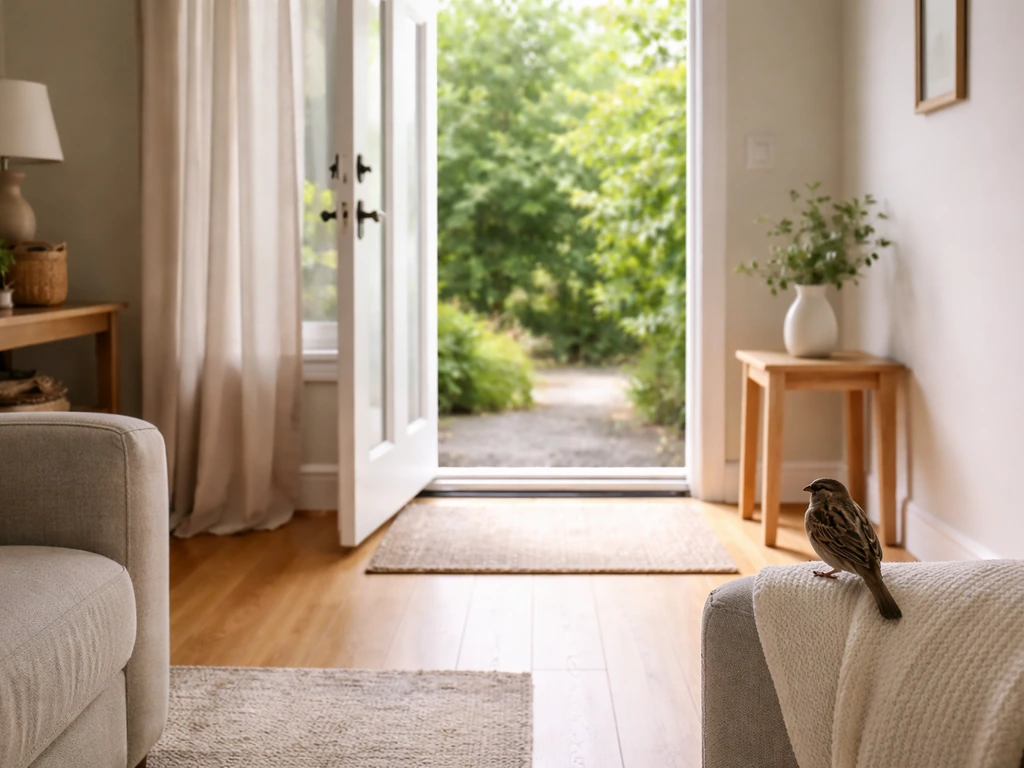
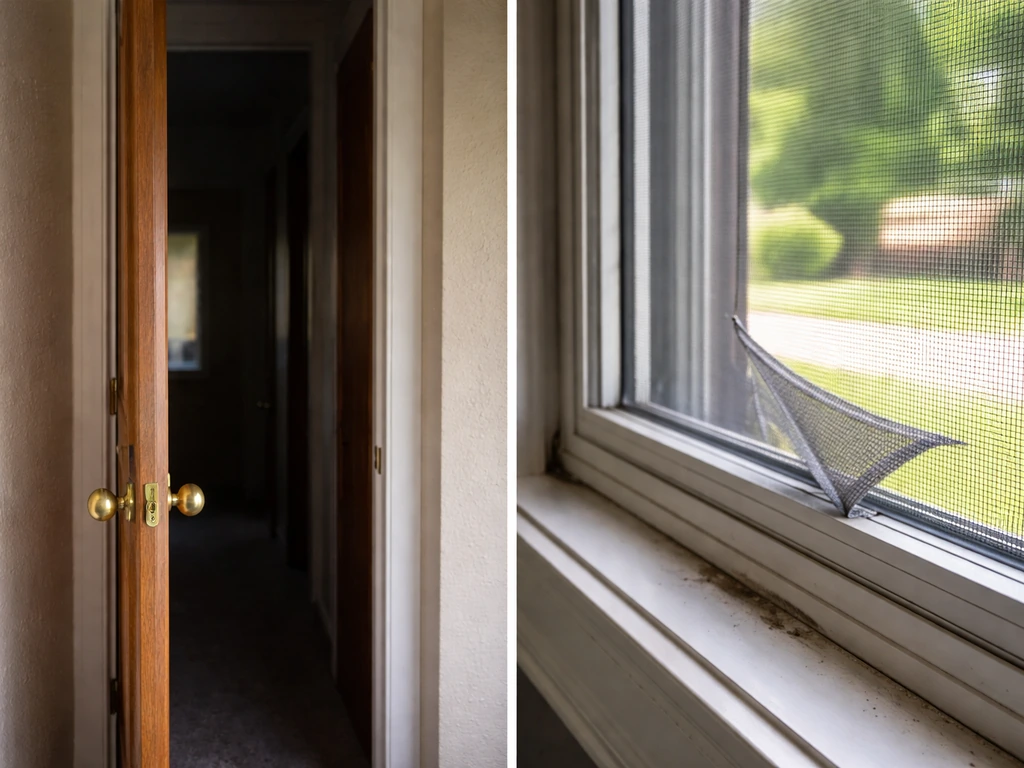
This is the most common scenario. A door was open for a few minutes, a screen had a small tear or wasn't sitting flush in the frame, or a window was cracked just wide enough. Small birds, especially sparrows, starlings, and finches, can squeeze through surprisingly tight gaps. They're drawn in by warmth, light, or simply by following an insect that drifted inside ahead of them.
Chimneys and vents
Uncapped chimneys are a classic entry point. A bird perches on the rim, loses its footing, or decides to explore, and suddenly it's dropping down into your living room. The same thing happens with soffit vents, damaged vent covers, and dryer exhaust openings, which are common places birds exploit when screens are torn or missing. If you've ever heard scratching or fluttering in your walls, you'll know what I mean, and that situation has its own set of challenges I get into in the piece on what to do when you think there is a bird in your wall.
Window collisions that lead indoors
Sometimes a bird hits a window, gets stunned, and flutters through an open door or screen while disoriented. Other times, a bird is actively trying to get inside because it sees a reflection of trees or sky in the glass and thinks it's flying toward open space. This is especially common during spring migration, when birds are moving fast and not paying close attention to suburban hazards.
Light attraction at night
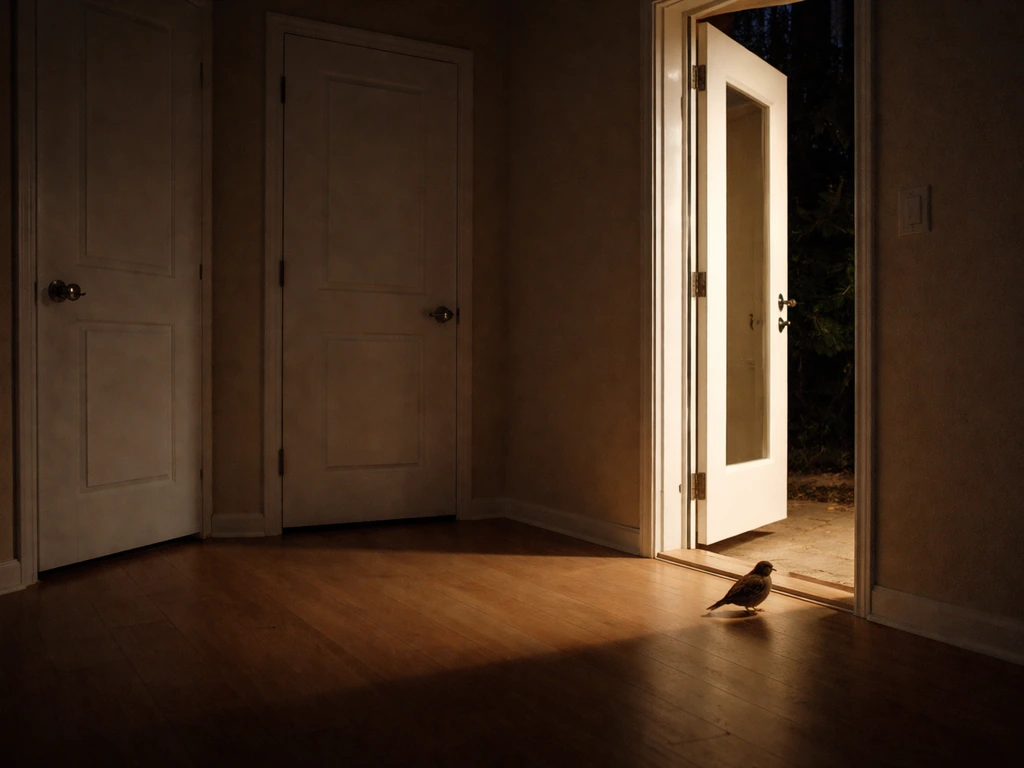
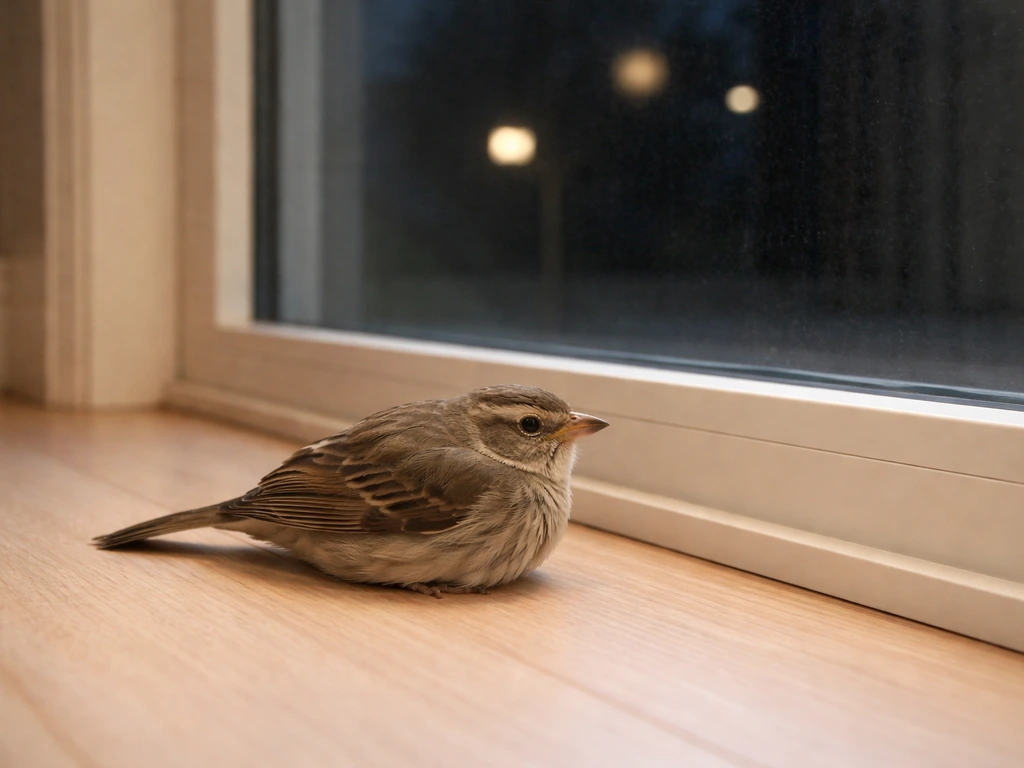
Lit windows at night can disorient birds during nocturnal migration, drawing them toward structures they'd otherwise avoid. This is a well-documented phenomenon, and it's one reason wildlife agencies recommend a "lights out" approach in areas near migration corridors. If you're finding birds inside repeatedly in spring or fall, nighttime lighting may be a contributing factor.
Attics and hidden entry points
Some birds, especially starlings and house sparrows, are persistent cavity nesters. They'll work their way into attic spaces through roofline gaps, broken soffits, or missing vent covers, and then find their way further into the house from there. If you're dealing with that specific situation, the detailed guide on how a bird got into your attic walks through the most common access points and what to do about them.
What to do right now to keep everyone safe
Before you do anything else, take a breath. A panicked bird is acting on pure instinct, and a panicked human chasing it will only make things worse for both of you. Here's what to prioritize in the first few minutes.
- Secure your pets. Dogs and cats need to be in another room with the door closed immediately. A bird can be seriously injured or killed by a pet in seconds, even by a well-meaning one.
- Don't chase the bird. Running at it, waving your arms, or cornering it will send it into a stress response that can cause the bird to injure itself on walls, ceiling fans, or glass.
- Keep children calm and at a distance. Kids moving quickly are stressful to the bird, and a frightened bird may accidentally fly into someone.
- Turn off ceiling fans immediately. A bird in a panicked flight path and a spinning fan is a bad combination.
- Note where the bird is. Before you start opening things, take a moment to see whether the bird is resting, flying, or already injured. That changes your approach.
How to get the bird out humanely, step by step
The goal is to make the outside more appealing than the inside, not to catch or corner the bird. Most healthy birds will leave on their own if you set up the right conditions.
- Close all interior doors to limit the bird to one room. The fewer spaces it can escape into, the easier this gets.
- Open one exterior window or door wide. This should be the biggest, clearest exit available, ideally leading directly outside rather than to a porch or enclosed area.
- Turn off all interior lights. The open exit should be the brightest spot in the room. As San Diego Humane Society advises, you want that open window or patio door to be the most inviting place in the room so the bird flies toward it naturally.
- Step out of the room and close the door behind you. Give the bird 15 to 30 minutes of quiet. In most cases, it will find the exit on its own.
- If the bird is still inside after a patient wait, try a towel or sheet. Holding one up gently behind the bird (not throwing it) can guide the bird's flight path toward the open exit without causing direct stress.
- As a last resort, use the box technique. Turn a box on its side and gently push it toward the bird where it's resting on a surface, then slide a piece of cardboard underneath to contain it. Carry the box outside and tip it open facing away from the house.
- Once the bird is out, close the exit point and figure out how it got in before opening anything again.
A few things to avoid: don't try to grab the bird barehanded if you can help it (stress and injury risk for the bird), don't spray anything at it, and don't use noise to scare it out through multiple openings at once. The CDC also advises avoiding direct contact or close exposure to sick or dead wild birds and other animals that could be infected with avian influenza A viruses avoid direct contact or close exposure to sick or dead wild birds and other animals. Multiple competing exits are confusing for a bird. One clear, bright way out is far more effective than three open doors leading in different directions.
Cleaning up: droppings, feathers, and health precautions
Once the bird is gone, you're not quite done. Bird droppings deserve some respect during cleanup, not panic, but real precaution. The fungus that causes histoplasmosis, a lung infection, is often found in bird and bat droppings, and breathing in disturbed spores is how exposure happens. This risk is most significant with large accumulations, but it's still worth being careful even with small amounts indoors.
- Wear disposable gloves before handling droppings or feathers.
- Wear an N95 respirator or better if you're cleaning up more than a few small spots, especially in enclosed spaces with poor ventilation.
- Do not sweep or vacuum dry droppings. This aerosolizes particles. Instead, lightly mist the area with water mixed with a small amount of disinfectant first, then wipe up with paper towels.
- Bag the waste and dispose of it in a sealed trash bag.
- Disinfect the affected surfaces with a standard household disinfectant.
- Wash your hands thoroughly after removing gloves.
- If a bird was visibly sick or you're cleaning up after a wild bird during an active avian influenza period, avoid contact with feathers, feces, or any body fluids and follow current CDC and USDA guidance.
For a single healthy bird that was inside briefly, the actual health risk to your household is low. The precautions above are about doing it right, not about treating a sparrow as a biohazard. Use common sense alongside proper hygiene and you'll be fine.
How to stop it from happening again
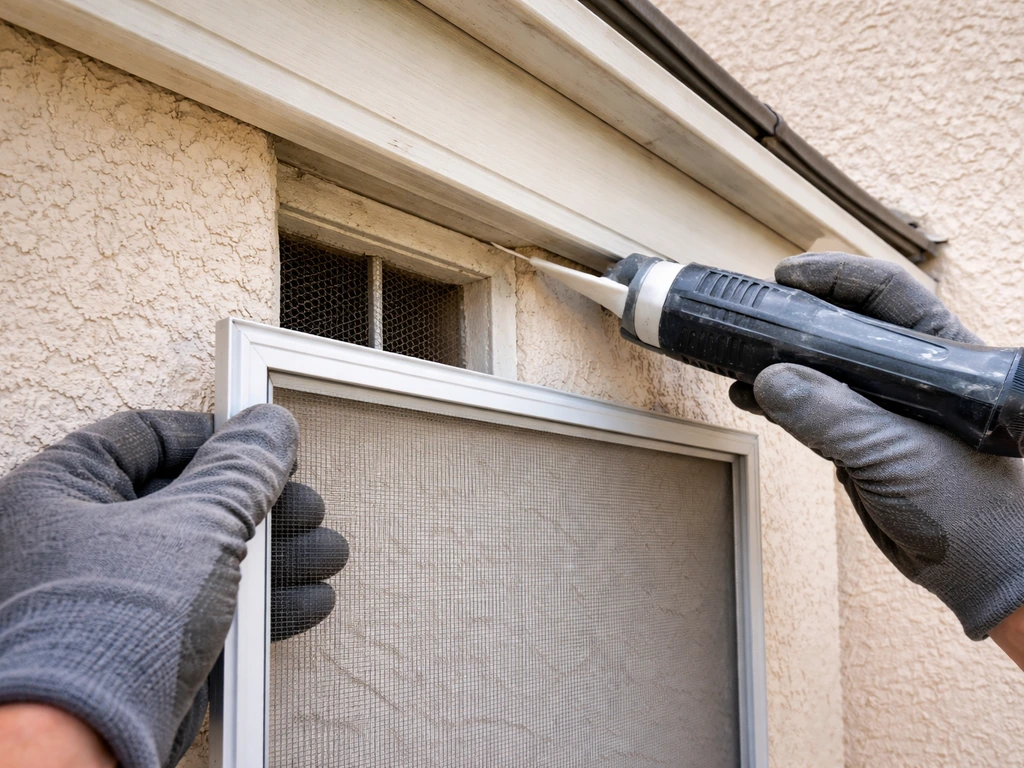
Once you've handled the immediate situation, it's worth spending an hour doing a walk-around of your home to figure out where the weak points are. Most repeat bird entries come down to a short list of fixable problems.
Seal up entry points
Check soffit vents, dryer vents, bathroom exhaust vents, and any roofline gaps. Torn or missing screens are the most common culprits. Replace damaged vent covers with hardware cloth or purpose-built vent guards rated for wildlife exclusion. Walk around the exterior at eye level and also look up at the roofline: gaps large enough for a bird to squeeze through are often more obvious than you'd expect. Turning off interior lights and checking for visible daylight coming through from outside can help reveal hidden openings.
If you have a chimney, a stainless steel chimney cap is one of the best investments you can make. It keeps out birds, squirrels, and rain at the same time. If you've been wondering whether there's a bird in your chimney already, deal with that before capping it, since you don't want to trap an animal inside. Similarly, if you've heard a bird in your chimney, you'll want to confirm it's gone before sealing the flue.
Reduce window collisions
Birds don't perceive glass as a barrier. They see a reflection of trees or sky and fly straight toward it. The best way to prevent this is to apply visual markers to the glass surface, especially on the outside, where they break up the reflection. Options include window decals, patterned film, tape strips, or even tempera paint. The critical detail here is density: a few scattered decals won't work. Markers need to cover enough of the glass surface that a bird can't see a gap wide enough to fly through. Cornell Lab and the American Bird Conservancy both emphasize this, noting that many people underestimate how much coverage is actually needed.
One-way transparent window film is another excellent option. It appears opaque from the outside (breaking the reflection) while remaining clear from the inside. This is a good solution for large picture windows or glass doors where you don't want to sacrifice the view.
Turn out the lights at night
Artificial light at night disorients migratory birds and can pull them toward your home during peak migration windows (spring and fall). Closing blinds after dark, switching to motion-activated exterior lighting, and reducing unnecessary interior lighting visible through large windows are all practical steps. This is especially worth doing if you live near water, open green space, or a known migration corridor.
When the situation is more complicated
Most bird-in-house situations resolve in under an hour. But a few scenarios call for a different approach.
The bird is injured
If the bird can't fly, is bleeding, or is lying on the floor without moving, it may have hit a window before coming inside or injured itself during the ordeal. Do not try to rehabilitate it yourself. Caring for a migratory bird requires a federal permit, so the right move is to get it to a licensed wildlife rehabilitator.
You can use resources like the American Eagle Foundation's rehabber locator or a quick search for your state's wildlife agency to find someone nearby. In the meantime, gently place the bird in a cardboard box with air holes, no food or water (this can do more harm than good without training), and keep it in a quiet, dark place until you can get it to a professional.
San Diego Humane Society also recommends gently placing the bird in a cardboard box with air holes and keeping it in a quiet, dark place until you can get help place the bird in a cardboard box with air holes.
You can't find the bird
Sometimes a bird gets into the house and disappears into a wall cavity, inside a cabinet, or into the attic. If you can hear scratching or movement but can't locate the bird, close off as many interior openings as possible and try to listen for the direction of sound. The guide on what to do when a bird is in your house and won't show itself covers the full strategy for this scenario, including when to call for help.
The bird keeps coming back
If the same type of bird keeps appearing at your windows or finding its way inside, it's worth asking why a bird keeps trying to get into your house. Repeat behavior usually signals either an unrepaired entry point, a territorial bird attacking its own reflection, or a nesting pair that has decided your home is prime real estate. Each of these has a different fix.
A large or dangerous bird
If a hawk, owl, or other large raptor has found its way inside, do not attempt to handle it yourself. Large birds have powerful talons and beaks, and even a stressed, disoriented one can cause serious injury. Open the largest exit you have, leave the room entirely, and call a wildlife professional. The U.S. Fish & Wildlife Service is clear that in many cases the safest action for both you and the animal is to stand back and let professionals handle it.
What it might mean: the spiritual side of a bird in the house
Once the bird is safely outside and you've caught your breath, it's natural to wonder whether there was something more to the moment. Across cultures and centuries, a bird flying into a home has rarely been considered a random event. Whether you hold a spiritual worldview or simply find yourself moved by the synchronicity of it, these interpretations are worth sitting with.
In many Western folklore traditions, a bird entering a home is read as a messenger, a signal that news is coming, that something is changing, or that a message from someone you've lost is finding its way to you. The older superstition, that a bird in the house predicts a death in the family, is one of the most persistent pieces of bird folklore in English-speaking cultures. It's worth naming directly: this is a superstition, not a prophecy. But the emotional weight it carries says something about how seriously people have always taken these encounters as potential thresholds between the everyday world and something less visible.
In biblical and Christian symbolism, a bird entering a space is sometimes associated with the Holy Spirit (particularly the dove in scripture) or with divine visitation. Some devotional traditions read a bird finding its way into your home as a sign of peace arriving, or of spiritual presence making itself known in an ordinary moment. The spiritual meaning of a bird coming down a chimney explores this in more depth, with the chimney as a symbolic threshold between the outer world and the hearth, the protected inner life.
Celtic traditions often viewed birds as souls or spirit messengers. A bird crossing the threshold of a home uninvited could signal that someone from the other side was trying to make contact, or that a period of transition was at hand. Eastern and Indigenous traditions vary widely, but many share a common thread: birds are not accidental visitors. They move between worlds in ways humans can't, and when they come to us, they bring something worth noticing.
From a metaphysical standpoint, some readers will connect this experience to a sense of personal shift: something ending, something beginning, a message from intuition asking to be heard. The bird's species matters in these readings too. A robin might signal new beginnings. A crow might ask you to pay attention to what you've been avoiding. A small, plain sparrow in some traditions carries the most powerful message of all: that you are seen, even in ordinary moments.
None of these frameworks require you to abandon the practical explanation. The bird probably came in through a gap in the screen. It also may have arrived at a moment when you needed to pause, look up, and pay attention to something. Both things can be true at once. What feels true to you, in the quiet after the bird has gone back outside, is probably the most honest place to start.
FAQ
What if I followed the steps and the bird still won’t get out?
If you already sealed exits, shut off interior lights, and the bird still will not leave, the bird may be trapped in a smaller space (behind a curtain, inside a closet, or inside an exterior door frame). Check for movement behind doors and curtains, then create one clear exit (open only one door or one window) and wait with minimal activity. If you cannot locate it within about 30 to 60 minutes, treat it like a “bird in a wall or hidden cavity” situation and avoid tearing into walls.
Should I turn off all the lights inside, even near the exit?
Turn off indoor lights that are brightest relative to the outdoors, but do not make every light go dark if your only exit is in a darker room. Instead, keep the pathway to the open exit well lit from the outside side (a porch or exterior light) and limit other indoor lights so the bird can orient to one direction. If possible, close interior doors that lead away from the exit.
Is it helpful to put out water or food to encourage the bird to leave?
Avoid pooling safe materials near the bird like towels, pet food bowls, or open water sources unless you are using them as temporary barriers to guide the bird toward the exit. Food and water can keep the bird lingering and increase mess. The best “attractant” is a visible, open route to daylight.
What’s the safest way to handle a bird that looks stunned or injured?
If you must transport a stunned bird, use a plain cardboard box with air holes, place it in a quiet, dark spot, and minimize handling. Do not give food or water, and do not use a towel to wrap the bird tightly, as this can worsen stress or injury. If the bird is bleeding, unable to stand, or appears to be a migratory species, contact a licensed wildlife rehabilitator as soon as possible.
What should I do if the bird keeps panicking and attacking the windows?
If the bird is flapping hard or hitting glass repeatedly, do not chase it room to room. Close off all but one exit, then create a calmer route: open the exit nearest to where the bird first appeared and keep your distance. If you can, reduce reflections immediately by covering the most problematic window with a sheet from the outside or using temporary visible markers, then wait for the bird to orient.
Can I patch entry points immediately, or should I wait?
Yes, but timing matters. If a bird is still inside, do not start sealing gaps while it could be inside the wall or attic. Wait until you are confident the bird has left, then do repairs with wildlife-safe materials (for example, hardware cloth or purpose-built guards on vents). After repairs, add visual markers to windows if reflections caused the entry.
How do I know if I should call for professional help instead of trying myself?
Large raptors and any bird that appears very strong, oversized, or difficult to control should not be handled. If it is a hawk, owl, or similar bird, open the largest exit you can and leave the room, then call a wildlife professional. Keep children and pets away until help arrives.
What’s the right way to clean droppings without spreading airborne particles?
If you find droppings after the bird leaves, ventilate the area first (open windows if possible) and use PPE if you have it. Avoid sweeping or vacuuming dry droppings. Instead, dampen with disinfectant safe for the surface (or use a commercial approach) and wipe up carefully, then wash hands thoroughly. If you see a heavy accumulation (for example in an attic), consider professional cleaning.
Why does this keep happening at my windows, even after the bird seems to leave?
Birds often re-enter because the same gap remains or because reflections and lighting still lure them back. If you get repeated events at similar times of day, check that screens are seated with no lifted corners, that vent covers are secure, and that your chimney cap (if present) is fitted. Also review nighttime lighting behavior during spring and fall.
What should I do if I can hear the bird but can’t find it, especially in an attic?
If you suspect the bird got into an attic, close interior doors and reduce access to the attic, then listen for movement direction before opening more. Avoid using loud noises or throwing objects into the space, since this can stress the bird or drive it further into cavities. If you cannot confirm it exited within a reasonable timeframe, call a professional who can locate the animal safely.
Next Articles
I Can Hear a Bird in My Chimney: Immediate Steps
Steps to find and safely remove a bird from your chimney, plus health risks, what not to do, and symbolic meaning.
Why Is My Bird Flapping Its Wings at Me? Causes and What to Do
Understand why your bird flaps wings at you and what to do, from hormones and stress to attention and warnings.
Makes My Bird Twitch Meaning: Causes, Fixes, and Red Flags
Understand why your bird twitches, what to check now, red flags, first-aid steps, and symbolic meaning safely.