A bird inside your house most commonly means one of two things: either a confused, disoriented wild bird found its way in through an open door, window, or chimney and is now desperately trying to escape, or you're looking for a deeper symbolic meaning behind the event. Both are completely valid ways to approach this, and this guide covers both. Whether you want to know how to safely get the bird out right now, or you're more interested in what different spiritual and folkloric traditions say about it, you're in the right place.
Bird in a House Meaning: Practical and Spiritual Guide

Maya Hartwell
11 Apr 2026
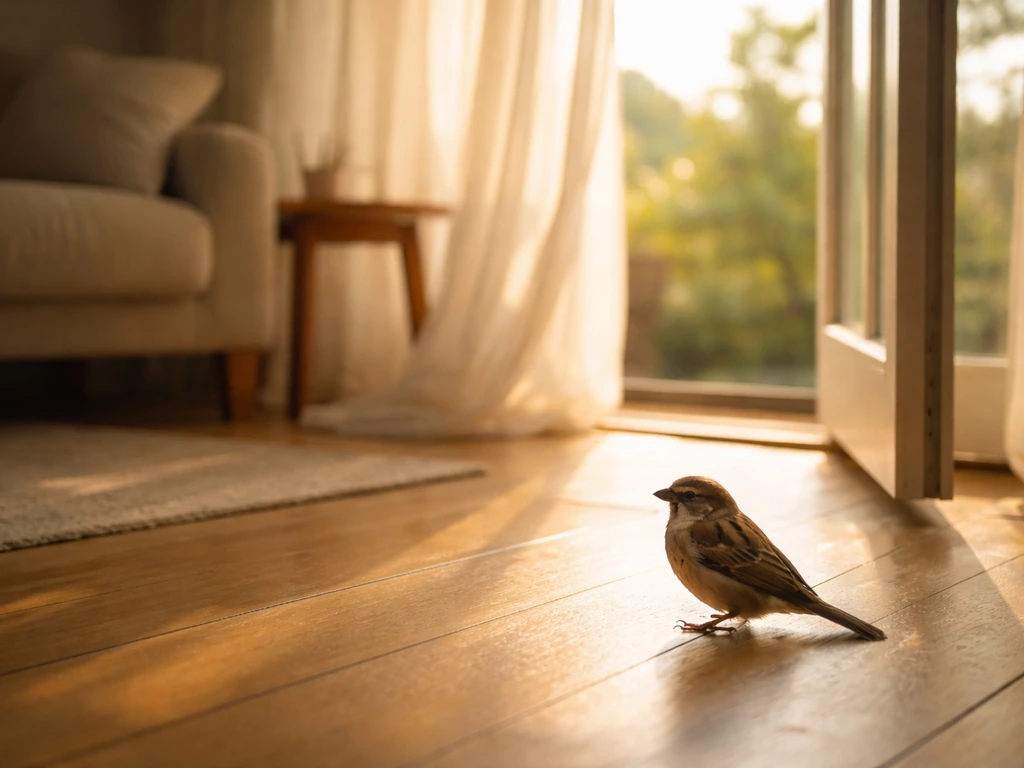
What "a bird in the house" actually means (the event itself)
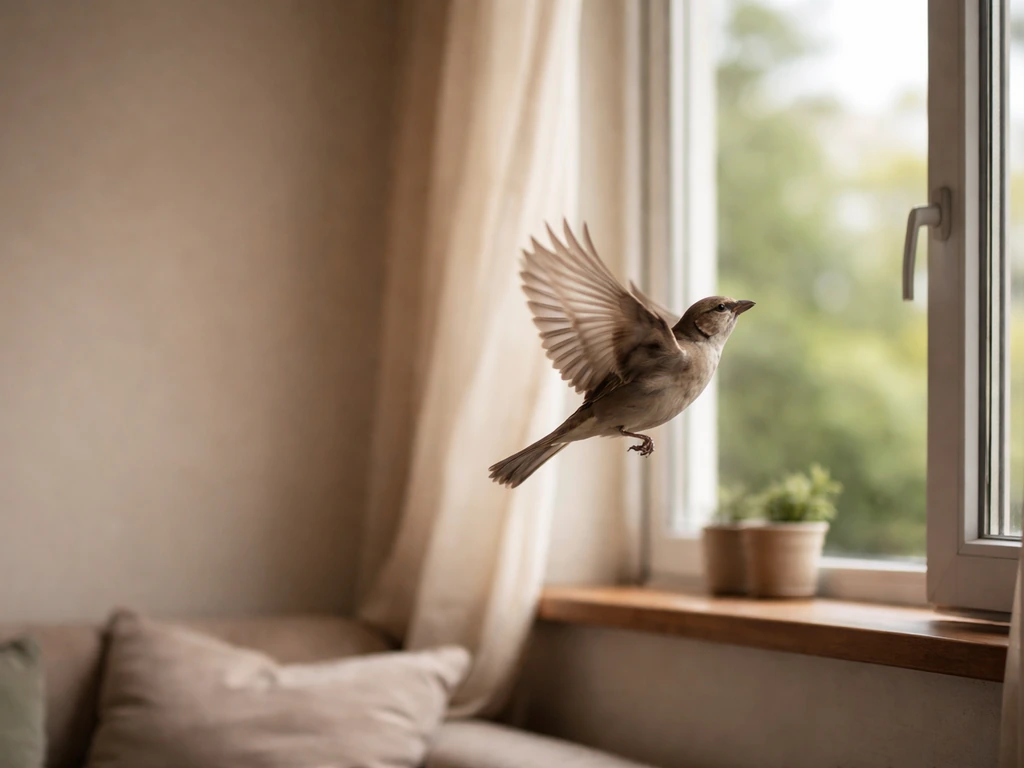
When people search for "bird in the house meaning," they're usually describing one of a few distinct situations: a bird flew in through an open window or door and is now trapped inside, a bird collided with a window and landed or entered in a dazed state, or a bird has been showing up repeatedly near or around the home. The meaning you draw from the event often depends heavily on which of those situations you're in. A frantic bird ricocheting off the walls is a very different event from a calm bird landing quietly on your windowsill.
If you're wondering whether there's a straightforward "house bird meaning," the short answer is: there isn't one universal interpretation. Different cultures, religious traditions, and spiritual frameworks attach very different symbolism to this event, and we'll get into all of those below. But before any of that, it helps to understand why birds end up inside homes in the first place, because the practical explanation actually informs the symbolic one.
Why birds end up inside homes
Birds don't choose to come inside your house for mystical reasons. They end up indoors because of very specific physical and environmental triggers, and knowing these makes the experience a little less alarming.
- Reflective glass and windows: Birds can't distinguish reflections from real open flyways. A glass corner, a large window with interior plants nearby, or a reflective surface on the outside of your home can all look like a clear flight path. Once a bird mistakes the glass for open space, it may enter through an adjacent door or opening in a disoriented state.
- Artificial light: Both the Smithsonian's National Zoo and Canadian government wildlife guidance confirm that artificial light disorients birds, especially at night when many species migrate using the moon and stars. Lights left on indoors can draw a bird toward what appears to be an exit, pulling it inside instead.
- Open doors and windows: The most straightforward cause. A bird chasing an insect, fleeing a predator, or simply following the light can enter through an open door or window without any complicated explanation.
- Chimneys and vents: Particularly during nesting season, birds may enter through uncapped chimneys or damaged roof vents. This is especially common with chimney swifts and starlings.
- Weather and seasonal disorientation: Storms, strong winds, and seasonal migration can push birds off course and into areas they'd normally avoid.
Understanding these causes matters spiritually too, because many interpretive traditions ask you to consider the full context of an encounter before assigning meaning. A bird that flew in during a windstorm at night carries different contextual weight than a bird that calmly entered on a still, sunny morning.
Get the bird out safely: what to do right now
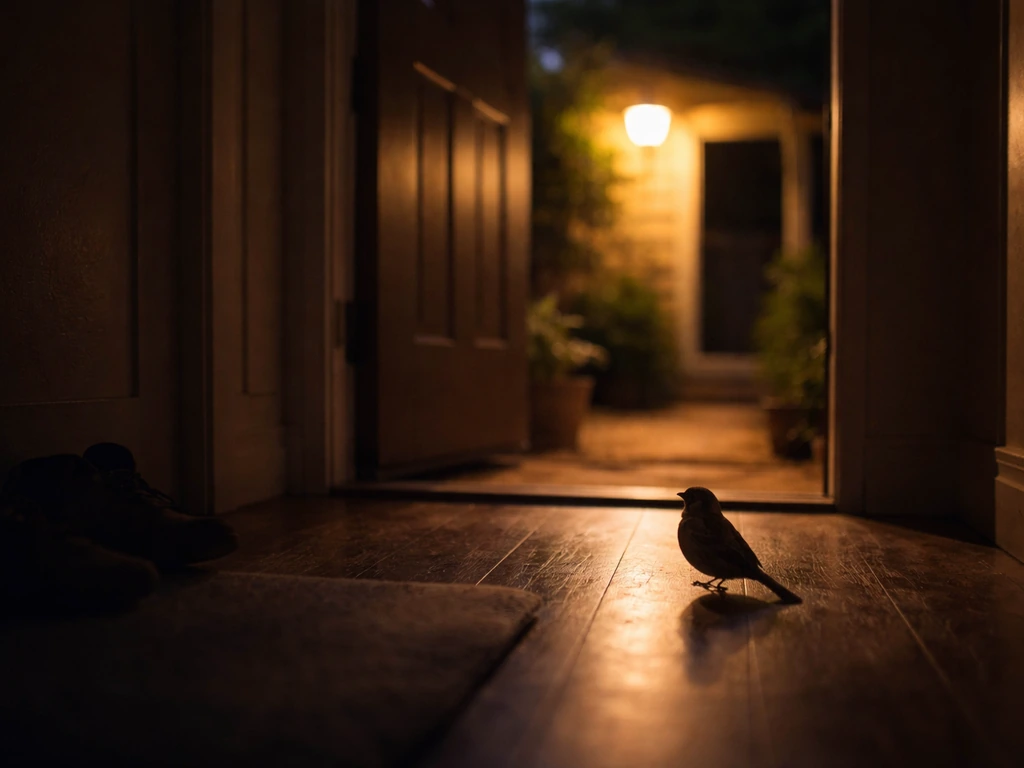
If there's a bird in your house at this moment, here's what actually works. The RSPCA and San Diego Humane Society both offer tested guidance, and these steps align with what wildlife rescuers recommend. The RSPCA recommends opening an external door or window and providing only one source of light by blocking other light sources, such as a fireplace The RSPCA and San Diego Humane Society both offer tested guidance.
- Turn off all interior lights. Birds follow light, so a dark interior with one bright, open exit is the fastest way to guide them out.
- Open one external door or window as wide as possible. Don't open multiple exits, since that creates confusion. One clear, bright opening is far more effective.
- Close or draw curtains over all closed windows. Birds will attempt to fly through glass they perceive as open air. Covered closed windows prevent injury and redirect the bird toward the real exit.
- Give the bird space and time. According to Columbus Audubon, birds instinctively fly upward when stressed, which can trap them against ceilings. Step back, stay quiet, and let the bird find the open exit on its own.
- If the bird isn't leaving, gently use a towel or sheet to block off interior spaces and guide it toward the exit. Don't chase or grab it unless absolutely necessary.
- If it still won't leave, call a local wildlife rehabilitation center. Continued indoor confinement is risky for the bird.
If the bird looks injured
If the bird is immobilized, unconscious, bleeding, or unable to fly, that's a sign it needs professional help immediately. Under U. S. Fish & Wildlife Service guidelines, you can humanely remove a trapped bird from your home without a federal permit if it poses a health or safety concern, but an injured or orphaned bird must be transferred to a federally permitted wildlife rehabilitator.
Don't attempt to treat the bird yourself. Contact your nearest wildlife rehab center, or check resources like FLAP Canada or Safe Wings Ottawa if you're in Canada. Some situations, like a bird stuck behind a gas appliance, may require calling a professional tradesperson rather than handling it yourself, since wildlife rescuers aren't qualified to work on gas fittings.
After the bird is gone
Once the bird has left, check the area for droppings and feathers and clean thoroughly. Wild birds can carry parasites and pathogens, so basic sanitation is important. Also take a moment to check which window, door, or vent the bird came through and see if you can prevent a repeat entry. Capping chimneys, adding bird-safe window film, and keeping screens in good repair are all straightforward preventive measures.
What it might symbolize: spiritual and omen interpretations
Once the bird is out and you've taken a breath, you might find yourself sitting with the experience and wondering what it means on a deeper level. That's a completely natural response. Humans have been reading meaning into bird encounters for thousands of years, and a bird entering a home is one of the oldest and most cross-cultural of all bird omens. If you've been asking yourself what the superstition about a bird in your house actually says, the traditions are varied and often contradictory, which is worth knowing before you attach too much weight to any one interpretation.
The most common modern spiritual framing treats a bird in the house as a "visitation," a messenger event. Many spiritual writers describe it as a possible sign of angelic presence, a message from a deceased loved one, or a nudge from the universe to pay attention to something in your life. The specific "message" is often tied to what's happening in your life at that moment, which is part of why this interpretation endures: it's open-ended enough to feel personal and relevant.
Other interpretive traditions lean into themes of transition and change. A bird crossing into a new space, your home, can symbolize an incoming shift: a new chapter, a period of growth, or the arrival of news. Some spiritual writers frame it as an encouragement rather than a warning, particularly when the bird is calm and appears comfortable in your space. The key takeaway from most contemporary spiritual perspectives, and this is worth holding onto: the event isn't automatically bad. Many modern spiritual writers explicitly advise against fear-based readings and instead invite curiosity.
Biblical, folklore, and cultural perspectives
Across religious traditions, birds carry layered and often comforting symbolism. In a Christian context, some of the most frequently cited passages around bird encounters come from the teachings of Jesus in Matthew's Gospel. Matthew 10:29 references God's awareness of every sparrow; Matthew 6:26 points to birds of the air as examples of divine provision and trust; and Matthew 10:31 offers direct reassurance: "Do not be afraid; you are worth more than many sparrows." These verses are commonly cited in Christian interpretation of bird encounters not as omens but as reminders of providence and presence. The bird becomes a prompt to release worry rather than a harbinger of specific events.
Folklore tells a more complicated story. One of the most documented North American household omens, recorded in West Virginia folklore, holds that a bird entering a home foretells the death of someone in the household. Appalachian and Southern folk traditions sometimes soften this to "a visitor or death," reflecting the ambiguity built into many superstitions. In Celtic traditions, birds were often seen as souls or messengers from the other world, and an uninvited bird indoors could signal news from beyond the veil. The practice of interpreting birds' actions as omens, known as ornithomancy, has roots in ancient Greek and Roman augury, where the flight, behavior, and species of birds were formally read as divine messages.
It's also worth noting that omen associations vary significantly by species. Magpies, crows, and ravens carry distinct luck associations in different cultures, some positive, some negative, and these associations don't translate cleanly across traditions. A magpie entering a home carries very different folkloric weight in British culture than in East Asian traditions, where it's often a symbol of good luck and happiness. This is one reason why the bird's species matters when you're trying to refine the meaning.
If you're curious whether the general weight of these traditions skews positive or negative, it's genuinely mixed, and whether a bird in the house is bad luck is a question worth sitting with carefully rather than answering too quickly.
How to refine the meaning: bird type, behavior, and timing
Not all bird-in-house events are created equal. Spiritual and folkloric traditions have always paid attention to the specifics, and there are a few key variables that can help you interpret the event more precisely.
The bird's behavior
A bird flying erratically, bouncing off walls and windows in a panic, is almost certainly disoriented and frightened. Spiritually, some interpreters read this as urgency, a message demanding attention, but practically, it's a sign the bird is stressed and needs your help getting out. A bird that lands calmly and stays still, or moves through the house slowly and purposefully, tends to draw more "visitation" or "messenger" interpretations. The calm bird that seems unbothered by your presence is the event most commonly described in spiritual contexts as a meaningful encounter.
The bird's species
Species matters both practically and symbolically. Different birds have different behaviors around homes and windows. For example, what a starling in the house means can be interpreted through both a practical lens (starlings are highly adaptable, attracted to light and warmth, and often enter through chimneys or vents) and a symbolic one (starlings are associated with community, communication, and resourcefulness in various traditions). Sparrows, robins, doves, and crows all carry their own distinct folkloric and spiritual associations that color the interpretation.
Timing and repetition
A one-time event and a repeated pattern are two different things. A bird entering your home once is easily explained by disorientation or an open window. A bird that returns to the same window, same doorway, or same perch over multiple days is harder to dismiss as coincidence, and spiritual traditions tend to weight repeated encounters as "stronger" or more deliberate messages. Similarly, timing matters: a bird entering during a period of personal transition, grief, or major decision-making will naturally feel more charged than one that flies in on an otherwise ordinary afternoon.
A quick comparison by event type
| Event Type | Most Likely Practical Cause | Common Spiritual/Folkloric Reading |
|---|---|---|
| Bird flies in erratically, bounces off walls | Disorientation from light/reflections | Urgent message; need for attention or change |
| Bird enters calmly and perches | Open door/window while exploring territory | Visitation, messenger, angelic presence |
| Bird hits window, enters dazed | Reflection mistaken for open flyway | Transition, a soul passing, news incoming |
| Bird returns to same spot repeatedly | Territorial behavior, food/light attraction | Repeated spiritual signal; strong message |
| Bird found at night near bright lights | Artificial light disorientation during migration | Liminal timing; crossing between states |
Dreams vs. the real thing
If you arrived here because you dreamed about a bird inside a house rather than experienced it physically, the interpretive framework shifts quite a bit. Dream encounters are processed differently across traditions and tend to draw more on personal psychology and inner symbolism. The spiritual meaning of a bird in a house dream deserves its own exploration, since dream birds are rarely about a literal event and more often about something your subconscious or inner life is working through.
What to take from this, practically and personally
Here's what I'd suggest as a practical meaning summary you can use right now. First, handle the physical situation: get the bird out safely using the steps above, check for injury, and clean up afterward. If a bird hits a window, first check for injuries like head or wings and assess how alert it is before deciding what to do next [check for injury and alertness](https://resources. sdhumane.
org/ResourceCenter/EducationalMaterials/CoexistingwithWildlife/Songbirds/WindowsandBirds). Second, if the event felt significant to you, trust that feeling as worth exploring, but resist snapping to the most fear-based interpretation you find. The death omen reading is the most dramatic and therefore the most memorable piece of folklore around this event, but it is far from universal and is directly contradicted by many other traditions that frame the same event as protection, hope, or spiritual proximity.
Third, pay attention to context. What's happening in your life right now? A bird entering your home during a period of grief or transition may carry personal resonance that a bird entering on a random Tuesday simply doesn't. The meaning you find in an encounter like this is genuinely shaped by your own story, your own beliefs, and your own readiness to receive a message. That's not a weakness in the interpretation, it's actually how meaning works in most spiritual traditions.
And if you're left with more questions than answers after this, that's okay too. Some encounters are worth sitting with rather than immediately resolving. What might this one be asking of you?
FAQ
Does a bird entering a house automatically mean something spiritual or supernatural?
No. In most cases it’s explained by real-world factors like open doors or windows, light drawing birds at night, or a chimney or vent route. If the bird was stressed or injured, prioritize the practical rescue and only then consider symbolism, if it still feels relevant to you.
What should I do if the bird keeps finding the same spot after it flies out once?
Treat it as a likely entry-point issue. Recheck screens, seal gaps around windows and vents, and confirm the chimney damper is closed when not in use. If it returns to the same window repeatedly over days, consider placing a temporary barrier (like covering the specific window) until you can inspect the exterior.
How can I tell whether the bird is disoriented versus injured?
Disoriented birds often flutter, bump into glass, or circle without consistent landing. Injured birds may sit low, droop a wing, bleed, pant with an open mouth, or fail to right themselves. If you see bleeding or inability to fly, don’t attempt care at home, contact a wildlife rehab center or appropriate professional immediately.
Is it safe to open doors and windows to let the bird out, or will it get worse?
It’s usually safer than trapping, especially if you can create an obvious exit route. Turn off interior lights near that exit, darken other rooms, and open only the path you want it to use. Avoid chasing, because rapid movement can increase panic and collisions.
What if the bird hits a window and then flies off on its own?
Even if it leaves, collisions can still cause unseen injury. Keep pets and children away from windows for the rest of the day, check the ground area and corners for a resting bird, and if it’s found injured or unresponsive contact wildlife help.
Does the bird’s species always determine the meaning?
Species affects folkloric and symbolic associations, but it does not override the practical reality. A species that tends to enter via chimneys or vents might explain the event without symbolism. If you want a meaning layer, use the species to refine interpretation, then confirm the entry mechanism.
What does it mean if the bird was calm and just landed quietly?
Some traditions read calm behavior as a “visitation” or message-type encounter, but the practical context still matters. A calm bird may simply be resting or investigating warmth and food sources near a window. If it appears uninjured, your priority is still to help it leave safely.
Are there cultural “death omen” interpretations, and should I worry if that’s what I’ve heard?
You should treat it as one tradition, not a universal rule. Many interpretations are non-fear-based, and the same event can be read as protection, change, or providence in other frameworks. If fear-based readings don’t align with your beliefs, you can focus on context and reassurance instead of expecting a specific outcome.
What if I dreamed about a bird in a house instead of seeing one in real life?
Dreams tend to be personal symbolism rather than a literal event indicator. Consider what was happening emotionally around the dream (stress, grief, a big decision) and whether the “bird” felt threatening or comforting. If you want a link to the waking-world meaning, keep it loosely interpretive rather than predictive.
Can I clean up right away, or are droppings and feathers a health risk?
Clean up after the bird is out, and do it carefully. Wear gloves if handling feathers or droppings, avoid dry sweeping, and consider dampening debris before removing it to reduce airborne particles. If you have respiratory conditions or the cleanup is large, consider professional assistance.
Should I contact a wildlife professional if the bird is uninjured but won’t leave?
Yes, if it’s not responding to basic exit setup or you can’t safely get it out without stress or risk. Wildlife rehab centers can advise remotely in many areas. If you suspect it’s behind a gas appliance or within walls, call the appropriate professional because handling those locations can be dangerous.
How do I prevent it from happening again without harming the bird?
Focus on prevention, not deterrent harshness. Repair or improve screens, use bird-safe window film to reduce collisions, cap chimneys when appropriate, and manage attractants like outdoor lights at night or accessible food sources near entry windows. If you have repeated visits, inspect vents and gaps around the specific entry route.
Next Article
Why Is My Bird Flapping Its Wings at Me? Causes and What to Do
Understand why your bird flaps wings at you and what to do, from hormones and stress to attention and warnings.