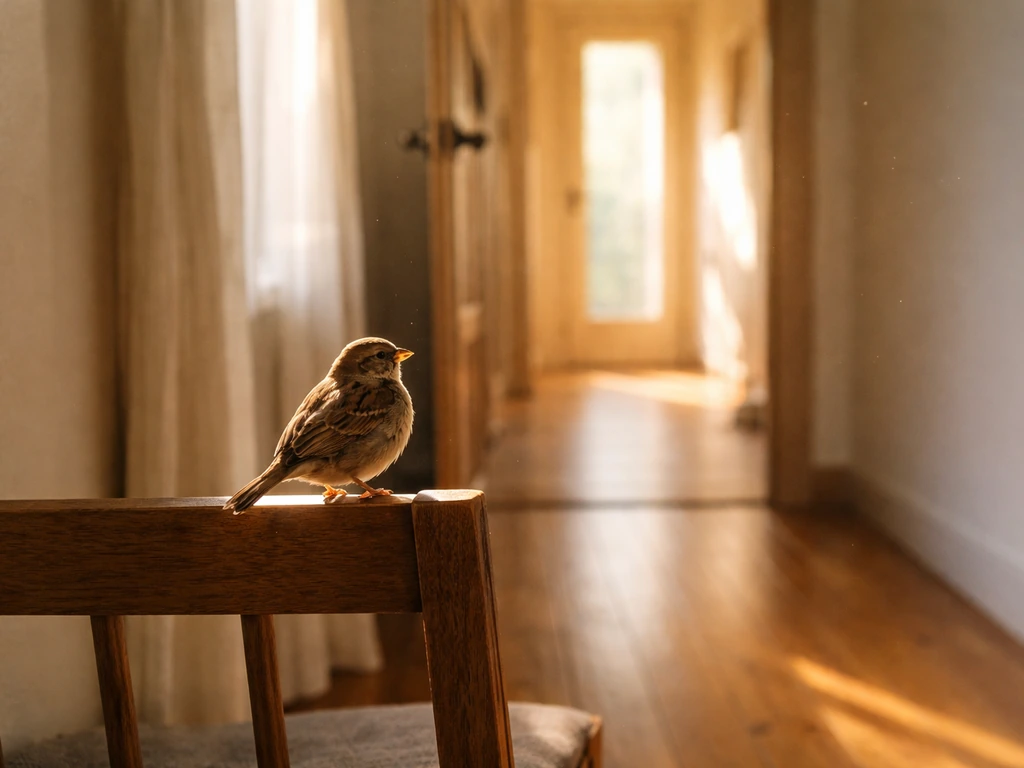
Dreaming of a bird inside your house most often points to a message trying to reach you, a change already in motion, or a part of yourself that feels either newly free or uncomfortably trapped. It is rarely a warning of literal harm. Across spiritual traditions, folklore, and psychological frameworks, the bird-in-house dream is best read as an invitation to pay attention, not a prediction to fear.
Bird in House Dream Meaning: Spiritual Messages and Steps

Maya Hartwell
27 Apr 2026
What a bird in the house dream usually means
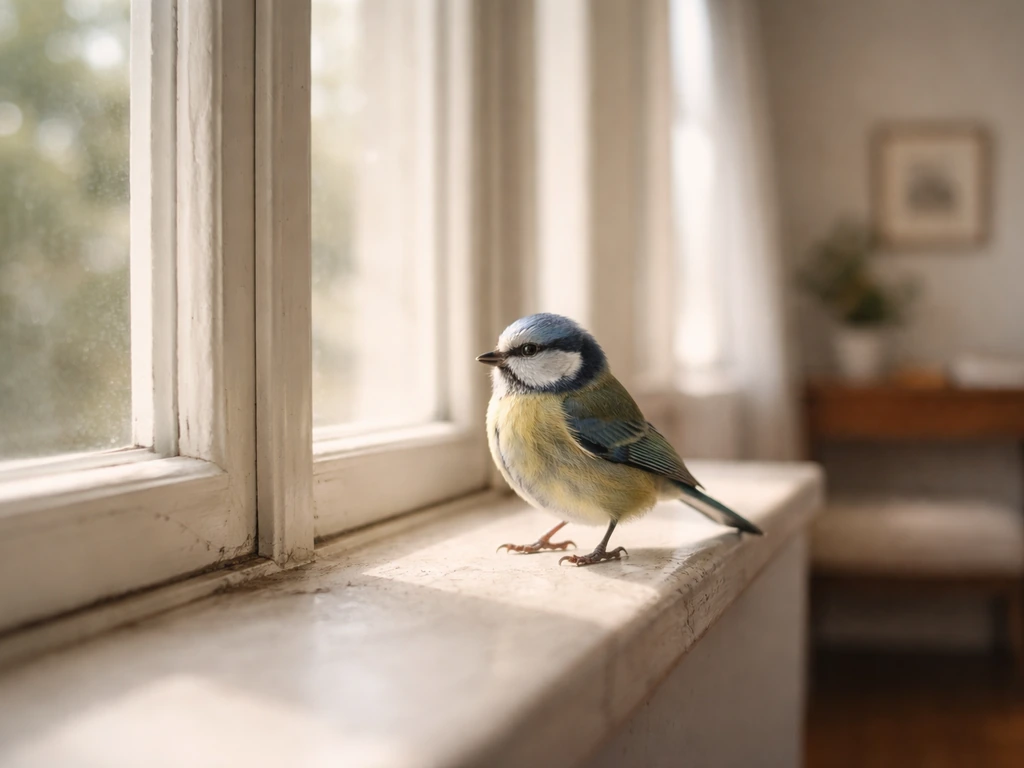
Birds appearing inside a domestic space in a dream tend to cluster around a few recurring themes: news or a message on its way, a shift in your personal boundaries, a nudge toward freedom or a warning that something is feeling confined. Dream dictionaries across many traditions frame birds generally as positive symbols tied to spirit, intuition, and transition. When a bird moves indoors in a dream, the layered meaning gets richer because your home represents your private self, your interior world. Something that belongs outside is now inside. That boundary crossing is the heart of the symbol.
From a psychological angle, dreaming about an animal in an unusual domestic space often reflects the dreamer's relationship with freedom versus constraint. Are you holding something in that wants to be released? Is something from the outside world pressing into your personal life? The bird inside the house can represent either of those tensions. It is worth holding the image lightly at first rather than immediately jumping to the most alarming interpretation.
The big themes running through this dream
No matter which tradition you look through, a handful of core themes keep surfacing when a bird appears inside a house in a dream. Understanding these themes gives you a framework before you try to pin down a specific meaning.
- Freedom and liberation: Birds are inherently symbols of flight and openness. When one appears indoors in a dream, it can signal a desire to break free from a situation, a relationship, or a limiting belief. Alternatively, if the bird seems distressed or trapped, it may mirror feelings of being confined in your waking life.
- Messages and news: Across folklore and metaphysical traditions, birds function as messengers. A bird entering your home in a dream can represent incoming news, an insight trying to reach your conscious mind, or a prompt to pay closer attention to communication in your life.
- Visitors and connection: Some folkloric traditions associate a bird in the house with an expected or unexpected visitor. In a dream, this can translate to a new relationship, a reconnection, or even contact from someone you have been missing.
- Boundaries and private space: Your home in a dream typically represents your inner world or personal life. A bird crossing that threshold raises a boundary question: is something or someone entering your private space in a way that feels welcome, neutral, or intrusive?
- Spiritual presence or guidance: In many traditions, birds carry spiritual significance, whether that is divine communication, a soul passing through, or a spirit guide making contact. The indoor setting amplifies the intimacy of that message.
How the details completely shift the meaning
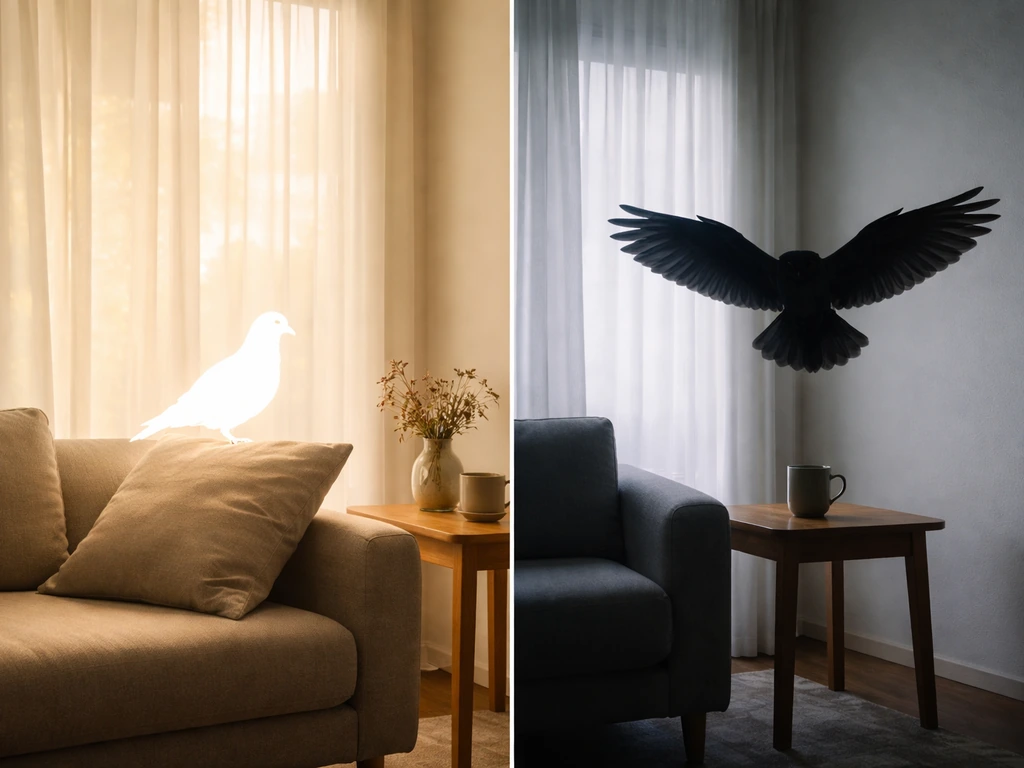
The general themes above are just the starting point. The specific details of your dream can dramatically change what it is pointing toward. Think of the bird type, the behavior, your emotional response, and any time-of-day or setting cues as the variables that tune the meaning. Getting specific about those details is the most practical thing you can do before settling on an interpretation.
Bird type and color
| Bird / Color | Common dream associations |
|---|---|
| Dove (white or gray) | Peace, spiritual presence, comfort, a gentle message; strongly tied to hope and the Holy Spirit in Christian tradition |
| Robin or small songbird | New beginnings, cheerfulness, renewal, a positive announcement on the way |
| Crow or raven (black) | Transformation, a message requiring your attention, change that may feel unsettling but is often necessary |
| Eagle or hawk | Clarity, heightened perspective, a call to see a situation from above rather than up close |
| Owl | Wisdom, hidden knowledge, or a situation that needs more light shone on it; in some traditions a more cautionary symbol |
| Parrot | Communication, something being repeated or mimicked in your life, a message about what is being said around you |
| Trapped or unknown small bird | A feeling of restriction, something delicate in your life that needs gentle handling |
| Brightly colored bird (red, yellow, blue) | Creativity, vitality, emotional energy; the specific color can add nuance (red for passion/urgency, blue for calm/truth, yellow for joy/caution) |
What the bird is doing

Behavior is often more telling than bird type. A bird flying freely through your house, exploring without distress, generally reads as a positive sign: something liberating is moving through your life. A bird frantically trying to escape through windows reflects anxiety, a sense of being stuck, or a situation that feels urgent and unresolved. A bird calmly perching and watching you can suggest guidance, patience, or a message that is waiting for you to be ready.
A bird tapping on glass from inside suggests something in your inner world is trying to get your attention from just below the surface. A bird that is injured or still speaks to vulnerability or something in your life that needs healing before it can move forward.
Your emotions in the dream
Your emotional state during the dream is arguably the single most important detail. If you felt peaceful or even joyful watching the bird, the overall message is likely one of reassurance or welcome change. If you felt anxious, urgent, or frightened, the dream is probably mirroring stress or worry in your waking life rather than predicting anything specific. Fear does not automatically mean a bad omen; it often means you are processing something that feels overwhelming right now. Curiosity or wonder points toward openness to the message. Frustration or helplessness mirrors feelings of being stuck.
Setting and time-of-day cues
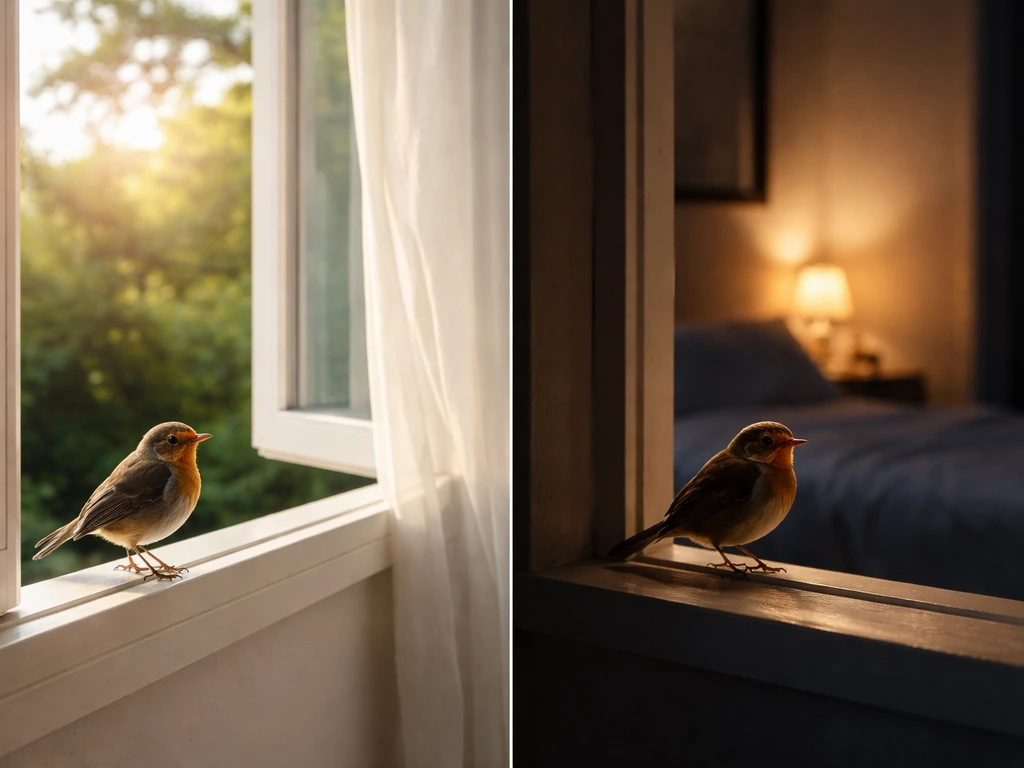
A bird appearing in a sunlit, bright room carries a lighter, more hopeful tone than one appearing at night or in a dark, unfamiliar room. Which room matters too: a bird in your bedroom relates more to your private emotional life or rest; a bird in the kitchen points to nourishment, home life, or family; a bird in the living room connects to how you present yourself or the shared, social part of your life. If the dream felt early-morning-like, with pale light and a sense of waking up, it may be linked to new beginnings or an insight you are just now able to receive.
Spiritual and cultural lenses worth knowing
Biblical and Christian perspectives
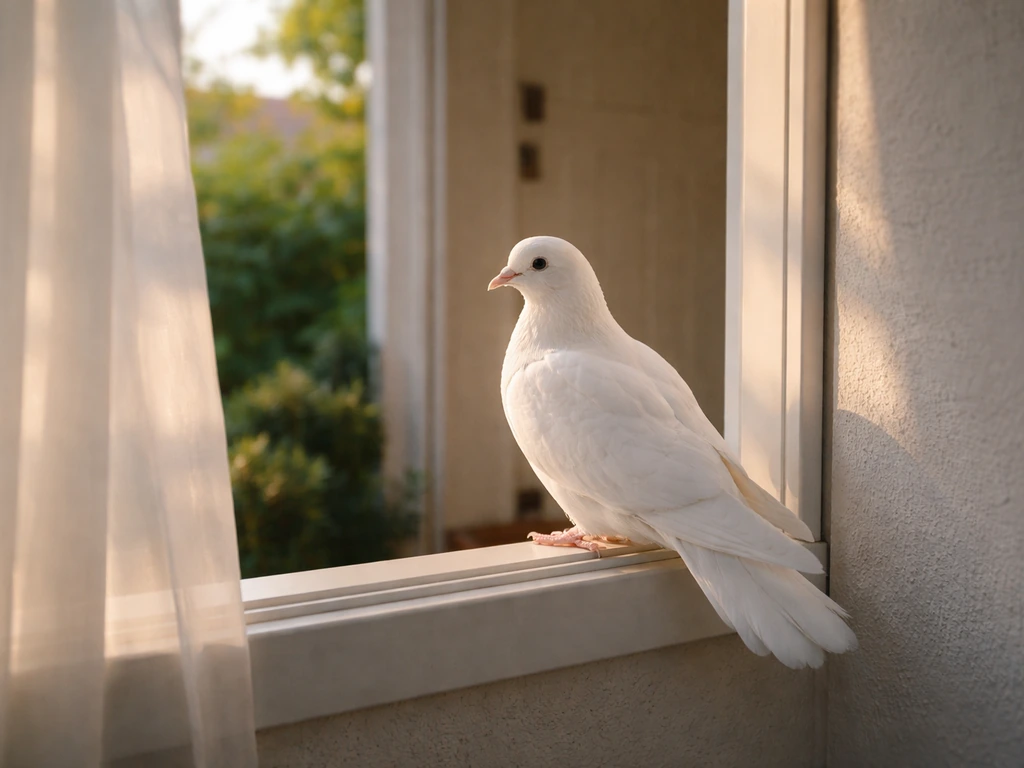
In Christian tradition, birds carry significant symbolic weight. The dove is one of the most recognized symbols of the Holy Spirit, connected to peace, purity, and divine presence. Biblical writers also used birds consistently in metaphor and simile to convey spiritual truths. From a Christian dream-interpretation standpoint, many practitioners would encourage the dreamer not to take the image literally, but to pray over it, note how it resonates with current life circumstances, and test what they sense against Scripture and sound judgment. The goal is discernment rather than fear. A bird arriving in a dream, particularly a gentle or luminous one, may feel like an encouragement or a nudge toward peace rather than a warning of harm.
Folklore and omen traditions
Folklore around birds entering a home is ancient and global. [The practice of ornithomancy, reading meaning from bird behavior and movement, dates back to Babylonian times and runs through Greek, Roman, and many indigenous traditions. ](https://en. wikipedia.
org/wiki/Ornithomancy) The most widely cited Western superstition is that a bird entering a house foretells death or serious misfortune, but even within that tradition the details vary considerably and not everyone agrees. Some regional variants say the bird entry simply signals a visitor is coming, or that change is on the way, without any death association at all. It is worth knowing this tradition exists without treating it as reliable prediction.
Folklore, as a rule, reflects cultural anxiety about the unfamiliar rather than literal prophecy. Folklore sometimes claims that is a bird in the house bad luck, but in a dream it is usually best treated as a symbol of change or a message you are being asked to notice. A real bird entering a real house carries those superstitions; in the dream world, the meaning tilts even more clearly toward symbol and metaphor.
Jewish and other traditional frameworks
In some Jewish dream interpretation traditions, birds in a dream are generally considered a positive sign, with a few specific exceptions such as owls or bats. There is also a practical tradition that if a dream symbol feels ambiguous or troubling, the dreamer can actively choose to focus on a verse or thought that reframes it positively, reinforcing that even within ancient traditions, dreamers have agency over interpretation rather than being locked into a fearful reading.
Metaphysical and spiritual psychology perspectives
From a metaphysical standpoint, the home in a dream represents the self, so a bird entering it can be read as spiritual energy, inspiration, or intuition crossing into your conscious awareness. It may signal that your inner life is opening up to something new, or that your boundaries between inner knowing and everyday practical thinking are shifting. If the bird feels like a presence more than just an animal, some traditions would interpret that as a visit from a spirit guide, an ancestor, or a loving presence from beyond the physical. These readings are more personal and experiential by nature, and how much weight you give them depends on your own spiritual framework.
Practical next steps you can take today

A dream like this is most useful when you treat it as a prompt rather than a verdict. Here is how to work with it practically right now.
- Write it down in detail before the image fades. Note the bird type, what it was doing, which room it was in, how you felt, and any other vivid details. Even a few sentences in the morning are enough to anchor the dream for reflection later.
- Ask yourself the grounding question: What is currently trying to get my attention in my waking life? Look at what is pressing on you at home, in relationships, or around personal freedom and boundaries. The dream is often a mirror for exactly that.
- Consider what feels 'trapped' or needs release in your life right now. If the bird was struggling to get out, this is worth sitting with. Is there a situation, a conversation, or a decision you have been avoiding?
- If you felt the dream carried a positive or peaceful energy, lean into that. Prepare for an incoming message, an opportunity, or a conversation that may open something up for you.
- Do something symbolic and grounding at home today: open a window, tidy a room you have been neglecting, or write a letter you have been putting off. These small acts of intentional action can help you process the dream's energy in a practical way.
- If you follow a spiritual practice, bring the dream into that space. Pray over it, meditate on the image, or simply sit quietly and notice what arises. You do not need a definitive answer; you need to be open to what the image is pointing toward.
Journaling prompts to go deeper
- What was the bird doing when I first noticed it, and what was my first emotional reaction?
- Where in my life right now do I feel either freer than usual or more confined than I would like?
- Is there a message I have been expecting, avoiding, or hoping for?
- Have I been letting outside pressures into my personal or home life in ways that feel uncomfortable?
- If the bird in the dream were a symbol of something I need to release, what would that be?
When to consider real-world factors or get support
Dreams, including vivid and symbolic ones, are not predictions of real events. Dreaming of a bird in your house does not mean harm is coming to your home or family. Research consistently shows that distressing or vivid dreams often reflect waking stress, anxiety, or emotional processing rather than future events. If you are going through a major life change, dealing with home stress, or carrying a heavy worry load, your dream content will often reflect that directly. The dream is your mind working through something, not a forecast.
That said, it is worth paying attention to patterns. If this dream is recurring, appearing with increasing intensity, or leaving you genuinely anxious when you wake up, that is a signal worth taking seriously, not as an omen but as a sign that something unresolved needs attention in your waking life. Recurring distressing dreams are often linked to unmet emotional needs, ongoing stress, or something you are not yet ready to face directly.
If the dreams are disrupting your sleep regularly, or if the anxiety you feel around them is bleeding into your daytime life, practical support is available. Talking through what you are experiencing with a trusted person, a therapist, or a counselor is a concrete next step. Approaches like imagery rehearsal therapy, where you consciously rewrite the ending of a distressing recurring dream while awake, have solid evidence behind them. You do not have to stay in a fearful loop around a dream, no matter how vivid it feels.
Also consider whether anything in your real home environment is contributing. Changes in your living situation, conflicts at home, worries about a family member, or even literally having heard birds outside your window at night can all find their way into your dream imagery. Sometimes the most grounded interpretation is also the most practical one.
Quick answers to the questions people ask most
Is dreaming of a bird in the house good or bad?
Most dream traditions lean positive, framing birds in the home as symbols of incoming news, spiritual presence, freedom, or welcome change. Whether it feels good or bad in your specific dream depends heavily on the bird's behavior and your emotional response. A calm, luminous bird is generally a reassuring symbol. A frantic or injured bird reflects stress or a situation that needs tending to. Neither is a fixed prediction.
Does it predict death?
No. The association between a bird in the house and death comes from folklore superstitions about real birds entering real homes, and even those traditions are inconsistent and disputed. In the dream space, that superstition carries even less literal weight. Dreams do not reliably predict physical events. If you woke up frightened by that thought, that fear is worth exploring, but it is not evidence the dream is a death omen.
What if the bird in the dream won't leave?
A bird that refuses to leave the house in a dream often points to something in your life that is lingering past its natural end: a relationship, a habit, a worry, or an old story about yourself. It can also reflect a message you have been resisting. The bird staying put is less of a threat and more of a persistence. Ask what in your waking life is similarly refusing to resolve itself until you give it proper attention.
Does bird type really change the meaning that much?
Yes, meaningfully so. A dove carries connotations of peace and spiritual gentleness across multiple traditions. An owl tends to point toward hidden wisdom or something you need to look at more carefully. A crow or raven signals transformation rather than threat. Black birds are sometimes framed as more cautionary in folklore, but that does not make them inherently negative in a dream context. Think of bird type as the tone or emotional color of the message rather than its literal content.
What if I dream about a specific bird I recognize from waking life?
If the bird in your dream is clearly a species or even a specific individual bird you have encountered in your real life, that personal connection usually takes priority over general symbolism. Your subconscious may be using something familiar to deliver a message in a language you will personally recognize. What does that bird mean to you? That personal resonance is often the most direct route to the dream's meaning.
If you are also curious about what it means when a real, physical bird enters your home, or whether there are specific superstitions tied to particular species like starlings, those are connected but distinct conversations from the dream space, worth exploring separately. If you are asking about the starling bird in house meaning specifically, that is a separate superstition and symbolism conversation from the dream space starlings.
FAQ
What if the bird just appears in my house but doesn’t behave in any obvious way?
If the bird does not interact much, treat the dream as a “symbol in the background” rather than a plot. Focus on what the bird represents emotionally in that moment (welcome, unease, curiosity) and on which room it appeared in, since location usually points to the life area most affected (rest, shared life, family/home, or personal boundaries).
How do I interpret the bird inside my house if it seems connected to boundaries?
Match the dream to current boundary issues. For example, a bird entering a bedroom can align with privacy and emotional guardrails, while a bird in a kitchen can map to family routines, nourishment, or obligations. Then ask what you have been “letting in” or “not letting in” lately.
What does it mean if the bird is tapping, watching me, or trying to get my attention?
Try a quick two-question check: “What does this bird want in the dream?” (escape, attention, to be comforted) and “What am I resisting in waking life?” If the bird is tapping or watching, the most helpful interpretation is often a call to pay attention to something you already suspect but have not acted on.
What if this bird-in-house dream keeps repeating or getting worse?
If you repeatedly have the dream, especially with stronger fear or urgency each time, don’t interpret it as a stronger prophecy, interpret it as your mind flagging an unresolved stressor. A practical next step is journaling one recurring theme you notice (a person, place, decision, or unmet need) and then choosing one small waking-life action that moves it forward.
Should I take the folklore “bird entering a house” ideas literally in a dream?
Yes, but do it carefully. If you want to use the folklore angle, treat it as a cultural lens, not evidence. Your real decision point is whether the dream leaves you more anxious and avoids action, or whether it helps you identify a concrete concern you can address.
Could this dream be influenced by my stress or sleep, not symbolism?
Don’t ignore the possibility of a sleep context effect. If it happens after stressful days, irregular sleep, alcohol, or late-night screen use, the vivid imagery may reflect heightened mental processing rather than spiritual meaning. Still, you can use it symbolically by translating it into the underlying emotion (stress, anticipation, longing for freedom).
What does an injured bird inside the house usually suggest?
If the bird looks injured, focus on what feels “wounded” in your inner life, then look for a healing step rather than a prediction. For instance, the dream can point to needing rest, repair conversations, therapy support, or reducing pressure in the specific room area it appeared in.
If the bird refuses to leave, what should I do practically?
A bird that won’t leave often symbolizes persistence in a real-life theme, but you can make it actionable. Name the theme (a worry, habit, conflict, or relationship dynamic), then choose one boundary or closure step, like a direct conversation, a plan change, or a decision you have been postponing.
How do I interpret it if the bird species matches a bird I’ve seen in real life?
If the bird in the dream is one you have personally encountered, your interpretation should prioritize personal associations. Add a detail-based layer too: how that specific species typically behaves in real life, and what qualities you personally connect to it (calmness, boldness, mystery, aggression). Then compare that to your dream emotion to confirm.
I don’t know the bird type or the exact details, how can I still get a useful meaning?
If you’re unsure, pick the smallest consistent meaning instead of forcing a single story. Start with: emotional tone (peace versus fear), room (private rest versus social life), and bird behavior (free exploration versus escape attempts). Those three usually produce a usable reading even when other details are unclear.
Next Articles
Is a Bird in the House Bad Luck? What to Do Now
Is a bird in the house bad luck? Get real causes and step-by-step help to safely remove it, plus meaning myths.
Bird in a House Meaning: Practical and Spiritual Guide
Learn what a bird inside your home usually means, plus safe next steps and spiritual symbolism by situation and behavior
Why Is My Bird Flapping Its Wings at Me? Causes and What to Do
Understand why your bird flaps wings at you and what to do, from hormones and stress to attention and warnings.