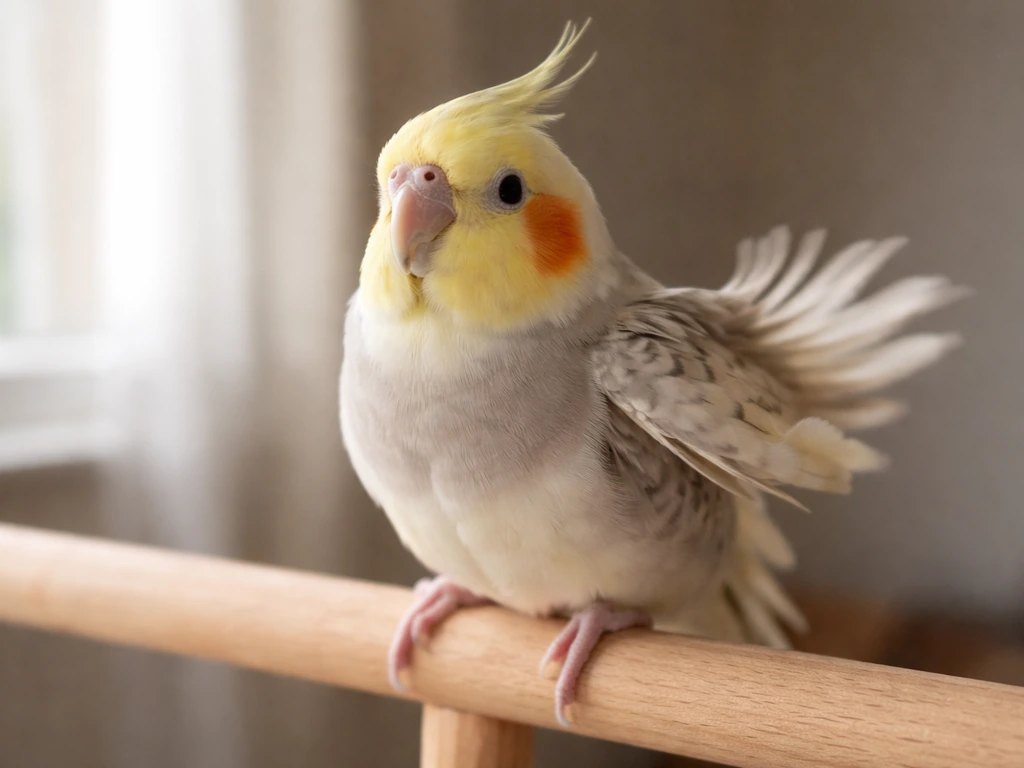
Quick answer: bad luck or just a bird indoors?
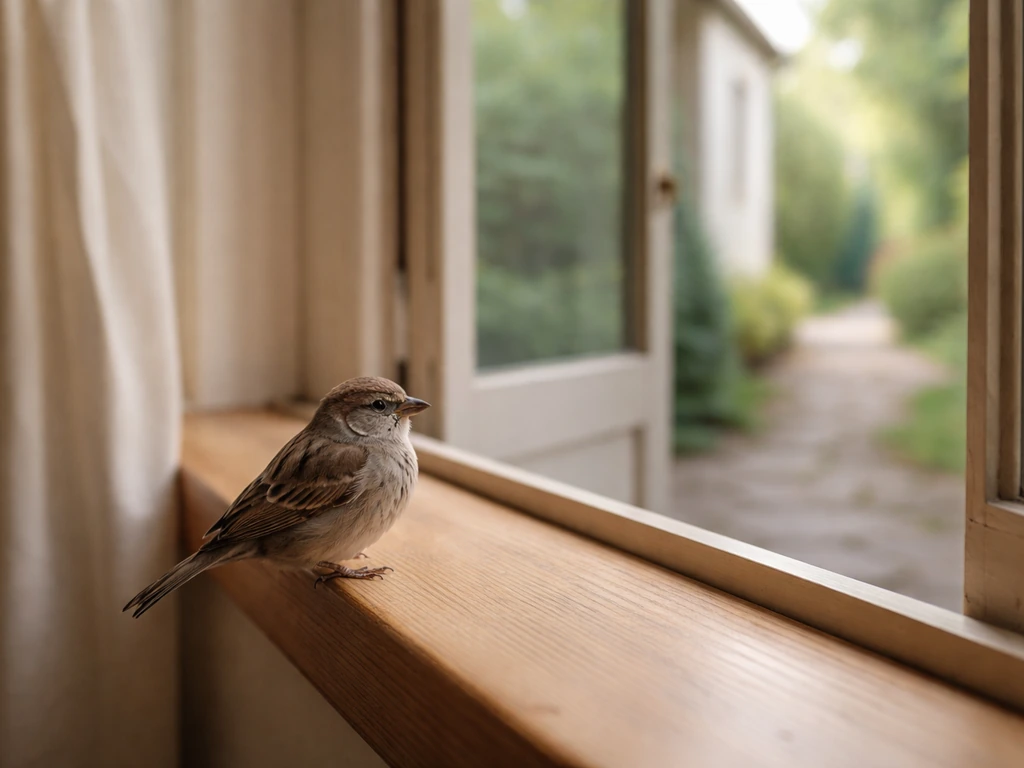
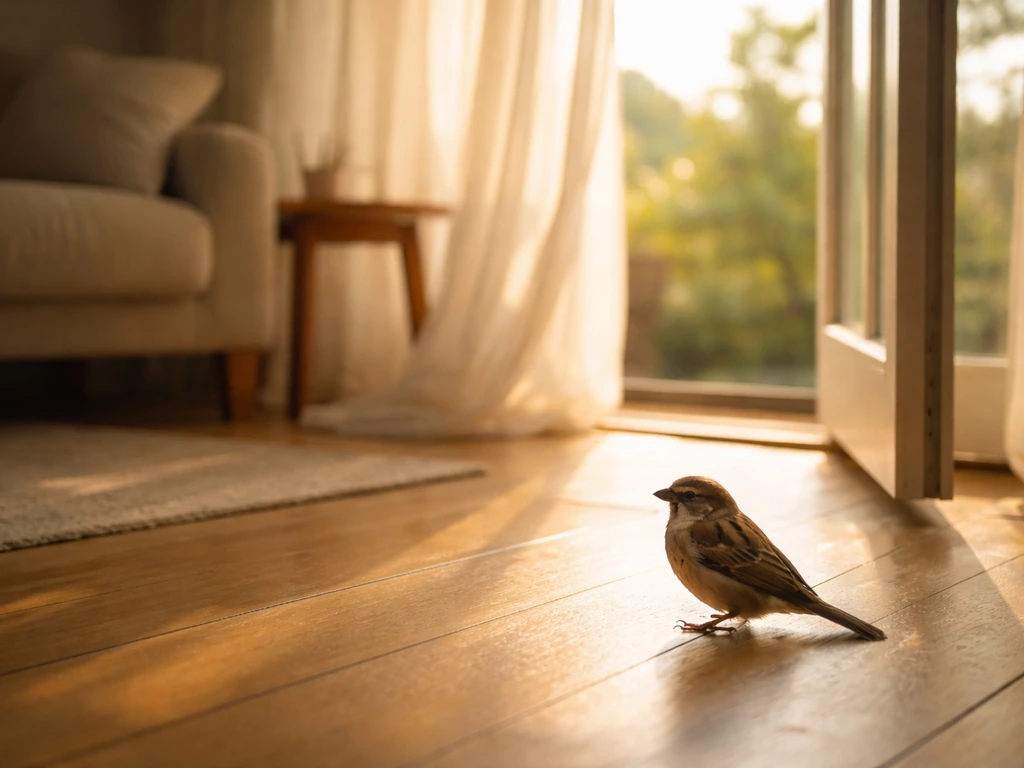
A bird in your house is almost always a natural accident, not a supernatural warning. Birds fly indoors because they are confused by reflections, drawn to light, or simply following an open window or door. That said, across dozens of cultures and centuries of folklore, an indoor bird carries real symbolic weight, and it is completely reasonable to wonder what it means beyond the practical. The honest answer is this: the bird itself is not inherently bad luck, but the tradition of reading meaning into the visit is old, wide, and worth understanding. Whether you treat it as a startling houseguest or a messenger worth paying attention to is entirely your call.
Why birds fly into houses (practical causes)
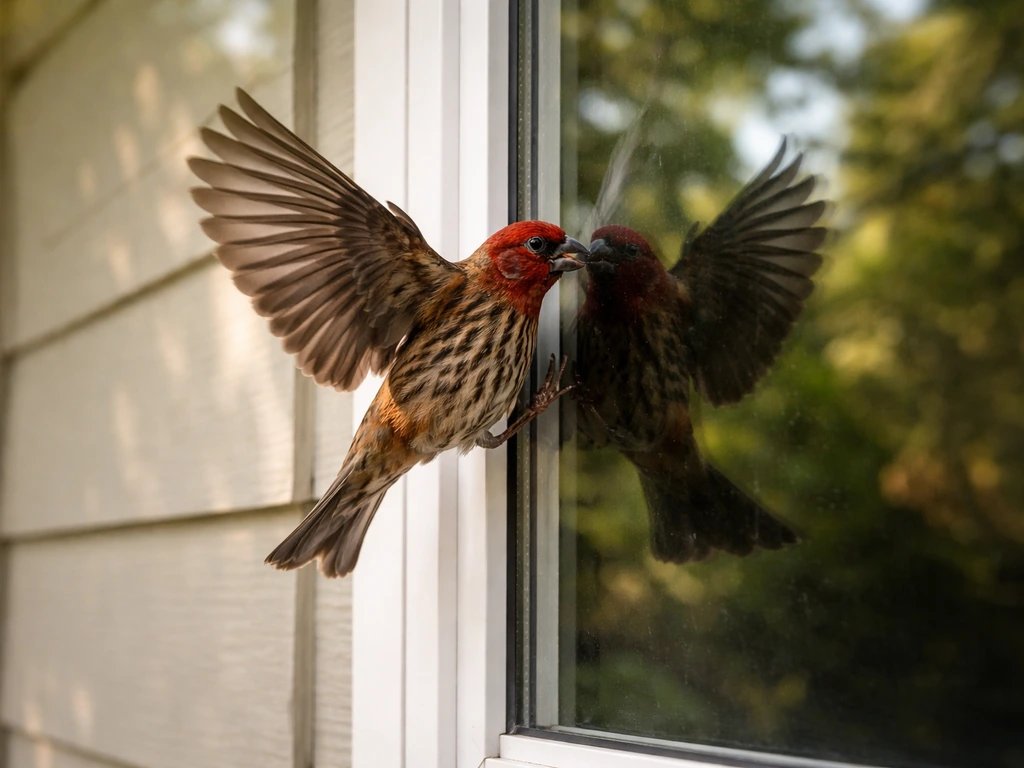
Before assigning spiritual meaning, it helps to understand why this happens in the first place. Birds do not wander indoors on purpose. There are a handful of very predictable, very ordinary reasons they end up inside.
- Reflective windows: The Cornell Lab of Ornithology explains that birds strike windows because the glass reflects sky and foliage, making it look like open space to fly into. During daylight, a bird simply cannot tell the difference between a reflection and real habitat.
- Artificial light at night: Research from the University of Florida notes that nighttime artificial lights actively draw birds in, particularly during migration season when millions of birds are navigating after dark.
- Open doors and windows: The most common cause of all. A bird spots movement or light inside, curiosity or momentum carries it through, and suddenly it cannot find its way back out.
- Seasonal and territorial behavior: During spring nesting season, some species (especially robins and starlings) become aggressive toward their own reflections and will fly at windows repeatedly, occasionally ending up inside.
- Juvenile birds: Young birds that have just fledged are clumsy, disoriented, and prone to landing somewhere they should not be, including your living room.
None of these causes have anything to do with luck or omens. They are physics, biology, and a little bit of bad timing. Knowing that makes the next step, getting the bird out safely, a lot less stressful.
How to get the bird out safely today (step-by-step)
The fastest, least stressful method for both you and the bird follows the same core logic recommended by the RSPCA, San Diego Humane Society, and Columbus Audubon: make the exit the brightest and most obvious point in the room, and then get out of the way. Here is the step-by-step process.
- Turn off the ceiling fan immediately. A panicked bird flying in circles can be seriously injured by a moving fan.
- Close off as much of the house as possible. Confine the bird to the room it is already in, or the smallest space closest to an exterior exit. The more space it has, the more chaotic this gets.
- Open one exterior door or window wide. This is your designated exit point. Make it the single clearest path to outside.
- Turn off all interior lights. The RSPCA specifically advises drawing curtains over closed windows and eliminating other light sources, including fireplace lights, so the bird is not confused by multiple bright spots.
- Let the open exit be the only light source. San Diego Humane Society calls this the 'bright exit' strategy: the bird is naturally attracted to the brightest point in the room, so make that point the open door or window.
- Leave the room. This is the part most people skip. Your presence is adding stress. Step out, give the bird five to ten minutes of quiet, and it will almost certainly find its own way to the light.
- If it is still stuck after 20 minutes, try gently herding it toward the exit with a large, open towel held in front of you, moving slowly. Do not grab or chase the bird.
- Once it is out, close the exit and check the room for droppings or feathers before letting pets or children back in.
Spiritual and folklore meanings of indoor birds (messages vs. omens)
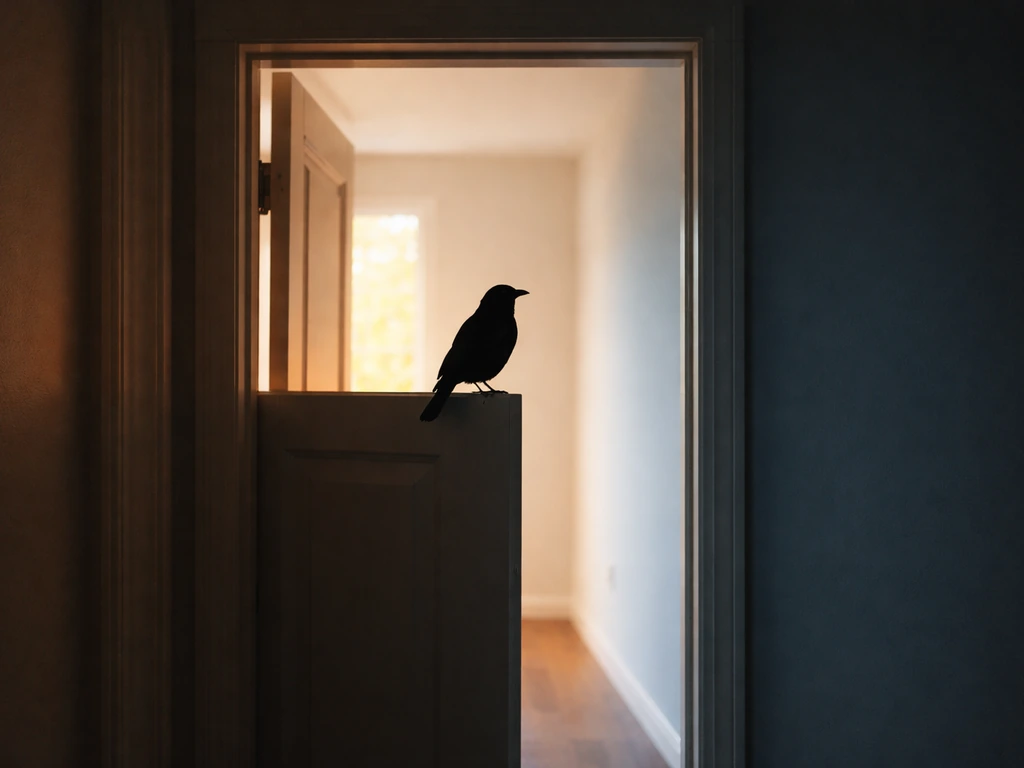
Once the bird is out and you have had a moment to breathe, the question that brought many of you here resurfaces: what did that mean? The idea that a bird entering a home carries symbolic significance is one of the most globally consistent pieces of folklore humans have ever shared. It shows up in European peasant tradition, Celtic mythology, Appalachian folk belief, and East Asian omens alike. But the meanings are far more nuanced than a simple 'bad luck' headline suggests.
In a lot of older European and British Isles folklore, a bird flying into the house was read as a message from the spirit world, sometimes interpreted as a soul visiting or a warning of change ahead. The specific bird mattered enormously. A robin indoors was sometimes seen as a sign of good fortune and blessing in Celtic tradition. A crow or raven indoors carried heavier, darker associations in Victorian England. A dove was almost universally read as peace or divine favor. If you want to dig deeper into what different species might symbolize, the starling bird in house meaning is a fascinating example of how one species carries its own layered folklore.
What most of these traditions have in common is that the bird is seen as a messenger rather than the source of bad luck itself. The event prompts reflection. Something is shifting. Pay attention. That framing is notably different from the blunt 'a bird in the house means someone will die' reading that circulates online. That specific belief does exist in some folk traditions, but it is one interpretation among dozens, and it is far from universal. For a fuller look at how these meanings vary, what is the superstition about a bird in your house walks through the regional and cultural variations in real detail.
If you want to interpret the visit personally, ask yourself what felt significant about it. Was the bird calm or frantic? Did it seem to linger near a particular person or space? Did it arrive during a moment of stress, transition, or uncertainty in your life? Many people find that the meaning of an encounter like this becomes clearer when they sit with it quietly rather than reaching for the fastest available interpretation. What might this visit mean for you, right now, given where you are in life?
Biblical and cultural symbolism of birds in the home
Biblical tradition does not address birds flying into homes directly, but birds carry profound symbolic weight throughout scripture. The dove that returned to Noah's ark with an olive branch became one of the most enduring symbols of hope and divine peace in Western culture. In the Psalms, the sparrow is used to represent God's care for even the smallest and most vulnerable creatures. Early Christian interpretation often read unexpected bird visits as potential signs of divine attention or angelic presence, particularly if the bird was a dove, a sparrow, or a songbird.
In Chinese tradition, certain birds entering the home are considered highly auspicious. A swallow nesting near or in a home is seen as a powerful sign of good fortune, prosperity, and family blessing. In Japanese folklore, cranes and certain songbirds are associated with longevity and good news arriving. Indigenous traditions across North America vary widely, but many include the belief that birds are messengers between the human world and the spirit world, and their unexpected presence in human spaces deserves respectful attention rather than fear.
The broader bird in a house meaning draws on all of these traditions simultaneously, which is why the symbolism feels so resonant across so many different backgrounds. Most cultural frameworks, when looked at carefully, lean toward the bird as a bearer of news or change rather than a direct cause of harm. The 'bad luck' label is a simplification of something much older and more complex.
What to do if the bird is injured or dead (meaning + safety)
If the bird is injured
If the bird hit a window hard and appears stunned or injured, do not handle it with bare hands. Use a clean cloth or gloves to gently place it in a small cardboard box with air holes, and keep it in a quiet, dark, warm place. Many stunned birds recover within an hour and can be released. If it does not recover, contact a local wildlife rehabilitator. In the US, the National Wildlife Rehabilitators Association has a directory. Do not attempt to feed it or give it water while it is stunned.
If the bird is dead
Finding a dead bird inside the house understandably amplifies the 'bad luck' worry. Symbolically, a dead bird has historically been associated with endings, transitions, and significant change in many folk traditions, though many interpreters also frame it as a sign that something old is releasing to make room for something new. On the practical side, safety comes first. Wear gloves and, if available, an N95 respirator or well-fitting mask before handling the bird or the area around it. The Massachusetts guidance for animal control officers responding to avian influenza mortality similarly emphasizes using appropriate PPE and following proper carcass disposal protocols appropriate PPE and follow-on carcass disposal protocols. The CDC advises using PPE and avoiding stirring up dust, waste, or feathers to prevent potential virus transmission, particularly given concerns around avian influenza.
Place the dead bird in a sealed plastic bag and dispose of it in an outdoor trash bin. Wash your hands thoroughly afterward. Clean the area where the bird was found with a diluted disinfectant solution. Do not dry sweep or vacuum, as the CDC specifically warns that this can push contaminated dust into the air. If there is a large accumulation of droppings in the area, the CDC and NIOSH recommend contacting professionals who specialize in hazardous waste cleanup.
Droppings, feathers, and 'signs' people notice (how to interpret and clean up)
What people read into droppings and feathers
A lot of people notice specific details after a bird visit and wonder if they carry meaning. A feather left behind is widely interpreted across folk and spiritual traditions as a message or a token, particularly if it is an unusually colored or placed feather. Many people in metaphysical and spiritual communities treat a found feather as a sign of guidance, protection, or contact from a loved one who has passed. Bird droppings landing on you or your belongings are, perhaps surprisingly, considered good luck in many European and Eastern traditions. The specifics matter here: where the feather or dropping was found, what you were thinking about at the time, and whether the moment felt significant to you personally.
It is also worth noting that if a bird visit happens while you are asleep, or if you find yourself repeatedly dreaming about birds indoors after an encounter, that layer of experience carries its own symbolic tradition. The bird in house dream meaning explores those interpretations in depth, and many people find it genuinely useful after a real-life bird encounter stirs something in their subconscious.
How to clean up safely
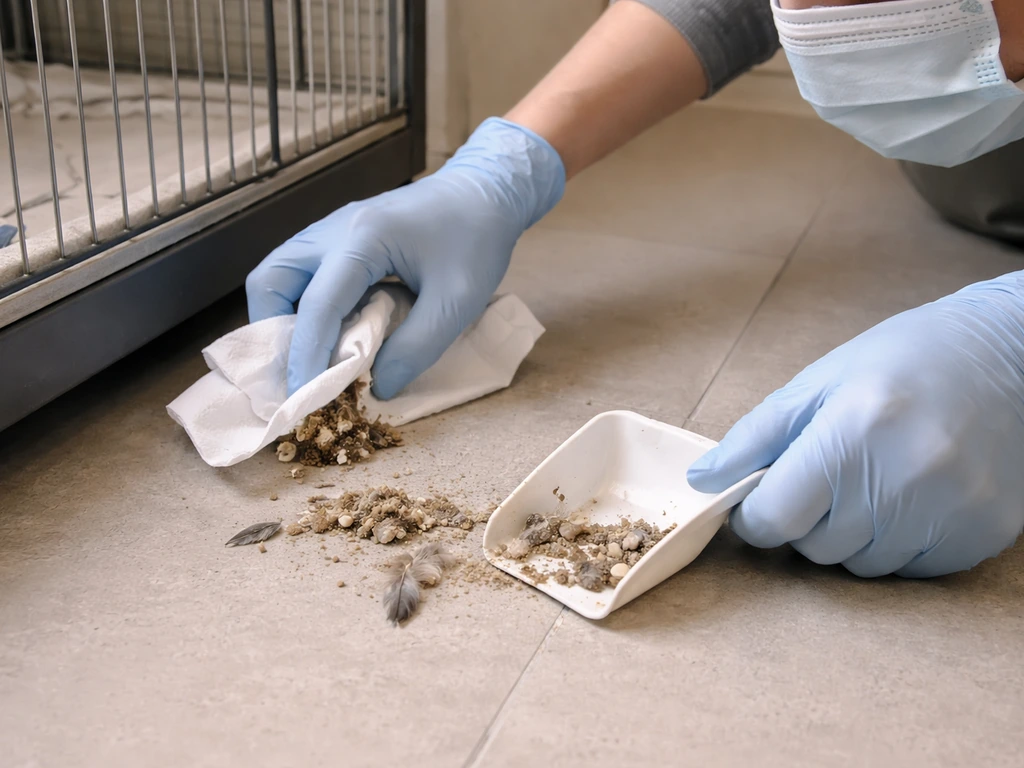
Whether you are processing the spiritual side or not, the cleanup needs to be practical and safe. Bird droppings can carry psittacosis, histoplasmosis spores, and in rare cases avian influenza, so the cleanup method matters.
- Put on gloves and a mask before touching anything. An N95 is ideal; a well-fitting surgical mask is an acceptable alternative if that is what you have.
- Do not dry sweep or vacuum. This aerosolizes particles. Instead, lightly mist the droppings with a water and disinfectant mixture to dampen them before wiping.
- Use disposable paper towels or cloths to wipe up the droppings, then place them directly into a sealed bag.
- Disinfect the surface with an appropriate cleaner and let it air dry.
- Wash your hands thoroughly with soap and water for at least 20 seconds.
- Dispose of the sealed bag in an outdoor bin. Do not leave it inside.
OSHA's guidance on avian flu prevention also recommends wetting or misting potentially contaminated material before any handling or cleaning, minimizing dust, and using appropriate respiratory protection throughout. If you found the bird in a space where droppings had been accumulating for a while (an attic, a rarely-used room), the CDC and NIOSH note that large accumulations may warrant professional hazardous waste cleanup rather than a DIY approach.
Practical vs. spiritual: a side-by-side comparison
| Situation | Practical explanation | Common spiritual interpretation |
|---|
| Bird flies in through open window | Attracted to light or reflection, entered accidentally | A message or visitor from the spirit world; change is coming |
| Bird hits window and enters stunned | Confused by reflective glass mistaken for open sky | A warning to pay attention; something requires your notice |
| Dead bird found inside | Struck a window or surface fatally; natural accident | An ending or transition; release of the old to make way for the new |
| Bird circles frantically and leaves | Panicked response to being trapped; natural exit-seeking | A brief message delivered; the situation will resolve quickly |
| Feather left behind after visit | Natural molting or stress shedding during the visit | A token or sign; guidance, protection, or contact from beyond |
| Droppings left on belongings | Normal bird behavior under stress | Good luck in many European and Eastern folk traditions |
You do not have to choose between these columns. Most people who take bird encounters seriously hold both the practical and the symbolic at the same time, without contradiction. The bird got in because of physics. What you do with the experience after that is entirely yours to determine.
When to worry more (and when to relax)
Most single bird-in-house events are exactly what they look like: a bird made a wrong turn, you helped it find its way out, and life moved on. The situations that call for more attention, practically speaking, are a bird that has been inside long enough to leave significant droppings (more than a small amount), a dead bird found in a space with poor ventilation, or repeated incidents suggesting birds are finding a consistent entry point into your home (which usually means a gap in the roof, an open vent, or a damaged screen that needs fixing).
From a symbolic standpoint, many traditions suggest that a single visit is worth noticing and reflecting on, while repeated visits from the same species over a short period carry more weight as a potential sign or message. If that resonates with you, sit with what has been shifting or uncertain in your life lately. Bird symbolism across cultures almost always points inward as much as outward. The question is never just 'what does this bird mean?' It is 'what does this bird mean to me, right now?'