
"Bird in your ear" most commonly works as an idiom rooted in the older expression "a little bird told me", meaning someone passed along information, advice, or a quiet suggestion, usually without naming their source.
Bird in Your Ear Meaning: Idiom, Spiritual Messages & Signs

Maya Hartwell
28 May 2026
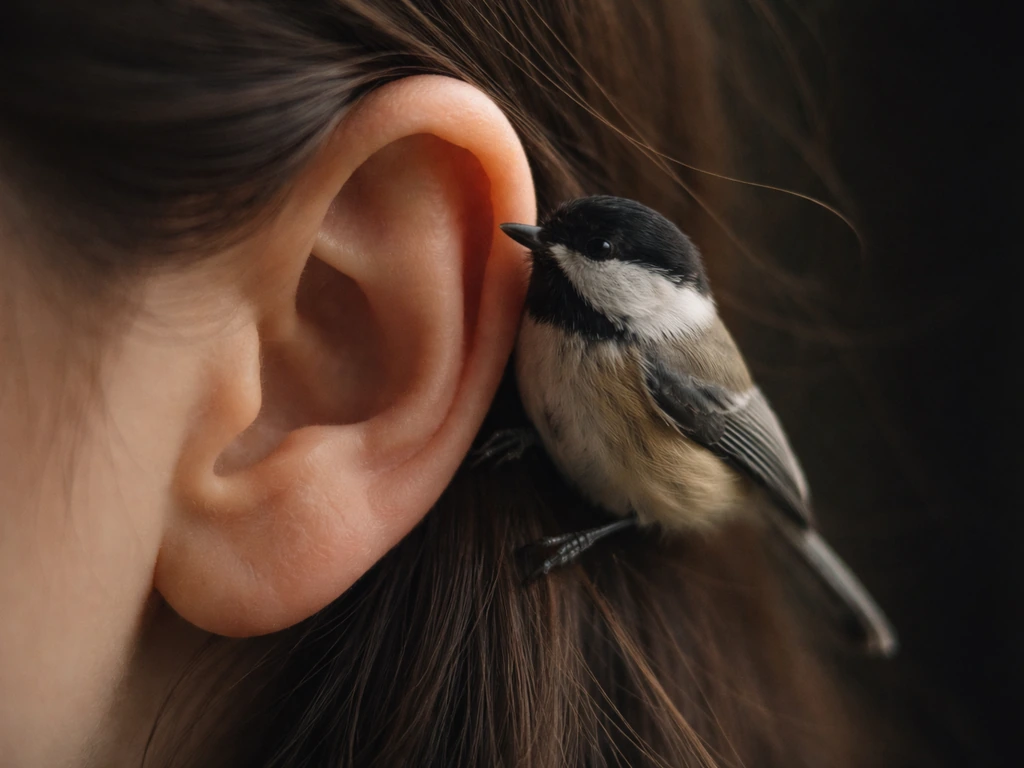
In Euralex 2012 proceedings, “Bible idioms” discussion gives an example of this idiom in the form “as a little bird told me …” and notes where it appears in analysis (including creative literature) “Bible idioms” discussion gives an example of “as a little bird told me …”.
But if you landed here because a bird literally flew close to your ear, chirped persistently near your face, or you felt an unexplained sensation you couldn't shake, the phrase takes on a whole different weight. Both interpretations are worth unpacking, and this guide covers each one honestly.
What "bird in your ear" actually means: idiom vs literal experience
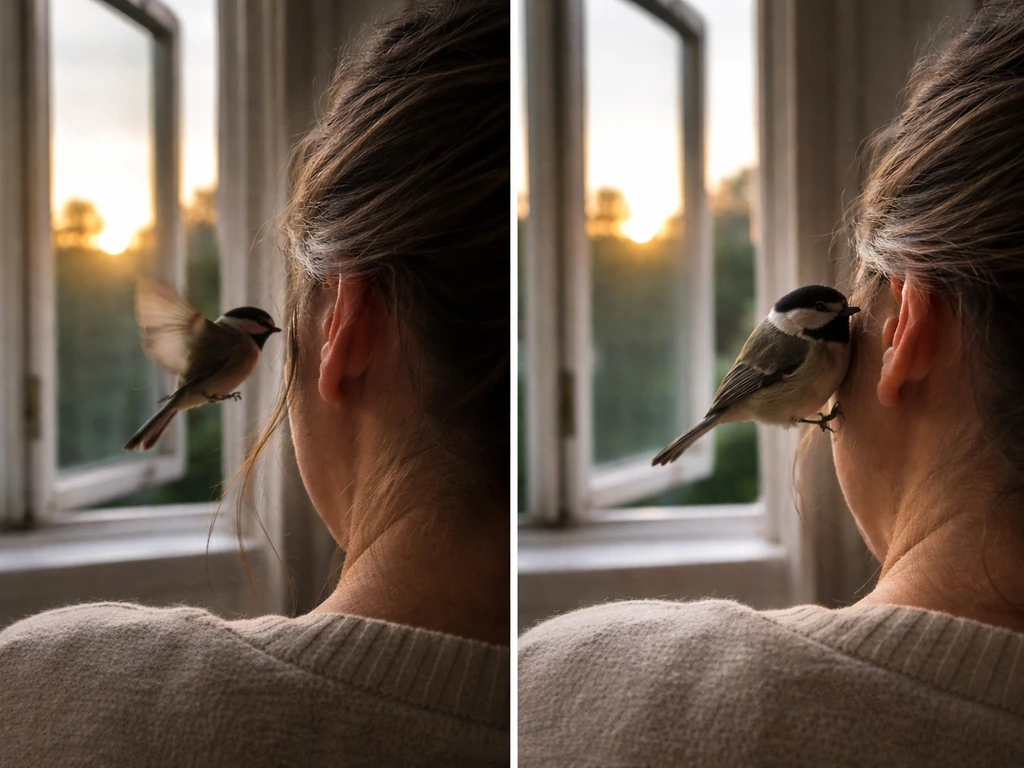
In everyday English, the phrase sits in the same family as "a little bird told me", one of the most recognizable idioms in the language. Cambridge Dictionary defines it as a way of saying you heard something (a secret, a rumor, a tip) without revealing who told you. Think of it as a polite or playful dodge: "Oh, a little bird told me you were considering a job change." Nobody expects you to produce the bird.
There's a close cousin idiom worth knowing too: "put a bug in your ear." That one means to plant a suggestion or reminder in someone's mind. Learners of English mix up the two constantly because the structure is almost identical, just swapping bird for bug. Both involve the ear as the site of receiving a message or nudge, which, once you notice it, feels almost poetic.
The literal version is different entirely. Maybe a bird swooped so close you felt air near your ear. Maybe one landed on or near your head and made a sound directly at you. Maybe you've been hearing persistent chirping that felt oddly targeted. These real physical encounters are what pull people toward the spiritual side of the phrase, and that's where this site spends most of its time.
Where the phrase comes from and how people use it today
The roots of "a little bird told me" go back centuries. Word historians have traced a parallel French proverb, "mon petit doigt m'a dit" ("my little finger told me"), to at least 1605 in Jean Héroard's diary. The Georgian language has its own equivalent literally meaning "a little bird brought me the story." Across cultures, the small, fast, elusive bird became a natural stand-in for information that arrives mysteriously, or for sources you'd rather not name.
There's a biblical thread here too. Older English biblical language contained metaphors about birds of the air carrying voices and matters, the idea that what is whispered in secret might travel on wings. That metaphor wove itself into everyday speech over generations until it settled into the cheerful, slightly evasive idiom we use today. When someone says "a little bird told me," they're pulling on a very long rope of cultural memory, even if they don't know it.
In modern English, the phrase is casual and often affectionate. You hear it in gossip, in teasing, and in situations where someone wants to acknowledge they know something without embarrassing the person who told them. It rarely carries a negative tone. It's information delivered with a smile.
The spiritual side: what a bird near your ear might be telling you
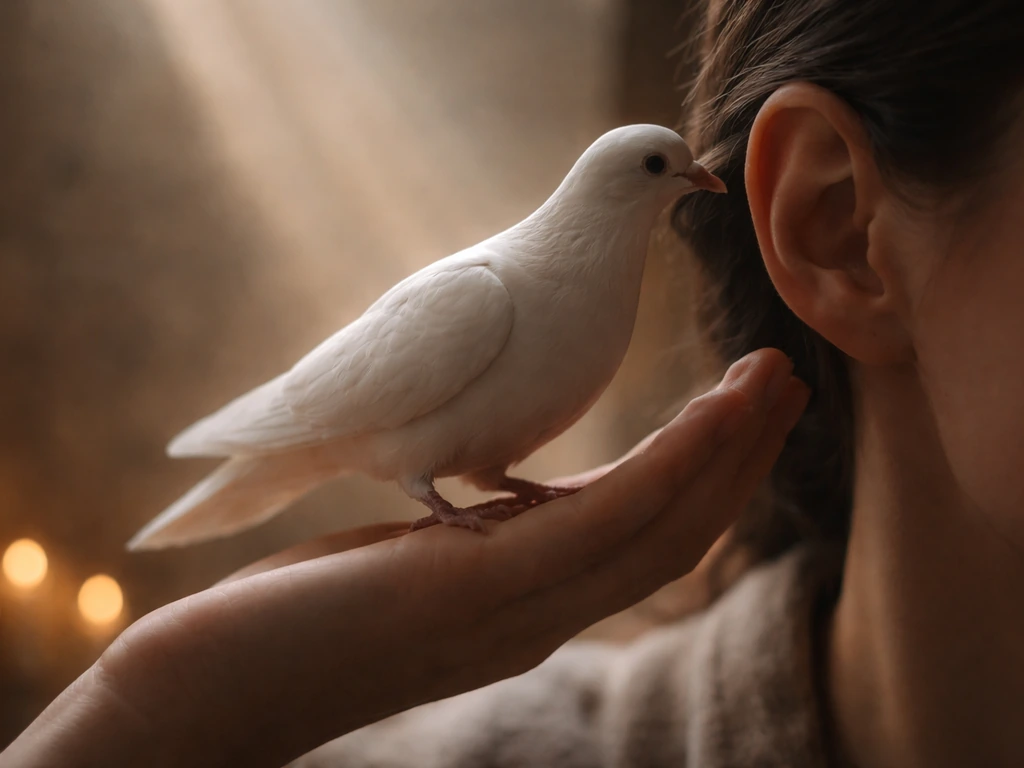
Across spiritual traditions, birds have consistently been cast as messengers, creatures that move between the earthly and the divine, carrying communication from one realm to another. If you've had a bird come unusually close to your ear, or if you've been hearing bird sounds in circumstances that feel significant, these traditions offer a layered set of possible meanings. None of them are certainties, but they're worth sitting with.
Birds as divine messengers
In biblical tradition, the Holy Spirit is represented as a dove, and birds appear throughout scripture as vessels of divine communication, from ravens feeding Elijah in the wilderness to the dove returning to Noah with an olive branch. The ear, spiritually speaking, is the organ of receptivity. A bird arriving near your ear could be interpreted, in this framework, as a call to tune in, to listen more deeply to what's already trying to reach you.
Celtic and folkloric readings

In Celtic tradition, certain birds, wrens, robins, swallows, were believed to carry news between the worlds. A bird that came close enough to whisper was sometimes interpreted as a visit from an ancestor or spirit guide. The proximity mattered: the closer the bird, the more urgent the message. Folklore from across northern Europe treated birds near the face or ear as omens requiring attention, not necessarily negative ones, but ones demanding you pause and listen to your own inner voice.
Metaphysical and intuition-based framing
In contemporary spiritual and metaphysical circles, hearing bird sounds near your ear, especially unexpectedly, or at a moment when you were already thinking through a decision, is often framed as the universe or your own higher self nudging you to pay attention. The bird isn't necessarily delivering a specific answer. It's more like a tap on the shoulder: "You already know something. Stop and listen to it." Many people who explore animal symbolism describe these moments as invitations to trust intuition rather than external noise.
Common real-life scenarios and what they might mean
Different situations pull people toward this phrase in different ways. Here's how the most common ones map to both practical and symbolic interpretations.
| Scenario | Practical explanation | Spiritual/symbolic interpretation |
|---|---|---|
| A bird chirps loudly or repeatedly near your ear | Normal bird behavior — territorial call, alarm, or curiosity | A prompt to listen closely; something in your environment or inner life is asking for attention |
| A bird flies very close to your face or ear | Birds sometimes misjudge distance or investigate unusual objects (including people) | Interpreted across traditions as a messenger arriving; especially noted if it feels intentional or repeated |
| You keep hearing bird sounds that feel oddly persistent or directed at you | Birds can be surprisingly consistent in their patterns and locations | Often framed as spiritual persistence — a repeated message you haven't fully received yet; a call to pause and reflect |
| Someone uses the phrase 'a bird in your ear' in conversation | Idiomatic English: they heard something about you and are passing it along | No supernatural element, but worth listening to the underlying message being relayed |
| An unexplained sound near your ear that resembles chirping or whispering | Could be tinnitus, auditory phenomena, or environmental sounds | Sometimes interpreted symbolically, but health evaluation should come first (see the section below) |
If birds landing on or very close to your head is part of what you're exploring, those experiences carry their own rich symbolic layer that runs parallel to the ear-specific meaning. If you meant there is bird on your head rather than near your ear, this guide’s symbolism still applies, just with the emphasis on the head as the message site. These meanings can include the specific case of when a bird lands on your head.
Many people also search for the meaning of a bird landing on your head, and it can carry a similarly symbolic message meaning of bird landing on your head. The proximity to the head and the ear both invoke the idea of messages being delivered to the seat of thought and perception.
If you meant the specific scenario where a bird hit your head, the bird hit me in the head meaning can help you interpret what happened without skipping the practical steps. If you meant the literal moment, “bird hit me in the head” can also be interpreted through the same meaning-focused lens as “bird hit me in the head,” depending on what happened and how it felt bird hit me in the head meaning.
What to actually do right now: grounding, observing, and finding meaning without spiraling

The most useful thing you can do after an experience that prompts this question is slow down before you interpret. Spiritual discernment works better from a calm state than an anxious one. Here's a simple approach.
- Ground yourself first. Before you decide what the encounter means, take a few slow breaths and notice your physical surroundings. If you use a structured grounding technique like 5-4-3-2-1 (name five things you can see, four you can touch, and so on), use it now. You want to bring your nervous system down before you start assigning meaning.
- Recall the context. What were you thinking about right before it happened? Were you wrestling with a decision, asking a question internally, or feeling stuck? Many people find that the timing of the encounter matters more than the encounter itself.
- Observe without locking in. Notice what kind of bird it was, what it did, and how you felt in your body during the moment — not anxious or startled, but genuinely felt. Did it feel like a warning, an encouragement, or simply a curiosity?
- Distinguish intuition from anxiety. Authentic intuitive signals tend to feel calm and steady even if the message is serious. Anxiety tends to feel urgent, catastrophic, or looping. If you find yourself spiraling into "what if this means something terrible," that's probably anxiety speaking, not genuine guidance.
- Sit with it rather than solving it immediately. You don't have to resolve what a bird near your ear means within the hour. Write down what happened, how you felt, and what was on your mind. Give it a day or two. Often clarity comes when the initial adrenaline settles.
If the phrase came to you through a conversation, someone literally said "I have a bird in your ear" or "a little bird told me", then the practical step is simpler: take the message seriously enough to think about it, and consider whether the information or suggestion being passed to you deserves a response.
When the sound might be a health matter, not a sign
This is important, and worth saying plainly: if you're hearing sounds near or in your ear that have no obvious external source, things that sound like chirping, whispering, ringing, or music that others can't hear, please don't default to only spiritual interpretation. The Mayo Clinic advises seeing a clinician if tinnitus bothers you see a clinician if tinnitus bothers you. These experiences can be symptoms of tinnitus, which the Mayo Clinic and Johns Hopkins Medicine both describe as noise or ringing in the ears that occurs without an external sound source. It's extremely common and usually not dangerous, but it deserves attention.
Harvard Health advises talking to a doctor if tinnitus-like sounds come with other symptoms, dizziness, hearing loss, or sudden onset. The UCSF EARS program notes that some sudden hearing-related symptoms actually warrant urgent care. The NHS puts it clearly: see a GP if the sounds persist, are bothering you, or are accompanied by changes in your hearing.
The Cleveland Clinic also points out that auditory hallucinations, perceiving sounds that aren't there, including voices, music, or nature sounds, can occur in various health contexts and are worth discussing with a clinician. Seeking medical advice doesn't contradict a spiritual worldview. It's responsible stewardship of your body, which most spiritual traditions actively encourage.
- See a doctor if: the sounds are persistent, only you can hear them, they're accompanied by dizziness or hearing loss, or they started suddenly without an obvious cause
- Rule out tinnitus, auditory hallucinations, or ear canal issues before settling on a purely symbolic interpretation
- If medical causes are ruled out and the experience felt genuinely meaningful, then explore the spiritual dimension from a grounded place
A question to carry with you
Whether you encountered this phrase in conversation, in a dictionary search, or because something happened with an actual bird, the core invitation is the same: what do you need to listen to right now? If you meant the phrase another way, you may also like this take on a bird in your teeth meaning. The idiom, the folklore, and the spiritual traditions all point in the same direction. The ear is where messages arrive. The question is whether you're willing to be still enough to receive one. What comes up for you when you sit with that?
FAQ
Is “bird in your ear” always spiritual, or can it be just everyday slang?
It depends on context. If it shows up in conversation as a secret or rumor you heard without a named source, it is usually the idiom meaning. If it is tied to a real event like a bird chirping near your ear or repeated bird-like sounds you cannot link to the environment, then people are more likely to explore the spiritual or symbolic angle.
How can I tell whether the “chirping near my ear” is tinnitus or something meaningful?
A practical check is whether the sound matches a consistent pattern without an external cause, especially if it persists in quiet settings. If it feels like ringing, music, whispering, or chirping with no source, treat it as a health signal first and consider medical advice. Spiritual meaning can come later, as a reflection, not as a replacement for ruling out hearing issues.
What if the “bird in your ear” phrase was said to me directly, should I respond?
Yes, but keep it light. Since the idiom often functions like a playful dodge around sources, you can respond by acknowledging the information without challenging the speaker, for example by asking what they think you should do next or by saying you’ll consider it.
Does “put a bug in your ear” mean the same thing?
They are close but not identical. “A little bird told me” is about receiving information you did not learn firsthand. “Put a bug in your ear” is about planting an idea or reminder so you will think about it later. If someone is trying to nudge you, “bug” usually fits better than “bird.”
What does it mean if I hear bird sounds near my ear right before a decision?
In spiritual interpretations, timing like that is often treated as a prompt to check your intuition and avoid rushing. A useful decision aid is to pause, name what you already know, write down your top two options, and see which option your body signals as calmer, rather than assuming the bird delivers a literal answer.
If a bird landed near my ear, how do I avoid over-interpreting?
Write down neutral facts first (time, location, bird behavior, weather, how close it was). Then treat symbolic meaning as one lens, not a verdict. If you feel anxious, scale back the interpretation and focus on what action you can take that day.
Can “bird in your ear” be negative?
In everyday speech, it is usually neutral or affectionate, even when the info is gossip. In spiritual readings, it can be framed as a call to listen, not a warning by default. If the message triggers fear, that is a sign to slow down and ground yourself, and also reassess any possible sound or hearing-related issue.
What should I do immediately after the experience, before interpreting it?
Do a quick grounding routine: step away from noise, take a few slow breaths, and note whether anyone nearby hears the same sounds. If sounds are only perceived by you and have no obvious source, prioritize a health check. If it was a real bird encounter, observe what your attention is drawn to next.
Is it okay to seek medical help even if I want to keep the spiritual meaning?
Yes. Treat spiritual interpretation as personal reflection, while medical evaluation addresses the physical cause. That way, you are not ignoring symptoms, and you still get to explore the meaning of the moment in a grounded, responsible way.
Next Articles

When a Bird Lands on Your Head: Safety, Meaning, and What to Do
Steps to clean up, check injury and droppings, then explore spiritual and cultural meanings behind a bird landing on you

Meaning of Bird Landing on Your Head: Omen and Dream Guide
Interpret the meaning of a bird landing on your head, from spiritual omens to dream symbolism, plus safe real-life steps

Bird on Your Head Meaning: Spiritual, Cultural, and Practical Steps
Meaning of a bird on your head: spiritual signs, cultural beliefs, what it might mean, and safe practical next steps.