If you've stepped outside and noticed a bird nest tucked against your house, perched on a window ledge, or woven into a shrub right next to your front door, you're probably asking two very different questions at once: what should I actually do about this, and what does it mean? Both questions are worth taking seriously. Here's a direct answer to both, starting with what's probably happening right now.
Bird Nest Outside My House Meaning: Practical and Spiritual

Maya Hartwell
19 Apr 2026
Why you're seeing a bird nest outside your house (or window)
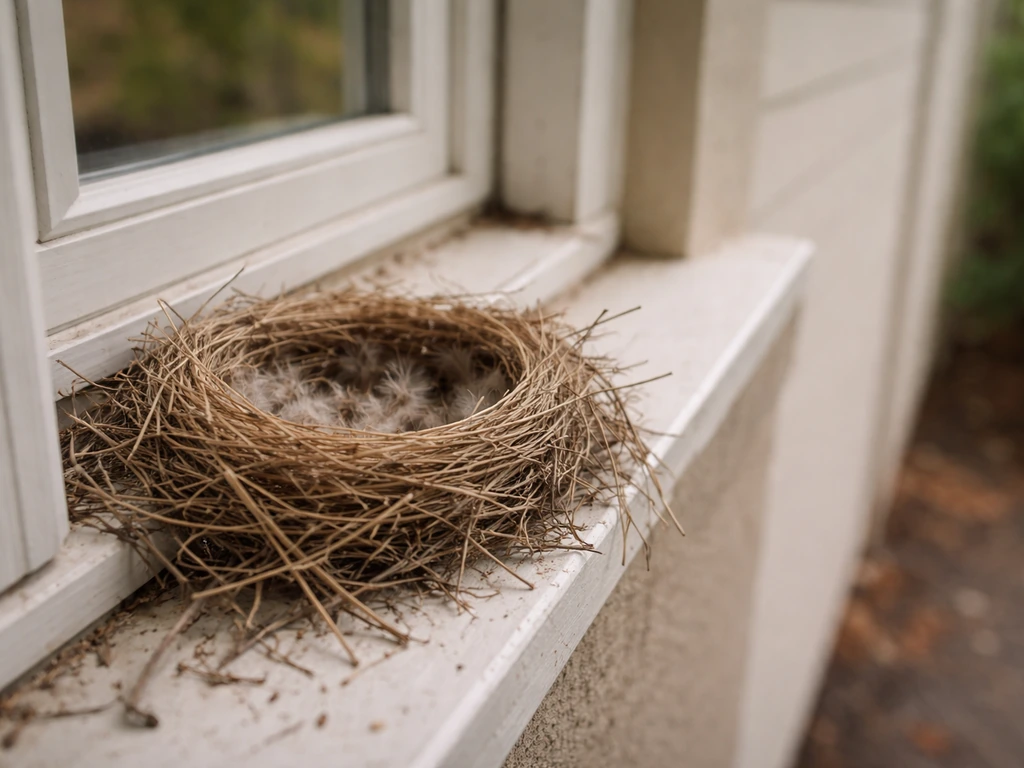
The short answer is that your house is a genuinely good place to build a nest. Birds aren't wandering randomly. When a bird selects a nesting site, it's running through a real checklist: shelter from weather, protection from predators, proximity to food and water, and structural stability. Your home checks most or all of those boxes, which is why this happens far more often than people expect.
There's also an interesting ecological angle here. Research on Barn Swallows suggests that birds sometimes actively choose to nest near humans because human activity can reduce predation pressure. Basically, the presence of people tends to keep certain predators away, making your yard or eave a relatively safe place to raise young. House Sparrows, similarly, show a strong preference for buildings with gutters and eaves. American Robins regularly nest on ledges of houses and barns, often at low-to-moderate heights on nearby shrubs. These aren't random choices; they're evolved strategies.
If the nest is right outside a window, that location probably offered something specific: a sheltered ledge, a window box, a vine growing up the wall, or simply a corner that blocks wind and rain while keeping the nest at a height that feels secure. Birds nesting near a home generally signal that the surrounding environment is healthy and food-rich, which is actually a good sign about your property's ecosystem.
Common natural reasons birds choose that exact spot
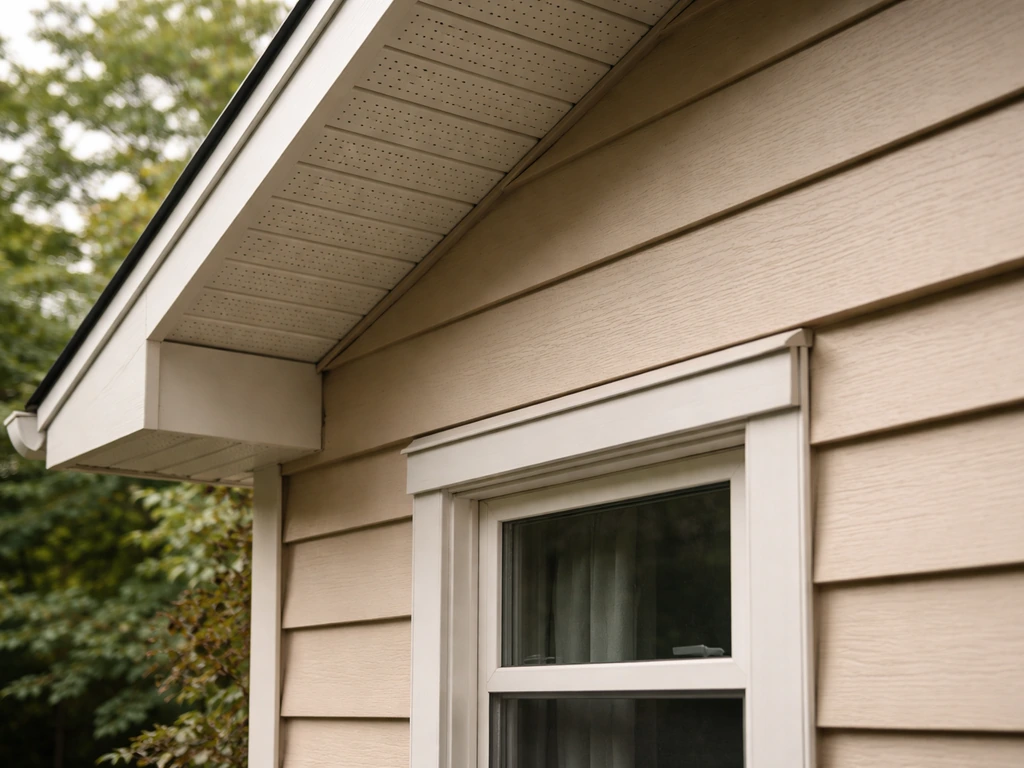
- Shelter from rain, wind, and temperature extremes: overhangs, eaves, and the area where a roof meets a wall create a natural rain shadow that birds seek out intentionally.
- Predator avoidance: human traffic around a home discourages many nest predators, making the site feel safer than a more isolated tree.
- Proximity to food and water: if you have a bird feeder, birdbath, garden, or even a lawn with insects and worms, you've essentially set up a grocery store nearby.
- Structural anchor points: ledges, gutters, window boxes, climbing plants, and decorative wreaths all give birds something solid and sheltered to build against.
- Visibility from the nest: birds often want a clear sightline to spot approaching threats, and a position near a human structure can offer exactly that.
- Habit and familiarity: some birds return to the same nesting area year after year, and if a previous generation nested near your home, the offspring may do the same.
What to do (and what not to do) right now
The first and most important thing to know is that if you're in the United States, that nest is almost certainly protected by federal law. The Migratory Bird Treaty Act (16 U.S.C. § 703) protects approximately 1,100 native bird species and makes it unlawful to pursue, take, disturb, or possess migratory birds or any part of them, including their nests and eggs, without a federal permit. Canada has similar protections with strong avoidance guidelines around active nests. This isn't a gray area: removing or significantly disturbing an active nest can carry heavy fines. Once eggs are present, the nest is protected and it is generally illegal to physically disturb it or its contents.
So here's the practical guidance for right now, in order of priority:
- Observe first, act second. Take a moment to watch from a distance. Is the nest active? Are there eggs, chicks, or adults coming and going? The more activity you see, the more clearly protected the situation is.
- Do not touch, move, or dismantle the nest. Even well-intentioned interference can cause adult birds to abandon eggs or chicks, and doing so may violate federal or national law.
- Adjust your own behavior around the nest rather than disrupting it. If the nest is near a door you use constantly, try using a different entrance temporarily. Audubon Community Nature Center specifically recommends walking a different way around the house during nesting periods rather than stressing the nesting adult.
- Keep pets and children away. Dogs and cats near an active nest stress nesting adults, and when frightened off their nests, eggs and young can be knocked out and exposed to temperature extremes or predators.
- Avoid loud power tools, bright lights directed at the nest, or construction activity near the area until nesting is complete. Nesting season for most North American birds runs roughly spring through midsummer.
- If the nest is in a genuinely dangerous location (directly above an HVAC intake, at a spot where it poses a real structural risk, or where you have a medical reason to address it), contact a licensed wildlife rehabilitator or your local Audubon chapter rather than handling it yourself. They can advise whether a permit situation applies or whether the nest can be safely managed.
- Once nesting is fully complete and the birds have left (the nest is clearly empty and abandoned), you can remove it if you choose and then take steps to discourage future nesting in that specific inconvenient spot.
Safety and property concerns: droppings, noise, damage, and pests
Real talk: nests near your house come with a few legitimate concerns, and it's worth addressing them honestly rather than dismissing them.
Droppings and health
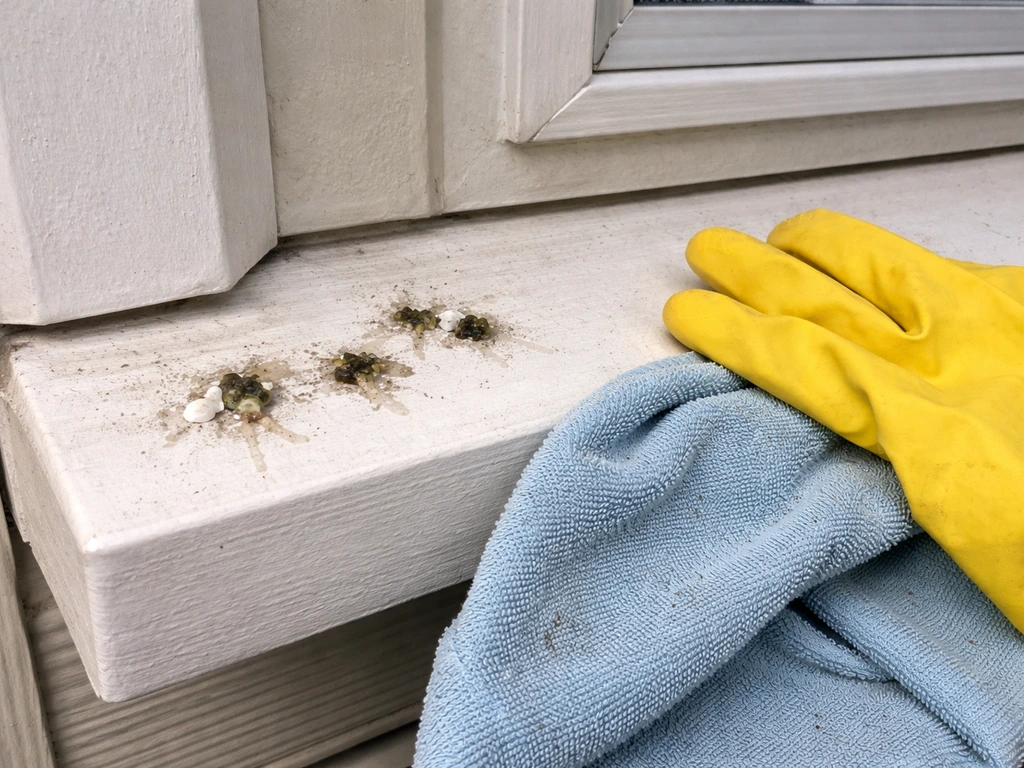
Bird droppings are the main health concern. blank" rel="noopener noreferrer">The CDC notes that histoplasmosis, a fungal infection caused by Histoplasma spores, is associated with bird and bat droppings, and the risk increases when droppings are disturbed and spores become aerosolized. For a typical backyard nest, this risk is low but not zero, especially if droppings accumulate on a ledge over weeks. If you need to clean a droppings-affected surface, wet the material first with water or a disinfectant solution before wiping, rather than dry-sweeping, which kicks spores into the air. Histoplasmosis is a lung infection caused by breathing in Histoplasma fungus spores found in the environment, and the fungus is associated with bird and bat droppings blank" rel="noopener noreferrer">Histoplasma fungus spores found in the environment and associated with bird and bat droppings. Wear gloves, avoid bare-hand contact with droppings, and wash hands thoroughly afterward. For small accumulations, soap and water work fine. For larger buildups after nesting is over, consider a mask rated for particulate filtration.
Noise
Chicks are genuinely loud, especially in the begging stage just before fledging. This usually lasts two to three weeks depending on the species. It's a temporary inconvenience. If the nest is directly outside a bedroom window, it might disrupt sleep during that window, but it ends. Knowing that it's time-limited makes it easier to tolerate.
Structural and pest concerns
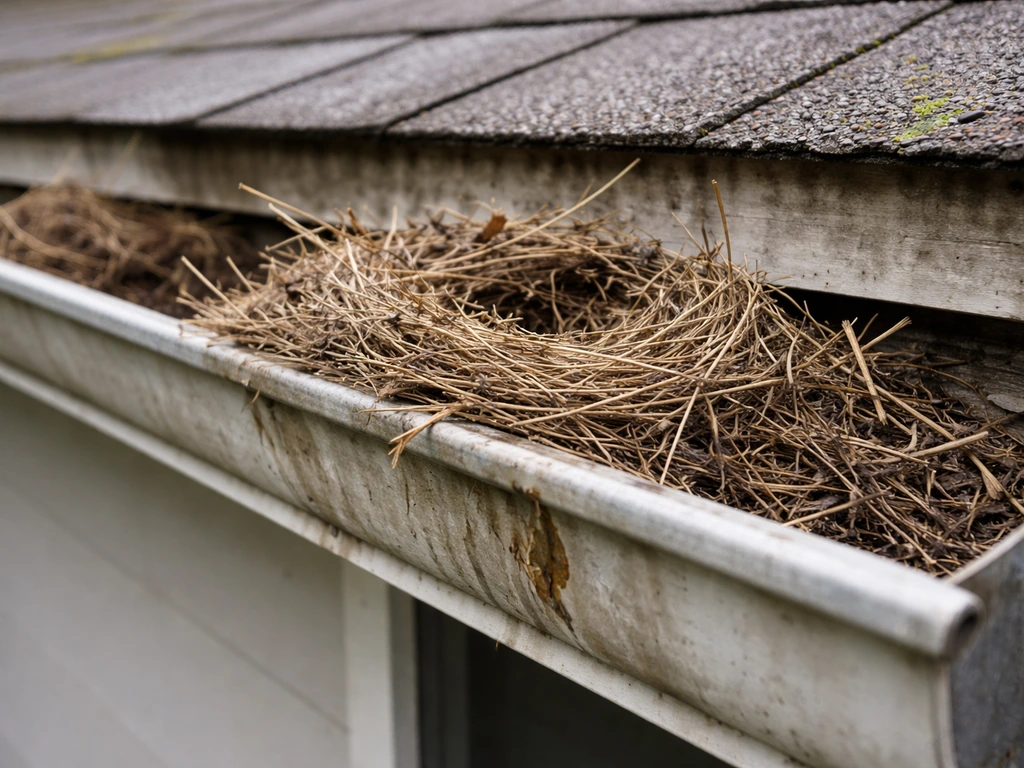
Most small songbird nests pose minimal structural risk. The bigger concerns arise with larger birds or nests in rain gutters, where they can block drainage and cause water damage over time. Nesting material can also harbor mites and other parasites, though these typically don't survive long without a bird host once the nest is abandoned. After nesting is complete, inspect and clean gutters and ledges thoroughly, and consider installing physical deterrents (like gutter guards or sloped ledge covers) in locations where you genuinely don't want repeat nesting.
The spiritual and symbolic meaning of a nest near your home
Now for the other reason you're here. Across cultures and across centuries, a bird choosing to build a nest near a human dwelling has rarely been seen as neutral. It tends to carry meaning, and that meaning is almost always positive. If you are wondering about the meaning of a bird nest at the front door specifically, the same symbolism often points to welcome, protection, and new beginnings for your household. If you’re specifically looking for the bird nest in front of house meaning, the symbolism is typically about welcome, protection, and new beginnings. If you’re specifically looking for the bird nest in front of house meaning, the symbolism is typically about welcome, protection, and new beginnings bird building nest in my house meaning. If you're drawn to the symbolic side of this encounter, here's what different traditions say. If you're wondering about the bird nest in front of house meaning, the symbolic sections later in this guide are a good place to start.
New beginnings and growth
A nest is, at its most literal, a structure built in anticipation of new life. In folk traditions across Europe and North America, a bird building a nest near a home was seen as a sign of incoming abundance, new starts, or a family expansion. If you're in a season of your life where something new is beginning, or where you've been hoping for growth, many people find that symbolism resonant. The nest appearing now, at this particular moment in your life, may feel less like coincidence and more like confirmation.
Protection and blessing on the household
In many European folk traditions, especially Celtic and Germanic ones, a bird choosing your home over all others was read as a sign of blessing and protection on that household. The bird's instinct for safety was projected onto the home itself: if the bird feels safe here, the home is protected. This interpretation appears across cultures in varying forms, from the swallow's nest being considered lucky in German and Dutch traditions to the idea in various Asian traditions that birds nesting near a home bring good fortune and ward off bad energy.
Biblical and Abrahamic threads
In biblical tradition, the bird's nest carries themes of divine care, provision, and the natural order established by God. The Psalms speak of the sparrow finding a house and the swallow a nest for herself near God's altar, framing the act of nesting as an image of seeking refuge and finding belonging. A bird finding a safe place to nest near your home can be read, in this tradition, as a reminder of care and provision, of the idea that the natural world operates under a protective intelligence. Deuteronomy also contains specific instruction about the care of a bird's nest, treating it as something worthy of respect.
Family, commitment, and home energy
Across metaphysical and New Age frameworks, a bird building a nest near your home is often interpreted as a sign of strengthening home or family energy. The nest is one of the most universal symbols of family bonds, nurturing, and the work of building a life together. If you're in a period of deepening relationships, making a home feel more like yours, or investing in family, the nest appearing now may feel like a mirror of that internal work.
A message about patience and timing
There's another layer that doesn't get talked about as often. Building a nest is slow, deliberate work. The bird doesn't rush it. Many people who notice a nest appearing outside their home are in a period of waiting, of things not moving as fast as they'd like. The symbolic read there is straightforward: something worth having is being carefully constructed, piece by piece, and it will be ready when it's ready. That's not a vague platitude; it's a concrete image of patient, purposeful effort.
How to interpret it based on your situation

Symbolism doesn't mean the same thing to everyone, and the context of your specific encounter shapes what it might mean to you. Here are a few lenses worth considering:
| Context | What it might point to |
|---|---|
| You noticed it during a major life transition (new job, relationship, move) | Themes of new beginnings, building something lasting, or finding your footing |
| The nest appeared in early spring | A fairly common seasonal occurrence, though still carries meaning of renewal and fresh starts |
| The nest appeared unexpectedly in an unusual place or season | More likely to feel significant as a sign or message worth sitting with |
| You felt immediate warmth or peace when you saw it | Many traditions say your emotional reaction is the most important interpretive tool |
| You felt unsettled or disrupted by it | Worth asking what in your life feels similarly unsettled; the encounter may mirror something internal |
| You found it with eggs or chicks already present | Symbolism tends to intensify: life is already unfolding, not just being prepared for |
| The nest was built by a specific bird species | Different species carry their own cultural symbolism (robins for hope, sparrows for humility/faith, swallows for good fortune and loyalty) |
| The nest is right at your front door or main entrance | In folklore, the entrance to a home is symbolically significant; nesting there amplifies themes of protection and welcome |
| The nest has lasted multiple seasons | Interpreted in many traditions as sustained blessing or ongoing protection on the household |
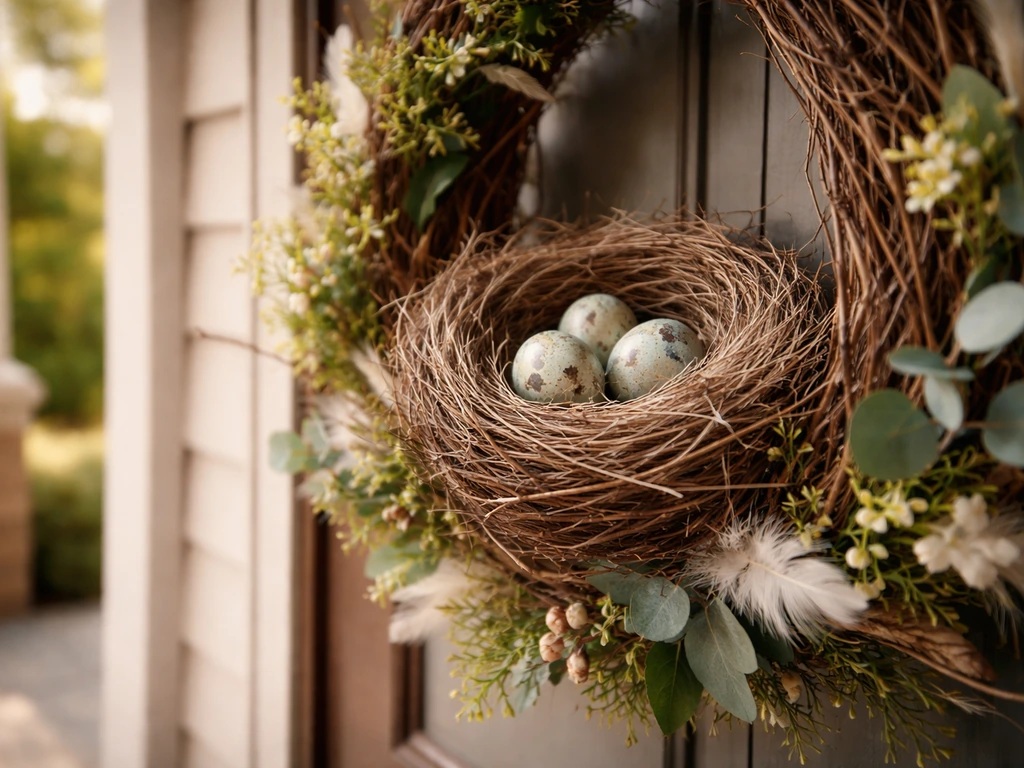
If you're exploring topics related to where exactly the nest appeared, the meaning shifts slightly depending on the location: a nest on a door wreath, directly in front of the house, or a bird that's actively building inside the structure each carry their own specific symbolic weight, and those are worth exploring separately if the location feels significant to you.
Ultimately, the most useful interpretive question isn't 'what does this officially mean' but rather: what does this feel like it means to you, right now, given what's happening in your life? Across nearly every tradition that has engaged with this symbol, the bird nesting near the home is a gentle, affirming sign. Seeing that birds roost near your home can also be a sign of nearby shelter and food, and it may carry different meanings depending on the situation the bird nesting near the home. In some readings, the bird is in or on the nest as a sign that there is shelter and stability nearby the bird nesting near the home. If the symbolism is what you want to pin down, the bird is on the nest meaning is often read as a sign that shelter, stability, and new life are close by the bird nesting near the home. It is chosen presence, careful effort, and new life on the way. That's a pretty good thing to find outside your window.
So for today: leave the nest alone, adjust your routines gently around it, handle any practical concerns with care and patience, and take a quiet moment to consider what this particular visitor might be reflecting back to you.
FAQ
What should I do if the nest is active but it blocks my walkway or entrance?
Avoid moving the nest or trying to relocate it. Instead, temporarily reroute foot traffic, use a different door, and protect the area with a physical barrier at a safe distance so people and pets do not contact droppings or the nest. If the nest is in a high-risk spot like a main entryway for pets or children, contact a licensed wildlife rehabilitator or local animal control for a site-specific plan that still respects nest protections.
Is it safe to take down the nest after the birds leave?
Often it is safer than during active nesting, but confirm it is fully abandoned first. Wait until there is no ongoing activity for a sustained period (commonly at least several days) and the nest is empty, then clean gently to avoid aerosolizing debris. If you cannot confirm species or whether eggs or chicks were recently present, delay cleanup and get advice from a local wildlife authority.
Can I relocate the bird nest to make my home more comfortable?
In most places, active nests and the birds themselves are protected, so relocation is usually not allowed without the right permits. Even after nesting, relocating can be stressful and may not solve the underlying reason the birds chose that site. The practical alternative is to make the area unattractive only after the nesting cycle ends, then add deterrents or repairs.
What if the nest is on a gutter, downspout, or near drainage and water is pooling?
Treat drainage issues as a time-sensitive but safe-cleanup problem. You should not disturb an active nest. If water damage risk is significant, keep the area clear and, after the nest is abandoned, inspect the gutter, remove debris, and repair the system. For prevention, use gutter guards or adjust downspout placement so birds do not find the same sheltered ledges again.
How do I clean droppings safely if I need to wash an area under a nest?
Do not dry-sweep or blast with a hose. Pre-wet the surface with water or a disinfectant solution, wear disposable gloves, and consider a particulate-rated mask for larger buildup. Bag and dispose of debris promptly, then wash hands thoroughly and avoid wiping in a way that spreads residue onto nearby items like doormats or outdoor furniture.
Are my pets at risk if they keep sniffing or pawing at the nest area?
Yes. Pets can increase disturbance, track droppings indoors, and potentially injure nestlings. Keep cats and dogs indoors near the nesting site, supervise any outdoor access, and block the area from the ground using a temporary barrier so the nest remains undisturbed.
What does it mean if the birds keep returning to the same spot?
Repeated use usually signals that the location remains attractive (shelter, structural support, and nearby food). Symbolically, people often read return visits as persistence or ongoing protection. Practically, it also means you should wait until the season ends, then modify the site (repairs, barrier, sloped surfaces, or guards) rather than relying on passive “they’ll move on” hope.
Why is the nest so close to my door or window, and can I prevent future nesting without harming birds?
Birds often pick corners that block wind and rain, ledges that feel secure, and areas near insect or berry sources. To prevent future nesting, plan after the current cycle ends: close access points, add deterrent coverings, clean up nesting material, and repair gaps or exposed ledges. Avoid using loud devices or chemicals during active nesting.
When should I contact a professional instead of handling it myself?
Contact help if the nest is on an unsafe surface (high elevation without safe access), if there is heavy droppings buildup, if chicks are in an unusual or compromised position, or if you are unsure whether the nest is active. A local wildlife rehabilitator or wildlife agency can advise on legal compliance and the safest timing for any cleanup or exclusion measures.