
A bird has built a nest right at your front door, and now you're standing there wondering what it means, what you're supposed to do, and whether you should even use your own door. That's a surprisingly common situation, and the meaning cuts in two directions at once: there's a real-world explanation for why birds choose doorways and thresholds, and there's a rich layer of spiritual and symbolic meaning that people across many cultures have attached to exactly this kind of event. Both matter. This guide walks you through both, and gives you clear, practical steps for what to do right now.
Meaning of Bird Nest at Front Door and What to Do Next

Maya Hartwell
19 Apr 2026
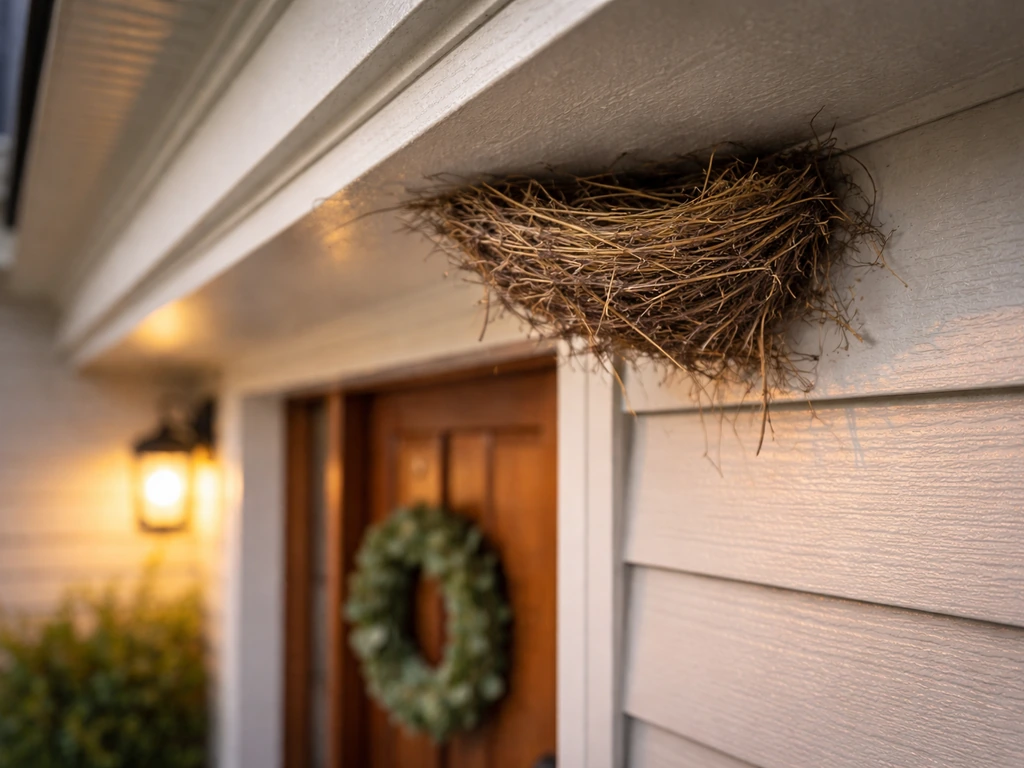
Why birds actually nest at front doors
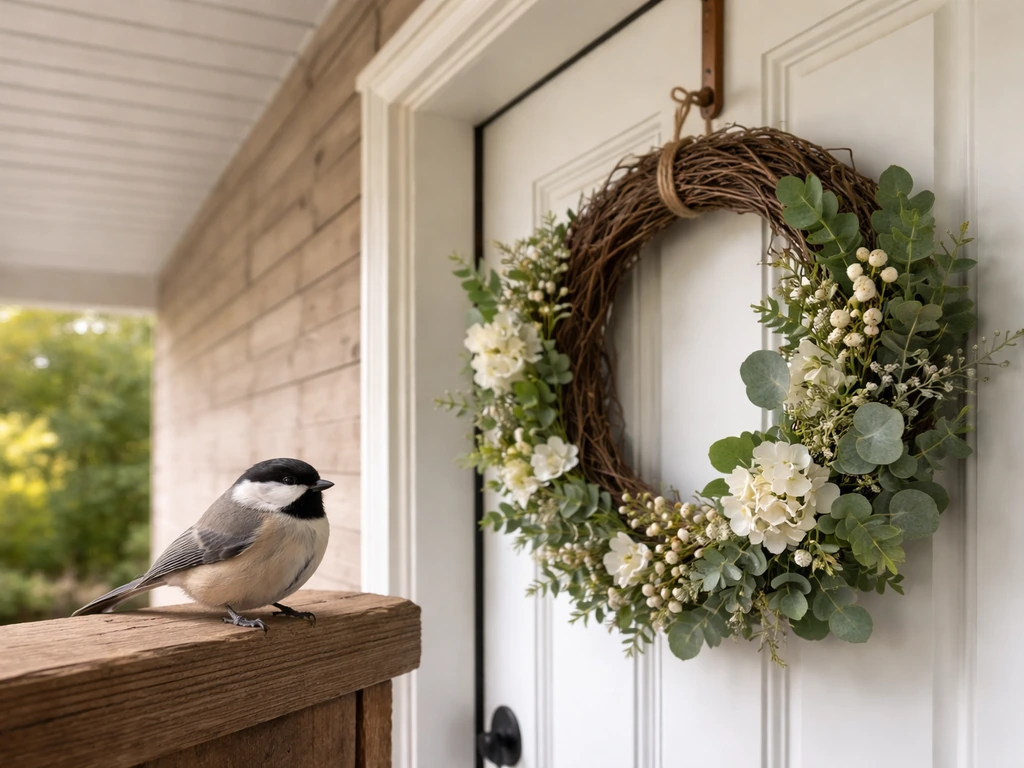
From a purely practical standpoint, your front door area is an excellent nesting spot by bird logic. Covered entryways, door wreaths, hanging light fixtures, and sheltered ledges above doors all offer exactly what nesting birds look for: overhead protection from rain, a narrow space that's hard for predators to approach from multiple angles, and the warmth that comes from a structure that absorbs heat. Human activity near the door also incidentally deters hawks and other predators. The bird didn't choose your door as a spiritual gesture; it chose it because it's genuinely one of the safer spots available.
Swallows are one of the most common species to nest near human structures, including eaves and entryways. The British Trust for Ornithology notes that swallows have a long history of nesting in and on buildings, which is part of why they're so embedded in folklore about doorways and homes. Robins, house sparrows, house finches, wrens, and mourning doves are also frequent door-nesters, each with slightly different placement preferences. So if you're wondering whether this is unusual, it isn't. If you are wondering what it means when a bird roosts, the same themes of safety, timing, and meaning can offer useful context what does it mean when a bird roosts. If you’re still wondering about the larger significance of the bird’s presence, you may also want to explore what does it mean when a bird builds a nest and how that fits with the themes of safety and timing what does it mean when a bird roosts. What's unusual is having it happen right at the threshold you use every day.
What the spiritual and symbolic traditions say
Here's where it gets interesting. Across a wide range of belief systems, a bird choosing to nest near the entrance to a home is considered one of the more auspicious things that can happen to a household. The threshold, in almost every culture that has a concept of sacred space, is significant. It marks the boundary between the outside world and the protected inner life of a home. A bird choosing to place its nest there, to raise its young there, is interpreted in many traditions as a sign that the space is safe, blessed, and energetically sound.
Folklore and European traditions
European folklore, especially in British and Celtic traditions, consistently treats a bird nesting near the home as a sign of good fortune and protection. Swallows in particular were seen as protective spirits of the home, and harming or driving away a nesting swallow was considered bad luck in many regions. The belief wasn't just superstition: it was tied to the observation that swallows are insect hunters, and their presence genuinely benefits the household. That combination of practical benefit and visible loyalty to a home made them powerful symbols of blessing and guardianship.
Biblical and Christian symbolism
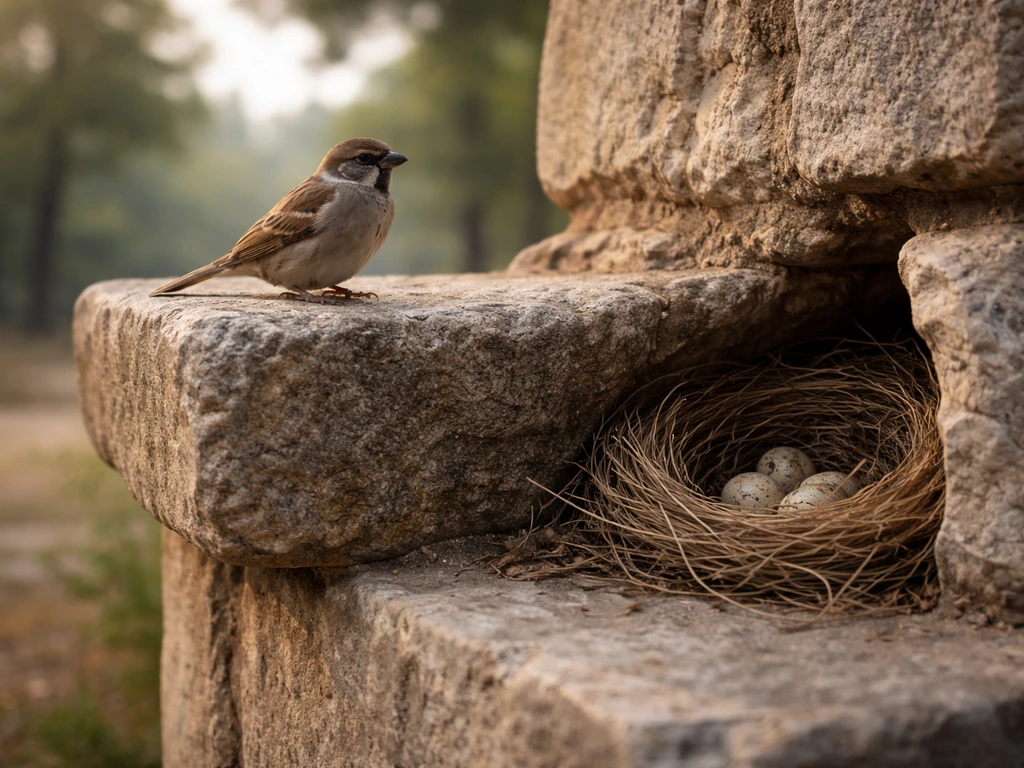
In biblical tradition, birds nesting near a home or altar are associated with divine provision and care. blank" rel="noopener noreferrer">Psalm 84 specifically uses the image of a bird finding a nest near the altar as a metaphor for the soul finding rest in God's presence. The front door, as a threshold, carries symbolic weight in many Christian traditions as the point where blessings enter and are received. A bird choosing that spot is often interpreted as a sign of divine protection over the household, a reminder that the home is held in care.
Eastern and feng shui interpretations
In Chinese feng shui and broader East Asian symbolic traditions, birds nesting near the home are seen as carriers of auspicious energy. Swallows in particular are associated with good luck, harmony, and the arrival of positive change. A nest at the front door, which is the main channel through which energy (or chi) enters a home, amplifies that interpretation. The nest itself is a symbol of family, warmth, and continuity, and its placement at the entry point is often read as a sign that the household is entering a fertile, protected, or prosperous period.
New beginnings and messages from the threshold
In more general metaphysical and intuitive spiritual traditions, a bird nesting at the front door is frequently interpreted through themes of new beginnings, home, and communication. Birds are widely seen as messengers in these frameworks, and the front door is where arrivals happen, where the new enters. A nest, specifically, adds the dimension of creation, nurturing, and patience. The symbolic read here is that something new is being built in your life, and the threshold of your home is where it's taking root. Whether you resonate with that framing is entirely personal, but it's one of the more consistent threads across non-denominational spiritual interpretation.
What different cultures say about birds and doorways
The doorway or threshold has sacred significance in cultures around the world, well beyond Western or Eastern frameworks. In many Indigenous traditions of North America, the home's entry is a liminal space where the physical and spiritual worlds are closest. A bird choosing that space to raise young is often seen as a sign that the home is in right relationship with the natural world, that the boundary between human life and wild life is being bridged in a good way.
In Roman tradition, birds near the threshold were observed as omens, with direction of flight, species, and behavior all read as signs about what was coming into or leaving the household. The Romans took threshold omens seriously enough that entire systems of augury were built around them. That impulse, to look at a bird near an entry point and ask 'what does this mean for my household?', is genuinely ancient and cross-cultural. You're in good company asking the question.
What's notable is how consistently positive the interpretation is when the bird is nesting, not just passing through. A bird choosing to stay, to commit to raising young at your threshold, is almost universally read as a sign of blessing, safety, and alignment, not warning. That consistency across very different traditions is worth sitting with, whatever your personal belief system.
Is this a sign or just nesting season? A framework for deciding
Here's a grounding question worth asking yourself: Does this feel meaningful to you? That's not a dismissal of the spiritual angle. It's actually central to how symbolic interpretation works in most traditions. A bird building a nest at your door during a time when you've been thinking about home, family, new beginnings, or a particular decision can reasonably feel like a message. That feeling of resonance is worth paying attention to, regardless of your belief system.
On the other hand, if this is April or May in the Northern Hemisphere (which it is right now, in mid-to-late spring 2026), you're squarely in peak nesting season. Birds are actively looking for spots. Your entryway may simply have been the right configuration at the right moment. Both things can be true at once: the bird made a practical choice and the event still carries personal meaning for you. You don't have to pick one framework and discard the other.
Where I'd encourage more caution is if you find yourself reading the nest as a warning, a bad omen, or a sign of something negative. Across the traditions covered here, a bird actively choosing to nest at your door is almost never interpreted that way. If the nest appears abandoned, damaged, or the birds seem distressed, that's a different situation worth looking at more closely. But a healthy, active nest at your threshold? That reads as positive in virtually every framework that addresses it.
How the details shift the meaning
The specifics of your situation matter, both for practical handling and for symbolic interpretation. A few key variables change the picture significantly.
Which species is nesting?
Species carries distinct symbolic weight and also affects what legal protections apply. Swallows have the deepest folklore tradition around home-nesting and are universally associated with good fortune and protection in the cultures that most commonly discuss them. Robins are associated with renewal and new beginnings in European and American traditions. Wrens, in Celtic traditions, were considered sacred birds associated with wisdom and the home. Sparrows are connected to community, simplicity, and care in many frameworks including Christian symbolism. If you can identify the bird by size, color, nest shape, and behavior, that layer of meaning becomes available to you. NestWatch recommends using field guide methods like vocalizations, behaviors, and habitat preferences rather than guessing from location alone.
Is the nest active or abandoned?
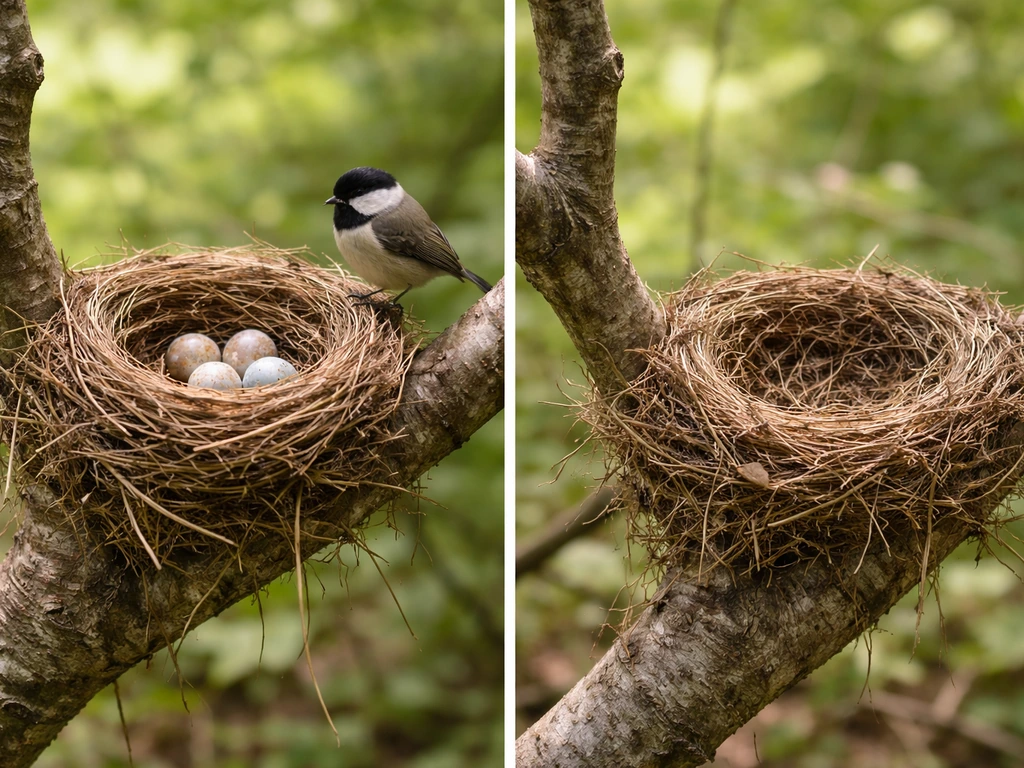
This is the single most important practical distinction you need to make. An active nest contains eggs or live chicks and has adults returning to it regularly. NestWatch is clear that nests can be mistakenly identified as abandoned when adults are actually still present, often simply because the adults retreated when a human approached. Before assuming a nest is abandoned, watch from a genuine distance for a full day to see whether parents return. Symbolically, an active nest is obviously the richer sign: something is being tended, nurtured, and brought into the world right at your threshold. An abandoned nest is a different situation, one that may prompt reflection on what has been left behind or completed.
Timing and season
Spring nesting, which is what's happening right now if you're reading this in April, is the most common and least remarkable from a wildlife standpoint. It's also symbolically the richest season for themes of new beginnings, growth, and creation. A nest appearing in an unusual season (late summer, fall, or winter) is rarer and may carry a different energy for those who interpret these things symbolically: a sense of something building out of season, or a message about timing and patience.
Whether the bird is still building vs. already settled
If you're catching the bird mid-construction, you're witnessing the act of creation in real time. That's a different symbolic moment than finding a completed nest. The building phase is associated with intention, effort, and the beginning of something. A completed, occupied nest signals that something is already underway, already committed to. Both are positive in the traditions discussed here, but they speak to different moments in a process.
Placement relative to the door
A nest directly on a door wreath, in a hanging planter, above the doorframe, or on a nearby porch column each carries slightly different practical implications (mainly around how much you'll disturb it by using the door). Symbolically, the closer the nest is to the actual threshold, the more directly it aligns with doorway symbolism around blessing, entry, and protection. A nest on a door wreath is perhaps the most visually striking version of this, essentially placing the bird's home on the door itself, which many people experience as particularly significant. If you are trying to interpret it specifically, the bird nest on door wreath meaning often combines doorway symbolism with the idea of protection over your household. A door wreath is a common place to spot a nest, and the bird nest on door wreath meaning is usually tied to themes of protection at the threshold. If you want to understand the broader bird building nest in my house meaning, the threshold themes can help you interpret the situation as a whole bird nest on door wreath meaning. If you are trying to interpret the bird nest in front of house, the same threshold symbolism of protection and blessing usually applies bird nest in front of house meaning. A nest on a nearby column or light fixture is slightly more removed but still within the symbolic orbit of the threshold. If you want a direct answer to bird nest outside my house meaning, start with the same threshold symbolism of safety and blessing, then compare it to the door wreath version nearby.
| Detail | Practical implication | Symbolic angle |
|---|---|---|
| Active nest (eggs/chicks) | Protected by law; do not disturb | Strongest sign of new life and blessing at your threshold |
| Abandoned nest | May be legally removable; verify first | Reflection on completion or transition |
| Swallow nesting | Common near structures; droppings may be issue | Strong luck/protection symbolism across many cultures |
| Robin or wren nesting | Usually less mess; quick nesting cycle | Renewal, wisdom, new beginnings in European traditions |
| Mid-construction (bird still building) | Most vulnerable phase; minimize disturbance | Creation, intention, the start of something new |
| Nest on door wreath | High foot-traffic disruption risk | Most direct threshold symbolism; often felt as personal message |
| Spring timing (now) | Expected nesting behavior; short duration | New beginnings, growth, fertility |
| Off-season timing | Rarer; worth monitoring | Urgency, unusual timing as a possible message |
What to actually do right now: practical next steps
Regardless of how you interpret the symbolic meaning, there are clear practical steps you should take today. Most native bird species in the United States and Canada are protected under the Migratory Bird Treaty Act (MBTA) or equivalent Canadian regulations, meaning that removing or disturbing an active nest without authorization can result in fines of up to $15,000 and possible criminal charges. That's not a scare tactic; it's a real legal constraint that shapes your options.
Step one: confirm whether the nest is active
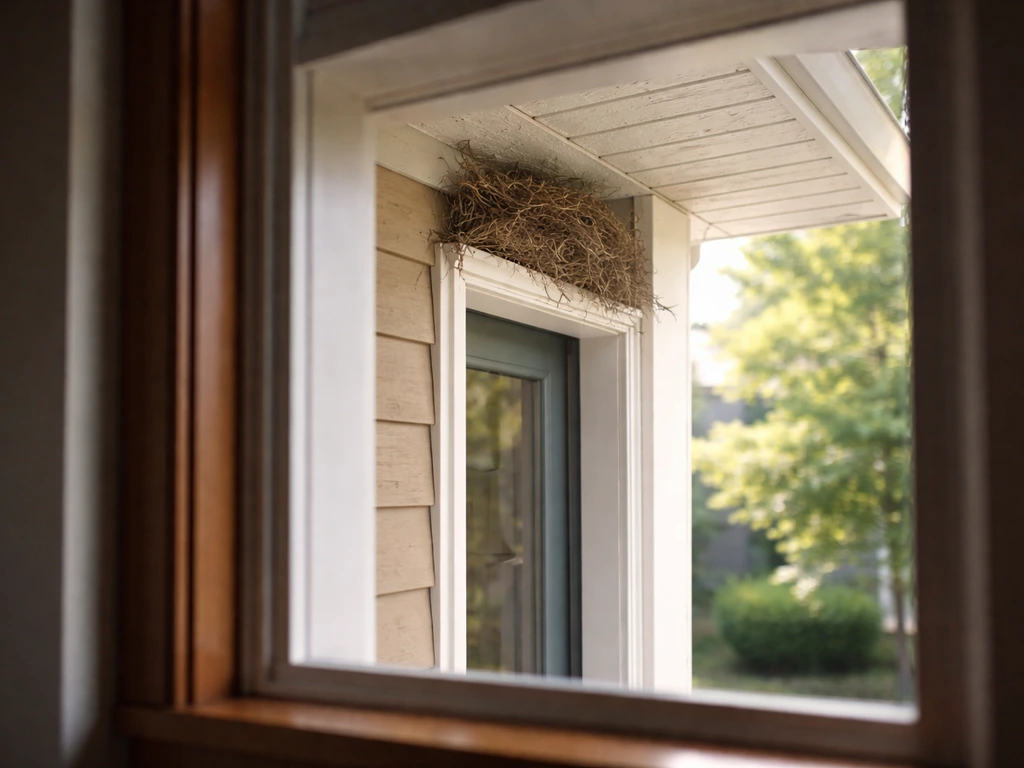
Watch from a distance, ideally from inside through a window, for several hours during the day. If you see adults returning to the nest, it's active. If you see eggs or chicks, it's active and protected. If you haven't seen any activity in a full day of observation, it may be inactive, but err on the side of caution before doing anything. You can also use that timing to tell whether the bird is in or on the nest, which affects how active it likely is.
Step two: minimize disturbance while the nest is active
NestWatch's code of conduct recommends giving birds time to slip away quietly before you approach. If you need to use your front door, do so calmly and without sudden movements or loud sounds. Avoid lingering near the nest. Try to use another entrance if the nest is directly on or immediately adjacent to the door and the birds are visibly distressed by your comings and goings. Eggs and young chicks can cool quickly if adults are repeatedly flushed from the nest, especially in early morning.
Step three: manage the mess, not the nest
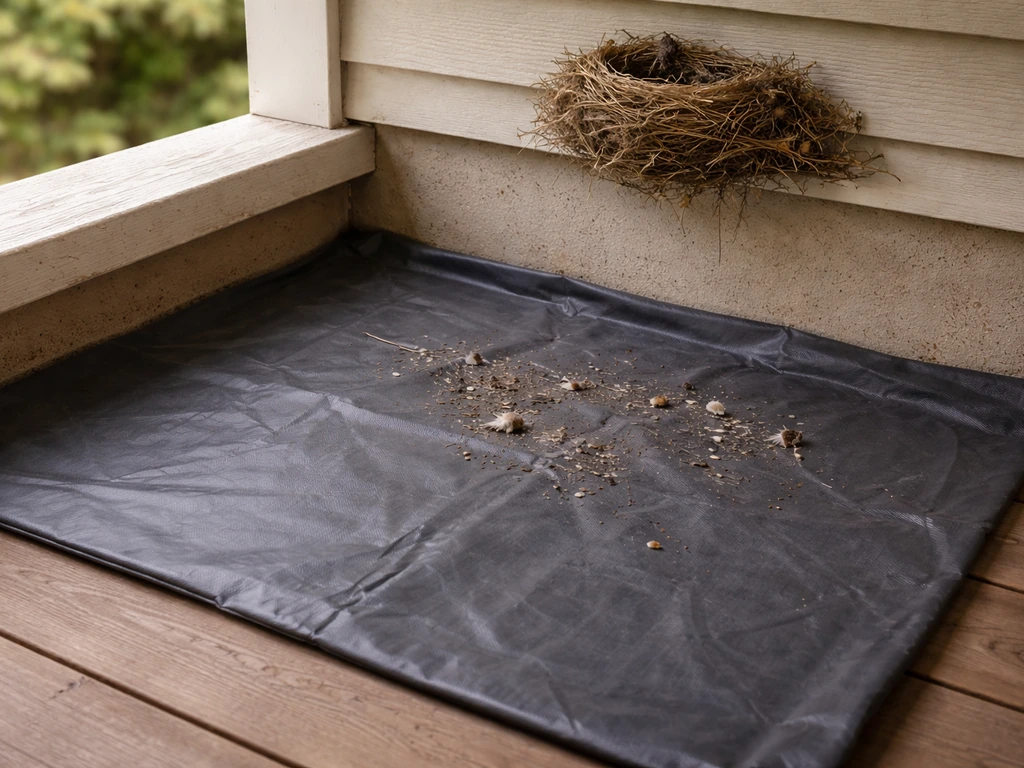
If droppings are a concern (which is the most common practical complaint), the U.S. Fish & Wildlife Service recommends placing newspaper or a tarp below the nest for easier cleanup. Cover any vehicles parked in the drop zone. Wash feces from hard surfaces regularly using gloves and basic sanitary precautions. Do not attempt to move or block the nest as a substitute for managing the mess.
Step four: know when to call a professional
If the nest presents a genuine health or safety hazard (not just inconvenience), or if there appears to be a sick or injured bird, contact a licensed wildlife rehabilitator or your state/provincial wildlife agency. The FWS and equivalent agencies do have permit processes for nest removal or relocation in cases of genuine health or property threats, but these must be authorized, not self-administered. If you suspect an illegal disturbance of a nest is occurring nearby, the FWS accepts reports by email with location, date, and description of the incident.
Your do-this-today checklist
- Watch from a distance for several hours to confirm whether the nest is active (adults returning, eggs, or chicks visible).
- Do not touch, move, block, or attempt to remove the nest if it appears active.
- Use your front door calmly and without sudden movements; consider an alternate entrance if birds are clearly distressed.
- Place newspaper or a tarp beneath the nest to catch droppings; wash any feces from surfaces regularly with gloves.
- Cover nearby vehicles or outdoor furniture that may be in the droppings zone.
- If a chick appears injured, sick, or fallen, contact a licensed wildlife rehabilitator rather than handling it yourself.
- If you believe the nest presents a genuine health or safety hazard, contact your state or provincial wildlife agency to ask about permit options for relocation or removal.
- Do not attempt to use deterrents on or near the nest while it is active; wait until the season is complete and young have fledged, then consult wildlife guidelines before removing the empty nest.
How long will this actually last?
Most songbird nesting cycles run between three and six weeks from egg-laying to fledging. Swallows can take a bit longer, roughly five to seven weeks for the full cycle. If the nest is newly built and eggs have just been laid, you're probably looking at about a month of active use. After the young fledge, the nest may be abandoned or, in the case of swallows, reused in subsequent broods. One important note: swallows in particular are known to return to the same nesting site in following years, and if you attempt to remove the nest immediately after fledging, they may simply rebuild within hours. A more effective long-term strategy is to consult wildlife guidelines about deterrent options once the nesting season is fully complete.
In the meantime, a month of a bird family at your threshold is, in nearly every tradition discussed here, considered a gift. What you make of that is entirely your own.
If you're curious about how these interpretations shift slightly depending on exact placement, the dynamics of a nest on a door wreath specifically, or what it means when a bird is actively building rather than already settled, those nuances are worth exploring further as their own topics. The symbolism around birds and the home is deep and layered, and the threshold is just one part of a much larger picture around what it means when wildlife chooses to share your space.
FAQ
Is it okay to move the nest if the birds are blocking my door or making a mess?
If the nest is active (eggs or chicks, or adults returning regularly), you should not relocate or block it yourself. In the US and Canada, many native birds are protected, and disturbing an active nest without authorization can lead to fines and even criminal charges. The safer approach is to minimize your own time in the drop zone, use a different entrance if possible, and plan cleanup only after the nesting period ends or through guidance from your wildlife agency.
How can I tell whether the nest is active versus abandoned without accidentally flushing the parents?
Watch from a distance or from inside with minimal window movements for several hours across the day, not just once. Evidence of activity includes adults landing near the nest, carrying food, frequent short visits, or eggs/chicks you can see. If adults stop returning for a full day, it may be inactive, but confirm again before doing anything, since some birds temporarily retreat when people are nearby.
What should I do if the nest is directly on the door wreath, doormat, or right beside the handle and I need to leave in the morning?
Use the most indirect, least disruptive path to get out, and avoid hovering by the nest while you unlock the door. If birds seem visibly stressed or frequently forced off the nest during your trips, switch to another entrance temporarily. Early morning can matter because eggs and young chicks can cool quickly after repeated disturbance.
Should I clean droppings immediately, or can I wait until the birds are gone?
If the nest is active, avoid reaching under or around it in ways that disturb the birds, and use a strategy that contains mess rather than pushes into the nest area. For active nests, the commonly recommended approach is to place disposable newspaper or a tarp beneath the drop zone to simplify later cleanup. Clean hard surfaces with gloves and basic hygiene, and do not wash or scrape in a way that creates extra movement near the nest.
What if the bird is aggressive, dive-bombing, or attacking people near the nest?
Some birds defend territory, especially when they have young. Do not retaliate or try to remove the nest. Keep people and pets away from the approach path, reduce traffic near the doorway, and consider contacting a wildlife agency or licensed wildlife rehabilitator if the situation poses a real safety risk (for example, repeated attacks or someone vulnerable nearby).
Does it matter which species it is for both meaning and practical handling?
Practically, yes, because different species have different nesting timelines and behaviors, which affects how long the nest will be active and whether reuse is likely. Meaning-wise, species can shape what people associate symbolically. If you are unsure, identify by size, color, nest shape, and behavior, and use birding guidance to confirm rather than relying only on “bird nesting near a door” assumptions.
If the nest looks unfinished or the bird is still building, do I treat it differently?
Yes. Construction phase nests are often where the “active use” begins, but the level of urgency may still be lower than with visible eggs or chicks. Still, treat it as protected once the bird shows consistent attendance. The key practical rule is to watch for adults returning regularly, then plan your doorway use around that schedule until fledging.
What if the nest appears in a weird season, like fall or winter?
Nesting out of peak season is less common, and it can change the practical reality of how long the nest remains active. If you see a nest outside typical nesting months, use extra caution, watch for true activity, and consider contacting your wildlife agency for species-specific guidance on whether it is a legitimate ongoing nest, a delayed second attempt, or something else.
Will swallows reuse the same spot next year if I leave the nest alone?
Often, yes. Swallows are known to return to successful nesting sites in subsequent years. If you wait until after the young fledge and the nesting season is fully complete, they may still rebuild quickly if you remove it too soon, especially within hours of fledging. A longer-term plan should come from wildlife guidance tailored to swallows and your location.
At what point should I stop trying to manage this myself and contact professionals?
Contact a wildlife rehabilitator or your state or provincial wildlife agency if there is a genuine safety hazard (for example, the nest is inside a critical walkway where people cannot avoid it), if you suspect an injured bird, or if the nesting setup is creating an urgent conflict that cannot be solved by changing your route and timing. If there is an illegal disturbance nearby, also report it with the location, date, and description.
Next Articles
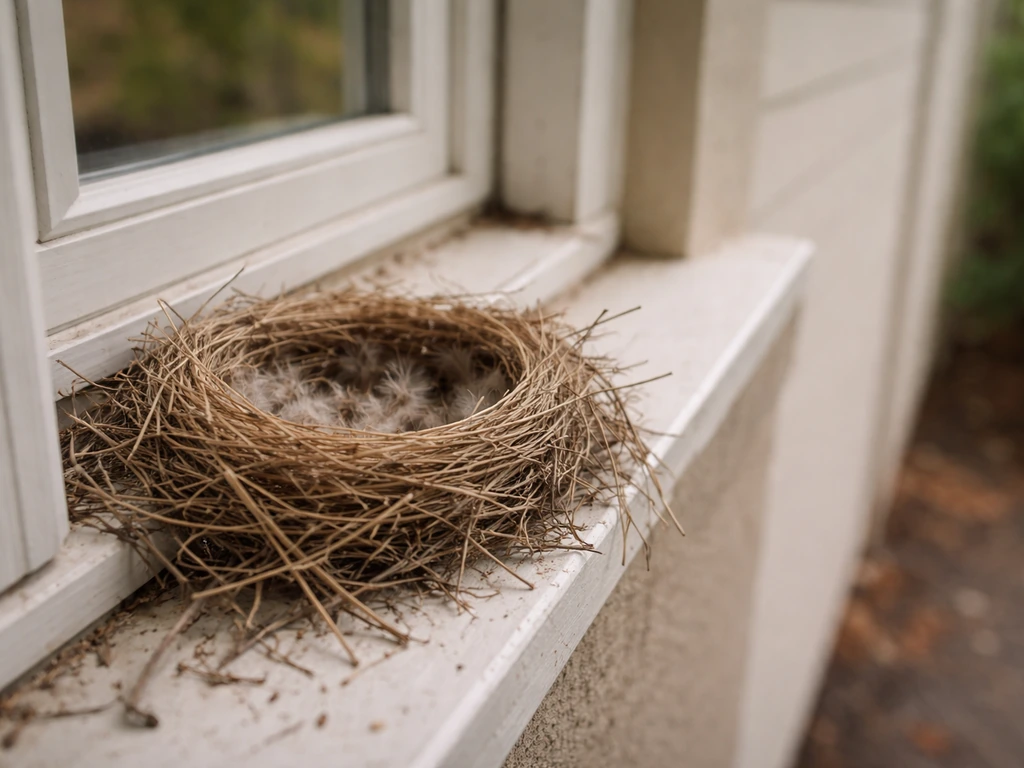
Bird Nest Outside My House Meaning: Practical and Spiritual
Learn why a bird nest is outside your house and window, plus spiritual meanings and safe steps to handle it.
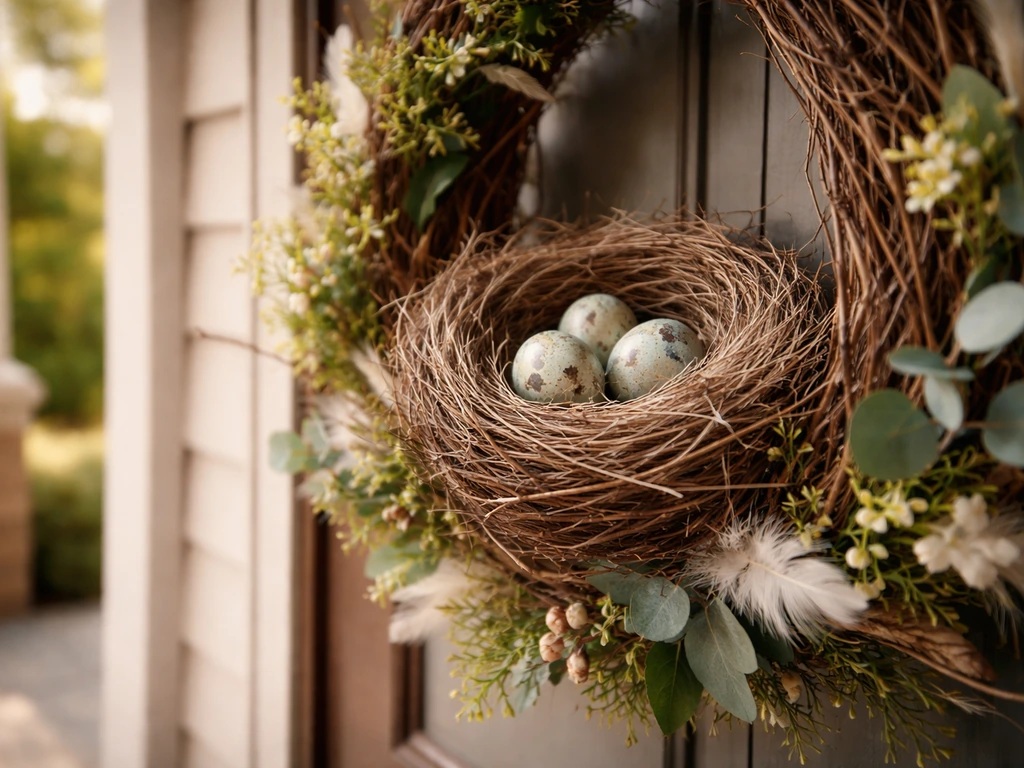
Bird Nest on Door Wreath Meaning: Practical and Spiritual Steps
Bird nest on a door wreath meaning: natural causes, spiritual symbolism, and safe next steps for what to do now.
Why Is My Bird Flapping Its Wings at Me? Causes and What to Do
Understand why your bird flaps wings at you and what to do, from hormones and stress to attention and warnings.