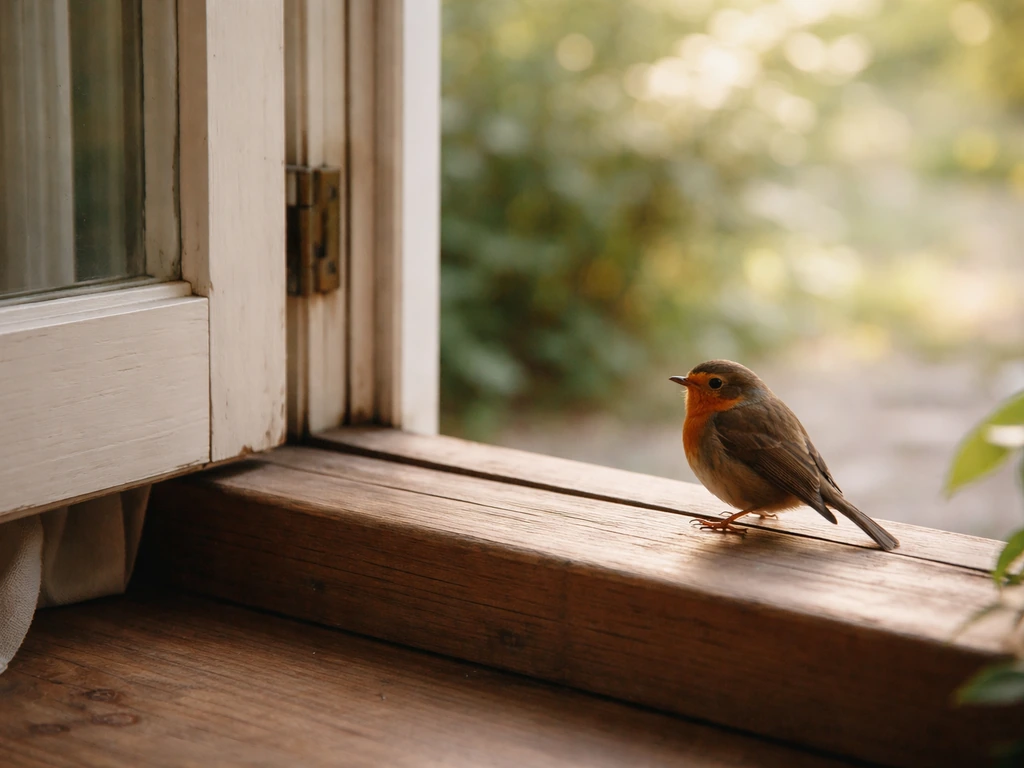
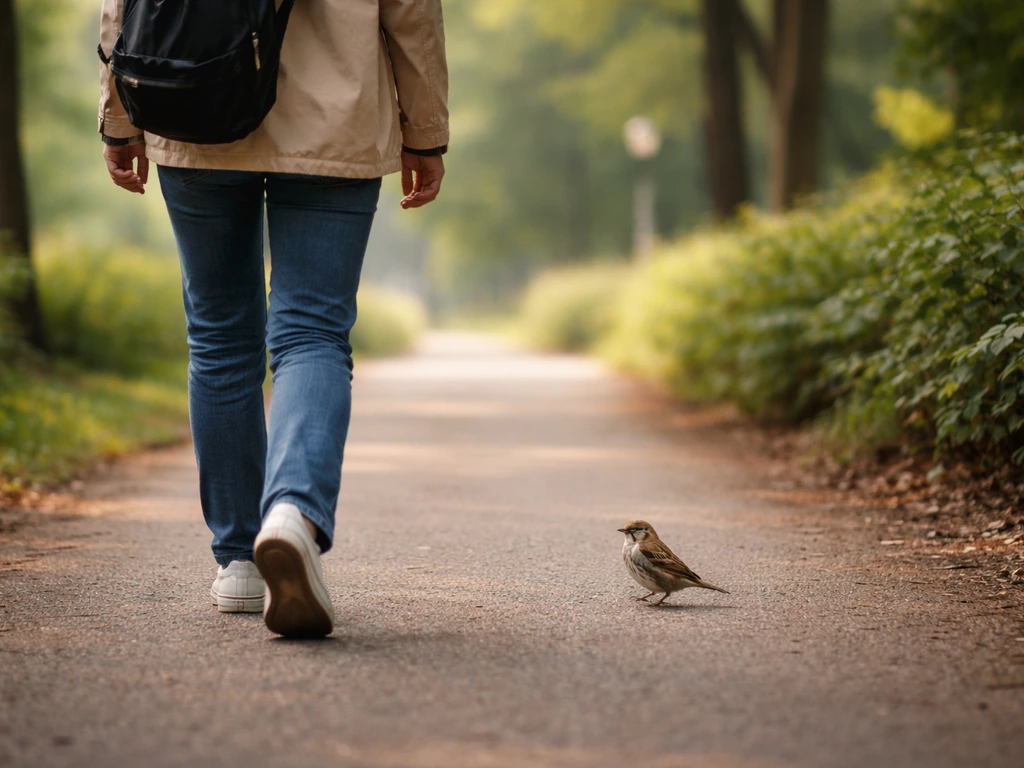
When a bird follows you, the most likely explanation is a behavioral or ecological one: it is curious, it associates you with food, it is defending a nearby nest, or it has become imprinted on humans. That said, across dozens of cultures and centuries of folklore, a bird that trails a person has also been read as a messenger, an omen, or a nudge from something beyond the everyday. Both things can be true at once. The goal here is to help you figure out which situation you are actually in, and what, if anything, to do about it.
What Does It Mean When a Bird Follows You? Meaning and Next Steps

Maya Hartwell
8 Apr 2026
Why a bird might actually be following you
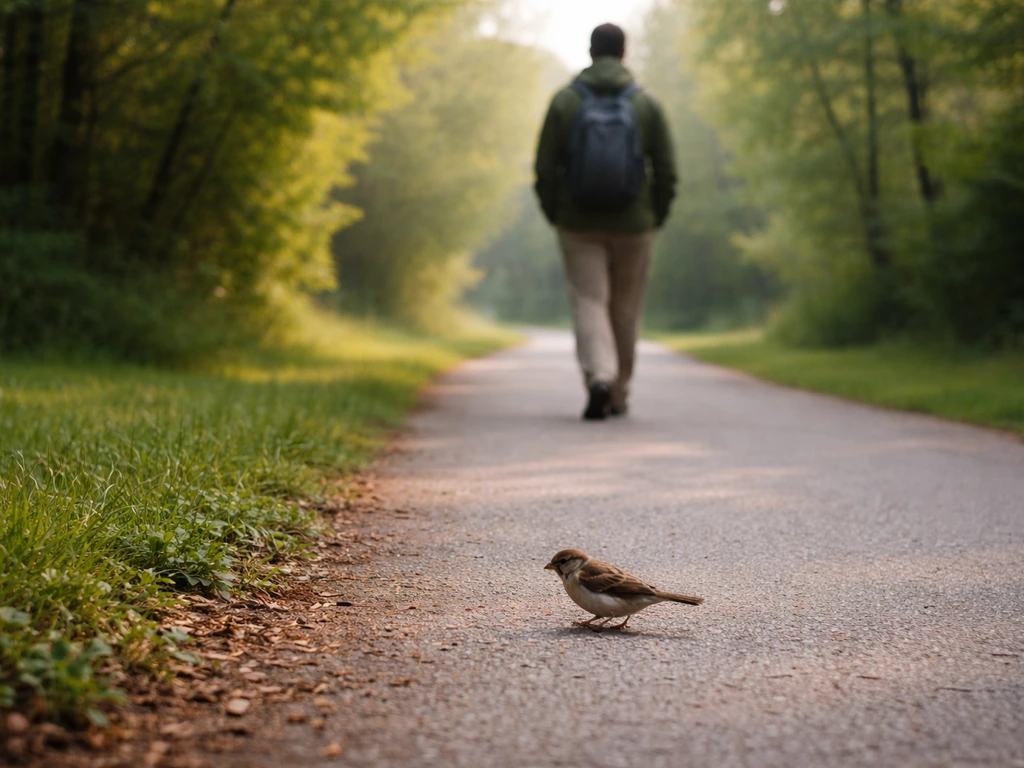
Before you reach for a symbolic interpretation, it helps to know what drives birds to trail people in the first place. There are several well-documented, completely ordinary reasons this happens.
Curiosity and social information gathering
Birds are surprisingly social learners. Research supports what ecologists call the "information centre hypothesis," which describes how animals gain an advantage by following individuals who seem to be locating food or resources. If you walk through a garden or park regularly, a bird may have learned that you disturb insects, expose seeds, or simply indicate a safe zone. More social bird species, in particular, are more likely to investigate novel sources of food this way. In short, the bird may be using you as a reliable tip-off.
Territorial or nesting defense
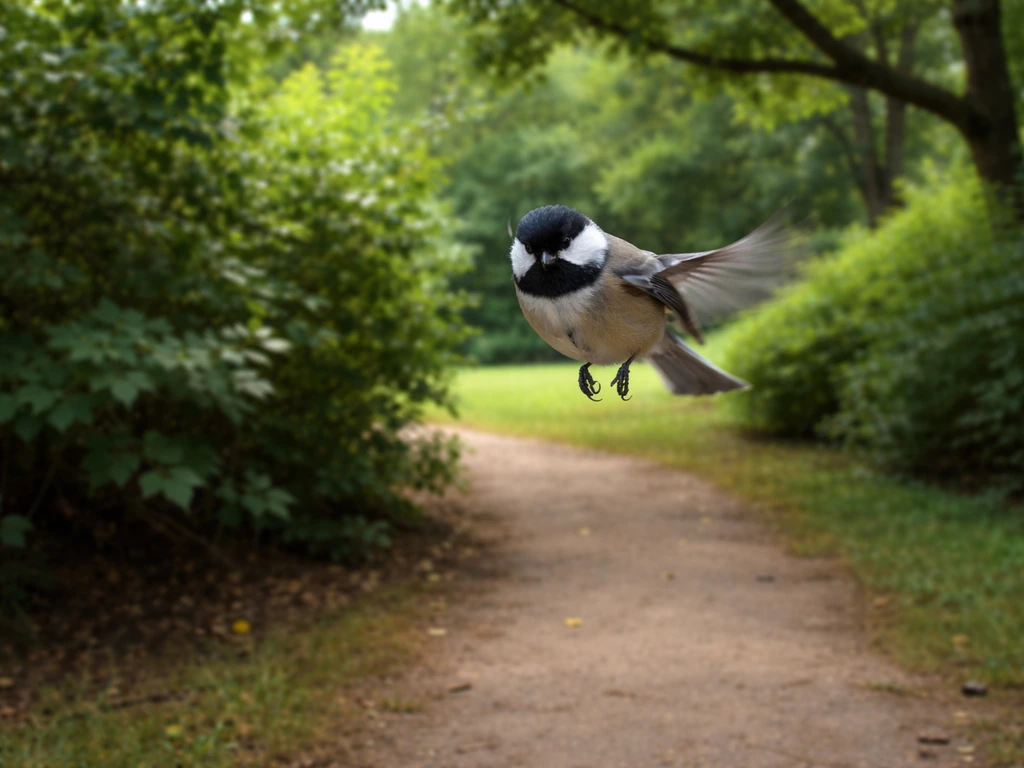
If the bird is tracking you in a specific area (especially a yard, park path, or near a tree line), there is a strong chance a nest is nearby. Birds engage in what ornithologists call mobbing: flying about an intruder, dive-bombing, loud squawking, and even defecating to drive perceived threats away from nestlings.
Cornell’s All About Birds notes that this kind of nest-related “following” or protective behavior can help chase off potential predators from nesting areas drive perceived threats away from nestlings.
Barn swallows, mockingbirds, and robins are especially well-known for this. The bird is not following you because it is interested in you. It is escorting you out of its territory. [Male American robins, for example, actively defend breeding territories from roughly April through July](https://en.
wikipedia. org/wiki/American_robin), which is exactly when most people notice robins trailing them.
Human imprinting
Some birds, especially those raised near humans or rescued as chicks, can imprint on people and begin treating a human as a social companion or even a rival. An imprinted bird may follow a person consistently, call for their attention, and even display territorial behaviors toward the person it is bonded with. This is more common than people realize, and it is one of the clearest cases where a bird seems genuinely attached to a specific individual. If the bird appears fearless, unusually close, and seeks you out repeatedly over days or weeks, imprinting is worth considering.
Disorientation or injury
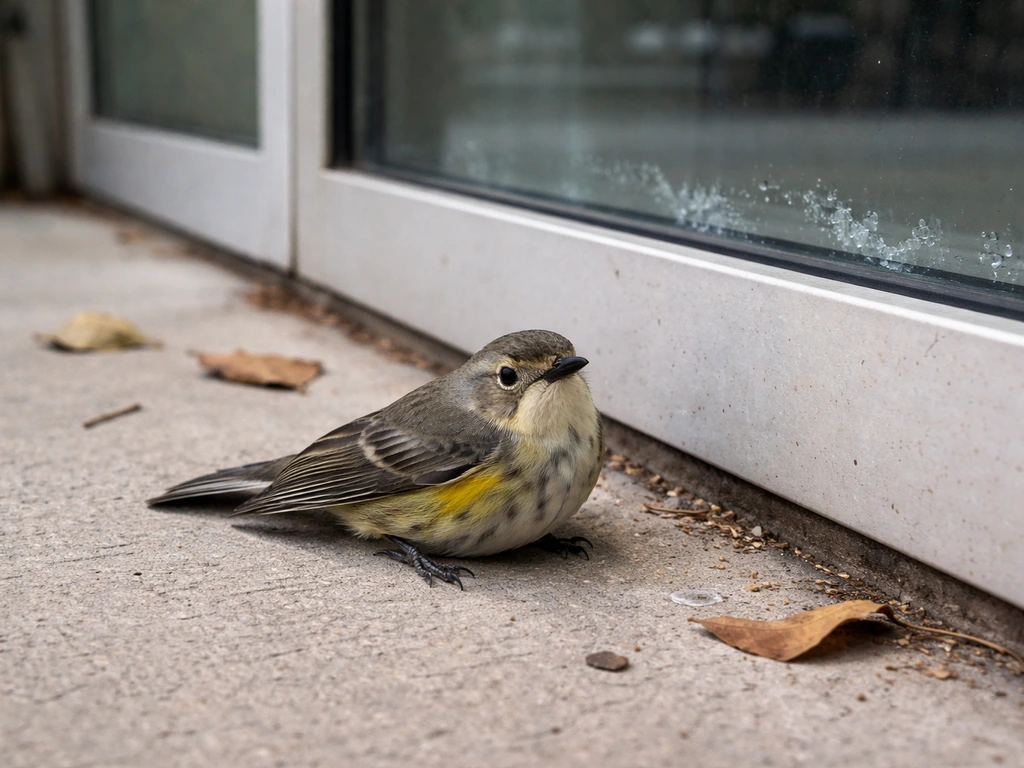
A bird that follows you in a slow, low-flying, or stumbling way may be disoriented from a window strike or some other injury. Birds that seem fine after colliding with glass can carry internal injuries that are not visible to the untrained eye. If the bird looks unsteady, is holding a wing oddly, or keeps landing near you as if seeking shelter, treat it as a potential injury situation rather than a symbolic one.
When it carries a symbolic meaning: what people believe
Once you have ruled out (or accounted for) the practical explanations, the interpretive layer becomes much richer to explore. People across traditions have long treated a bird that singles out a person as meaningful, and honestly, the sheer variety of those beliefs is fascinating.
In many spiritual traditions, a bird that follows you is understood as a messenger, a guide, or a soul in transit. The general sense, explored in depth when you look at what it means when a bird visits you, is that a bird approaching a person deliberately (rather than just being nearby) carries more intentional energy. It is seen as choosing contact.
In metaphysical and New Age frameworks, a bird following you is often interpreted as a sign of guidance, protection, or an incoming message from a spirit, ancestor, or higher self. The direction the bird flies, whether it crosses your path or leads you, and whether it calls out are all treated as additional layers of meaning. Some readers treat it as confirmation that they are on the right path, others as a prompt to pay attention to something they are avoiding.
Robin symbolism is a good example of how layered this can get. Spiritually, robins are frequently associated with renewal, new beginnings, and the presence of departed loved ones. If you want to go deeper on that specific encounter, the spiritual meaning of a robin bird visiting you covers the symbolism in much more detail.
Reading the clues: species, distance, timing, and direction
The practical and symbolic interpretations both benefit from the same close observation. Here are the key variables to pay attention to.
Which species is following you?
Species matters enormously. A mockingbird trailing you in late spring almost certainly means you are near its nest (mockingbirds are famously aggressive nest defenders and can even call neighboring mockingbirds to join their defense). By contrast, a crow following you over multiple locations and days suggests something quite different, behaviorally and symbolically. The butcher bird, or shrike, is another species whose "following" behavior can look eerie but often reflects its predatory territorial strategy. If you have had a shrike acting brazen around you, the meaning of a butcher bird visiting you gives helpful context on what that species signals.
How close does it get, and does it land?
A bird that follows at 20 feet and calls loudly is almost certainly doing a territorial escort. A bird that lands within arm's reach, makes eye contact, and stays quiet is a much more unusual encounter and the one most people intuitively feel is "meaningful." Landing on you or very near you is a behavior that goes well beyond normal defensive or foraging activity and is the kind of moment many traditions interpret as direct contact.
Time of day, weather, and direction
Dawn and dusk encounters carry different folkloric weight than midday sightings. A bird following you toward your home is interpreted very differently than one that appears when you are leaving, or one that crosses your path toward water. In symbolic frameworks, direction adds a layer of narrative: moving toward home can signal comfort or return, while leading you away is sometimes read as a call to move, change, or follow through on something deferred. Weather matters too. A bird that follows you through rain or storm is noted in many folklore traditions as carrying especially urgent or protective energy.
| Clue | Likely Practical Meaning | Common Symbolic Interpretation |
|---|---|---|
| Mockingbird trailing you, spring/summer | Nesting defense, territory escort | Message about protection or fierce loyalty |
| Bird lands on or very near you, stays calm | Imprinting or injury possible | Direct contact, personal message or sign |
| Bird follows across multiple locations/days | Foraging cue, or imprinting | Persistent guidance, spirit presence |
| Dive-bombing and loud calls | Active nesting defense (mobbing) | Warning, boundary, or urgent omen |
| Slow, low, disoriented following | Likely injury or window-strike aftermath | Soul in transition (in some traditions) |
| Following toward home | Food association with your property | Comfort, return, or domestic blessing |
What to do if the bird seems persistent or aggressive
If a bird is dive-bombing you repeatedly, that is mobbing behavior and it is worth taking seriously. The U.S. Fish and Wildlife Service confirms that backyard birds and birds of prey have been known to dive-bomb to scare off threats. Watch for broken-wing displays (the bird dragging a wing along the ground near you), which can be a warning sign before full defensive behavior escalates. The practical steps are straightforward.
- Leave the immediate area calmly. You are almost certainly near a nest. Give it a wide berth for a few weeks during nesting season.
- Do not swat at the bird or try to chase it off aggressively. That escalates the perceived threat.
- Wear a hat if you must pass through the area. Mockingbirds and other dive-bombers tend to target the top of the head.
- If the bird appears injured (low to the ground, asymmetric wings, unresponsive), do not try to capture it yourself. U.S. Fish and Wildlife guidance is clear that taking wildlife home is illegal, and internal injuries from window strikes or collisions may not be visible. Contact a licensed wildlife rehabilitator.
- If the bird is stunned near a window, keep it somewhere quiet, dark, and safe (a ventilated box works well) while you arrange for professional help or, if capture is not possible, gently move it to shelter under nearby vegetation.
- Never attempt to keep a wild bird, even temporarily as a "rescue," without professional guidance.
Mockingbirds in particular can be intense during nesting season, which is important to understand if yours is the species in question. Understanding the deeper meaning of a mockingbird visiting you can help you hold both the practical (this bird is defending its nest) and the symbolic (this species carries its own rich lore) at once.
What different cultures and traditions say about birds that follow people
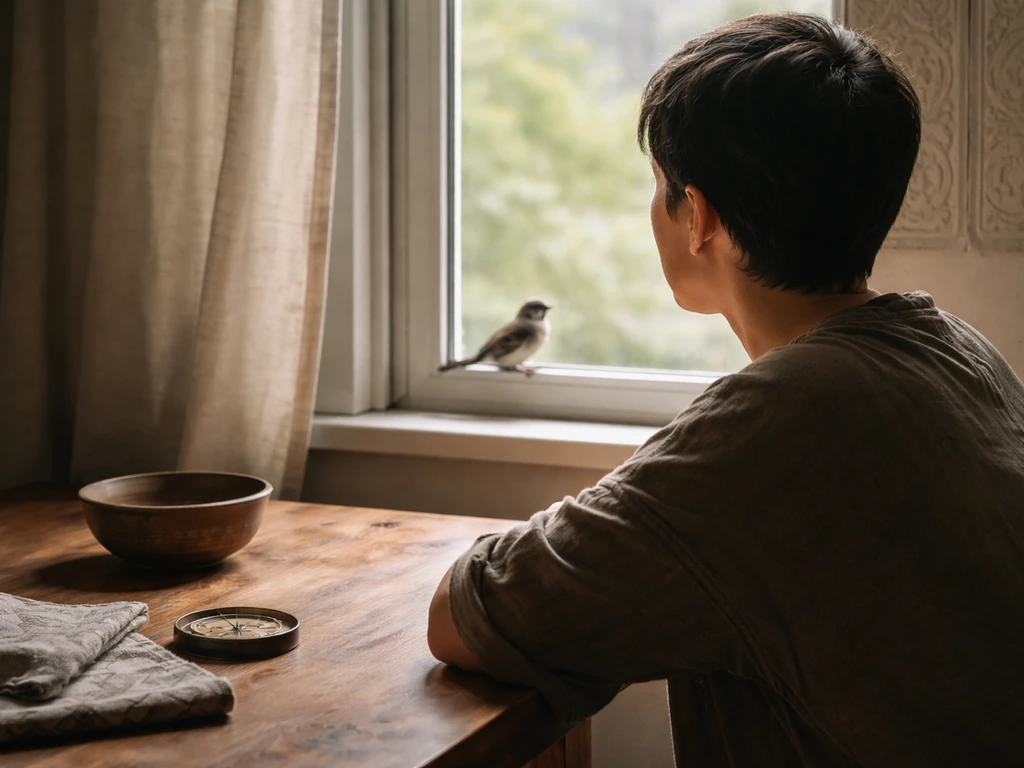
Across almost every tradition that has left us records, birds occupying the space close to a human have been treated as significant. The reasons vary, but the basic intuition, that a bird choosing proximity to a person is communicating something, is remarkably consistent.
Norse and Germanic traditions
In Norse mythology, Odin's ravens Huginn and Muninn (Thought and Memory) flew across the world each day and returned to whisper what they had seen into the god's ear. Ravens were not random visitors in this tradition. They were deliberate messengers carrying intelligence between worlds. A raven that follows a person was therefore not a coincidence but a conveyance. This association between ravens and important, often weighty information persists in Scandinavian and Germanic folklore well beyond the original mythological context.
Biblical and Abrahamic traditions
In biblical tradition, birds appear repeatedly as divine instruments. Ravens fed the prophet Elijah in the wilderness (1 Kings 17). A dove returned to Noah with an olive branch, signaling that the land was safe. In these contexts, a bird accompanying or following a person is understood as provision, protection, or guidance from God. The specific species mattered (doves carried peace and purity, ravens carried sustenance against all odds), but the pattern of a bird staying near a person in need runs consistently through the text.
Celtic and indigenous traditions
In Celtic belief, certain birds, especially the crow, raven, and robin, were considered to carry souls or serve as psychopomps (guides between life and death). A bird following you near a time of grief or transition was sometimes understood as the presence of a departed ancestor walking alongside you. Many indigenous North American traditions similarly hold that birds serve as messengers between the physical and spirit worlds, with specific species assigned specific relational or directional meanings depending on the culture. It would be reductive to generalize across the enormous diversity of indigenous traditions, but the widespread reverence for birds as boundary-crossers, beings that exist in the sky world as well as the earth world, appears across a striking number of them.
East Asian and South Asian traditions
In Chinese tradition, certain birds (the crane especially) are considered auspicious and their sustained presence near a person signals longevity, good fortune, or harmony. In Hindu tradition, specific birds serve as vahanas (vehicle-mounts) of deities: Garuda for Vishnu, the peacock for Saraswati and Kartikeya. A bird of these species appearing at a spiritually significant moment carries the energy of that deity's domain. Japanese folklore holds that cranes bring good luck, while crows (karasu) near a shrine signal the presence of the divine.
How to interpret what happened without spiraling or dismissing it
Here is the honest framework I use when someone describes a bird following them: start with what is physically observable, then let the meaning open from there if it wants to.
First, account for the natural explanation. Is it nesting season? Are you near a food source? Has the bird shown signs of imprinting or injury? If any of those apply, the practical reading is probably the primary one, though it does not close the door on meaning. A mockingbird defending its nest fiercely during a period of your life when you are also protecting something fragile can feel resonant and symbolic even if the bird's behavior is entirely biological.
Second, notice your own emotional response. The feeling of being followed by a bird does something to most people. There is a reason this question gets asked so frequently. If you felt a shift, a sense of being seen, a moment of grief or relief, pay attention to that. Your intuition is data about your inner life even when it is not data about the bird's intentions.
Third, resist both poles: the urge to declare it a definitive supernatural sign and the urge to dismiss it as "just a bird." The most useful place to sit is open curiosity. Ask: what is happening in my life right now that makes this encounter feel significant? What would it mean if it were a message? What would that message be asking of me?
Fourth, if the experience happened in a dream or in that liminal half-awake state, weight it more heavily toward the symbolic. The unconscious mind speaks in images, and birds appearing in dreams or on the edge of sleep carry different interpretive weight than a territorial robin in a spring backyard.
Finally, if the encounter felt particularly personal, consider writing it down: the species, the time of day, what you were thinking about, what direction the bird came from, how it left. You do not need to reach a conclusion. Sometimes the act of noticing carefully is the whole point.
FAQ
What should I do in the moment if a bird is following me closely and getting aggressive?
Treat it as a nest-defense scenario until you learn otherwise. Back away slowly, avoid sudden head or arm movements, keep kids and pets close to you, and change direction rather than trying to “out-walk” the bird. If you see broken-wing behavior, stay clear of that area and consider using a different route for a few days.
How can I tell the difference between a bird being curious and a bird that is defending a nest?
Curiosity usually looks like short investigations at a distance (hovering, circling once, then moving on). Nest defense is more sustained and escalating, with repeated dive-bombing, loud vocalizations, and consistent targeting of your path toward a specific spot. The target spot is often a tree, hedge, or ledge you can’t immediately see from where you stand.
Can window strikes be the reason a bird seems to “follow” me afterward?
Yes. Birds sometimes appear to recover on the surface but remain disoriented, injured internally, or unable to judge barriers. If it keeps landing near you, follows at close range with unsteady footing, or holds a wing differently, assume injury and keep distance from it. Contact local wildlife rehab if you can do so safely.
If the bird lands on me or within arm’s reach, does that always mean something symbolic?
Not necessarily. Some species can land close because they are feeding, inspecting, or trying to get a better position to distract you away from a nest. Symbolic interpretations tend to fit better when the bird’s behavior is unusually deliberate (stays put, makes sustained eye contact, and repeatedly chooses your personal space) without obvious nesting pressure nearby.
What if multiple birds follow me, or different species keep showing up?
Multiple birds often points to a shared, practical driver like food availability, a local nesting area, or a predator-distraction situation. If the birds are from the same species and appear at the same time of day, that can indicate territorial or nesting focus. If species change across days, note what common factor stays consistent, like a garden patch, fruit tree, pond, or walking route.
Does the time of day actually matter, or is it just folklore?
It can matter behaviorally. Dawn and dusk are prime activity windows for many birds, including territorial patrolling and feeding movements, so encounters feel more intense then. Folklore assigns extra meaning to those times, but you can combine both by checking whether the bird’s behavior matches typical activity for its species during that window.
Could a bird following me be a safety issue beyond nest defense?
Yes, especially if the bird is a bird of prey. If you notice repeated stoops, high-speed approaches, or a sustained watch pattern from above, treat it seriously and give it space. Move away from open ground or where it can easily strike, and avoid trying to “shoo” it directly at close range.
How do I write down the details without turning it into a stressful ritual?
Use a simple log you can complete in under two minutes. Record species, location type (yard, park path, near a building), distance, what it did (circled, called, dive-bombed, landed near), time of day, and what you were doing right before it appeared. Then decide on one practical action, like taking a different route, and one personal reflection question.
If I feel strongly that it’s a sign, how do I avoid misreading it later?
Anchor the interpretation to observable triggers. Before concluding it’s “meant something,” verify whether nesting season, a nearby food source, or a consistent pattern of location explains the behavior. After that, you can choose a symbolic meaning as a reflection prompt, not a certainty, and revisit it after the seasonal or environmental context changes.
What’s the safest way to help an imprinted or tame-looking bird without making things worse?
If the bird seems bonded to humans, don’t attempt to handle it or feed it. Keep distance, discourage pets from chasing, and avoid cornering it near windows or entrances. If it is causing repeated conflicts or appears injured, contact a local wildlife organization or animal control for guidance on relocation or rehabilitation.
Next Article
What Does It Mean When a Bird Visits You?
Learn spiritual and practical meanings of a bird visit, including repeats, plus steps to observe, stay safe, and reflect