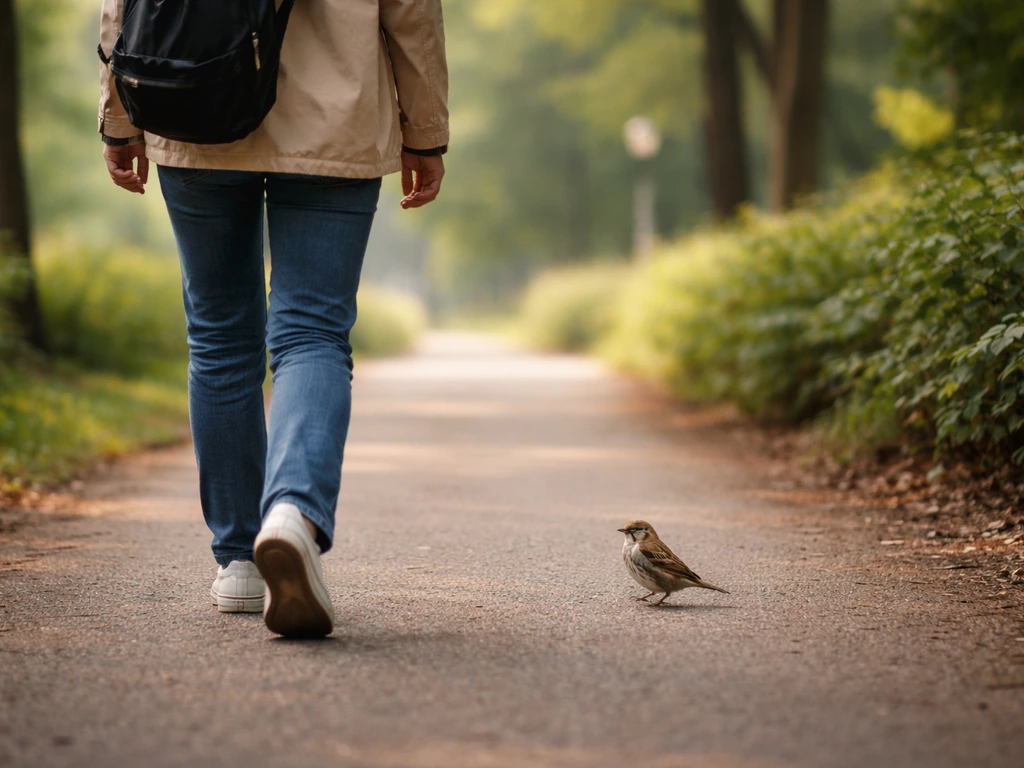
When a mockingbird shows up near you, it can mean one of two things: a bold, territorial bird is doing exactly what mockingbirds do, or you're receiving a message worth paying attention to. The practical and the symbolic are both real possibilities here, and the good news is you don't have to choose one explanation and ignore the other. If you want a fuller interpretation of a bird visit in general, this guide also breaks down what it means when a bird visits you what does it mean when a bird visits you. Mockingbirds are genuinely remarkable birds with layers of meaning across many cultures, and figuring out which lens applies to your encounter is exactly what this guide is for.
What Does It Mean When a Mockingbird Visits You?

Maya Hartwell
30 Apr 2026
Why a mockingbird might visit you in the real world
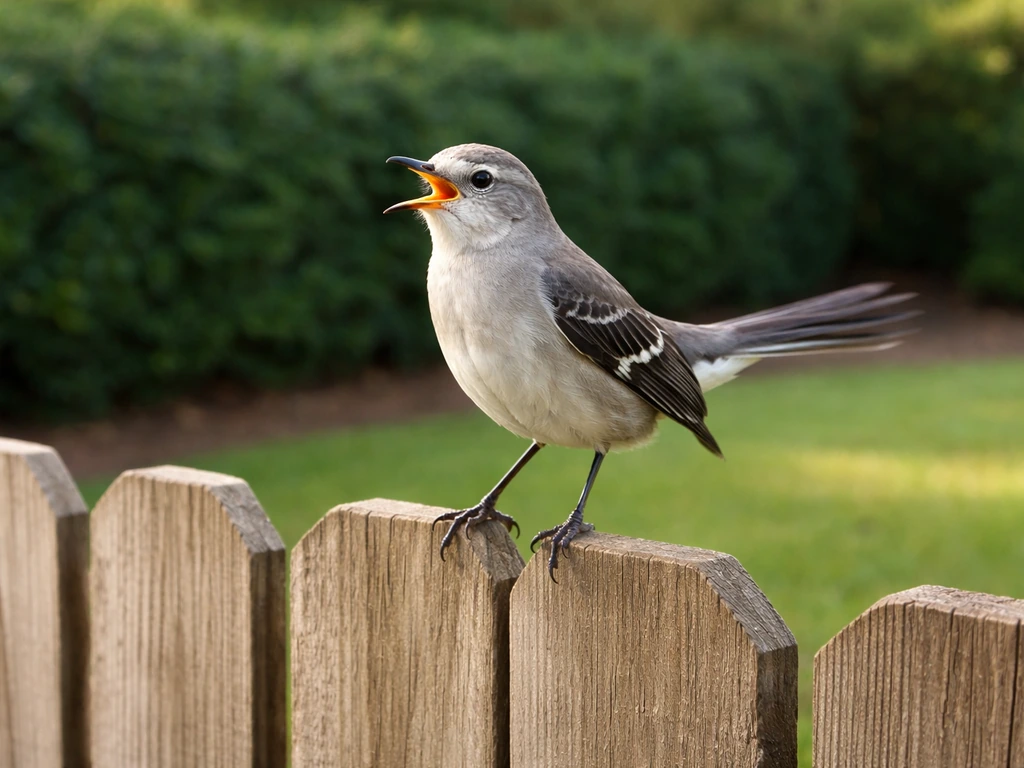
Before you assign meaning to a mockingbird visit, it helps to know what mockingbirds are actually up to most of the time. Northern Mockingbirds are one of the boldest, most vocal backyard birds in North America, and their behavior often looks intensely personal even when it isn't.
The biggest driver of unexpected mockingbird encounters is territory and nesting. Both male and female Northern Mockingbirds build nests in dense shrubs or trees roughly 3 to 10 feet off the ground. During nesting season (primarily spring and early summer), they defend those nests fiercely. Males sing long, complex songs specifically to claim territory and attract mates. If a mockingbird has suddenly started showing up on your porch, fence, or yard repeatedly, there's a good chance a nest is nearby.
Food sources also draw mockingbirds in. They eat berries, insects, and small fruits, so a yard with fruiting shrubs, a garden full of insects, or even an outdoor pet food bowl can become a regular stop. Weather shifts, especially in fall and winter, can push mockingbirds into new areas as they search for food. If the visit feels random, look around for what might be attracting them.
What the bird's behavior is actually telling you
The behavior itself is one of the most useful clues, whether you're reading it practically or spiritually. Mockingbirds have a wide behavioral range, and what they're doing when they visit you matters a lot.
Singing and mimicking
A mockingbird singing near you, especially for extended periods, is most likely a male defending territory or advertising for a mate. Their songs can mimic dozens of other bird species at once, which is part of what makes them so arresting. Spiritually, this behavior is often interpreted as a call to pay attention to the messages around you, a theme we'll explore more below.
Landing close or following you
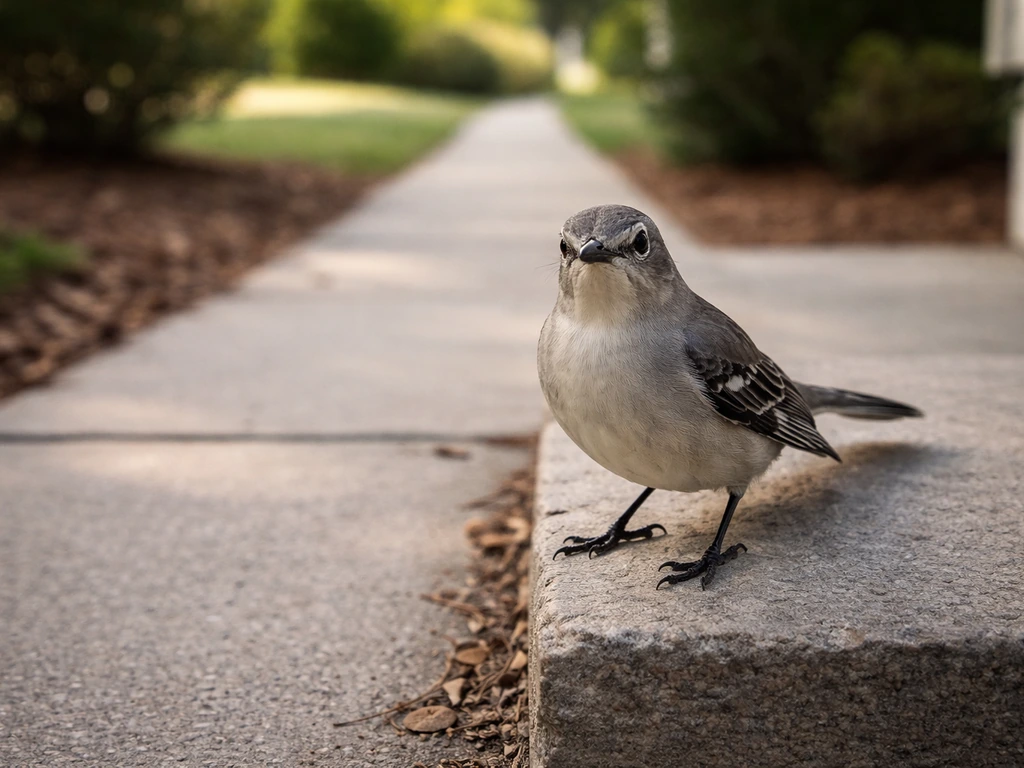
If a mockingbird lands unusually close to you or seems to follow you across your yard, it's worth knowing that research has confirmed mockingbirds in urban settings rapidly learn to identify individual humans and adjust their threat responses accordingly. In other words, this bird may have clocked you specifically. Practically, it could mean you've walked too close to a nest.
In fact, a study found that urban Northern Mockingbirds can rapidly recognize and respond differently to individual humans according to the threat level to their nests (rather than reacting to people at random) [recognize and respond differently to individual humans based on threat level posed to their nests](https://pmc. ncbi. nlm. nih.
gov/articles/PMC2690012/). Symbolically, being singled out by a bird that is known to see and assess you individually feels significant to many people, and understandably so.
Dive-bombing or aggressive behavior
Mockingbirds are among the most common dive-bombing birds during nesting season. The U.S. Fish and Wildlife Service notes this behavior is triggered when people get too close to nests or young birds. If a mockingbird is swooping at your head, it's not a random spiritual attack. There's almost certainly a nest within about 10 to 15 feet of where you're standing. That said, some traditions read this as the bird urgently demanding your attention.
Sitting quietly nearby or appearing unexpectedly
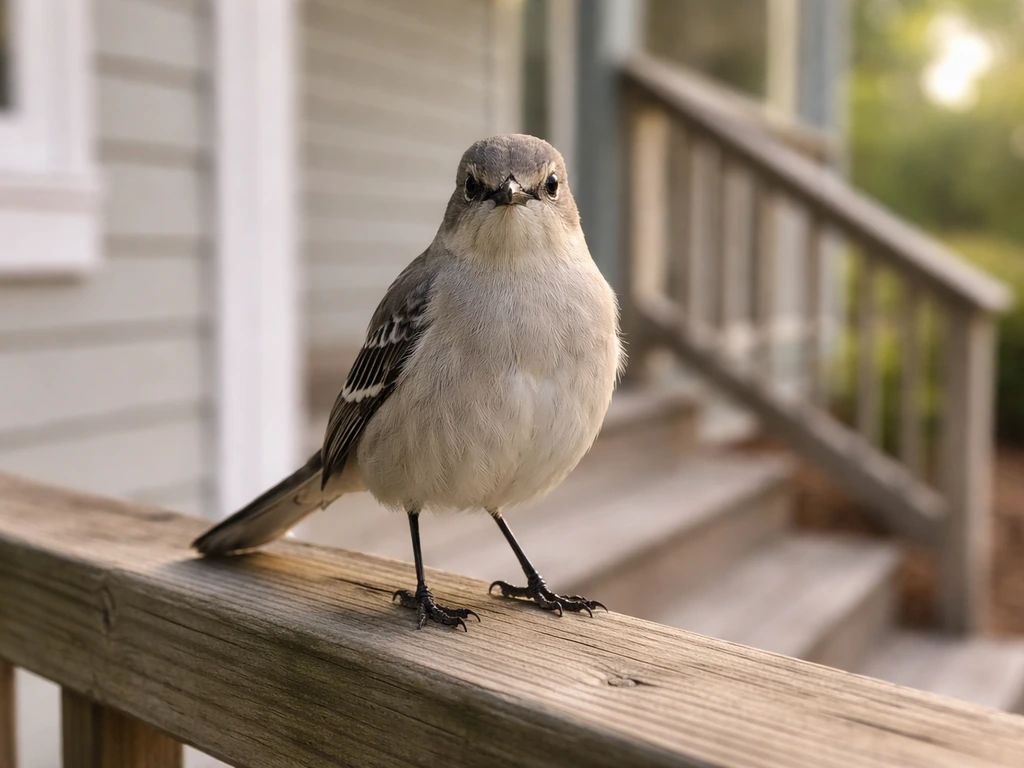
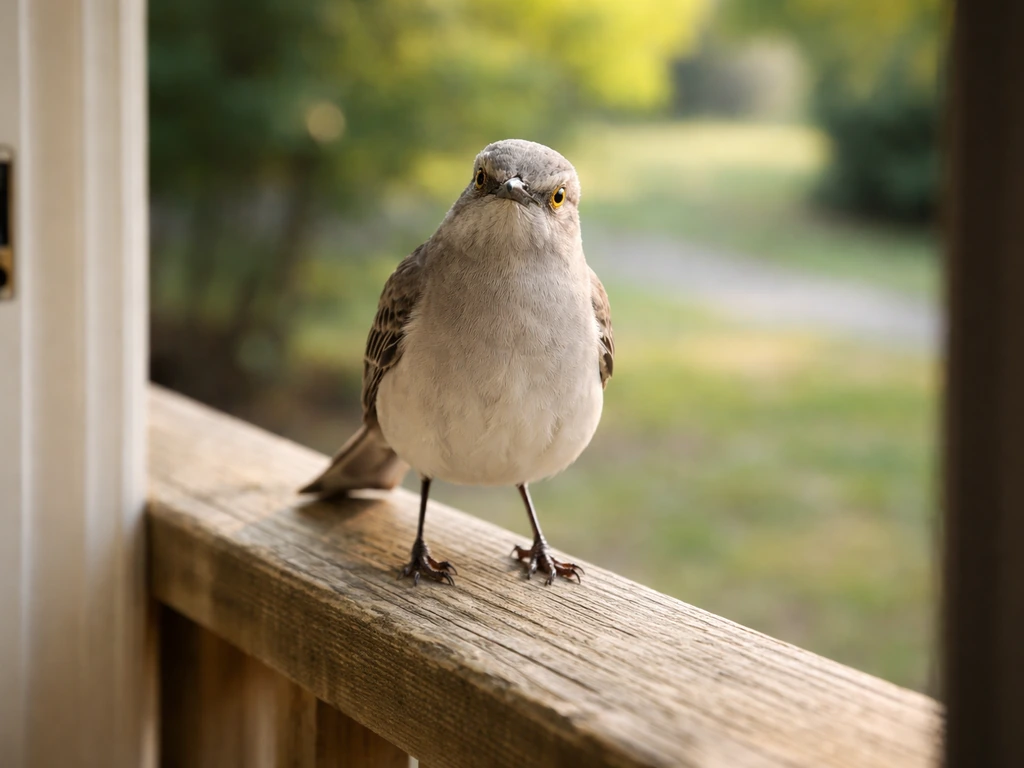
A mockingbird that simply appears, sits still, makes eye contact, and stays calm is the encounter people most often describe as feeling meaningful. This is the visit with the least obvious territorial explanation, and it's the one most worth sitting with from a symbolic perspective.
Spiritual and symbolic meanings of a mockingbird visit
Mockingbirds carry rich symbolic weight in several traditions, and their most distinctive trait, the ability to mimic the songs of many other birds, is the key to most of their spiritual meaning.
Communication and finding your authentic voice
The mockingbird's mimicry is often interpreted as a message about communication. In many metaphysical traditions, a mockingbird visit prompts the question: are you speaking in your own voice, or echoing what others expect? The bird's gift for reproducing every sound it hears can be a gentle nudge to become more intentional about your words, or a signal that you're at a crossroads involving communication, honesty, or self-expression.
Carrying messages from other realms
Across multiple spiritual frameworks, birds that sing with unusual intensity near a person are sometimes understood as messengers, carrying communication from guides, ancestors, or the spiritual realm. The mockingbird's ability to voice many songs at once amplifies this interpretation. Some people feel a strong mockingbird visit during a time of grief or major decision is the universe's way of saying: listen carefully, there's something here for you.
Protection and fearlessness
Mockingbirds are famously fearless. They'll challenge cats, hawks, and even humans twice their size to protect what matters to them. Spiritually, this can be read as a symbol of protection: a reminder that you have more strength available to you than you might think, or that something (or someone) you care about is worth defending boldly.
Truth-testing and discernment
Because the mockingbird can reproduce any sound, some traditions associate it with the idea of testing truth. A mockingbird encounter might be asking: what is genuinely yours, and what have you borrowed from other people's stories? This is particularly resonant during life transitions, after a difficult conversation, or when you're trying to figure out what you actually believe about something.
Cultural, religious, and folklore perspectives
The mockingbird shows up across several cultural traditions with consistent themes, though the details shift interestingly depending on the tradition.
| Tradition | Mockingbird Meaning |
|---|---|
| Native American (various tribes) | A gifted communicator and teacher; its mimicry represents learning from all beings and carrying their wisdom forward |
| Cherokee tradition | Associated with the spirit world; mockingbirds singing at night were sometimes believed to carry messages from the deceased |
| Southern American folklore | Considered a good omen near the home; its song around a house was seen as a sign of blessings and lively, joyful energy |
| Celtic/European folklore | Mimic birds broadly were associated with trickster figures and with the idea that things are not always what they seem — a call for discernment |
| Biblical/Christian symbolism | No direct biblical reference to mockingbirds, but birds broadly appear as divine messengers; the mockingbird's song and bold spirit have been linked to the concept of speaking truth fearlessly |
| Literary symbolism (American) | Harper Lee's 'To Kill a Mockingbird' cemented the mockingbird as a symbol of innocence, truth, and the moral cost of harming what is pure and good |
What's striking is how consistent the core ideas are across these traditions: communication, truth, fearlessness, and the carrying of messages. If you're drawn to a particular cultural lens, that specific tradition's interpretation is worth sitting with more deeply.
How to read your specific encounter
Not every bird visit means the same thing. The details of your specific encounter, where it happened, when, how many times, and what was going on in your life, matter more than any generic interpretation.
Location
A mockingbird on your porch or windowsill is a more intimate encounter than one singing from a distant tree. If the bird came to your window specifically, many people read this as the most direct form of a message delivery. A mockingbird in your yard during normal daily activity is less unusual and might lean more toward territorial or food-driven behavior. A mockingbird showing up somewhere you rarely go, or somewhere that carries personal significance, is worth noting.
Timing
Spring and early summer visits are heavily influenced by nesting and mating behavior, which doesn't cancel out spiritual meaning but should be weighted practically. A mockingbird showing up in winter, away from its typical territory, or during a moment of personal significance (a difficult decision, a period of grief, an anniversary) carries more symbolic weight. Night singing is particularly noted in some traditions as meaningful: male mockingbirds do sing at night, often under bright conditions or during a full moon, but if you hear one at 2 a.m. during a sleepless night, many people find that hard to dismiss.
Repetition
A single visit is a moment. A mockingbird returning to the same spot, at similar times, over several days is a pattern worth paying attention to, both practically (likely nesting) and spiritually (most traditions treat repeated animal appearances as amplified messages). If you've been visited more than once and there's no obvious nest or food source, that repetition is probably the most significant data point you have.
What was happening in your life
This is the question that often brings the most clarity. Were you in the middle of a difficult conversation, a period of creative block, a loss, or a transition? The mockingbird's core themes of communication, finding your voice, and fearless truth-telling land very differently depending on what's alive in your life right now. Take a few minutes to journal what was on your mind when the encounter happened. That context is personal and irreplaceable.
Practical steps to take today
Whether the visit feels symbolic or just curious, here's what's worth doing right now.
- Check for a nest: Walk the perimeter of where you saw the bird and look in nearby shrubs, hedges, and low tree branches between 3 and 10 feet off the ground. A nest explains a lot of territorial behavior and is the first thing to rule out.
- Look for food sources: Berry-producing shrubs, open compost, pet food left outdoors, and insect-rich garden beds all attract mockingbirds. Remove or relocate these if you'd prefer the bird to move on.
- Note the details while they're fresh: Write down where the bird appeared, what it was doing, what time of day it was, how long it stayed, and how it made you feel. These details are important for both a practical assessment and a meaningful personal interpretation.
- Sit with the symbolic question: If the visit felt significant, ask yourself: what in my life right now involves communication, truth, or finding my own voice? The mockingbird's most consistent message across traditions is about how we speak and what we say.
- Observe without intervening: If the bird returns, watch it calmly without feeding it or approaching it. Feeding wild birds can create dependency and increase aggressive behavior near nesting sites.
- Look up comparable encounters: If you've had other birds visiting you with seeming intention, the patterns across visits can be illuminating. Other birds like robins, butcher birds, and general bird visits each carry their own symbolic threads worth exploring.
When to take action or get help
Most mockingbird encounters are completely safe to observe and appreciate from a respectful distance. But there are a few situations where you should act.
If the bird appears injured
A mockingbird on the ground that isn't flying, appears disoriented, has a drooping wing, or doesn't react to your approach may be injured. Don't try to handle it yourself unless it's in immediate danger (like on a road). Contact your local wildlife rehabilitator or animal control service. Most states and countries have a wildlife rehabilitation network you can find with a quick search for your city or county.
If a nest is in an unsafe location
Under U.S. federal law (the Migratory Bird Treaty Act), active mockingbird nests cannot be legally removed while eggs or young are present. If a nest has been built somewhere that creates a genuine hazard, like inside a garage, directly over a heavily used doorway, or near an air conditioning unit, contact your local wildlife service for guidance on what options are available. Don't attempt to move an active nest yourself.
If the aggression is a safety concern
Mockingbird dive-bombing is startling but rarely causes injury. However, if the bird is consistently targeting the same path and you have young children, elderly family members, or people with balance concerns walking that area, take it seriously. Wearing a hat, carrying an umbrella overhead, or temporarily using an alternate path are all effective deterrents. The behavior typically stops once the fledglings leave the nest, usually within two to three weeks.
If the bird got inside your home
A mockingbird that has flown indoors is stressed and needs to get out quickly. Open windows and doors, darken the room to reduce its confusion, and gently guide it toward the light of an exit. Do not chase it. Symbolically, many traditions view a bird entering a home as a significant sign. Practically, getting it safely outside is the first priority.
The mockingbird is one of those birds that demands your attention whether you want to give it or not. That boldness, that refusal to be ignored, might be the most honest message it carries. Whatever brought it to you today, the encounter is worth both a clear-eyed practical look and a moment of genuine reflection. What would it mean if the visit was meant for you?
If you are also wondering what a butcher bird visit could mean, the symbolism can shift depending on behavior, timing, and your personal context what does it mean when a butcher bird visits you. If you are wondering whether that same meaning could apply to other birds, you might also ask what does it mean when a robin bird visits you.
FAQ
How can I tell whether the visit is more about a nest than a “spiritual message”?
If the mockingbird keeps showing up at the same spot, sings at consistent times, or dive-bombs along the same route, that usually points to territory and nearby young rather than a one-off “message.” In that case, your best next step is to check for nests in the nearest shrubs or trees (about 3 to 10 feet up, sometimes closer to where you walk) and temporarily change your path, especially during spring and early summer.
What does it mean if the mockingbird seems to recognize me or watch me?
Repeated eye contact or close hovering can feel personal, but mockingbirds may be recognizing you as a specific threat to defend against, not targeting you emotionally. Use a simple test: if the behavior escalates when you approach and relaxes when you step back, treat it as protective nesting behavior and keep distance.
Does a mockingbird singing at night always have spiritual meaning?
Night singing can be meaningful to some traditions, but in practice it often happens under bright conditions (full moon, bright lights) or when the bird is active due to territory and mates. Try to note your surroundings, does it sing from the same location each time, and are there strong lights nearby, those details help decide between “signal” and “environment.”
Could a mockingbird visit just mean it’s looking for food?
Yes. If you see a mockingbird repeatedly around fruiting shrubs, a feeder, or a pet dish, the visit may simply be food-seeking, especially during weather shifts. To separate food from territory, observe whether it rushes to the same resource (feeding) or changes behavior only when you get close to a particular area (nest defense).
Is there a difference in meaning between a calm visit and dive-bombing?
If it is only calm and briefly present, many people treat that as less “urgent” than dive-bombing or persistent pursuit. A useful decision aid is urgency level: calm landing or brief singing, lower urgency, listen reflectively; aggressive swooping, high urgency, increase physical distance and treat it as nesting protection first.
What should I do to prevent mockingbirds from coming so close to my door or walkway?
Avoid feeding or luring mockingbirds if you want to reduce conflict, especially near homes during nesting season. Instead, remove obvious attractants like outdoor pet food and limit fruit spillage, then give the bird space near shrubs so it is less likely to associate your path with a nest.
What if the nest is in a place where someone could get hurt, can I move it?
If you find a nest in a high-risk location (like above a doorway), don’t relocate it yourself. Contact your local wildlife service or a professional, they can advise on safe exclusion options, timing, and whether temporary modifications are allowed while protecting migratory nests.
Can I connect a mockingbird visit to something happening in my life, or is that over-interpreting?
Yes, but interpret the “message” through your immediate reality rather than guessing. If the encounter happens right after a difficult conversation or during decision stress, focus on the article’s communication and truth themes as journaling prompts, but do not treat it as certainty, use it as a cue to check in with your own intentions and boundaries.
What should I do if the mockingbird looks injured or can’t fly?
If a mockingbird is acting disoriented, grounded and unresponsive, or has visible injury, your priority is getting help from a local wildlife rehabilitator. Handling can worsen injuries, and keeping pets and people back reduces risk. If it is on a road, intervening only to move it out of immediate danger is usually safer than carrying it long distances.
How do I safely get a mockingbird back outside if it gets into my home?
If a mockingbird flew indoors, open windows and doors to create an exit route and reduce confusion by dimming or turning off interior lights, use the brightest doorway or window as the target. Do not chase, because chasing can increase panic and injury, once it starts moving toward the exit, stay still and let it finish the escape.
Next Article
What Does It Mean When a Bird Follows You? Meaning and Next Steps
Learn why a bird follows you and how to read it biologically or spiritually, plus safe next steps.