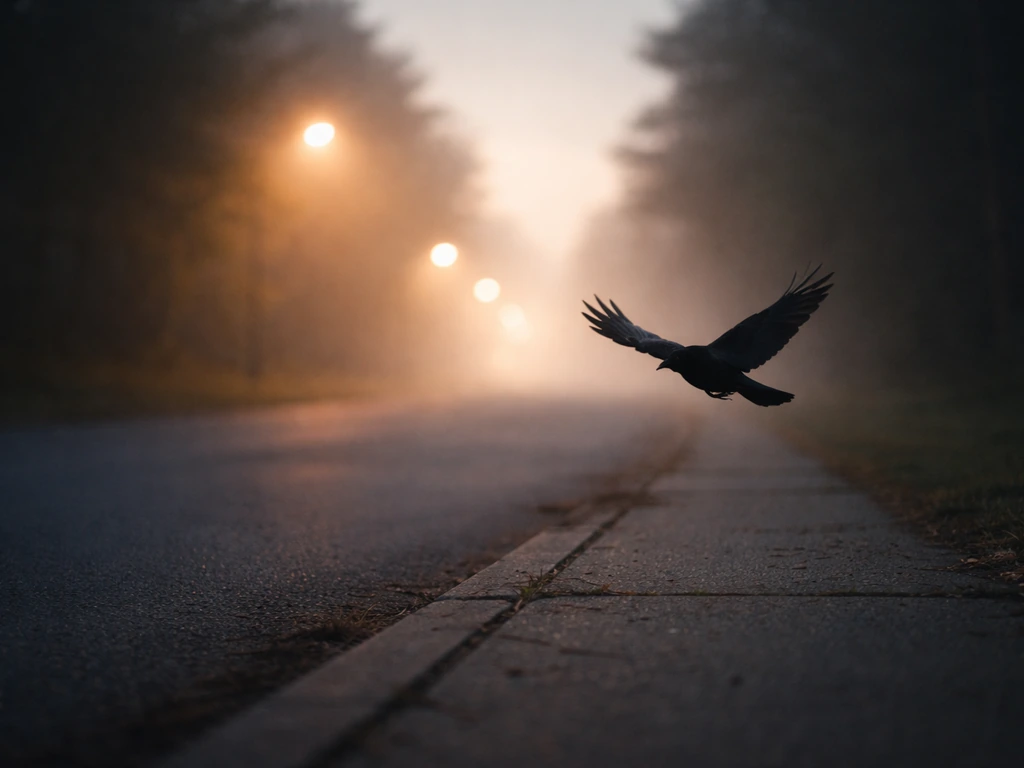
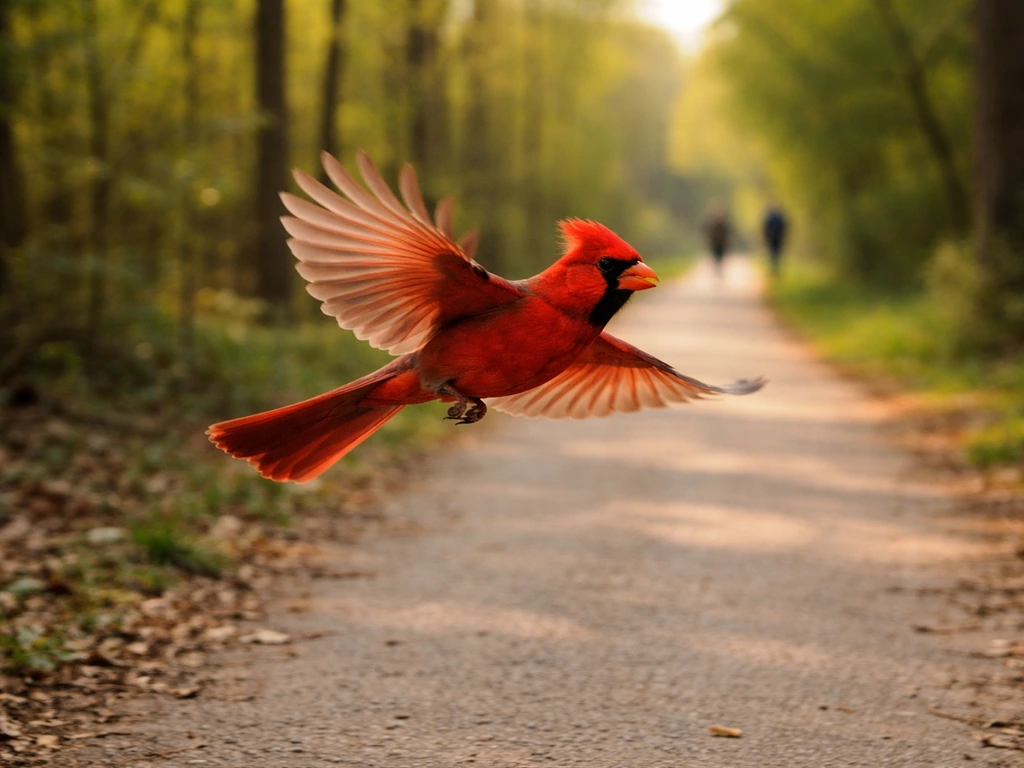
When a red bird crosses your path, most traditions read it as a signal worth pausing for: a nudge toward vitality, love, courage, or spiritual attention depending on the belief system you lean toward. It is rarely considered a bad omen. Across Christian folklore, indigenous traditions, and metaphysical circles, red birds, especially the Northern Cardinal, are widely understood as messengers of encouragement, reminders of someone loved, or markers of a moment your intuition is trying to highlight. That said, what it means for you personally depends heavily on what species you saw, how it behaved, and what was already on your mind when it happened.
When a Red Bird Crosses Your Path: Meaning and Next Steps

Maya Hartwell
18 May 2026
What a red bird crossing your path usually means
The big-picture interpretation is this: a red bird crossing your path is most commonly seen as a positive, energetically charged encounter. Red, in nearly every symbolic tradition, carries urgency and life force. It is the color of blood, fire, passion, and vitality. When that color appears in motion, literally crossing into your physical space, many people experience it as a moment of synchronicity, as if something is trying to get your attention right now.
The most common interpretation threads across traditions are messages of hope and encouragement, reminders of deceased loved ones (especially in Christian-adjacent American folk belief), signals to pay attention to your heart or relationships, and, less frequently, warnings to slow down or reconsider a direction. None of these is "the" meaning. They are lenses, and you get to choose which one resonates with what was already stirring inside you before the bird appeared.
One important framing: "crosses your path" suggests movement. The bird flew across your field of vision or your walking route. That motion is itself symbolic in many traditions, representing transition, passage, and change in progress. It is different from a bird that lands on your windowsill and sits there, though those encounters share some interpretive ground. If you are curious about what it means when any bird crosses your path, that broader question has its own exploration, and comparing it to the red-specific meaning adds useful context.
Which red bird was it? Species clues and behavior details
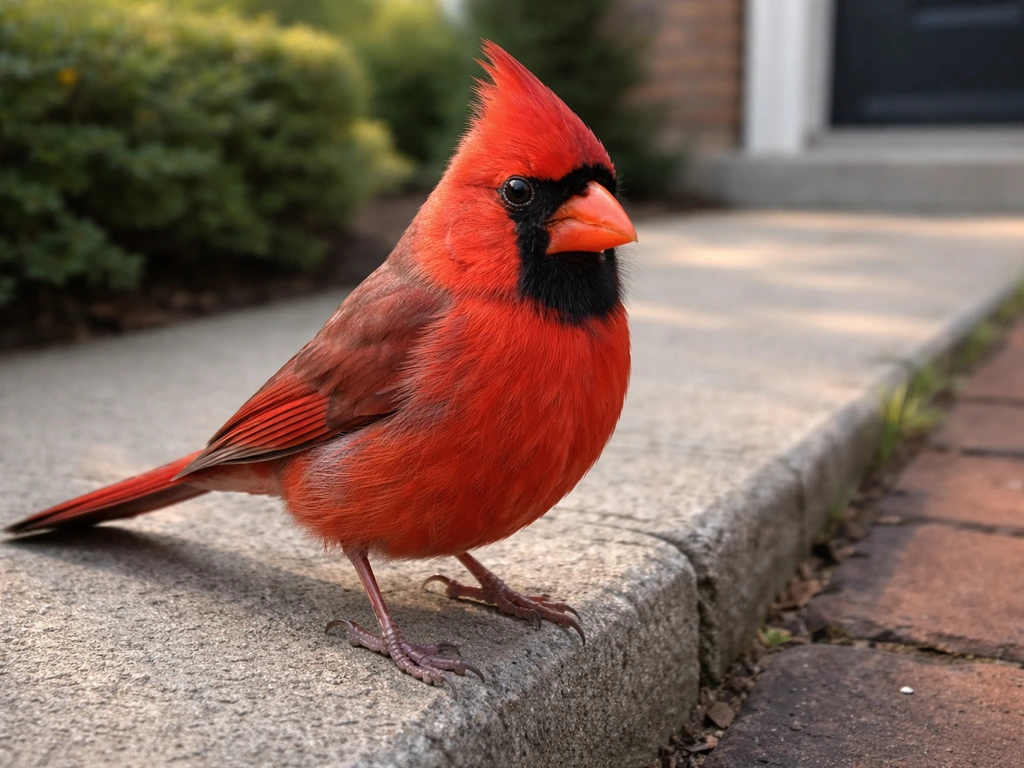
Before you dive into meaning, it helps to know what you actually saw. There are several red birds you might encounter depending on where you live, and each one has a slightly different symbolic weight in folklore and a very different behavioral profile in nature.
Northern Cardinal
This is the most likely candidate for most people in North America. According to Cornell Lab's All About Birds, the male Northern Cardinal is brilliant red all over with a short, very thick bill, a prominent crest, and a black mask immediately around the bill. Cardinals are commonly found in backyards, parks, woodlots, and shrubby forest edges, so running into one near a path or trail is genuinely common, not rare. If the bird was solidly red from head to tail with that distinctive crest, it was almost certainly a Cardinal.
Scarlet Tanager
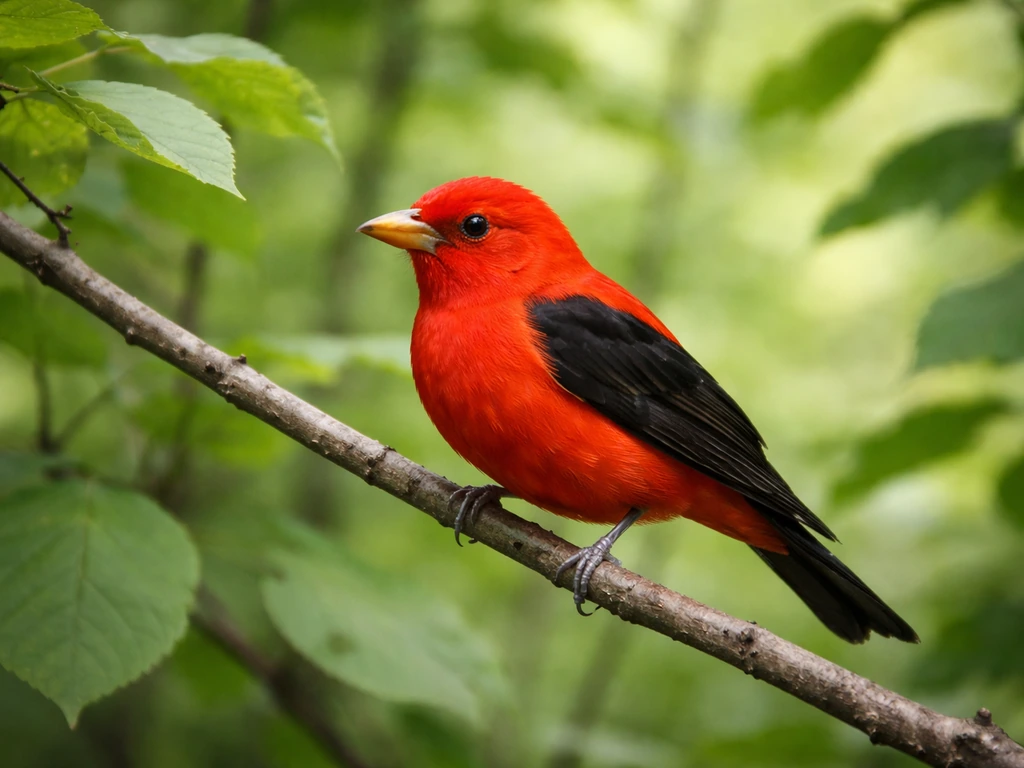
The male Scarlet Tanager is described by the Smithsonian National Zoo and National Geographic alike as brilliant red with striking black wings and tail, almost neon in quality. They are roughly similar in size to a Cardinal but lack the crest and have a smaller bill. Tanagers tend to stay high in dense forest canopies and are harder to spot, so if you saw one crossing your path at eye level, it was an unusually intimate encounter, and many people would consider that especially significant.
Vermilion Flycatcher
Found in the southwestern United States and parts of Central and South America, the male Vermilion Flycatcher has a brilliant orange-red crown and underparts with a dark brown back and a dark mask through the eyes. According to Audubon's field guide, this bird has a distinctive tail-dipping habit and sallies out from exposed perches to catch insects mid-air. If your bird was darting out and back in a quick, precise motion rather than crossing steadily, a Vermilion Flycatcher is worth considering.
Cornell Lab's Four Keys to Bird Identification are a useful quick checklist: size and shape, field marks (like color patterns and bill shape), behavior, and habitat and range. Applying those four quickly can help you confirm what you saw, which then informs how to interpret the encounter symbolically.
How behavior changes the reading
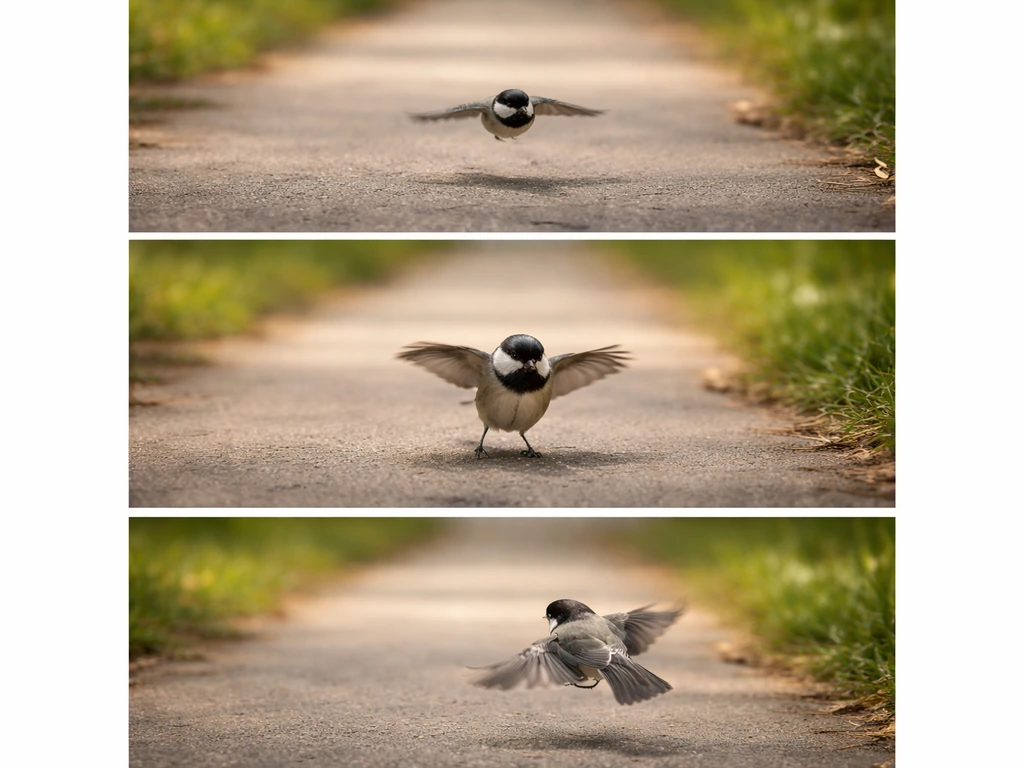
The way the bird moved matters as much as the species. Here is a quick interpretive guide based on common behavioral variations:
| Bird Behavior | Common Symbolic Read | Practical Note |
|---|---|---|
| Flew directly across your path and kept going | A passing message or nudge, transition in motion | Most common scenario; notice what you were thinking at the moment |
| Paused, perched nearby, and looked at you | A deliberate message, spiritual contact, a loved one checking in | Cardinals especially are known for this in folklore |
| Flew toward you or close to your body | Urgency, a strong call to attention, heightened energy | Rare; worth journaling if this happened |
| Landed at your feet or very near you | Grounding energy, a direct and personal encounter | Also uncommon; traditionally seen as auspicious |
| Flew erratically or into a window nearby | May be distress or territorial behavior, not necessarily a spiritual signal | See the grounding section below for more on this |
What red means in bird symbolism: love, passion, danger, and transformation
Red is not a subtle color, and its symbolism across human cultures reflects that. In Chinese tradition, red is the color of luck, joy, and celebration. In Western and European folklore, red carries both love and warning: think of red roses and red stop signs, both urgently attention-grabbing but for different reasons. In indigenous American traditions, red is often associated with the south direction on the medicine wheel, representing the heart, relationships, and emotional life.
When red appears on a living, moving creature, it picks up additional layers. Blood and vitality. Fire and transformation. Passion that demands expression. These meanings map onto the most common interpretations of red bird encounters:
- Love and relationships: A red bird crossing your path is frequently interpreted as a sign to pay attention to your heart, a relationship, or an emotional connection that needs tending.
- Passion and creativity: In metaphysical circles, red connects to the root chakra and also to creative fire. A red bird can signal it is time to pursue something with boldness.
- Protective warning: In some folklore traditions, a red bird appearing suddenly can signal caution, a heads-up to be aware of something in your environment or a decision you are about to make.
- Transformation and courage: Red is the color of willingness to act. A red bird crossing your path can mean you are in a moment of transition and are being encouraged to move through it with energy rather than hesitation.
- Connection with the departed: This is perhaps the most widespread folk belief in American and European traditions. Red birds, especially Cardinals, are frequently seen as spirits of deceased loved ones making contact.
What different belief systems say about this encounter
Biblical and Christian-adjacent traditions
The Bible does not mention cardinals by name, but red birds hold meaningful symbolism in Christian-influenced folk belief that draws on scripture. Red is the color of the blood of Christ in Christian theology, symbolizing sacrifice, redemption, and love. The phrase "when God sends a Cardinal, it's a visitor from Heaven" is a well-known American folk saying tied to the belief that red birds carry messages from the spiritual realm or from loved ones who have passed.
In a broader biblical sense, birds are frequently used as messengers and signs of divine attention. Sparrows are noted as being under God's care (Matthew 10:29), and many Christian readers extend that awareness to any remarkable bird encounter as a reminder of spiritual presence and guidance.
Folklore and regional traditions
In Appalachian and broader American Southern folk traditions, seeing a red bird is considered good luck, particularly if it appears when you are worrying about something. If a Cardinal crosses your path when you are facing a decision, some traditions say it is a confirmation to go forward. In Celtic traditions, red animals are often associated with the otherworld and with messages crossing between realms.
Red is the color of the fairy mounds in Irish mythology, and a brilliantly red creature appearing suddenly has long been read as a threshold moment, a brush with something beyond the ordinary. In some Latin American traditions, a red bird near the home is read as protective, while in other regional European folklore, an unexpected red flash of color is a warning to pay close attention in the coming days.
Indigenous perspectives
Many indigenous North American traditions view the Cardinal as a sacred bird. In Cherokee tradition, the red bird is associated with the sun and with good fortune. The Choctaw people also hold the Cardinal in high regard. It is worth approaching these traditions with respect rather than reducing them to a quick meaning. The core shared thread is that the red bird is not ordinary, it commands attention, and seeing one is an invitation to be fully present in the moment.
The metaphysical angle: intuition, energy, and what to ask yourself
From a metaphysical perspective, a red bird crossing your path is often read as an activation of the root chakra (your sense of groundedness, security, and physical vitality) and sometimes the heart chakra. Red energy in this framework is about life force, presence, and the courage to be fully alive and engaged. If you have been feeling stuck, scattered, or emotionally withdrawn, a red bird encounter might be nudging you back toward embodied, passionate engagement with your life.
Many people who work with signs and synchronicities use a simple but effective test: What were you thinking about in the exact moment before you noticed the bird? If you were mid-thought about a relationship, a creative project, a fear, or a hope, many practitioners say that thought is the context for the message. The bird does not bring the answer so much as it punctuates the question you were already holding.
Some reflection prompts worth sitting with after this encounter:
- What was I thinking or feeling in the seconds before I saw the bird?
- Is there a relationship or emotional situation I have been avoiding or neglecting?
- Is there something I want to pursue with more passion or courage right now?
- Does this encounter remind me of anyone I have lost, and is there something I want to say or feel in relation to them?
- Am I being called to slow down, or to speed up?
Practical next steps you can take today

Whether you lean spiritual, practical, or somewhere in between, here is what I would actually recommend doing after this kind of encounter.
- Pause and note the details right now: species (to the best of your ability), direction it flew, what it did, and where you were. These details matter for interpretation and for your own memory of the moment.
- Write down what you were thinking or feeling the moment before the bird appeared. This is the most useful interpretive data you have.
- Identify which symbolic frame resonates: Is it a message of love? Encouragement? A warning to pay attention? Trust the first interpretation that felt right to you intuitively.
- Consider a small gratitude practice: if the encounter felt meaningful, acknowledge it. A simple "thank you" said aloud or in your head closes the loop energetically and keeps you present.
- Take one concrete action related to the theme that surfaced: If the encounter brought someone to mind, reach out to them. If it sparked a creative idea, write it down. If it felt like a push toward courage, identify one step you have been avoiding.
- Keep a bird encounter journal for the next week or two. If red birds or other striking bird encounters keep happening, patterns become more visible across multiple entries.
- If you are drawn to deeper reflection, look at how this encounter compares to other bird crossing experiences. Different bird colors and species carry different energies, and comparing them across your own life can reveal longer patterns.
When to treat it as symbolism vs. a real-world concern
Here is the grounding note: birds cross paths with humans constantly. Cardinals in particular, as Cornell Lab notes, are common in backyards, parks, woodlots, and shrubby forest edges. The fact that a red bird crossed your path does not automatically mean something cosmic is happening. Migration, feeding routes, territorial behavior, and habitat proximity all explain why a brilliantly red bird might appear right in front of you on a Tuesday afternoon.
The question to ask is not "did this bird mean something" but rather "does this feel significant to me, and if so, what is that significance pointing to? " Meaning is something you bring to the encounter. It can help to remember that the meaning of a black bird crossing your path is often treated differently across belief systems, so context matters Meaning is something you bring to the encounter. .
The bird is doing bird things. You are the one with a life, questions, and a story that the encounter lands inside of. If you are wondering what it means when a little bird visits you, the same idea applies: reflect on the moment, the bird’s behavior, and what you were already feeling.
If the bird behaved erratically, flew into a window, or seemed disoriented, that is worth treating as a practical concern first. Tufts Wildlife Clinic explains that window strikes can happen when birds panic or flee, and territorial behavior can also lead to window attacks, often in spring or fall [flew into a window](https://www. vets. tufts.
edu/tufts-wildlife-clinic/resource-library/bird-strikes-and-windows). According to Cornell Lab and the American Bird Conservancy, [birds hit windows because they see reflections of vegetation or sky in the glass, or because they are attacking their own reflection during territorial behavior, which is especially common in spring. ](https://www. allaboutbirds.
org/news/why-birds-hit-windows-and-how-you-can-help-prevent-it/) If you see an injured or stunned bird, the Humane Society recommends gently placing it in a cardboard box in a quiet, dark space for an hour to recover, then releasing it. That is a real-world action, not a symbolic one.
Similarly, if the encounter left you feeling anxious or frightened, it is worth remembering that in the vast majority of traditions, red birds are considered positive or neutral messengers, not harbingers of doom. If a specific fear is coming up for you, that fear probably predates the bird. Use the encounter as an invitation to look at what is underneath it rather than as confirmation of something bad about to happen.
The most useful posture after a red bird crosses your path is open curiosity, not certainty in either direction. You do not have to decide it was "just a bird" and dismiss it, and you do not have to build a prediction out of it either. Sit with what it stirred. Notice what resonates. Take one small, grounded action from that place. That is almost always enough.
FAQ
What if the red bird didn’t just cross my path, it stayed near me or followed me?
If it landed, sat still, or followed you, treat it as a stronger “message about attention” than a fast fly-by. A landing often reads as your nervous system being invited to slow down, take in the moment, and check what relationship, courage, or heart topic you have been avoiding. If it hovered close to you repeatedly, many people interpret that as heightened relevance, but it can also be simple curiosity or territorial behavior depending on where you were standing.
Does one red bird encounter mean something specific is about to happen?
A single encounter is rarely enough to predict a specific event. A practical way to use the experience is to decide on a theme (love, courage, boundaries, urgency) and then take one grounded step within 24 to 72 hours, like making the call you have been delaying or doing a small creative action. If the same theme shows up repeatedly across days, that’s when people tend to treat it as more than a one-off moment.
What should I do if the red bird flew into a window or seemed injured?
Window collisions, sudden circling, or visible disorientation should be handled as a safety issue first. If the bird appears stunned, place it in a cardboard box with ventilation, keep it in a quiet, dim spot, and check for recovery before releasing. Only after it is safe to do so should you reflect symbolically, because meaning should not override care.
How much does species identification change the meaning?
Yes. If you can, note the exact species cues, since interpretation can shift. Cardinals are often read as “encouragement” in many places, while a Scarlet Tanager sighting is often treated as rarer and more intimate due to its forest canopy tendency. If you cannot identify it confidently, use the broader red-as-life-force theme and focus on what you felt right before you noticed the bird.
If the bird’s behavior was chaotic, does that make it a warning?
It helps to separate “your meaning” from “the bird’s behavior.” Erratic movement can be weather, hunger, territorial defense, or navigation errors. Symbolically, you can still take a prompt like “something wants attention,” but avoid concluding that chaos in the sky equals chaos in your future.
What if the encounter made me anxious instead of hopeful?
If you saw a red bird and later felt a wave of dread, ask what that fear was already tied to. Many people find the bird functions like a spotlight, not a cause. A useful next step is to write down the fear, then list one controllable action you can take today to reduce uncertainty.
How do I find the right personal message instead of guessing?
Try the “context test” immediately: What was on your mind in the 10 to 30 seconds before you noticed the bird? Then choose one of the likely lenses (relationship, courage, letting go, spiritual attention) and ask, “What would an aligned choice look like?” The meaning becomes actionable when you can translate it into a concrete behavior.
If I see red birds often, does it still count as a sign?
If you are in a place where red birds are common in feeders or hedges, the encounter may be more about timing and attention than fate. Consider whether you were near bird habitat, whether other birds were present, and whether the timing matches your routine. That way, you can keep the spiritual value without forcing cosmic certainty.
How should I interpret it if the bird crossed my path in a similar way more than once?
“Crosses your path” is different from a bird that stays in one place. A crossing encounter typically suggests transition, a moment passing through your awareness, or a decision window. If it repeatedly appears from the same direction or at the same stop, some people interpret it as a recurring prompt to revisit a specific issue rather than a one-time encouragement.
How can I respond spiritually without turning it into unrealistic predictions?
You can take a balanced approach: be open to personal meaning, but keep your choices grounded. For example, if the bird stirs courage, use it to support a real-world step you would take anyway, like setting a boundary or starting the project. If the bird stirs fear, respond with support and planning rather than prediction.
Next Article
What Does It Mean When a Bird Crosses Your Path?
Real reasons and spiritual meanings for when a bird crosses your path, based on bird behavior, type, and context.