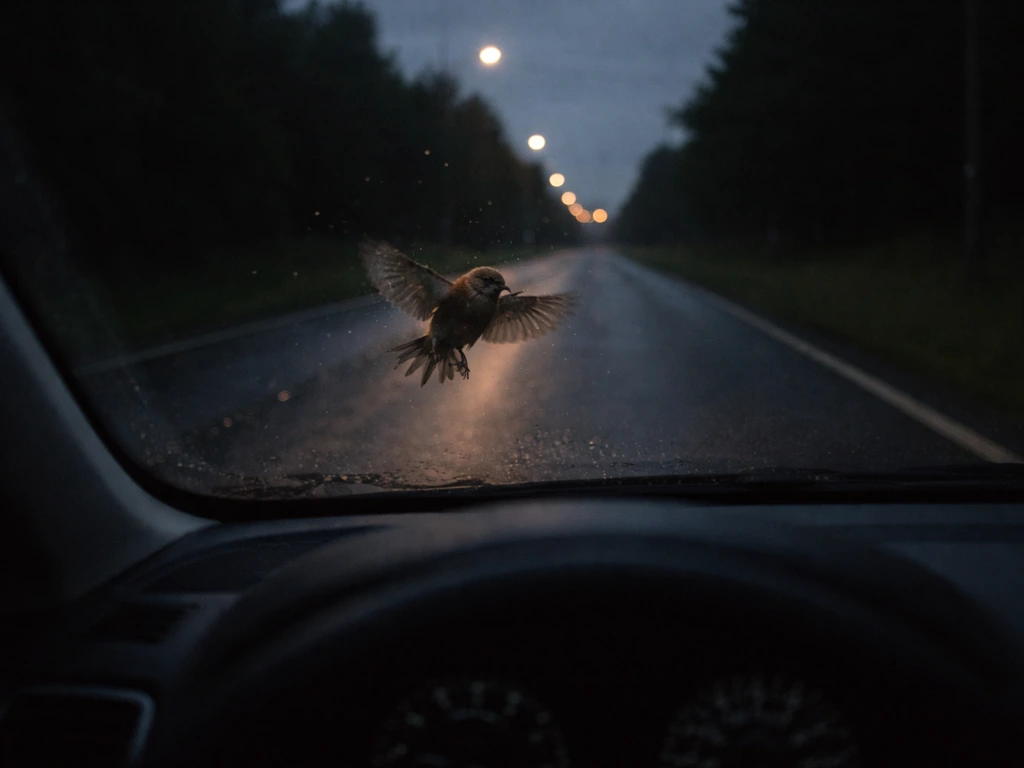
When a bird hits your car, two very different questions tend to surface at the same time: "Is everyone okay?" and "What does this mean?" Both are worth taking seriously. This guide walks through exactly what to do in the minutes after it happens, why these collisions occur naturally, and what spiritual and symbolic traditions have long associated with bird encounters near moving vehicles. You don't have to choose between a practical explanation and a meaningful one. Both can be true.
What Does It Mean When a Bird Hits Your Car? Steps and Meanings

Maya Hartwell
8 Apr 2026
What to do right after a bird hits your car
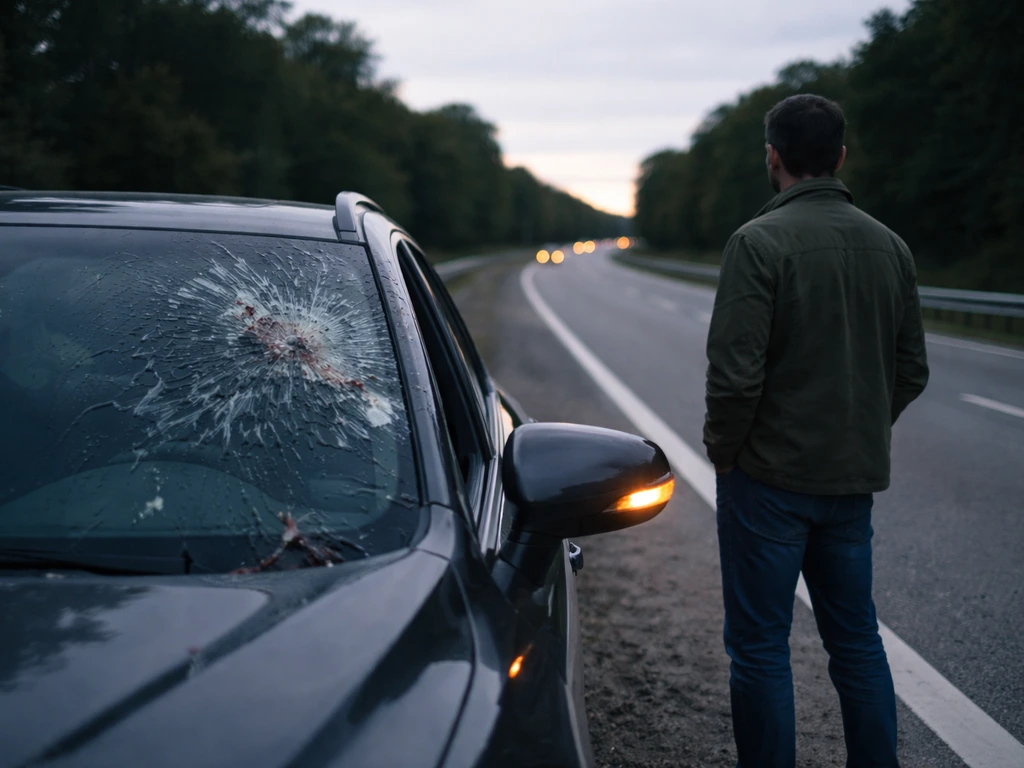
Your first priority is the people in the vehicle. A bird strike can startle a driver enough to cause a swerve or braking reaction, and if that led to any kind of impact or jolt, check yourself and your passengers carefully. The American Red Cross recommends calling 911 for any head, neck, or spinal injury that needs immediate emergency treatment, and to watch for changes in breathing or responsiveness. The CDC's concussion guidance uses observable signs and time-based assessment to help determine when someone may need urgent evaluation. The Mayo Clinic lists red flags like blank" rel="noopener noreferrer">bleeding or fluid leaking from the nose or ears as symptoms requiring emergency attention. If clear fluid (cerebrospinal fluid) is leaking from the ears or nose after a head injury, treat it as an emergency and seek urgent evaluation blank" rel="noopener noreferrer">clear fluid (cerebrospinal fluid) leaking from the ears or nose. If everyone feels fine, take a breath. Then deal with the bird and the vehicle.
Pull over safely if you haven't already. On a busy road or highway, your safety comes before the bird's. The Wildlife Collision Prevention Program notes that what you do after a wildlife collision depends heavily on road type, traffic, and the animal's condition. Once it's safe to stop, assess what happened. Did the bird fly off? Is it stunned on the ground near the road? Is it clearly injured or not moving? Your answer shapes what comes next.
- Check all passengers for injury and call 911 if there are any head, neck, or spinal concerns.
- Pull over safely, using hazard lights on any road with moving traffic.
- Observe the bird from a distance first. Do not attempt to grab it immediately.
- If the bird is stunned but alive, contact a licensed wildlife rehabilitator for specific guidance before touching it.
- If transport is needed, use a box with air holes, lined with a towel. Keep the environment warm, dark, and quiet to reduce stress.
- Do not offer food or water to an injured bird unless instructed by a professional.
- Check your vehicle for visible damage to the windshield, hood, or grille before driving on.
On the legal side, it matters which species hit your car. Many birds in the U.S. are protected under the Migratory Bird Treaty Act. The U.S. Fish and Wildlife Service includes a "Good Samaritan" provision that allows any person who finds a sick, injured, or orphaned migratory bird to take temporary possession solely to transport it to a permitted rehabilitator. However, you are not allowed to keep it, treat it yourself, or transport it anywhere other than a rehab facility. The USFWS is clear that attempting to care for wildlife at home is both risky and, in most cases, illegal. To find a licensed rehabilitator near you, the Bi-State Wildlife Hotline recommends using the "Animal Help Now" emergency search tool, while the FWC advises noting the bird's location and contacting a licensed wildlife rehabilitator directly.
One more thing worth knowing: not every injured bird needs rescuing. The AWARE Wildlife Center points out that not all injuries require human intervention, and some scenarios call for leaving the animal alone rather than attempting capture. The California Department of Fish and Wildlife similarly advises against assuming an animal needs help unless there are obvious visible signs of distress. When in doubt, call first. State and facility regulations also vary, so the National Wildlife Rehabilitators Association notes that requirements for taking or transporting wildlife differ by state and permit type.
Why birds hit cars: the natural explanation
Birds are not careless. They are, however, genuinely ill-equipped to judge the speed and distance of a moving vehicle. The Wildlife Society has described research showing that birds' ability to respond to approaching vehicles is limited, and that faster speeds give them even less time to react. A bird that waits until what feels like a safe moment to take flight may still be caught by a vehicle moving at highway speeds.
Several conditions make collisions more likely. Glare from the sun or a freshly washed hood can reflect sky and trees, making the car invisible or appear like open space to a bird in flight. Roadside habitat is another factor: feeders, berry bushes, and open fields near roads attract birds to exactly the areas where vehicles travel. Low-light conditions at dawn and dusk align with peak bird activity and reduced driver visibility at the same time. Weather like fog or rain limits both the bird's sight lines and reaction time. And some species, particularly songbirds during migration season, are simply moving through unfamiliar territory in dense numbers.
None of this makes the collision feel any less jarring, but it does help frame it as a natural event rather than something directed at you specifically. That context matters when you start asking the deeper question.
Is it a sign? Spiritual and symbolic meanings people connect to this
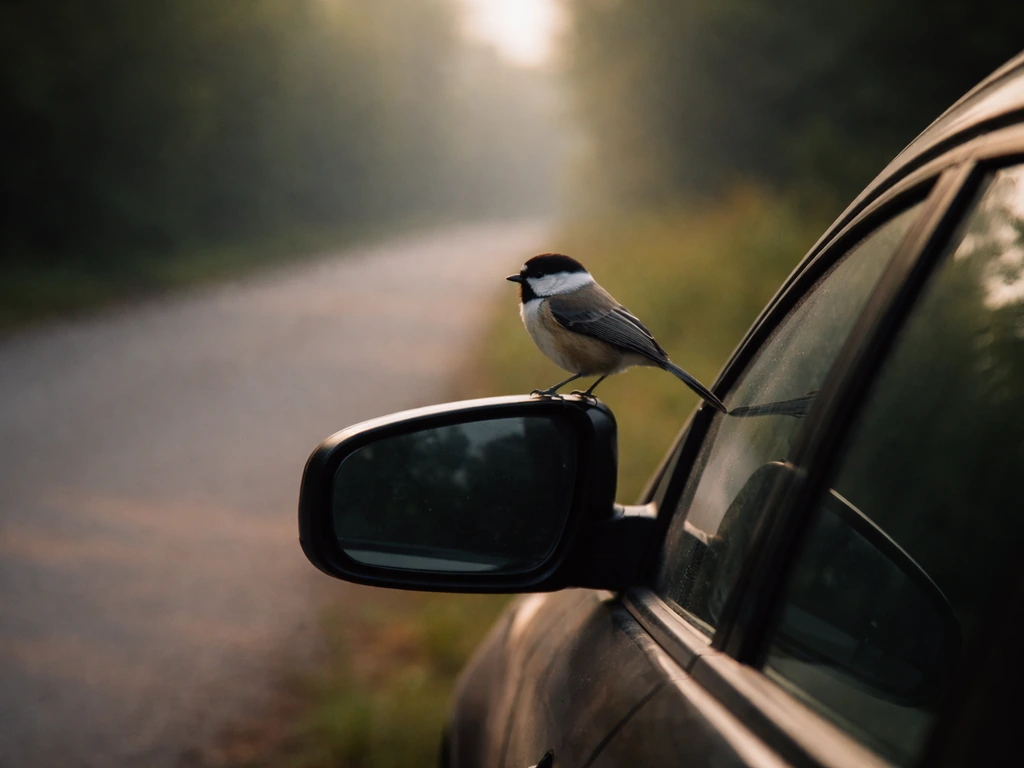
Across cultures and centuries, birds have been read as messengers. Augury, the ancient practice of interpreting bird behavior and sounds as omens, was formalized in classical Rome and Greece and practiced in various forms across the ancient world. Ornithomancy, the broader cross-cultural tradition of reading signs from bird actions, appears in Mesopotamian, Celtic, Native American, and East Asian traditions. So the impulse to pause and ask "what does this mean?" when a bird collides with your car isn't irrational. It's deeply human.
The specific symbolism people attach to a bird hitting a car tends to cluster around a few themes. Because a car is associated with your direction, your journey, and your momentum in life, a sudden interruption to that movement often reads as a signal to pause and pay attention. For many people, it prompts reflection on whether they're moving too fast, heading in the right direction, or missing something important along the way.
The type of bird involved shapes the interpretation further. A crow or raven striking your car carries very different folkloric weight than a dove or a robin. Crows are often associated with transition, intelligence, or liminal thresholds in many traditions. Doves are near-universally linked to peace and spiritual presence. A hawk or eagle might suggest a call toward higher perspective. These associations vary by culture, so there's no single authoritative meaning. What matters most is what resonates with you.
Some people interpret the encounter through the lens of a bird flying into your car more broadly, seeing it as the universe placing something in your direct path rather than allowing you to pass by unaware. Others connect it to the idea of a message from a departed loved one, a tradition found in many cultures that associates birds with the souls of the deceased or with spiritual intermediaries.
If you're curious about how this encounter compares to similar events, it's worth knowing that the meaning of hitting a bird while driving is interpreted slightly differently depending on whether the bird approached the car or the car overtook the bird, though both are understood as significant moments by those who read bird signs.
Biblical and cultural perspectives on bird encounters
In biblical tradition, birds appear with remarkable frequency as symbols of divine attention, protection, and guidance. Jesus uses birds in parables and teachings, including the well-known passage about God's awareness of even sparrows falling. A BYU Religious Studies Center analysis notes that birds in Scripture carry interpretive themes of guidance, renewal, and spiritual care, suggesting that bird encounters in Christian tradition are not automatically ominous but can point toward watchfulness and trust. The question this tradition might prompt is: what is being brought to your attention right now?
Recurring biblical themes around birds, as noted in resources like Teach About the Bible, include birds functioning symbolically as agents of protection and spiritual renewal. From this lens, a bird suddenly entering your path, even violently, might be read less as a curse and more as an interruption that deserves prayerful consideration.
Celtic folklore treats birds as creatures that pass between worlds, carrying news from the spirit realm. Indigenous North American traditions vary widely by nation, but many view birds as messengers or as representatives of specific spiritual qualities. In East Asian traditions, certain birds are considered auspicious, while others signal important transitions. The convergence across these systems isn't about superstition. It's about the human habit of treating sudden, unexpected contact with nature as something worth pausing over.
Similar reflections come up when people explore what it means when a bird hits your door. The common thread across these encounters is that an unexpected bird collision with an object in your personal space tends to carry symbolic weight in traditions that see birds as messengers.
Should you be worried about safety?
For you and your passengers: the main risks are from the driving reaction itself, not the bird. A startle response at highway speeds is the actual danger. As long as no one hit their head, lost consciousness, or experienced neck pain from a sudden swerve or stop, you're almost certainly fine. Use the concussion and head injury guidelines mentioned earlier as a reference point if anyone is unsure.
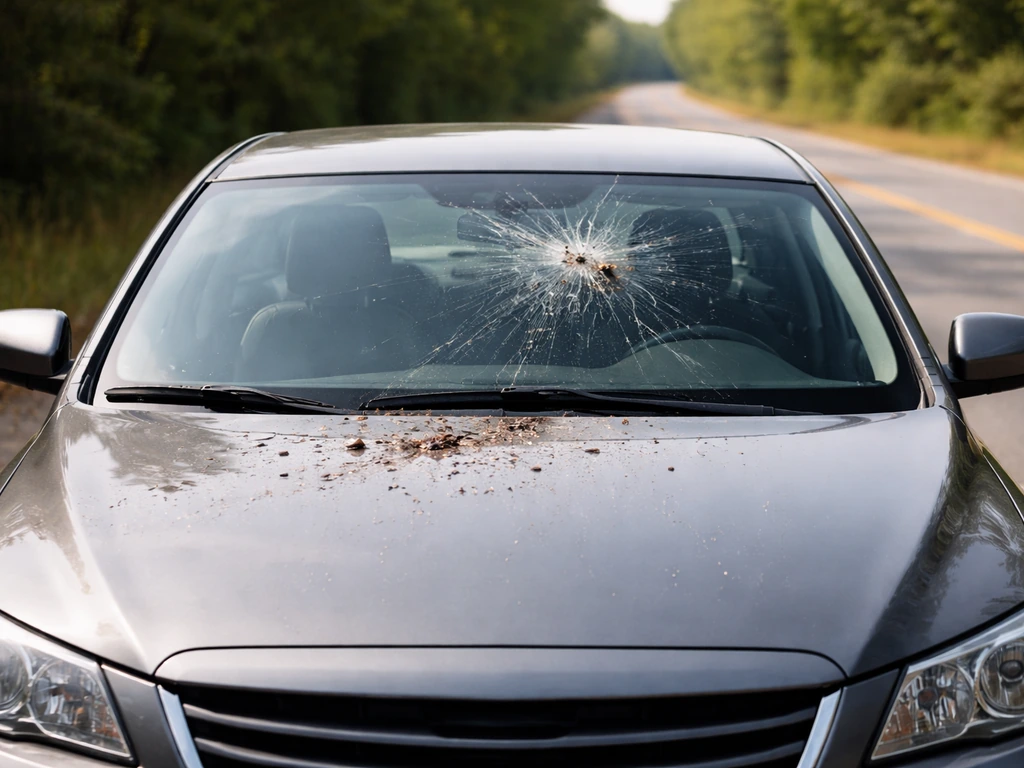
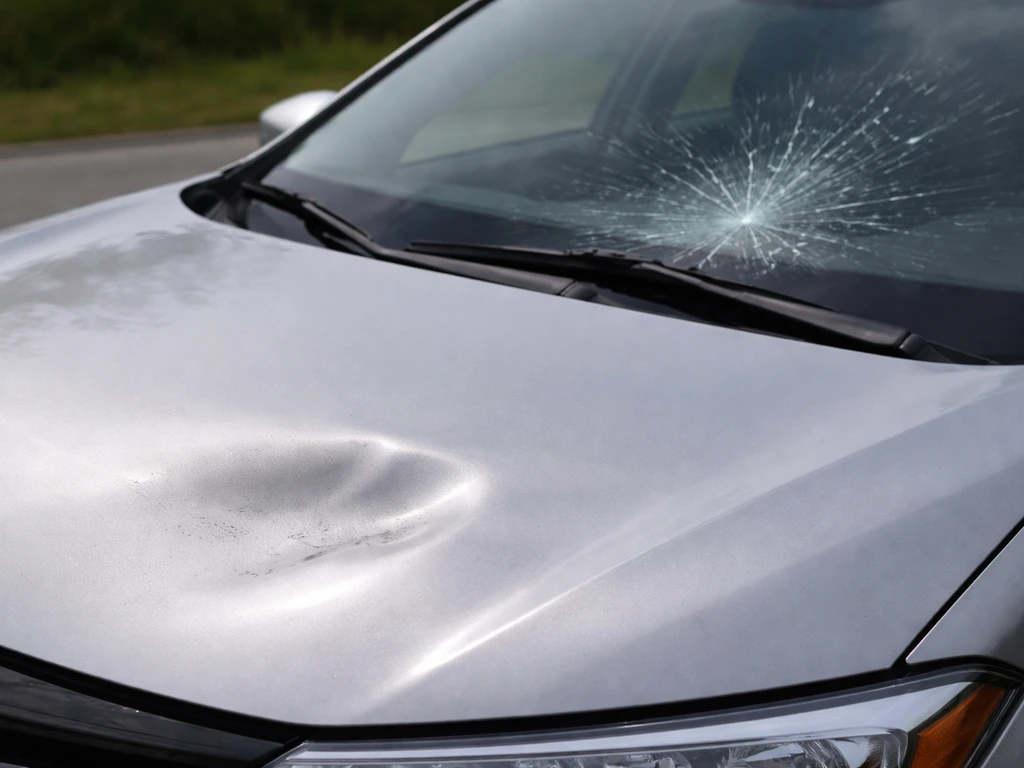
For the vehicle: a bird hit at low speed usually leaves a dent, a cracked windshield, or paint damage. At highway speeds, larger birds like geese or herons can cause significant damage to a windshield, front grille, or hood. Inspect the windshield carefully before driving again, especially for spiderweb cracking or impact near the driver's line of sight. If the damage affects your view or structural integrity, don't drive until it's assessed.
If the bird left feathers or debris on the car, clean the area with gloves on. Avoid direct skin contact with wild birds. Most casual exposure from a quick collision carries minimal risk, but basic hygiene precautions make sense.
There's also the question of the bird's wellbeing and your legal standing. As covered earlier, the Good Samaritan provision gives you legal cover to transport an injured migratory bird to a rehabilitator, but anything beyond that moves into legally complicated territory. When a situation involves an animal that feels dangerous to approach, the Washington Department of Fish and Wildlife recommends contacting law enforcement or wildlife authorities rather than attempting to handle the animal yourself.
How to make personal sense of what happened
The most honest thing anyone can tell you is that no one knows with certainty what a bird hitting your car "means" in a cosmic sense. What research on meaning-making and spirituality does suggest, explored in a 2023 scoping review in MDPI's Religions journal, is that turning stressful or surprising events into opportunities for reflection, rather than pure anxiety, is genuinely beneficial. You don't need to believe in omens to use this encounter as a prompt.
The meaning of a bird flying into your car is ultimately something you co-create with the encounter itself, filtered through your own life context, beliefs, and what's currently unresolved in your world. That's not a weakness of interpretation. That's how personal symbolism works.
Here are some reflection prompts to sit with, regardless of your belief system:
- What were you thinking about or stressed over right before this happened? Is there something you've been moving through quickly without fully examining?
- What kind of bird was it, and does that species carry any personal meaning for you, such as one you associate with a loved one or a particular place?
- Did the encounter make you feel alarmed, sad, or unexpectedly moved? Your emotional response often points toward what needs attention.
- Is there a direction in your life, whether a relationship, a decision, or a habit, that feels like it needs to slow down or change course?
- What would it feel like to acknowledge this moment with gratitude, even if it was upsetting, as an invitation to pay closer attention?
If you're spiritually inclined, consider offering a brief prayer, moment of silence, or intention for the bird's wellbeing. If journaling is part of your practice, write about where you were headed, literally and figuratively, when the encounter happened. If you're more secular, simply letting the moment register as unusual and meaningful doesn't require any theological commitment. Surprise encounters with wild creatures have always grabbed human attention for a reason. That instinct is worth honoring.
You don't have to walk away from this with a definitive message. The most useful takeaway is often the simplest: something interrupted your momentum today. Whatever you choose to do with that interruption, handle the practical steps first, then give yourself a quiet moment to listen.
FAQ
If I was driving and a bird hit my car, when can I get back on the road?
Only after you confirm (1) no passengers report head, neck, or back pain, dizziness, or worsening symptoms, and (2) the windshield is safe to drive. If you see spiderweb cracking, impacts in the driver’s line of sight, or any sign the glass is compromised, wait for an inspection instead of assuming it is cosmetic.
What should I do if the bird is still alive but won’t move?
Check distance and traffic first, then avoid grabbing it barehanded. If it appears injured or stunned and you are allowed to act, the safest next step is to contact a licensed wildlife rehabilitator. If the bird is in a dangerous spot (active lanes, aggressive behavior, or you cannot approach safely), call wildlife authorities or non-emergency police instead of trying to relocate it yourself.
Do I need to report the collision to anyone?
Sometimes. If the bird is clearly protected species, if the bird appears severely injured, or if the collision caused vehicle damage that could affect safety, contact local wildlife authorities or your state’s wildlife agency. Reporting is also more likely when the incident happens on federal land or involves large species, since guidance and requirements can differ by location.
Is it safe to touch feathers, blood, or bird debris with bare hands?
Use gloves if you have them, and wash hands thoroughly afterward. Even though routine exposure from a single strike is usually low risk, avoiding direct skin contact with bodily fluids is the practical precaution most people can take. Also wipe any contaminated areas on the interior if debris got inside the car.
What if the bird strike caused a hard swerve, but nobody is visibly hurt?
Adrenaline can mask symptoms. Monitor passengers for delayed signs such as unusual sleepiness, confusion, repeated vomiting, persistent headache, or neck pain over the next several hours. If any symptoms develop or you are unsure, it is safer to seek urgent medical advice rather than relying on how people feel immediately after the event.
Does the “meaning” depend on whether the bird approached the car or the car overtook it?
Many symbolism traditions treat them as different kinds of interruptions, but in practice the physical reality still matters most. If the collision timing affects your assessment, rely on evidence like scrape marks, where the bird ended up, and whether you braked or swerved, then use symbolic interpretation as a reflection prompt rather than a decision tool.
What should I do if the bird hit my windshield but fell off and I cannot find it?
Assume the bird may have been injured or escaped, but do not chase it into traffic. Focus on safety checks first, then inspect the vehicle for damage. If you want to report or follow up for wildlife purposes, describe the location and approximate time to a local wildlife rehabilitator or agency.
Are all birds legally protected in the U.S. after a car collision?
Not exactly. Many migratory species are protected, and the permitted actions (like transporting to a rehabilitator) depend on species status. If you are unsure, do not keep or transport the bird yourself, and instead contact a licensed rehabilitator or wildlife authority for case-specific guidance.
Can I move the bird a short distance to get it off the road?
Only if it is safe and you can do it without causing risk to yourself or the bird, and only within what your local guidance allows. Many programs advise against handling injured wildlife when capture is unsafe or unnecessary, especially when the animal is in a hazardous area.
How do I clean the car properly after a bird strike?
Remove visible debris with gloves, then clean the affected areas using an appropriate car-safe cleaner. Avoid spreading contaminated material into vents or upholstery, and let the area dry fully before driving again. If the impact damaged glass, do not rely on cleaning to make it safe, have the damage assessed.
What if I feel shaken or guilty, even though it was an accident?
That reaction is common after a sudden wildlife encounter. A practical reset is to do a quick checklist (people, vehicle safety, safe next contact), then give yourself permission to return attention to normal tasks. If anxiety persists, grounding your thoughts in what you can control (monitoring symptoms, arranging repairs, contacting a rehab provider if needed) usually helps more than trying to find a definitive cosmic explanation.
Next Article
Hit a Bird While Driving Meaning: What to Do and Symbols
Practical steps after you strike a bird while driving, plus respectful spiritual omens, symbols, and reflection tips.