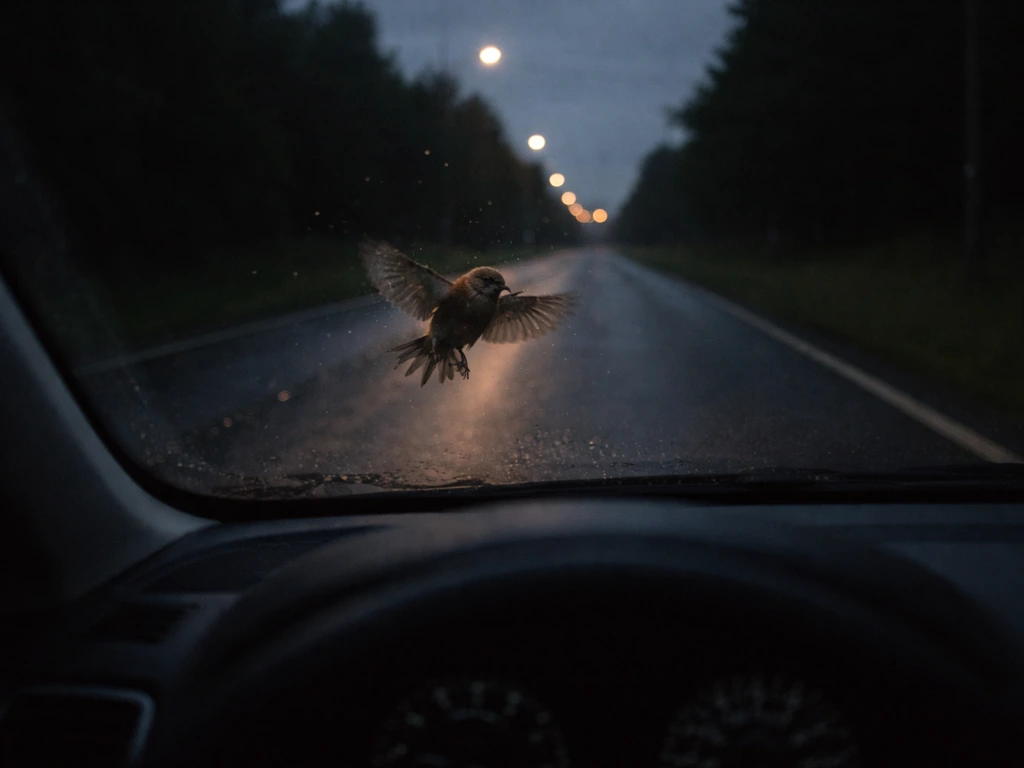
Hitting a bird while driving means two things at once: something real and immediate happened on the road, and something has stirred inside you that feels bigger than a traffic incident. Most people who search this phrase are not just asking about insurance claims. They want to know both what to do right now and what, if anything, this moment is trying to tell them. This guide covers both, in that order.
Hit a Bird While Driving Meaning: What to Do and Symbols

Maya Hartwell
7 Apr 2026
What to do the moment it happens
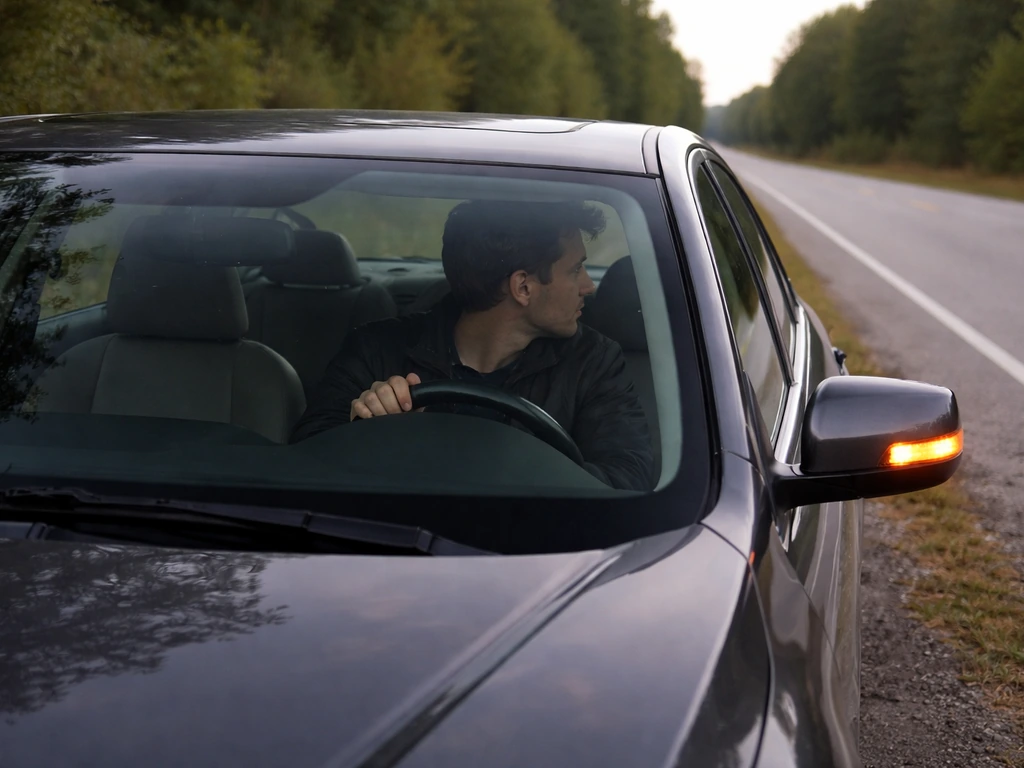
Your first move is pure safety, nothing else. If the impact was jarring or you feel distracted, pull over carefully, move your vehicle to a safe spot away from traffic, and turn on your hazard lights. This is not optional if there is any chance your car, or the bird, is blocking the road. If the carcass or debris is in a lane and you cannot safely move it yourself, call local authorities so they can clear the hazard. A stunned driver on a busy highway is a second accident waiting to happen, so take a breath before you do anything else.
Once you are safely stopped, check your vehicle for damage: windshield cracks, hood dents, or anything that could affect how the car drives. Then, only if it is genuinely safe to exit, look back at where the impact occurred. You are not obligated to go back, but if you saw the bird fall and you want to check on it, approach cautiously.
What to actually do with the bird
Here is where most people need clear guidance, because the instinct to help can sometimes do more harm. Birds can die from shock and stress alone, and unnecessary handling often worsens the outcome. If the bird is visibly dead, your safest and most responsible move is to contact your state wildlife agency or local animal control.
The USDA APHIS recommends reaching out to your state wildlife agency or state health department, especially for dead wild birds, partly for disease surveillance reasons. For reporting instructions and guidance on dead wild birds, USDA APHIS recommends using its downloadable fact sheet and contacting your state wildlife agency or state health department, especially for large-scale die-offs [contact your state wildlife agency or state health department](https://www. aphis. usda.
gov/sites/default/files/fs-hpai-dead-wild-bird. 508. pdf). When you report it, note the exact location, a nearby landmark, and approximate distance and direction so that wildlife staff can locate the spot if needed.
If the bird appears injured but alive, do not pick it up with bare hands. Wildlife guidance from agencies including the U.S. Fish and Wildlife Service recommends wearing disposable gloves if you must handle a bird, and covering it with a dark towel or cloth to calm it while keeping the wings tucked. Covering the head helps reduce stress significantly. Then contact a licensed wildlife rehabilitator before doing anything further. In many states, including Florida, keeping an injured wild bird beyond the time needed to transport it to a licensed rehabilitator is a legal violation. So your job is not to nurse it, it is to get it to the right hands quickly.
One more thing worth saying plainly: if you are near an area with bird flu activity, the National Park Service advises people not to handle or attempt to rescue birds at all due to public health risks. Check current guidance from your local wildlife authority before touching any sick or dead bird. If you do handle one regardless, discard or disinfect any PPE used and wash your hands thoroughly afterward, as the CDC recommends when handling dead wild birds.
The spiritual meaning people are really asking about
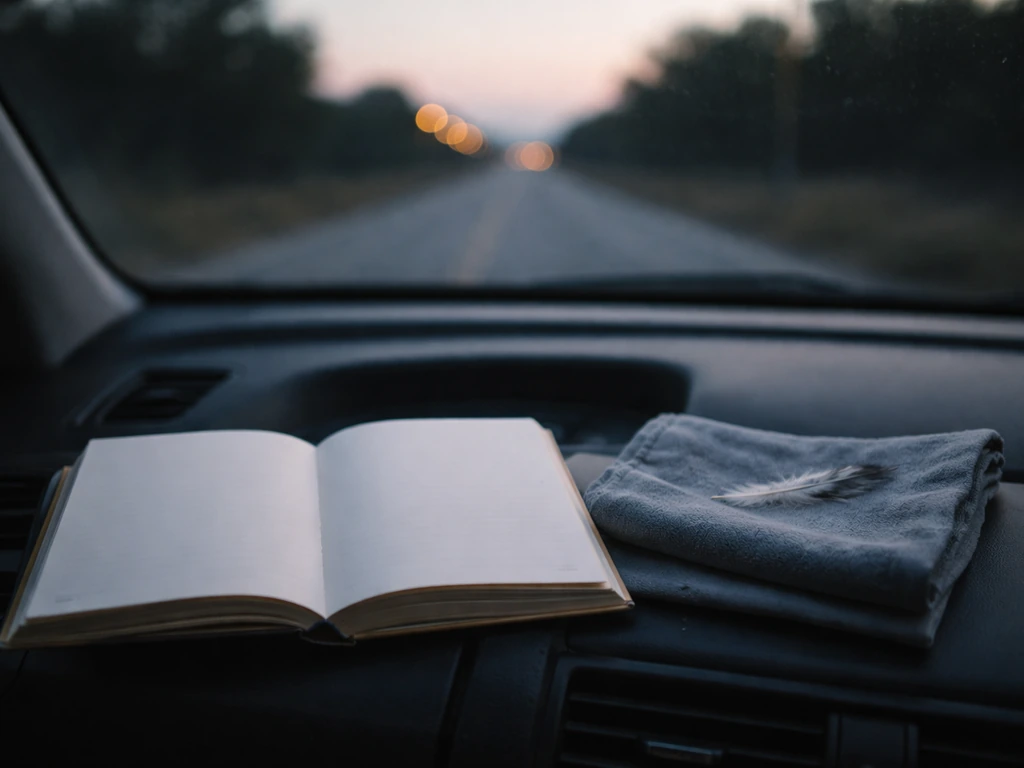
Once the practical moment has passed, the question that lingers is usually not about the bird. It is about you. Why did this happen? Was it a sign? What does it mean? These are old, human questions, and they deserve a thoughtful answer rather than a dismissive one.
Across many spiritual traditions, birds are understood as messengers, carriers of energy between the earthly and the spiritual. A bird crossing your path abruptly, especially one that ends in impact, tends to be read as an interruption, a moment where the veil between the ordinary and the symbolic becomes thin. Many people report feeling a sudden weight or unease after hitting a bird, even when they know rationally it was an accident. That feeling is worth paying attention to, not as proof of an omen, but as information about where your own inner life is right now.
Common metaphysical interpretations include: a sudden change or transition arriving in your life, a warning to slow down (literally or figuratively), a signal to pay closer attention to something you have been overlooking, or a moment of release tied to grief or an ending. None of these are absolute. They are lenses, not verdicts. What it means when a bird hits your car can shift significantly depending on the type of bird, the direction it came from, the time of day, and what was already on your mind when it happened.
What different traditions make of this
In Celtic and broader European folklore, a bird striking a moving vehicle (or historically, a carriage or person) was often seen as a harbinger of news, sometimes difficult news on its way. The direction the bird came from mattered: from the left was thought to signal caution or bad luck, from the right was considered more auspicious. These readings were not about the driver being cursed, they were about awareness and timing.
Indigenous North American traditions vary enormously by nation and bird species, but broadly, birds are seen as spiritual intermediaries. An unexpected and violent encounter with a bird mid-journey was often understood as a call to pause and reflect, rather than a punishment. The incident was considered worth noting in a spiritual log or sharing with an elder for interpretation, not something to dismiss or dramatize.
Eastern traditions, particularly in some Chinese folk beliefs, draw a distinction between the bird that dies upon impact and one that is merely injured. A death is sometimes read as the bird absorbing or carrying away negative energy on your behalf, which reframes the event as something closer to protection than misfortune. This is not universal, but it offers a genuinely different way to hold the moment.
From a biblical perspective, the most relevant passage is Matthew 10:29-31, where Jesus references sparrows specifically: "Are not two sparrows sold for a penny? Yet not one of them will fall to the ground outside your Father's care. " This teaching, commonly interpreted as reassurance rather than divination, is often used pastorally to counter fear or omen anxiety. The point is not that a bird falling is a bad sign, but that nothing escapes divine awareness.
Bible Gateway provides the Matthew 10:29, 31 passage about sparrows and God’s care, often used to reassure people that nothing escapes divine awareness.
Many Christian readers draw comfort from this after unsettling animal encounters, reading the event as held within something larger rather than as a punishment or warning. It is also worth noting that ornithomancy, the practice of reading bird encounters as omens for fortune-telling purposes, has been actively discouraged in classical and medieval Jewish literature, suggesting that the impulse to interpret bird encounters is ancient but also complicated by religious caution.
How to personalize the meaning for your situation
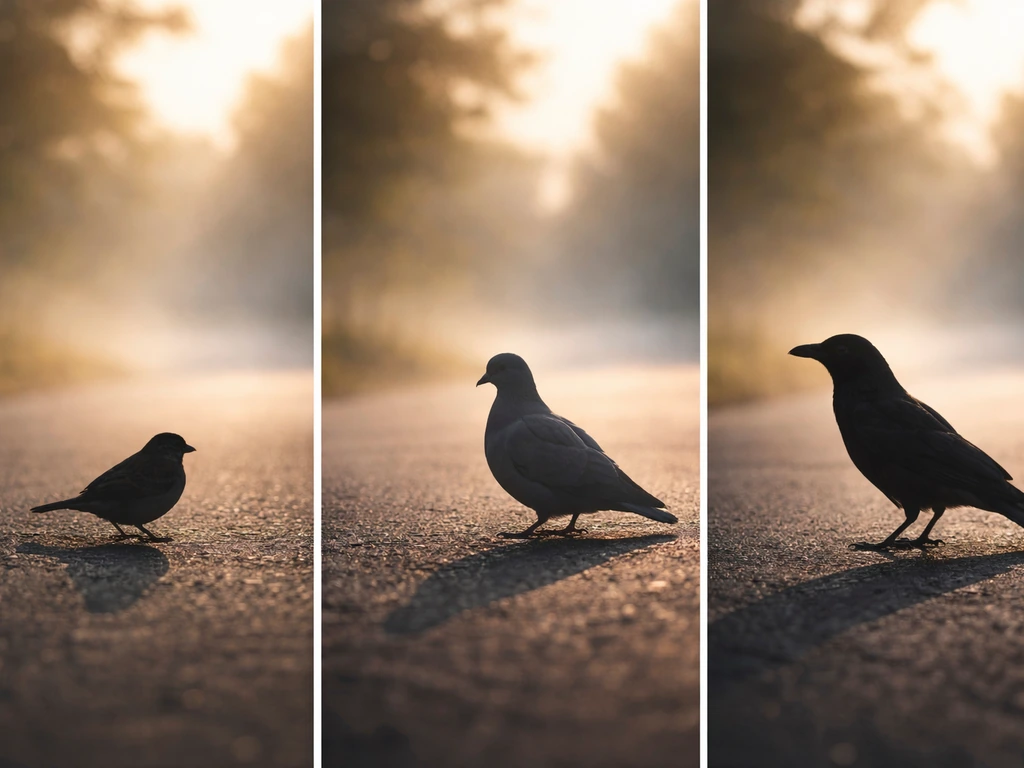
The most honest thing anyone can tell you is that a bird hitting your car while driving does not have one fixed meaning. What matters is the context you bring to it. Here are the factors worth sitting with:
- What kind of bird was it? A dove, a crow, a hawk, a sparrow, and a robin each carry distinct symbolic weight across traditions. If you recognized the bird, that is a useful thread to pull.
- What time of day did it happen? Dawn and dusk are traditionally considered threshold times, moments between states, which many traditions treat as more symbolically charged.
- Where were you going? Were you heading somewhere emotionally significant, a difficult meeting, a family visit, a new beginning? The journey itself can color the message.
- What were you thinking about right before impact? This is often the most telling detail people overlook. The mind and the moment sometimes collide in ways worth noticing.
- How did you feel immediately after? Fear, sadness, calm, numbness? Your emotional response is data about where you are, not just about what happened.
If you want to go deeper into how the specific dynamic of a bird entering your space while driving shapes the symbolic reading, the meaning behind a bird flying into your car explores that territory in detail, including how the direction of approach and the type of vehicle encounter changes the interpretation. For those curious about how similar events in other locations compare, what it means when a bird hits your door offers a useful parallel, since both involve a sudden, unexpected collision between a bird and a boundary you occupy.
The framing question that tends to open things up most is simply: what does this event remind me of? Not what does it predict, but what does it echo? Sometimes the answer is nothing. Sometimes it points to something you already knew was asking for your attention.
A quick comparison of common symbolic interpretations
| Tradition / Lens | Common Reading | Emotional Tone |
|---|---|---|
| Celtic / European folklore | Harbinger of news or coming change; direction matters | Cautionary, worth noting |
| Indigenous North American (broad) | A call to pause, reflect, or seek guidance | Respectful, non-alarmist |
| Chinese folk belief | Bird may have absorbed negative energy; protective reading | Reassuring |
| Biblical (Christian) | Nothing falls outside divine awareness; reassurance over omen | Comforting, anti-fear |
| Metaphysical / New Age | Transition, awakening, or signal to slow down and attend | Reflective, open-ended |
No single row in that table is the truth. They are different ways of asking the same question, and you get to decide which framing resonates. The meaning of a bird flying into your car covers some of these same traditions with additional nuance, especially for people who experienced the bird entering the vehicle space before impact rather than a straight road collision.
Giving yourself room to process this
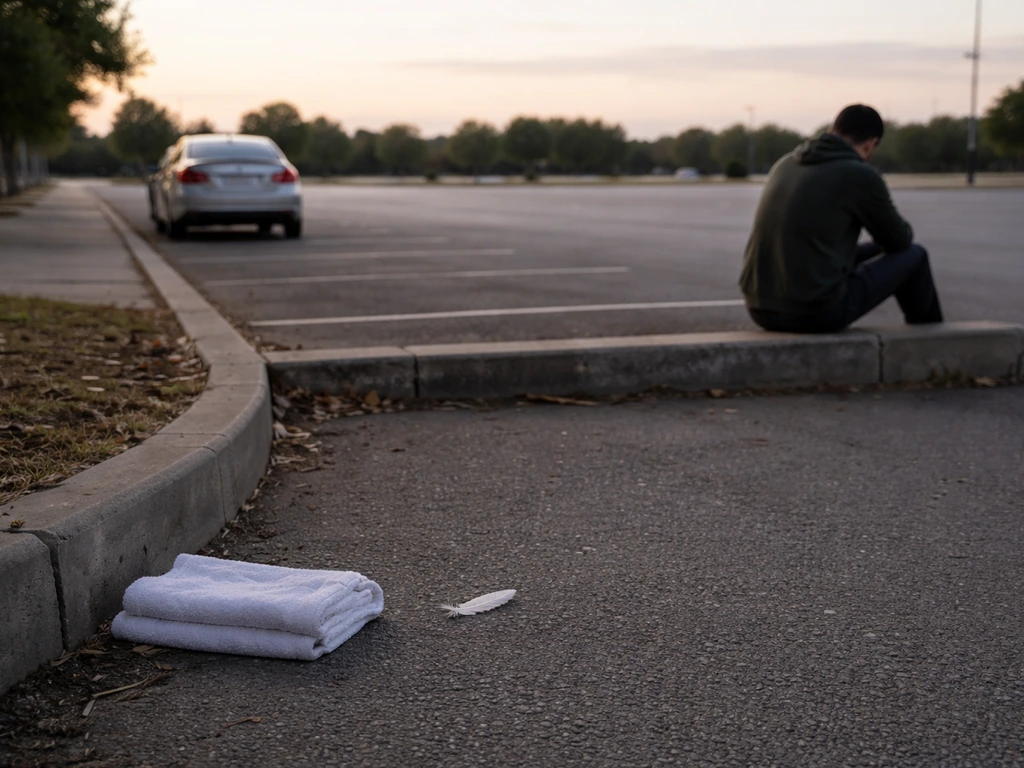
It is surprisingly common to feel unsettled, even guilty, after hitting a bird. You were not careless. Birds fly at unpredictable angles and speeds, and most road collisions with birds are genuinely unavoidable. Still, if you feel a heaviness about it, that is worth honoring rather than pushing away. Trauma-informed research, including guidance from UCSF on moral injury and stress responses, recommends self-compassion and radical acceptance for events we could not control. Breathing exercises, quiet reflection, and talking through the moment with someone you trust are all legitimate tools.
If the event stirred up something larger, grief, anxiety about change, fear around a specific situation in your life, give that a little room. Some people find it helpful to mark the moment: a brief pause, a few words said aloud, or a simple acknowledgment that something living crossed your path. Whether or not you hold a formal spiritual framework, a small ritual of recognition can help close an open loop that the mind tends to circle back to.
If, the next day, you are still finding yourself distracted, anxious, or looping on the incident beyond what feels proportionate, that is worth paying attention to. AP mental health guidance recommends monitoring your feelings and seeking professional support if distress is significantly disrupting daily functioning or involving severe anxiety. Most people will not get to that point, but it is worth knowing the threshold exists and that reaching for help is a reasonable and smart move when you need it.
A reflection to carry into tomorrow
The next morning, after the adrenaline and the searching have settled, it can help to sit with one simple question: what was I carrying into that drive? Not because the bird caused anything or arrived as a punishment, but because our moments of disruption often land on already tender ground. The event was real. The bird was real. And your response to it, whatever you feel, is real too. That combination does not require a verdict. It just asks for a little honest attention.
You do not have to arrive at a definitive meaning. Some encounters stay open. What you can do is note what surfaced, check in with yourself honestly, handle the practical pieces responsibly, and move forward with a little more awareness than before. That, across almost every tradition that has ever interpreted a bird crossing a person's path, is considered enough.
FAQ
What should I do if the bird hit my windshield versus the hood or side of the car?
If the bird hit your windshield, treat it like a potential driving-safety issue even if you feel fine. Check for chips that extend across your field of view and cracks that radiate outward, and if visibility is affected or the windshield is compromised, schedule a replacement before driving again.
Can I drive away if I think the bird and debris are off the road?
Don’t assume it’s safe to drive away just because the road looks clear. If you cannot confirm the lane is fully clear, do not try to “wait it out,” pull into the next safe area and reassess, then call authorities if debris remains or you are unsure where the bird landed.
What if the bird flies away after I hit it, or I cannot find it right away?
If the bird is alive but you feel you cannot safely approach, the safest option is to keep distance and contact animal control or a wildlife rehabilitator. For an injured bird, stress ramps up quickly, so avoid chasing it or trying to corner it near traffic.
What’s the safest way to handle PPE or clean up after touching a dead or injured bird?
Wear gloves if you need to touch the bird or contaminated materials, but avoid wiping debris with your hands or rehandling the towel later. Bag any used cloth, then wash hands thoroughly, and disinfect surfaces only after you confirm the area is safe to clean.
Is it illegal to keep an injured wild bird or try to rehabilitate it at home?
If you feel compelled to “keep” an injured bird, check local rules first. In many places, transfer and possession of wild birds require authorization, and holding them longer than transport time can be illegal, even with good intentions.
What changes if the area has higher risk of avian illness or bird flu activity?
If you hit a bird while traveling near waterfowl, farms, or known outbreaks, treat the situation as higher risk. Avoid touching the bird if you can, keep others away, and follow your local health department or wildlife authority guidance for reporting and cleaning.
How do I document the incident for insurance or to report it without making things worse?
If your car is damaged and you worry about claims, document what you can without putting yourself at risk. Take photos of the scene from a safe spot, note the time and location, and keep debris or wildlife-contact documentation if you were instructed to report it.
Why do I feel guilty or traumatized after hitting a bird, and when is that a sign I should get support?
Yes. Even if you know it was unavoidable, strong guilt can be a stress response. A practical approach is to do a quick “closure step” (wash up, check damage, report if needed), then set a time limit for ruminating, and seek help if anxiety starts interfering with driving or daily life.
What if I’m too emotionally upset to drive safely right after the incident?
If you’re shaken and still feel unsafe driving, pull over again. Don’t rely on willpower to “snap out of it,” because distraction can linger after impact. If you are too rattled to drive safely, arrange a ride or wait until you can concentrate.
What should I do if the bird is trapped in an unsafe spot like a ditch, median, or under the car?
If the bird lands inside a culvert or you can’t reach it safely, don’t climb, crawl, or work near traffic lanes. Mark the location, then contact the right authority for removal, since attempting retrieval can cause both injury and additional animal harm.
Next Article
Why Is My Bird Flapping Its Wings at Me? Causes and What to Do
Understand why your bird flaps wings at you and what to do, from hormones and stress to attention and warnings.