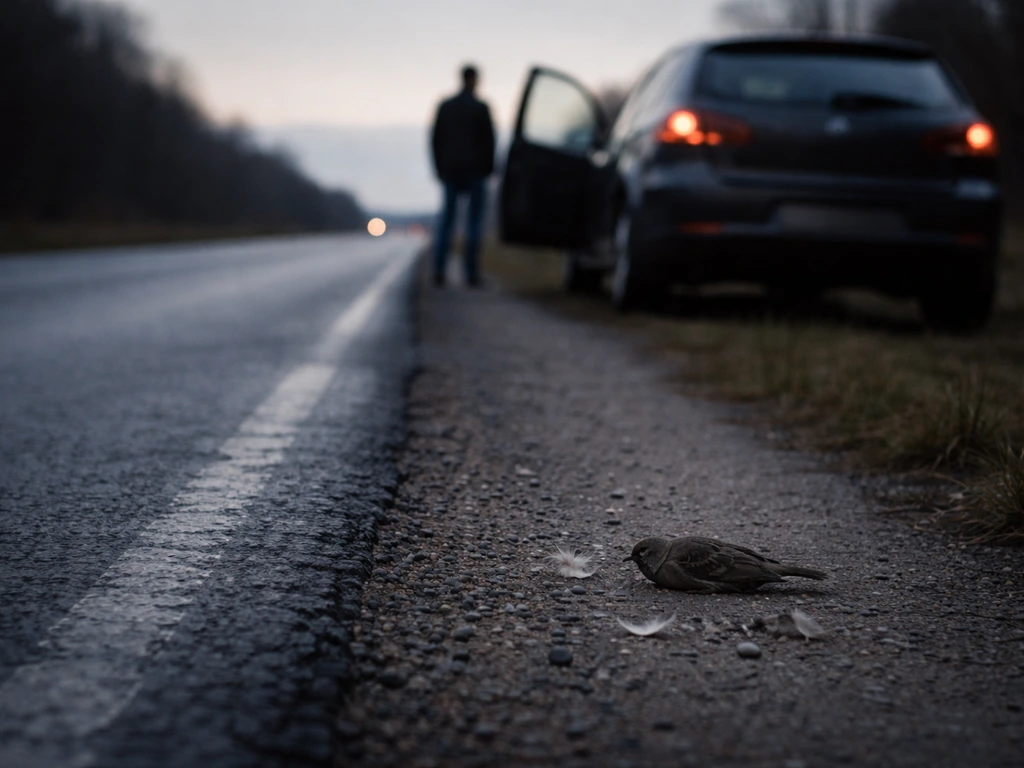
Killing a bird, whether by accident, intention, or in a dream, carries real weight across almost every spiritual and cultural tradition. Most frameworks interpret it as a signal: something has ended, a boundary has been crossed, or a lesson is being offered. The meaning shifts significantly depending on how it happened and what you were feeling in that moment, so before you spiral into guilt or dismiss it entirely, it helps to slow down and look at the full picture.
What Does It Mean When You Kill a Bird Spiritual, Biblical, More

Maya Hartwell
28 Apr 2026
The Immediate Spiritual and Symbolic Meaning
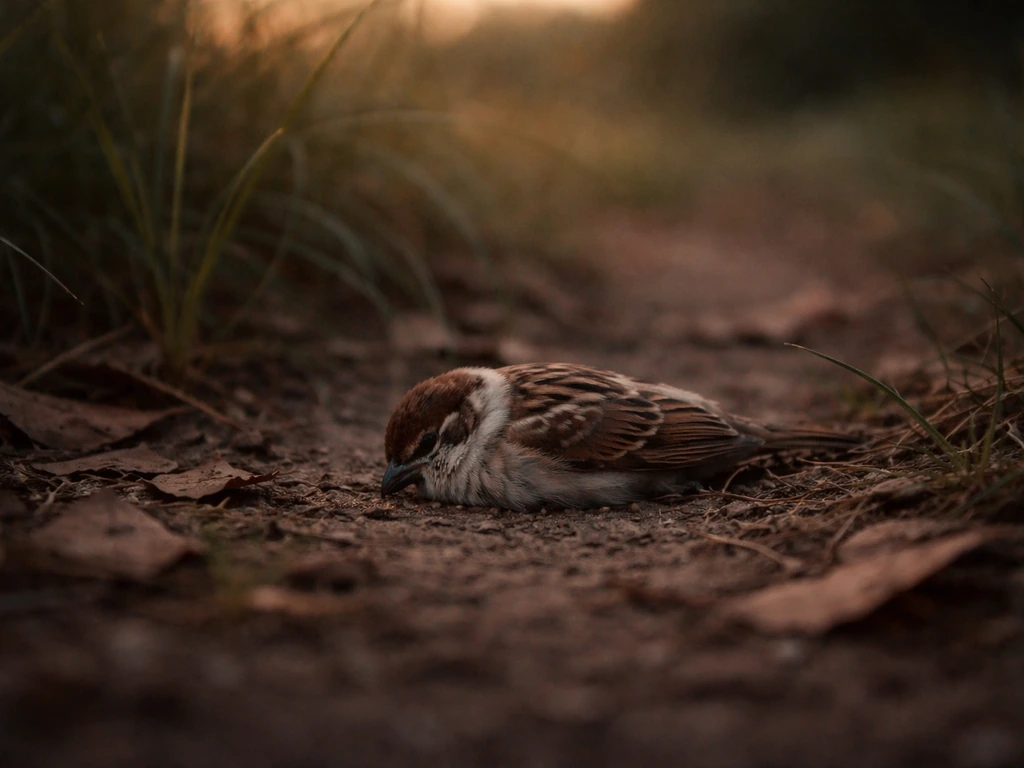
Across spiritual traditions, birds are widely understood as messengers, symbols of the soul, and bridges between the earthly and the divine. When one dies by your hand, the symbolic weight is that you have intersected with that liminal space, whether you wanted to or not. Spiritually, the event is rarely framed as random. Instead, it tends to be read as a moment of transition, a threshold crossing, or a mirror being held up to something in your own life that needs attention.
The type of bird matters too. A sparrow, for example, is linked in many traditions to the everyday soul, humility, and community. A crow or raven carries associations with transformation and shadow work. A dove is almost universally connected to peace and spirit. If you remember which species was involved, that detail can sharpen the interpretation considerably.
Critically, most spiritual frameworks do not deliver a flat verdict of 'bad omen' without context. Intent, awareness, and your emotional response afterward are all part of the picture. The event is less a sentence and more an invitation to reflect.
Biblical and Christian Views vs. Other Faith Perspectives

The Biblical Framework
In Christian and Jewish scripture, birds carry clear moral and spiritual weight. Matthew 10:29 is one of the most direct references: 'blank" rel="noopener noreferrer">not one sparrow falls to the ground without your Father.' The theological point is that God is aware of every bird's fate, including when one dies. That awareness extends to you as the person involved. It is not a condemnation, but it does frame the moment as something God sees and holds.
Deuteronomy 22:6 reinforces the theme of compassion toward birds specifically. The commandment about not taking a mother bird with her young, known in Jewish tradition as shiluach haken, is rooted in the idea of restraint and mercy toward creatures. The implied message is that a person of moral character extends care even to small, seemingly insignificant animals. Killing a bird, even accidentally, brushes against that principle and many Christian and Jewish readers will feel that friction intuitively.
From a Christian pastoral perspective, the response is typically one of repentance and repair. If the act was accidental, acknowledgment and prayer are enough. If intentional and regretted, confession and a commitment to do better are the path forward. The emphasis is on compassion as a virtue that can always be restored.
Eastern and Dharmic Perspectives

Buddhism and Jainism approach this from the angle of karma and non-harming. In Buddhist teaching, killing a sentient being, including a bird, is understood to generate negative karma that shapes future experience. The International Buddhist Society describes the karmic weight of killing as significant, though Buddhist practice also emphasizes intention heavily: an accidental death carries far less karmic consequence than a deliberate one. The practice of life release, called fangsheng in Chinese Buddhism, is actually used as a counterbalancing act of compassion, releasing a captive bird with sincere intention to generate merit and restore balance.
Jainism takes an even stricter view. Karma is attracted through harmful actions regardless of intent, though intent does affect the weight of that karma. In both traditions, the emphasis after the fact is on cultivating compassion, making amends where possible, and recommitting to non-harming going forward.
What Folklore and Cultural Traditions Say
Cultural folklore tends to be blunter than formal religion. In many European and Celtic traditions, killing certain birds is considered deeply unlucky. Killing a robin, for instance, is widely believed in British and Irish folklore to bring misfortune to the household. Killing a wren outside of the ritualized 'Wren Day' context was historically considered a serious offense. Seagulls carry the souls of lost sailors in some coastal folklore, making their killing taboo for fishermen.
In some Indigenous North American traditions, birds are clan totems or spirit helpers, and harming one without purpose or ceremony is considered a disruption of natural and spiritual order. The appropriate response in many of these traditions involves acknowledgment, an offering, or a prayer of thanks and apology to the spirit of the animal.
In contrast, some Appalachian and rural American folk traditions frame accidentally killing a bird near your home as a warning sign rather than a personal failing. It is read as a portent that something in your household or life needs attention, not necessarily a consequence of something you did wrong. The bird's death, in that reading, is a message rather than a verdict.
Metaphysical Readings: Energy, Karma, and Guilt

From a metaphysical standpoint, the energy surrounding the event matters as much as the event itself. Many metaphysical practitioners would frame killing a bird as a disruption in your personal energy field, one that calls for intentional cleansing and rebalancing. This is not about punishment. It is about recognizing that taking a life, even accidentally, creates an energetic impression that benefits from conscious acknowledgment.
Guilt is a common response, and metaphysical traditions generally treat it as useful only in small doses. Guilt that prompts reflection and changed behavior serves a purpose. Guilt that spirals into self-punishment does not, and some teachers would argue it actually holds more negative energy in place rather than releasing it. The preferred response is atonement through action: doing something kind, protective, or restorative for other living creatures.
Karmic interpretations across multiple traditions suggest that what follows from the event matters as much as the event itself. How you respond, whether you become more careful, more compassionate, more aware of your impact on the natural world, shapes what the experience ultimately means for your spiritual path.
Does It Change Meaning in a Dream vs. Real Life?
Yes, significantly. A dream in which you kill a bird is generally read as an internal event, not an external one. Most dream interpretation traditions treat the bird as a symbol of some part of yourself: your freedom, your aspirations, your intuition, or your voice. Killing it in a dream may point to a part of yourself you are suppressing, sacrificing, or losing. It can also reflect guilt about something else entirely, with the bird standing in as the symbol of whatever you feel you have harmed.
In real life, the meaning is more immediate and externally directed. The question shifts from 'what does this say about my inner world?' to 'what is my relationship with the natural world, and how do I want to respond to this moment?' Real-life incidents also carry practical dimensions that dreams do not, including how to handle the bird's body safely and what steps to take to prevent future harm.
It is also worth noting that context within the real-life experience matters. Accidentally killing a bird while driving is a very different event, spiritually and practically, than deliberately harming one. Related experiences like almost hitting a bird or running over one carry their own symbolic weight and are worth examining separately if that describes your situation more accurately. If you almost hit a bird, treat it as a reminder to slow down and reflect on how you want to relate to the natural world going forward almost hitting a bird. If you were wondering about getting hit by a bird meaning instead, those near-miss experiences are often treated as a separate, adjacent symbol worth examining too. If you almost hit a bird, that near-miss can also be read as a prompt to slow down and reflect on your choices in the moment almost hitting a bird.
| Scenario | Primary Spiritual Read | Key Emotional Cue | Suggested Response |
|---|---|---|---|
| Accidental kill (e.g., window strike, car) | Unexpected life transition; a message to pay attention | Shock, sadness, guilt | Acknowledgment, practical prevention, brief prayer or intention |
| Intentional kill | Boundary crossed; karmic consequence in play | Justification, regret, or ambivalence | Honest reflection, atonement through compassionate action |
| Dream: killing a bird | Inner suppression; loss of freedom, voice, or hope | Fear, sadness, or relief in the dream | Journaling, inner work, examine what feels stifled in waking life |
What to Actually Do After This Happens
If You Are Dealing with a Real Bird
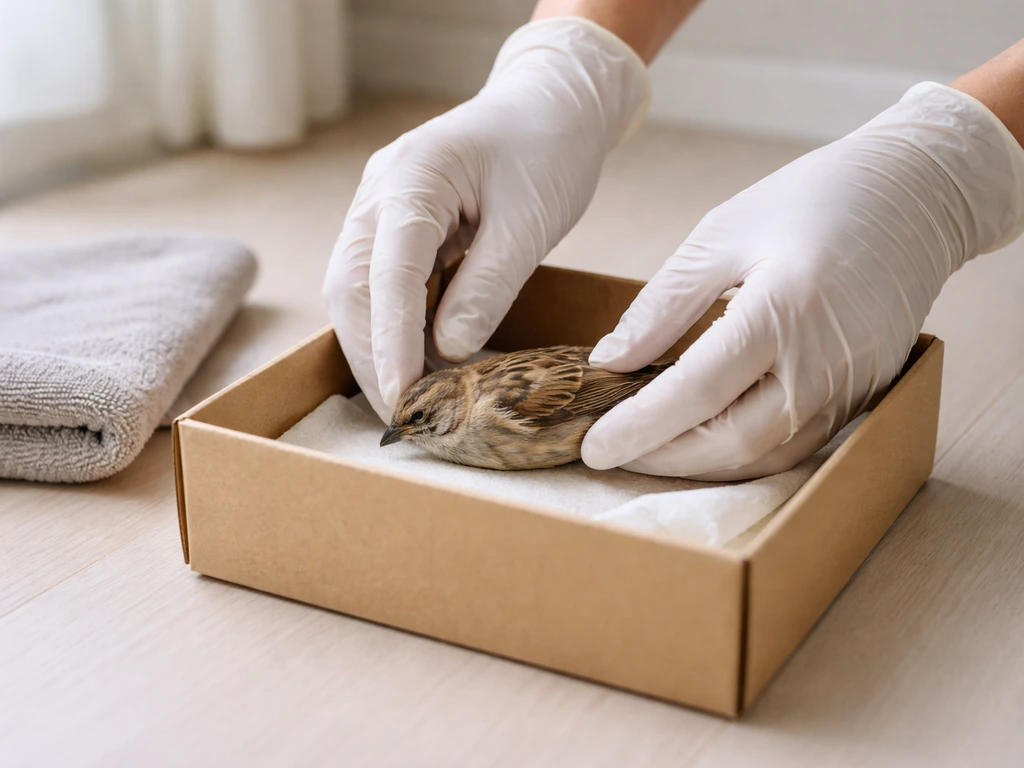
First, handle the practical side before the symbolic. Do not pick up a dead bird with your bare hands. The CDC and Cornell Lab of Ornithology both advise using disposable gloves, placing the body in a double-bagged container, and washing your hands thoroughly with soap and water afterward. Dead birds can carry West Nile virus and other pathogens, so this is not overcaution, it is just common sense. If you suspect the bird may be part of a disease outbreak or you find multiple dead birds in the same area, contact your local wildlife or county health department. The Cornell Lab recommends noting the species, location, date, and circumstances before disposal.
If the bird died from a window strike at your home, the most meaningful practical step you can take is preventing the next one. Window films and decals are effective, but only when applied correctly. Scientific American and peer-reviewed research confirm that films must be placed on the exterior surface of the glass to work. All About Birds recommends spacing decals about 2 inches apart across the entire window surface, not just placing a couple of stickers in the corners. Partial coverage does not protect birds effectively.
The Spiritual and Emotional Side
Once the practical is handled, give yourself space for whatever comes up emotionally. Many people feel a surprising amount of grief or guilt over accidentally killing a bird, and that response is healthy and worth honoring rather than dismissing. A simple acknowledgment, whether through prayer, a moment of silence, or a brief meditation, helps close the energetic loop for many people. If you have a faith tradition, bringing the experience into your practice through prayer, confession, or journaling is a natural fit.
If the experience was a dream, spend some time writing down what you remember, the species of bird if you noticed, how you felt during and after, and what associations the bird stirs in you. Dreams rarely deliver literal messages, so the more you explore your own emotional landscape around the image, the more useful the interpretation becomes.
- Handle the bird safely: gloves, double-bagged disposal, handwashing (real-life incidents only)
- Report if needed: contact local wildlife or health authorities if disease outbreak is a concern
- Prevent future harm: apply exterior window film spaced 2 inches apart if window strikes are a risk at your home
- Acknowledge the moment: a brief prayer, intention, or moment of silence directed toward the bird's spirit
- Do something restorative: donate to a wildlife rehabilitation center, put up a bird feeder, or commit to a concrete bird-protection step
- Process the emotion: journal about guilt, grief, or any symbolic resonance the event carries for you
- Seek guidance if overwhelmed: a spiritual director, counselor, or wildlife organization can help depending on what you need
Questions to Ask Yourself to Find the Right Meaning
The interpretation that will actually be useful to you depends on your specific situation, belief system, and emotional state. If you are trying to interpret what might prompt you to flip the bird, it also helps to compare the situation, intent, and emotional context the way you would for other bird-meaning scenarios flip someone the bird. Many people also use the phrase to mean a crude, hostile gesture, depending on context flip someone the bird. If you are asking about running over a bird meaning, use the same approach: look at context, intent, and how it affects you afterward flip someone the bird. Rather than landing on a single universal answer, it helps to sit with a few honest questions and let your own responses guide you toward the meaning that fits.
- Was this accidental or intentional? Your honest answer to this question determines the karmic and ethical weight most traditions assign to the event.
- Was this real or a dream? If a dream, what was the emotional tone, and what in your waking life might the bird represent?
- What is my gut feeling about it? Guilt, grief, indifference, and relief each point toward different underlying dynamics worth examining.
- What kind of bird was it? Species carries symbolic meaning across many traditions, and remembering it can sharpen the interpretation.
- What do I believe about animals and life? Your own spiritual or ethical framework matters more than any single tradition's verdict.
- Am I using this moment to grow, or to punish myself? Reflection and changed behavior are the productive path; extended self-punishment rarely is.
- What can I do today that honors life? A concrete action, however small, tends to restore a sense of agency and balance after an event like this.
Whatever lens you bring to this, the common thread across traditions is that your response to the moment matters as much as the moment itself. A bird's life, however small, is held sacred in most human cultures for a reason. If you meant the insult phrase, "flip someone the bird" is an offensive gesture meaning you are telling them to stop or that you want them to go away what does it mean to flip someone the bird. Letting that awareness shape how you move through the world going forward is probably the most honest and practical meaning you can take from the experience.
FAQ
Does it matter whether I killed a bird accidentally or on purpose, spiritually?
Check two things first, what you did (accidental versus deliberate) and what you felt immediately afterward (shock, fear, numbness, relief, anger). In many traditions, a death connected to carelessness or an unavoidable accident reads differently than a motivated harm, and the emotional residue often determines whether the event is treated as a lesson, a threshold, or a prompt to make amends.
How does the situation change the meaning of killing a bird (window strike, driving, pet, gardening)?
Yes. If you can identify the circumstances, you can narrow the interpretation: a window strike is often read as a “systems warning” (your environment needs adjustment), while harming it during a hunt or act of aggression is more likely read as a “character invitation” (restraint and compassion). Even if you do not accept spiritual meanings, the practical correction still matters.
Is killing a bird always a bad omen or a sign that something terrible will happen?
Often, yes, but not as a certainty. Many readers treat the “message” as symbolic rather than literal punishment, so the best test is behavior change. If you respond with precautions, compassion, and reduced harm going forward, most frameworks consider that the meaning is already being “resolved.”
What does repentance or making amends look like in a practical way?
You can, but keep it bounded. If the bird died due to a known hazard like a collision or vehicle, the most helpful “repentance” is repair, prevent the next incident and show care afterward. If the death was intentional and you regret it, pair apology and commitment with concrete non-harming steps, for example, changing habits that led to the harm.
What if I keep having bird-related incidents, does it mean something bigger?
Yes, especially if you have more than one incident. Repeated events can be interpreted as a persistent pattern in your environment or routine, for example, certain windows, a frequent road stretch, or an accessible nesting area for pets. If multiple dead birds occur in a short time, treat it as a real-world safety issue, not just a spiritual sign.
How should I interpret a dream where I kill a bird if I do not believe in omens?
Dream meanings usually work best when you treat the bird as a stand-in for an inner quality (voice, freedom, intuition, hope) rather than the literal species. A helpful next step is to ask, what part of me felt “killed,” silenced, or sacrificed in the dream, and what similar feeling has been present in your waking life.
I feel intense guilt after accidentally killing a bird, how do I handle it without spiraling?
Your response matters, but avoid self-ruin. A grounded approach is “contained guilt,” where you acknowledge grief, then redirect into one or two actions: safer handling, prevention measures, and a kind action toward other animals. If guilt turns into obsessive replay or punishment, many teachers would say that energy is no longer clarifying and needs to be released.
What details should I record to figure out the meaning of what happened?
If you are unsure what you saw, write down objective details first (location, time, species if known, weather, speed or lighting if it was near traffic, whether a window was involved). Then add subjective details (your mood, your urgency, whether you felt regret or numbness). Many interpretations become clearer once you separate facts from feelings.
How is the meaning different if it was an almost hit versus actually killing the bird?
Yes. A near-miss is often read as a prompt to slow down, pay attention, or adjust choices before harm occurs, while an actual death is then treated as the “consequence” portion of that lesson. If you recently had both almost-hitting and then a death, many people interpret it as a stronger invitation to change behavior in that specific area.
What if the bird was already injured or appeared sick when I was involved?
Sometimes, but be careful. If the bird was already sick or injured before you encountered it, some spiritual and ethical lenses emphasize humane triage rather than moral blame. The key distinction is whether your involvement added harm or whether you were responding to an existing condition.
Next Article
Running Over a Bird Meaning: What to Do and Interpretations
What to do after running over a bird, plus symbolic, biblical, and folklore interpretations without superstition.