When a bird "lights" nearby, it simply means the bird landed or briefly settled somewhere close to you. Merriam-Webster lists "to light" as a verb meaning to settle or alight, and gives the example "the bird lit on the branch and began to sing." So if someone says a bird lit on their porch railing, their windowsill, or even their hand, they mean it touched down and rested there, even if only for a moment. That's the plain English of it. But if you're here, you're probably less interested in the dictionary and more interested in what it might mean, and that's where things get genuinely interesting.
What Does It Mean When a Bird Lands? Practical and Symbolic

Maya Hartwell
13 May 2026
What "a bird lights" actually means
The verb "to light" in this context is an older, slightly formal usage that you'll still hear in everyday speech across the American South and Midwest in particular. It describes the moment a bird dismounts from flight and settles onto a surface, whether that's a lawn, a fence post, a car roof, or your shoulder. It's not about fire or brightness (that's the other meaning of "light"), and it's not about anything dramatic happening to the bird. It's simply: the bird flew, and then it landed near you. That distinction matters because some people search this phrase wondering if something is wrong with the bird, or if "lighting" refers to a specific behavior. It doesn't. It just means the bird chose that spot, even briefly, and you noticed.
Why birds land where they do (the practical side)
Before diving into symbolism, it's worth understanding what's actually going on from the bird's perspective, because sometimes the most grounding thing you can do is appreciate the natural reality alongside the spiritual one.
- Foraging and scouting: Birds frequently land in new spots to assess whether food is available. Your yard, porch, or garden may simply look promising from the air.
- Rest and thermoregulation: Research on avian behavior shows that perching is a key way birds manage body temperature. A bird landing in a shaded spot on a hot day, or a sunny patch on a cold morning, is actively regulating its heat budget. It's not random.
- Magnetic navigation: Birds use Earth's magnetic field (via magnetoreception) as one layer of their navigation system, alongside visual landmarks and sun position. A bird landing in your yard mid-migration may be orienting itself before continuing on.
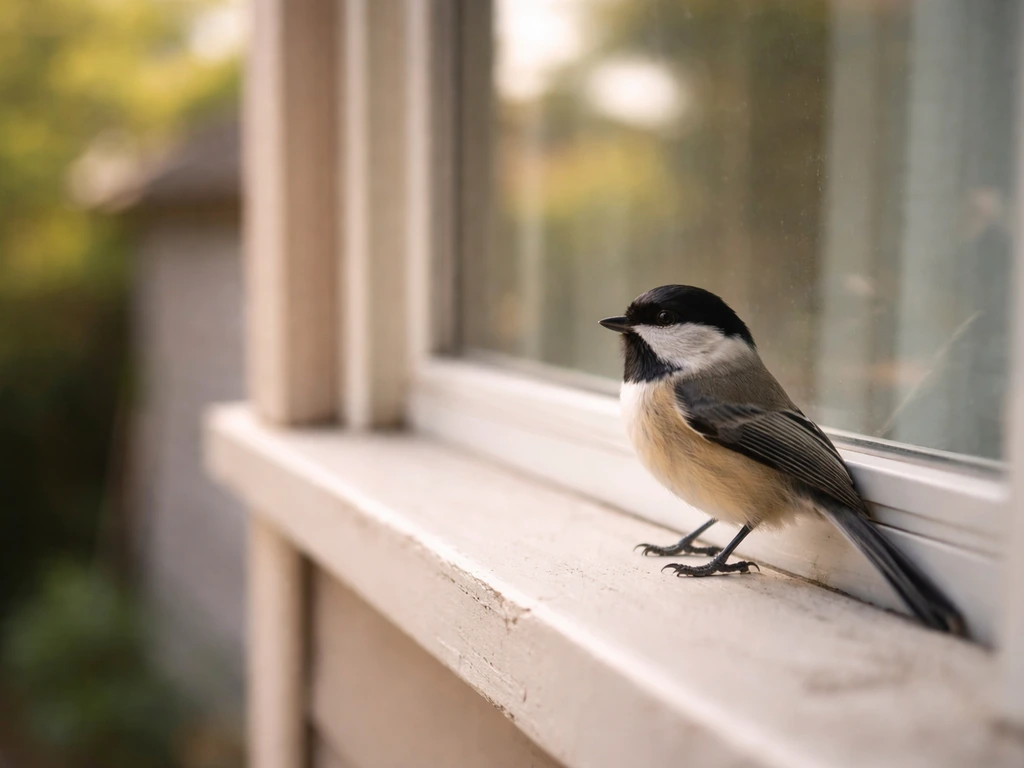
- Reflection confusion: Windows and glass surfaces can reflect sky and trees so convincingly that birds mistake them for open space. A bird that lands on or near a window repeatedly may be responding to its own reflection.
- Nesting signals: In spring and early summer, a bird repeatedly landing near your home, checking eaves, gutters, or hanging baskets, is often scouting nesting sites.
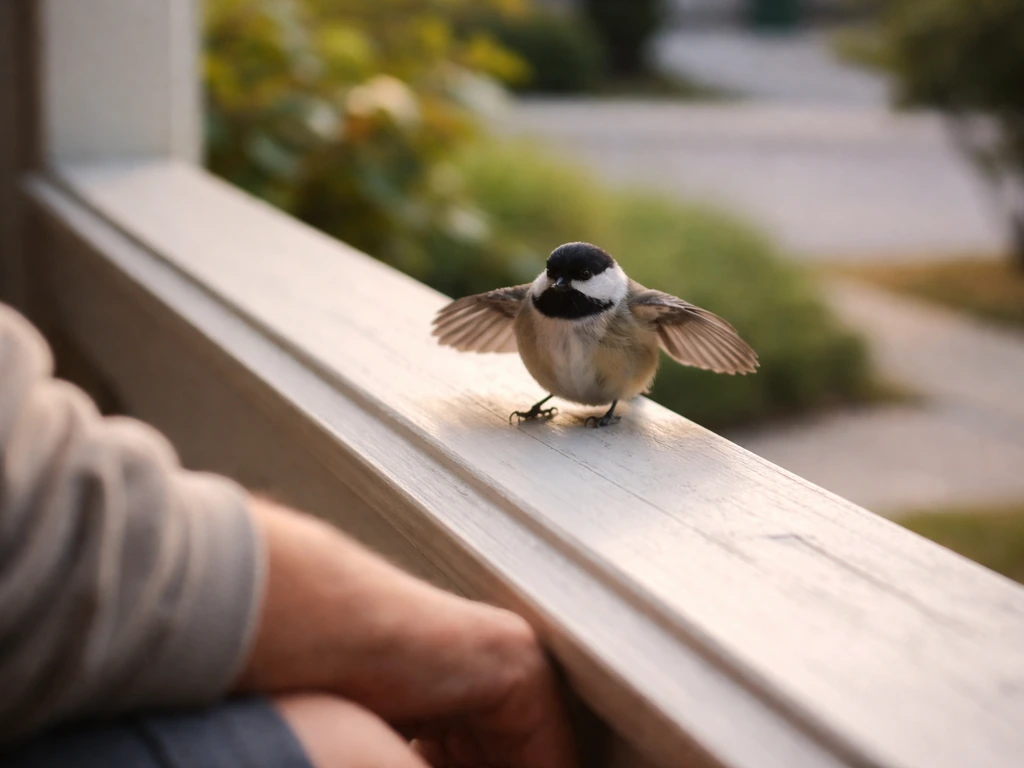
- Curiosity about humans: Some species, like chickadees, house sparrows, and corvids, are genuinely curious about people and will land close to investigate, especially if they associate humans with food.
None of these practical explanations cancel out a spiritual interpretation. For a lot of people, both things can be true at once: the bird landed because it was warm there AND it carried a message. Holding that tension is part of what makes bird encounters so rich to reflect on.
The spiritual and symbolic side of a bird landing near you
Across nearly every spiritual and metaphysical tradition, birds are understood as messengers or intermediaries between the earthly and the unseen. When one lands close to you, especially if it lingers, holds eye contact, or returns more than once, many traditions interpret that as a deliberate sign rather than a coincidence. Here are the most common themes you'll find:
- A message from a loved one who has passed: This is one of the most widely held informal beliefs, especially when the bird seems unusually calm, unafraid, or arrives at a meaningful time like an anniversary or after a loss.
- Good news or positive change on the way: Many folk traditions treat an unexpected bird landing as a positive omen, a signal that something new or hopeful is approaching.
- A nudge toward awareness or reflection: Some spiritual frameworks don't assign a fixed meaning to bird visits but treat them as invitations to pause and pay attention to your inner life.
- Protection and guidance: In various traditions, a bird landing nearby signals that you are being watched over or guided, particularly during uncertain or transitional times.
- A signal to trust your path: Birds that land and then fly upward are sometimes read as encouragement to keep moving forward, to trust the direction you're already heading.
It's worth being honest here: none of these meanings are universal or guaranteed. What resonates with you will depend heavily on your own beliefs, your emotional state at the moment the bird appeared, and what's happening in your life. That personal resonance is often considered the most reliable compass for interpreting any sign.
What to notice: matching the meaning to the moment
The details surrounding a bird landing matter enormously for anyone trying to interpret it. Think of these as the context clues that help you move from a general meaning to one that actually fits your situation.
Which bird was it?
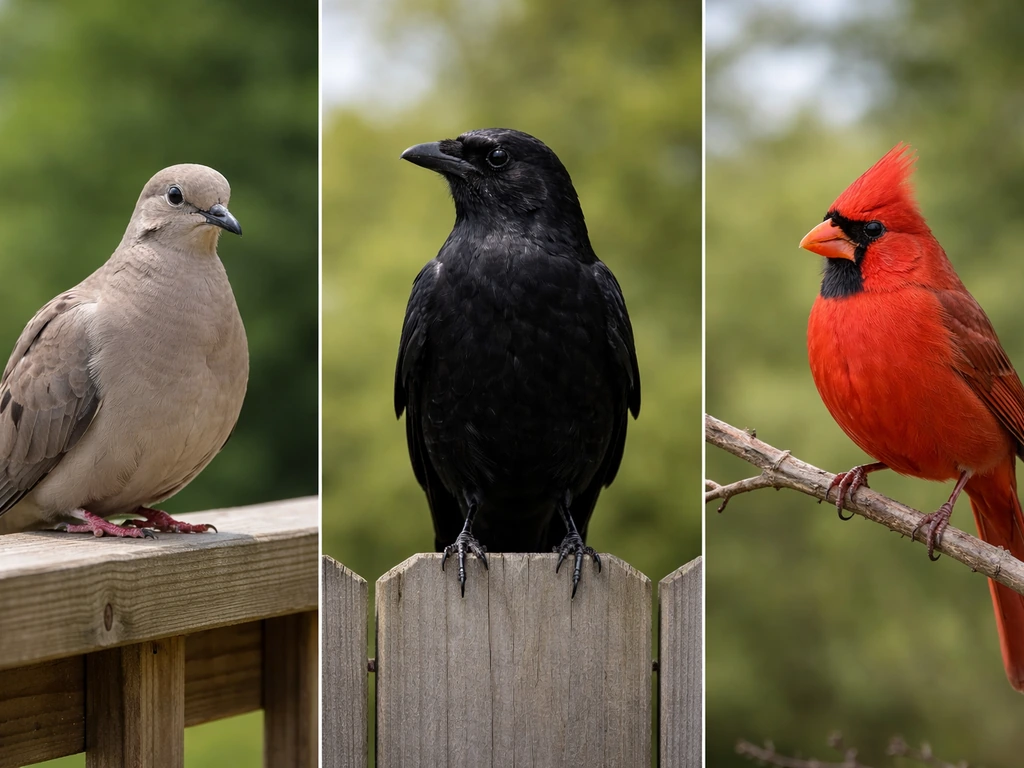
Species carries a lot of weight in both folk tradition and spiritual interpretation. A mourning dove landing on your railing brings a different energy than a crow doing the same thing, even if the physical act is identical. Knowing what bird you saw is the starting point for more specific meaning.
| Bird | Common Spiritual/Folk Themes | Notable Tradition |
|---|---|---|
| Cardinal | Messages from loved ones, good luck, hope | Cherokee mythology links cardinals to protection; widely cited in North American folklore |
| Dove | Peace, reconciliation, harmony, divine presence | Noah's dove with olive leaf in Genesis; cross-cultural symbol of peace |
| Crow or Raven | Transformation, intelligence, mystery, warning or providence | Ill omen in some Western traditions; ravens fed Elijah in 1 Kings 17; positive in many indigenous traditions |
| Sparrow | Humility, simplicity, God's care for small things | Matthew 10:29-31 references sparrows as under divine providence |
| Swallow | Safe return, good fortune, protection at sea | Sailing superstition: swallows are a good omen for sailors returning home |
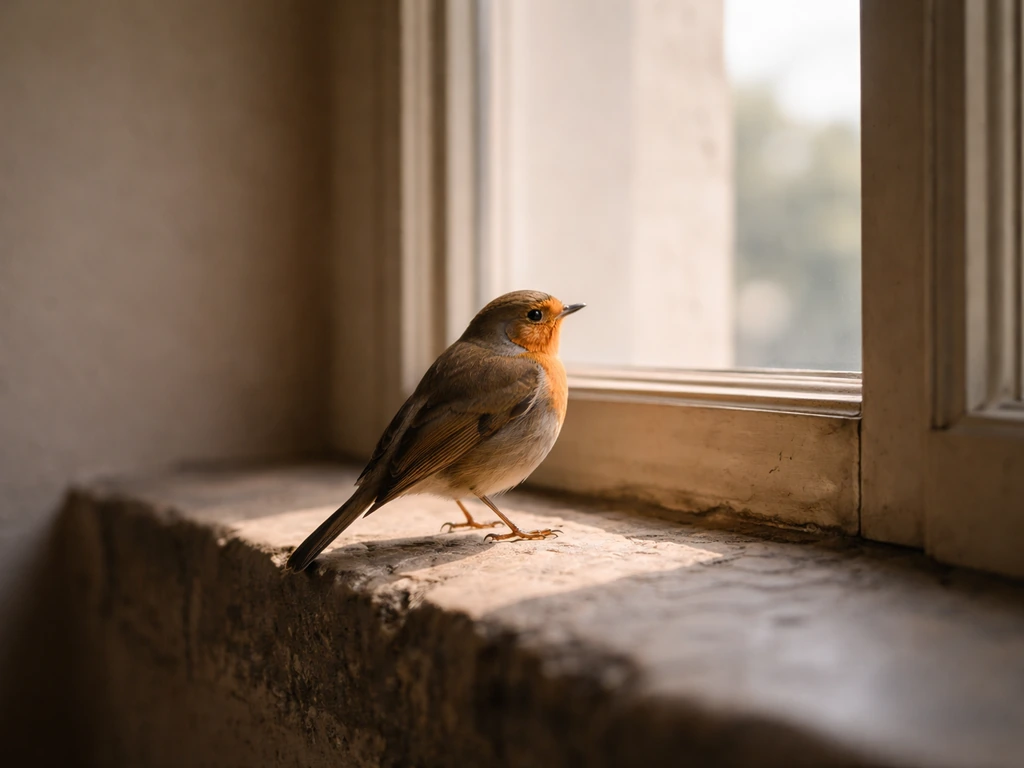
| Robin | New beginnings, renewal, spring optimism | Common in Celtic and European folk belief as a herald of fresh starts |
| Hawk or Eagle | Vision, power, higher perspective, spiritual guardianship | Widespread across indigenous North American and Celtic traditions |
Where did it land?
Location shifts the interpretation significantly. A bird landing on the ground near your feet is often read differently than one that lands directly on your windowsill, your doorstep, or on your body. Doorways and thresholds have long been seen as liminal spaces in folklore, places between the ordinary world and something beyond it, so a bird perching on your front door or porch carries extra weight in many traditions. A bird landing on a window (especially repeatedly) is sometimes linked to messages from the spirit world in popular belief, though it can also be explained by window reflection. A bird landing on you directly, on your hand, shoulder, or head, is considered unusually significant across almost every tradition. If a bird tilts its head, it often helps interpret sounds and movements nearby, which can also be part of what people interpret as a meaningful sign.
How did the bird behave?
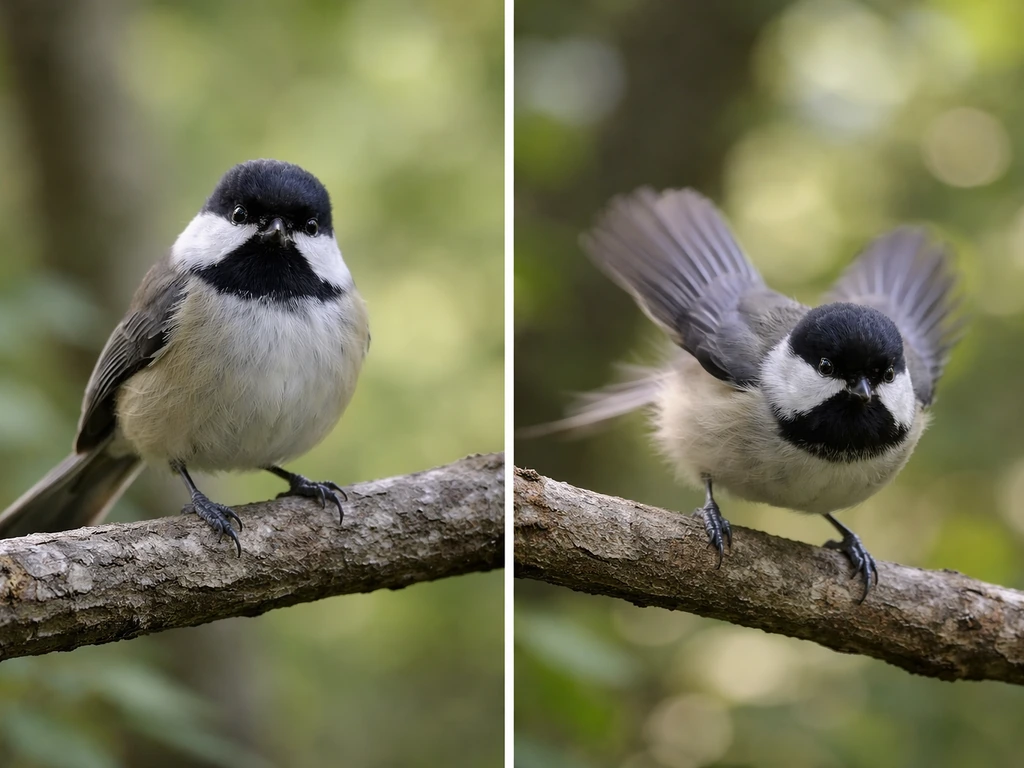
A calm, still bird that holds your gaze and seems in no hurry to leave is interpreted very differently from one that's agitated, flapping, calling loudly, or clearly distressed. If a bird opens its mouth, it can be part of normal behavior like calling or begging for food, so context matters before you assume it has a deeper meaning what does it mean when a bird opens its mouth. Repeated visits from the same bird (or what appears to be the same bird) over several days are often treated as stronger signals than a single brief landing. Notice also whether the bird seemed healthy and alert or appeared injured, dazed, or lethargic, because that changes both the spiritual reading and the practical action you should take.
When did it happen?
Time of day and season add another layer. Dawn and dusk are traditionally considered liminal times in many spiritual frameworks, moments when the boundary between worlds is thinner. A bird landing at dawn might signal a new beginning; at dusk, an ending or transition. Season matters too: a cardinal in winter carries different resonance than one in full spring migration. And your personal timing, whether you were grieving, celebrating, anxious, or at a crossroads, shapes what the encounter might be asking you to notice.
What different cultures and traditions say about birds as messengers
The idea that birds carry messages is one of the oldest spiritual threads running through human history. You find it everywhere, from ancient Rome (where augury, the reading of bird behavior, was a formal religious practice) to indigenous North American traditions (where specific birds are understood as clan messengers or spiritual guides) to East Asian symbolism (where cranes represent longevity and heavenly connection). It shows up in Celtic traditions where birds like wrens and robins were considered sacred intermediaries, and in African and Caribbean spiritual practices where bird encounters can signal ancestral contact.
In the biblical tradition, birds appear repeatedly as instruments of divine communication and care. In Genesis, Noah sends out a raven and then a dove; the dove returns with an olive leaf, and that single bird landing back on the ark becomes one of the most enduring symbols of hope and restored covenant in human history. In 1 Kings 17, ravens are sent to feed the prophet Elijah in the wilderness, a story that positions birds not as random wildlife but as agents of provision. And in Matthew 10:29-31, Jesus uses sparrows, the most ordinary of birds, to make a point about how nothing in creation falls outside divine awareness. The verse has been read both as comfort (God notices even the smallest bird landing) and as caution against treating bird visits as deterministic omens that override faith or discernment.
Corvids (crows and ravens) offer a good example of how dramatically cultural context shapes meaning. blank" rel="noopener noreferrer">In some Western European folklore traditions, a raven landing near a home is a dark omen associated with death or illness. In many indigenous North American traditions, Raven is a creator figure, a trickster, and a bringer of light. The same bird, the same behavior, entirely different frameworks. This is why the most honest approach to bird symbolism acknowledges that there is no single correct interpretation, only the one that speaks to your tradition, your life, and your gut.
What to actually do right now
First: make sure the bird is okay
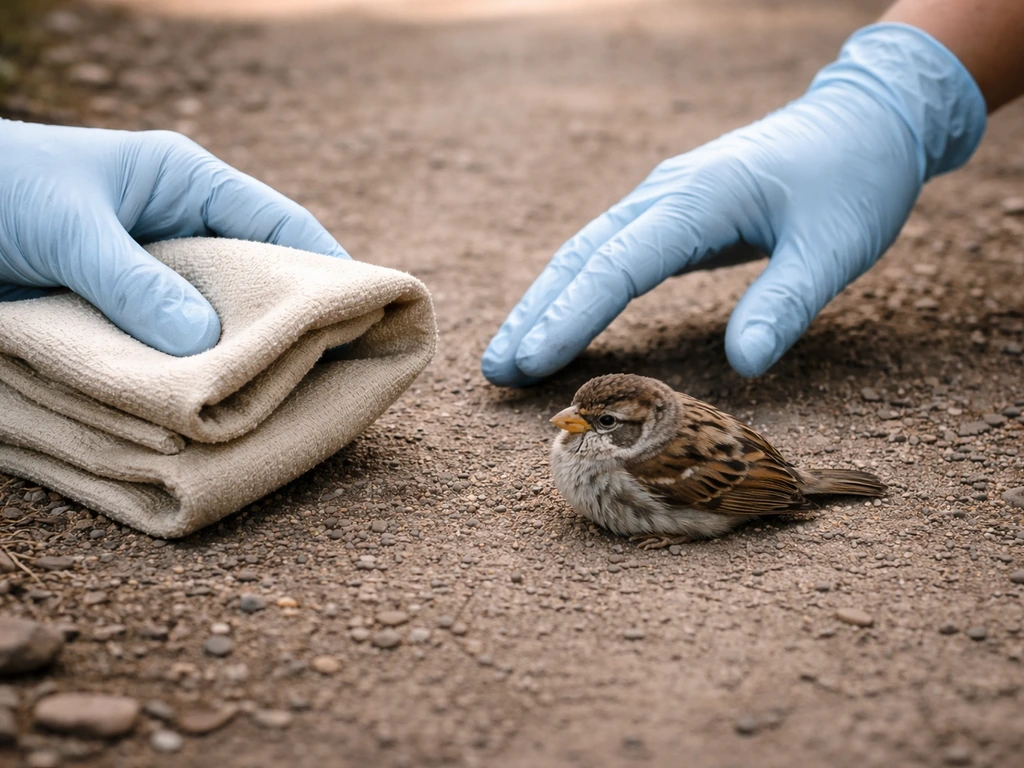
If the bird that landed near you seemed unusually still, dazed, unable to fly, or showed signs like bleeding, a drooping wing, or labored breathing, your first move is practical. The U.S. Fish and Wildlife Service advises against attempting to handle or trap an injured wild bird yourself. Instead, contact a local wildlife rehabilitator who can assess the situation. If the bird struck a window, the Wildlife Center of Virginia recommends placing it gently in a shoebox or unwaxed paper bag (with air holes) in a quiet, dark spot and calling a rehabilitator or avian vet. Cornell Lab of Ornithology also notes that window collisions can be reduced by applying patterns to the outside of glass. If the bird looks like a fledgling (short tail, fluffy patches, hopping on the ground), Audubon advises leaving it alone, because the parents are almost certainly nearby and will continue feeding it.
If the bird seemed perfectly healthy and simply landed, did its thing, and flew away, then no intervention is needed. You're free to move straight into reflection.
Then: document what you noticed
While the encounter is fresh, write down or voice-memo the specifics: what kind of bird it was (or your best guess), where exactly it landed, what time of day, how long it stayed, what it did while it was there, and what you were thinking or feeling in that moment. These details are what allow you to move from a generic interpretation to one that actually fits your life. You might also note what was happening for you that week, any questions you'd been sitting with, any losses or transitions, anything you'd been hoping for. That context is the raw material for genuine reflection.
Reflection prompts to sit with
- What was I thinking about right before the bird landed? Is there a connection between that thought and what the bird might symbolize?
- Did the encounter feel ordinary, or did something about it make me stop and pay attention? What made the difference?
- If this bird carried a message, what would I most need to hear right now?
- Does the species, behavior, or timing remind me of anyone or anything? A person I've lost, a situation I'm navigating, a quality I've been neglecting?
- Which cultural or spiritual lens feels most authentic to my own beliefs? What does this encounter mean through that specific lens?
- What would it look like to honor this moment, whether through prayer, gratitude, a small ritual, or simply paying closer attention to the days ahead?
You don't have to land on one definitive answer about what the bird's visit meant. In fact, some of the most meaningful encounters stay with people precisely because they remain open-ended, a quiet reminder to look up more often, to trust what you're feeling, or to remember that you're not as alone as you sometimes think. Whether you read the bird's landing as a natural moment of beauty, a message from someone you've lost, or a gentle nudge from the universe toward something you've been avoiding, the invitation is the same: pay attention, and see what resonates. If you are wondering what finding a bird feather means, it can help to apply the same context clues and reflection approach used for a landing near you what does finding a bird feather mean.
If you've been noticing other bird behaviors alongside a landing, like a bird fluffing up, tilting its head, or wagging its tail, those details can add additional layers to your reading. Each gesture has its own symbolic and behavioral dimension, and putting them together often tells a richer story than any single action on its own. Tail-wagging can also be a form of communication or a sign that the bird is alert and adjusting its footing. Some people also search for the bird ruffling feathers meaning, which is a different phrase but often gets confused with “a bird landing” symbolism.
FAQ
If someone says “a bird lit on me,” does it always mean it landed on my body, or can it mean nearby?
In everyday usage, “lit on” usually suggests the bird actually touched down on you, like your shoulder or hand. If it was simply close by, most people would say it “landed near you” or “perched nearby,” so the exact wording can matter when you interpret the encounter.
How long does a bird have to stay for it to be more than a coincidence?
There is no universal threshold, but practical pattern-recognition helps. A brief landing and immediate departure is often just normal feeding or exploration, while repeated appearances at the same spot over multiple days, or staying long enough for you to notice behaviors like eye contact or repeated head tilts, tends to be where people feel the encounter is more intentional.
What should I do if the bird lands repeatedly on the same window or keeps “stopping” there?
If the behavior looks like ongoing attempts to get outside, treat it as a likely window-related issue rather than a message. Reduce collisions with window decals or exterior screening, and if you find a stunned bird, use a dark, quiet container and contact a local rehabilitator instead of handling it on your own.
Is “birds landing” ever connected to someone being in danger?
Some people interpret it as an omen, but the safest approach is to check for practical signs first. If the bird seems injured, dazed, or shows abnormal behavior (like labored breathing), focus on wildlife safety and get help, rather than assuming the landing predicts harm.
What if the bird looks healthy, but it lands on me and won’t leave right away?
If it appears alert and calm, this is often the bird pausing to assess or preen, not a sign you must “act.” Give the bird space, avoid sudden movements, and let it choose when to fly off. If it shows distress behaviors (hissing, wing droop, repeated stumbling), shift to safety and contact wildlife experts.
Can “lighting” be confused with other meanings of “light,” like fire, brightness, or aggression?
Yes, that confusion happens. “To light” in this context refers to settling after flight, not to anything involving illumination or flame. When a bird “lights” somewhere, the key cue is the bird arriving from the air and perching or resting briefly.
Does the bird species matter if the behavior was identical?
Often, yes. Species influences both natural explanations (where it forages, its typical perching habits) and folk interpretations. If you can identify the bird, your context-based meaning will usually be more specific, for example comparing a crow versus a dove landing at your doorway.
What if I don’t know the bird type, only that it landed near me?
You can still interpret using non-species context. Focus on location (doorstep, window, ground, body), time of day, duration, and behavior (calm versus agitated). Recording these details helps you form a grounded reading even with an uncertain identification.
If the bird is a corvid like a crow or raven, should I assume a “negative” omen?
Not automatically. Cultural interpretations differ sharply, so don’t lock into one outcome. A practical step is to compare the encounter to what is happening in your life right now, and let your own belief system guide whether the symbolism feels like caution, change, or something else.
How should I respond emotionally if I interpret the landing as a sign, but it doesn’t match how I feel in the moment?
Treat the symbolism as a prompt, not a command. If the interpretation increases anxiety, switch back to practical possibilities (weather, habitat, food, migration timing) and use the encounter for a low-stakes reflection, like asking what you noticed or needed to pay attention to, rather than forcing a definite meaning.
Can a bird landing near me have a natural explanation that still “counts” spiritually?
Yes. Many people hold both views at once, for example thinking the spot is warm or safe while also feeling the moment carries personal significance. A helpful decision aid is to ask, “What about this moment feels personally relevant,” regardless of the bird’s underlying biological reason for choosing the location.
Is it ever appropriate to try to move the bird or shoo it when it lands on my porch or windowsill?
If the bird is healthy and simply resting, avoid unnecessary handling. You can gently create space and keep pets indoors, but let the bird leave on its own. If it appears injured or unable to fly, do not trap it yourself, contact a local wildlife rehabilitator for guidance.