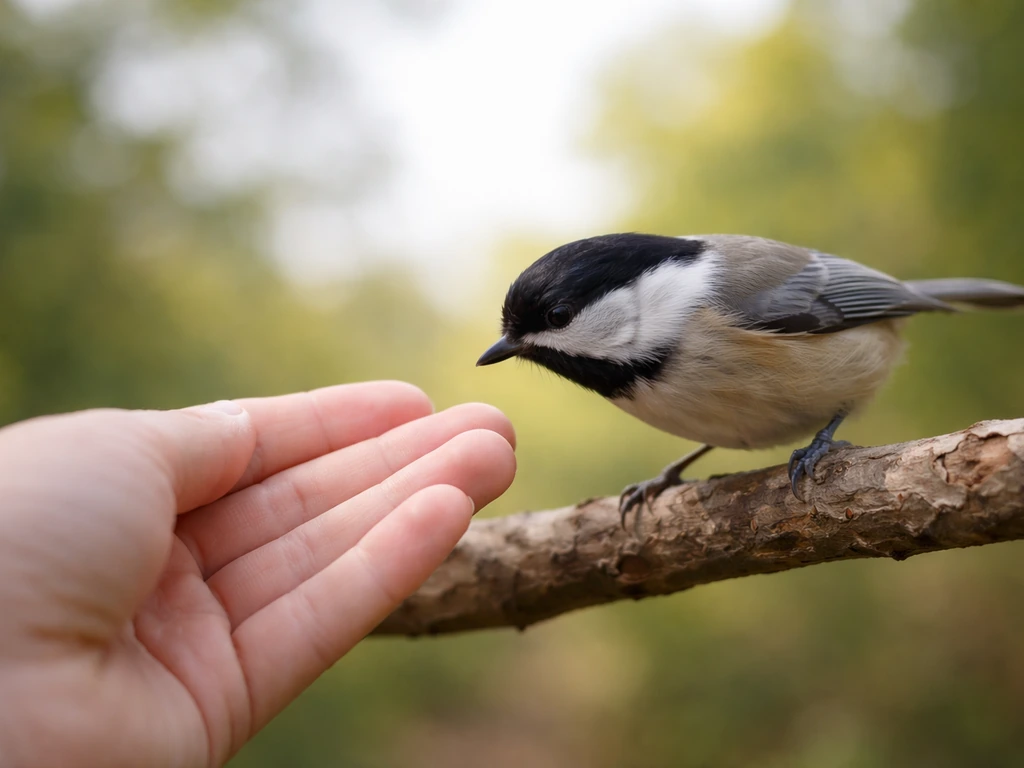
When a bird touches you, it almost always comes down to one of two things: a natural, behavioral reason the bird made contact, or a moment that feels significant enough to carry meaning. Both can be true at the same time. First, wash your hands with soap and water, check for any scratches or broken skin, and take a breath. Then, when you're settled, you can explore what the encounter might mean spiritually, symbolically, or culturally, depending on what resonates with you.
What Does It Mean When a Bird Touches You and What to Do

Maya Hartwell
3 May 2026
Do This Right Now: Practical Steps After a Bird Touches You

Before you look up omens or symbolism, take care of yourself physically. Bird contact, even a brief one, can involve feather dust, dried secretions, or droppings you didn't notice. The CDC is clear that you should always wash your hands thoroughly with soap and water after contact with wild birds. If soap and water aren't available, use an alcohol-based hand sanitizer as a temporary measure until you can get to a sink.
Avoid touching your eyes, mouth, or nose before you've washed up, because that hand-to-face route is one of the main ways bird-related pathogens enter the body. If the bird made any contact with your face, rinse gently with clean water.
If the bird scratched or broke your skin, treat it more seriously. Johns Hopkins Medicine recommends washing any bite or scratch wound with soap and water for at least 5 minutes under running water from a faucet. The WHO goes even further for deeper wounds, recommending thorough washing and flushing for approximately 15 minutes. After washing, apply an antiseptic. If the wound is deep, the bird was behaving erratically, or you're unsure about your tetanus status, get it checked by a doctor.
- Wash hands with soap and water immediately, even if contact seemed minor
- Don't touch your face before washing
- If skin was broken, wash the wound under running water for at least 5 minutes and apply antiseptic
- Seek medical advice for deep scratches, bites, or if the bird seemed sick or disoriented
- Watch for flu-like symptoms in the days following: fever, cough, headache, or chest pain can appear 3 to 17 days after exposure to certain bird-related pathogens like histoplasmosis or psittacosis
Most casual bird contacts, a robin landing on your shoulder, a pigeon brushing past your arm, are low risk. But it's always worth a quick hygiene check before you move on to the more interesting question of what it might mean.
Why Did the Bird Actually Touch You? Natural Reasons First
Birds don't usually make contact with humans by accident. There's almost always a behavioral reason, and knowing it helps you interpret the encounter more accurately, whether you're leaning toward the practical or the spiritual.
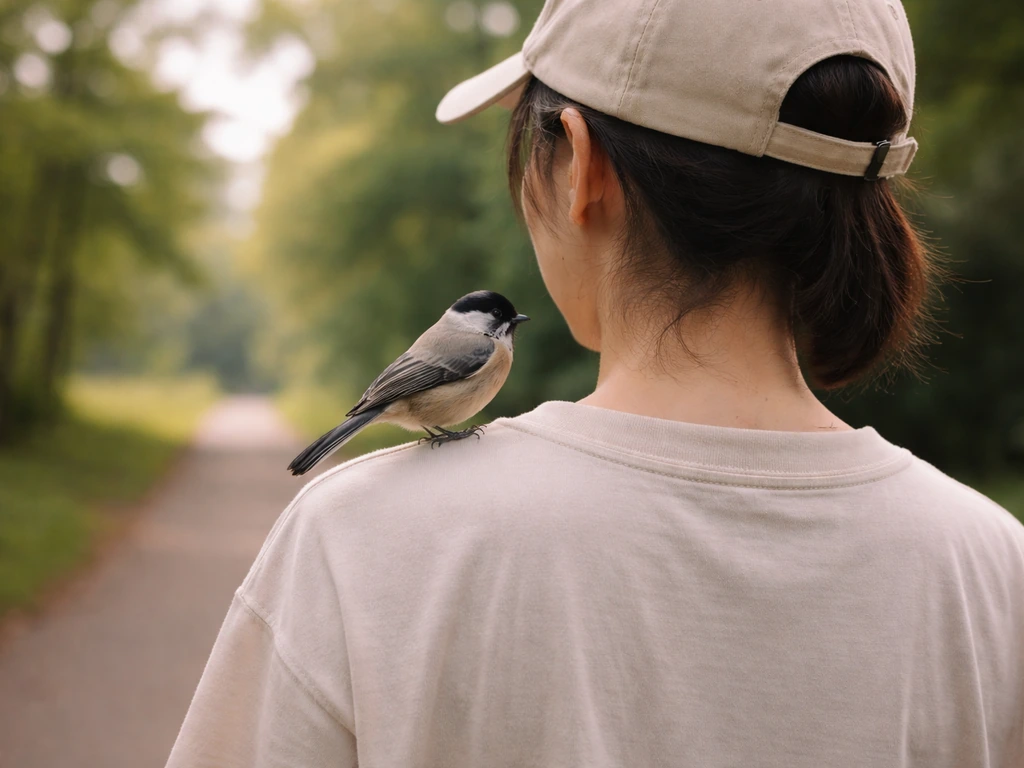
- Seeking a perch: Birds constantly look for stable footing. If you were standing still, you were essentially a convenient branch. This is especially common with small songbirds and domesticated or semi-tame birds in parks.
- Curiosity: Some species, like corvids and chickadees, are genuinely inquisitive and will investigate unfamiliar objects and people. Landing on you might simply mean you caught their attention.
- Nest or fledgling defense: If a bird bumped or struck you from behind, especially during spring and summer, it was almost certainly protecting nearby eggs or chicks. The U.S. Fish and Wildlife Service notes that defensive birds may posture aggressively and even attack the tallest object in their territory.
- Food association: If you were eating, holding something shiny, or near a feeding area, a bird may have made contact while investigating a potential food source.
- Disorientation or injury: A bird that flew directly into you without veering may have been startled, temporarily blinded by sunlight, or unwell. A disoriented bird making unusual contact is worth watching from a safe distance before assuming spiritual significance.
- Weather and migration: During migration or before a storm, birds sometimes behave unusually, landing in unexpected places and on unexpected surfaces, including people.
The context matters enormously. A gentle landing on your outstretched hand reads differently than a hawk grazing your shoulder mid-flight, which reads differently than a nesting robin dive-bombing your head every time you walk past the garden gate. Species, season, and setting all shape what's actually happening.
What It Might Mean: Spiritual and Symbolic Interpretations
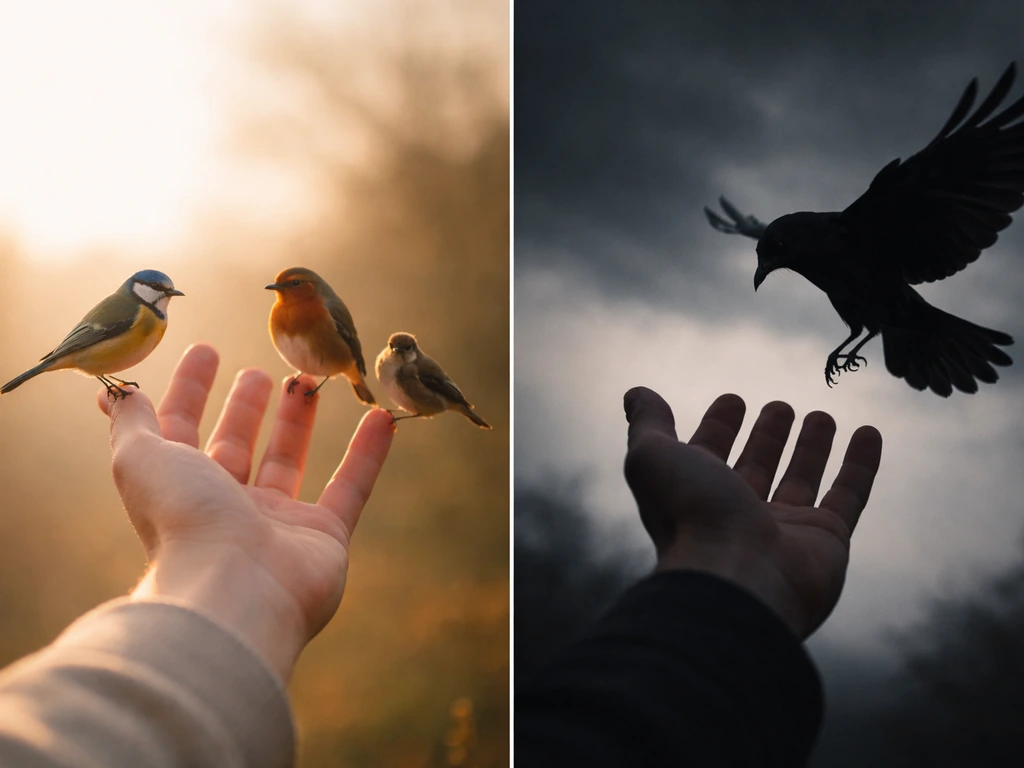
Across cultures and centuries, birds touching or landing on a person has been read as far more than coincidence. The interpretations split roughly into two camps: positive, message-bearing encounters and cautionary or warning-themed ones. Neither cancels the other out, and what feels right to you personally is part of the meaning.
Positive and Uplifting Meanings
In many traditions, a bird choosing to land on or touch a person is seen as a blessing or a sign of being chosen. The idea is that wild creatures are attuned to energy and spiritual openness, and if a bird settles on you voluntarily, it may reflect something about the state you're in: calm, receptive, or carrying a frequency worth visiting. Some interpret it as a message from a deceased loved one, particularly when the encounter involves a species that had personal significance to someone who has passed. The feeling of being touched by something more than just a bird can be powerful and shouldn't be dismissed.
- A gentle landing is widely read as a sign of trust, peace, or spiritual alignment
- Many people interpret unexpected bird contact during grief as a visit from a loved one in spirit
- Birds landing on the hand or shoulder are often seen as omens of incoming good news or positive change
- Some traditions connect bird contact to heightened intuition or a call to pay attention to something in your life
- A bird touching you before a significant decision is sometimes read as confirmation or encouragement
Cautionary and Warning Themes
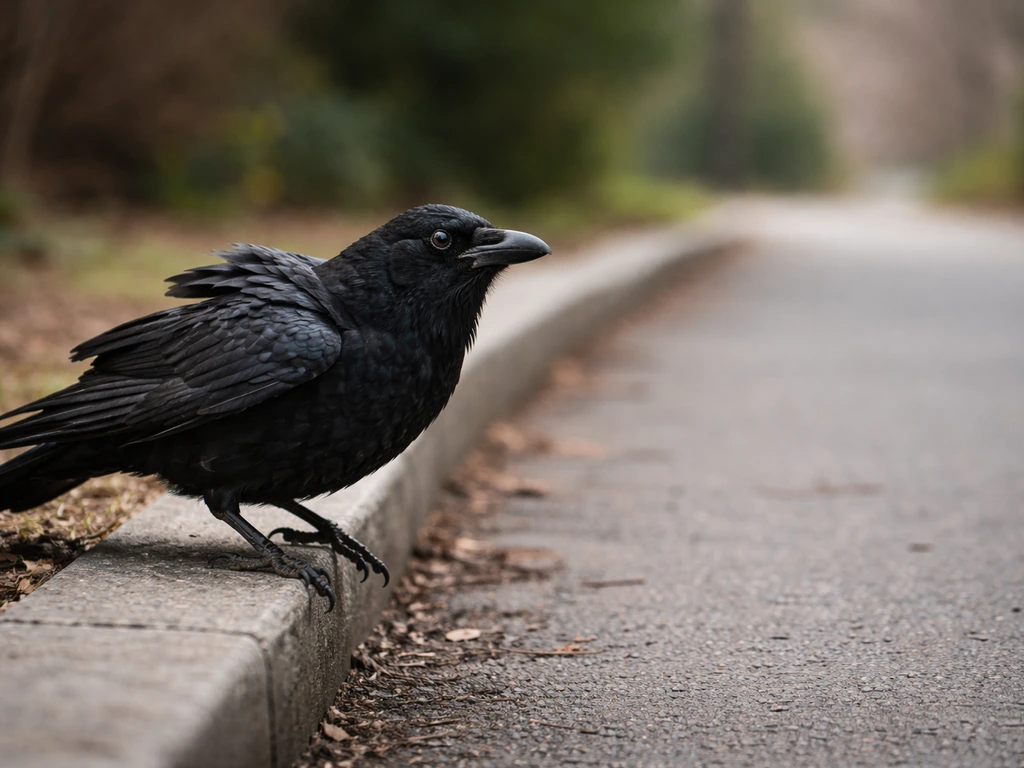
Not every interpretation is entirely rosy. In some folklore traditions, a bird striking you unexpectedly, particularly a dark-feathered species like a crow or raven, is read as a warning to slow down, pay attention, or prepare for a period of transition. This doesn't necessarily mean something bad is coming. Transition and change aren't inherently negative. But these frameworks do treat the encounter as a nudge: something in your life may need addressing. A bird attacking you near its nest, while behaviorally explainable, has been read symbolically as a reminder to protect what matters to you or to examine whether you're encroaching somewhere you shouldn't be.
The honest answer is that cautionary readings depend heavily on the species, the manner of contact, and the emotional state you bring to the moment. If the encounter felt alarming, sit with that feeling rather than rushing to rationalize it away. Your instinctive response is often useful data.
Biblical and Faith-Based Perspectives on Birds as Signs
Birds appear throughout the Bible as instruments of divine communication and symbols of God's attentiveness. In Matthew 10:29-31, Jesus points to sparrows, the most ordinary of birds, and says that not even one falls without God's awareness. The implication is that if God notes the sparrow, you are even more seen and cared for. A bird encounter, in this reading, isn't about the bird itself but about the reminder it carries: you are not overlooked.
Genesis 8:7-12 gives us the raven and the dove sent out from Noah's ark, birds used as messengers to test conditions and bring news of restoration. The dove returning with an olive branch is one of the most enduring images of peace and divine promise in Western tradition. For Christians who see meaning in bird encounters, these biblical touchstones matter: the bird may function as a reminder of hope, care, or a message of peace arriving at the right moment.
In Islam, the framework is notably different. Islamic teaching cautions against "tiyarah," which is treating bird behavior as an omen that foretells fate. Hadith explicitly discourages this kind of superstitious interpretation, favoring optimism and trust in God over reading bird signs as deterministic messages. A bird touching you in an Islamic framework would more naturally prompt gratitude for the beauty of creation than a search for hidden meaning.
Jewish tradition also records birds in biblical folklore, though rabbinic interpretation generally discourages divination and omen-reading. Across these Abrahamic traditions, the through-line is similar: birds point toward the Creator rather than serving as autonomous messengers with predictive power.
What Cultures and Folklore Say About Bird Contact
Outside of formal religion, folk traditions worldwide have developed rich, specific systems for reading bird encounters. These vary enormously by species, region, and circumstance, which is worth keeping in mind before applying any single framework to your experience.
In Celtic traditions, birds were seen as messengers between the living world and the Otherworld. A bird making deliberate contact was often interpreted as a communication from an ancestor or a spirit guide. The wren, the robin, and the raven each carried distinct meanings in this tradition, with the robin especially connected to the souls of the departed.
East Asian traditions also attach meaning to specific species. In Korea, the magpie is celebrated as a bird of great good fortune, associated with prosperity and positive developments. A magpie encounter, including physical contact, would typically be welcomed as an auspicious sign. British folklore takes a more number-based approach: the nursery rhyme "One for Sorrow" assigns luck or misfortune to magpies based on how many you see at once, showing how even the same bird can carry different weight depending on circumstance.
One widely shared piece of folk wisdom, documented by Audubon, is that a bird leaving droppings on you is actually a sign of good luck. This may seem counterintuitive, but the logic follows a long tradition of finding fortune in unexpected disruption. If you're curious about the specific meaning attached to that kind of bird contact, it has its own interpretive tradition worth exploring separately.
Indigenous traditions across North America, Australia, and Africa generally view birds as deeply integrated into the spiritual ecosystem, carrying messages between human and non-human realms. A bird making physical contact in many of these frameworks would be treated as a significant communication requiring quiet reflection rather than an instant interpretation.
| Tradition | General Interpretation of Bird Contact | Key Nuance |
|---|---|---|
| Celtic folklore | Messenger from the Otherworld or an ancestor | Species matters greatly; robins and wrens carry specific meanings |
| Christianity (biblical) | Reminder of God's care and attention | The bird points toward the divine, not itself as an omen |
| Islam | Beauty of creation; omens discouraged | Treat with gratitude, not superstitious interpretation |
| Korean/East Asian | Good fortune, especially magpies | Species-specific; context and number can shift meaning |
| British folklore | Mixed; number and species dependent | Magpie rhyme shows how circumstance changes the reading |
| Indigenous traditions (various) | Spiritual communication requiring reflection | Deeply tied to local species and relational context |
| General Western folklore | Often positive, especially droppings as luck | Droppings contact is widely read as a lucky omen |
When the Meaning Question Should Wait: Health, Safety, and Emotional Wellbeing
There are situations where pausing on symbolism and prioritizing your wellbeing is the right call. If a bird broke your skin, monitor the wound and get medical advice. Psittacosis, caused by Chlamydophila psittaci, can develop 5 to 14 days after contact with infected bird secretions. The CDC reports that the incubation period for psittacosis is typically 5 to 14 days. Histoplasmosis symptoms can appear 3 to 17 days after breathing in fungal spores from environments with bird or bat droppings. Neither of these is common from a single brief encounter, but if you develop fever, cough, chest pain, or malaise in the weeks following significant bird contact, mention the encounter to your doctor.
If the encounter triggered persistent fear, anxiety, or intrusive thoughts that aren't fading, that's worth addressing directly rather than burying under symbolic interpretation. Healthline notes that intrusive thoughts themselves don't carry inherent meaning, but when they persistently interfere with daily functioning, professional support is genuinely useful. NIMH recognizes that OCD and anxiety disorders can latch onto unexpected events and loop them into distressing thought patterns. A bird touching you is not a curse, and if part of you can't stop worrying that it might be, talking to a therapist is a practical and sensible step.
Finally, for those who are grieving: bird encounters, including physical contact, are among the most commonly reported experiences people describe as feeling like a sign from someone who has passed. If a bird touched you during or after a period of loss and the moment felt meaningful, trust that feeling without needing to defend it to anyone. You don't have to choose between the behavioral explanation and the personal significance. Both can sit alongside each other comfortably.
How the Type of Contact Shapes the Meaning
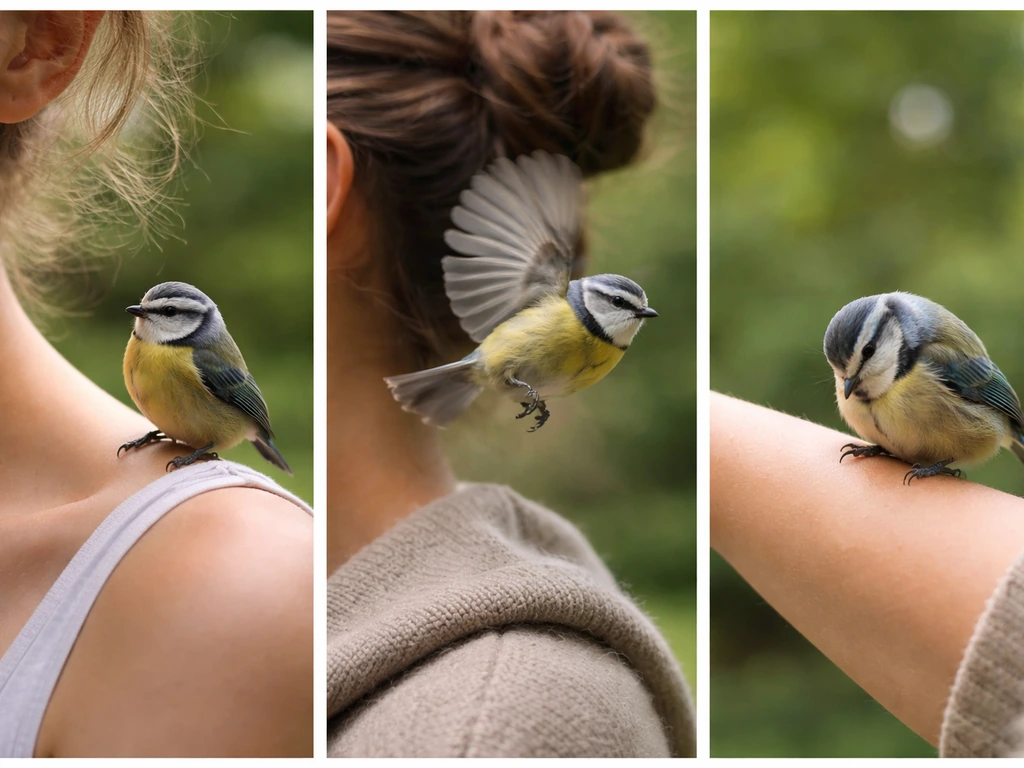
Not all bird contact is the same, and being specific about what actually happened helps you find the interpretation that fits. A bird gently landing on your shoulder or hand carries entirely different energy than a bird striking you mid-flight. A bird that lingered, made eye contact, or returned multiple times is often read as more intentional across spiritual traditions than one that briefly brushed past you while flying. If the bird’s behavior felt like it was specifically “checking” you, you may be wondering what it means when a bird blinks at you what does it mean when a bird blinks at you.
If the bird preened you, that's its own distinct category of behavior with its own symbolic weight, as preening is a behavior birds typically reserve for those they trust and feel bonded to. Similarly, a bird bite carries both a practical response protocol and its own interpretive tradition. So if you are wondering what it means when a bird bites you, consider both the immediate safety steps and the personal symbolism you connect with. And if the encounter involved the bird leaving droppings on you, folklore has something very specific to say about that. Each of these variations in contact tells a slightly different story, practically and symbolically.
What do you take from the moment you're sitting with right now? That question is usually the most useful place to start. The encounter found you for some reason, whether that's behavioral, symbolic, or simply a reminder to pay attention to the world around you. Wash your hands, tend to any wounds, and then take a quiet moment to notice what the experience stirred in you. If your bird sleeps on you, many people interpret that as a sign of trust and comfort in your presence, which can have its own spiritual meaning what does it mean when your bird sleeps on you. That internal response is often where the real meaning lives.
FAQ
Does it mean something bad if the bird touched me and I felt chills or dread afterward?
Your bodily reaction can be a normal stress response, not a prediction. Use the same priority order as the article (hygiene first, then assess any injury). If the fear sticks, especially with intrusive images or compulsive checking, it may be more helpful to treat it as anxiety than as an omen.
What if the bird touched my clothes instead of my skin, and I already washed my hands after?
If it only contacted fabric, the main risk is usually transfer from your hands to your face. After washing, you can remove the soiled clothing and launder normally. If droppings got onto the fabric, pre-treating with detergent before washing can help reduce lingering residue.
How long should I wait before deciding whether I need to see a doctor after a scratch or bite?
If skin was broken, don’t wait for symptoms. Get medical advice promptly, especially if the wound is deep, bleeding heavily, or you are not up to date on tetanus. Also seek care sooner if you notice spreading redness, increasing pain, pus, or swelling in the days after the contact.
What should I do if a bird hit my face, like my eyes or mouth, and I was unable to rinse right away?
Rinse as soon as possible with clean water and avoid rubbing your eyes. Wash hands again before touching your face. If the bird contacted your eye directly, lastsingly irritated, or vision feels changed, it’s safer to get same-day medical evaluation.
Can a bird touching me be “intentional” if it flew away quickly?
Not necessarily. Birds often make brief contacts for ordinary reasons like landing, balance, foraging, or mistaking motion for a perch. What makes an encounter feel more intentional in symbolic readings is usually repeated or deliberate behavior (like returning to the same spot), not a single moment.
Is it different if the bird was sick, acting strangely, or approached people more than usual?
Yes, practically. Erratic or unusually tame behavior can increase the chance of contamination and the need for extra caution. Keep distance, avoid handling the bird, and treat any contact as higher stakes until you have confirmed you have no broken skin or persistent symptoms.
What does it mean if a bird keeps touching me repeatedly in the same place over days?
From a behavioral angle, repeated visits often point to a specific attractant like food, nesting nearby, or a consistent shelter spot. If the contact was gentle and not involving injury, you can still explore symbolism, but it helps to also check the environment, for example, whether you are leaving accessible crumbs or water.
How can I tell the difference between “meaningful” symbolism and an anxiety loop?
A helpful test is whether the interpretation reduces your urge to monitor and obsess. If you find yourself replaying the event, googling nonstop, or needing constant reassurance, that pattern fits an anxiety or OCD-like loop more than a grounded reflection. In that case, the practical next step is support from a clinician.
Should I avoid meaning altogether if I’m not religious or don’t want spiritual interpretations?
No. The article’s core practical steps apply regardless of beliefs. If you want a secular framework, focus on meaning in terms of attention and emotion, for example, “I need to slow down,” “I noticed my surroundings,” or “I felt comfort or alertness,” without treating it as predictive.
What if the bird left droppings on me, but I’m unsure whether it touched my mouth or eyes?
Assume there was potential hand-to-face transfer and follow the same hygiene sequence: wash hands thoroughly, don’t rub eyes or touch your face until you have. Clean the area on your skin or clothing, and if any droppings contacted your eye or you develop eye irritation, get medical advice.
Next Article
What Does It Mean When a Bird Bites You?
Understand why a bird bites, what it means symbolically, and get first-aid steps and prevention tips.