
Stay calm, move your pets and kids out of the room, and open one exterior door or window while turning off all the lights inside. That single combination, one lit exit and a dark room, is your fastest, safest way to get a bird out of your house without touching it or stressing it further. Most birds will find that light and fly straight out within minutes. Everything else in this guide builds on that foundation.
A Bird Is in My House: Safe Steps to Get It Out and Prevent It

Maya Hartwell
26 Apr 2026
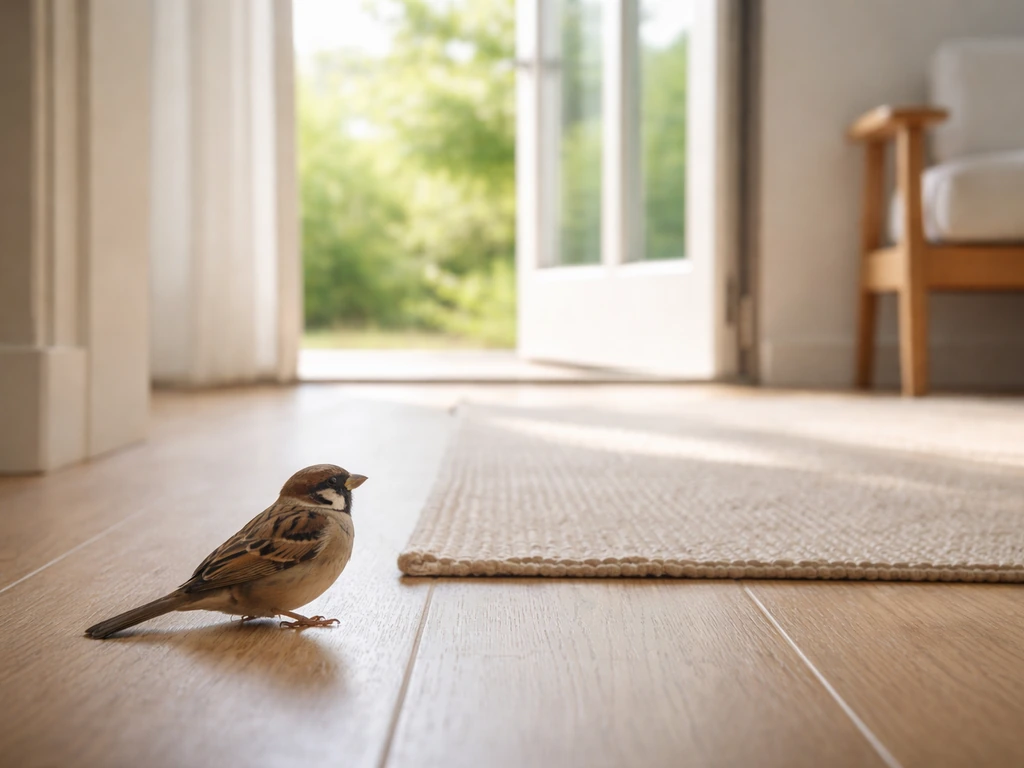
First things first: keep everyone safe
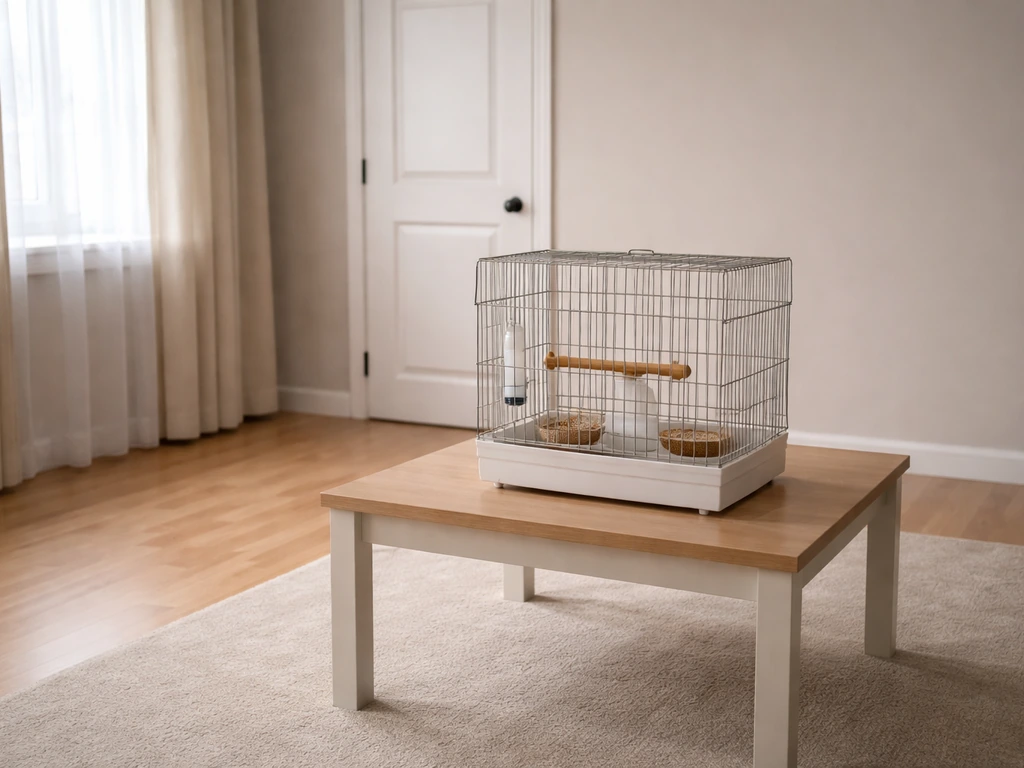
Before you do anything else, remove pets and children from the room. A cat or dog trying to chase a panicked bird will almost certainly injure it, and the extra commotion makes the whole situation worse for everyone. Close interior doors to contain the bird to one room if you can. The smaller the space you're working with, the easier and faster this goes.
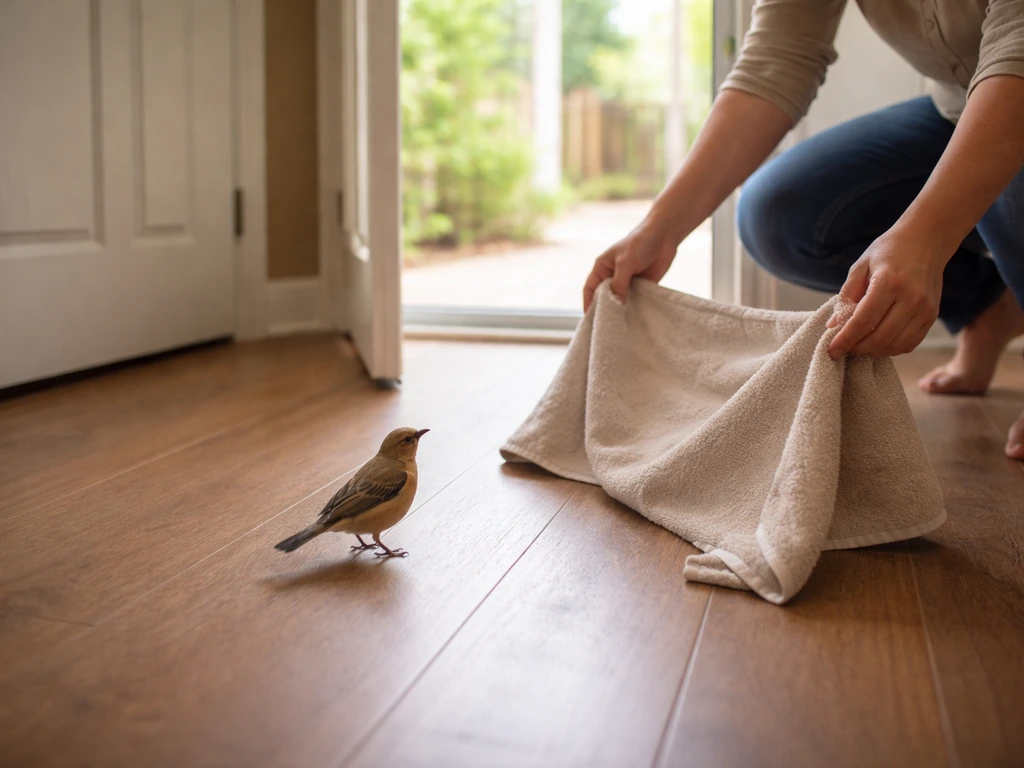
Don't try to grab the bird with your bare hands, and resist the urge to throw a towel or blanket over it if it's still flying. The RSPCA specifically warns against this because it can worsen hidden injuries. If the bird is perched and clearly injured, that's a different situation handled later in this guide. For now, assume it just needs a clear, calm path to the outside.
- Remove all pets and children from the room immediately
- Close interior doors to limit the bird's range to one room
- Do not chase the bird or wave things at it
- Do not try to grab it or throw fabric over it while it's still moving
- Wash your hands thoroughly after any contact with the bird, its droppings, or surfaces it touched
How did it get in? Finding the entry point
Before you seal anything up later, you need to understand how it got in. If you’re wondering how a bird got in your house in the first place, the entry point is the key to everything that follows. Watch where the bird keeps returning to, whether that's a window, a vent opening, a fireplace, or a high corner. Birds often return toward the point they entered because that's the last familiar direction they came from. That behavior tells you a lot.
Common entry points include open or uncapped chimneys, damaged or missing vent screens, open windows without screens, and doors left ajar during active bird season. If you also want the bird coming down chimney meaning, see the related interpretation here open or uncapped chimneys. If you're hearing sounds from your fireplace or noticing soot-covered wing prints, the chimney is almost certainly involved.
If you suspect you can hear a bird in my chimney, treat the chimney like the likely entry point and focus on a clear, calm route out first i can hear a bird in my chimney. Birds that enter through a chimney rarely get out on their own because they can't fly upward in a narrow shaft, so that scenario almost always requires a hands-on approach or a professional.
If you're not sure whether the issue is the chimney specifically, or whether a bird is stuck somewhere in the walls, the sibling problems of a bird in the chimney or a bird in the wall are worth thinking through separately, since each has its own entry logic and removal strategy.
- Open or uncapped chimney flues
- Broken, missing, or corroded vent screens on soffits, attic vents, or dryer vents
- Open windows or doors without screens, especially during spring and fall migration
- Damaged fascia boards or gaps around roofline features
- Skylights or sun tunnels left open or cracked
Step-by-step: get the bird out safely right now
This is the core plan. Follow these steps in order and give each one real time to work before escalating.
- Clear the room of pets and children and close all interior doors to limit the bird to one space.
- Identify the best external exit, ideally a door or window that opens directly outside, not into another room.
- Open that single exit as wide as possible.
- Turn off every interior light in the room, including lamps, screens, and overhead lights. Cover skylights if you can.
- Leave the room entirely and give the bird 15 to 30 minutes of quiet. Most birds will navigate toward the single light source and fly out.
- If the bird hasn't moved after 30 minutes, return calmly and gently guide it toward the open exit by moving slowly from the opposite side of the room. Do not rush it.
- If a bird is cornered and not flying, you can gently place a small box or container over it, slide a piece of cardboard underneath, and carry it outside to release it at ground level in a sheltered spot.
- Once the bird is out, close the exit and begin your inspection for how it got in.
The light-and-dark method works because birds are strongly attracted to natural light and instinctively move toward it. The San Diego Humane Society and RSPCA both emphasize this as the primary technique: one lit exit, everything else dark. Giving the bird quiet time without human presence is often the difference between a five-minute fix and an hour of frustration.
Stopping it from happening again
Once the bird is out and you've identified the likely entry point, sealing it properly is the priority. If the bird keeps coming back, the most common reason is that the entry point was left open or not fully sealed. A bird that found its way in once will likely try again, and during nesting season, the problem can escalate quickly if a pair decides your attic or eaves are a good home.
Sealing gaps and vents
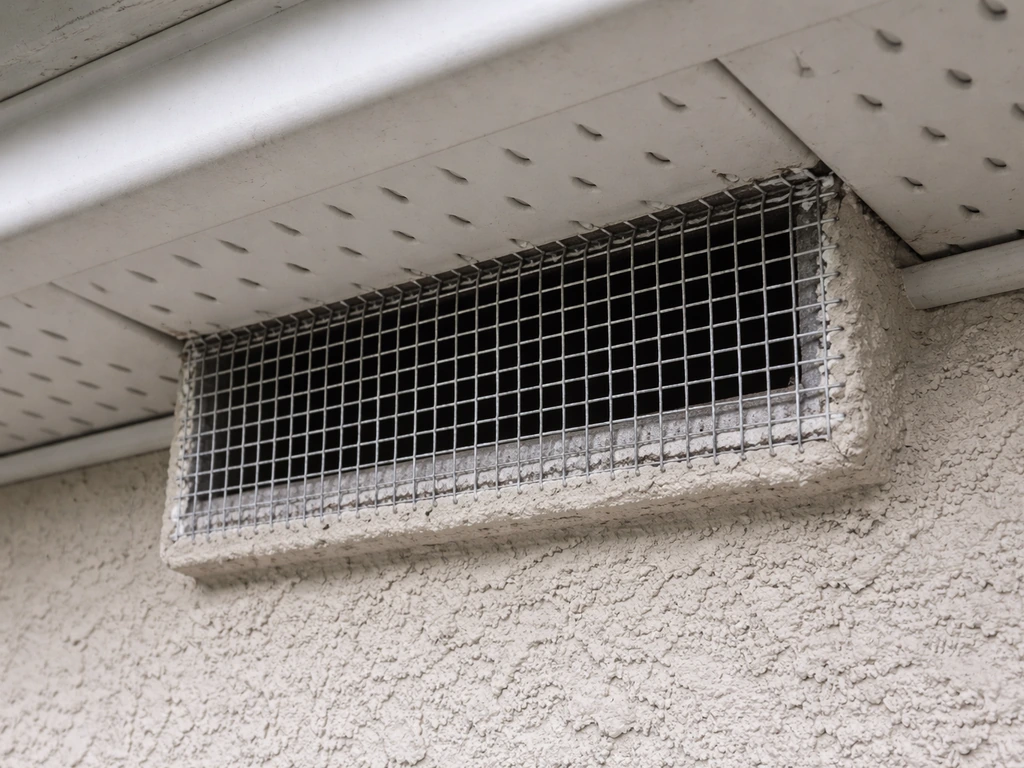
For vents and openings, use corrosion-proof wire mesh with holes no larger than 1/4 inch. Larger mesh lets small birds through. Cover soffit vents, dryer exhaust vents (carefully, so airflow isn't blocked), attic vents, and any visible gaps in the roofline. Cap your chimney with a purpose-built chimney cap that has a wire mesh surround. These are inexpensive and eliminate the problem entirely.
Windows and glass
Birds fly into windows because they see a reflection of sky or trees and don't register the glass as a barrier. External screens and window films that break up the reflective surface are the most effective fixes. If you have a bird feeder, place it within 3 feet of a window rather than farther away. At that close range, birds don't build up enough speed to injure themselves if they do hit the glass.
Lighting at night
Bright indoor lights at night, especially during spring and fall migration, can disorient birds flying overhead and draw them toward your home. BirdCast’s “Turn Lights Out” guidance explains migration-period “lights out” practices and offers date ranges/alerts to help reduce disorientation and collisions lights out guidance for migration periods. The Audubon Society's Lights Out program and U.S. Fish and Wildlife Service guidance both recommend turning off unnecessary interior and exterior lights during peak migration periods (roughly March through May and August through November in North America). It's a small habit change that makes a real difference.
Cleaning up droppings and feathers the safe way
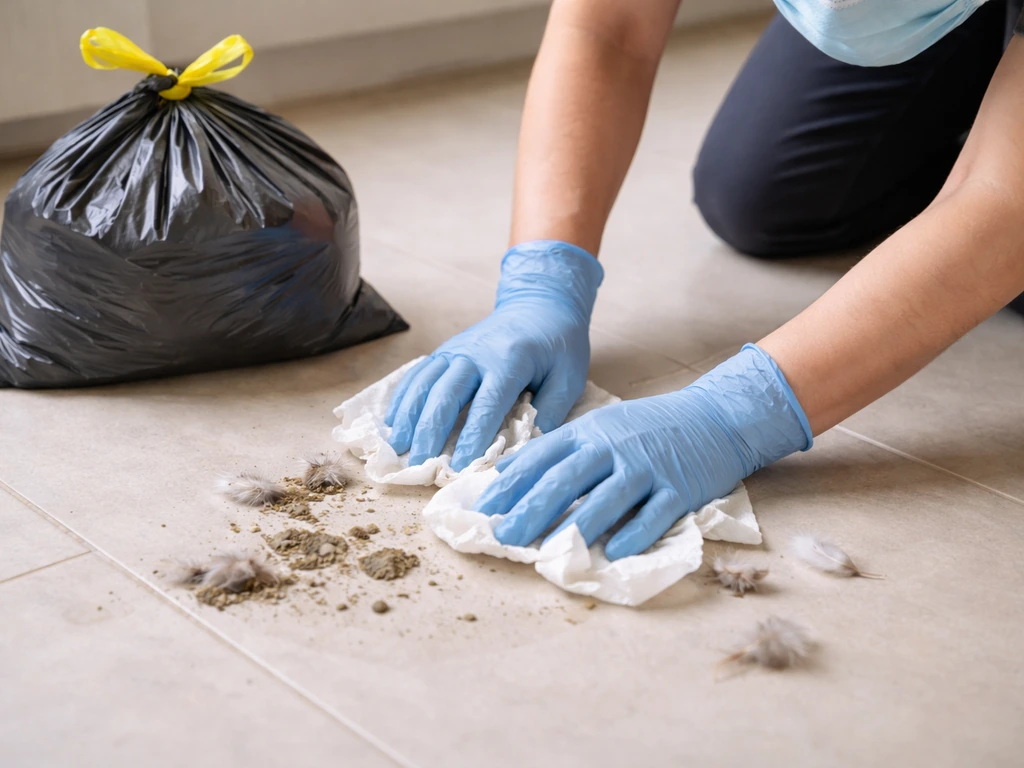
Bird droppings can carry fungi and bacteria that are genuinely hazardous if you disturb them carelessly. The main risks are histoplasmosis, a fungal lung infection from disturbed droppings, and psittacosis, a bacterial infection found in some bird species. Neither of these is common from a single indoor bird visit, but the cleanup still deserves care.
- Never sweep or vacuum dry droppings. This sends spores and particles into the air. The CDC specifically warns against dry sweeping for this reason.
- Wet the droppings first with water or a disinfectant spray before wiping them up. This suppresses dust and reduces inhalation risk.
- Wear disposable gloves and, if there's more than a small amount, an N95 respirator.
- Use paper towels or disposable cloths and bag everything securely before disposal.
- Clean the surface afterward with a disinfectant appropriate for the material.
- Wash your hands thoroughly with soap and water when finished, even if you wore gloves.
- If the bird was in your home for an extended period and left significant droppings across a large area, consider calling a professional cleaning service. The CDC notes that large accumulations of bird droppings may warrant professional hazardous-waste cleanup.
Feathers pose minimal risk for most people but should still be handled with gloves and disposed of in a sealed bag. Avoid touching your face during cleanup.
What it might mean: the spiritual side of a bird in your home
Once the bird is safely out and you've caught your breath, it's natural to wonder whether the whole encounter means something. Across dozens of traditions and cultures, a bird entering a home has carried symbolic weight for centuries. There's no single universal interpretation, but there are threads worth exploring if this kind of reflection resonates with you.
Omens of change and new beginnings
Many folklore traditions, particularly in Western European and Celtic contexts, treat a bird flying into a home as a message that change is coming. Some older British and Irish traditions framed it as a warning, while others saw it as a herald of good news or a visiting spirit. In many contemporary metaphysical frameworks, the emphasis has shifted toward the positive: a bird entering your space is seen as a prompt to pay attention to something new unfolding in your life.
Biblical and Christian symbolism
Birds carry deep symbolic resonance in biblical tradition. The dove in particular is one of the most enduring spiritual symbols in both the Hebrew Bible and early Christianity, associated with the Holy Spirit, peace, and divine presence. While scripture doesn't specifically address birds entering homes as omens, the broader tradition of reading bird encounters as spiritually meaningful has roots that run genuinely deep. A bird appearing unexpectedly in your domestic space can feel, to those inclined toward this tradition, like a nudge toward prayer or quiet reflection.
A messenger asking for gentleness
Across many metaphysical interpretations, the consistent thread isn't doom or fortune, it's an invitation to respond with care. The way you handle a frightened, disoriented creature in your home says something. Many spiritual writers note that how we treat vulnerable living things, especially unexpectedly, reflects something about our inner state. The bird's visit, then, becomes a kind of mirror.
What might you take from this particular encounter? Was it a moment of panic or calm? Did you respond with patience? The meaning, if there is one, may be less about the species or direction of flight and more about what the experience surfaced in you.
When to call a professional (and when to worry)
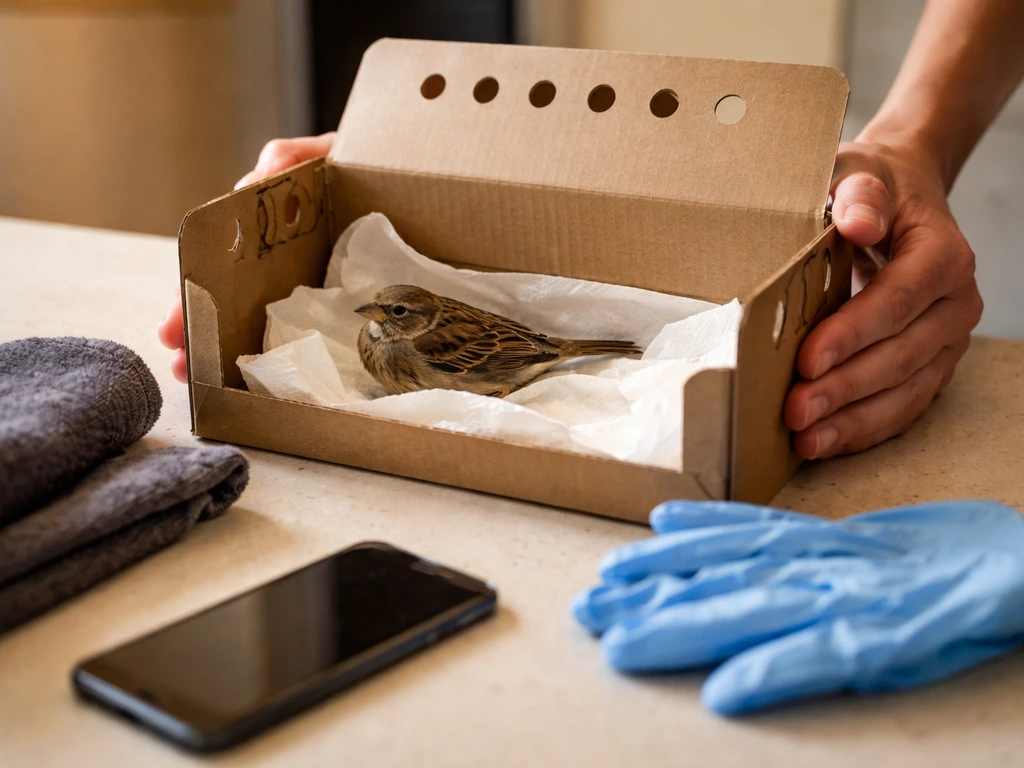
Most indoor bird situations resolve themselves with the light-and-dark method in under an hour. But there are clear signs that you need outside help.
| Situation | What to do |
|---|---|
| Bird is bleeding, has a visibly broken wing, or cannot fly | Contact a licensed wildlife rehabilitator. Audubon recommends this for any bird with obvious injuries. Do not attempt to treat it yourself. |
| Bird has been in the house for several hours and won't leave | Call your local wildlife authority or a wildlife rehabilitation hotline rather than continuing DIY attempts. |
| Bird entered through the chimney and is trapped in the firebox | Close the damper if the bird is still above it, or if it's in the room, follow the release steps. For birds stuck in the chimney shaft, call a wildlife removal specialist. |
| You suspect the bird is a protected migratory species | Under U.S. federal law, migratory birds are protected and require a federal permit to handle or transport. Contact U.S. Fish and Wildlife Service or a licensed rehabilitator. |
| There are large amounts of droppings left behind | Consider professional hazardous-waste or specialty cleaning rather than DIY cleanup. |
| You or a household member has symptoms after exposure (respiratory issues, fever) | Consult a doctor and mention the bird exposure. Histoplasmosis and psittacosis are both treatable when caught early. |
If you're unsure whether the bird is injured or just disoriented, give it quiet time first. A stunned bird that hit a window often recovers within 30 minutes to an hour if left undisturbed in a safe, sheltered spot. If it hasn't improved after that window, that's your cue to make the call. The U.S. Fish and Wildlife Service advises against attempting to trap or restrain an injured bird before contacting a rehabilitator, because well-intentioned handling can make injuries worse.
The bottom line is this: the bird wants out as much as you want it out. Give it a calm, clear path and most of the time, it will take it. Handle the cleanup carefully, seal the entry point, and if it happened once, take the prevention steps seriously so it doesn't become a recurring situation. The U.S. Fish & Wildlife Service explains that the Migratory Bird Treaty Act prohibits taking protected migratory birds, including capturing or transporting them, without authorization Migratory Bird Treaty Act (MBTA) prohibits taking protected migratory birds without authorization. And if you find yourself still thinking about the encounter later, sitting with what it might have stirred up in you, that reflection is worth something too.
FAQ
What should I do if the bird is not leaving after 30 to 60 minutes with the light-and-dark method?
Give it additional quiet time only if it looks alert and is moving or repositioning. If it stays grounded, appears weak, or has not improved at all after about an hour, treat it as possibly injured and contact a local wildlife rehabilitator instead of trying to trap or restrain it yourself.
I can see the bird but it keeps landing back on the same spot. Does that mean something specific is still open?
Usually, yes. Repeated returns often indicate a nearby entry point that is still accessible, such as a vent edge, a partially open window, a chimney without a proper cap, or a gap around the roofline. Focus your sealing and exclusion work on the exact direction it repeatedly chooses rather than sealing random places.
Can I use a fan, flashlight, or loud noise to move the bird out faster?
Avoid loud noises or chasing. A fan can accidentally blow it deeper into a room or closer to a wall it cannot escape from. Stick to quiet, reduce distractions, and use controlled lighting (one lit exit, other areas dark) to guide it.
What if the bird is trapped somewhere I cannot reach, like a ceiling vent or a high corner?
Do not climb or attempt to open structures while the bird is inside. Use the same light-and-dark approach for any reachable exit first, then call a wildlife professional to access the area safely, especially if the bird is in a duct, wall cavity, or inaccessible attic space.
Is it okay to close doors and wait, or should I keep the exit path open the whole time?
Close interior doors to keep the bird contained, but keep at least one clear exit route open and reachable (one exterior door or window). If you close the bird into a room without a path out, the light strategy cannot work and it may become more stressed.
How should I handle cleanup if I see droppings but no bird now?
Treat the area as potentially contaminated before touching it. Ventilate the room, wear gloves, dampen droppings before wiping to reduce dust, and bag debris sealed. Avoid sweeping dry material and do not shake feathers or nests.
Are there species-specific risks I should know about?
Yes. Some species can carry illnesses even if the overall chance from a single incident is low. If you were bitten or scratched, if the bird had visible blood, or if you develop fever or breathing symptoms after cleanup, seek medical advice and mention the bird exposure.
What if the bird hit a window and seems stunned, but I am worried it is injured?
Prioritize a calm recovery space rather than immediate handling. Let it rest undisturbed in a sheltered area near an exit. If it does not show clear improvement after roughly 30 minutes to an hour, contact a rehabilitator instead of trying to restrain it.
How do I prevent birds from getting back in without damaging airflow to vents?
For most ventilation openings, use corrosion-proof wire mesh sized to no larger than 1/4 inch. For dryer or other exhaust vents, cover in a way that does not block airflow. If airflow seems reduced or the cover does not fit securely, have an installer confirm the option so you do not create a ventilation or safety problem.
Should I wait to seal the entry point until after the bird is definitely gone for good?
Yes. Do not seal while the bird might still be inside. Once it is out and you have confirmed the bird will not return immediately, then seal and cap the entry point properly, because sealing too early can trap it and make recovery harder.