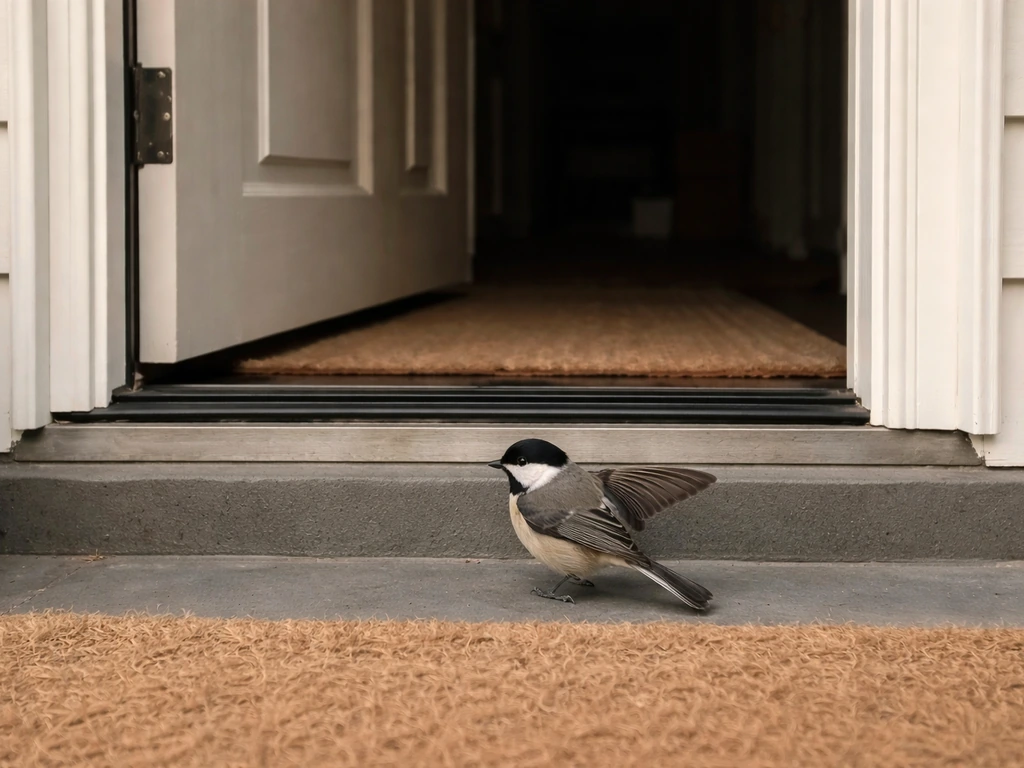
Birds get into attics almost exclusively through small gaps you probably haven't noticed yet: open or damaged soffit vents, missing or cracked roof shingles, unscreened ridge vents, loose gable vents, broken fascia boards, or wherever a pipe or electrical line punches through the roofline. If you are wondering why is a bird trying to get in my house, the answer often comes down to how the bird is finding shelter and access points near the roofline Birds get into attics. Those openings don't have to be large. A sparrow needs only about an inch of clearance, and even a starling can squeeze through a gap the size of a golf ball. Right now, your job is to figure out which opening it used, get the bird out calmly, and close that gap before it happens again. If you need the quick answer to how a bird got in your house, start by locating the exact gap it used and sealing it shut.
How Did a Bird Get in My Attic? Find Entry, Remove Safely

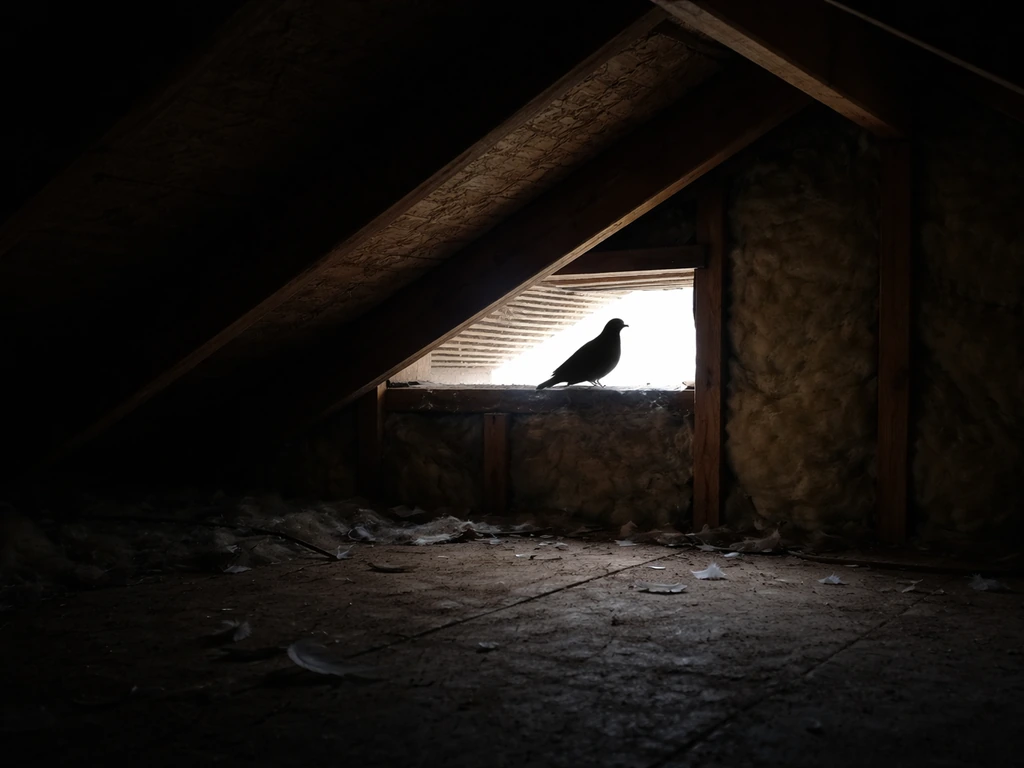
How birds get into attics in the first place
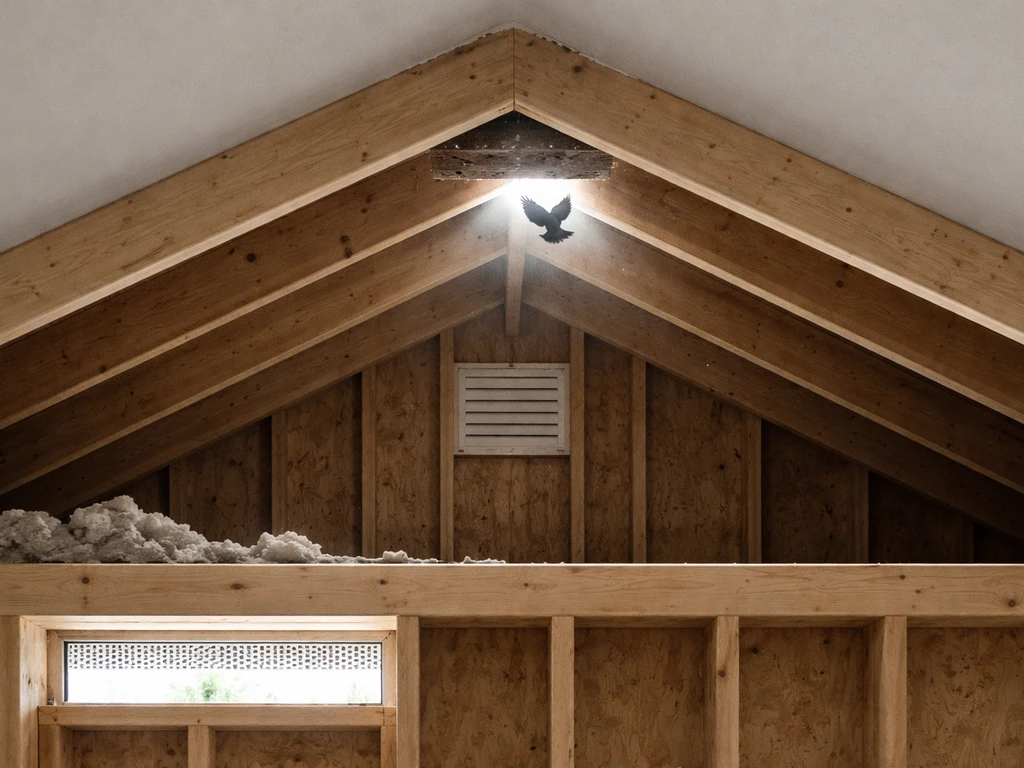
Attics are essentially designed to breathe, which means they're full of intentional openings. The problem is that any opening designed for airflow is also an invitation for a bird looking for a sheltered nesting spot. Soffit vents along the eaves are the single most common entry point. They pull cooler air in from outside while ridge vents at the roof peak push warm air out. If the soffit vent screen is torn, rusted through, or was never properly installed, birds find it immediately. The same goes for gable vents on the triangular end walls of your roof, older homes often have these with mesh that's simply given way over the years.
Beyond the intentional vents, birds also exploit structural gaps that develop over time. Loose or rotted fascia boards create a gap right at the roofline. Missing or shifted shingles leave exposed wood that birds can pry open further. Where plumbing stacks and electrical conduits pass through the roof or into the attic, the surrounding caulk or flashing often cracks and pulls away, leaving a ring-shaped gap. Even a chimney without a proper cap is essentially an open door, a problem closely related to what happens when a bird gets stuck in a chimney rather than an attic, which is a separate situation worth understanding on its own. If you suspect the same kind of situation happened in your chimney, that calls for a different approach than an attic entry bird gets stuck in a chimney.
- Torn or corroded soffit vent screens along the eaves
- Open or unscreened ridge vents near the roof peak
- Damaged or missing gable vent screens
- Gaps around pipe, plumbing, or electrical penetrations through the roofline
- Loose, rotted, or missing fascia boards
- Missing, lifted, or cracked roof shingles exposing the decking
- Uncapped chimneys or deteriorating flashing around chimney bases
- Gaps where dormers or additions meet the main roofline
Reading the clues to find the entry point
Before you go up into the attic or onto the roof, take a few minutes to look for signs that point you toward the right spot. This saves time and tells you whether you're dealing with a single lost bird, a nesting pair, or a longer-term resident. Start at ground level: walk around the house and look up at the soffits, fascia, and gable ends for obvious gaps, discoloration from droppings, or feathers caught at an edge. Then go to the attic itself if you can do so safely.
- Droppings concentrated near one vent or corner — that's usually the entry and roosting zone
- Feathers, especially small flight feathers, stuck around a vent or gap edge
- Nesting material (twigs, dried grass, insulation fibers pulled together) piled near an opening
- Scratching, fluttering, or tapping sounds that seem to come from one specific area rather than moving around
- Daylight visible through a gap when you're in the dark attic — if you can see light, a bird can find that hole
- Disturbed insulation near a vent, suggesting repeated entry over days or weeks
If you hear scratching in a wall rather than a wide-open attic space, that situation is a bit different and might be more like having a bird in a wall cavity. If you think there is a bird in my wall, the safest move is to identify the likely entry gap and plan an exit-based removal bird in a wall. But if the sounds are coming from above and you have access to the attic, focus your search there first. If you specifically hear a bird in your chimney, the approach is similar in goal but different in how you safely clear the flue sounds are coming from above. The combination of droppings and nesting material almost always points directly at the entry gap.
What to do right now: safe removal step by step
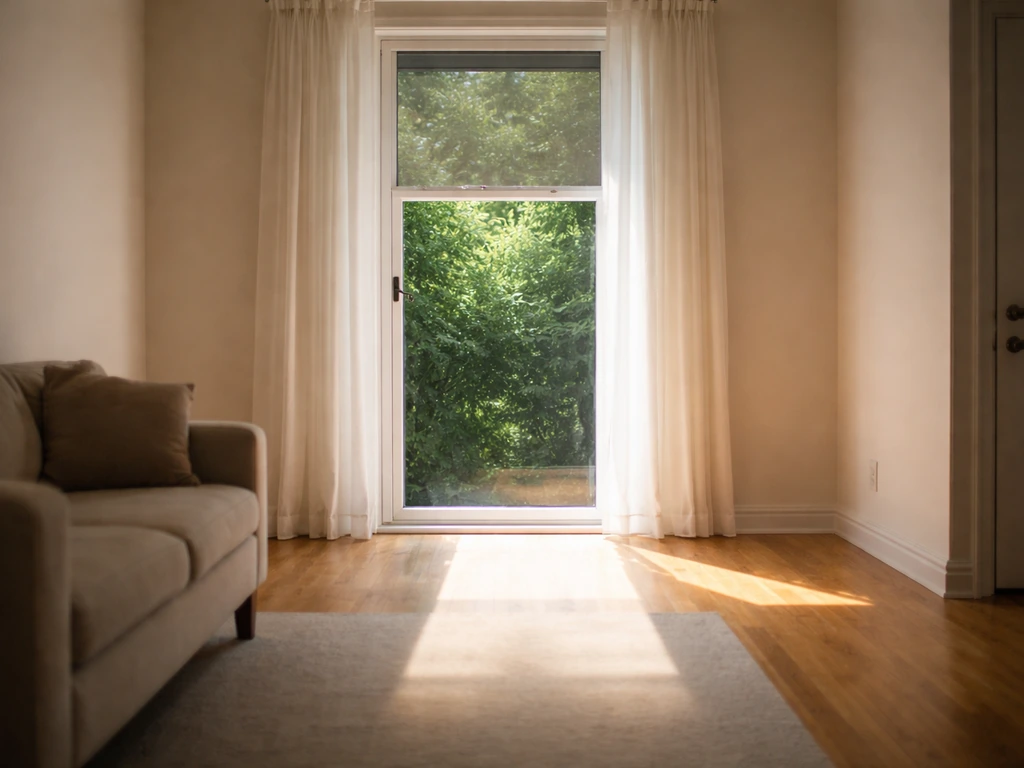
The core principle here is simple: give the bird a clear, obvious exit and get yourself out of its way. If you suspect a bird is in your house right now, focus on getting it a calm, clear exit before you deal with sealing any entry points a bird is in my house. Birds panic when cornered, and a panicked bird flaps hard, which kicks up feather dust, dander, and dried droppings, exactly what you don't want to breathe. Chasing it or trying to grab it makes things worse and stresses the animal unnecessarily.
- Stay calm and move slowly — don't make sudden movements that send the bird into a flapping frenzy
- Identify the entry point or the nearest opening to the outside before doing anything else
- If the attic has a window, gable vent, or roof hatch that opens outward, open it fully — this becomes the exit
- Turn off any attic lights or cover light sources inside so the bird is drawn toward natural daylight at the opening
- Close off any interior hatches or doors between the attic and the living area of the house so the bird can't work its way down
- Leave the attic entirely and give the bird at least two hours to find the exit on its own
- Check back quietly — in most cases the bird will have gone
This approach works because it uses the bird's own instincts. Birds move toward light and open air. If you reduce competition from interior light sources and leave a clear outdoor exit, the bird does the work for you. The Wildlife Humane Exclusion approach backs this up: open the nearest exit, close other exits, reduce interior light, and step back. Give it time.
What not to do
- Don't chase the bird with a net, broom, or box — this causes panic, injury, and spreads contaminated dust
- Don't use glue traps under any circumstances — they cause severe injury and slow suffering, and wildlife organizations strongly advise against them
- Don't use poisons or chemical deterrents on a live bird inside the attic
- Don't seal the entry point while the bird is still inside — you'll trap it
- Don't dry-sweep or vacuum loose droppings during this phase — wait until the bird is out and you're suited up properly
- Don't assume the bird will just leave on its own without confirming the entry gap is open and accessible
Sealing the entry and keeping birds out for good
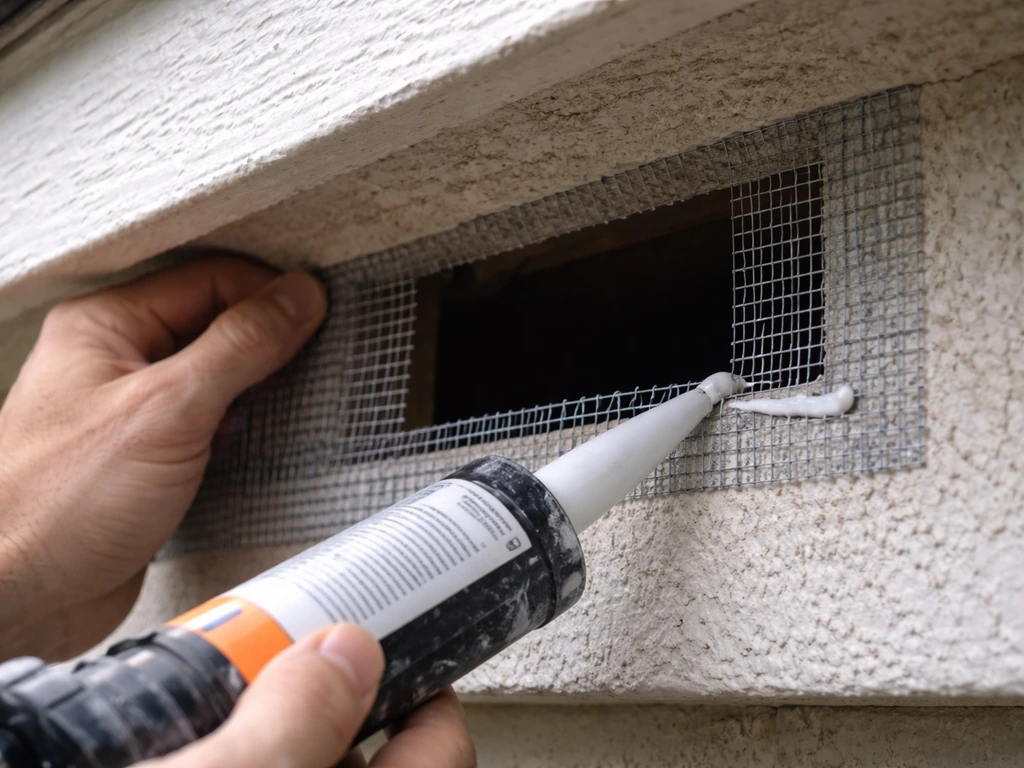
Once the bird is confirmed gone, wait until you're certain no animal remains in the attic before sealing anything. Timing matters here, especially in spring and early summer, you want to avoid sealing birds inside or cutting off a nest with dependent young (more on that below). Once you're clear, work systematically.
For vent openings, the standard recommendation from wildlife exclusion professionals is to use hardware cloth with quarter-inch mesh for birds and bats, or half-inch by half-inch welded wire mesh as a minimum for smaller birds. Standard aluminum window screen isn't durable enough, birds and other animals can push through or tear it. Cut hardware cloth to size, secure it with screws or staples into solid wood framing, and fold the edges under so there are no loose corners to pry open.
For larger structural gaps, like a dropped soffit area, a gap under a knee wall, or an open chase where pipes run through, use a solid material first. Rigid foam board or OSB cut to fit the opening, then sealed at the edges with caulk or mastic, closes the gap properly. Stuffing it with insulation alone isn't enough. The Department of Energy's air-sealing guidance is clear that gaps around soffits and penetrations need both a solid barrier and an edge seal, which happens to also be exactly what keeps birds out.
Walk the full roofline from outside and look at the fascia, soffit panels, and any points where materials meet. Binoculars help for upper sections. Any gap wider than about half an inch needs attention. Don't forget the areas where plumbing vents and electrical conduits exit the roof, those rings around the pipe are a classic neglected spot.
| Entry Point | Best Seal Material | Notes |
|---|---|---|
| Soffit vents | Quarter-inch hardware cloth, secured with screws | Replace torn screens entirely rather than patching |
| Ridge vents | Purpose-built ridge vent covers with integrated mesh baffles | Don't block ventilation entirely — use vented covers |
| Gable vents | Quarter-inch or half-inch hardware cloth inside the vent frame | Existing louvers often need a backing layer of mesh |
| Pipe/electrical penetrations | Solid flashing or collar + caulk/mastic at edges | Check from both inside and outside the attic |
| Loose or rotted fascia | Replace fascia boards + seal gap with caulk before painting | Birds exploit soft wood — full replacement is better than patching |
| Larger structural gaps | Rigid foam or OSB panel + caulk or mastic at all edges | Hardware cloth alone won't fill a large irregular gap |
One important caution: sealing an attic changes its ventilation and moisture dynamics. If you're closing multiple openings at once, make sure you're not inadvertently reducing airflow below what the attic needs. The soffit-to-ridge airflow system depends on both ends staying functional. If you're unsure, a roofing contractor or wildlife exclusion professional can assess the situation without you needing to guess.
When it's more than one bird, or there's a nest involved
If you find nesting material with eggs or baby birds, stop. This is where the practical situation gets legally complicated. Most wild birds in the U.S. are protected under the Migratory Bird Treaty Act, which makes it illegal to disturb, move, or destroy an active nest containing eggs or dependent young without federal authorization. The same protection applies in Canada under the Migratory Birds Regulations. You generally cannot simply remove the nest and seal the hole until the nest is no longer active.
In practice, this means if you find an active nest, you may need to wait. Most songbird nesting cycles run two to four weeks from egg-laying to fledgling departure, though this varies by species. Once the young have left the nest on their own and the nest is empty and cold, the nest is no longer protected and you can remove it and seal the entry. If you're unsure of the timeline or the birds appear injured or abandoned, contact a licensed wildlife rehabilitator in your area, they're the right resource and are permitted to advise on and sometimes handle these situations.
If you're hearing sounds that suggest more than one bird, or sounds that seem to come from multiple areas, take time to map out where each sound is coming from before acting. You might have a colony of starlings or sparrows using multiple entry points, which is a more involved exclusion job. In that case, a wildlife removal professional who specializes in bird exclusion is worth calling, both for effectiveness and to make sure you're complying with wildlife laws.
Health, safety, and cleanup after the bird is gone
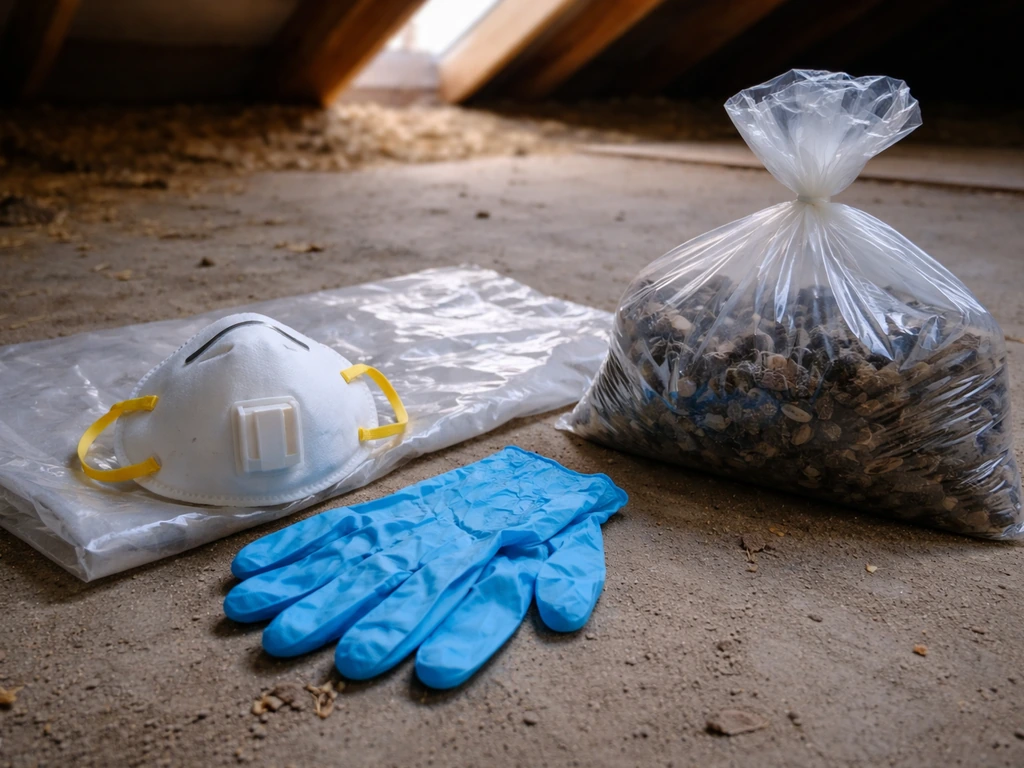
Bird droppings in an enclosed attic are a genuine health concern. Dried droppings can carry Histoplasma capsulatum, a fungal spore associated with histoplasmosis, and Chlamydia psittaci, the bacterium responsible for psittacosis. Both are acquired by inhaling contaminated dust particles, which is exactly why the CDC, NIOSH, and occupational health agencies are consistent on one rule: do not dry-sweep or dry-vacuum bird droppings. That action puts the dust directly into the air you're breathing.
Before you clean, gear up properly. At minimum, wear an N95 respirator, a P100 or FFP3 respirator is better for larger accumulations. Add disposable gloves, eye protection, and old clothes you can bag and wash immediately. Ventilate the attic as much as possible before starting, and don't work up there on a hot, still day when there's no airflow.
- Put on your respirator, gloves, and eye protection before entering the attic for cleanup
- Lightly mist droppings and contaminated insulation with water or a dilute disinfectant solution to dampen the material before touching it — this prevents aerosolization
- Use a HEPA-filter industrial vacuum to collect contaminated material rather than sweeping
- Place all waste in sealed plastic bags before removing from the attic
- Remove and bag any contaminated insulation — do not reuse it
- Wipe down hard surfaces with a disinfectant appropriate for bird pathogens
- Wash hands thoroughly after removing gloves, and change clothes before moving through the rest of the house
If the accumulation is large, meaning years of nesting rather than a single recent visitor, it's worth calling a professional remediation service. Attic insulation replacement combined with sanitizing treatment is a job where the equipment and containment a professional brings genuinely reduces your exposure risk compared to doing it yourself with basic gear. Odor from a long-term roost can also persist after visual cleanup, and enzyme-based odor neutralizers are more effective than masking sprays for that problem.
What it might mean: the spiritual side of a bird in the attic
Once the practical work is handled, it's worth sitting with the experience for a moment. Across many traditions, a bird entering the home, especially in an unusual or unexpected way, has long been read as a message rather than an accident. The attic carries its own symbolic weight: it's the uppermost space of the home, associated with the mind, memory, stored history, and things tucked away. A bird arriving there uninvited might invite a certain kind of reflection.
In a number of European and British folk traditions, a bird entering the house was seen as a harbinger of change, sometimes of transition in the family, sometimes as a messenger from someone who had passed. The bird was thought to carry news from beyond the threshold of ordinary life. Celtic traditions in particular held birds as liminal creatures, existing between worlds, with access to knowledge that earthbound beings couldn't reach. An unexpected visitor in the highest room of the house could be read as something or someone trying to get your attention.
In biblical and broader Abrahamic symbolism, birds frequently appear as divine messengers. The dove to Noah, the raven sent out before it, the sparrow held in God's attention, birds carry the idea that nothing is unwitnessed. Some people who find a bird in an unexpected place take it as a nudge to pay attention: to something unresolved, to a question they've been avoiding, or to a change that's already in motion but not yet acknowledged.
Eastern and indigenous traditions vary widely, but many share the understanding that a bird crossing into human domestic space is an invitation to reflect. In some Native American frameworks, each bird species carries its own medicine or teaching. A wren might speak to resourcefulness and resilience. A starling, often dismissed as common, is associated in some traditions with communication and community. The species itself might be worth noting.
It's worth holding both truths at once: the bird likely got in through a gap in your soffit, and that gap needs sealing. And the experience may also be asking you something. What's been stored in the upper floors of your life, literally or metaphorically, that might benefit from some fresh air and attention? The most practical response and the most meaningful one don't have to be in competition with each other.
What does this particular arrival stir in you? Sometimes that question is the most useful one to sit with, long after the bird has found its way back outside and the hardware cloth is in place.
FAQ
If I only saw one bird, could more still be inside my attic?
Yes, depending on the species and your roofline. Birds may hop between vents and gaps to reach nesting materials or warmth, so you can have one bird seen but multiple entry points feeding the same space. If you hear repeated scratching or see droppings in more than one area, map the sound locations first, then inspect for more than one probable gap before sealing anything.
How can I tell whether the bird is truly gone after I get it out?
If the bird has had access to a dark attic for more than a short time, it may leave droppings and feathers even after it exits. After you remove the bird, re-check the exact entry route for fresh signs like new feathers, wet streaks, or active scratching, and wait to seal only once you are confident the area is quiet for a full period of time, not just a moment.
What should I do if opening one exit does not make the bird leave?
Use your exit-based plan, but avoid relying on a single open path if the bird seems repeatedly to avoid the door you provided. Birds move toward light and open air, so open the nearest exterior exit and reduce interior light near the route, then give it time to choose the opening. If it does not leave after an extended attempt, it may be cornered by insulation or into a smaller cavity, and you should adjust the exit location rather than chasing.
What if I find a nest when I’m locating the entry gap?
If you discover an active nest with eggs or dependent young, do not remove it and do not seal the opening yet. In many places the nesting protection period is timed by species, so the safest decision aid is to wait until the nest is empty and the birds have fledged on their own. If you are unsure about activity level or you find injured or seemingly abandoned young, contact a licensed wildlife rehabilitator for guidance before any exclusion work.
Can sealing the entry gap make my attic ventilation worse?
Yes, and it matters. Sealing too many vents or penetrations at once can reduce soffit-to-ridge airflow, which can worsen moisture and insulation performance. When you identify gaps, decide whether they are part of the intended ventilation system (for example, soffit or ridge vents). If you are closing vents or multiple penetrations and the attic’s airflow is uncertain, get a roof or wildlife exclusion professional assessment.
What roofline gaps are easiest to miss during an inspection?
A torn or missing screen on soffit or ridge vents is often the culprit, but the more common ‘missed’ issues are the places where materials meet, such as loose trim at the fascia edge, gaps around vent collars, and cracks at pipe penetrations. Use binoculars from the ground to scan the roofline, then confirm from the attic for the exact clearance and path before closing it.
Is it okay to quickly sweep up droppings to clean up before sealing the attic?
Do not dry-sweep or dry-vacuum droppings. Use wet cleaning methods or appropriate cleanup procedures, and ventilate the attic before starting. Wear at least an N95 respirator, upgrade to a P100 or FFP3 for heavier contamination, and bag clothing that you wore inside to avoid spreading dust through the home.
What if the bird is stuck in insulation and I can’t see a clear exit?
If the bird appears trapped behind insulation, in a small crawl space, or wedged near a vent, grabbing it can cause panic and more dust and feathers. Instead, focus on creating an unmistakable exit and clearing interior obstacles around the opening route if you can do so safely. If access requires working at the roofline or inside an unsafe attic, hire a professional wildlife removal service.
What’s the best material to cover attic vent openings, and what mistakes to avoid?
For vent and small gap barriers, hardware cloth with small mesh is preferred over standard aluminum window screen because birds and other animals can tear or push through it. Make sure you fasten the barrier into solid framing and fold edges under so there are no loose corners that can be pried open.
If the bird came from the attic, could it be inside a wall cavity too?
Not always. Some birds can enter through roof gaps, then move into wall or chase spaces if the attic contains connected cavities. If you hear sounds that seem lower than the attic or you find droppings near a wall chase, consider that the entry problem may have multiple pathways, and you may need a coordinated exclusion plan across the connecting spaces.
My bird sounds like it is coming from above, how is that different from an attic entry?
If you have a chimney with sounds coming from above, the safe approach may differ from an attic exit plan because the flue space is constrained. Don’t assume the same method applies. Evaluate the source location first, because exclusion materials and how you block access to the correct opening are different for a flue than for soffit or ridge vents.
When should I call a professional for attic bird droppings and odor?
If droppings and insulation contamination suggest long-term roosting, DIY cleanup may not be enough to reduce exposure, and odors can linger even after visible debris is removed. Professionals can use containment and proper remediation approaches, and odor control often performs better with targeted neutralizers rather than masking sprays.
What’s the biggest legal or safety mistake people make after finding birds in the attic?
If you remove a nest or seal an entry while birds are still dependent, you risk harming the animals and also may violate wildlife protection rules. A decision aid is to stop, verify whether eggs or nestlings are present and active, and then choose the delay-until-empty path or consult a licensed wildlife rehabilitator for species-specific timing.
Why Is a Bird Trying to Get in My House? Causes and Steps
Discover why birds enter homes and get safe steps to guide them out, plus prevention tips and gentle symbolic meanings.