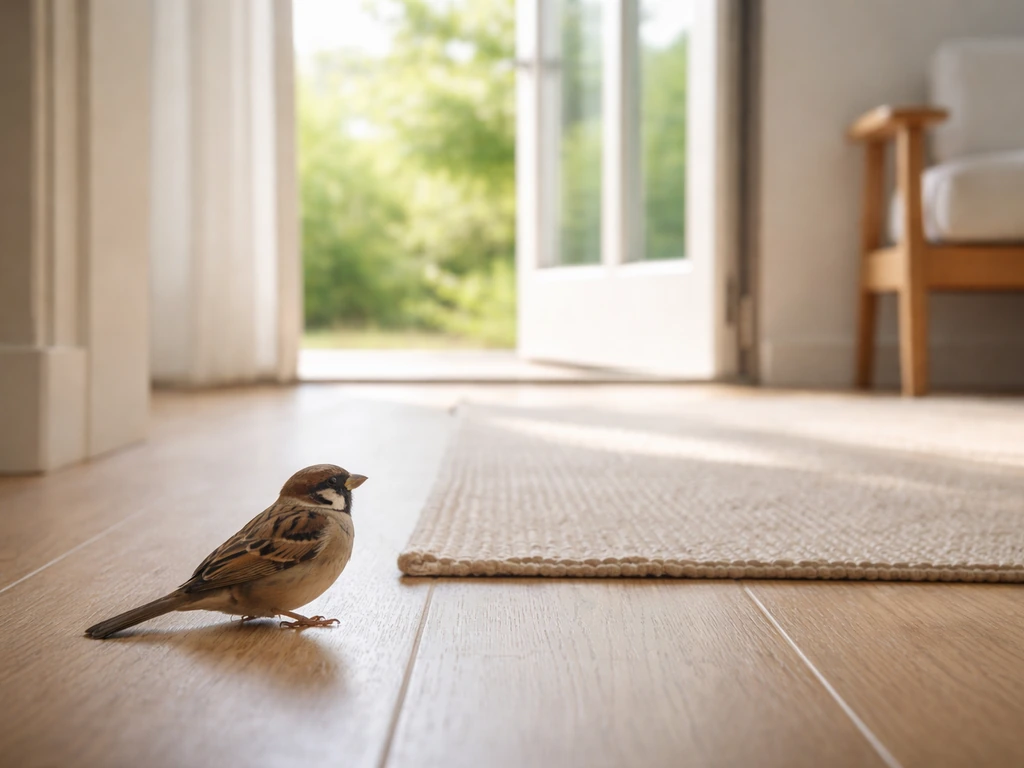
A bird trying to get into your house is almost always after one of four things: light, warmth, food, or a safe place to nest. The most common culprit is a window reflection that the bird has mistaken for open sky or a rival bird, followed closely by an open vent, gap, or chimney offering shelter. Once you figure out which of those is pulling the bird in, you can solve the problem quickly and humanely.
Why Is a Bird Trying to Get in My House? Causes and Steps

Maya Hartwell
28 Apr 2026
Why birds try to get into houses in the first place
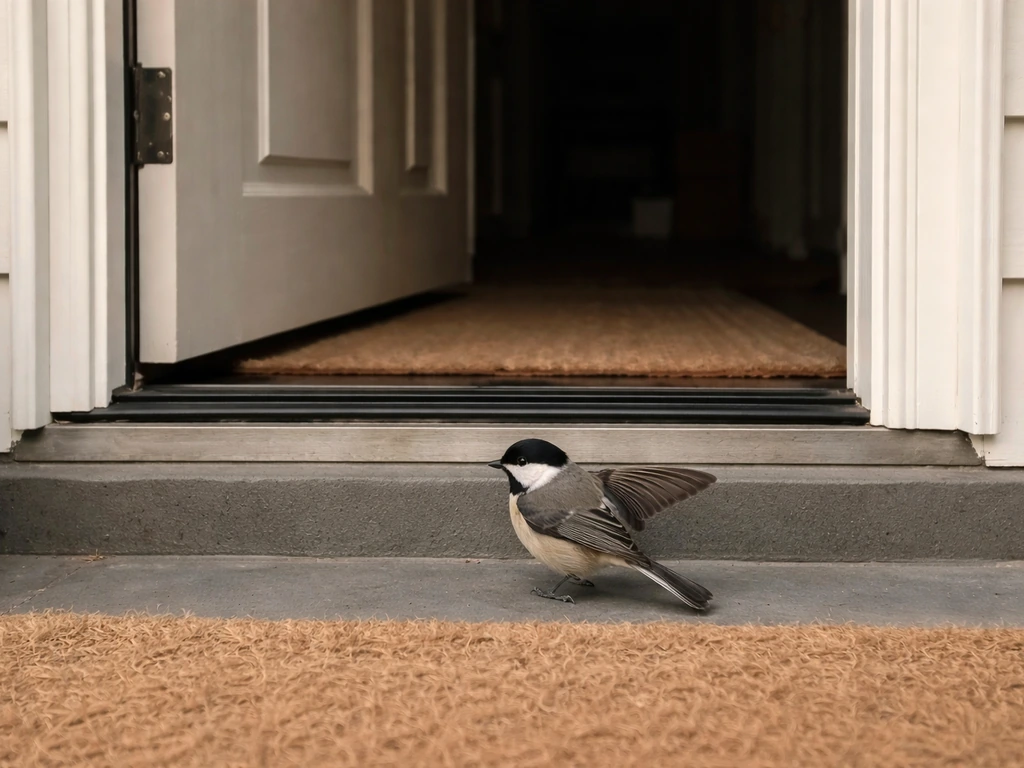
Birds don't actually want to be inside your home. What they want is whatever your home is accidentally advertising to them from the outside. Here are the most common reasons a bird keeps showing up at your door, window, or wall.
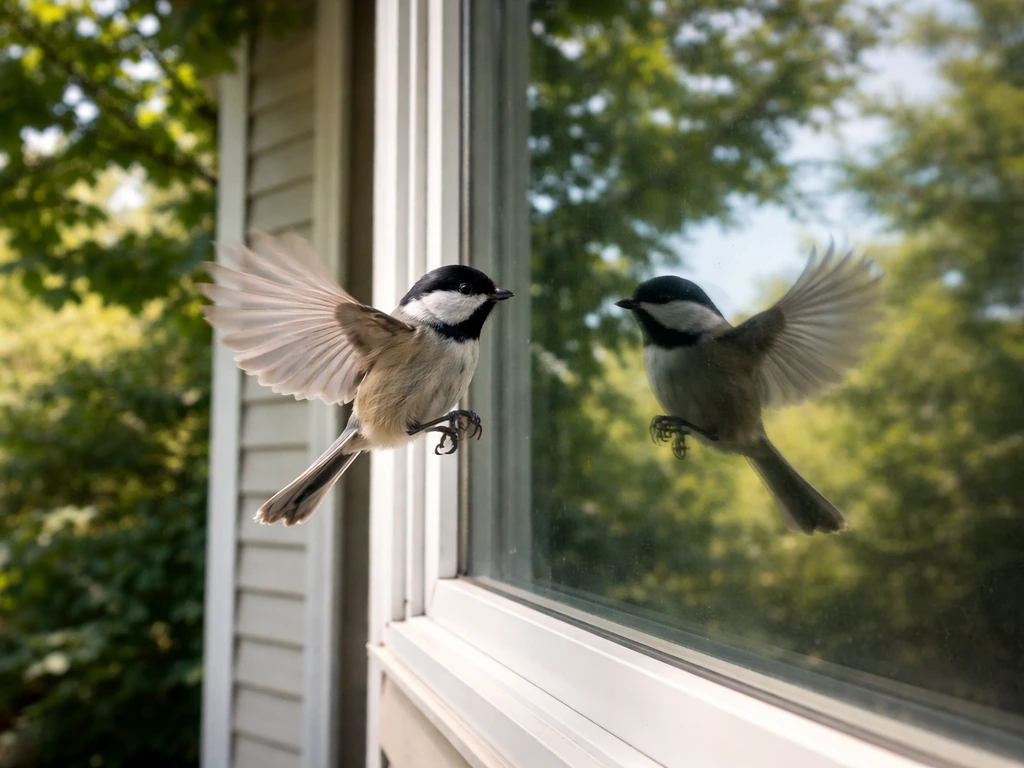
- Window reflections: Over a billion birds collide with glass in the U.S. and Canada every year. A window can mirror the sky, trees, or the bird's own image so convincingly that the bird flies straight at it, or sits outside attacking what it thinks is a rival.
- Interior light: Bright indoor lighting visible from outside draws birds in, especially at night during migration season. They navigate by stars and artificial light throws them completely off course.
- Insects: If you have bugs around your windows, porch lights, or eaves, birds will follow. The bugs are the real lure; your house is just where the buffet is located.
- Warmth and shelter: In cold weather, gaps around vents, loose roof tiles, open chimneys, and soffit openings look like ideal roosting spots. A bird that's cold or stressed will investigate any gap that radiates warmth.
- Nesting instinct: During spring and early summer (roughly March through July), birds are aggressively scouting for safe, enclosed spaces to raise young. Attics, chimneys, and wall cavities are extremely appealing.
- Ventilation openings: Dryer vents, bathroom exhaust vents, and attic louvers are common entry points because they are warm, dark, and protected from weather and predators.
How to figure out what's actually attracting the bird
You don't need to guess. Use a few quick observations to narrow it down fast.
Look at the time of day
If it's happening during the day, especially in spring, a window reflection or nesting instinct is the most likely cause. If it's happening at night or during dawn and dusk migration windows (typically April through May and September through October), artificial light is probably the draw. Early morning activity near eaves, chimneys, or vents points strongly toward nesting or roosting.
Check the weather
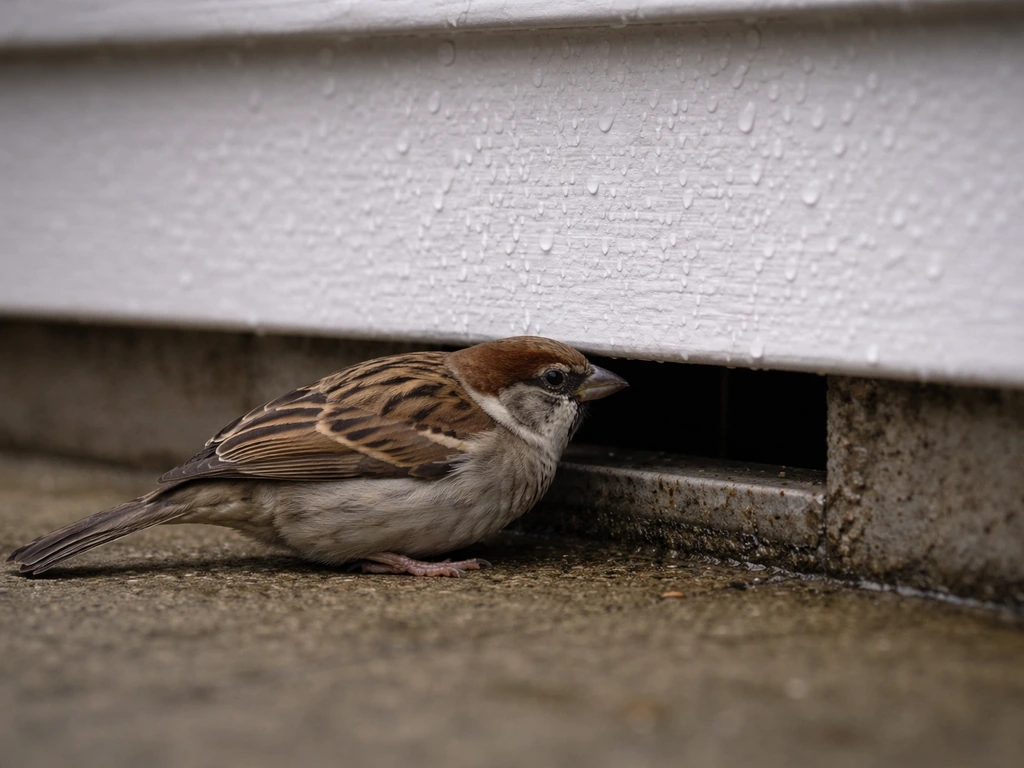
A cold snap, storm, or sudden temperature drop will push birds to seek shelter urgently. If the weather just turned bad and a bird is suddenly hammering at a vent or gap, it's almost certainly looking for warmth, not food or light.
Look at exactly where the bird is focusing
- Repeatedly hitting or hovering at a specific window: reflection attack or collision confusion.
- Pecking or pushing at a vent, gap in the soffits, or the chimney opening: shelter or nesting scouting.
- Hovering near your porch light or exterior light fixture: drawn by insects attracted to the light.
- Appearing near an open window or door and then flying partway in: accidental entry driven by curiosity or disorientation.
Notice what's nearby
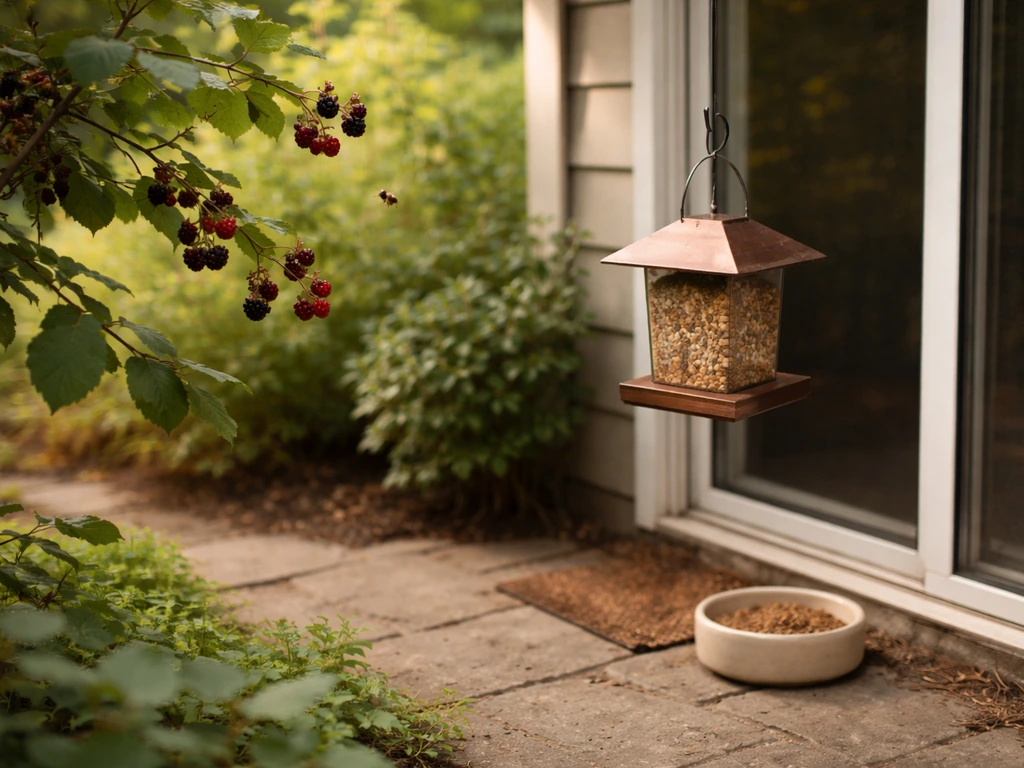
If there's a tree, bush, or garden close to the entry point, there may be insects or berries drawing the bird in. A bird feeder or pet food dish left outside near a window or door is also a strong attractant. And if you have a decorative mirror, a glass door, or highly reflective siding, that surface is probably reflecting sky or vegetation and the bird is responding to the reflection.
What to do right now: safely removing the bird
If the bird is already inside, stay calm. If you suspect a bird is in your house, focus first on keeping it calm and helping it find the exit a bird is in my house. If the bird is getting in through your chimney, you can use the same approach to narrow down the entry point and stop repeat visits. Panicking makes the bird panic, and a panicking bird can injure itself badly. The goal is to make the exit the most obvious and appealing option in the room.
- Close all interior doors to contain the bird to one room. This reduces the number of possible escape directions and prevents the bird from getting deeper into your home.
- Turn off every interior light in the room. Birds fly toward light, so indoor lights will confuse them and pull them away from the exit.
- Open one exterior window or door as wide as possible and remove the screen completely. This is now the brightest and most obvious way out.
- Cover any windows that won't open with a blanket, towel, or cardboard. A closed window that still lets light through looks like a flight path to the bird and will cause a collision.
- Step back and give the bird space. Stand well away from the exit and stay quiet. Most birds will find the open window within a few minutes once the room is darkened.
- If the bird is in a garage, turn off the garage lights, open the garage door fully, and wait. The open door will be the only bright opening and the bird will almost always fly toward it.
- As a last resort for a grounded or exhausted bird, gently place a light towel over it, pick it up carefully, carry it outside, and release it near vegetation.
Never chase a bird with a broom or make sudden loud noises. Never grab a bird without covering it first. And don't use any sprays, chemicals, or traps. Slow, calm, and dark is the approach that works.
Bird behavior clues: what type of bird tells you a lot
Different species behave differently, and identifying the bird (or even its rough size and color) gives you a huge shortcut to understanding what it wants.
| Bird Type | Most Likely Motivation | Key Behavior Clue |
|---|---|---|
| Robin, cardinal, or sparrow (spring/summer) | Reflection attack on a rival | Repeatedly pecking or flying at the same window or car mirror, especially in the morning |
| Chimney swift | Nesting or roosting in chimney | Entering and leaving the chimney every 30 to 60 minutes; chattering sounds from below the damper |
| Starling or house sparrow | Nesting in vents or wall gaps | Carrying nesting material, disappearing into a small gap repeatedly |
| Owl or hawk | Following prey (mice or small birds) inside | Usually a one-time accidental entry through an open door or large gap; disoriented once inside |
| Warbler or thrush (migration seasons) | Disorientation from artificial light | Nighttime or dawn collisions; more common April through May and September through October |
| Woodpecker | Insects inside siding or eaves | Drilling into wood around window frames or soffits; persistent tapping at the same spot |
If you're dealing with chimney swifts specifically, it's worth knowing that in many areas they are federally protected and cannot legally be disturbed during nesting season (typically May through August). Keeping the fireplace damper closed during this period, as the U.S. Fish and Wildlife Service recommends, prevents them from coming down into your living space while still allowing them to use the chimney safely.
How to stop it from happening again
Once you've handled the immediate situation, a few targeted changes will dramatically reduce the chances of a repeat visit. Match your prevention strategy to the cause you identified.
For window reflection issues
Apply window treatments on the outside of the glass. Bird-safe window films, tape strips spaced 2 to 4 inches apart, or external screens all break up the reflection enough to signal to a bird that the surface is solid. Smithsonian includes specific guidance on outside-facing window treatments such as stick-on stripes, spacing them no more than about 2 inches. The Smithsonian National Zoo and U.S. Fish and Wildlife Service both recommend outside-facing treatments specifically because they disrupt the reflection from the bird's viewpoint, not yours. Closing blinds or curtains at night also reduces the amount of interior light spilling outward.
For light-related attraction
Turn off or dim any non-essential exterior lights at night, especially during spring and fall migration. Audubon's Lights Out Program is built around this exact principle: excess artificial light causes birds to waste energy circling in confusion and greatly increases collision risk. Motion-activated lights are a reasonable middle ground if you need outdoor security lighting.
For vents, gaps, and entry points
Cover all vent openings with corrosion-proof wire mesh with holes no larger than one-quarter inch. This is the standard recommended by the Building America Solution Center and is small enough to exclude even the smallest common house bird. Check dryer vents, bathroom exhaust vents, attic louvers, and any gaps where utility lines enter your home. After you've confirmed no bird (or nest) is inside, seal the opening permanently. If you've used a one-way exclusion door to let a bird exit, the Washington Department of Fish and Wildlife recommends removing it and sealing the gap immediately after the bird has left, before it can return.
For food and insect attractants
Move bird feeders at least 10 feet away from windows and doors, or further if possible. Store pet food inside. Reduce exterior lighting that attracts insects at night, since fewer insects means fewer birds hunting near your walls. If you compost, use a covered bin.
For chimney access
Install a capped chimney cover designed to allow airflow but block bird entry. If chimney swifts are using the chimney and are protected, leave them alone through the nesting season and then install the cap afterward. Keep your fireplace damper closed when the fireplace isn't in use throughout the warmer months. The U.S. Fish & Wildlife Service advises keeping the fireplace damper closed after heating season is over to better protect nesting and roosting chimney swifts from falling into the fireplace or entering the house.
What it might mean: the spiritual and symbolic side of this encounter
If you've found this page because the practical explanation doesn't feel like the whole story to you, you're not alone. Across many cultures and belief systems, a bird that persistently tries to enter your home has been interpreted as far more than a case of mistaken identity. Here's how different traditions have understood this kind of encounter, offered not as definitive truth but as lenses worth considering. If you came here wondering about the bird coming down the chimney meaning, the practical cause is usually shelter-seeking or a nest attempt bird coming down chimney meaning.
Biblical and Christian tradition
In biblical symbolism, birds frequently appear as signs of divine care and provision. The sparrow in Matthew 10:29 is used specifically to illustrate that nothing goes unnoticed by God, even what seems small or ordinary. From this framework, a bird repeatedly seeking entry could be read as a prompt to notice something you've been overlooking, or a reminder of protection and grace at a time when you may feel exposed or uncertain. The meaning is rarely seen as literal instruction but more as an invitation to reflection.
Folklore and indigenous traditions
In many European folk traditions, a bird attempting to enter the home was treated as a message from the spirit world, sometimes carrying news of change, transition, or a loved one trying to make contact. Celtic tradition in particular associated birds with the in-between: creatures that moved freely between the physical world and the unseen. In many indigenous North American traditions, birds are viewed as messengers, with the specific species and its behavior carrying distinct significance depending on the community's own teachings.
Eastern and metaphysical perspectives
In some Eastern traditions, a bird arriving at your threshold represents a transition or a new cycle beginning. In the broader metaphysical or spiritual-but-not-religious space, birds are often understood as messengers in the sense that they draw your attention outward, away from routine, and toward something worth noticing. The interpretation often comes not from the bird itself but from what was happening in your life when it appeared, and what the encounter stirred in you.
How to hold these interpretations responsibly
The Environmental Literacy Council puts it well: the meaning of a bird encounter is culturally constructed and subjective. That doesn't make it meaningless. It means the meaning is yours to make. If a bird at your window arrived during a period of grief, transition, or longing, and that encounter felt significant, honoring that feeling is entirely valid. If you find a natural explanation fully satisfying, that's equally valid. Most people who explore this topic find themselves somewhere in between: grateful for the practical answer and still a little curious about the timing.
One question worth sitting with, whatever your beliefs: what was on your mind in the moment the bird appeared? Sometimes that's where the most honest interpretation lives.
When the situation is more complicated
If a bird has actually made it inside rather than just trying to get in, the removal steps above apply directly. But if you're hearing sounds inside a wall, ceiling, or chimney and you're not sure what's going on, that's a different situation worth investigating carefully before taking action. If you suspect there is a bird in your wall, the same observation steps for entry points and shelter-seeking cues can help you figure out what's attracting it. Birds in chimneys, birds in walls, and birds in attics each have slightly different removal considerations, and in some cases the bird may have already built a nest that is legally protected during the nesting season.
If the sounds or activity suggest a bird is already inside your structure rather than just trying to get in, contacting a licensed wildlife removal professional or your local humane society is the safest next step. They can identify the species, confirm whether nesting has occurred, and advise on legal and humane options specific to your situation. If the bird is in your attic, you may need species-specific guidance to remove it safely and legally bird get in my attic.
FAQ
What should I do in the first 5 minutes if I keep hearing tapping near a window or vent?
Start by turning off nearby interior lights in the room the bird is at, then open one exterior door or window elsewhere to create a clear exit. Keep the area calm and dim, close off other rooms, and watch which opening the bird chooses. If it is hitting a specific vent repeatedly, treat that as the likely entry and focus on that spot rather than sweeping the whole house.
Is it safe to open doors and windows everywhere to help the bird escape?
Not always. Opening multiple openings can confuse the bird and increase the chance it moves into another room or a more enclosed space. Instead, choose one primary exit (an open exterior door or window) and keep other interior doors closed so the bird can only move toward the exit you’re offering.
How can I tell if the bird is trying to nest versus just being attracted by light or warmth?
Look for repeated behavior that escalates at daytime hours, especially in spring, such as hovering at the same seam or pecking along edges, eaves, or chimney areas. Nesting or roosting behavior is more persistent and localized, while light attraction often corresponds with nighttime illumination and may involve circling or bouncing off glass.
What if the bird keeps coming back the next day even after it flew out?
That usually means the attractant is still present, or there is an entry gap that remains accessible. Do a quick “cause audit” of reflections (mirrors, glass doors, reflective siding), vents and gaps, exterior lights, and pet food or feeders near entry points. If you used any temporary one-way exit method, confirm the gap is sealed after the bird leaves so it cannot re-enter.
Can I relocate a bird if it won’t leave on its own?
It’s best not to handle the bird directly. If it isn’t exiting after you make a clear, dim exit, contact a licensed wildlife remover or your local humane society. Some species can be easily stressed or injured, and certain species have legal protections that affect what you are allowed to do.
Should I cover my fireplace or chimney immediately if I suspect a bird is using it?
If chimney swifts might be nesting, avoid disturbing the chimney during nesting season, instead use the recommended approach that keeps the damper closed when the fireplace is not in use in warmer months. If you are unsure which species it is, treat it as potentially protected and get advice before installing a cap or doing anything that blocks airflow during an active period.
What if the bird got inside but I can’t find it anymore?
Assume it may have moved to another space such as a higher ceiling area, behind curtains, or near an attic access point. Turn off lights, close interior doors to limit movement, and then use a quiet search by following where sound echoes originate. If you discover signs it entered an attic or wall, switch to the appropriate access-point approach and consider professional help.
Could this be a bat or something else instead of a bird?
Yes. Nocturnal creatures like bats may also appear near vents, windows, or in attics, and their behavior differs from birds. If the animal clings to surfaces, hangs upside down, or you hear fluttering that doesn’t match bird movement, stop using bird-specific tactics and contact wildlife professionals to identify it safely.
What should I do if I see a bird repeatedly hitting the same window?
That’s a window-safety issue, not just an entry problem. Use exterior solutions that break up reflections and sight lines, such as outside-facing window films or external screens, rather than relying on indoor curtains alone. After adjusting, reassess for continued impacts over several days because birds may take time to learn the corrected hazard.
When is it appropriate to call for professional help instead of handling it myself?
Call a professional if the bird is inside a wall, attic, or chimney and you cannot safely control the area, if you suspect nesting has occurred, or if the bird is injured or behaving abnormally. Professionals can identify the species, advise on legal restrictions, and use species-appropriate exclusion and sealing methods afterward.
Next Article
A Bird Is in My House: Safe Steps to Get It Out and Prevent It
Step by step plan to safely get a bird out, handle pets, clean droppings, prevent repeats, and know when to call help.