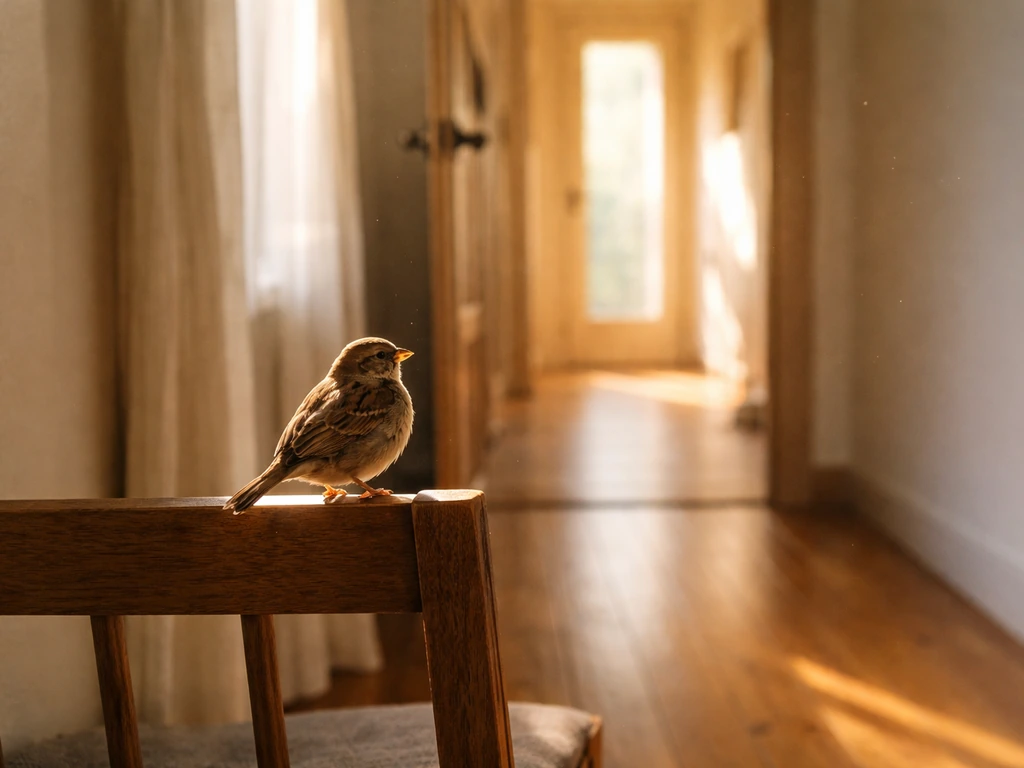
The most widespread superstition about a bird flying into your house is that it signals bad luck, and in the darkest versions of that belief, it specifically foretells a death in the family. That's the short version you'll find in British, Irish, Scottish, Appalachian, and Southern American folklore alike. But there's a lot more layered underneath that headline claim, and whether you're standing in your living room watching a panicked sparrow bounce off your walls right now, or you're trying to make sense of what just happened, you deserve both the full symbolic picture and a practical plan for what to do next.
What Is the Superstition About a Bird in Your House

Maya Hartwell
7 May 2026
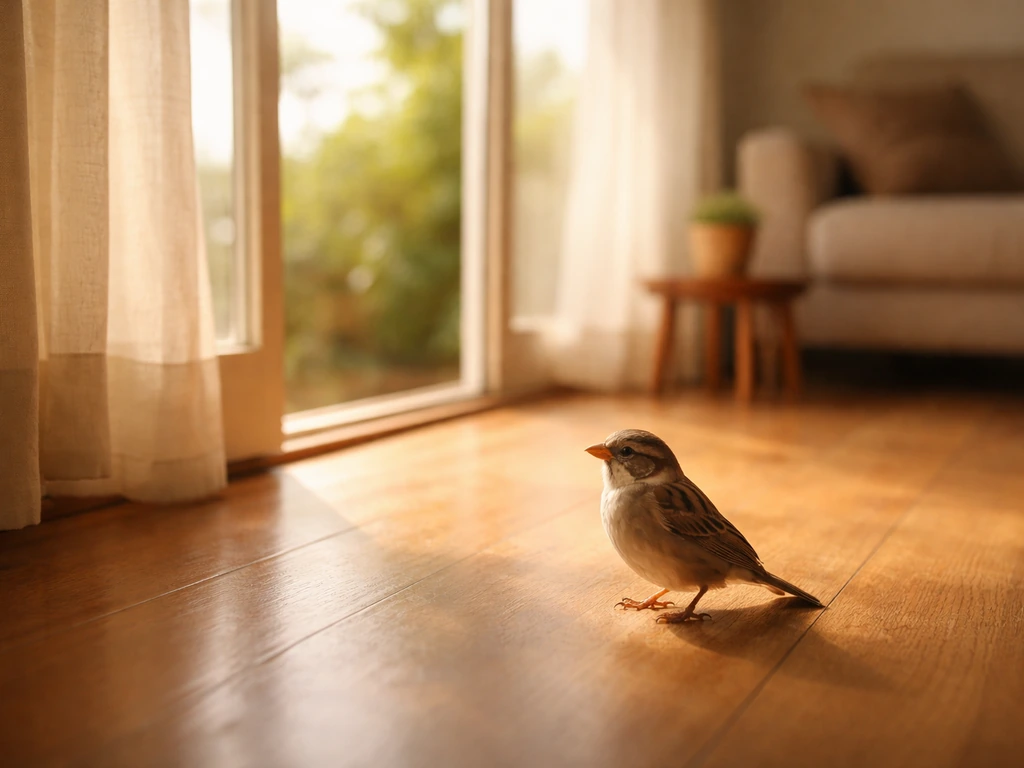
What people actually say a bird in your house means
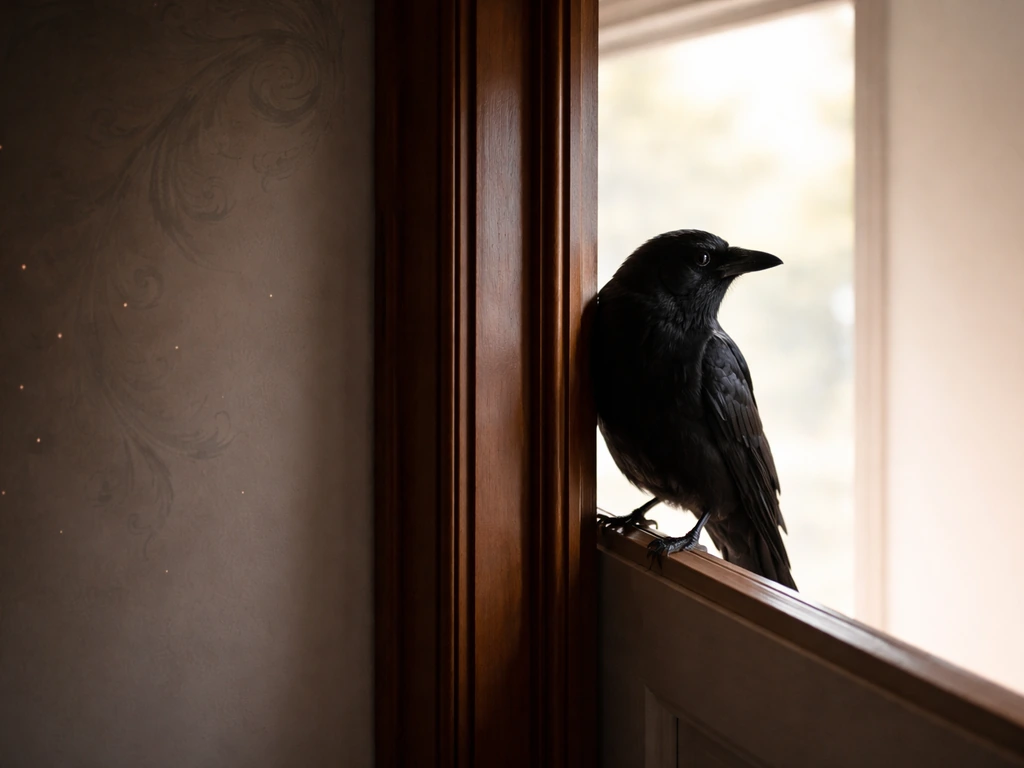
The bad-luck interpretation is the loudest one in Western folklore. In Appalachian and Southern American tradition, a bird flying indoors is often described as a sign that either a visitor is coming or that someone in the home will die. That dual meaning (visitor or death) isn't a contradiction so much as a reflection of how closely death and visiting were linked in older rural communities, where a distant relative often arrived only for illness or a funeral. This tradition is thought to have been carried over to North America by Irish, Scottish, and English settlers and blended into regional folk belief over generations.
Welsh folklore goes even further with the concept of the "Aderyn y Corff," which translates to "corpse bird." This was a bird associated with imminent death, said to cry out something resembling the word "come" and to appear near a home where someone was about to pass. It's one of the more specific and eerie examples of birds as death omens in the Celtic tradition.
Not every tradition frames this as doom, though. In many modern spiritual and folk interpretations, especially in North American contexts influenced by Indigenous symbolism, a bird entering your home is read as a messenger. Some frameworks describe it as a spirit making contact, a sign of transition or change rather than catastrophe, or a prompt to pay attention to something in your life. The Catholic and broader Christian tradition sometimes links birds to the soul or to divine messengers, which softens the omen into something more like a visitation with purpose.
Some cultures land on the positive end entirely. In certain Eastern European and Asian traditions, a bird flying into the home is a sign of incoming good news or good fortune, particularly if it enters freely and lands calmly. The behavior of the bird matters a great deal in these readings, which we'll get into shortly.
The honest summary is this: there is no single universal superstition. The death-omen reading is the most widely cited one in Western folklore, and it's worth knowing, but it shares the stage with interpretations ranging from spiritual messenger to upcoming change to incoming guest to good luck. Where you land depends heavily on your own cultural background, belief system, and what resonates personally.
Why birds get inside (check the practical side first)
Before you spiral into omens, it genuinely helps to understand why birds end up indoors in the first place. Most of the time it's startlingly mundane. A bird didn't choose your home for symbolic reasons. It got confused, frightened, or curious, and physics took care of the rest.
- Open doors and windows: The simplest explanation. A bird sees an opening, follows light or movement, and suddenly it's in your kitchen.
- Reflective glass: Windows that reflect sky or trees look like open space to a bird in flight. They fly toward what looks like a continuation of their path.
- Seasonal disorientation: During spring and fall migration, birds can be navigating unfamiliar territory and may investigate structures more boldly than usual.
- Juveniles leaving the nest: Young birds that have just fledged are still learning spatial boundaries and often land in odd places, including inside homes.
- Chasing prey or fleeing predators: A bird pursuing an insect or running from a hawk may fly through an opening without registering it as a boundary.
- Nesting near entry points: Birds nesting in eaves, vents, or porches sometimes find themselves accidentally deeper inside than intended.
- Injured or ill birds: A bird that is already disoriented due to illness or a prior window strike may wander into unusual spaces.
Knowing the likely cause helps you respond appropriately and also gives you useful context if you're inclined toward a spiritual interpretation. A bird that fluttered in through a door you left open while unloading groceries carries a different energy than one that appeared with no obvious entry point and sat quietly on your windowsill for an hour.
What the bird's behavior inside actually symbolizes
The behavior of the bird is where many folk and spiritual traditions diverge most sharply, and it's also the most useful lens if you're trying to interpret the experience for yourself. A frantic bird bouncing off walls reads very differently from one that perches calmly and watches you.
A bird flying in frantically or unable to escape
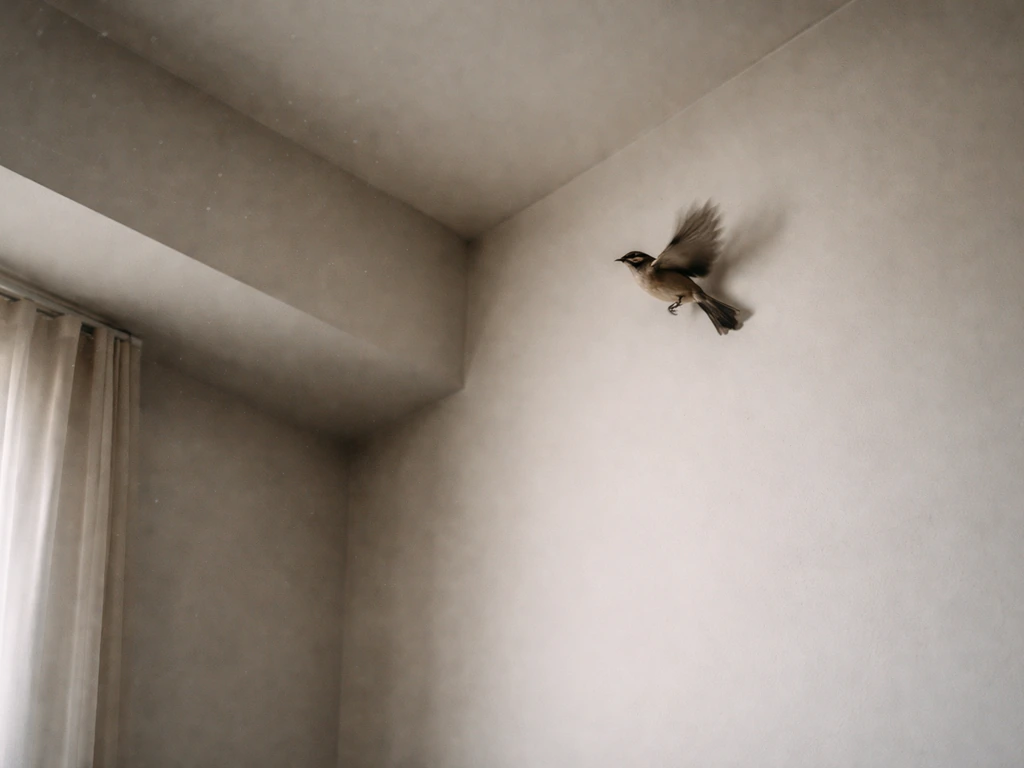
This is the scenario most commonly tied to the bad-luck or death-omen interpretation in Western folklore. The chaos of a panicked bird was historically associated with disrupted energy, coming turmoil, or a message arriving with urgency. Practically speaking, the bird is simply terrified and responding to a situation it doesn't understand. Spiritually, some readers interpret the frantic movement as a sign of imminent upheaval or a warning to prepare for change.
A bird that lands calmly and stays
A bird that enters quietly, perches, and seems unafraid is more often interpreted as a visitation or a message from a loved one who has passed, particularly in modern spiritual traditions. Some people feel strongly that a calm indoor bird is a spirit making contact. Others read it as a sign of incoming news or a need to pause and reflect. In several folk traditions, this type of visit is actually considered fortunate rather than ominous.
A bird that flies in and immediately out
A quick flythrough is generally treated as a lighter encounter in most traditions, sometimes read as a brief message delivered and received, or as a spirit checking in without needing to stay long. This is also the most common real-world scenario and the least alarming from a practical standpoint.
How different traditions read the same encounter
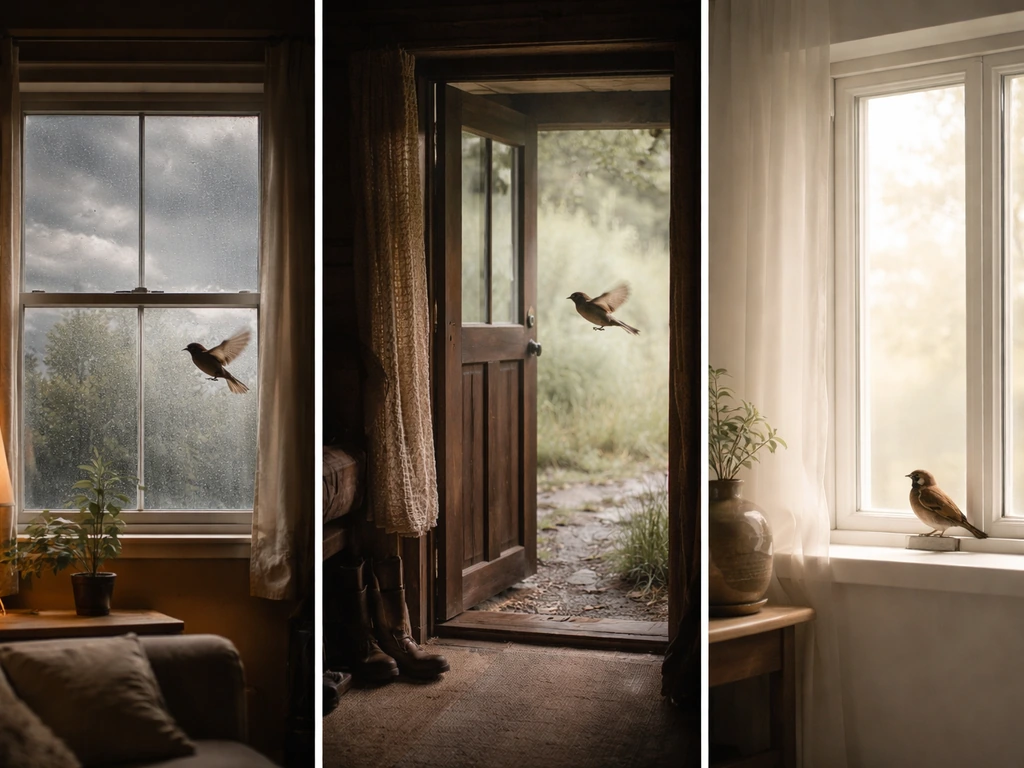
| Tradition / Belief System | General Interpretation of Indoor Bird |
|---|---|
| British/Irish/Scottish folklore | Bad luck or death omen, especially if the bird cannot find its way out |
| Appalachian/Southern American folklore | A visitor is coming, or a death in the household is near |
| Welsh tradition (Aderyn y Corff) | Corpse bird: a specific death portent associated with the bird's cry |
| Modern Western spiritual / New Age | Spiritual messenger, sign of transition, contact from a deceased loved one |
| Indigenous North American (varies widely by nation) | Bird as messenger between worlds; spiritual communication or change signal |
| Eastern European folk tradition | Can signal good news or fortune if the bird enters calmly and freely |
| Christian / biblical framework | Birds as divine messengers or symbols of the soul; presence may signal spiritual attention |
| Chinese folk tradition | Often a lucky sign, especially if the bird is seen as bringing positive energy into the home |
It's worth noting that interpretations shift dramatically by species too. A robin carries different associations than a crow, an owl, or a dove. If you're curious about a specific bird type, the species meaning often layers on top of the general indoor-bird symbolism in meaningful ways.
What to do right now: get the bird out safely
If the bird is still in your home, your first job is helping it leave without injuring it or yourself. Birds panic in enclosed spaces and can hurt themselves badly by flying into walls, mirrors, or ceilings. The goal is to make the exit obvious and reduce everything that causes fear. Audubon’s “Lights Out” program recommends turning off interior lighting, especially on higher stories, to reduce nighttime bird disorientation and attraction behavior near buildings.
- Clear the room of people and pets. Every additional presence adds to the bird's stress and makes it fly more erratically.
- Close interior doors so the bird is confined to one room rather than having the run of your house.
- Open one large exit point: a wide window or an exterior door. Bigger is better. Remove any screen if you can do it quickly.
- Close or cover all other windows in that room. This removes false escape routes that will tire and injure the bird.
- Darken the room if possible by closing blinds on all windows except the open exit. Birds move toward light, so make the exit the brightest point.
- Leave the room entirely and give the bird 10 to 20 minutes undisturbed. Most birds will find the opening and leave on their own when they're not being chased.
- If the bird hasn't left after waiting, you can try gently guiding it with a large, slow-moving object like a bed sheet or a piece of cardboard. Move slowly and avoid cornering it.
- If the bird lands on a surface, you can place a lightweight towel or cloth over it gently, scoop it up, and carry it outside. Hold it firmly but without squeezing, release it at a safe outdoor spot, and step back immediately.
Do not chase the bird, throw objects near it, or try to grab it barehanded without a cloth barrier. Do not use food to lure it (this rarely works and can extend the encounter). And don't leave the bird alone with a pet in the room, even for a moment.
When the bird hits a window, won't leave, or you find it dead or injured
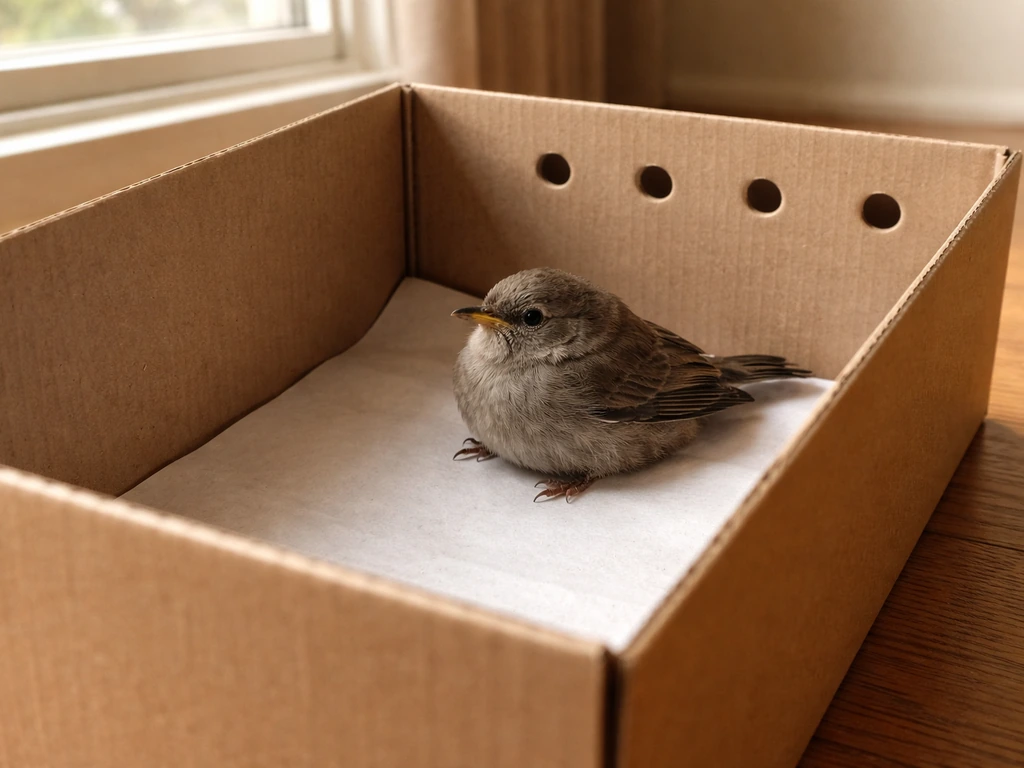
Bird hit a window and is stunned
Window strikes are extremely common. If a bird hit your window and is sitting dazed on the ground or windowsill, it may just need time to recover. Place a shoebox with air holes near the bird, gently scoop it inside using a cloth, and put the closed box in a warm, dark, quiet place indoors or in a sheltered outdoor spot. Check after 30 to 60 minutes. If it's recovered, it will be visibly alert and may try to escape the box. Take it outside, open the box, and let it fly when ready. If it's still dazed after an hour, contact a local wildlife rehabilitator.
Bird won't leave
If you've followed the steps above and the bird is still inside after several hours, it may be injured, ill, or very young and not yet capable of sustained flight. Use the towel method to catch it gently, assess it visually for obvious injuries (drooping wing, inability to stand), and contact a wildlife rehabilitator or your local animal control if it seems hurt. Do not attempt to feed it or give it water unless directed by a professional.
You found a dead bird inside
Finding a dead bird indoors is the scenario most strongly tied to the death-omen superstition, and it's understandably unsettling regardless of your beliefs. Practically, the bird likely died from a window strike, exhaustion, or an underlying illness. For removal, use gloves or a plastic bag inverted over your hand, place the bird in a sealed bag, and dispose of it in an outdoor bin. Do not handle it with bare hands. Clean the area with a disinfectant spray and wash your hands thoroughly. If you want to mark the moment with intention, take a breath, acknowledge the encounter, and give yourself space to reflect on what it might mean to you before moving on.
A bird that keeps coming back
If the same bird (or what appears to be the same species) keeps returning to your home, it's worth checking for a practical reason first. A bird repeatedly flying at a window is almost always responding to its own reflection, which it perceives as a rival. A Tufts wildlife resource explains that bird window strikes often happen because birds mistake reflections of trees and sky, and panicked or fleeing birds are more likely to fly into the glass responding to its own reflection. Break the reflection by placing decals or tape on the outside of the glass, or by temporarily covering the pane from outside. If a bird is returning because it's found food, nesting material, or access to a vent, those attractants need to be addressed.
Cleanup and safety after a bird is inside
Once the bird is out, don't skip the cleanup step. Wild birds can carry parasites (mites, lice), bacteria (Salmonella, Chlamydia psittaci), and fungal spores (Histoplasma in dried droppings) that are genuinely hazardous to humans, especially in enclosed spaces.
- Wear disposable gloves when cleaning any area where the bird landed, perched, or left droppings.
- Dampen droppings with a spray disinfectant before wiping. Do not dry-sweep or vacuum dried droppings, as this aerosolizes particles that can be inhaled.
- Wipe down all surfaces the bird contacted using a disinfectant safe for that material.
- Wash any soft furnishings the bird touched, such as curtains or upholstered surfaces, if visibly soiled.
- Wash your hands thoroughly with soap and water after any contact with the bird or its waste, even if you were wearing gloves.
- If the bird was in an enclosed room for an extended period (several hours or more), ventilate the space well before spending extended time there.
- Call a professional wildlife removal service or pest control if you suspect the bird entered through a vent or chimney, as this may indicate a nest or repeated access point that needs sealing.
For most brief indoor visits, a standard cleaning with household disinfectant is entirely sufficient. The situations that warrant a professional are longer occupations, evidence of nesting, signs of a larger entry point, or if anyone in the home is immunocompromised.
How to find the meaning that actually fits your situation
If you're drawn to the symbolic side of this experience, the most honest framework isn't to pick a single tradition and adopt its verdict. It's to use the encounter as a mirror. Here are the questions worth sitting with:
- What species was it? A dove carries different traditional weight than a crow, a robin, a sparrow, or an owl. The species often points toward specific meaning layers worth exploring.
- What was the bird doing? Calm and still reads differently from frantic and panicked, which reads differently from flying in and straight back out.
- What time of day or year was it? Spring birds, dawn appearances, and birds arriving during personally significant moments all carry distinct weight in various traditions.
- What were you doing or thinking about when it happened? Some people report that an indoor bird appeared during a moment of grief, a major decision, or right after thinking about someone who had passed.
- What did you feel in the moment? Fear, wonder, peace, sadness? Your gut reaction is data worth factoring in.
- Does any single tradition's interpretation feel true for you? You're allowed to take what resonates and leave what doesn't.
There's no authority that can tell you definitively what your bird encounter meant. The superstition about death is the loudest one in the Western tradition, and it's worth knowing. But it's one voice in a chorus that also includes messages, visitations, fortune, change, and simple natural curiosity on the part of a lost bird. What you make of it is yours to decide. Some of the most meaningful personal experiences start with exactly this kind of unexpected, slightly disorienting moment, a wild thing briefly sharing your space, and then being gone.
FAQ
Is it really a sign of death if a bird flies into my house?
No. While the death-omen version is the most widely repeated in some Western folklore, the most common real-world causes are simple entry and panic, especially around windows. Treat it as symbolism only if it helps you make sense of the moment, not as a prediction.
Does the superstition change depending on whether the bird enters through a door or a window?
Yes, in practical terms it often changes what likely happened. A door entry usually points to an open doorway or confused navigation, while window contact often points to a window strike followed by dazing and disorientation. The bird behavior will matter more than the myth.
What should I do first if the bird keeps flying around and won’t go near the exit?
Reduce stimulation and create one clear route out. Turn off interior lights near the exit and open a single door or window to the outside, then dim other rooms if possible. Avoid chasing, throwing items, or grabbing, because panic increases wall and mirror impacts.
If I want to keep my house “safe” from the omen, what’s a reasonable approach?
Use a grounding ritual instead of taking actions that could harm the bird. Acknowledge the experience, then focus on practical safety steps (escape route, cleanup if needed). If you’re cleaning after a deceased bird, prioritize disinfection and handwashing, that’s the real safety measure.
Does the bird’s behavior mean something different if it is calm versus frantic?
Many interpretations treat behavior as the key. Frantic, repeated wall or mirror impacts typically match fear and confusion, while a calm perch or quiet presence is often read symbolically as a “message” in modern spiritual readings. Either way, your safest response is still to help it leave without injury.
What if the bird is a specific species, like an owl or crow, does that make the superstition stronger?
Species can change symbolic associations, but it doesn’t change the immediate risk. Owls, crows, doves, and robins can all panic and injure themselves after a strike. Follow the same injury-aware removal steps and consider contacting a wildlife rehabilitator if it is dazed or can’t fly.
Is there any superstition about the time of day, like dusk or midnight?
Some folk versions attach extra weight to unusual timing, but there’s no reliable way to translate that into a concrete meaning. If the encounter happens at night, the practical reality is still the same, birds can be drawn toward indoor light or confused by reflections, so prioritize controlling lighting and openings.
What if the bird lands on a person or on the floor in front of me?
Folklore may treat landing as more personal than a quick pass-by, but physically it can still be fatigue after a strike or curiosity. Keep your distance, allow space, and guide it toward an exit rather than reacting with sudden movements that could startle it again.
How long should I wait before assuming the bird is injured or unable to fly?
If it hit a window or seems dazed, check within 30 to 60 minutes after placing it in a warm, dark, quiet recovery container (like the shoebox method described). If it is still unsteady after about an hour, or it cannot stand or fly, contact a local wildlife rehabilitator.
What should I do about cleaning if the bird is alive and left, do I still need to disinfect?
If there were no droppings and the bird escaped quickly, a full disinfecting deep-clean is usually unnecessary. If you see droppings or there was a longer stay, disinfect surfaces where droppings or feathers may have been, and wash hands thoroughly. If anyone is immunocompromised, be more cautious.
What if another bird appears afterward, does that mean the superstition is “continuing”?
Often it’s not a continuation of symbolism, it’s a reflection of a practical attractant. Check for ongoing cues like a window reflection, accessible vents, nearby food sources, or a spot the bird keeps trying to reach. Fix the attractant, then re-monitor.
Should I contact animal control or a wildlife rehab if the bird is fine but keeps coming back?
If it keeps returning and you’ve already checked common causes (openings, reflections, vents), local wildlife professionals can advise based on species and local risks. In the meantime, address the most likely triggers, such as covering reflective glass from the outside or placing decals to break the reflection.
If I find a dead bird indoors, is there anything I should avoid beyond bare-hand handling?
Avoid sweeping or vacuuming dried droppings before you disinfect, because it can aerosolize contaminants. Ventilate the area if you can, wear gloves or use a bag-over-hand approach, seal the bird, then disinfect and wash hands thoroughly.
Next Article
Bird in House Dream Meaning: Spiritual Messages and Steps
Bird in house dream meaning with spiritual, biblical and psych insights plus steps to journal, cleanse, and act safely t